You’ve heard the horror stories about data breaches, stolen customer information, and apps getting shut down because of compliance issues.
And when you’re planning a white-label Etsy app, the fear becomes very real:
What if my users’ data leaks? What if payments get compromised? What if I get legally trapped?
In 2026, safety matters more than ever because marketplaces handle high-risk data every day: customer profiles, payment details, seller banking info, order history, and sometimes even location-based delivery tracking.
This guide will give you an honest assessment of white-label Etsy app security, the real risks, and practical steps to protect your business. And yes — I’ll also show how Miracuves approaches security differently as a security-first white-label solution provider.
Understanding White-Label Etsy App Security Landscape
What “white-label security” actually means
White-label security is the set of protections built into an app that a provider hands you — not something custom-developed from scratch. You must ensure those protections meet modern standards.
Common security myths vs reality
Myth: All providers offer strong security by default.
Reality: Many do not have up-to-date certifications or proper audit practices.
Why people worry about white-label apps
Businesses fear inadequate data protection, weak authentication, and poor third-party dependency controls.
Current threat landscape for Etsy-type platforms
Marketplaces see phishing, fraudulent sellers, payment interception, credential stuffing, and API-targeted attacks often.
Security standards in 2026
Expect encryption everywhere, mandatory compliance documentation, regular audits, and continuous monitoring.
Real-world statistics on app security incidents
Recent reports show marketplace platforms continue to face breaches due to weak API security and poor credential handling.
Key Security Risks & How to Identify Them
Data Protection & Privacy
User personal information
Weak encryption or storage can expose names, emails, and profiles.
Payment data security
Unprotected payment flows risk card data theft and fraud.
Location tracking concerns
Marketplace apps sometimes track seller/ buyer locations — this data must be protected.
GDPR/CCPA compliance
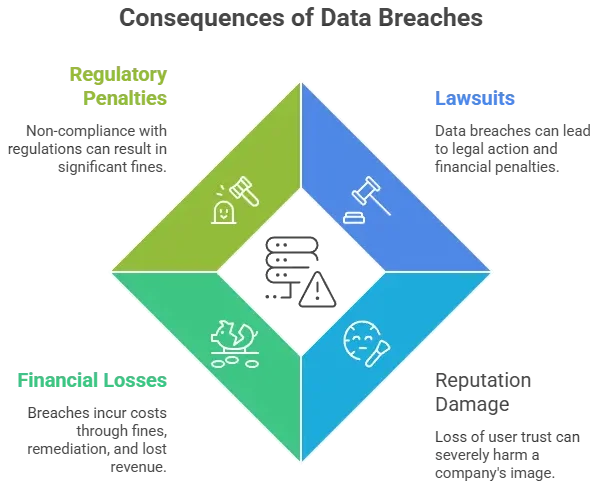
Failing to comply leads to fines and operational shutdowns.
Technical Vulnerabilities
Code quality issues
Poor code leads to exploitable bugs.
Server security gaps
Unpatched servers are often the first entry point for attackers.
API vulnerabilities
APIs handling marketplace data are high-value targets.
Third-party integrations
Plugins or tools without strong security can introduce risks.
Risk Assessment Checklist
- Is user data encrypted at rest and in transit?
- Does the provider support secure authentication?
- Are payments processed through PCI DSS–compliant systems?
- Is there logging and monitoring in place?
- Are regular security audits documented?
Security Standards Your White-Label Etsy App Must Meet
Essential Certifications
A white-label Etsy app handles marketplace-level sensitive data, so these certifications matter in 2026:
ISO 27001 compliance
Shows the provider follows a structured Information Security Management System (ISMS).
SOC 2 Type II
Proves security controls are not only designed properly, but also consistently followed over time.
GDPR compliance
Mandatory if you have users in the EU or handle EU resident data.
HIPAA (if applicable)
Usually not required for Etsy-type apps, unless you sell medical or health-related products with protected health information.
PCI DSS for payments
Non-negotiable if your app stores, processes, or transmits cardholder data.
Technical Requirements
These are the minimum security expectations for 2026 marketplace apps:
End-to-end encryption
All sensitive communication should be encrypted (especially authentication and payments).
Secure authentication (2FA/OAuth)
Must include strong password hashing, session security, and optional 2FA.
Regular security audits
Not a one-time thing. You need scheduled audits.
Penetration testing
A safe provider should run penetration tests before launch and after major updates.
SSL certificates
Every page, every API call, and every backend service must run on HTTPS.
Secure API design
APIs should use proper authentication, rate limiting, and validation to stop attacks like data scraping and injection.
Security Standards Comparison Table
| Standard / Control | Why it Matters for Etsy-Type Apps | Required in 2026? |
|---|---|---|
| ISO 27001 | Strong security management process | Highly recommended |
| SOC 2 Type II | Proves security controls work over time | Strongly recommended |
| GDPR | Protects EU users and prevents legal fines | Mandatory (EU users) |
| CCPA/CPRA | California privacy compliance | Mandatory (US users) |
| PCI DSS | Secures payment transactions | Mandatory (payments) |
| OWASP Top 10 | Protects against common app attacks | Mandatory baseline |
| 2FA + OAuth | Prevents account takeover | Expected standard |
Red Flags: How to Spot Unsafe White-Label Providers
Choosing the wrong provider is the biggest security risk in a white-label Etsy app.
No security documentation
If they cannot provide security architecture details or compliance reports, walk away.
Cheap pricing without explanation
Extremely low pricing often means shortcuts in infrastructure or security testing.
No compliance certifications
No mention of ISO, SOC 2, GDPR, or PCI DSS is a serious concern.
Outdated technology stack
Old frameworks and unsupported libraries increase vulnerability exposure.
Poor code quality
No code review process or testing standards is dangerous.
No security updates policy
Ask how often they patch vulnerabilities. If the answer is unclear, that’s a red flag.
Lack of data backup systems
No automated backups means disaster during ransomware or system failure.
No insurance coverage
Professional liability and cyber insurance show maturity and accountability.
Evaluation Checklist
Questions to ask providers
- Are you ISO 27001 or SOC 2 certified?
- How do you handle encryption and key management?
- Do you conduct third-party penetration testing?
- How often are security updates released?
- Where is user data hosted?
Documents to request
- Security policy documentation
- Compliance certificates
- Penetration test summary reports
- Data processing agreement (DPA)
Testing procedures
- Request staging access for vulnerability scanning
- Conduct independent security testing
- Review authentication flow and API security
Due diligence steps
- Check client references
- Review breach history
- Verify hosting infrastructure
- Confirm backup and disaster recovery plans
Read more : –Must-Have Features in an Etsy-Like App
Best Practices for Secure White-Label Etsy App Implementation
Even if you choose a secure provider, your implementation decisions can still create security gaps. A white-label Etsy app is only as safe as how it’s deployed, configured, and maintained.
Pre-Launch Security
Security audit process
Before launch, run a full security audit covering backend, APIs, admin panel, and user flows.
Code review requirements
Even white-label apps should undergo code review for authentication, payments, and data handling.
Infrastructure hardening
Secure hosting is critical: firewall rules, private networking, hardened databases, and least-privilege access.
Compliance verification
Confirm GDPR/CCPA readiness, PCI DSS payment flow design, and proper consent tracking.
Staff training programs
Most breaches happen due to human error. Your admin team must be trained on phishing, access control, and data handling.
Post-Launch Monitoring
Continuous security monitoring
Use monitoring tools for:
- unusual login attempts
- suspicious seller activity
- API abuse
- payment fraud patterns
Regular updates and patches
Security updates must be scheduled, tested, and deployed frequently.
Incident response planning
You need a documented plan:
- who responds
- how users are notified
- how regulators are informed
- how evidence is preserved
User data management
Make sure your app supports:
- data export
- account deletion
- consent logs
- data retention controls
Backup and recovery systems
Backups must be automated, encrypted, and tested regularly.
Security Implementation Timeline
Week 1–2: Pre-launch hardening
- security audit
- infrastructure configuration
- compliance check
Week 3–4: Testing
- penetration testing
- vulnerability scanning
- payment flow validation
Launch Month
- 24/7 monitoring setup
- incident response readiness
- logging and alerting
Ongoing (Monthly / Quarterly)
- monthly patch updates
- quarterly security reviews
- annual compliance renewals
Read more : – Etsy Marketing Strategy | Creator-Driven Growth Hacks
Best Practices for Secure White-Label Etsy App Implementation
Even if you choose a secure provider, your implementation decisions can still create security gaps. A white-label Etsy app is only as safe as how it’s deployed, configured, and maintained.
Pre-Launch Security
Security audit process
Before launch, run a full security audit covering backend, APIs, admin panel, and user flows.
Code review requirements
Even white-label apps should undergo code review for authentication, payments, and data handling.
Infrastructure hardening
Secure hosting is critical: firewall rules, private networking, hardened databases, and least-privilege access.
Compliance verification
Confirm GDPR/CCPA readiness, PCI DSS payment flow design, and proper consent tracking.
Staff training programs
Most breaches happen due to human error. Your admin team must be trained on phishing, access control, and data handling.
Post-Launch Monitoring
Continuous security monitoring
Use monitoring tools for:
- unusual login attempts
- suspicious seller activity
- API abuse
- payment fraud patterns
Regular updates and patches
Security updates must be scheduled, tested, and deployed frequently.
Incident response planning
You need a documented plan:
- who responds
- how users are notified
- how regulators are informed
- how evidence is preserved
User data management
Make sure your app supports:
- data export
- account deletion
- consent logs
- data retention controls
Backup and recovery systems
Backups must be automated, encrypted, and tested regularly.
Security Implementation Timeline
Week 1–2: Pre-launch hardening
- security audit
- infrastructure configuration
- compliance check
Week 3–4: Testing
- penetration testing
- vulnerability scanning
- payment flow validation
Launch Month
- 24/7 monitoring setup
- incident response readiness
- logging and alerting
Ongoing (Monthly / Quarterly)
- monthly patch updates
- quarterly security reviews
- annual compliance renewals
Legal & Compliance Considerations
Security is not only technical. A white-label Etsy app must also be legally compliant across regions.
Regulatory Requirements
Data protection laws by region
- EU: GDPR requires strict consent, breach reporting within 72 hours, and data minimization.
- USA: CCPA/CPRA gives users rights to access, delete, and opt out of data selling.
- UK: UK GDPR mirrors EU standards.
- India: Digital Personal Data Protection Act (DPDP) mandates lawful processing and safeguards.
Industry-specific regulations
If your marketplace handles regulated goods (health, finance, children’s products), additional compliance may apply.
User consent management
Clear opt-in systems, cookie controls, and audit-ready consent logs are mandatory.
Privacy policy requirements
Must clearly explain:
- what data is collected
- how it is used
- how long it is stored
- third-party sharing details
Terms of service essentials
Define seller responsibilities, prohibited items, dispute handling, and liability limitations.
Liability Protection
Insurance requirements
Cyber liability insurance helps cover breach costs, legal fees, and compensation claims.
Legal disclaimers
Protect your platform from seller misconduct and product-related disputes.
User agreements
Well-drafted agreements reduce exposure in fraud or misuse cases.
Incident reporting protocols
You must define:
- internal escalation steps
- regulator notification process
- user communication timelines
Regulatory compliance monitoring
Compliance is ongoing. Annual reviews and legal updates are essential.
Compliance Checklist by Region
| Region | Key Law | Breach Reporting | User Rights Required |
|---|---|---|---|
| EU | GDPR | 72 hours | Access, deletion, portability |
| USA (California) | CCPA/CPRA | Without unreasonable delay | Access, delete, opt-out |
| UK | UK GDPR | 72 hours | Access, correction, deletion |
| India | DPDP Act | As prescribed | Access, correction |
Read more : – How to Hire the Best Etsy Clone Developer
Why Miracuves White-Label Etsy App is Your Safest Choice
If you’re serious about launching a marketplace, security cannot be an “extra feature.” It has to be built into the foundation.
That’s exactly how Miracuves approaches white-label Etsy app development.
Miracuves Security Advantages
Enterprise-grade security architecture
Miracuves builds marketplace apps with security-first architecture, focusing on safe data storage, hardened APIs, and secure admin access.
Regular security audits and certifications
Security is treated as an ongoing process, not a one-time setup.
GDPR/CCPA compliant by default
The platform is designed to support modern privacy expectations without expensive rework later.
24/7 security monitoring
Marketplace apps are high-attack targets. Continuous monitoring helps detect fraud and intrusion early.
Encrypted data transmission
All critical data flows are protected with strong encryption standards.
Secure payment processing
Miracuves supports secure payment gateways and PCI-aligned implementation practices.
Regular security updates
The app stays protected as new threats emerge in 2026.
Insurance coverage included
This adds a layer of business protection that most low-cost providers don’t offer.
Final Thought
Don’t compromise on security. Miracuves white-label Etsy app solutions come with enterprise-grade security built-in. Our 600+ successful projects have maintained zero major security breaches. Get a free security assessment and see why businesses trust Miracuves for safe, compliant platforms.
A white-label Etsy app is safe — but only if security is treated as a priority, not an afterthought.
In 2026, marketplace trust is everything. Choose a provider that proves their security, not just promises it.
FAQs
1. How secure is white-label vs custom development?
Security depends on standards followed. A certified white-label Etsy app can be as secure as custom development if audits and compliance are in place.
2. What happens if there’s a security breach?
You must activate your incident response plan, notify affected users, and report to regulators within required timelines such as GDPR’s 72-hour rule.
3. Who is responsible for security updates?
The provider handles core app updates, while you manage configuration, admin access, and operational security.
4. How is user data protected in white-label apps?
Through encryption, access control, secure hosting, and compliance with GDPR, CCPA, and related privacy laws.
5. What compliance certifications should I look for?
ISO 27001, SOC 2 Type II, PCI DSS for payments, and regional data protection compliance.
6. Can white-label apps meet enterprise security standards?
Yes, if built with enterprise architecture, regular audits, and penetration testing.
7. How often should security audits be conducted?
At least annually, with quarterly vulnerability assessments.
8. What’s included in Miracuves security package?
Secure architecture, encrypted data handling, compliance-ready setup, monitoring, and regular security updates.
9. How to handle security in different countries?
Follow region-specific laws such as GDPR (EU), CCPA (California), UK GDPR, and DPDP (India).
10. What insurance is needed for app security?
Cyber liability insurance and professional indemnity insurance are strongly recommended.
Related Articles