


Imagine needing to send money to a friend instantly, split a bill, buy Bitcoin, or invest in stocks—all without dealing with traditional bank apps or long signup processes. That’s the everyday convenience Cash App was built for.
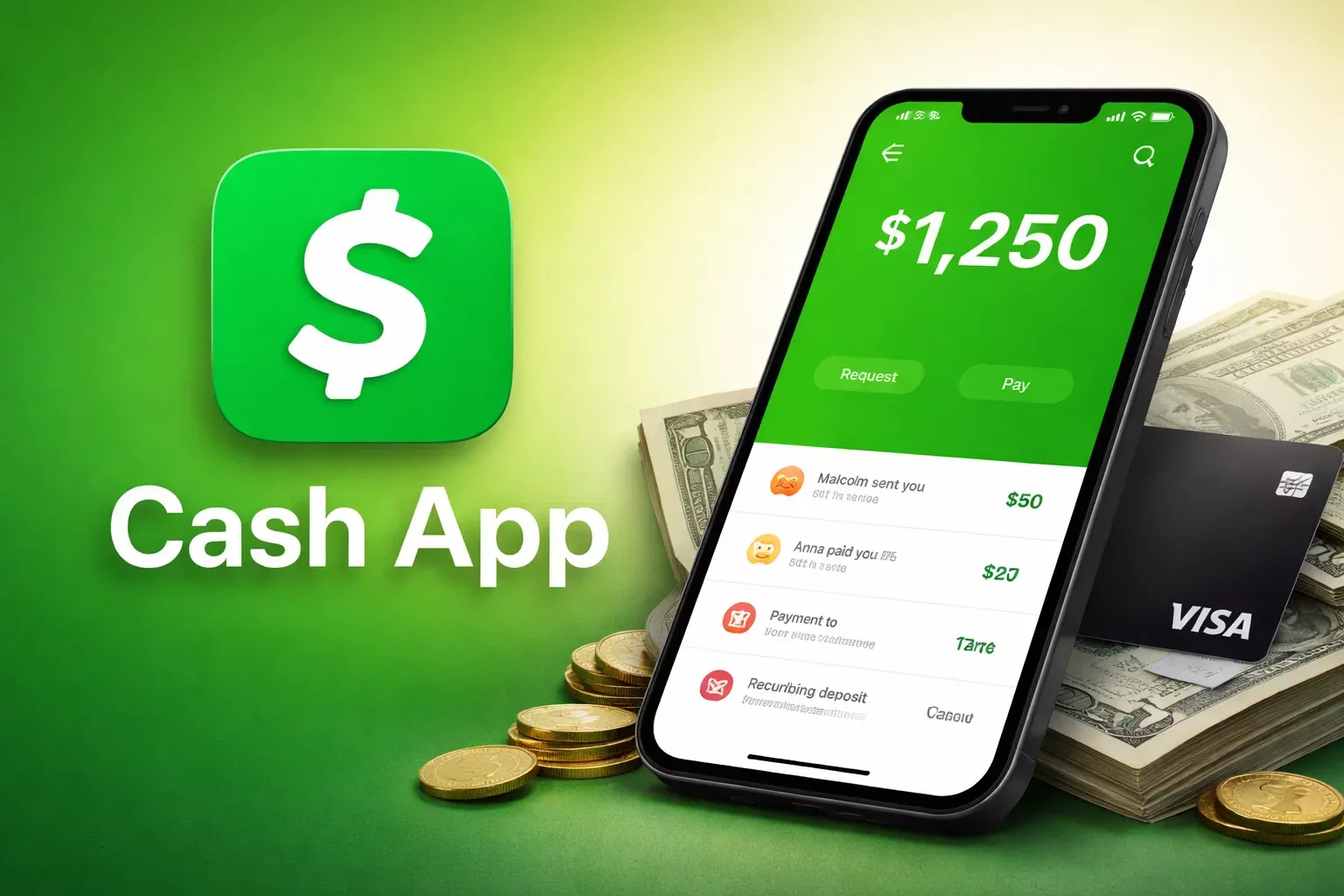
Cash App is a peer-to-peer payments and financial services app that lets users send and receive money instantly using their mobile phone. Over time, it has expanded beyond simple transfers into a broader financial platform that includes debit cards, investing, Bitcoin trading, and basic banking-style features.
What makes Cash App stand out is its simplicity. There are no complicated menus or banking jargon—just fast money movement, clear balances, and easy access to modern financial tools.
By the end of this guide, you’ll understand what Cash App is, how it works step by step, how it makes money, its key features, and the technology behind it—plus why many fintech founders aim to build Cash App–like platforms and how Miracuves can help you launch one.
What Is Cash App? The Simple Explanation
Cash App is a mobile-first peer-to-peer payments app that lets people send, receive, and manage money instantly using their phone. At its core, it replaces cash and checks with fast digital transfers—but it also goes further by adding investing, Bitcoin, and debit card features in one simple app.

The Core Problem Cash App Solves
Traditional banking and money transfers can be slow, complicated, and expensive—especially for everyday payments between friends or family. Cash App solves this by making money movement instant, simple, and accessible without needing full bank-style workflows.
Target Users and Use Cases
Cash App is commonly used by:
• Friends splitting bills or rent
• Individuals sending money instantly
• Gig workers receiving payments
• Users without access to full traditional banking
• People who want simple investing and Bitcoin access
Current Market Position
Cash App is one of the most widely used peer-to-peer payment apps in the United States. It competes with apps like Venmo and Zelle but differentiates itself by combining payments, investing, Bitcoin, and a debit card into a single financial ecosystem.
Why It Became Successful
Cash App grew quickly because it focused on speed, simplicity, and mobile-first design. Easy onboarding, instant transfers, and a clean interface made it especially popular among younger users and digitally native audiences.
How Cash App Works — Step-by-Step Breakdown
For Users (Senders & Receivers)
Account Creation
Users download Cash App and sign up using a phone number or email address. A unique $Cashtag is created, which works like a public username for sending and receiving money. Users can link a bank account or debit card for funding.
Sending Money
To send money, a user:
- Enters an amount
- Chooses a recipient using phone number, email, or $Cashtag
- Adds an optional note
- Confirms the payment
Transfers between Cash App users are instant and usually free.
Receiving Money
When someone sends money, it appears instantly in the recipient’s Cash App balance. Users can:
- Keep the balance in Cash App
- Spend it using the Cash App Card
- Withdraw it to a linked bank account
Cash Out to Bank
Users can withdraw funds to their bank in two ways:
- Standard deposit (free, takes time)
- Instant deposit (small fee, immediate access)
Cash App Card
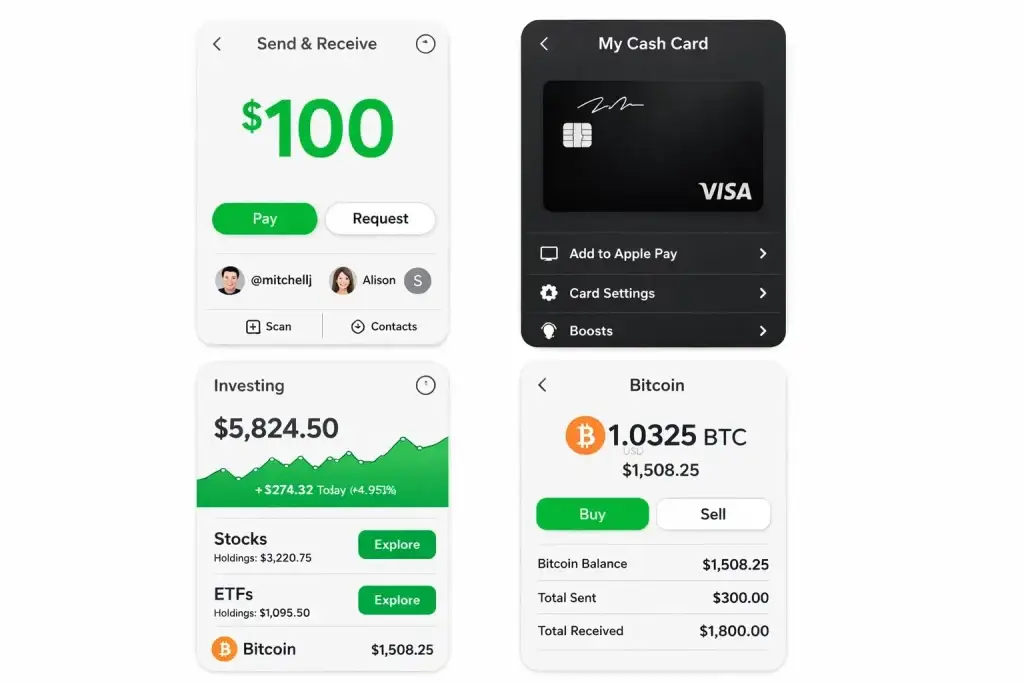
Users can order a Cash App Card, which is a debit card linked directly to their Cash App balance. It can be used online or in stores like a regular debit card.
Example User Journey
A user creates an account → links a debit card → sends money to a friend → receives money back → uses the Cash App Card for spending → cashes out to their bank.
Additional Financial Features
Investing in Stocks
Cash App allows users to invest in fractional shares of stocks and ETFs. Users can start with small amounts, making investing accessible to beginners.
Bitcoin Buying & Selling
Users can buy, sell, and hold Bitcoin directly in the app. This feature made Cash App popular among users interested in crypto without complex exchanges.
Technical Overview (Simplified)
Cash App works through a simple but powerful system:
- Mobile app as the primary interface
- Real-time payment processing between users
- Secure wallet balances for each account
- Bank and card integrations for deposits and withdrawals
- Investment and Bitcoin modules layered on top of payments
All of this is designed to feel instant and frictionless from the user’s perspective.
Read Also :- Most Profitable Digital Banking & Fintech Apps to Launch in 2025
Cash App’s Business Model Explained
How Cash App Makes Money
Cash App follows a multi-stream fintech revenue model built around high user engagement rather than charging for basic transfers. Sending and receiving money between users is mostly free, which drives adoption. Revenue is generated from value-added services layered on top of payments.
Key revenue sources include:
- Instant deposit fees: Users pay a small fee to withdraw money instantly to their bank
- Interchange revenue: Earned when users spend using the Cash App Card
- Bitcoin trading spreads: Margin on buying and selling Bitcoin inside the app
- Stock investing order flow & spreads: Revenue linked to investing activity
- Business payments: Fees when merchants accept payments via Cash App
This diversified approach allows Cash App to stay free for core use while monetizing power users.
Pricing Structure
- P2P transfers: Free
- Standard bank deposits: Free
- Instant deposits: Fee-based
- Cash App Card: Free to order and use
- Stock investing: No commission, indirect revenue model
- Bitcoin trading: Spread-based pricing
Users only pay when they want speed, convenience, or advanced financial features.
Commission / Fee Breakdown
- Instant deposit fee: Percentage of withdrawal amount
- Card spending: Interchange fees paid by merchants
- Bitcoin trades: Buy/sell spread
- Business transactions: Merchant service fees
Market Size and Growth
Peer-to-peer payments and mobile wallets are now mainstream in the U.S. Cash App benefits from strong network effects—more users make the app more useful. Its expansion into investing and crypto increases lifetime value per user.
Profitability Insights
Cash App’s model is effective because it combines:
- High transaction volume
- Low marginal cost per user
- Multiple monetization points
- Strong brand loyalty among younger users
Revenue Model Breakdown
| Revenue Stream | Description | Who Pays | Nature |
|---|---|---|---|
| Instant Deposits | Faster bank withdrawals | Users | Transaction-based |
| Interchange | Debit card spending | Merchants | Transactional |
| Bitcoin Trading | Buy/sell margin | Users | Spread-based |
| Investing | Stock transactions | Market partners | Indirect |
| Business Payments | Merchant acceptance fees | Businesses | Transaction-based |
Key Features That Make Cash App Successful
Instant Peer-to-Peer Payments
Cash App’s core feature is instant money transfer between users. Payments happen in real time, making it ideal for splitting bills, paying friends, or receiving money without delays.
$Cashtag User Identity
Each user gets a unique $Cashtag, which works like a public payment handle. This removes the need to share bank details and makes sending money simple and memorable.
Cash App Balance & Wallet
Users can hold money directly in their Cash App balance instead of immediately transferring it to a bank. This wallet-style experience makes spending, investing, and transfers seamless.
Cash App Card (Debit Card)
The Cash App Card is linked directly to the user’s balance. It can be used online and offline like a regular debit card, turning the app into a daily spending tool.
Boosts & Rewards
Cash App offers instant discounts (called Boosts) at selected merchants when users pay with the Cash App Card. This feature encourages regular card usage and loyalty.
Fractional Stock Investing
Users can invest in stocks and ETFs with small amounts using fractional shares. This lowers the barrier for beginners and keeps investing simple and accessible.
Bitcoin Buy, Sell & Hold
Cash App allows users to buy, sell, send, and hold Bitcoin directly inside the app. This crypto access is tightly integrated into the same wallet experience.
Direct Deposit Support
Users can receive salaries, government payments, or gig income directly into Cash App. This positions the app as a lightweight alternative to traditional bank accounts.
Simple, Minimal UI
Cash App’s design avoids clutter. The interface focuses on key actions—send, receive, invest, spend—making it easy even for first-time users.
Fast Onboarding
Signing up takes minutes. Users can start sending and receiving money quickly, with additional features unlocking as they complete verification.
The Technology Behind Cash App
Tech stack overview (simplified)
Cash App is best understood as a payments wallet + banking rails + investing + Bitcoin packaged into one smooth mobile experience. Under the hood, it combines:
- Mobile apps + backend services to manage accounts, balances, and transactions
- Payment rails for card funding, bank transfers (ACH), and merchant spending
- A prepaid/debit card layer via partner banks and card networks (Cash App Card)
- Crypto module for buying/selling Bitcoin with fees shown at confirmation
- Investing module for fractional stocks/ETFs (where available in-app)
- Risk, compliance, and fraud controls to keep transfers and crypto activity safer at scale
Real-time features explained
Instant payments between users
When you send money to another Cash App user, balances update immediately inside the Cash App ecosystem (wallet-style transfers). This “instant” feel is why it’s so popular for daily use.
Instant Deposit (fast cash-out)
Cash App offers standard transfers (slower, typically free) and Instant transfers that arrive instantly to a linked debit card for a 0.5%–1.75% fee (minimum $0.25).
Technically, this requires tight coordination between wallet balance, debit card rails, and payout routing.
Card controls + real-time alerts
Because Cash App links a wallet to a card product, the system needs real-time authorization, notifications, and controls (so spending stays consistent with the available balance and user settings).
Data handling and privacy
Cash App operates as a financial services platform with banking services provided by partner banks, and prepaid debit cards issued by a partner bank (example: Sutton Bank noted in Cash App’s disclosures).
That setup requires strong identity verification, secure session handling, and careful data protection—especially across payments, cards, and crypto.
Fraud prevention and compliance (why it’s a big deal)
Payments + crypto attracts fraud attempts. Regulators have also scrutinized compliance controls in this space; for example, New York’s DFS announced a settlement tied to AML/KYC compliance issues involving Cash App.
So a serious Cash App–style build must include:
- Identity verification (KYC) and limits
- Transaction monitoring and risk scoring
- Dispute handling and audit logs
- Controls for suspicious patterns and abuse prevention
API integrations (what Cash App-like apps must connect to)
A Cash App–like platform typically integrates with:
- Bank transfer systems (for deposits/withdrawals)
- Card issuing + payment networks (Cash App Card, merchant spending)
- Crypto pricing/execution layer (Bitcoin trades with fees shown pre-confirmation)
- Direct deposit systems (salary deposits and eligibility-based features)
- Messaging/notification services (transaction alerts, confirmations, security notices)
Why this tech matters for business
Cash App’s technology isn’t just “sending money.” It’s a full ecosystem that makes users stay inside the app because it’s convenient to:
- Receive money (P2P, direct deposit)
- Spend instantly via card (interchange-driven model)
- Cash out quickly (Instant Deposit fees)
- Trade Bitcoin with transparent fees shown before confirming
Read Also :- Top UI/UX Mistakes in Digital Banking & Fintech Apps
Cash App’s Impact & Market Opportunity
Industry disruption caused
Cash App changed how people think about everyday money movement. Instead of banks being the default place to send, receive, and store money, Cash App made peer-to-peer payments fast, casual, and mobile-first. Sending money became as easy as sending a text, which reshaped expectations—especially among younger users.
It also blurred the line between payments, banking, and investing. By putting transfers, a debit card, stock investing, and Bitcoin in one app, Cash App helped normalize the idea of a single financial “super wallet.”
Market opportunity and growth drivers
The opportunity Cash App tapped into comes from several overlapping trends:
- Growing comfort with mobile wallets
- Demand for instant money movement
- Increased gig economy and flexible income streams
- Desire for alternatives to traditional banks
- Rising interest in simple investing and crypto access
Because payments are frequent and habitual, platforms like Cash App benefit from daily engagement, which naturally supports expansion into higher-value financial services.
User demographics and behavior
Cash App is especially popular with:
- Younger, mobile-first users
- Gig workers and freelancers
- Users who want fast access to funds
- People who prefer simple tools over traditional bank apps
- Users interested in Bitcoin and fractional investing
A key behavior pattern is high frequency usage. Many users open Cash App multiple times a week (or even daily) to send money, check balances, or use the Cash App Card.
Geographic presence
Cash App primarily operates in the United States, where it competes with other P2P payment platforms. Its features and compliance structure are tailored to the U.S. financial system.
Future projections
The direction of platforms like Cash App is toward:
- Deeper wallet functionality (more reasons to keep money inside the app)
- Smarter rewards and incentives tied to spending
- Continued blending of payments, investing, and crypto
- Stronger trust, fraud prevention, and user controls
As users rely more on mobile wallets, platforms that feel fast, simple, and reliable will continue to gain share.
Opportunities for entrepreneurs
There is strong opportunity to build Cash App–like platforms for:
- Regional or niche payment networks
- Freelancer and gig-worker–focused wallets
- Creator and community payments
- Cross-border or remittance-focused wallets
- Business-first P2P and collections apps
This massive success is why many fintech founders aim to build wallet-based platforms—because once users trust you with daily money movement, growth compounds naturally.
Building Your Own Cash App–Like Platform
Why businesses want Cash App clones
Cash App is attractive because it’s not just a payments app—it’s a wallet ecosystem. Once users start using it for daily transfers and spending, you can expand into higher-value services like cards, investing, and crypto. That creates strong retention, frequent engagement, and multiple revenue streams.
Key considerations for development
To build a Cash App–style platform that works in the real world, you’ll need to plan for:
- Licensing model: partner-bank / BaaS setup vs full licensing
- KYC/AML compliance and identity verification
- Wallet ledger (the “single source of truth” for balances)
- Payments rails: bank transfers + debit card funding + payout options
- Card issuing: prepaid/debit card, controls, rewards
- Fraud prevention: monitoring, risk scoring, dispute workflows
- Security: encryption, 2FA, device binding, audit logs
- Feature scope: P2P first, then add savings, investing, crypto, etc.
Cost Factors & Pricing Breakdown
Cash App-Like App Development — Market Price
| Development Level | Inclusions | Estimated Market Price (USD) |
|---|---|---|
| Basic P2P Payments & Wallet MVP | Core mobile/web app for P2P money transfers, user registration & login, basic KYC, simple contact-based sending/receiving, balance wallet, basic transaction history, single payment rail integration, basic notifications, standard admin panel | $70,000 |
| Mid-Level Payments & Lite Banking Platform | Full P2P transfers, contact list, QR/code payments, basic direct deposit support (via partners), bill payments, card linking, improved KYC/AML flows, richer transaction history & filters, spending summaries, in-app support, analytics dashboard, polished mobile-first UX (web + apps) | $150,000 |
| Advanced Cash App-Level Money & Investing Ecosystem | Large-scale P2P + card + investing stack, stock and bitcoin trading (via partners), cash/card accounts, instant transfers, rewards, advanced risk & fraud controls, deep banking/issuer/data-provider integrations, powerful analytics & growth tooling, cloud-native, highly scalable architecture | $250,000+ |
Cash App-Style P2P Payments & Banking App Development
The prices above reflect the global market cost of developing a Cash App-like P2P payments and digital banking-style platform — typically ranging from $70,000 to over $250,000, with a delivery timeline of around 4–12 months for a full, from-scratch build. This usually includes secure onboarding and KYC, money transfer and wallet logic, card and banking integrations, fraud/risk tooling, analytics, and production-grade mobile apps.
Miracuves Pricing for a Cash App-Like Custom Platform
Miracuves Price: Starts at $15,999
This is positioned for a feature-rich, JS-based Cash App-style money and banking platform that covers secure onboarding and KYC (via your providers), P2P transfers, wallet balance view, card linking, basic cash-in/cash-out flows, transaction history with filters, alerts and notifications, core analytics, and a modern admin console plus customer-facing web/mobile apps. From this foundation, the solution can be extended into stock/crypto investing (via partners), direct deposit, rewards, and more advanced risk, fraud, and growth tooling as your fintech product scales.
Note: This includes full non-encrypted source code (complete ownership), complete deployment support, backend & API setup, admin panel configuration, and assistance with publishing on the Google Play Store and Apple App Store—ensuring you receive a fully operational P2P payments and digital banking ecosystem ready for launch and future expansion.
Delivery Timeline for a Cash App-Like Platform with Miracuves
For a Cash App-style, JS-based custom build, the typical delivery timeline with Miracuves is 30–90 days, depending on:
- Depth of payments and wallet features (P2P, card, direct deposit, bill pay, etc.)
- Number and complexity of banking, issuer, and data-aggregator integrations
- Complexity of risk/fraud controls, limits, and monitoring dashboards
- Scope of web portal, mobile apps, branding requirements, and long-term scalability plans
Tech Stack
We preferably will be using JavaScript for building the entire solution (Node.js/Nest.js/Next.js for the web backend + frontend) and Flutter / React Native for mobile apps, considering speed, scalability, and the benefit of one codebase serving multiple platforms. Other tech stacks can be discussed upon request — Contact us
Essential features to include
A solid Cash App–style MVP should have:
- Sign-up + identity verification
- Wallet balance and transaction history
- Send/receive money (P2P) with usernames/handles
- Add money via bank/debit card
- Withdraw to bank (standard + instant option)
- Notifications and receipts
- Basic card controls (if you include a card)
- Admin panel (users, risk flags, disputes, KYCs)
Optional high-impact add-ons:
- Cash card with rewards
- Direct deposit
- Savings features
- Bitcoin/crypto module
- Fractional investing
- Business merchant payments
Read More :- Read the complete guide on fintech app development costs
Conclusion
Cash App shows how powerful simplicity can be in financial products. By making money transfers instant and removing traditional banking friction, it turned everyday payments into a fast, social, and mobile-first experience. Its expansion into cards, investing, and Bitcoin demonstrates how a simple wallet can evolve into a full financial ecosystem when users trust it with daily transactions.
For entrepreneurs, Cash App is a clear lesson in building habit-driven platforms. When your product becomes part of how people move and manage money every day, growth comes naturally—and new services can be layered on without losing simplicity.
FAQs :-
How does Cash App make money?
Cash App earns revenue through instant deposit fees, interchange fees from Cash App Card spending, Bitcoin trading spreads, investing-related revenue, and merchant fees for business payments.
Is Cash App free to use?
Yes, sending and receiving money between users is free. Fees apply only for optional services like instant deposits and Bitcoin trading.
How fast are Cash App transfers?
Transfers between Cash App users are instant. Cashing out to a bank can be free (standard) or instant with a small fee.
What is a $Cashtag?
A $Cashtag is a unique username that lets others send you money without sharing bank details or phone numbers.
Can I use Cash App without a bank account?
Yes. Users can hold money in their Cash App balance and spend it using the Cash App Card, though linking a bank account unlocks more features.
Is Cash App safe?
Cash App uses encryption, fraud monitoring, identity verification, and real-time alerts. Users can also enable security features like PINs and biometric authentication.
Does Cash App support investing?
Yes. Cash App allows users to invest in fractional shares of stocks and ETFs, making investing accessible with small amounts.
Can I buy Bitcoin on Cash App?
Yes. Users can buy, sell, send, and hold Bitcoin directly within the app, with fees shown before confirming transactions.
Is Cash App only available in the USA?
Cash App primarily operates in the United States, and most features are designed around the U.S. financial system.
What makes Cash App different from Venmo or Zelle?
Cash App combines P2P payments, a debit card, investing, Bitcoin, and basic banking features into one app, while many competitors focus mainly on payments.
Can I build an app like Cash App?
Yes. With the right wallet architecture, banking partnerships, and compliance setup, a Cash App–style platform is achievable.
How can Miracuves help build a Cash App–like platform?
Miracuves helps founders launch Cash App–style payment and wallet platforms in 30-90 days, with secure P2P transfers, wallet systems, KYC-ready onboarding, card integrations, and full customization to fit your business model.