



How to Hire the Best Grab Clone Developer
Create a powerful, customizable streaming solution with Miracuves’ Grab Clone, equipped with high-performance features and next-gen technology.
Remember the time when getting a taxi late at night felt impossible? Then came Grab, and suddenly people could hail rides, order food, and pay bills from a single app. What started as a ride-hailing platform grew into Southeast Asia’s super app, redefining digital convenience.
For entrepreneurs, Grab isn’t just a transport company — it’s a blueprint of how one platform can solve multiple daily problems. From groceries to payments, Grab has shown that “one app, many services” is a winning formula.
Now in 2025, with the global super app market projected to exceed $750 billion by 2030 (Statista), launching a Grab clone app is a smart move. The challenge? Finding the right development partner who can build a secure, scalable, and feature-rich platform. That’s where Miracuves comes in.
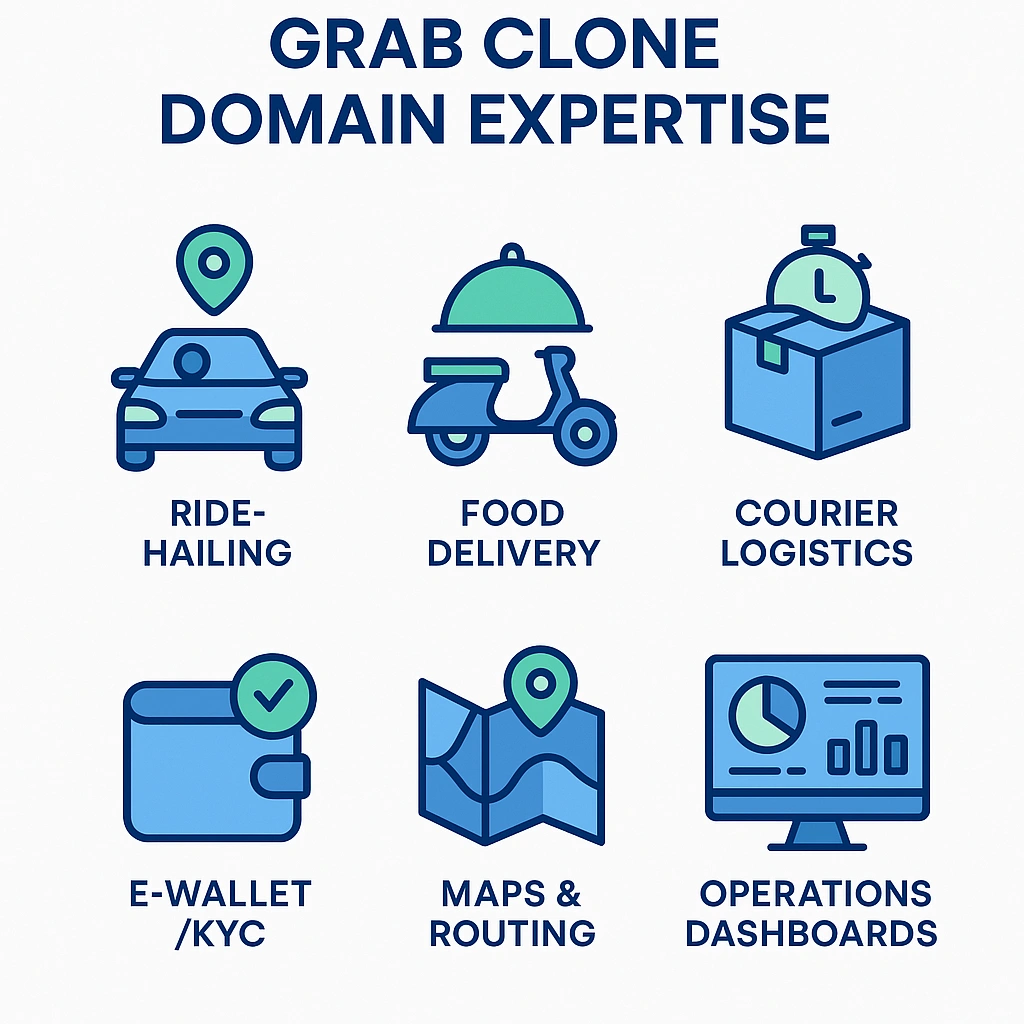
Look for Domain Expertise
Not every app company understands the complexity of a super app. A Grab-style product blends mobility, on-demand delivery, and fintech—which means routing, geofencing, live tracking, settlement, KYC, and dispute workflows all have to click together.
What to confirm
Relevant portfolio — Ride-hailing, last-mile delivery, marketplace, or e-wallet builds with real DAU/MAU or GMV growth.
Case studies with numbers — Driver matching time, order success rate, on-time delivery %, payment success %, and churn reduction.
Maps & logistics fluency — ETA calculation, surge logic, batching/stacking, heatmaps, and fallback handling for GPS drift.
Payments & compliance — PCI-DSS awareness, tokenization, 3-D Secure, chargeback flows, AML/KYC readiness where applicable.
Operational tooling — Driver onboarding KYC, merchant dashboards, fleet operations console, dispute/refund tooling.
Tech Stack & Scalability
Your MVP may start in one city—but success means handling spikes, festivals, rain days, and payday rush without throttling. Architecture choices today decide whether you scale smoothly tomorrow.
What to check
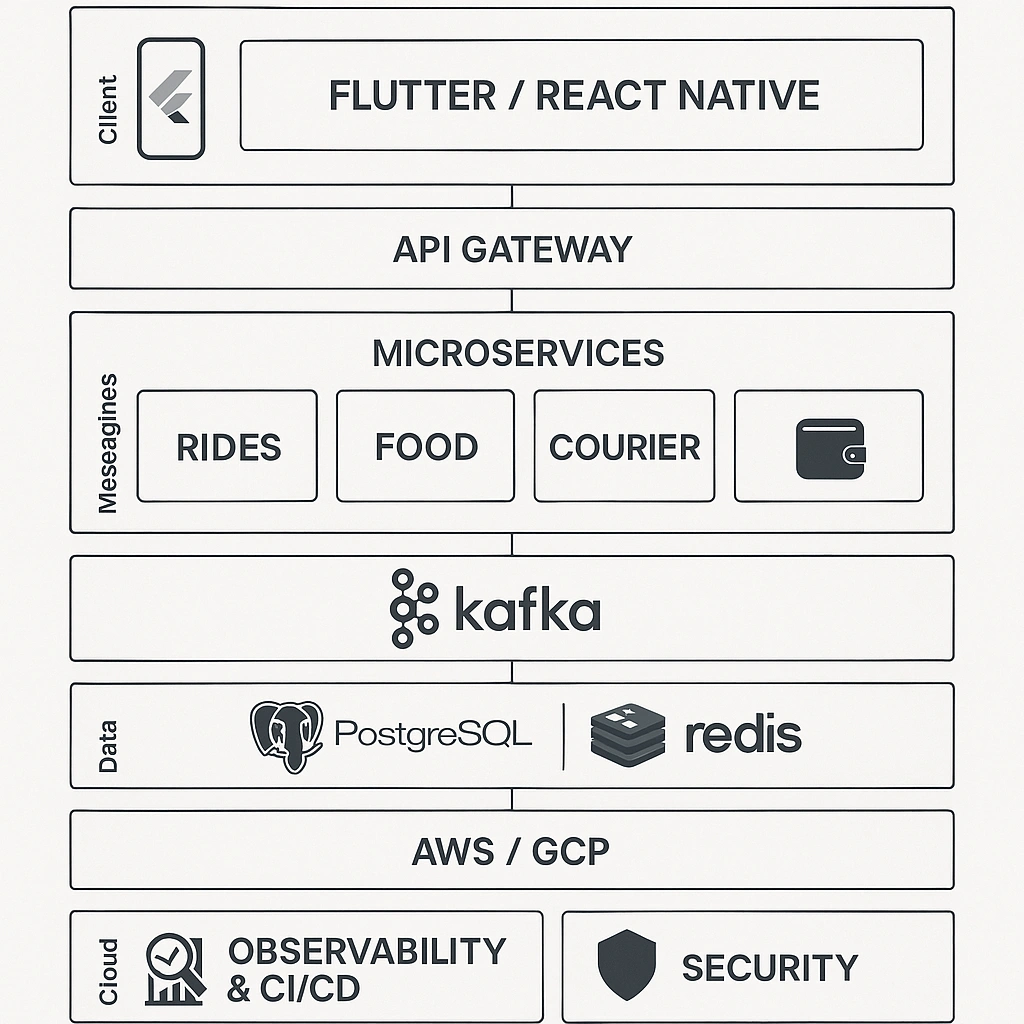
App layer — Flutter or React Native for multi-service navigation, lightweight bundles, offline states, and OTA updates.
API & services — Node.js / TypeScript, Go, or Django with gRPC/REST, rate limiting, circuit breakers, and idempotent endpoints.
Real-time — WebSockets or MQTT for live driver location, order states, and in-trip events; message queues (Kafka/RabbitMQ) for event processing.
Data & search — PostgreSQL for transactions, Redis for caching/queues, Elasticsearch/OpenSearch for geo queries and logs.
Cloud & ops — AWS/GCP/Azure with autoscaling groups, managed DBs, object storage for receipts, Kubernetes for microservices.
Observability & QA — Centralized logs, distributed tracing, synthetic checks, chaos testing, and load tests to your target TPS.
Security — OAuth2, rotating tokens, HSM-backed secrets, OWASP checks, SAST/DAST pipelines, and least-privilege IAM.

UI/UX Capabilities
Super apps fail when the interface gets cluttered. Users must move from home → service → checkout in as few taps as possible, with real-time states that feel instant and trustworthy.
What to evaluate
Information architecture — A home that prioritizes your top services; contextual shortcuts (repeat ride, reorder meal).
Booking flows — Clear pickup/drop pins, fare estimate, ETA, surge notices, add-stops, tip, and safety features (SOS, sharing).
Merchant/driver UX — Order batching cues, earnings summary, heatmaps, breaks, and fraud checks that don’t block legitimate work.
Accessibility & trust — Large touch targets, high-contrast modes, plain-language errors, and receipts that itemize fees and taxes.
Performance — Sub-200ms perceived transitions, lazy loading, offline states, and zero-jitter GPS updates.
Communication & Workflow
Complex builds die from silent assumptions. You need cadence, transparency, and one accountable owner who keeps scope, speed, and quality aligned.
What to require
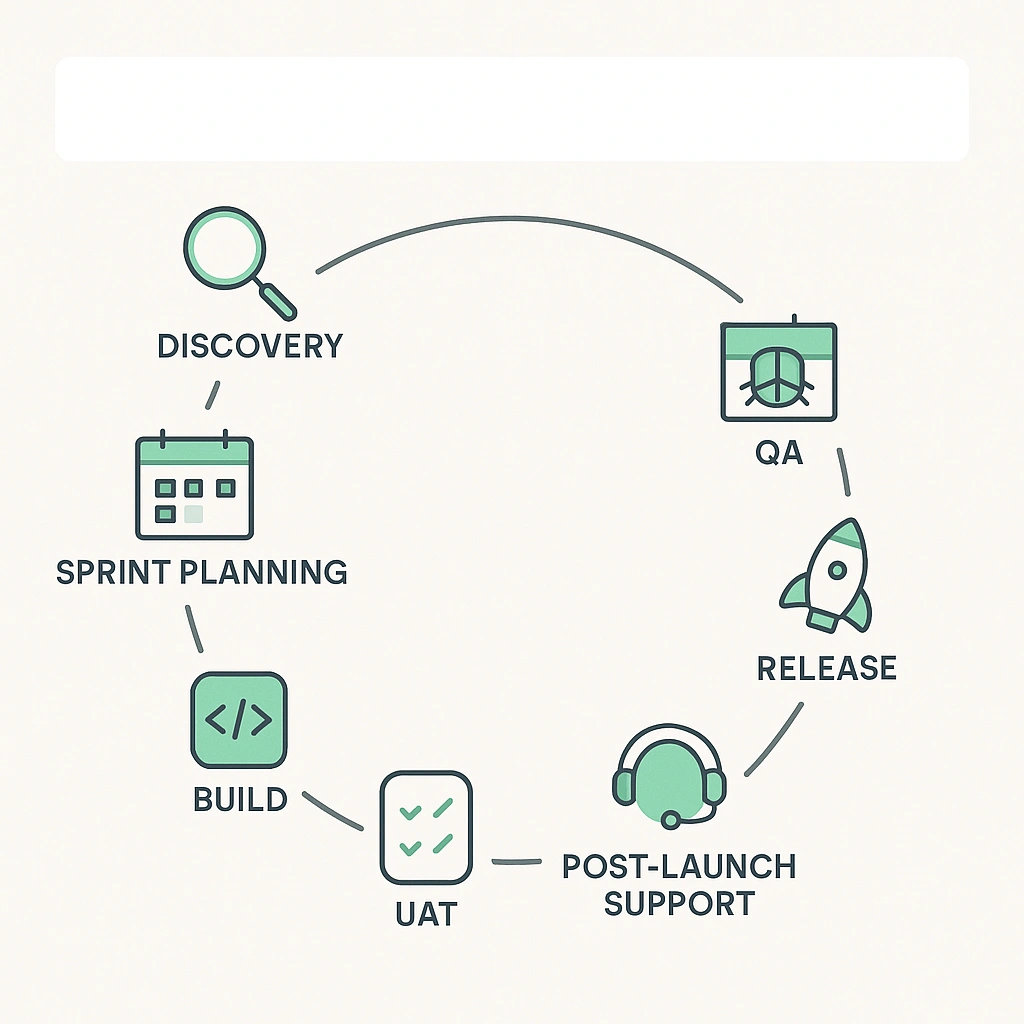
Agile rhythm — Two-week sprints, defined exit criteria, weekly demos, and burndown visibility.
Single accountable PM/Tech Lead — One person who owns timelines, risks, and decisions—no hand-offs between sales and delivery.
Tooling — Jira/ClickUp for tickets, GitHub/GitLab with PR reviews, CI/CD pipelines, and shared dashboards for QA and staging links.
Documentation — ADRs (architecture decision records), API contracts (OpenAPI), runbooks, and release notes.
Post-launch cadence — Patch windows, canary releases, regression suites, and SLA/response times spelled out.
Pricing Models & Quality
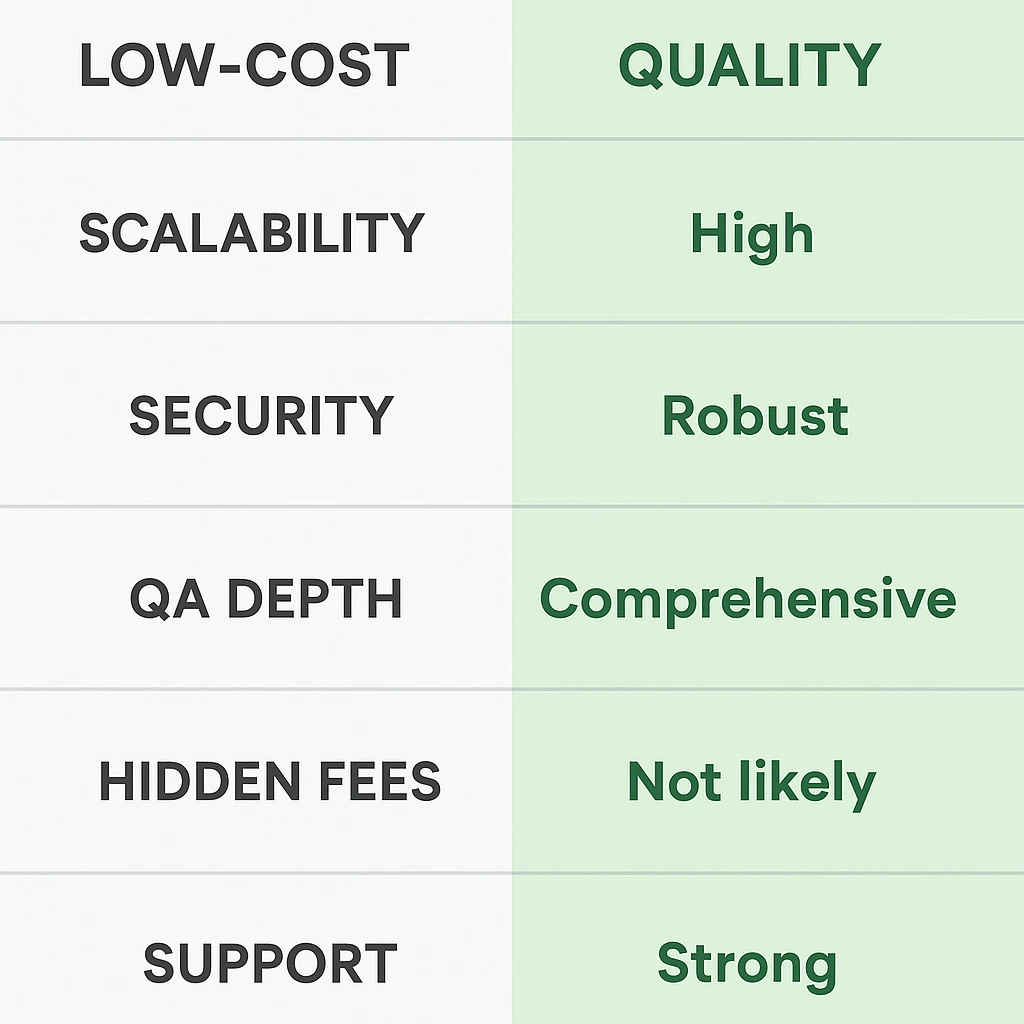
Low quotes look tempting—until scale, security, and support expose hidden costs. Evaluate value, not just price.
What to review
Detailed estimate — Phase-wise breakdown (discovery, design, backend, apps, QA, DevOps, launch), with milestones tied to deliverables.
Engagement options — Fixed scope for MVP, monthly retainer for growth, or hybrid with dedicated engineers for speed.
What’s included in QA — Automated tests, device matrix, load tests, security audits, and staging environments.
Hidden fees — Map calls, SMS/OTP, payment gateway charges, notification costs, and 3rd-party services.
Support scope — Uptime targets, hotfix SLAs, monitoring, and feature rollouts (3–6 months minimum on launch plans).
Choose the Right Development Partner
Launching a Grab-style platform isn’t a one-off build; it’s the backbone of a multi-service business. The right team operates as a partner, not a vendor—guiding trade-offs, flagging risks, and preparing you for new lines of revenue (grocery, courier, two-wheeler rentals, subscriptions).
What really matters
Demonstrated success with mobility/delivery/fintech products.
Clear architecture plans, performance budgets, and security posture.
End-to-end capability—product planning → integrations → scaling → analytics.
At Miracuves, we engineer secure, high-performance Grab clone apps built to scale across cities and services—so you can focus on growth while we handle the tech.
Conclusion
Picking the best Grab clone developer means aligning on expertise, architecture, UX clarity, delivery discipline, and transparent pricing. From live maps to wallet settlement, your partner shapes performance from day one and determines how quickly you can expand.
At Miracuves, we help innovators launch high-performance app clones that are fast, scalable, and monetization-ready. Ready to turn your idea into reality? Let’s build together.
Frequently Asked Questions
A Grab clone app is a multi-service platform offering ride-hailing, food delivery, courier, and digital wallet features in one application.
With Miracuves, your Grab clone can be delivered in 3–9 days only, depending on the features you choose (rides, wallet, driver app, admin panel, etc.). Setup, testing, and deployment are included—ready to launch.
With Miracuves, a Grab clone app starts at $2,899. Your app can be built, tested, and deployed in 3–9 days only, depending on the features you choose.
Yes. With a microservices-based architecture, new modules like grocery, payments, or e-commerce can be added without rewriting the app.
Core features include real-time ride booking, GPS tracking, surge pricing, in-app wallet, food/courier modules, reviews, and customer support.
