
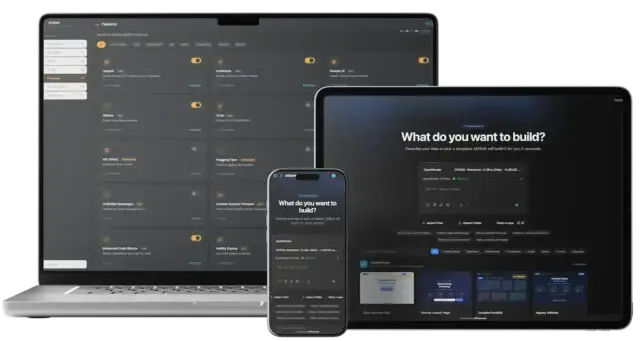
Blockchain Development Company
Smart ContractsdAppsDeFi
Miracuves is an enterprise blockchain development company. We build production smart contracts, decentralized applications, DeFi platforms, crypto exchanges, and NFT marketplaces on public chains such as Ethereum, its layer 2s and Solana, and permissioned ledgers such as Hyperledger Fabric - from token launch platforms to enterprise supply-chain ledgers - with 100% source code ownership and an NDA from day one.
- 9,000+ Delivered
- 3,900+ Apps Published
- 100% Source Ownership
- NDA Day One
- DeFi · dApps · ExchangesBlockchain-powered products
- 100% Source CodeDelivered to you on handoff
White-Label Ready
Fully rebrandable on delivery
NDA Day One
IP protected first call
Full Source Code
Delivered at handoff
60-Day Support
Post-launch included
100% IP Ownership
Yours - always
Clutch Reviewed 5.0★
Third-party verified



Miracuves is a blockchain development company that builds on public chains - Ethereum, its layer 2s and Solana - and on permissioned ledgers such as Hyperledger Fabric, for Web3 founders and enterprises. We first check whether a blockchain is needed at all. Ready-made crypto platforms launch in 6 working days; custom blockchain builds take 2-8 weeks. You own 100% of the source code.
Our Blockchain Approach
How Miracuves delivers blockchain products - from 9,000+ projects of real experience
After 9,000+ delivered projects and 3,900+ published apps, Miracuves builds on blockchain in a specific way. We start from production-grade smart contract templates and dApp frontends that already handle wallet sign-in, ERC token standards, DeFi building blocks, IPFS storage and on-chain verification - not from an empty Hardhat repository - and before any of it we decide which data belongs on a chain at all.
The chain is chosen per product: Ethereum or an established layer 2 when users need open access and existing tokens and wallets, Solana when transaction volume and fees drive the design, and a permissioned ledger such as Hyperledger Fabric when only known organizations should write. Around it Miracuves builds the dApp frontends, admin panels and APIs your users and operators actually touch; full source code is yours on handoff.
Who this service is built for: Two kinds of buyer. Web3 founders, DeFi protocols, NFT platforms and DAO operators launching tokens, trading venues or governance tools on public chains; and enterprises that need one shared record with suppliers, banks or regulators - supply-chain traceability, document provenance, settlement between known parties, tokenized assets - often on a permissioned ledger. Miracuves blockchain development fits when you want a company-delivered build with published pricing and full IP - not hire or hourly staffing. If your product does not need a shared, tamper-evident record, a normal database is cheaper and faster, and we recommend our React Native or Web App services instead.
- Solidity on OpenZeppelin libraries for EVM chains, Rust for Solana programs, Go or JavaScript chaincode for Hyperledger Fabric - chosen per chain
- Typed contract bindings with TypeChain or viem, so frontends and backends call contracts with checked arguments
- Role-based access control, audit logs, and responsive layouts for admin panels on desktop and tablet
- CI on every pull request: contract tests, static analysis and gas reports run before anything reaches a testnet
- Nodes, indexers and backends deployed to AWS or your cloud: deployer keys on hardware wallets, never in the repository
Why Blockchain at Miracuves
- Custom blockchain build2-8 weeks
- Chains we build onEVM chains · Solana · Hyperledger Fabric
- Before any codeWritten check that a ledger is needed
- Clone solutions ready to ship90+ solutions
- Ecosystem depthEVM multi-chain
- Source code ownership100% yours
"Supply-chain tracking dApp for a Dubai logistics company - shipment verification, tamper-evident document storage on IPFS, multi-party escrow payments and chain-of-custody records on Polygon - scoped to 8 weeks. We used Solidity, Hardhat, React with Ethers.js, and IPFS for document storage. Delivered on week 8 with full source code and deployment scripts."
Ready-made platforms · 6 days
What Miracuves has deployed - ready-made platforms you can launch today
Six of our 90+ ready-made platforms, each shipping with its apps and admin panel in 6 days.
View All 90+ SolutionsBinance Clone
Order-book crypto exchange with spot and futures markets, user wallets, staking and a P2P desk, run from its own admin panel.
OpenSea Clone
NFT marketplace where creators mint, list and auction collections, with support for more than one chain.
ChatGPT Clone
AI assistant platform that keeps long conversation context, ships prompt templates and exposes API hooks for your own tools.
P2P Exchange
Buyers and sellers trade crypto directly while the platform holds the coins in escrow, settles disputes and connects fiat payment methods.
ICO Launchpad
Token sale platform with KYC/AML checks, whitelists, tiered sale rounds and vesting schedules for participants.
TikTok Clone
Short-video app with a swipeable feed, creator earnings, hashtag challenges and AI-driven personalized recommendations.
Honest noteMiracuves uses Solidity for EVM chains, Rust for Solana and chaincode for Hyperledger Fabric to build production smart contracts, dApps and permissioned ledgers. We deploy on Ethereum, Polygon, BNB Chain, Solana and private networks. Every contract is reviewed and tested before mainnet, with an independent audit recommended for anything that holds funds, upgradeable where needed, and delivered with full source code - we recommend the chain that fits your product before kickoff, or a normal database when no chain fits.
Technology Comparison
Blockchain vs Web3 vs DeFi vs Smart Contracts vs DApp - which is right for your project?
Most development companies avoid this question because they push blockchain for everything. Miracuves answers it honestly - blockchain has specific strengths and real costs that determine whether it is the right choice for your product.
Blockchain
Public chain or permissioned ledger
Web3 dApp
Wallet-connected app on existing contracts
DeFi
AMM, lending or staking protocol
You need trustless execution, immutable records, decentralized finance, multi-party verification, or token-gated access. Blockchain delivers what centralized databases cannot: verifiable transparency without a trusted middleman.
Your product does not need immutability or decentralization · performance and speed matter more than trust · you are building a simple CRUD app. See React → · See Node.js →
Blockchain guide
Before you hire a blockchain development company: the decisions that come first
For buyers who are not yet sure what they need: whether a blockchain fits at all, which kind, what enterprises and crypto founders build on it, which of our teams to talk to, and what it costs to build and to run.
Does my product actually need a blockchain?
Often it does not, and we would rather say so before you pay for one. A blockchain earns its cost only when several organizations or users write to the same record, none of them should control it alone, and each wants to check it without asking the others. If one company writes all the data and everyone already trusts that company, a normal database does the job faster, for less, and lets you fix mistakes.
On the first call we run a four-question test. If none of these is true, we recommend a conventional stack and put that in writing:
- More than one party writes the data, and they do not fully trust each other
- No single operator should be able to rewrite or delete history
- Outsiders - auditors, regulators, customers - need to verify records on their own
- Assets or rights must pass between parties without a middleman settling them
Public or permissioned blockchain - which kind fits my project?
A public chain is open: anyone can read it, hold its tokens and build on it, and its security comes from a large independent validator set. Ethereum and its layer 2 rollups such as Arbitrum, Optimism and Base suit products that need open access, existing wallets and tokens, or deep liquidity; the layer 2s cut fees while settling back to Ethereum. Solana suits high-volume consumer apps that need low fees and quick confirmation, but its programs are written in Rust on a different account model, so EVM contracts do not carry over unchanged.
A permissioned ledger admits only known members. Hyperledger Fabric has no native cryptocurrency, keeps data private to channels and sets who must approve each transaction through endorsement policies, which suits a consortium of companies. Hyperledger Besu applies the same idea to an EVM network, and Corda was built for regulated financial workflows. You gain privacy and control, and give up the neutrality that makes a public record credible to strangers.
What do enterprises build on blockchain, and how does it differ from consumer crypto?
Consumer crypto is the product itself: exchanges, wallets, NFT marketplaces and DeFi apps where the public chain, the token and the user's own wallet are what people come for. Enterprise projects use the ledger as shared plumbing between organizations that already know each other. The users are staff and partners behind a normal login, not token holders, and the chain is usually permissioned. Budget, security model and team differ, so we scope the two very differently. The enterprise patterns we are asked for most:
- Supply chain traceability: each handoff of a batch or shipment is signed by the party that performed it, so origin claims can be checked
- Document provenance: the hash of a certificate, contract or bill of lading is anchored on-chain while the file stays private, proving later that it was not altered
- Settlement between known parties: invoices, escrow and netting run on shared rules instead of reconciling separate books
- Tokenized assets: property shares, fund units, carbon credits or loyalty points issued as tokens with transfer rules built in
Which Miracuves blockchain service matches my project?
This page covers the chain decision itself, permissioned networks and projects that span several layers at once. When most of the work sits in one layer, a specialist team goes deeper:
- Contracts for a product you already run: smart contract development
- Solidity engineers working inside your own team: Solidity development
- An app with screens, accounts and a backend on top of a chain: Web3 app development
- Swaps, lending, staking or derivatives: DeFi development
- Minting, collections and marketplaces: NFT development
- A self-custody wallet as the product: crypto wallet development
- A centralized or P2P trading venue: crypto exchange development
How much does blockchain development cost, and what does it cost to run?
A ready-made crypto platform - the Binance clone exchange, the P2P exchange, the GMX clone perpetuals DEX, the ICO launchpad or the OpenSea clone NFT marketplace - launches under your brand in 6 working days at its listed price. Custom blockchain work starts from $3,699 depending on the work; a custom dApp, protocol or permissioned network typically runs $8,000-$45,000 over 2-8 weeks, and larger scopes are quoted in writing before work starts.
Running cost is where public and permissioned ledgers part ways. A public chain charges gas on every write, and you also pay for RPC access, indexer hosting and, before any contract holds user funds, a third-party security audit quoted by the firm you choose. A permissioned network has no gas but needs a node per member organization, certificate authorities, monitoring and someone to coordinate upgrades across the consortium. Our estimate covers both, not just the build.
What about regulation, KYC and tokenized assets?
Writing the software is rarely the regulated part; issuing, selling or holding assets for other people often is. Tokenized securities, exchanges, custody and payment flows can fall under securities, money-transmission or crypto-asset rules that differ by country. Miracuves builds the KYC/AML checks, transfer restrictions, whitelists, audit trails and reporting exports those regimes require. The licence, the legal opinion and the choice of where to launch belong to you and your counsel; we do not give legal advice, and we treat tokens as software features, not investments.
Settle this early: transfer rules written into a token contract are far easier to design in than to add after launch.
Should I hire blockchain developers or work with a development company?
Blockchain hiring is narrower than it looks. Solidity, Rust for Solana and Fabric chaincode are different skills, and engineers who have shipped to mainnet are scarce. Hire in-house when the ledger is your core product for years and you can recruit that person plus someone who owns security review. Work with a company when you need the full set - contracts, nodes, backend, frontend, QA - for a launch, or when you have not settled on a chain and do not want to hire for the wrong one.
At Miracuves the NDA is signed before you share details, you own 100% of the source code, and a retainer from $2,299/month covers upgrades after launch. A mixed route also works: we build and document, and your first in-house hire takes over.
Smart Contract Architecture
How Miracuves engineers structure blockchain projects for production
These are the specific decisions our engineering team makes on every blockchain project - choices that determine whether smart contracts are secure and upgradeable or become an unaudited liability on mainnet.
- 01
Architecture - Smart Contract Layers + dApp Frontend
contracts/ for Solidity with OpenZeppelin base, scripts/ for deployment and verification, frontend/ with React + Ethers.js + wagmi hooks. Miracuves adds a new DeFi module - staking, lending, governance - as a separate contract or through an upgradeable proxy, so users keep the same contract address and balances while the logic behind it changes.
- 02
State - On-Chain State + Client Cache
Solidity contracts own canonical state; an indexer built on The Graph or our own event listeners turns contract events into queryable data, and Ethers.js + wagmi handle client-side reads and cache invalidation. Pages never poll the chain for history through raw RPC calls - the slow pattern we most often find in inherited dApps and replace on day one.
- 03
Performance - Gas Optimization and Lazy Loading
Gas-optimized Solidity with minimal storage writes, batched transactions, and lazy-loaded dApp modules. We profile gas costs with Hardhat gas reporter and Tenderly - development chain performance is never accepted as representative of mainnet costs.
Unaudited contracts deployed to mainnet. No upgradeability patterns. Gas-wasteful loops. Private keys in client bundles. No emergency pause mechanism. No reentrancy guards. And the costliest of all: a blockchain built for data that only one company ever writes. We have taken over projects with every one of these problems, and building on the right foundation costs less than the cleanup.
// SPDX-License-Identifier: MIT// Three-party escrow: the buyer deposits, the buyer or the arbiter releases// to the seller, and only the arbiter can refund. Funds leave exactly once.pragma solidity ^0.8.24;import {ReentrancyGuard} from "@openzeppelin/contracts/utils/ReentrancyGuard.sol";contract PaymentEscrow is ReentrancyGuard { enum State { Created, Locked, Released, Refunded } error NotAllowed(); error WrongState(); error TransferFailed(); address public immutable buyer; address payable public immutable seller; address public immutable arbiter; uint256 public amount; State public state; event Deposited(uint256 value); event Settled(address indexed to, uint256 value); constructor(address payable seller_, address arbiter_) { buyer = msg.sender; seller = seller_; arbiter = arbiter_; } function deposit() external payable { if (msg.sender != buyer) revert NotAllowed(); if (state != State.Created || msg.value == 0) revert WrongState(); amount = msg.value; state = State.Locked; emit Deposited(msg.value); } function release() external nonReentrant { if (msg.sender != buyer && msg.sender != arbiter) revert NotAllowed(); _settle(State.Released, seller); } function refund() external nonReentrant { if (msg.sender != arbiter) revert NotAllowed(); _settle(State.Refunded, payable(buyer)); } function _settle(State next, address payable to) private { if (state != State.Locked) revert WrongState(); state = next; // effects before the external call uint256 value = amount; amount = 0; (bool ok, ) = to.call{value: value}(""); if (!ok) revert TransferFailed(); emit Settled(to, value); }}Our Service Models
Three ways Miracuves delivers your blockchain project
Every blockchain engagement is contracted with Miracuves as a company - contract engineers, backend and frontend developers, QA and a project manager, with one party accountable for delivery. Pick the model that matches where your product is: a catalogue crypto platform, a custom ledger or protocol, or ongoing work after launch.
Ready-Made Crypto Platform Delivery
Pick an exchange (the Binance clone), a P2P trading desk, a GMX-style perpetuals DEX, an ICO launchpad or the OpenSea clone NFT marketplace, and Miracuves brands, configures and launches it in 6 working days - apps, admin panel and all. Anything the catalogue product does not do is quoted as custom blockchain work. Source code fully yours.
- Each platform at its own listed price, fixed before work starts
- Five crypto platforms, part of 90+ ready-made solutions
- Branding, configuration, white-labelling applied
- Contracts reviewed and tested before deployment
- Full source code · NDA · 60-day support
Custom Blockchain Build
Miracuves builds from your specification - custom smart contracts, custom dApp frontend, unique DeFi mechanisms. Full team: Solidity dev, frontend, QA, PM.
- From $3,699 · 2-8 weeks · priced in writing before work starts
- Smart contract architecture designed specifically for your protocol
- Weekly sprint demos - working software every sprint
- Production deployment to AWS, Vercel, or your cloud
- Full source code · IP 100% yours
Ongoing Blockchain Development
Miracuves works as your ongoing blockchain partner - new smart contract features, protocol upgrades, and dApp maintenance on a monthly retainer with weekly sprint demos.
- From $2,299/month for protocol and ledger work - 2 weeks notice to cancel
- Dedicated Miracuves team assigned to your product
- Direct communication - no account manager relay
- Weekly sprint demos - deliverables every cycle
- Scales up or down as your product evolves
Quality Standards
How Miracuves ensures every blockchain delivery meets production standard
Every blockchain project, public or permissioned, passes the same Miracuves quality gates before mainnet or network go-live - applied to each contract and chaincode package we ship as a fixed security standard, not ticked off as a checklist at the end.
- Smart contract layers - Core / Extensions / Interfaces separatedArchitecture
- OpenZeppelin base - audited library code, custom logic kept smallContracts
- Hardhat gas reporter - gas budget per functionGas
- Testnet QA - deployed to a public testnet such as Sepolia before mainnetQA
- Hardhat CI - automated tests, coverage, and gas reports from day oneDevOps
- No private keys in source - .env only, hardware wallets for deploymentSecurity
- Mainnet-ready - review findings closed, upgradeability verified, pause mechanism testedDelivery
Enforced QA Gates
Our 6 Continuous Security Gateways
Every smart contract, frontend module, and deployment script must successfully clear all six security gates before mainnet deployment.
Smart Contract Review on Every Commit
Every smart contract is reviewed by a senior Solidity engineer at Miracuves. No contract reaches testnet deployment without that review.
Hardhat Test Coverage Required
Unit tests for every function path, integration tests for contract interactions, and invariant tests for protocol-level properties. Minimum 95% branch coverage enforced before any deployment build.
Gas Costs Profiled - Not Dev Chain Costs
Miracuves profiles gas costs using Hardhat gas reporter and Tenderly on every deployment. Local Hardhat node gas costs are not representative of mainnet and are never accepted as sufficient.
Deployment Package - Not Just Contracts
Source code, deployment scripts, ABI definitions, frontend integration docs, environment configuration, hardware wallet setup guide, and post-launch monitoring runbook - all included in every handoff.
Mainnet Deployment - Verified Source, Multi-Sig Control
Miracuves handles contract verification on Etherscan, deployment scripts with multi-sig confirmation, upgradeability proxy configuration, emergency pause setup, and mainnet deployment with rollback procedures.
Post-Launch Monitoring - 60-Day On-Chain Support
Alchemy and Tenderly monitoring configured pre-launch. Miracuves monitors on-chain events, gas costs, and contract health during the 60-day post-launch support window - proactive, not reactive.
Technology Stack
The blockchain stack Miracuves ships with
Matched to your chain, your users and your delivery requirements - not a one-size-fits-all default.
Our Process
From brief to deployed blockchain product - what happens and when
The delivery sequence is identical for a catalogue crypto platform and a custom ledger or protocol: five steps, each with a named output. At every step you can see what Miracuves is working on, what we need from you - chain choice, signer wallets, legal review of any token - and what you receive. The timelines below describe the ready-made launch; custom builds are billed by milestone and pass the same checkpoints.
- Step 01
Brief & NDA
Share your concept via WhatsApp. NDA signed same day. We ask 6 specific questions.
- Step 02
Scope & Plan
Right solution base, stack, and model confirmed. No payment before scope is agreed.
- Step 03
Build & Demo
Repo created, architecture set. First commit in 24h. Weekly working demo runs.
- Step 04
QA & Polish
Contracts tested on a public testnet, frontends on real browsers and devices. Review findings closed before mainnet.
- Step 05
Launch & Handoff
Full code and docs delivered. Mainnet deployment handled, plus store submissions for ready-made platform apps. 60 days active support.
Six days is Miracuves build time, not calendar time
The six days are ours, and they do not run past six. What can add time sits on your side: developer account verification, merchant onboarding and compliance approvals are controlled by the app stores and your payment provider, not by us. We list exactly what you need ready on the first call so you can start those in parallel.
Transparent Pricing
What blockchain development costs at Miracuves
Blockchain budgets usually go wrong on extras nobody mentioned, so we publish ours. No "contact us for pricing" pages. Gas budgets and any independent audit are listed in the scope, not added after it is agreed.
Ready-made Crypto Platform
$2,199 from
Fixed price · 6 working days · catalogue platform
- Exchange, P2P desk, perps DEX, launchpad or NFT marketplace - each at its listed price
- Contracts reviewed and tested before launch
- Branding and white-label applied
- Full source code on handoff
- 60-day post-launch support
- NDA protected from day one
Custom Blockchain Build
$3,699 from
Scoped before build · 2-8 weeks · milestone billing
- Full blockchain team - Solidity + frontend + QA
- Custom smart contract architecture for your protocol
- Weekly sprint demos - working software
- Mainnet or permissioned-network deployment
- Full source code · complete IP transfer
- Milestone billing - no pay before delivery
Ongoing Blockchain Development
$2,299 /mo
Monthly retainer · cancel with 2 weeks notice
- Miracuves team assigned to your product
- New smart contract features, protocol upgrades, and dApp maintenance
- Weekly demos and sprint planning
- Direct communication - no relay
- Scales up or down as needed
- All code remains 100% yours
Why Miracuves publishes pricesClients who know blockchain costs upfront make better calls about what goes on-chain at all. If your ledger or protocol needs a larger budget, Miracuves shows you which contracts, chains or integrations drive it - we do not simply charge more.
What affects blockchain project cost at Miracuves
A catalogue crypto platform is sold at its listed price while your scope stays inside what that product already does; permissioned network setup (member nodes, certificate authorities, channels) is custom work. Custom blockchain builds scale with: number of smart contracts, DeFi complexity (liquidity pools, staking, lending), multi-chain requirements, NFT metadata storage, third-party oracle integrations (Chainlink, Band Protocol), upgradeability patterns, and whether we extend existing contracts or build greenfield.
Typical blockchain budget ranges
- Ready-made crypto platformfrom $2,1996 working days; each crypto platform carries its own listed price
- Custom blockchain workfrom $3,699, depending on the work
- Custom dApp / protocol build$8,000-$45,0002-8 weeks; larger scopes are quoted in writing before work starts
- Ongoing retainerfrom $2,299/month for protocol work and maintenance
Every quote is written before payment - no surprise invoices after kickoff.
Client project
What a real blockchain project looks like at Miracuves
A real Miracuves client project. Every detail here is taken from its published case study.
BRC20 needed a crypto exchange. The Binance Clone base already carried the mechanics, so the engagement went where their product was actually different. We built the product; they launched the brand. The stack on record for this build: JavaScript. Other client projects on record for this: Ryke.
- 01
What already existed
20 of its 25 building blocks were reused unchanged from the Binance Clone base, already proven on other engagements.
- 02
What was built for BRC20
5 pieces were built for this client: the parts that made the product theirs rather than anyone else's.
- 03
Handover
4 applications and consoles shipped through development, staging and production, and the source code was transferred to BRC20's own account.
"Order book, matching, settlement and wallets are the long pole and they already existed. We layered on our token support, our listing rules and our compliance checks. Trading inside a month rather than the two quarters a from-scratch build was quoted at."
- ClientBRC20
- SolutionBinance Clone · MXCrypto
- Delivered2024
- StackJavaScript
- Build time6 working days
- Source codeTransferred to the client
Client Reviews
What clients say about building with Miracuves
Named clients, in their own words, on crypto and Web3 platforms Miracuves built with them - an exchange, an OTC desk and a family of seven Web3 products. Each card names the product; read every testimonial on our client testimonials page.
"We had a licence sitting idle and every quote we pulled came back six figures on a nine-month timeline. Miracuves had a matching engine, settlement and the trading surface already built, so we spent our time on branding, the on-ramp and our reward token instead of on order books. The platform was running inside a month, and we have had no settlement incidents since."
"RFQ, matching and post-trade reporting was our long pole. Their OTC module covered it, and we layered on our compliance checks and multi-leg settlement. First counterparties were trading within weeks and we saved a third of the engineering budget."
"We needed seven Web3 products off one spine rather than five engineering teams. Shared auth, KYC and wallet came from their suite. Each product landed in weeks rather than quarters, and our ops cost per product is a fraction of a stand-alone build."
Why Miracuves
Six places to check us before you ever call us
Each one is either run by someone else or open to anyone. Check them in any order; the whole list takes about a minute.
Why clients choose MiracuvesCompany registration
Miracuves Solutions Pvt. Ltd., CIN U62099MH2023PTC406639. Search the CIN on the Ministry of Corporate Affairs portal.
mca.gov.in 02Every number, sourced
Projects, clients, prices and timelines, each one defined and sourced on our public facts ledger.
miracuves.com/facts 03Reviews on Clutch
Client reviews published by Clutch, an independent B2B review platform, not by us.
clutch.co 04Reviews on GoodFirms
A second, separate review platform. Read what clients wrote there too.
goodfirms.co 05The product itself
Web app, admin panel and APK with printed credentials. Try the real thing before a single call.
miracuves.com/solutions 06Clients, by name
Named clients describing their launches, in their own words.
miracuves.com/client-testimonialsThree promises we would stake the company on
Every promise on this site rests on these three. Each one is something you can check, not something you have to take on trust.
01People you can name
Our leadership is public, with real LinkedIn profiles, not a stock-photo team page. A named team works your build and sends you progress on WhatsApp every working day.
Meet the leadership02Proof over promises
Every number we publish, pricing, timelines, project counts, is defined and sourced on a public facts ledger. If we can't back a claim, we don't make it.
Read the facts ledger03A process with a deadline
Ready-made platforms go from kickoff to live deployment in 6 working days, guaranteed: miss it for reasons on our side and we work free until launch. Custom builds get a fixed quote after a free feasibility study.
Get a feasibility study
Industries
Industries we build Blockchain products for
Custody, regulation and the chain you choose change by industry. These industry pages go deeper on each.
Healthcare & Life Sciences
Health-record access logs and consent trails anchored on a ledger, with patient data kept off-chain.
View industryTelemedicine
Credential checks and payment rails for cross-border virtual care.
View industryFintech
Exchanges, wallets, tokenized assets, on/off-ramps and KYC/AML flows.
View industryRetail & E-commerce
Loyalty tokens, crypto checkout and product provenance on a public chain.
View industryMedia & Entertainment
Tokenized access, collectibles and royalty splits for digital content.
View industryCreator Economy
NFT memberships, fan tokens and creator payouts in stablecoins.
View industryTransportation & Mobility
Supply-chain tracking, freight documents and settlement on shared ledgers.
View industryFood & Beverage
Origin tracking, loyalty points and crypto payments at checkout.
View industryRelated Services
Also building with these technologies at Miracuves
A Web3 product needs more than contracts: a backend and indexer, an app or dashboard, and wallet and payment flows. These are the services that usually sit next to it.
Frequently Asked
Questions about blockchain development at Miracuves
Something not covered here? Ask on WhatsApp and you will usually have an answer within two hours.
Ask us directlyWhat is the difference between Solidity and Rust at Miracuves?
Solidity is for EVM-compatible chains - Ethereum, Polygon, BNB Chain, and Arbitrum. Rust is for Solana and other high-performance chains. Miracuves writes smart contracts in both languages; we recommend the chain that fits your product's throughput, gas, and security requirements before kickoff.
How much does blockchain development cost at Miracuves?
A ready-made crypto platform starts from $2,199 and launches in 6 working days; the exchange, P2P, perpetuals DEX, launchpad and NFT marketplace platforms each carry their own listed price. Custom blockchain work starts from $3,699, depending on the work. A custom dApp or protocol build typically runs $8,000-$45,000 and takes 2-8 weeks; larger scopes are quoted in writing before work starts. Cost scales with the number of smart contracts, DeFi complexity such as liquidity pools, staking or lending, multi-chain requirements, NFT metadata storage, oracle integrations, upgradeability patterns, permissioned network setup, and whether we extend existing contracts or build greenfield. Ongoing work is from $2,299/month for protocol work and maintenance. Every quote is written before payment, with no surprise invoices after kickoff.
Does Miracuves deliver the full smart contract source code?
Yes - completely. You receive the full Solidity codebase, Hardhat project with deployment scripts, verified contracts on Etherscan, frontend dApp code, ABI definitions, deployment credentials, and monitoring configuration. Zero lock-in. Your team or any other blockchain development company can continue the work immediately after handoff.
How fast can a blockchain project realistically be delivered?
Ready-made crypto platforms - an exchange, a P2P desk, a perpetuals DEX, a launchpad or an NFT marketplace - launch in 6 working days. Custom protocols, dApps and permissioned ledgers take 2-8 weeks with milestone billing, including testnet deployment and audit coordination; larger scopes are quoted in writing before work starts. Every timeline is agreed in writing before we ask for payment.
Ethereum vs Polygon vs Solana - which chain should I build on?
Miracuves defaults to Ethereum for DeFi protocols requiring maximum security and liquidity. Polygon and Arbitrum when gas costs matter. Solana for high-throughput applications. We recommend based on your product requirements - not whichever chain is trending. Every decision includes gas cost analysis and ecosystem trade-offs.
When should I NOT use blockchain for my project?
Do not use blockchain if your product does not need trustless execution, immutable records, or decentralized finance. If a centralized database handles your requirements with lower cost and faster performance, blockchain adds unnecessary complexity and cost. Miracuves will tell you honestly if blockchain is wrong for your product - before you spend a dollar.
What is included in a Miracuves blockchain delivery?
Smart contracts with OpenZeppelin base, Hardhat test suite, frontend dApp with wallet integration, deployment scripts, Etherscan verification, monitoring setup, and upgradeability patterns. Ready-made crypto platforms include their standard modules; custom builds scope additional protocol features in the quote.
Can Miracuves connect our web and mobile frontends to the smart contracts?
Yes - standard at Miracuves. We build dApp frontends in React or Vue.js that connect to deployed smart contracts via ethers.js or web3.js, sharing ABI definitions and TypeScript types so frontend and on-chain logic stay aligned.
How does Miracuves handle NDA, IP, and post-launch support for blockchain projects?
Bilateral NDA before project details are shared. IP assignment confirming 100% client ownership of all smart contracts and dApp code is signed at project start. Every delivery includes 60 days of post-launch support for on-chain bugs within agreed scope; protocol upgrades and new features are quoted separately.
What is the difference between a public and a private blockchain?
A public blockchain such as Ethereum or Solana lets anyone read it, transact on it and help secure it, so its records are credible to outsiders, but every write costs a fee and all data is visible. A private or permissioned blockchain such as Hyperledger Fabric admits only approved members, keeps data inside the group and charges no gas, but outsiders have to trust those members. Miracuves builds both and recommends one in writing after the first call.
Can a blockchain connect to our ERP and existing systems?
Yes. The ledger rarely replaces your ERP, warehouse or accounting system; it sits beside them. We connect through APIs and event listeners: your system writes a record or a document hash to the chain when a shipment, invoice or certificate changes state, and reads chain events back into its own database. Personal data stays in your systems, with only references or hashes on-chain, so erasure requests remain possible.
Can Miracuves build a tokenized asset platform?
Yes, as software: token contracts with transfer restrictions and whitelists, participant onboarding with KYC/AML checks, ownership and distribution records, and an admin panel for the issuer. Whether a given token is a security, and which licence the platform needs, depends on the asset and the countries involved; that decision and the licence belong to you and your legal counsel. Custom blockchain work starts from $3,699, depending on the work, and is quoted in writing before it begins.
Get Started
Ready to build your blockchain product with Miracuves?
Tell Miracuves what you are building. We will confirm the right blockchain base, smart contract architecture, and deployment timeline - in writing, before any commitment is required from you.
NDA signed before we discuss your project details
Page reviewed by the Miracuves Blockchain Development Team · Last updated May 2026 · Clutch & Google Reviews
