
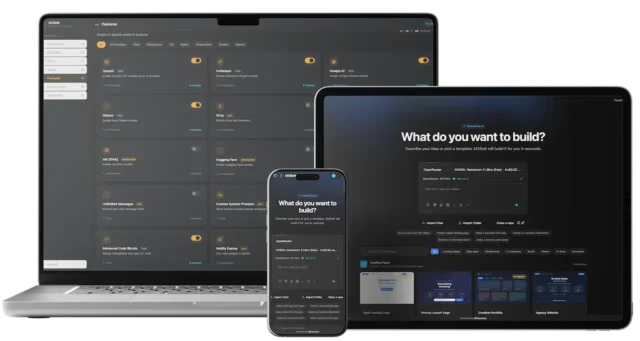
Business Process AutomationMap · Automate · Integrate · Measure
Data EntryApprovalsReportingReconciliation
Miracuves finds the work your team repeats by hand every week and replaces it with something that runs on its own. We start by measuring how the work is actually done, not how the process document says it is done, then automate the steps that cost the most hours for the least judgment. What we build runs inside tools you already own, documented so your team can change it without calling us back.
- NDA Before Access
- Written Scope First
- Hours Saved, Measured
- You Own What We Build
- MappedWhat actually happens
- ScopedIn writing, before payment
- BuiltIn systems you own
- HandoverDocumented, not locked in
- 9,000+Projects delivered







Miracuves business process automation finds the work your team repeats by hand and automates the parts worth automating. Each engagement observes and times the process as it really runs, ranks candidates by hours returned against build effort, builds inside tools you already own, documents every automation and measures the same process after go-live. Work is scoped and quoted in writing. Miracuves is based in Mumbai and works remotely.
What This Engagement Delivers
What an automation engagement actually produces
A Miracuves automation engagement starts by watching how the work is done today: who touches it, how long each step takes, where it waits, and what people do to work around the system. From that we produce a shortlist ranked by hours returned against build effort, then build the ones you approve inside tools you already own.
This is deliberately not a licence resale. Plenty of vendors will sell you a platform and leave the building to you. The value is in knowing which processes are worth automating and which are not, and that only comes from measuring the current one first. We will also say when the answer is not automation: a step that runs twice a month, or one that needs real judgment every time, is usually cheaper left alone. For custom systems see software development, and for ongoing engineering capacity see dedicated teams.
- Maps the process as performed, not as documented
- Measures time and volume per step before anything is built
- Ranks candidates by hours returned against build effort
- Builds inside tools you already own and control
- Measures the same process after go-live and reports the delta
"The process people complain about loudest is rarely the one costing the most. We rank by hours multiplied by frequency, which usually surfaces something quiet that three people spend an afternoon on every week without ever mentioning it."
Deliverables
What you hold when the work is done
Every engagement leaves written proof: where the hours were going, how each automation works, and what it actually saved. Each document is written so your operations lead can act on it without us in the room.
Process audit report
Written report · ranked shortlist- When
- At the end of the audit
- Timeline
- Scoped by number of processes
- Used for
- Deciding what to build, with us or on your own
Automation handover document
Runbook · written for your team- When
- With each automation
- Timeline
- First workflow typically within weeks of scope
- Used for
- Letting your team maintain and change it without us
Before-and-after report
Measurement report · method agreed upfront- When
- After go-live
- Timeline
- Monthly on a retainer
- Used for
- Proving the saving and choosing what to automate next
Every engagement produces these standard documents. Samples are shared under NDA after you brief us.
Honest Comparison
Miracuves vs a platform licence vs building it yourself - an honest comparison
Each of these is right sometimes. A platform licence is cheap if you already employ someone to build with it, and doing it in-house is best when the knowledge sits with your team. A large consultancy suits a multi-year, company-wide programme, which is a different job; it is covered under the table.
Miracuves
Measured, then built in your tools
Platform licence
A tool; someone still has to build
In-house only
Your people, your time
You need the hours back this quarter and nobody has time to work out where they are going. The audit ranks what is worth building, and you can stop there owing nothing more.
You already employ people who build automations: buy them a licence and get out of their way. A multi-year, company-wide programme is the job a large consultancy is set up for. For a bespoke system rather than glue between existing ones, see software development.
Automation guide
Automating business processes: what to decide before you build
The questions operations leads and founders ask before they pay anyone to automate their work, answered plainly, including when the answer is to leave a process alone.
Which business processes are worth automating first?
Start with volume, not irritation. Multiply how often a process runs by how long one pass takes and how many people touch it, and the ranking often surprises the team: a quiet reconciliation three people do every Friday can outweigh the approval everyone complains about.
The best first candidates share four traits. They follow rules rather than judgment, their inputs arrive in a predictable shape, the steps have not changed in months, and they move data between systems that already exist.
- Copying records from one tool into another
- Rebuilding the same weekly report from several sources
- Creating and closing accounts for joiners and leavers
- Matching payments against invoices or stock against records
Workflow tools, scripts or custom code: which fits?
When the systems involved have usable APIs, a workflow tool is usually the cheapest route. n8n suits teams that want to self-host, Zapier and Make are quick to set up for hosted connectors, and Power Automate fits a Microsoft estate. Apps Script covers a lot of Google Workspace work with no new licence.
Code earns its place when the logic is heavy, the volume is high enough that per-task pricing adds up, or the data needs joining and cleaning on the way through. Python and Node.js services with scheduled runs and webhooks handle that. Tools that drive a screen like a person should be the last resort, used only where a system has no API, because they break whenever the screen changes.
How do you measure the saving from automation?
Before anything is built, record a baseline for each process: how often it runs, how long one pass takes, how many people touch it, where it waits, and how often it goes wrong. Agree that method in writing, because a saving measured a different way afterwards proves nothing.
After go-live, measure the same process the same way over a comparable period. Report the hours returned, the change in errors and delays, and the hours the automation now costs in upkeep. Where the result is smaller than the estimate, say so; it usually means an exception path is still handled by hand, which is useful to know before automating the next process.
What does an automation cost to keep running?
The build is only part of the bill. A hosted workflow tool charges for seats or task volume, a self-hosted one needs a server someone looks after, and custom code needs hosting and logging. Budget for all three before comparing options.
The larger ongoing cost is change. Vendors revise their APIs, a field gets renamed in the CRM, a form gains a new question, and an automation that ran cleanly for months stops. Failure alerts mean you hear about it from the system rather than a customer, and the handover document means your own team can often fix it. Where changes are frequent, a retainer that covers maintenance is usually cheaper than paying for each repair.
What should stay manual?
Anything that needs real judgment each time: a credit decision, a complaint that needs a person, a discount outside policy. Automate around the decision instead, by routing the request to the right person with everything they need and chasing it when it stalls, and leave the decision itself with them.
Rare processes rarely pay back. A task that runs twice a month can take years to recover what it cost to build and maintain. Processes still being redesigned should wait too, because automating a moving target means rebuilding it. An honest shortlist names these, which is why a report that recommends automating everything should be read as a sales document.
How is sensitive data handled in an automation?
Access comes after the NDA and is limited to what each automation actually needs: a dedicated service account with the narrowest permissions the job allows, never a person's own login. Credentials are created in your accounts and stay yours when the engagement ends.
Every run is logged, so you can see what an automation read, wrote and changed. Joiner and leaver flows are worth automating for this reason alone, because an account left open after someone leaves is a security gap rather than an admin chore. If a process touches regulated data, such as health, payment or personal records, raise it at the start, because it changes where the automation can run and what it may store.
Engagement Method
Six steps, and nothing is built before you choose
Most automation projects fail by automating the process as documented rather than as performed. The method puts observation and measurement first, and every step leaves you something in writing.
- Step 01
Observe
Sit with the people doing the work and record the process as it really runs, workarounds included.
- Step 02
Measure
Frequency, duration, people, waiting time, errors, judgment and systems, recorded per step.
- Step 03
Shortlist
Candidates ranked by hours returned against build effort, with the ones not worth doing named.
- Step 04
Agree
You pick what gets built. Scope, systems and the measurement method go in writing.
- Step 05
Build
Built inside tools you already own, with failure alerts, while your team can watch the work.
- Step 06
Prove
The same process measured the same way after go-live, and the difference reported as found.
Engagement Types
Four ways to engage Miracuves on automation
Pick the shape that matches where you are. Scope, systems and what you receive are written into the engagement letter before payment.
Process Audit
We measure how the work is done today and hand you a ranked shortlist, including what is not worth automating.
- Best for: Knowing where the hours go
Single Workflow
One process automated end to end, built in your tools and documented for your team.
- Best for: A specific job that eats hours
Systems Integration
Two or more systems kept in step automatically, so nobody retypes anything between them.
- Best for: Data living in several places
Automation Retainer
A standing arrangement to keep automating, maintain what exists, and fix what breaks when a vendor changes an API.
- Best for: Teams automating continuously
What We Measure
What we measure before building anything
Seven numbers per process. A candidate that is missing any of them does not reach your shortlist, because without them nobody can prove afterwards that the automation was worth building.
- How often the process runs per weekFrequency
- How long one pass takes end to endDuration
- How many people touch itPeople
- Where it waits, and for how longDelay
- How often it goes wrong, and what that costsErrors
- Which steps need real judgmentJudgment
- What systems it already crossesSystems
What's Included
Every automation engagement includes this - no add-on tiers
The Process As It Really Runs
We watch the work happen before designing anything. The documented process and the real one differ almost every time, and automating the documented version is how these projects fail.
NDA Before Any Access
A bilateral NDA is signed before we are given a credential, a system, or a copy of your data. Nothing is discussed in detail before that.
Ranked by Hours Returned
Candidates are ordered by hours saved against effort to build, so the shortlist opens with the job that returns the most time, not the one mentioned most often in meetings.
Built In Systems You Own
Automations run in tools you already pay for and control. No Miracuves-hosted middleman that stops working the day you stop paying us.
Documented for Your Team
Every automation ships with a written explanation of what it does, what it touches, and how to change it. Handover is part of the work, not a later invoice.
Measured After Go-Live
We count what the process cost in hours before and after. An automation nobody can prove saved anything is a cost, not a saving.
Scope
Where automation actually pays back
These are the areas we look at first, because they are where most teams still pay people to do work a system should be doing. Which are in scope is agreed with you before any build starts.
Moving data between systems
Someone exporting from one tool and typing it into another. High volume, zero judgment, and usually the first thing worth removing.
Automation areaRequests waiting on a person
Purchases, leave, discounts and access sitting in an inbox. Routing and reminders remove the delay without removing the decision.
Automation areaRebuilding the same report
A weekly spreadsheet assembled by hand from three sources. Generated on schedule instead, with the same numbers every time.
Automation areaJoiners and leavers
Creating accounts across tools for a new starter and closing them for a leaver. Manual offboarding is a security gap, not only a chore.
Automation areaRoutine messages
Confirmations, status changes, reminders and follow-ups that somebody currently sends one at a time.
Automation areaMaking two lists agree
Payments against invoices, stock against records, bookings against calendars. Error-prone by hand, trivial for a system.
Automation areaTools & Methods
What Miracuves automations are built on
Your tools where possible. Code where it is cheaper.
How It Runs
From first conversation to a measured saving
Nothing gets built until we both agree it is worth building. That decision is made from measurements, not opinions.
- Before any access
Scope and NDA
You describe the work that feels repetitive. We agree which processes are in scope, what systems we will need to see, and sign a bilateral NDA before any access. If something you want falls outside what we do, we say so here rather than after payment.
- Discovery
Observe the real process
We watch the work being done and talk to the people doing it. This is the step most vendors skip, and it is why their automations break: the documented process and the real one are different, and people have quietly built workarounds nobody wrote down.
- Discovery
Measure and shortlist
Time, frequency, error rate and waiting time per step. From that we produce a ranked shortlist of candidates with the hours each would return and the effort to build it, and we name the ones that are not worth automating.
- Build
Build what you approve
You choose. We build inside tools you already own, with your team able to see the work as it happens rather than receiving a finished black box. Each automation ships with written documentation of what it does and how to change it.
- After go-live
Measure again
After go-live we measure the same process the same way and report the difference honestly, including where the saving was smaller than expected.
Agreed in writing before any build
1. What is in scope: the named processes and systems, and what is excluded. 2. Who owns what: the automations, credentials and documentation are yours from handover. 3. How the saving is judged: the measurement method is fixed upfront, so neither side can argue with the result.
How It Is Scoped
What automation work costs
Priced by what is in scope, so we scope it with you before quoting. Any number printed here would be wrong for most readers.
Process Audit
Get pricing
Scoped by number of processes
- Observation of the work as performed
- Time, frequency and error measurement
- Ranked shortlist with hours returned
- The ones not worth automating, named
- Written report you can act on alone
- No obligation to build with us
Workflow Build
Get pricing
Scoped by process complexity
- Everything in the audit for that process
- Built inside tools you already own
- Error handling and failure alerts
- Written documentation for your team
- Your team watching as it is built
- Measured again after go-live
Automation Retainer
Get pricing
Scoped by ongoing capacity
- Continuous automation of new processes
- Maintenance when vendor APIs change
- Monitoring and failure response
- A named contact who knows your setup
- Monthly reporting on hours returned
- Cancellable with notice, no lock-in
Why there is no price on this pageOne workflow between two systems and a company-wide integration programme are not the same job, and a single figure would mislead one of them badly. We measure first, quote in writing, and you can stop there owing nothing.
What changes the scope
How many processes, how many systems each one crosses, whether those systems have usable APIs, and how much judgment sits in the middle of the work. A process nobody can describe consistently takes longer than one that is already written down.
What is never charged extra
The documentation, and the measurement after go-live. Both are part of the work. An automation your team cannot modify is a dependency we have sold you, and a saving nobody measured is a claim rather than a result.
Why Miracuves
Six places to check us before you ever call us
Each one is either run by someone else or open to anyone. Check them in any order; the whole list takes about a minute.
Why clients choose MiracuvesCompany registration
Miracuves Solutions Pvt. Ltd., CIN U62099MH2023PTC406639. Search the CIN on the Ministry of Corporate Affairs portal.
mca.gov.in 02Every number, sourced
Projects, clients, prices and timelines, each one defined and sourced on our public facts ledger.
miracuves.com/facts 03Reviews on Clutch
Client reviews published by Clutch, an independent B2B review platform, not by us.
clutch.co 04Reviews on GoodFirms
A second, separate review platform. Read what clients wrote there too.
goodfirms.co 05The product itself
Web app, admin panel and APK with printed credentials. Try the real thing before a single call.
miracuves.com/solutions 06Clients, by name
Named clients describing their launches, in their own words.
miracuves.com/client-testimonialsThree promises we would stake the company on
Every promise on this site rests on these three. Each one is something you can check, not something you have to take on trust.
01People you can name
Our leadership is public, with real LinkedIn profiles, not a stock-photo team page. A named team works your build and sends you progress on WhatsApp every working day.
Meet the leadership02Proof over promises
Every number we publish, pricing, timelines, project counts, is defined and sourced on a public facts ledger. If we can't back a claim, we don't make it.
Read the facts ledger03A process with a deadline
Ready-made platforms go from kickoff to live deployment in 6 working days, guaranteed: miss it for reasons on our side and we work free until launch. Custom builds get a fixed quote after a free feasibility study.
Get a feasibility study
Industries
Industries we build Technology leadership for
The method is the same in every sector; what changes is the regulation, the data and the risks the assessment has to weigh.
Healthcare & Life Sciences
Patient portals, booking flows and HIPAA-aware web apps.
View industryTelemedicine
Browser-based video visits, intake forms and provider dashboards.
View industryFintech
Secure dashboards, onboarding flows and payment integrations.
View industryRetail & E-commerce
Fast storefronts, checkout flows and headless commerce.
View industryMedia & Entertainment
Streaming front ends, subscriptions and content portals.
View industryCreator Economy
Creator profiles, paywalls and membership sites.
View industryTransportation & Mobility
Booking portals, dispatch dashboards and live tracking maps.
View industryFood & Beverage
Online ordering, menus and restaurant admin panels.
View industryFull Catalog
Other ways Miracuves can help - build, harden, or staff
Some audits end with a finding that glue between tools will not fix: the system itself is missing, or nobody is free to run it. For those, Miracuves builds the product from 90+ ready-made bases or from scratch, or supplies the engineers - same company, same NDA, same IP ownership.
Related Engagement Models
Related services across Miracuves
Advice is one way to work with Miracuves. These pages cover the builds, roles and teams that carry a recommendation out.
Frequently Asked
Questions about automation services from Miracuves
Something not covered here? Ask on WhatsApp and you will usually have an answer within two hours.
Ask us directlyWhere do you actually start?
By watching the work, not by reading your process documentation. The two differ almost every time, because people build workarounds when a system gets in their way and rarely write them down. Automating the documented version of a process is the single most common reason these projects fail.
Will this replace people on my team?
Usually it removes the part of their job they like least: retyping, chasing, and rebuilding the same report. Whether that translates into fewer people or the same people doing better work is your decision, and we will not pretend to make it for you.
Do we have to buy a new platform?
No. We build in tools you already own wherever that is possible, because the alternative is a dependency that stops working the day you stop paying someone. Where a new tool genuinely is the cheapest route we will say so and explain why.
How much does business process automation cost at Miracuves?
There is no fixed price on this page, because the work is priced by what is in scope. A Process Audit is scoped by the number of processes, a Workflow Build by the complexity of the process, and an Automation Retainer by the ongoing capacity you need. Each is quoted in writing after a scoping conversation, an audit carries no obligation to build with us, and the documentation and the measurement after go-live are never charged extra. Every quote is written before payment, with no surprise invoices after kickoff.
What happens when a vendor changes their API?
Automations break, which is why maintenance is a real consideration rather than a scare tactic. Everything we build has failure alerting so you find out from the system rather than from a customer. Ongoing maintenance is what the retainer covers.
Who owns what you build?
You do: the automations, the credentials, and the documentation. We do not keep anything as a retention mechanism. If you decide to take it in-house or to another vendor, everything needed to do that is already in your hands.
How do you prove it actually saved anything?
We measure the process before and after in the same way, using a method agreed with you upfront so the result cannot be argued about later. Where the saving is smaller than we estimated, that is what the report says.
What if a process is not worth automating?
We tell you. Something that runs twice a month, or that needs genuine judgment at every step, is usually cheaper left alone. A shortlist that recommends automating everything is a sales document rather than an assessment.
How long before something is live?
A single well-understood workflow is typically live within weeks of the scope being agreed, because the measuring is the slow part and the building is not. Multi-system integration takes longer, and we say so before you commit rather than after.
Can our team change things afterwards?
That is the point of the documentation: each automation comes with its trigger, the systems it reads and writes, its failure alerts and the steps to edit it safely. If your team cannot change what we built, we have sold you a dependency rather than a capability.
Do you handle sensitive data?
Frequently, which is why an NDA is signed before we see any system and why access is limited to what the work actually requires. If your process involves regulated data, tell us early, because it changes both the approach and the timeline.
What is the difference between a process audit and a workflow build?
A process audit measures how the work is done today and ends in a written, ranked shortlist, including the processes not worth automating. You can act on it alone, with no obligation to build with us. A workflow build takes one approved process from that measurement to a working automation in your tools, with failure alerts, documentation and a second measurement after go-live.
What do you need from our team during the audit?
Time with the people who do the work, so we can watch it and ask why each step happens, plus read access to the systems the process crosses once the NDA is signed. A process owner who can approve the shortlist and agree the measurement method keeps it moving. We do not need anyone to write the process down first; the real version is what we map.
Can you automate processes for a company outside India?
Yes. Miracuves is based in Mumbai and runs automation engagements remotely, observing the work over screen-share calls with the people who do it. The automations run in your own accounts and tools wherever they are hosted, and call times are agreed in the written scope.
Get Started
Ready to find out where your hours go?
Tell us which work feels repetitive. Miracuves comes back with a written scope: which processes we would measure, what access that needs, and what you receive at the end. You can walk away at that point owing nothing.
NDA signed before we discuss your systems
Page reviewed by Miracuves Automation Team · Last updated September 2026 · Clutch & Google Reviews