v2026 - Production Ready

Amazon Clone App: White-Label Multi-Vendor Marketplace

A launch-ready multi-vendor marketplace with the part most platforms leave out: the delivery fleet. Catalog, cart, checkout, orders and refunds sit on one Laravel backend, vendors run their own shops and get paid from a wallet ledger, and your own delivery agents close the loop with OTP-verified handover and cash reconciliation.

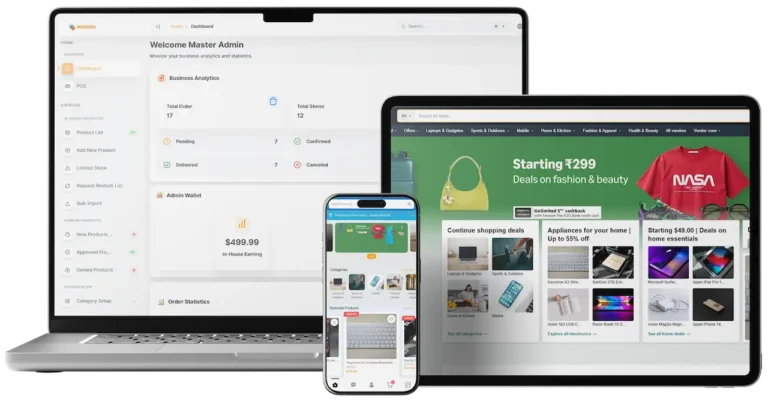
Six surfaces, one REST API. A customer storefront and Android app, a vendor panel and vendor app, a deliveryman app, and an operator console spanning catalog, orders, finance, marketing and configuration.

Launch in 6 Days using

  • Multi-Vendor Catalog
  • Vendor Payouts
  • Delivery Fleet
  • COD Reconciliation
  • AI Catalog Copy
  • White-Label
MXAzon admin · OperationsLive
Checkouts so far today1,284
Active vendors318
Agents on shift46

Streaming activity log

  • Vendor approvedStaff and sign-off
  • Order split by vendorCheckout
  • Rider matched to orderRider network
  • Doorstep OTP verificationDelivery confirmation
  • COD cash reconciledAgent wallet
  • Return requestedReturns waiting
  • Fee booked to ledgerWallet quartet
  • Restock alert sentCatalog
App in action
OTP-verified handovercash reconciled per agent

Platform Overview

6
Where Takings Originate

commission, vendor plans, delivery margin, placement

13
Ways to Pay

cards, wallets, netbanking, EMI and cash on delivery

4
Separate Wallets

buyer, seller, driver and platform, reconciled

0
How Takings Divide

the complete source code is yours, with no charge per seat

Multi-Vendor and Multi-Category From Day One

Sellers onboard themselves, list against a shared catalog and are paid on their own commission rate, so the marketplace grows without your team touching a product record.

Your Own Fleet, Not Just a Courier API

Drivers, zones, assignment, proof of delivery and rider payouts run inside the platform, so the last mile is a margin line you control instead of an invoice you receive.

Ready to launch your own Amazon-style multi-vendor marketplace?Schedule a Consultation

6,000+ Companies Worldwide Rely on Us


Miracuves named one of the best managed IT service providers in New York City by Expertise.comMiracuves is an official member of Forbes Business CouncilMiracuves is a verified agency with design rush. Miracuves is reviewed on TrustpilotMiracuves is one of the top managed service providers, companies by themanifest. Miracuves ranked as a top software development company by Design Rush. Miracuves is recognized as top software developed company by goodfirms. Miracuves Ranked among top 1000 companies globally by ClutchMiracuves is a top-minus service provider in the United States by Clutch

01See it live

Live in Action

Amazon Clone Demo: Six Live Screens, One Database

Six live surfaces on the same database: the customer storefront on web and Android, the seller panel on web and Android, the delivery app, and the operator dashboard. Sign in to each with the credentials below and follow a single order all the way through: a customer places it, a seller accepts and packs it, an agent collects and verifies it at the door, and the operator sees every state change and the money that moved.
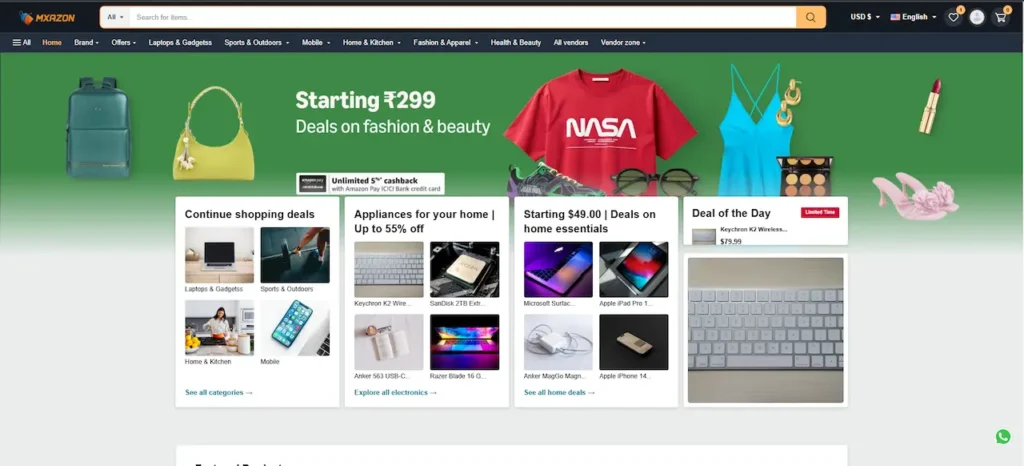
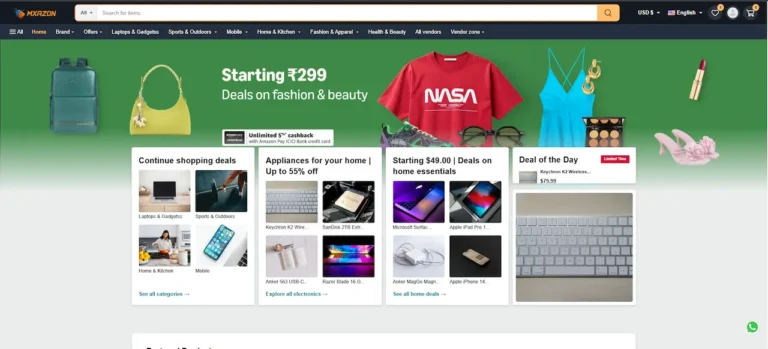
mxazon.mimeld.comAmazon Clone Web Storefront Homepage
Live demo
BUYER WEB

Web Storefront: Browsing Through to Payment

Web shoppers get a category tree and brand directory, filtered search with autocomplete, product pages that carry reviews and the variant matrix, one cart across multiple vendors, and a checkout where coupon, wallet and loyalty can all be applied at once.

  1. 1Open the storefront in your browser
  2. 2Sign in using the customer login shown below
  3. 3Explore: Search, Product, Cart, Checkout, Orders
Try:user@demo.com | User_321
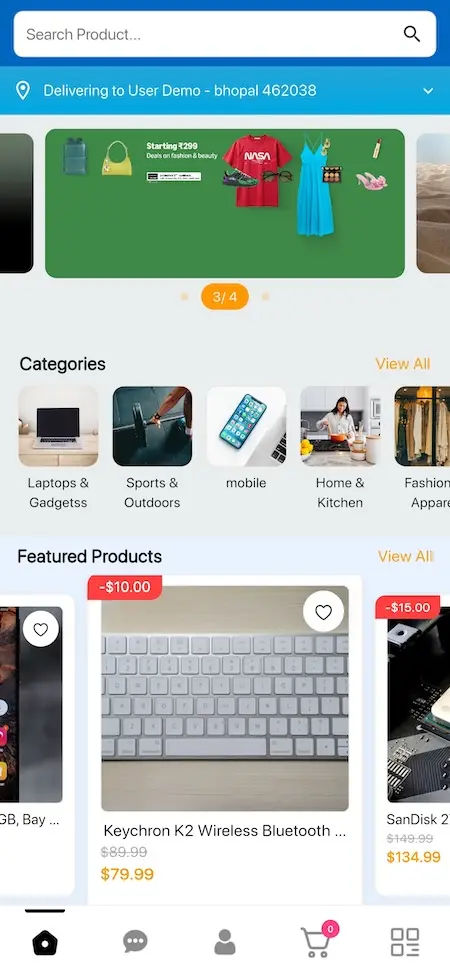
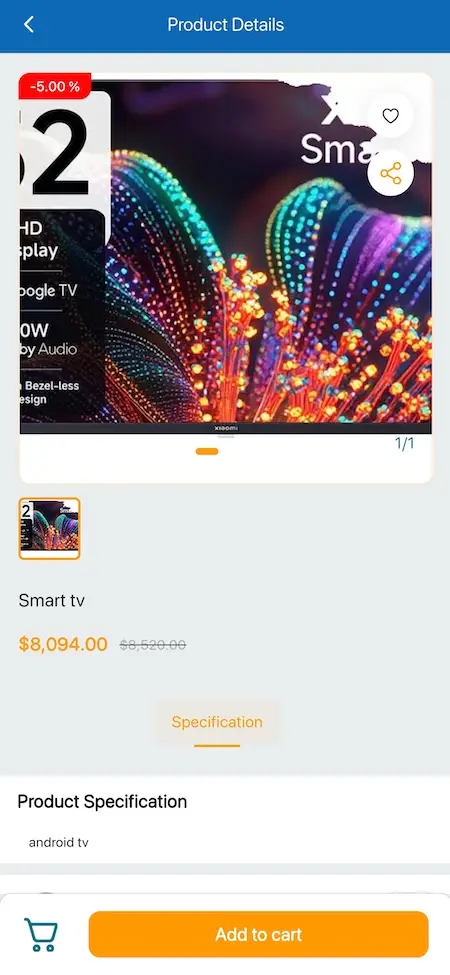
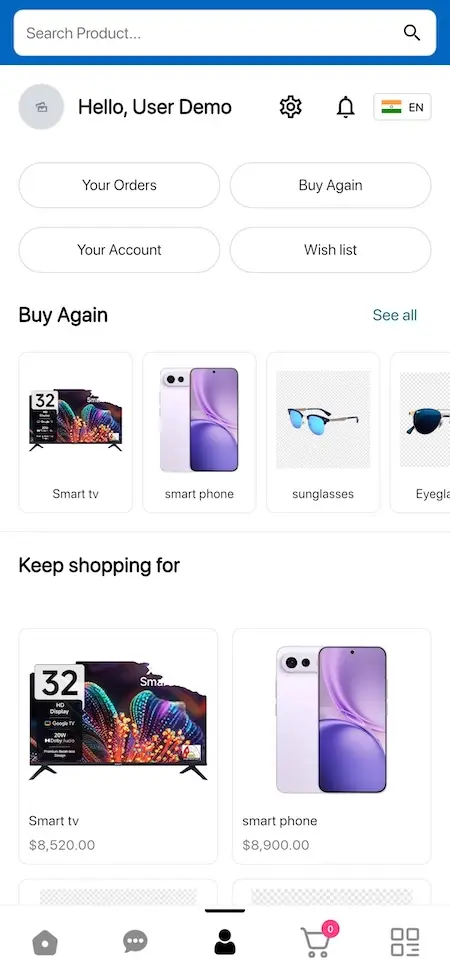
Amazon Clone Mobile Storefront and Featured ProductsAmazon Clone Mobile Product Details
Live demo
BUYER MOBILE

The Storefront Again on Android

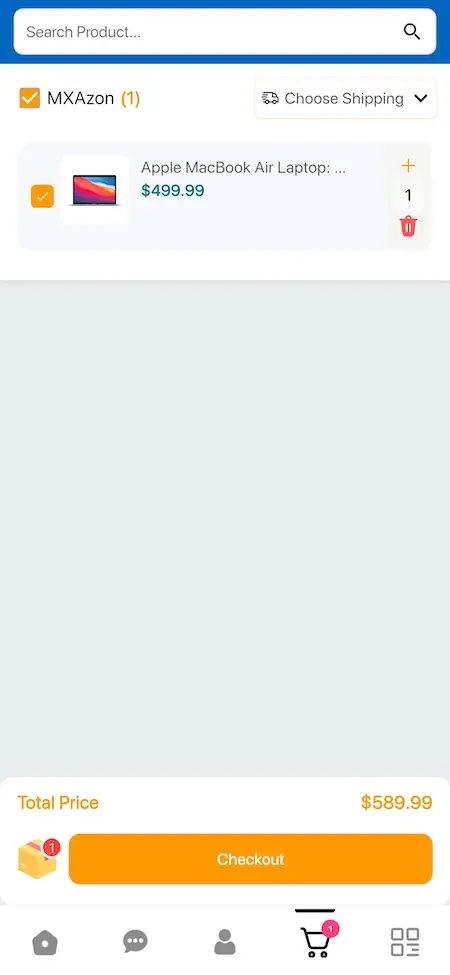
A Flutter customer app on the same REST API, with home rails, category browsing, search, variant-aware product detail, cart and checkout, live order-status tracking, wallet and loyalty, and in-app support chat alongside push notifications.

  1. 1Download the Android customer build
  2. 2Sign in with the customer credentials below
  3. 3Explore: Home, Search, Cart, Orders, Wallet
Try:user@demo.com | User_321
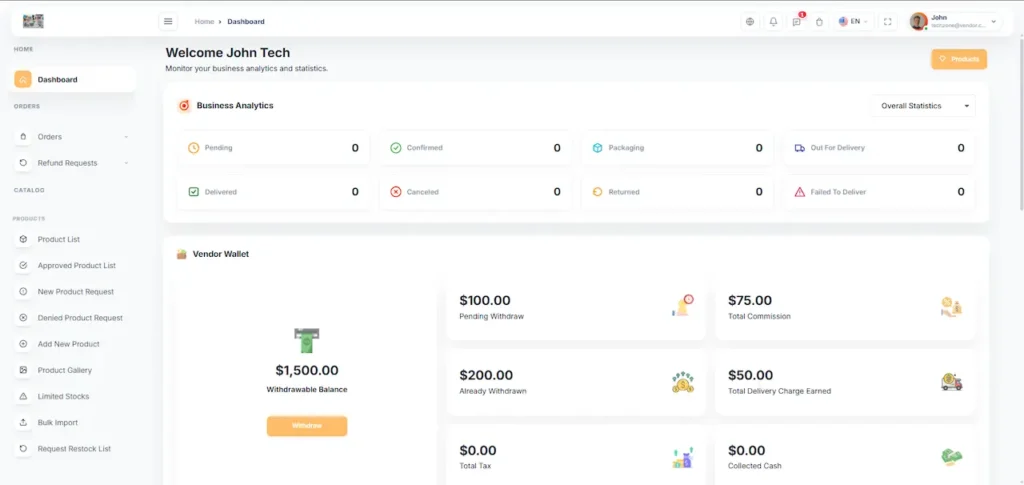
mxazon.mimeld.comAmazon Clone Vendor Sales Dashboard
Live demo
MERCHANT WEB

Store, Listings, Orders and Earnings

On the web, a seller manages the shop profile and KYC, handles stock and variants through product CRUD (variant matrix included), moves catalogs in bulk with import and export, drafts descriptions with AI assistance, accepts or rejects queued orders, answers refunds, reads sales analytics, and checks a wallet that shows commission next to a withdrawal request flow.

  1. 1Open the seller panel and sign in
  2. 2Use the vendor login listed below to sign in
  3. 3Explore: Products, Orders, Refunds, Wallet, Analytics
Try:vendor4@demo.com | Vendor_$321
Open Seller Web Deep Features
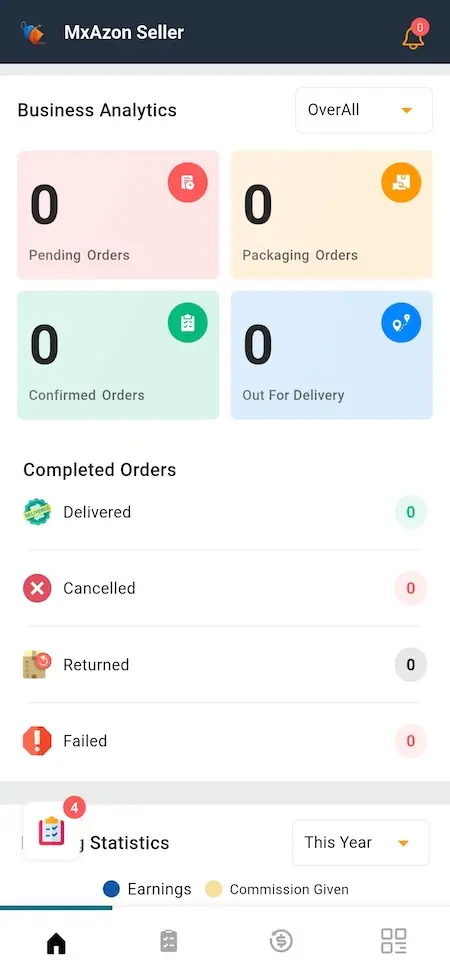
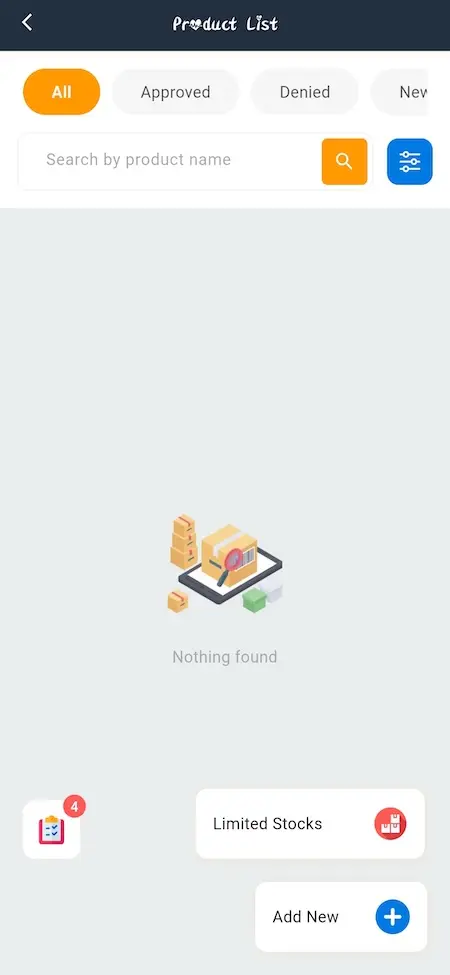
Amazon Clone Seller Mobile Business DashboardAmazon Clone Seller Mobile Product List
Live demo
MERCHANT APP

Vendor App for Managing a Store on the Move

Sellers who are not at a desk get a Flutter vendor app. It holds the real-time order queue where orders are accepted or rejected, product and stock edits, replies to refund requests, chat with customers, a wallet balance with commission shown, and withdrawal requests.

  1. 1Download the Android seller build
  2. 2Sign in with the vendor credentials below
  3. 3Explore: Orders, Products, Stock, Chat, Wallet
Try:vendor4@demo.com | Vendor_$321
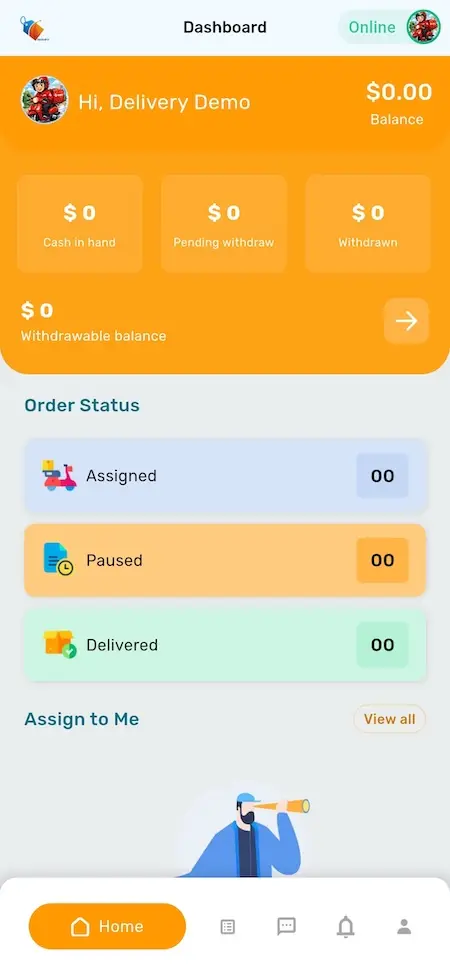
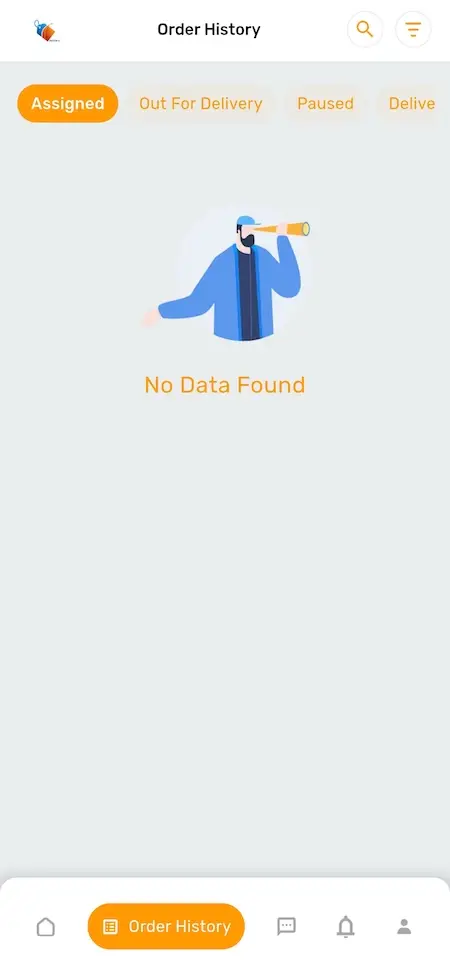
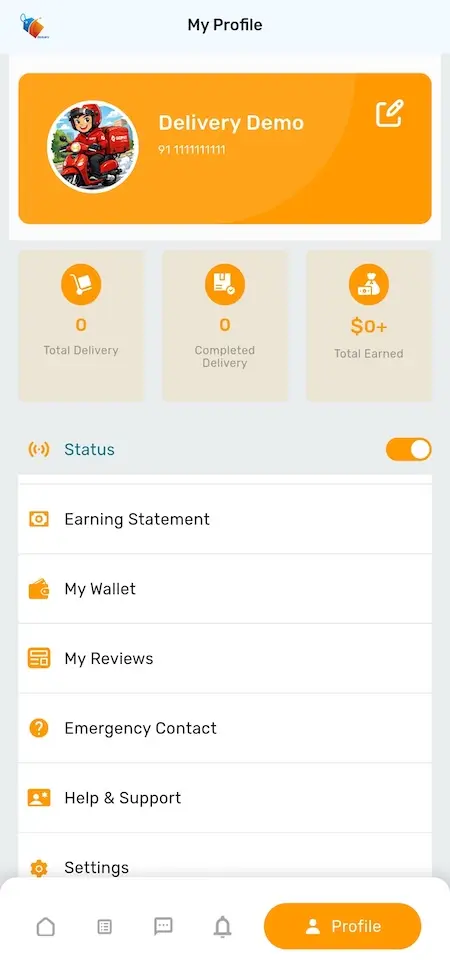
Amazon Clone Delivery Staff DashboardAmazon Clone Delivery Staff Order History
Live demo
COURIER MOBILE

Dispatch, Handover Proof and Cash Handling

Delivery staff work from an assignment feed where jobs are accepted or rejected, with turn-by-turn routing that goes to the vendor first for pickup and afterward to the customer. Status checkpoints run from picked up to delivered, the door handover is confirmed by a one-time code, and earnings and COD cash collection sit in separate wallet balances.

  1. 1Download the Android delivery build
  2. 2Sign in with the delivery credentials below
  3. 3Explore: Assignments, Pickup, OTP Handover, Earnings
Try:delivery@demo.com or +91 9876543212 | Delivery_$321
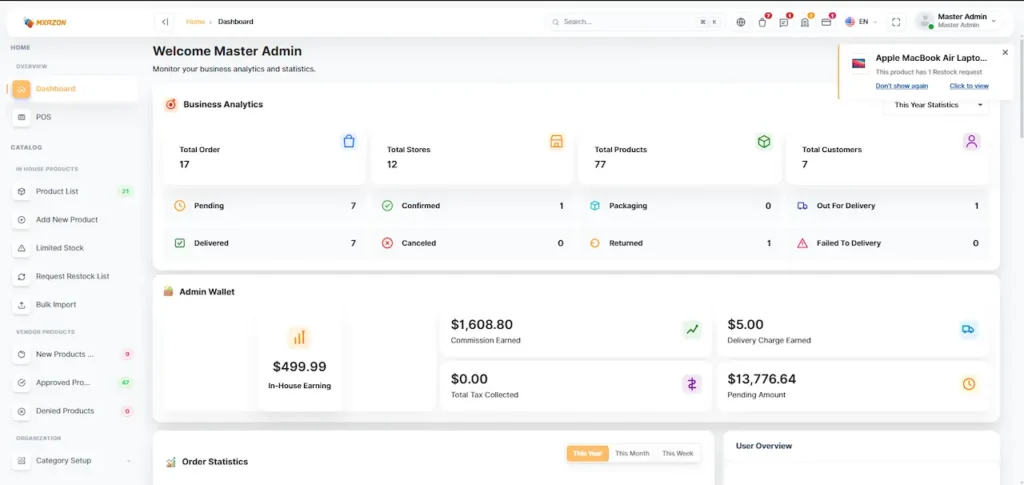
mxazon.mimeld.comAmazon Clone Marketplace Admin Dashboard
Live demo
OPERATOR COMMAND DESK

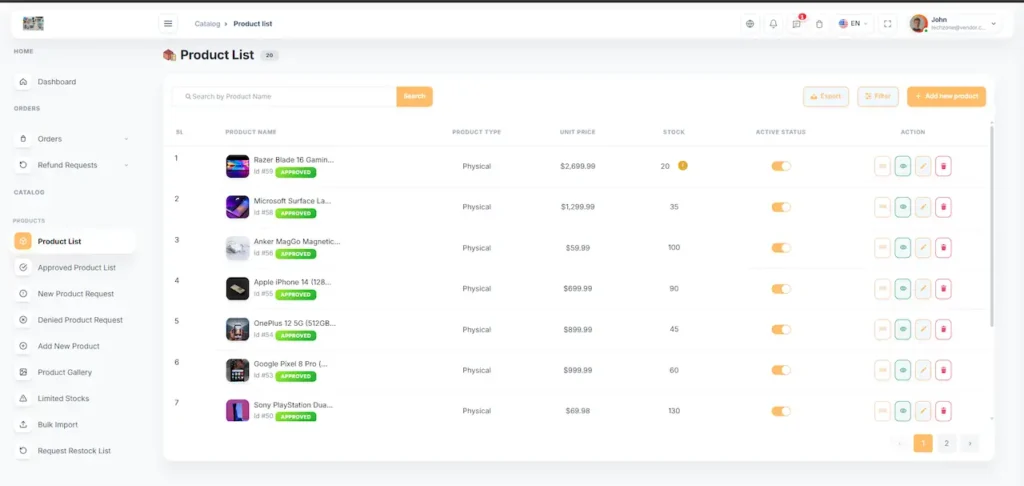
Listings, Staff, Money and Settings

The operator console covers product moderation, orders across all vendors with a complete status timeline, queues for refunds and withdrawals, approval of vendors and deliverymen, commission and tax setup, marketing, and reports. Every business rule lives in configuration instead of code.

  1. 1Open the admin dashboard in your browser
  2. 2Enter the admin account details shown below
  3. 3Explore: Moderation, Orders, Payouts, Settings, Reports
Try:admin@demo.com | Admin_$321

Screen Recording

Video Demo of the Amazon Clone: Storefront, Operator Console and Vendor Flow

This is the platform seen from the operator's seat, not a reel of features. A single order is traced from the customer's search, via the queue on the vendor side and then the delivery handover, and the same order is then opened in the admin console, where the status trail, the tax lines and the resulting wallet entries on both sides are visible. Catalog and moderation screens come next, then vendor subscriptions and commission, and last of all the configuration area, which holds the delivery zones, languages, currencies and gateways. Prefer to see one flow in particular? Ask, and we will demonstrate it live on real data.

Schedule a Consultation

Walkthroughs by Screen

Amazon Clone App Screens: Customer, Vendor, Delivery plus Operator

Screens from every surface that counts: home and category browsing, filtered search, product pages with the variant matrix and reviews, a cart and checkout spanning vendors, the vendor's order queue with its wallet, the deliveryman's assignment feed, OTP handover, plus the operator console.

Amazon Clone Mobile Wishlist
Amazon Clone Mobile Shopping Cart
Amazon Clone Customer Profile and Recommendations
Amazon Clone Mobile Product Details
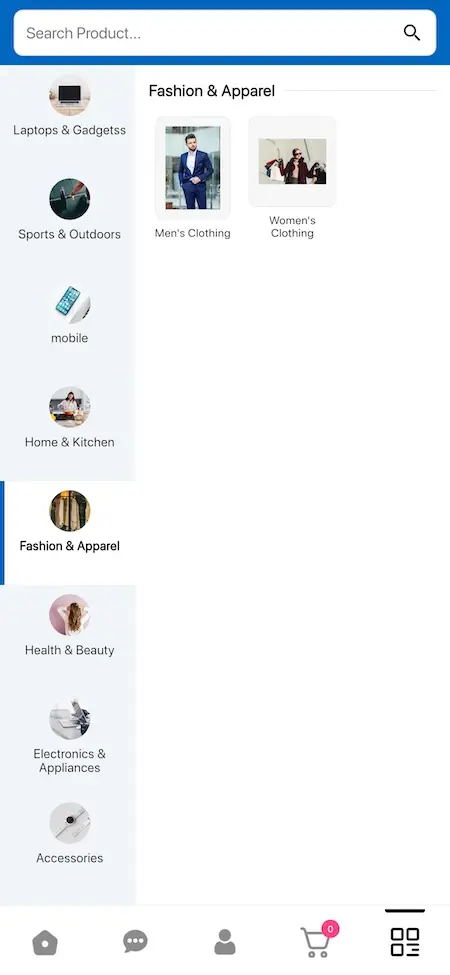
Amazon Clone Mobile Product Categories
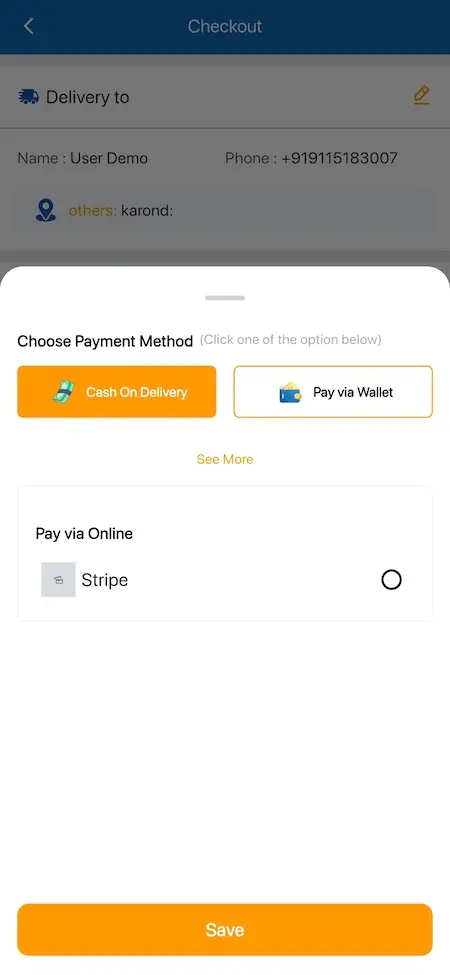
Amazon Clone Mobile Payment Method Selection
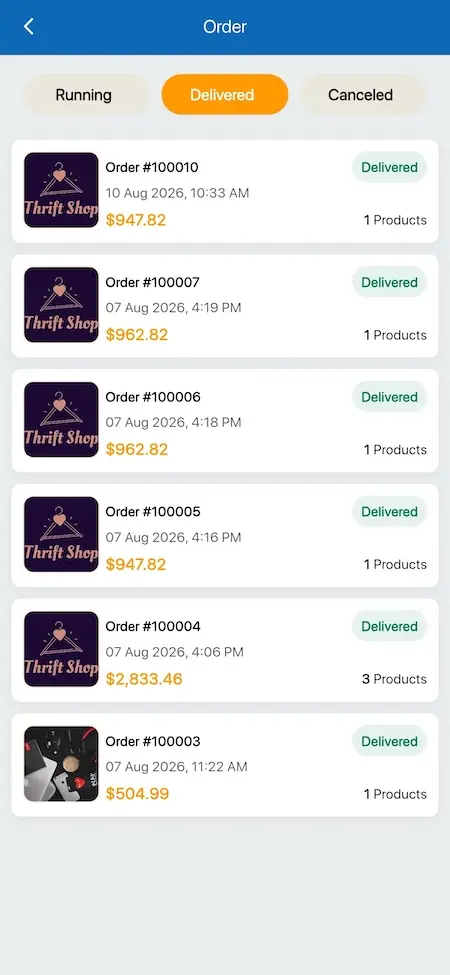
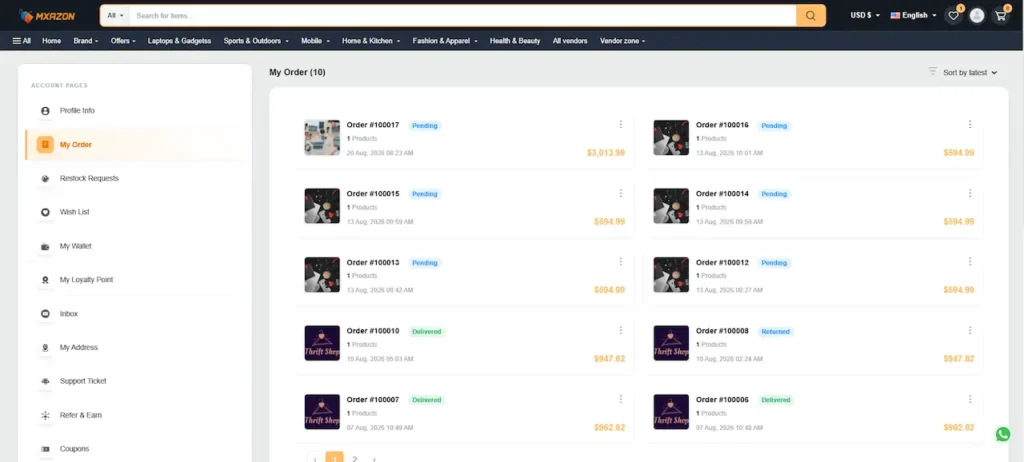
Amazon Clone Mobile Order History
Amazon Clone Mobile Customer Inbox
Amazon Clone Mobile Storefront and Featured Products
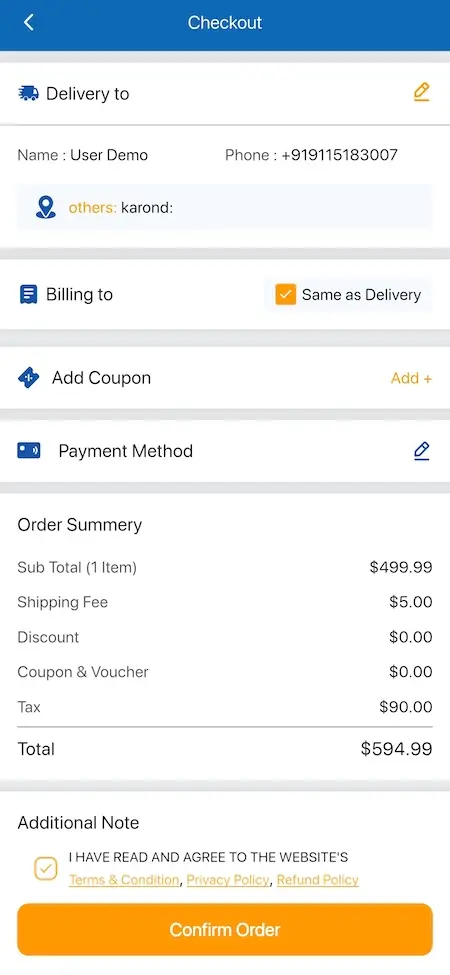
Amazon Clone Mobile Checkout Summary
10 screens · scroll →
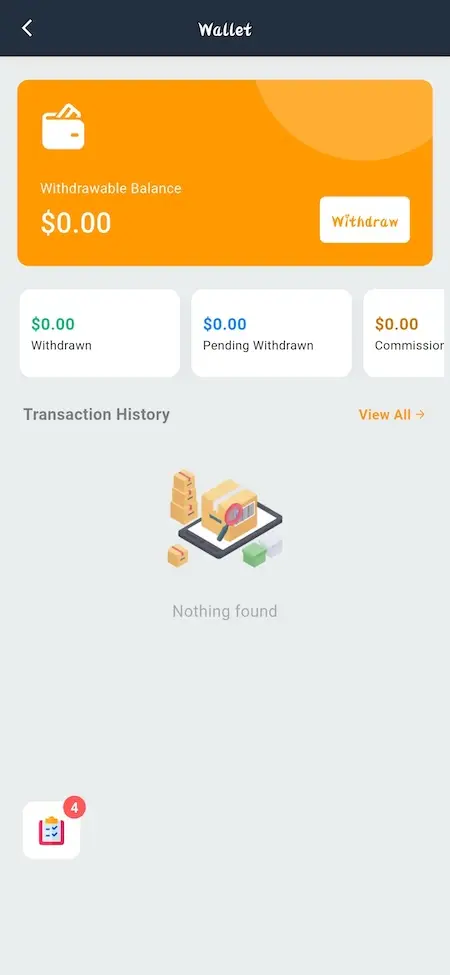
Amazon Clone Seller Wallet
Amazon Clone Seller App Splash Screen
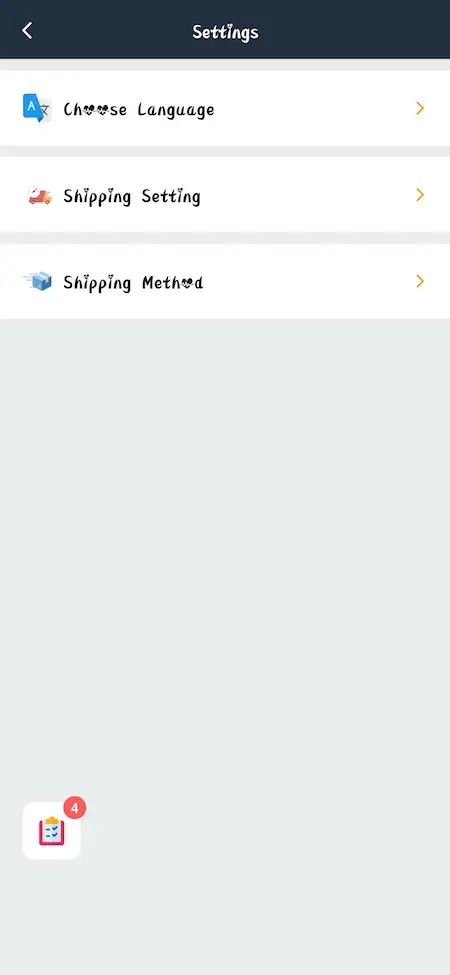
Amazon Clone Seller Mobile Settings
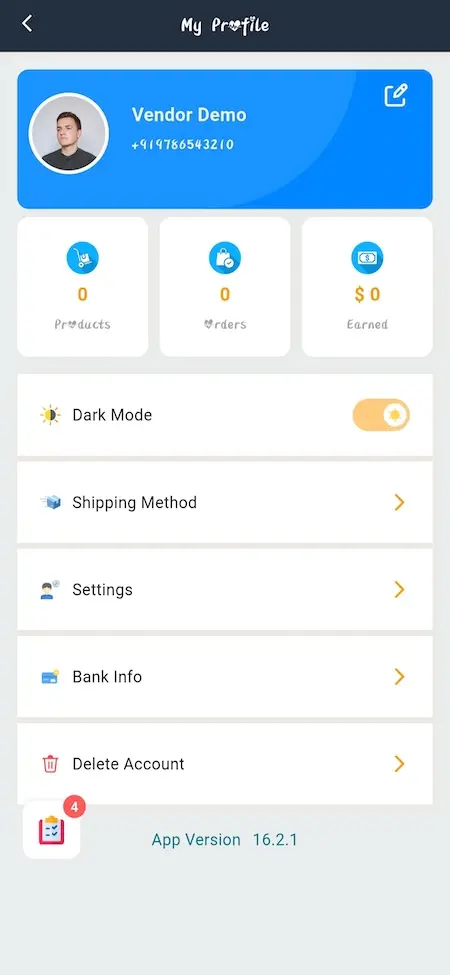
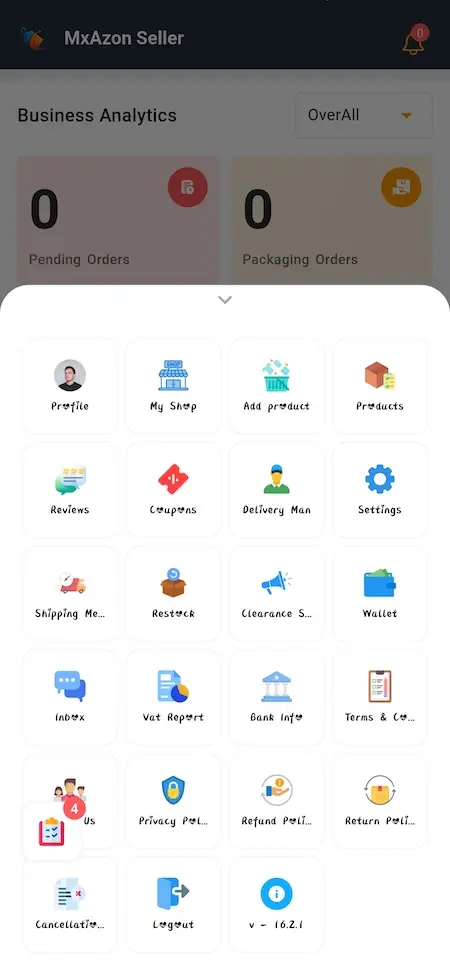
Amazon Clone Seller Profile and Account Menu
Amazon Clone Seller Mobile Product List
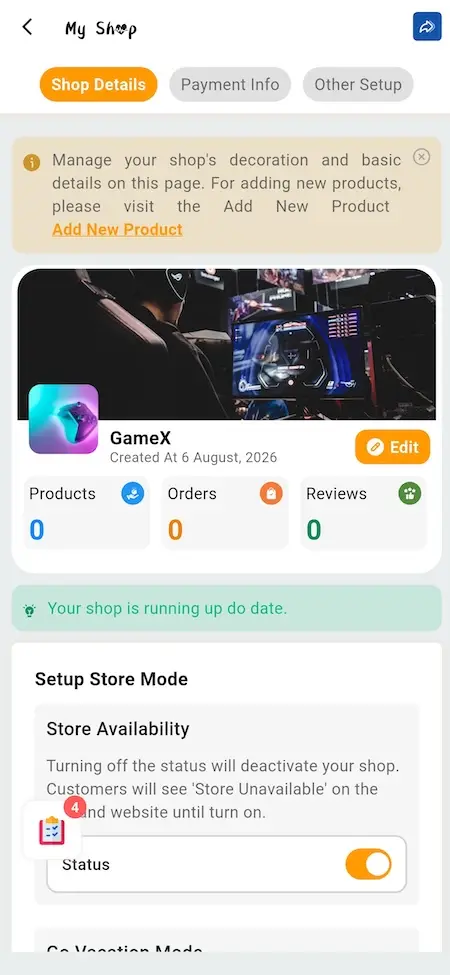
Amazon Clone Seller Shop Availability Settings
Amazon Clone Seller Mobile Management Menu
Amazon Clone Seller Mobile Business Dashboard
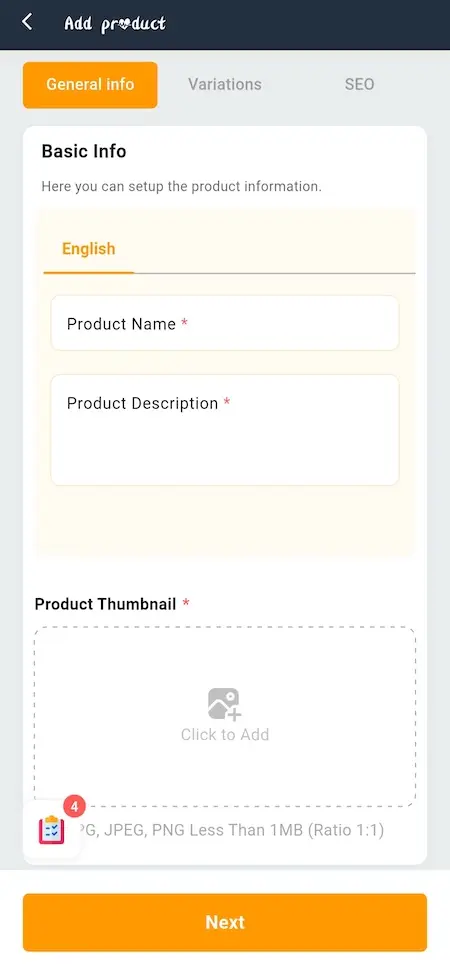
Amazon Clone Seller Add Product Form
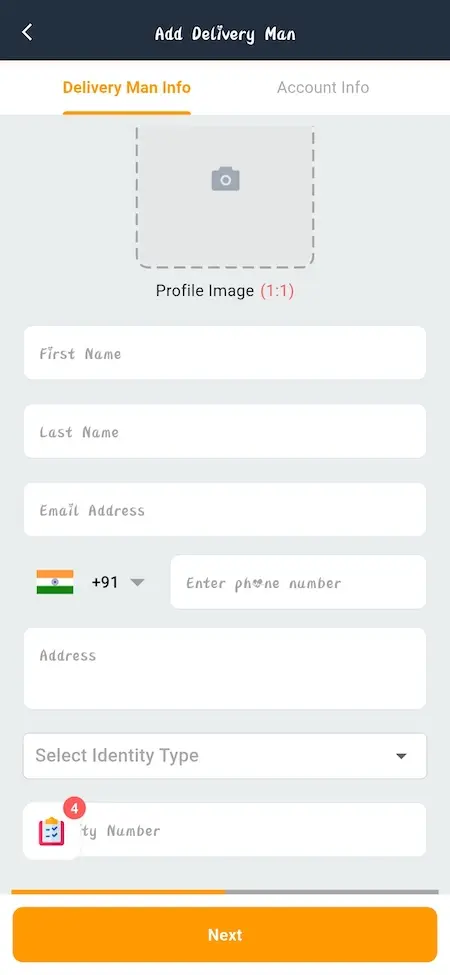
Amazon Clone Seller Add Delivery Staff Form
10 screens · scroll →
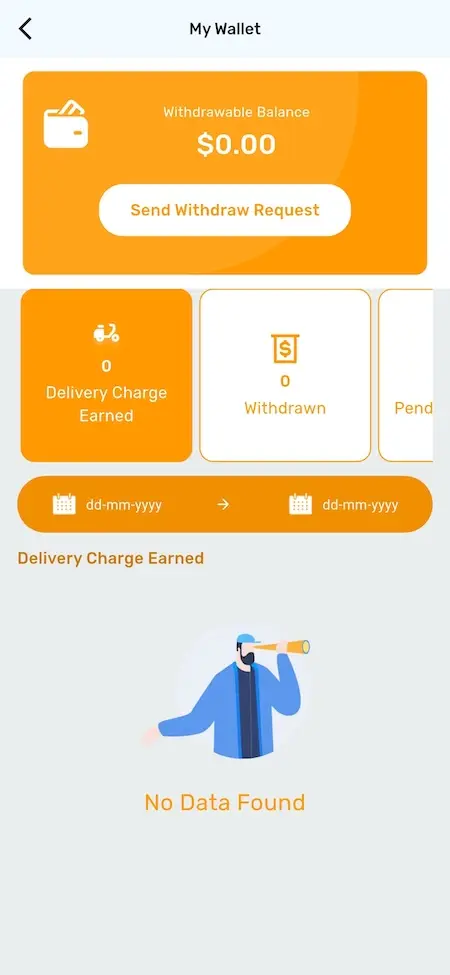
Amazon Clone Delivery Staff Wallet
Amazon Clone Delivery App Splash Screen
Amazon Clone Delivery Staff Settings
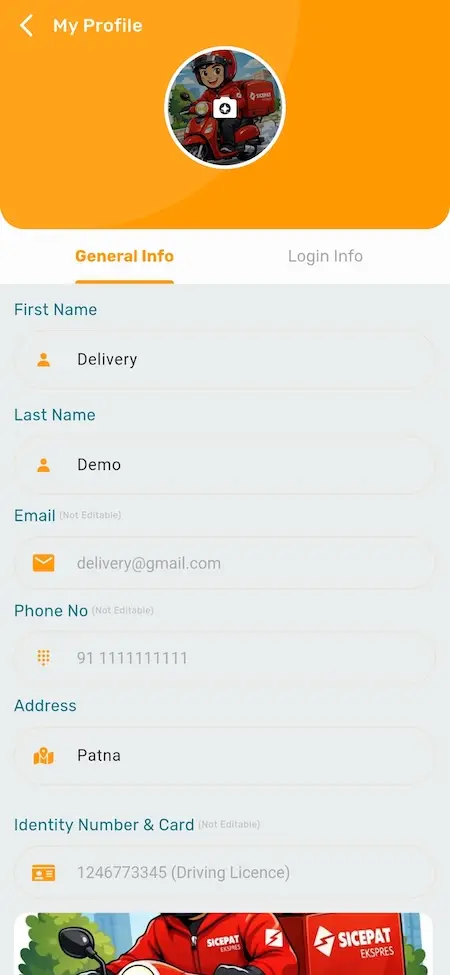
Amazon Clone Delivery Staff Profile
Amazon Clone Delivery Staff Order History
Amazon Clone Delivery Staff Onboarding
Amazon Clone Delivery Staff Sign-In
Amazon Clone Delivery Staff Dashboard
Amazon Clone Delivery Staff Profile Editor
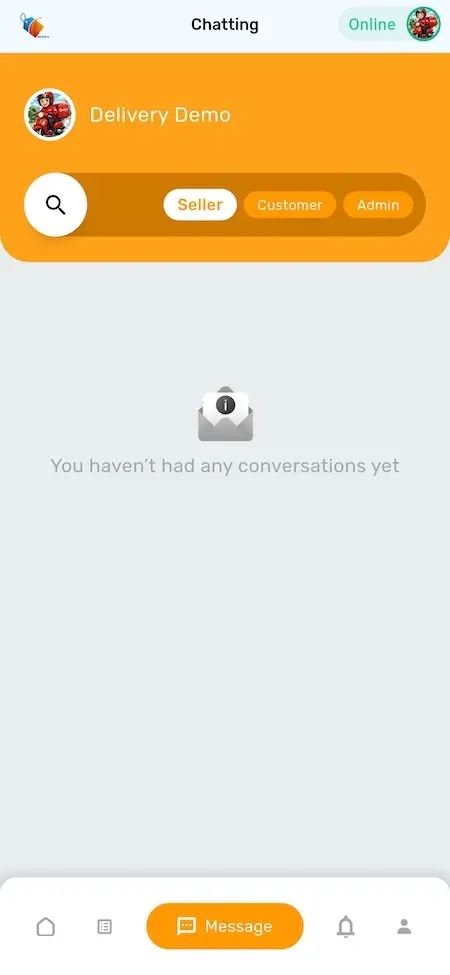
Amazon Clone Delivery Staff Chat
10 screens · scroll →
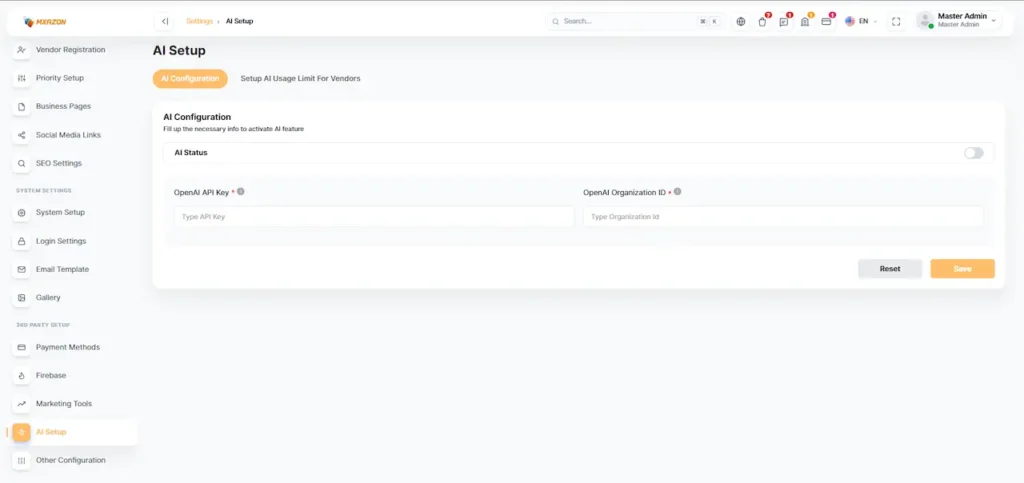
Amazon Clone Admin AI Configuration
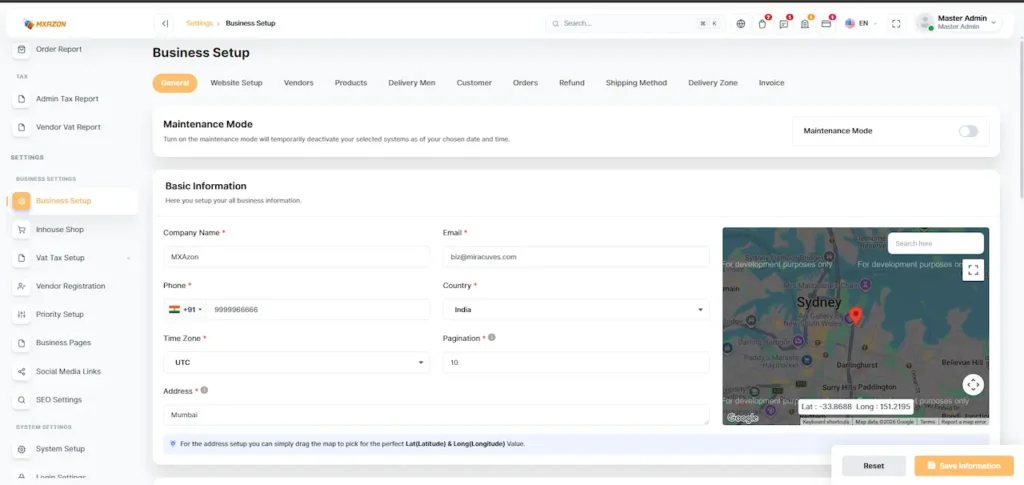
Amazon Clone Admin Business Settings
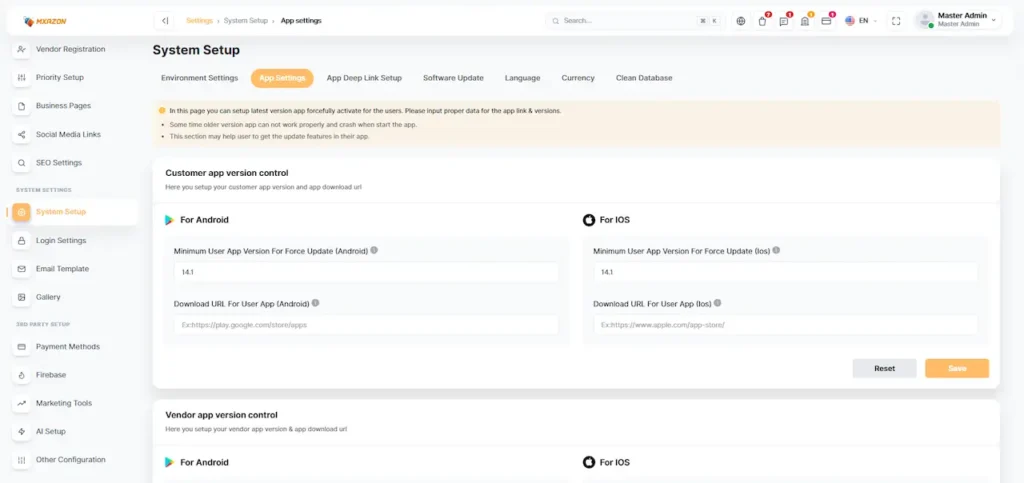
Amazon Clone Admin System Configuration
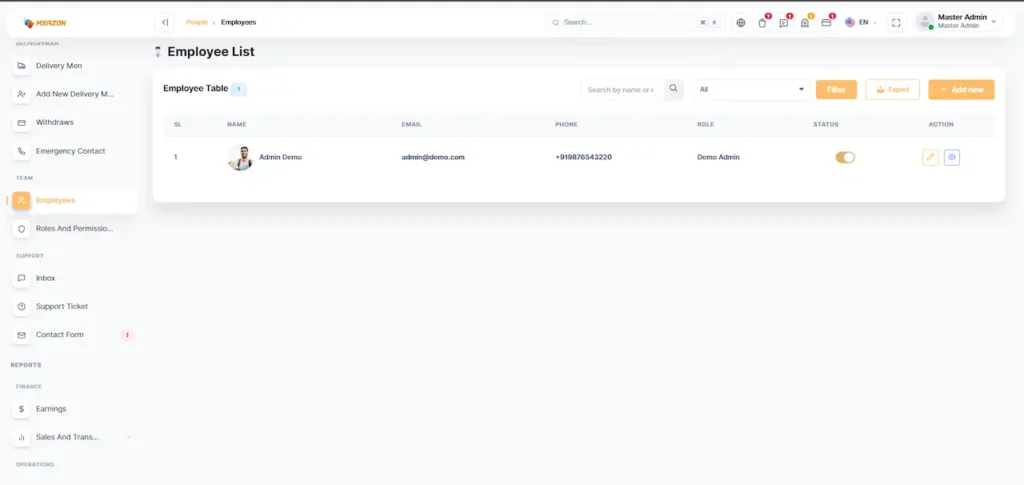
Amazon Clone Admin Employee Management
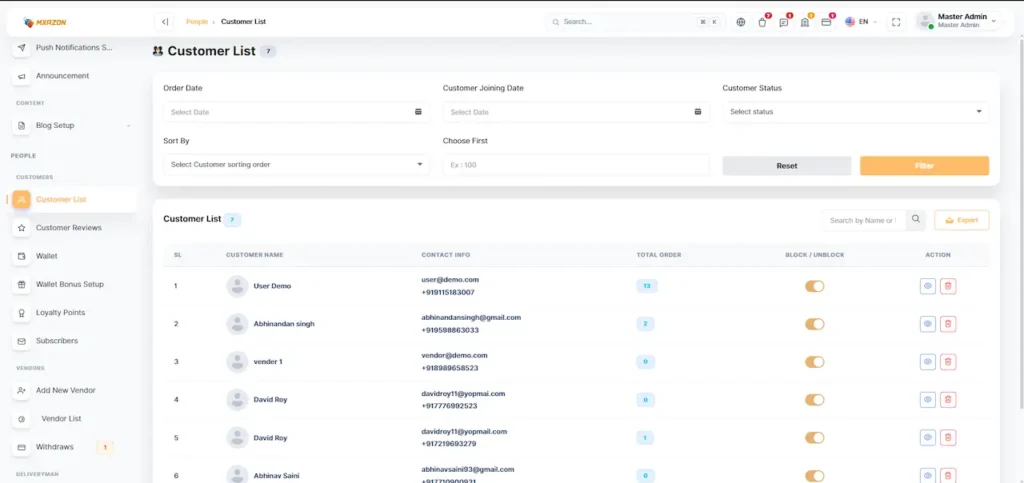
Amazon Clone Admin Customer Management
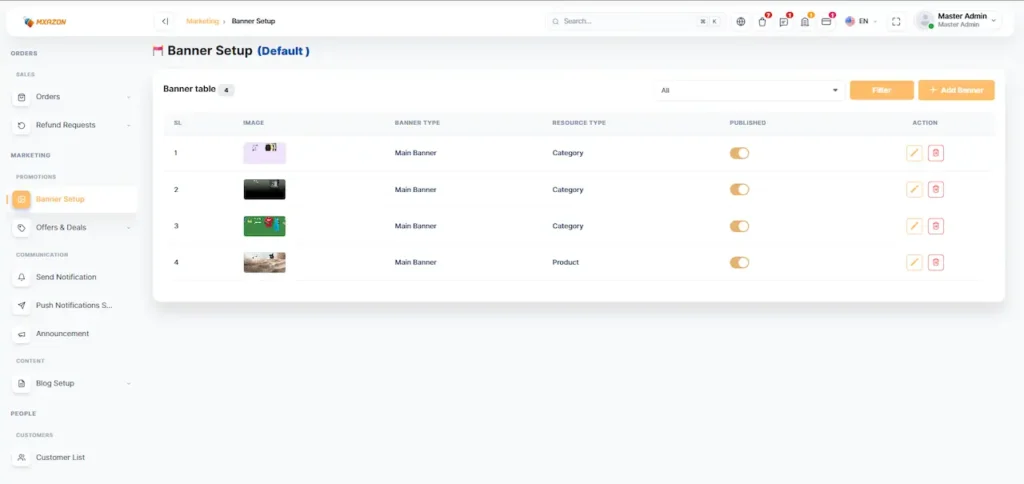
Amazon Clone Admin Banner Management
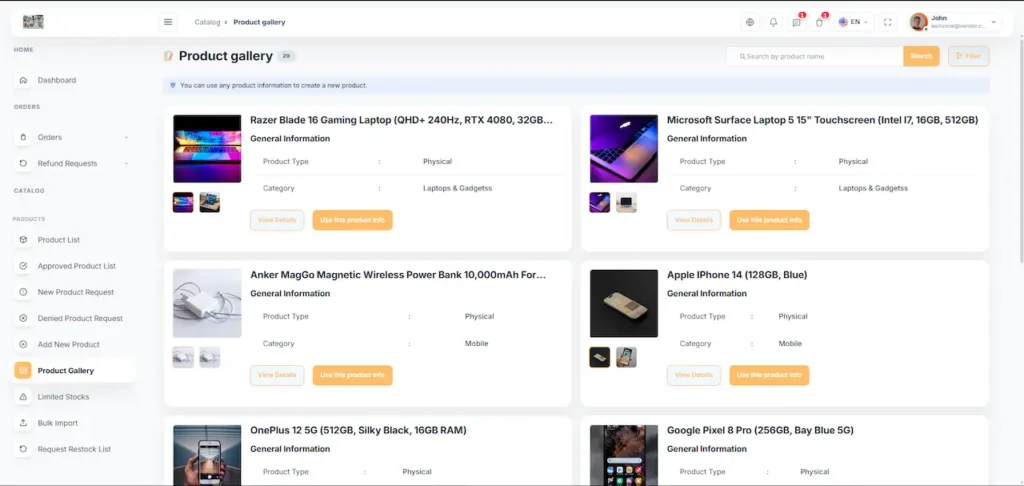
Amazon Clone Admin Product Management
Amazon Clone Admin Vendor Management
Amazon Clone Marketplace Admin Dashboard
9 screens · scroll →
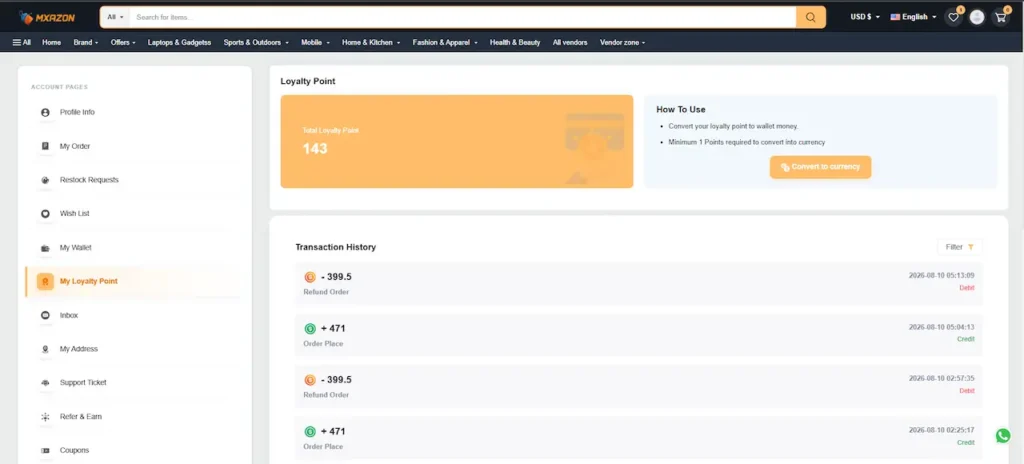
Amazon Clone Loyalty Points and Transactions
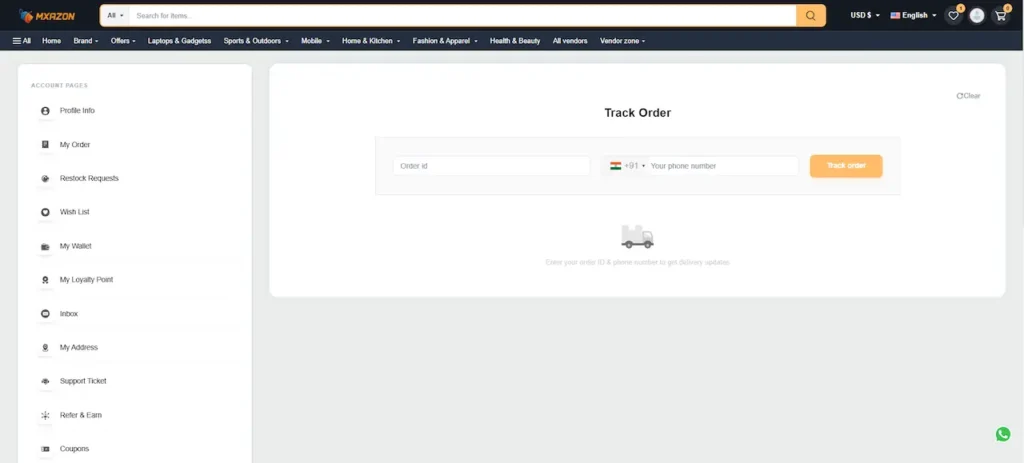
Amazon Clone Web Order Tracking
Amazon Clone Customer Loyalty Points
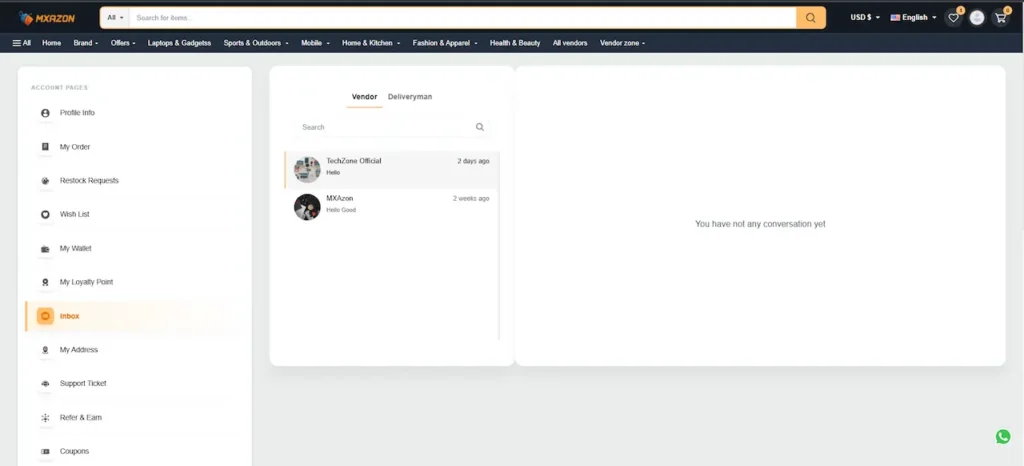
Amazon Clone Customer Support Inbox
Amazon Clone Customer Order History
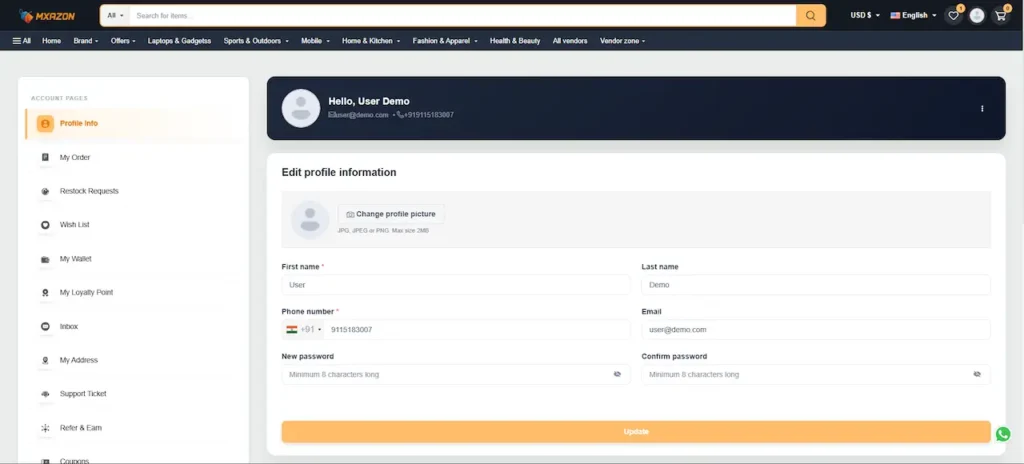
Amazon Clone Customer Account Information
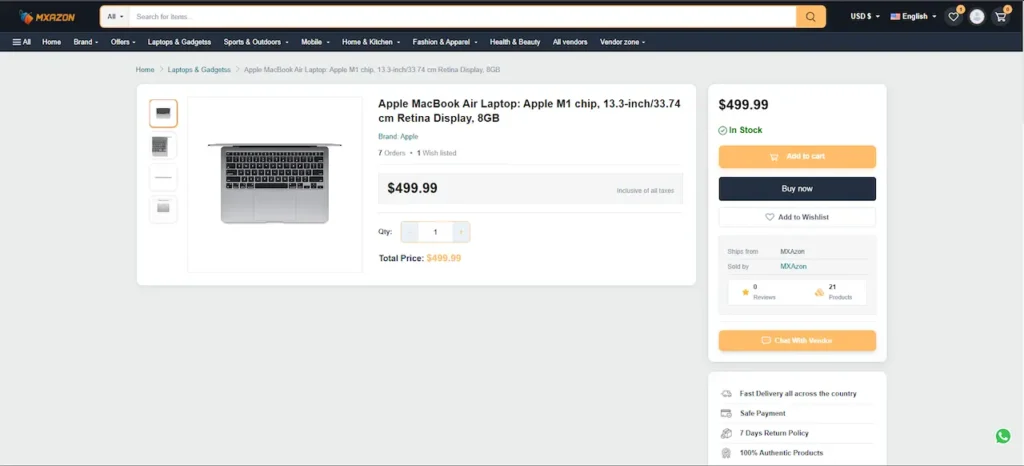
Amazon Clone Web Product Details and Purchase Panel
Amazon Clone Web Storefront Homepage
8 screens · scroll →
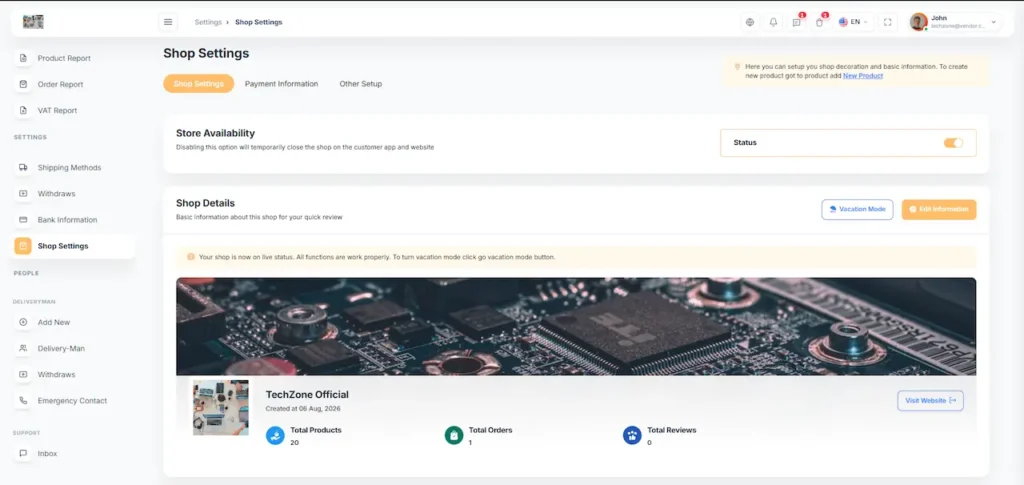
Amazon Clone Vendor Shop Settings
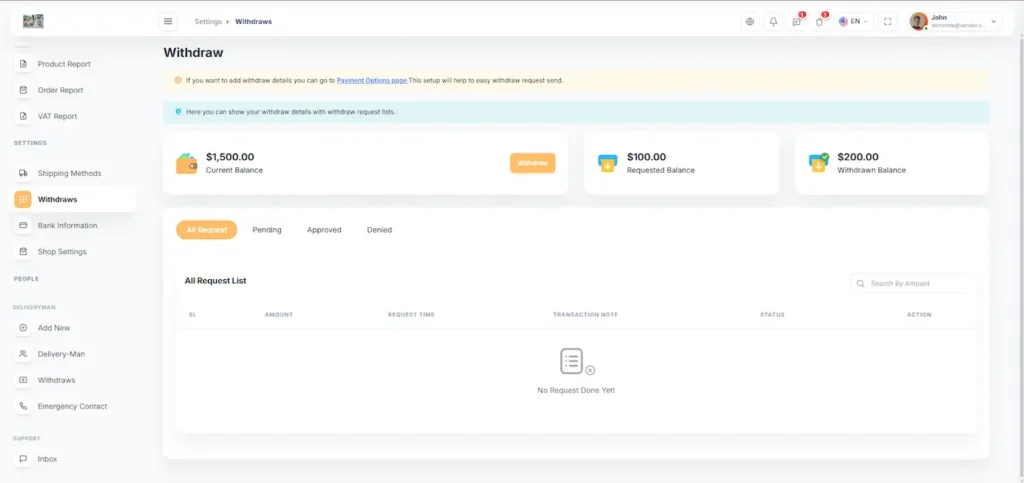
Amazon Clone Vendor Withdrawal Management
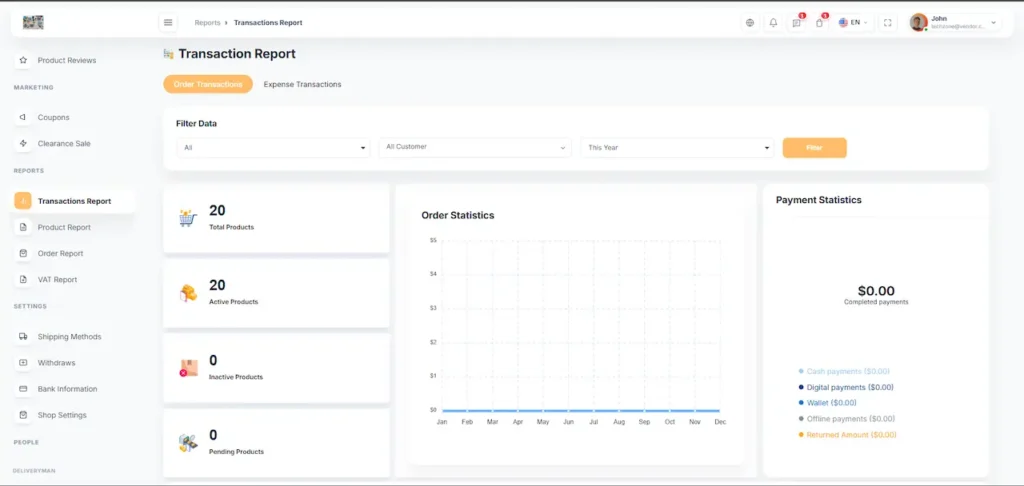
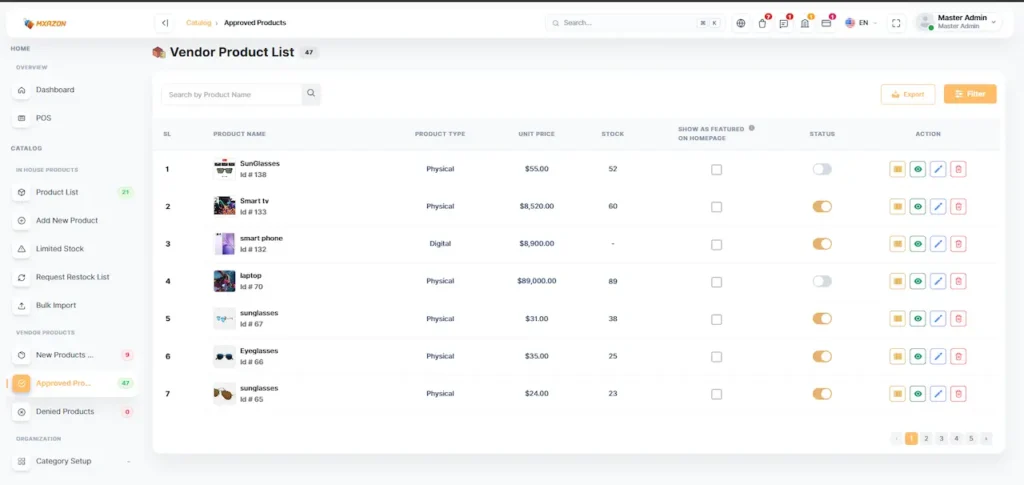
Amazon Clone Vendor Transaction Report
Amazon Clone Vendor Product Catalog
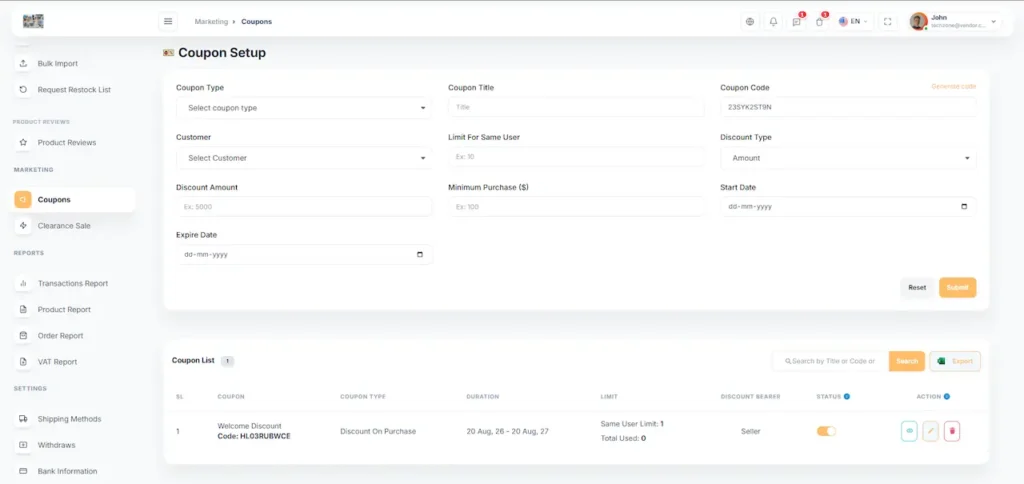
Amazon Clone Vendor Coupon Setup
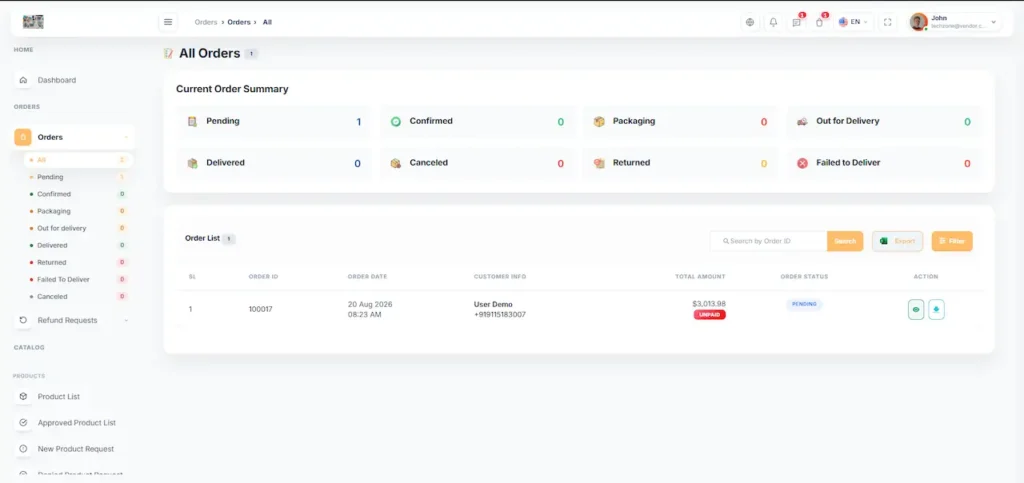
Amazon Clone Vendor Order Processing Workflow
Amazon Clone Vendor Order Management
Amazon Clone Vendor Product Inventory
Amazon Clone Vendor Sales Dashboard
9 screens · scroll →

Want a guided look at a specific flow? Book a call and we will run that surface for you on live data.

Explore Our Solutions

02Proof

Client Reviews

What Operators Say About Miracuves: Real Platforms, Live Outcomes

This multi-vendor commerce platform has not yet been deployed for a named client, so none of the quotes below are offered as Amazon Clone references. They are approved statements from operators who went live on other Miracuves marketplaces sharing the same base: a single ledger carrying commission and payouts, vendor onboarding with approval, a merchant console and fleet dispatch.

MMelvin MoralesOperations Lead, Shophy Holdings
“Ride-hailing, food, courier and a marketplace, and we were chasing a holiday window. Their Gojek base had the rider and driver apps, dispatch and the merchant console already. We added local payment partners and our regional marketplace layer, and were taking live orders inside a month.”
MMakaalu TeamFounding team, Makaalu
“We needed three apps that agree with each other: customer, driver and store. The shared state model was already built, which is the part people underestimate. Live inside a month with all three in the stores.”
CCharles EveillardManaging Partner, Izi Technologies
“Talokitoko is grocery and food delivery for the African diaspora market in Europe. The rider app, dispatch and the merchant console were already built, so we spent the engagement on our own local payment mix, the vendor onboarding flow and the regions we actually operate in. The platform was live inside a month, which was months faster than our internal estimate.”
SSaas Home Services TeamFounding team, Saas Home Services
“Provider onboarding, quoting, booking and payments came off the shelf. We added our service categories and our vetting rules. Both sides of the marketplace were live inside a month.”
Browse More Client TestimonialsWords from founders, CTOs and operator teams, collected on the testimonials page

Proof in Production

Marketplace Reference Deployments: Delhi and Bangkok

Below are two modeled reference deployments that show the platform configured for markets that differ widely. Both are illustrative scenarios, not client engagements, and draw only on capabilities found in the base build. Actual client deployments, along with the figures they report, are listed in the Miracuves portfolio.

Illustrative Sample Deployment
India
COD-Led Multi-Vendor Marketplace

A setup for a marketplace in which cash still settles a large portion of orders, and growth spreads from the metros outward into tier-2 as well as tier-3 towns.

Illustrative exampleNot a real client engagement
IndiaRegion modeled
Cash-Led Multi-Vendor RetailSector
131Tables in the delivered schema
4Wallet entries matched per order
6 daysLaunch lead time
Amazon Clone Web Storefront Homepage
Where This Market Gets Tricky
  • Cash that settles an order at the doorstep days after it was placed, by which time stock and commission are already committed
  • Tax rates varying with product category and with state, each requiring its own invoice line
  • Shoppers who do not browse in English and convert poorly on an English storefront
  • Some pin codes get dependable delivery while others get none
What an Operator Might Ask For
  • Accept cash without improvising its bookkeeping in a spreadsheet
  • Enter a new town only when a delivery route really exists there
  • Commission set category by category, not a single flat rate covering electronics and apparel
  • Operate the storefront in whichever language the local market reads
🛠 Shipped in the Base Build
  • Cash on delivery, with the code checked on the server at handover
  • Each agent carries a cash-collected balance that is settled into the operator wallet
  • A handling fee on cash orders, set by the operator
  • Zip allowlists that determine whether checkout is offered in a location
  • Per-zone tax classes, plus rules attached to individual products
  • Language and currency settings covering the web storefront and three Android apps
  • KYC-based seller onboarding and commission set for each seller

This deployment is modeled, not a client engagement. All the capabilities above come in the base build and can be demonstrated in the live demo, while the figures describe the platform itself rather than results a customer reported.Deployments for named clients are published separately · Real engagements, with the figures they report, are in the Miracuves portfolio.

Test this model on your own marketWe lay your catalog over cash exposure, tax zones and serviceability.
Illustrative Sample Deployment
Thailand
Provincial and Cross-Border Marketplace

The same platform set up for a single catalog that must serve Bangkok, the provinces and neighboring markets, every one with its own delivery economics and currency.

Illustrative exampleNot a real client engagement
ThailandRegion modeled
Cross-Border Multi-Vendor RetailSector
11Gateways you can switch among
9Order statuses, payment through delivery
3Android apps included in the base build
Amazon Clone Marketplace Admin Dashboard
Where This Market Gets Tricky
  • Delivery costs that diverge widely between a crowded Bangkok route and one through the provinces or islands
  • Customers expecting to pay when the order arrives, not beforehand
  • Selling to neighboring markets that price in another currency
  • Each additional market typically adding a second deployment to be kept in sync
What an Operator Might Ask For
  • Cover the provinces and the capital from a single catalog, with neither subsidizing the other
  • Show each buyer prices in a currency they know
  • Bring in a neighboring market through configuration, not a separate platform
  • Final-leg delivery and the money collected on it both remain under the operator's brand
🛠 Shipped in the Base Build
  • Zones that allow shipping cost overrides per category
  • A catalog of currencies where the default sets how checkout is displayed
  • Cash on delivery reconciled agent by agent
  • A delivery fleet tracked through pickup and delivery checkpoints
  • A storefront in multiple languages on all surfaces
  • Nine order statuses, and a complete status history kept for each order
  • A single REST API behind the storefront, plus the seller panel and every one of the three apps

This deployment is modeled, not a client engagement. All the capabilities above come in the base build and can be demonstrated in the live demo, while the figures describe the platform itself rather than results a customer reported.Deployments for named clients are published separately · Real engagements, with the figures they report, are in the Miracuves portfolio.

Try this model on your own marketWe lay your catalog over routing in the provinces, currencies and rules for crossing borders.

03The product

The Basics

What Is an Amazon Clone App?

An Amazon Clone is a multi-vendor marketplace that comes ready-made: customers browse and buy, independent vendors list their own products and receive payment, your own delivery agents handle the last mile, and you earn commission on every transaction. The backend runs on Laravel 12 with 131 normalized MySQL tables, and the same REST API serves the web storefront, vendor panel, operator console and three Flutter Android apps.

Amazon Clone Platform Across Storefront, Seller, and Admin Interfaces

Marketplace

Catalog, variants, categories to any depth, brands, digital goods, restock alerts and a clearance storefront, with a moderation queue standing between a vendor and the shop front.

Logistics

A deliveryman identity with KYC and approval, an assignment feed, live location, OTP proof of delivery, and cash-on-delivery reconciled through its own ledger.

Money

Four wallets, with an append-only history for each actor, commission divided on completion, reversal on refunds, withdrawal queues and settlement records per gateway.

Covers Web, Android, Vendor & Delivery

What Is an Amazon Clone Script?

A marketplace is hard because of what must stay consistent after the product page, not the page itself. Stock has to decrement per SKU, an order has to divide neatly among several vendors, delivery fees and commission have to end up in four separate wallets, cash taken at a doorstep has to reconcile with the operator, and a refund has to reverse every step without leaving a balance no one can explain. This platform has already solved that part.

Amazon Clone Web Storefront Homepage
  1. 01Customer storefront plus a Flutter Android app
  2. 02Vendor panel plus a Flutter Android app
  3. 03Deliveryman Flutter Android app
  4. 04Back-office console where each staff role sees only its own scope
  5. 05REST API v1, v2 and v3 with OAuth2 for partners

Unless marked configuration-required or integration-required, every item on this page ships in the base build. Keys for gateways, SMS, push and AI come from the operator, since those accounts are yours rather than ours.

Features

Amazon Clone Features: Catalog, Checkout, Fulfillment plus Earnings Withdrawals

All of the items below are part of the base build and can be shown in the live demo. A module you do not need is turned off from the admin, with no code changes.

Feature 01 / 12

Catalog and Categories

Products with multi-image galleries, a self-referencing category tree with unlimited depth, a brand directory, an attribute library and tag-based search tokens.

  • Products with multi-image galleries and video
  • Self-referencing category tree of unlimited depth
  • Brand directory, attribute and color libraries
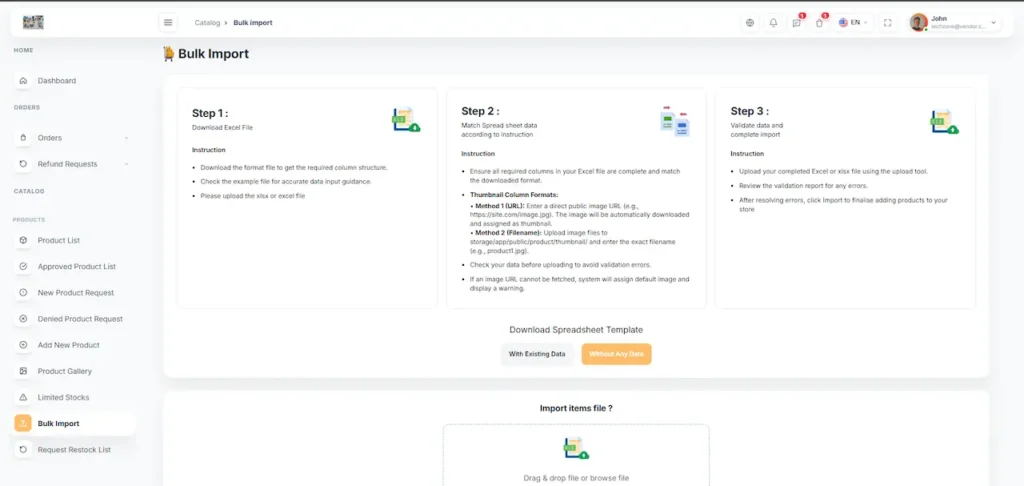
  • Barcode and SKU management with bulk import
Feature 02 / 12

Variant Matrix

Color, size and custom attributes resolved to SKU-level rows carrying their own price and quantity, so stock and pricing move per variant rather than per product.

  • Color, size and custom attribute variants
  • SKU-level rows with their own price and quantity
  • Stock thresholds with low-stock alerts
  • Digital product variants with single-use OTP access
Feature 03 / 12

Search and Discovery

Keyword search with autocomplete, filters on price, brand, rating, vendor and attributes, sort options, recent searches per customer and operator-defined search keys.

  • Keyword search with autocomplete suggestions
  • Filters on price, brand, rating, vendor and attributes
  • Sort by relevance, price, newest and popularity
  • Recent searches per customer and operator search keys
Feature 04 / 12

Merchandising Rails

Featured, most-demanded, best-selling and best-rated rails, a daily deal, time-boxed flash deals with per-product discounts, and a dedicated clearance storefront.

  • Rails showing featured items, those most in demand, and bestsellers
  • A deal of the day, plus flash deals limited by time
  • A separate clearance storefront handling short-dated stock
  • Restock subscriptions that notify customers once an item is back
Feature 05 / 12

Multi-Vendor Cart

One cart spanning several sellers, split at checkout into per-vendor orders, with guest carts tracked by session and merged into the account on login.

  • A single cart that holds items from several vendors
  • A guest cart followed by session and merged in at login
  • Items can be saved for later or moved to a wishlist
  • Shipping estimated per vendor before checkout
Feature 06 / 12

Cart and Promo Codes

At checkout, loyalty points, wallet balance and a coupon can be combined, shipping is chosen vendor by vendor, and an idempotency check protects order placement.

  • Coupon, wallet and loyalty combined in one order
  • Flat or percentage discounts limited to a product, a category or the cart
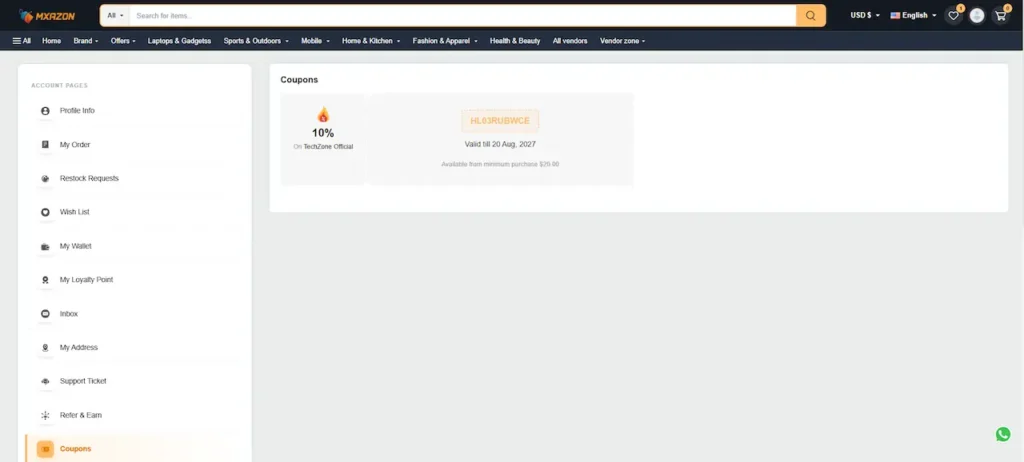
  • Coupons for free shipping, with usage limits for each user
  • Idempotency check applied at order placement
Feature 07 / 12

Order State Machine

Nine statuses from pending payment to delivered, with canceled, returned and failed as terminal branches, and every transition written to a status history.

  • Nine order statuses, running from pending payment through delivered
  • Delivery status tracked per line, so partial fulfillment is possible
  • A status history recording the actor, a note and a timestamp
  • Field-level edit history on any operator change
Feature 08 / 12

Refunds and Returns

A refund request carries a reason and moves through its own status machine, settling either as an instant wallet credit or back through the original gateway.

  • Refund requests that include a reason and evidence
  • A dedicated status machine that stops double-spend
  • Instant wallet credit or gateway settlement
  • Loyalty points reversed on cancellation
Feature 09 / 12

The Wallet Set

Separate balances for the customer, vendor, deliveryman and operator, with every debit and credit tied to a history row in the same database transaction.

  • Wallets for the customer, vendor, deliveryman and operator
  • Each balance movement gets an append-only history row
  • Top-ups go through any gateway that is configured
  • Operator-defined bonus tiers for added funds
Feature 10 / 12

Points and Invite Rewards

Points accrue on order value or by category, are redeemed at checkout or converted into wallet balance, and referral codes reward both parties.

  • Earned on the order value, or category by category
  • Used at checkout to offset the order total
  • Turned into wallet balance when requested
  • Referral codes rewarding both sides
Feature 11 / 12

Shipping and Cash on Delivery

An assignment feed with accept and reject, checkpoints for pickup and delivery, live location, OTP checks on arrival, and a cash-collected balance for every agent.

  • A feed of assignments that can be accepted or rejected
  • Location shared live during transit
  • A one-time code checked at the doorstep
  • Cash collected is tracked agent by agent and reconciled
Feature 12 / 12

Ratings and Messaging

Ratings and reviews with image upload, vendor replies, customer-to-vendor chat with attachments, and a support ticket queue with threaded conversations.

  • Ratings and reviews that accept image uploads
  • Vendor replies on any review
  • Chat between customer and vendor, attachments included
  • Support tickets with threaded conversations
Heads up for purchasers:

all features above are white-label, and each deployment can enable or disable them from the admin console. Switching any item in this list off takes no code change.

See All Features

Control Center

Amazon Clone Admin Dashboard: Catalog, Orders, Earnings and Settings

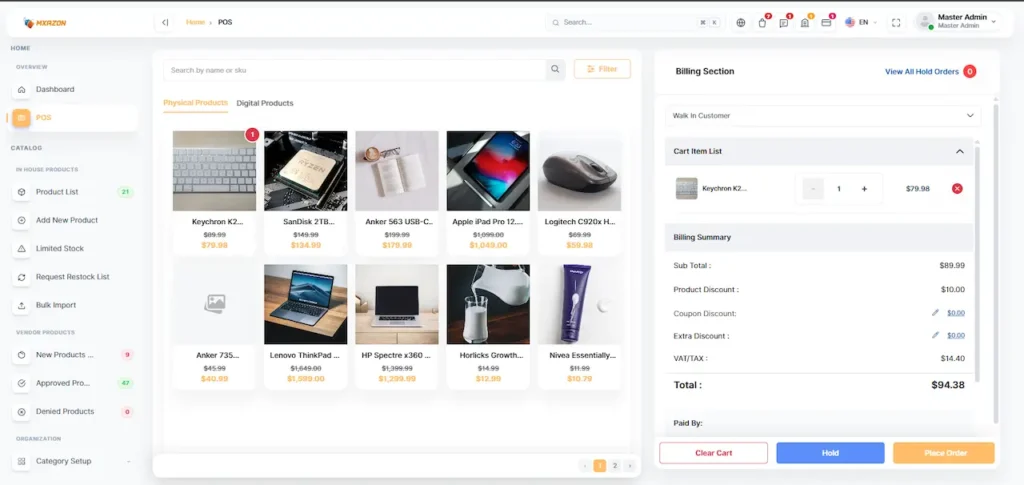
The operator console is where the marketplace is actually run, and every module sits behind its own permission. Roles are granular enough that a finance clerk can process payouts with no catalog access, while a moderator can approve products and has no access to settings.

Amazon Clone Marketplace Admin Dashboard
Amazon Clone Admin Business Settings

Operator Oversight

  • 01

    Headline Metrics

    Gross merchandise value, order volume, vendor and customer counts, a sales chart, top categories and vendors, and queues showing what is waiting on an operator decision.

  • 02

    Catalog Moderation

    Vendor-submitted products wait in a queue where they can be approved, rejected or handled in bulk; staff can also edit any listing in full and manage the category, brand and attribute libraries.

  • 03

    Cross-Vendor Orders

    All orders from every vendor, each with a status timeline and field-level edit history, plus expected-delivery changes, a manual status override that needs a reason, and invoice generation.

  • 04

    Return Requests

    Each request carries a reason and evidence; staff approve or reject it and add a note, and the settlement goes to the customer wallet or returns through the gateway used for the original payment.

  • 05

    Payout Request Inbox

    Payout requests from vendors and deliverymen can be approved, denied or marked processed, using the withdrawal methods the operator defines and each vendor’s saved payout details.

  • 06

    Team Access and Vetting

    Customer directory, vendor approval and suspension with subscription management, and deliveryman approval, suspension and zone assignment.

  • 07

    Marketing Surface

    Banners, flash deals, featured deals and the daily deal, along with coupons at platform and vendor level, plus composers for push, email and SMS campaigns.

  • 08

    Tax Setup

    Tax classes and rates are tied to each zone, product-level tax rules use a polymorphic binding, display can be inclusive or exclusive, and every order gets a tax line breakdown.

Store Settings

Everything is a setting rather than code: the commission rate, loyalty ratio, how long an OTP lives, currencies, languages, the countries and zip allowlists you deliver to, shipping methods, and cost overrides per category.

  • Robots directives and SEO metadata set route by route
  • A sitemap that regenerates itself every day
  • Drop in GA, GTM or Pixel analytics scripts
  • Product and blog pages carry structured data

Exports and Reporting

Pick any date range and pull reports on sales, vendors, products, customers, wallets, refunds, withdrawals and tax, then export them as Excel, CSV or PDF.

  • Gross merchandise value, orders and growth at a glance
  • Pending vendor and product requests surfaced as actions
  • Refund and withdrawal queues with counts
  • Top categories, vendors and products by period
Want stricter controls?

Need age-gated categories, catalog rules that differ by country, document expiry tracked per vendor, or a four-eyes approval step on payouts? Each can be built as a custom module. Tell us and we will scope it.

Request an Admin Walkthrough

04Inside the package, and what it costs

Deliverables

What's Included: Amazon Clone Source Code, Mobile and Go-Live

Handover means the full system is yours, not permission to run a platform that belongs to someone else.

01

Customer App

A branded Android build consuming the same REST API as the storefront, carrying browse, cart, checkout, order tracking, wallet and support.

  • Fully branded Android app for your customers
  • Browse, search, cart, checkout and order tracking
  • Built-in wallet, loyalty and referral
  • Push notifications and in-app support chat
Amazon Clone Mobile Storefront and Featured Products
02

Vendor App

The seller surface on mobile: products, stock, the order queue, refund responses, customer chat, wallet and withdrawal requests.

  • A vendor-facing Android app in your branding
  • Mobile screens for product CRUD, stock and the order queue
  • Refund responses and customer chat
  • Wallet balance and withdrawal requests
Amazon Clone Seller Mobile Business Dashboard
03

Rider-Side Mobile App

What the delivery agent sees: OTP handover, status checkpoints, navigation and assignments, plus cash collected and earnings tied to a payout flow.

  • An Android app for delivery agents, carrying your brand
  • A feed of assignments the agent can accept or reject
  • OTP proof of delivery and live location tracking
  • Agents see earnings and cash collected, and can request payouts
04

Customer Storefront

The public marketplace with category browse, search and filters, product pages with variants and reviews, and a multi-vendor cart.

  • A web storefront for customers, with complete search
  • Category and product pages built for search engines
  • Adapts to mobile, tablet and desktop screens
05

Vendor Web Panel

Shop profile and KYC, catalog management with bulk import, analytics, and everything a seller needs from a desk rather than a phone.

  • A web panel where vendors run their shop and catalog
Amazon Clone Marketplace Admin Dashboard
06

Operations Desk

Moderation, cross-vendor orders, refunds and payouts, then people, marketing, tax and configuration, with staff access scoped by role from day one.

  • Operator console with role-scoped staff accounts
  • Granular permission system per module
  • Vendor approval and product moderation
  • Commission, coupons and payout processing
07

Entire Codebase Handover

Your repository receives all three Flutter projects plus the Laravel 12 backend, unobfuscated, with no license callback.

  • Full Laravel 12 source code with nothing encrypted
  • Every client is served by the v1, v2 and v3 REST API
  • A 131-table schema, migrations that can be reversed
  • AI, Blog and Tax live in separate modules
08

Go-Live and Training

Deployed onto your infrastructure with the queue, scheduler and storage set up, then an admin walkthrough and the configuration checklist.

  • Color theme, splash screen, logo and app name are yours to set
  • Branded transactional email templates
  • Custom domain configuration
  • White-label branding on every surface
  • Server setup is done by us, on the provider of your choice
  • Storage, scheduler and queue worker come configured
  • 60 days of launch guidance
  • Bug fixes get priority for 6 months, and updates run for 12 months
Curious what the handover contains?

In a booked walkthrough we go through the storefront, vendor panel, delivery app and operator console using live data, and then show you how the repository is laid out - the code you would own.

See What You Get

Pricing

How Much Does It Cost to Build an Amazon Clone App in 2026?

The one-time purchase price is $2,799, and deployment takes six working days. Included: all three Android applications, the operator console, the vendor panel, the customer storefront and the source code, all of it running on your own infrastructure and carrying your branding. Writing this much surface from nothing is a program of eighteen to thirty months for a senior team, while assembling it from separate payout, logistics and commerce products would mean paying for three subscriptions, running three security reviews, and living with integration work that never quite ends. Outside the fixed price sit the things you supply yourself: gateway credentials, plus email and SMS providers, catalog data, tax rates for your jurisdictions, a Firebase project and an OpenAI key. Custom or deeper work is scoped first, then priced separately, and usually takes two to eight weeks.

Buyers' Choice

Professional

Ready-to-Run Package
$2,799/-flat sum
Go-live: 6 days

Best fit: COD-heavy operators, regional retailers & vertical marketplaces

The product matches what our demo shows, rebranded as yours and hosted on your own servers.

Get Started

Enterprise

Bespoke, Regulated & Heavy-Load
Customquote
Go-live: Based on final scope

Best fit: White-label agencies, franchise networks, distributors & retail groups

A build shaped around your own situation and requirements.

Request a Quote

05Who it is for

Built For

Which Sellers Is Our Amazon Clone App Made For?

The platform suits operators who already have supply, demand or a territory, and need the marketplace and the logistics rather than the business.

Audience 01 / 06Regional Retail Groups

Retailers with existing stores and stock who want their own marketplace and their own delivery instead of paying an incumbent for access to their own customers.

Audience 02 / 06Vertical Marketplace Founders

Fashion, grocery, electronics, home, beauty, pharmacy or books, categories in which a tightly focused catalog and vendor mix outperforms a general store on relevance.

Audience 03 / 06COD-Heavy Markets

Operators in regions where cash still closes most orders and who need cash collection, OTP handover and agent reconciliation built in rather than bolted on.

Audience 04 / 06Distributors Going Direct

Wholesalers that already have supplier relationships and want a branded storefront plus a vendor pipeline, without giving the customer relationship to a platform.

Audience 05 / 06Franchise and Multi-Location Networks

Groups running many outlets that want each outlet onboarded as its own vendor shop, with its own stock and orders, and one operator console over the whole network.

Audience 06 / 06Studios and Reseller Partners

For studios delivering commerce projects that need a deep, brandable base to roll out per client or territory from one codebase.

When catalog, vendors, fulfillment or repeat purchase carry your business, this platform is the base to build on. Book a call and we will tell you honestly whether it suits your model or whether an adjacent solution of ours would be a better place to begin.

Talk to Our Team

Fit by Industry Type

Amazon Clone Use Cases: Retail, Grocery, Fashion & Overseas Selling

Every case below runs on the same platform. The differences lie in the modules you turn on and the part of the operating model that takes the lead.

RetailMulti-CategoryGeneral Retail Marketplace

A general marketplace with many vendors across many categories, an unlimited category tree, brand pages and a moderation queue holding quality. Commission and vendor subscriptions carry the revenue, and the delivery fleet keeps the last mile under your brand rather than an aggregator.

01
Amazon Clone Web Storefront Homepage
GroceryPerishableGrocery and Daily Essentials

Grocery depends on parts that other commerce platforms treat as edge cases: fast-moving stock, restock subscriptions that tell customers when an item returns, a storefront for clearing short-dated goods, and a delivery fleet that collects cash at the door.

02
Amazon Clone Mobile Product Categories
FashionVariantsFashion and Lifestyle

Fashion is a variant problem. Color and size resolve to SKU-level rows with independent price and stock, product galleries carry the range, and reviews with image upload do the work that description copy cannot.

03
Amazon Clone Mobile Product Details
ElectronicsHigh-ValueElectronics and High-Value Goods

High-value electronics need the audit surface. Every order carries a status history and a field-level edit log, OTP verification proves the handover happened, and the refund pipeline keeps a defensible record when a dispute arrives.

04
Amazon Clone Web Order Tracking
DigitalDownloadsDigital Goods and Media

Digital goods ship without a courier. Downloadable products carry their own variants and an OTP verification that enforces single-use access, with authors and publishing houses modeled for books and media catalogs.

05
Amazon Clone Web Product Details and Purchase Panel
Cross-BorderMulti-CurrencyCross-Border Commerce

Cross-border rollouts use the multi-currency table, the translation store, delivery country codes and zip allowlists, and per-zone tax profiles, so one deployment serves several markets under one operator console.

06
Amazon Clone Admin Business Settings

Cannot tell which one describes you? Most operators turn out to be a mix of two. Set up a call and we will lay your catalog, vendor mix and fulfillment model next to what the platform already covers.

Discuss My Use Case

Industries

Industries We Serve

Miracuves Amazon Clone is a marketplace-first commerce platform, adaptable to any catalog sold through multiple vendors, priced by your own rules, delivered by your own fleet and fully white-labeled under your brand.

  1. 01Everyday Retail
  2. 02Food & Household
  3. 03Clothing & Style
  4. 04Electronics
  5. 05Health & Pharmacy
  6. 06Print & Digital Media
  7. 07Bulk & Trade Supply
  8. 08Chain Operators
  9. 09Crafts & Artisan Goods
  10. 10Overseas Retail

Any operator that sells physical or digital goods through several sellers can use the Amazon Clone. A general retailer works with the complete category tree and brand directory, while a grocery operator depends on quick stock movement, clearance and restock alerts. Fashion brands rely on the variant matrix at SKU level, and electronics sellers want the audit trail plus OTP handover for high-value orders. Pharmacies get moderation and controlled catalog access. Sellers of books and media have the digital product tables, which hold authors and publishing houses. Distributors who go direct lean on vendor onboarding and commission, and franchise networks give every outlet its own vendor shop under a single console.
06Under the hood

The Order Journey

How the Amazon Clone Works: Browse, Buy, Fulfil then Reconcile

One order, followed end to end, across all four surfaces and both ledgers.

The Order Journey

  1. Amazon Clone Mobile Storefront and Featured Products
    1Browse and Add to Basket

    A customer arrives and finds a product through whichever route suits them.

    • Category tree, brand directory or keyword search with autocomplete
    • Filters on price, brand, rating, vendor and attributes, with sort options
    • Product page with gallery, variant picker, stock indicator and reviews
    • Added to a cart that can hold items from several vendors at once
  2. Amazon Clone Mobile Payment Method Selection
    2Pay and Confirm

    Carts are divided per vendor, and totals are settled before any money changes hands.

    • A shipping address is picked and each vendor gets its own method
    • A single checkout combines the coupon, the wallet balance and loyalty points
    • Pay with cash on delivery, an offline method, or any of eleven gateways
    • An idempotency check protects order placement, so submitting twice cannot create a duplicate
  3. Amazon Clone Seller Profile and Account Menu
    3Seller Confirms and Packs

    A vendor is shown just their own share of the order.

    • Order lands in the vendor queue with buyer and item detail
    • Orders get accepted or declined with a reason, then flagged packed and ready
    • SKU-level stock goes down automatically
    • PDF versions of the packing slip and invoice are generated
  4. Amazon Clone Seller Add Delivery Staff Form
    4Dispatch and Collect

    The operator or the auto-assignment job presents the order to an agent.

    • Assignment appears in the deliveryman feed, accepted or rejected
    • Navigation to the vendor for pickup, then to the customer
    • While the order travels, its live location is broadcast
    • Each status checkpoint is recorded with a timestamp and geo position
  5. Amazon Clone Delivery Staff Profile
    5Confirm and Hand Over

    The handover is proved rather than asserted.

    • At the door, the one-time code is checked against a time-limited record
    • COD orders: the cash taken is posted to the agent balance
    • The order is marked delivered, and the customer hears by push, email and SMS
    • The delivery trail is kept for SLA and dispute records
  6. Amazon Clone Delivery Staff Wallet
    6Reconcile and Close Out

    The money resolves across four wallets in one transaction.

    • Commission split between operator, vendor and delivery agent
    • Vendor balance credited and the platform commission debited
    • Collected cash is reconciled, moving from the agent balance into the operator wallet
    • Every movement is matched with a reference id and a history row that can only be appended to
Process Flow ChartBrowseCartCheckoutSeller ConfirmsDelegate to CourierPickupOTP HandoverSettle

Architecture

Amazon Clone Platform Architecture and Order of Server Steps

Technical Dossier
  1. Layer 01

    Layered Backend

    Controller for the HTTP boundary, service for orchestration and transactions, repository for data access, Eloquent for the entity. Business rules live in one layer, not scattered across controllers.

  2. Layer 02

    Modular Packaging

    AI, Blog and Tax ship as nWidart modules with their own routes, migrations and providers, so an operator can disable one without touching the core application.

  3. Layer 03

    Reactions to Events

    Order placed, status changed, vendor approved, payout requested and refund processed each emit an event. Listeners fan out to notifications, ledger writes and analytics.

  4. Layer 04

    Job Queues and Timers

    Workers backed by Redis and managed by Supervisor process image, PDF, email, push and AI jobs.. Backups, abandoned-cart reminders, subscription renewals and commission recalculation are run by a cron scheduler.

  5. Layer 05

    Ledgers That Only Grow

    Records for wallet history, order status history, order edit history and refund status are only ever appended, never updated, which lets the financial and operational trail be replayed and audited.

  6. Layer 06

    Scaling Out Sideways

    Application servers stay stateless behind a load balancer; reporting reads from MySQL replicas, Redis handles cache and queue, and media sits on S3 fronted by a CDN.

Tech Stack

Built with Laravel 12 plus Flutter, MySQL and Redis: the Amazon Clone Stack

The stack is conventional and easy to hire for. Nothing in it is exotic, and that is intentional, since whoever maintains it after handover should already be familiar with it.

Laravel 12

Server Code and Rules

PHP 8.2 · Laravel 12 · nWidart Modules
  • Layers run controller, service, repository and model, and transactions are placed at the service boundary
  • The data layer is 131 normalized MySQL tables fronted by 114 Eloquent models
  • AI, Blog and Tax ship as modules you can switch on or off without changing core code
  • Notifications and ledger writes are driven by observers, events and listeners
Flutter

Phone Apps

Flutter · Dio · Provider with GetIt
  • One shared architecture underlies the customer, vendor and deliveryman builds
  • Seller and delivery agents authenticate with Sanctum bearer tokens carrying role claims
  • Every app gets a separate Firebase Cloud Messaging setup, topic subscriptions included
  • The deliveryman build uses Google Maps to route pickups and drop-offs
MySQL 8 · Redis 7

Database and Cache Tier

MySQL 8.x · Redis 7.x · InnoDB
  • Soft deletes apply to product, agent, vendor and customer rows, and utf8mb4 is used everywhere
  • Hot paths use composite indexes, for example vendor plus status plus created date
  • Cache, queue and session use Redis, and a database queue serves as the fallback
  • Wallet histories only ever append, which means any balance can be derived again
Eleven Payment Rails

Charging and Settling Money

Eleven gateways · Offline · COD
  • Supported gateways: PayTabs, Flutterwave, SSLCommerz, PayUZ, Paytm, PhonePe, Iyzico, Mercado Pago, Razorpay, PayPal and Stripe
  • Webhook signatures are verified at the boundary, and handling is idempotent on the gateway transaction id
  • Offline methods the operator defines, verified by hand
  • A dedicated agent transaction table is used to reconcile cash on delivery
FCM · OpenAI

Messaging and AI Tools

FCM · Twilio · Vonage · OpenAI
  • All three apps receive push via Firebase Cloud Messaging
  • Twilio or Vonage sends SMS; SMTP or Amazon SES sends email
  • OpenAI covers image alt text, SEO copy and product descriptions
  • Token quotas are set for each feature, and tokens plus cost are logged on every call
S3-Compatible

Files and Content Delivery

S3-compatible · Intervention · CDN
  • Flysystem connects to AWS S3, MinIO, Wasabi or DigitalOcean Spaces for storage
  • A queue produces optimized images and responsive variants
  • Images become WebP for clients that support the format
  • For static and media assets we recommend a CDN at the edge
A word for technical buyers:

the Amazon Clone is built for your own team to take over, using standard Laravel conventions, a schema that is documented and migrations that can be reversed, with a modular boundary kept for anything custom.

Ask About Custom Modules

Build to Scale

Built to Scale: Rider Fleet Volume, Order Volume and Catalog Depth

The scaling questions on a marketplace are specific: a catalog that grows faster than the index, order tables that get hot at peak, and a fleet writing location updates continuously. Each has an answer already in the build.

01

Order Data at Busy Hours

The busiest tables are orders and order details, plus notifications, chat and delivery histories.

  • Composite indexes follow the actual access patterns
  • Vendor, combined with status and created date
  • Agent with status
02

Deferred Job Processing

Supervisor runs AI enrichment, push fan-out, email, report and invoice generation and image processing as queued jobs.

  • Failed jobs are captured and retried with a backoff
  • Not one of them runs within a customer request
  • Page rendering is never held up by a sudden burst of orders
  • Notification delivery degrades when the mail provider fails, while checkout carries on
03
category tree cachedpopular rails cachedpages paginated

Browse-Heavy Traffic

Banners, settings, the category tree and the popular-product rails sit in Redis instead of being rebuilt on every request, covering the bulk of what the storefront reads.

  • Server-side pagination keeps product lists from returning unbounded result sets
  • Eager loading of related models keeps category and search views clear of the N+1 problem that shows up first as a catalog grows
04
MySQL full-textElasticsearchMeilisearch

Search Beyond MySQL

MySQL full-text and indexed columns carry the baseline, which is enough for most catalogs.

  • Elasticsearch or Meilisearch can be introduced behind the same search service interface
  • Index sync on a queue
  • Outgrowing the default is a configuration and infrastructure change rather than a rewrite
05

Fleet Write Volume

While it is on shift, a delivery fleet writes continuously.

  • Location updates run on their own queue rather than synchronously inside a request
  • Delivery histories and notifications are natural candidates for time-based partitioning at the storage layer once the fleet grows large enough to justify it
06

Where Old Records Go

Orders that closed more than twelve months ago can be moved into an archive table sharing the schema.

  • Keeping the working set small
  • Without breaking joins or reporting

Founders and CTOs, one thing to know:

a single modest instance is a workable starting point with a credible route to scale, since none of it has to be replaced on the way. Only the drivers change; the code stays.

Discuss Scale Requirements

07Security and trust

Security

Amazon Clone Security Controls: Mapped to OWASP, Ready for GDPR and VAPT

Security on a marketplace is not one control, it is four separate problems. Money moves between four wallets and must never be silently editable. Vendors are tenants, and one must never see another’s data. Customers give up addresses and signal payment intent. And delivery agents carry cash plus a live location trail that is sensitive in itself. The platform answers each with a specific mechanism rather than a general claim: append-only ledgers written inside the same transaction as the balance change, repository-level tenant scoping keyed on the vendor and agent identity, gateway-hosted payment fields so no card number ever reaches the server, and emergency-contact and location data segregated to the agent and the operator alone.

  1. 01 · Controls
    Built to the Controls

    Argon2id password hashing, encrypted session cookies with HttpOnly and SameSite, CSRF tokens on every state-changing web route, and mass-assignment protection across models.

    • Default rate limits are sane, not tuned: Throttling covers login, registration, OTP and checkout from the start. The right values depend on your traffic profile, so check them against real volume instead of leaving defaults in place indefinitely.
    • Captcha is available and off by default: A captcha on signup and contact forms is wired but not enabled, because it costs conversion. Turn it on when abuse justifies it, and prefer a honeypot first.
    • Two-factor is optional, not forced: Operator staff can use TOTP, and anyone who can sign off a payout or change an order should have it enabled. Nothing switches it on for you by default.
  2. 02 · Privacy
    GDPR-Ready

    Soft deletes on customer, vendor and agent records, a JSON export for each user, account deletion with a grace period before PII is purged, and marketing that requires explicit opt-in.

  3. 03 · Tenants
    Separation Between Tenants

    Scoping for vendors and deliverymen is enforced in the repository layer, with model policies covering reads and writes and API token abilities tied to permission slugs instead of one blanket scope.

  4. 04 · Payments
    Money Handling Safety

    Card numbers are never stored. The boundary verifies webhook signatures, gateway ids make transactions idempotent, and a status machine on refunds prevents double-spend.

  5. 05 · Input
    XSS and Injection Checks

    Parameterized Eloquent queries run throughout, every write endpoint has form-request validation, Blade escapes output, and Mews Purifier cleans rich-text fields like descriptions and support replies.

    • Security headers are yours once we hand over: Your web server or CDN applies HSTS, X-Frame-Options, Referrer-Policy and Content Security Policy at the edge. We configure them during deployment; if you add third-party scripts later, the operator is responsible for keeping them accurate.
    • A WAF is advised but not bundled: Rate limiting at the edge and a web application firewall should sit ahead of the app. Cloudflare or a comparable service is the usual choice, and picking one is a deployment matter rather than a code matter.
  6. 06 · Audit
    Activity Logging

    Order status and field-level edit histories, refund transitions, wallet histories per actor, AI usage with cost per call, and an application error log surfaced in the console.
    • Dependency audits never finish: Run Composer and npm audits in your CI with every deploy. A penetration test every year and a dependency review every quarter keep this posture current instead of leaving it a snapshot.

We configure it; you own it afterward. On certification, the plain position is this: the controls listed above exist, and the platform is ready for penetration testing and for collecting the evidence ISO 27001 or SOC 2 demand. No certificate for either is held or claimed. A few items sit at the deployment layer; we configure them, you own them once handed over, and the cards above name them as such instead of blending them into a compliance claim.

Request the VAPT Summary

Go-Live Preparedness

Amazon Clone Marketplace Readiness - What the Software Provides and What Is Yours to Keep Afterward

An Amazon clone is software, not a license or a certification. Miracuves builds and hands over the marketplace controls this page describes. Running a marketplace lawfully – who may sell, what may be sold, how buyers are protected, which taxes the platform collects and how money reaches sellers – stays with you as the operator.

Built ready for a marketplace-integrity program, not certified for one.

For operators who need to manage sellers and orders with care, the build includes vendor registration that includes KYC, with approval or suspension by the operator, a moderation queue sitting between vendors and the shop front, KYC and approval for deliverymen, a refund status machine capturing reason and evidence, per-zone tax classes with a tax line on each order, zip allowlists that decide where checkout is available, OTP-verified handover, histories for order status and field-level edits, append-only wallet histories, payment fields hosted by the gateway so card numbers are never stored, and GDPR tooling (JSON export per user, account deletion after a grace period, explicit marketing opt-in). Four-eyes payout approval, age-gated categories, per-vendor document expiry and country-specific catalog rules are custom modules, and this page labels them that way. The software holds no certification, and Miracuves puts up no compliance badge for you.

What the Product Covers

Product moderation, per-seller commission with KYC at onboarding, queues for refunds and withdrawals, tax set per zone and shown as a line on each order, controls for delivery zones and zip codes, an audit trail covering wallets, refunds and orders, plus a security posture ready for a penetration test. You get the source code and own it.

What the Operator Still Owns

Choosing who may sell and checking their documents, obligations around product safety and consumer protection, handling returns, refunds and disputes under local law, and drafting seller rules and terms of service of your own all remain with you. If the law makes a marketplace collect tax on behalf of its sellers, such as US marketplace-facilitator sales tax or India’s GST TCS, you register, collect and file yourself. The software equips your team, but the decisions are not made by it.

Collections and Disbursements

The wallets, commission split and withdrawal queues are complete; real money movement and seller payouts run through the payment providers you connect, on your own merchant credentials with your own licensed provider. Card data stays with the gateway and never touches the platform.

Regional Regulations Set Terms

Platform liability and e-commerce rules differ from one market to the next, for example India's Consumer Protection (E-Commerce) Rules, 2020 and the EU Digital Services Act, in addition to tax, product-safety and consumer-protection law wherever you sell. Please have qualified counsel confirm what covers your situation; legal advice is not something Miracuves offers.

08Grow the platform

Built-in essentialsMXAzon
  • Multi-vendor catalog & checkout
  • Delivery fleet & COD
  • Four wallets & vendor payouts
  • Back-office dashboard

How add-ons work

  1. 1
    Select needed modules

    Choose when you launch or add them afterward; the core never needs rebuilding.

  2. 2
    Priced per module after scoping

    Every module is scoped and priced separately, in writing.

  3. 3
    Handed over as source

    Delivered the same way as the core, with source code that is yours.

Ask About Custom Modules

Advance Add-Ons

Amazon Clone Add-Ons: Search, Analytics, Integrations with Automation Tools

Operators ask for these extensions once volume arrives. The marketplace is what the base build covers, and each extension is quoted after scoping instead of being bundled.

  • Capacity and upkeep

    Standalone Search Service

    Elasticsearch or Meilisearch placed behind the current search service, syncing the index through a queue, for catalogs that have outgrown MySQL full-text.

    Search
  • Capacity and upkeep

    Deeper Reporting

    Cohort analysis, vendor performance scoring, basket analysis and forecasting on a read replica, beyond the standard sales, refund and tax reports.

    Analytics
  • Connectors and sales outlets

    ERP and Accounting Bridges

    Two-way sync with an existing ERP, accounting package or POS, so stock and settlement do not have to be reconciled by hand.

    ERP
  • Earnings and loyalty

    Loyalty and Membership Tiers

    A paid membership that brings free delivery and member pricing, sitting on top of the loyalty points and wallet already there, in the style buyers now expect.

    Loyalty
  • Earnings and loyalty

    Bulk and B2B Trade

    Tiered pricing by customer group, quote requests, credit terms and minimum order quantities let operators serve trade buyers alongside retail.

    B2B
  • Earnings and loyalty

    Sponsored Placement Engine

    A self-serve advertising surface where vendors bid for position on search and category pages, with budget control and delivery reporting.

    Ads
  • Capacity and upkeep

    Monitoring Toolset

    Operators who want something beyond the built-in error log can add log aggregation, OpenTelemetry tracing, and Prometheus with Grafana or an equivalent from a vendor.

    Observability
  • Connectors and sales outlets

    iOS Builds

    Compiling and signing all three Flutter projects and submitting them to the App Store is covered, along with the review cycle and store assets.

    iOS

Other Store Platforms

Selling Online? Whatever the Niche, We Have It Covered.

Several neighboring products stand on the same foundations as this platform. Start with one of them if your model sits closer to it.

Alibaba Clone app screen on tablet show product details01
Pick it if: Your buyers are businesses ordering wholesaleAlibaba Clone

Wholesale B2B marketplace: single-unit and bulk prices side by side, seller approval, deals and auctions.

Explore Solution
Aliexpress Clone Featured Image02
Pick it if: You sell retail across borders and ship internationallyAliExpress Clone

Cross-border retail with multi-currency pricing, international shipping and buyer protection.

Explore Solution
Desktop marketplace homepage featuring a Live Shopping Events banner, buyer protections, categories, and group-buy deals03
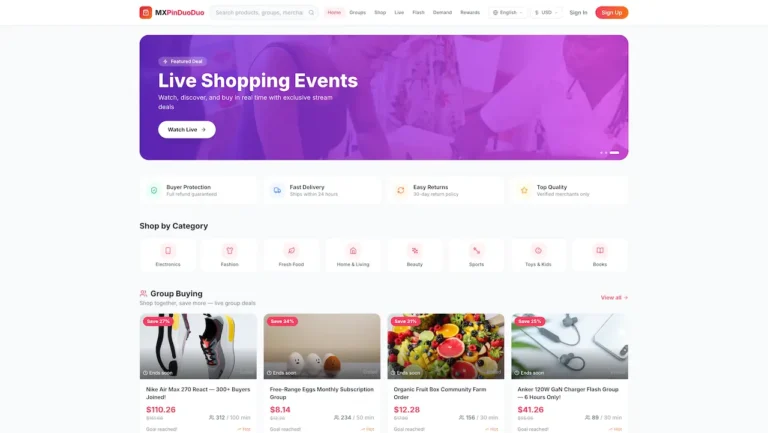
Pick it if: Shoppers buying together is your growth enginePinduoduo Clone

A group-buying marketplace in which shoppers join forces on a single order to reach tiered discounts.

Explore Solution
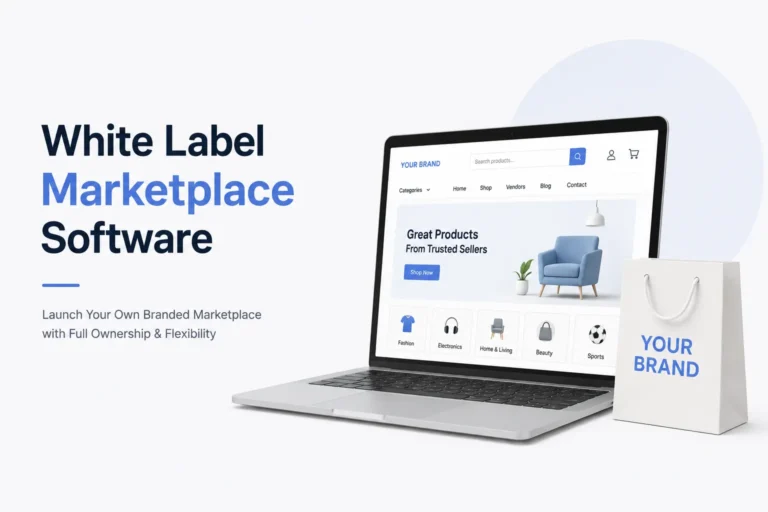
White label marketplace software for launching a branded multi-vendor e-commerce platform with full ownership and customization.04
Pick it if: You want it positioned as your own marketplace softwareWhite Label Marketplace Software

This marketplace platform under your own brand name, with the complete source code handed over.

Explore Solution
CatalogAll 90+ solutions

09The business case

Monetization

Amazon Clone Revenue Models: Commission, Subscriptions, Delivery and Shelf Position

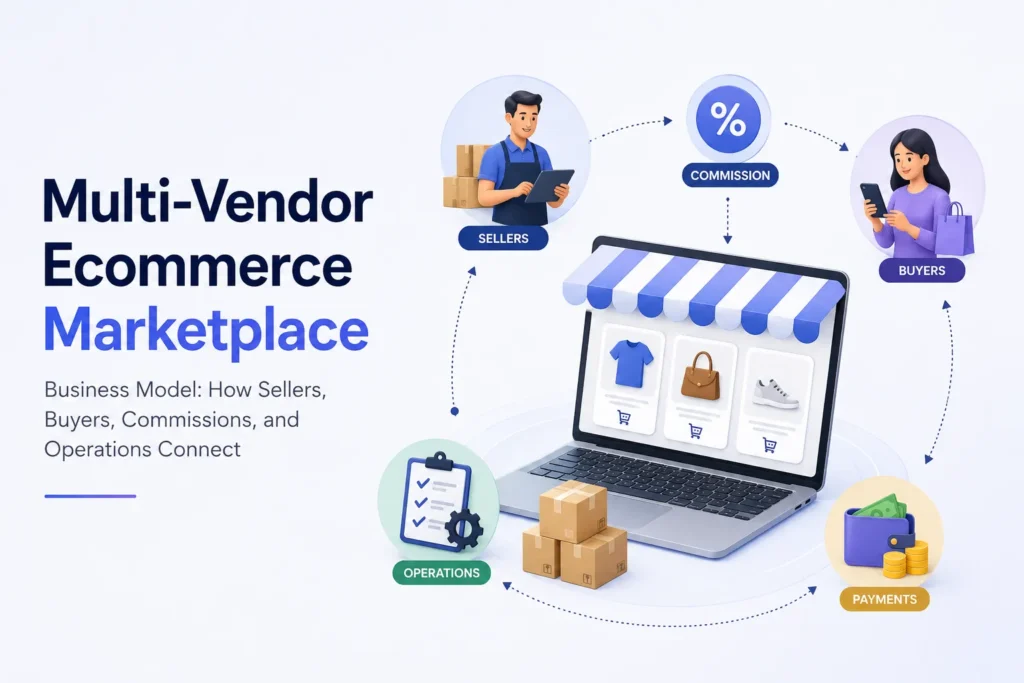
Six revenue lines run on one ledger, and they combine. An operator can take commission on a sale, charge the vendor a monthly plan, mark up the delivery fee, sell a featured slot and hold the float between payout runs, all against the same order.

  1. 01

    Cut Taken per Order

    Set the percentage globally, or per category, vendor or product; it comes out of the vendor wallet when the order is completed, and a refund reverses it automatically.

  2. 02

    Vendor Subscriptions

    Packages in tiers with caps on product count, lower commission, featured placement and priority support, billed per cycle, with a trial period and a grace period if payment fails.

  3. 03

    Shipping Spread

    The levers are a configurable mark-up on shipping charges, a settlement fee when an agent withdraws, and a handling fee for cash-on-delivery orders.

  4. 04

    Paid Product Spots

    Paid banner slots, sponsored positions across search and category pages, plus a fee charged to vendors who join a time-boxed flash deal.

  5. 05

    Held Wallet Balances

    Until the next payout run, vendor balances and customer top-ups stay on the platform, and add-fund bonus tiers let operators nudge customers toward bigger top-ups.

  6. 06

    Rebranded Rollout

    Agencies and networks can resell the platform itself, running a branded marketplace for each client or territory off one codebase.

Four Amazon clone streams set against the referral, plan and click pricing Amazon publishes, with the limit on each.
Revenue streamHow it is chargedTake rateTypical rangeWhat sets the ceiling
Cut Taken per OrderA referral percentage of the sale price, with a small minimum per item, taken at settlement.Most categories 15%; clothing 5%-17%; computers and electronics 8%; device accessories 45%.Category competition. Amazon's table runs from 3% to 45% and uses price tiers, such as jewelry at 20% up to $250 and 5% beyond, so one flat rate rarely fits a wide catalog.
Vendor SubscriptionsSellers pick a flat monthly plan or a per-item charge, so the plan only pays off above a volume line.Professional $39.99 per month; Individual $0.99 per item sold; both plus referral fees.The break-even point. At $0.99 an item, the monthly plan is cheaper only past about 40 sales a month ($39.99 / $0.99 = 40.4), so tier perks must justify the jump.
Shipping SpreadFulfillment and shipping fees ride alongside commission and are priced by size and weight, not by percentage.No flat rate. Amazon points sellers to a separate fulfillment cost schedule and calculator.Cost to serve. Amazon books commissions and related fulfillment and shipping fees as one line ($172.2 billion in 2025), so public data cannot isolate the margin on delivery alone.
Paid Product SpotsAdvertisers set a maximum bid per click for sponsored slots in search and on product pages, billed only on a click.Set by auction, not a fixed rate. Amazon states there are no monthly or upfront fees.Seller willingness to bid. Amazon's 2025 advertising revenue was $68.6 billion against $172.2 billion of seller-services revenue, roughly 40 cents per dollar.

How to read this. Commission and plan figures are published rates from Amazon seller pricing, which lists referral fees by category and the two selling plans. The click-based pricing comes from Amazon Ads, and the revenue lines from Amazon's 2025 Form 10-K; the 40 cent ratio is our own division of two lines in that filing. Referral and plan rates are published and can change, while ad prices are auction-set market pricing. Use every number as a planning input for your own rate card, because no cell predicts takings and none of them is a vendor price quote.

Looking for a revenue model that suits your market?

Delivery margin, subscription tiers and commission bands are all in operator hands. Book a call and we can test the levers on the volumes you expect in practice.

Design My Revenue Model

Market Benchmarks

Independent Benchmarks for Online Marketplaces 2025-2026 Data

The revenue models are ours; the numbers below are not. The US Census Bureau, BCG, Amazon and Etsy released these figures, and they appear exactly as published. They indicate how large online retail has become, what a listed marketplace truly retains per sale, and how big seller services are at the largest incumbent, which lets you test the business case against checkable sources.

US Census Bureau01

Share of US Retail Sales Made Online Reaches 17.1% (Q2 2026)

According to the US Census Bureau, retail e-commerce sales came to $340.2 billion during the second quarter of 2026, a rise of 12.2 percent on the second quarter of 2025 against 6.7 percent growth in total retail sales. E-commerce made up 17.1 percent of all retail sales. The data are seasonally adjusted, came out on 18 August 2026 and may be revised.

Etsy 10-K02

Etsy's 2025 Revenue Take Rate Stood at 24.2%

Etsy's 2025 annual report shows $11,916.9 million of gross merchandise sales and $2,883.5 million of revenue, which is a take rate on revenue of 24.2 percent, compared with 22.3 percent in 2024. GMS is the divisor in Etsy's definition of take rate, with revenue as the numerator. The total splits into $876.3 million from services and $2,007.2 million from the marketplace, so it goes beyond a sales commission.

Amazon 10-K03

Amazon Books $172.2bn from Third-Party Seller Services

Amazon's annual report for 2025 lists $172,162 million of net sales from third-party seller services, against $156,146 million in 2024 and $716,924 million of consolidated net sales. Commissions plus the related fulfillment and shipping fees paid by sellers are booked in that line. By our arithmetic on the reported figures, that is close to 24 percent of total Amazon net sales, with growth of about 10 percent.

BCG04

India E-Commerce Heading for $280-300bn by 2030

In a February 2026 study built from a survey of over 12,000 shoppers in both urban and rural India, BCG puts the country's e-commerce on track for $280-300 billion by 2030. The study links the growth to quick commerce, social and chat commerce and platforms focused on categories, along with more rural consumers, women and smaller cities taking part.

Figures traced to origin.

US Census Bureau, Quarterly Retail E-Commerce Sales, 2nd Quarter 2026, 18 August 2026 - census.gov

Etsy, Inc., Form 10-K for the fiscal year ended 31 December 2025, filed 19 February 2026 - sec.gov

Amazon.com, Inc., Form 10-K for the fiscal year ended 31 December 2025, filed 6 February 2026 - sec.gov

Boston Consulting Group, $300 Billion Connected Commerce: How clicks and bricks are defining the future of India's E-commerce, 24 February 2026 - bcg.com

All figures are estimates, forecasts and filings from the publishers themselves, reproduced as published, and the Census figures may be revised. The percentages for Amazon's share and growth come from our own arithmetic. They describe the market, not how any platform built by Miracuves performs, and nothing here projects revenue for your business.

Why Now

In 2026, Why Start a Multi-Vendor Marketplace?

The case is rarely that a marketplace is a good idea in the abstract. It is that an operator already has the hard half, and is paying someone else for the easy half.

01

Commission Stays With You

Each order placed on your own platform pays your rate, not an incumbent's. For a business already doing meaningful volume, that gap is usually the whole case.

02

You Own the Customer

Your database holds email addresses, order history, wallet balances plus repeat-purchase behavior, and that is what makes a loyalty program and direct marketing possible at all.

03

Inventory Already Yours

Networks with outlets, distributors with suppliers and retailers with stock all begin with the hard half solved. What they lack is the platform, not the business.

04

Last Mile Under Your Brand

Giving delivery to an aggregator gives away the moment the customer actually remembers. With your own fleet, the handover, the packaging and the cash stay under your control.

05

Markets Served Badly

A local payment rail, a language, a cash-heavy buying habit or a regulatory requirement the global platforms treat as an edge case is a durable opening.

06

One Base, Not Five

Commerce, logistics, content, AI and payouts in one codebase means one vendor contract, one data model and one security review rather than five of each.

Reasons to Start

131

Schema Table Inventory

114

Models Built on Eloquent

11

Checkout Providers

3

Android Apps

These numbers are facts about the platform, not market projections: they cover what comes in the build, not what analysts expect from the sector. Sources disagree on market sizing, and we prefer quoting our own schema to quoting someone else’s forecast.

Marketability

Market Appeal, Revenue Potential and Commercial Picture

Whether the platform is worth much to an operator depends almost wholly on already holding supply or demand. The scenarios that follow are only illustrative arithmetic on inputs chosen by the operator; they neither forecast nor promise anything.

  1. 01

    Commission Compounds

    Every order pays your rate. On an operator already doing volume through someone else’s platform, the rate difference alone usually funds the build many times over.

  2. 02

    Sellers Bring Repeat Income

    Subscription tiers convert the single onboarding event into a line that repeats monthly, and as a vendor grows, stepping up a tier is the upsell route.

  3. 03

    Shipping Earns, Not Drains

    With your own fleet, the shipping charge stops being a pass-through and becomes a margin you control, topped by the COD handling fee in cash-heavy markets.

  4. 04

    The Asset Is the Network

    A vendor roster and a customer database are worth more than the software itself. The platform lets you own both instead of renting access to them.

Primary Earning Streams
  • Commission on each order, set globally, by category or by vendor
  • Vendor subscription plans that come with product limits and lower rates
  • Margin on the shipping charge, plus a COD handling fee
  • Vendors can buy featured placement and sponsored positions
  • Withdrawals by vendors or agents carry a settlement fee
  • Wallet float kept between payout runs, plus add-fund bonus tiers
Worth Over Time
  • A sales channel you own, not a rented listing on someone else's platform
  • A customer database open to direct marketing, with order history attached
  • A vendor network that stands as an asset by itself
  • You set the commission rate; nobody sets it for you
  • Last-mile delivery carrying your brand, not an aggregator's
  • Source code you can extend, license or resell
Illustrative Earning Cases

About these numbers: each scenario is arithmetic on inputs that the operator chooses, shown to make the levers tangible. None are projections, and Miracuves guarantees no commercial outcome. Six days is simply how long we take to deploy the base platform; it is not your route to market.
Regional retailer going multi-vendor30Vendors onboarded in year one

An operator that already runs stores adds thirty local sellers and takes a commission on each order alongside their own sales.

Operators set the commission rate, order volume and delivery margin. The platform cost is paid once; hosting, gateway fees and the operating team are the recurring costs.

Niche marketplace debut6Business days until go-live

A founder who has a supplier network can open with a focused catalog, not a general store, and compete on relevance rather than breadth.

Operator work sets the real timeline: loading the catalog, recruiting vendors and entering the market. Deployment time reflects only what we need to build the base.

Agency operating rebranded rollouts1One repo, several branded stores

A studio can deploy the platform for each client or territory, every one fully branded, out of a single codebase the studio already knows.

Licensing per deployment is a commercial conversation, not a page price. The platform offers branding depth and module toggles, and those make repeat deployment practical.

10Why Miracuves

Why Miracuves

Miracuves vs Other Amazon Clone Developers

Getting a marketplace can mean owning the platform outright, or hiring agencies or freelancers, or buying generic commerce scripts.

Founders Pick Miracuves For These

  • 01

    Single Quote, No Bracket

    You pay $2,799, a single number instead of a "starting at" figure. Before anything gets built the scope goes on paper, and any change to it is quoted, never silently absorbed.

  • 02

    Commerce and Logistics Together

    Most scripts stop at checkout and hand delivery to an aggregator. The fleet, the OTP handover and the cash reconciliation are in this codebase, not an integration.

  • 03

    Code Delivered at Handoff

    Your repository receives the full backend plus all three Flutter projects. Files are not obfuscated, there is no license server, and nothing depends on us for the platform to keep running.

  • 04

    Six Business Days

    Deployment on your infrastructure with the queue, scheduler and storage configured. The platform is proven; the work is installation and branding, not construction.

  • 05

    Easy-to-Staff Technology

    The stack is Laravel, MySQL, Redis and Flutter, so anyone who maintains it after us can be hired in the normal way instead of through us.

  • 06

    Candid Status Tags

    Items that need configuration or integration are labeled as such across this page. Anything that needs your credentials is named, not implied as included.

Compare & See Why Operators Pick Us in Multi-Vendor Selling

CriteriaMiracuvesMiracuves Amazon CloneGeneric Clone ScriptCustom Dev Agency
Time to Launch6 days (Production)Unknown / DIY6-9+ months
Source-Code OwnershipFullOften limited / encryptedUsually yes
Feature Depth (Amazon-like)High (catalog, payouts, fleet)Basic (single-vendor storefront)Depends on budget
Security & ComplianceStrong (built against the controls, GDPR-ready)MinimalVaries widely
Scalability & PerformanceCloud & CDN-optimizedRarely consideredDepends on architecture
Monetization OptionsMultiple (commission, plans, delivery)Usually commission onlyCustom (more time & cost)
Admin & AnalyticsFull-fledged dashboardVery basic or missingCustom build (extra cost)
Cost vs Speed vs QualityBalancedCheap but riskyHigh cost, slow
Ongoing Support & UpdatesAvailable with clear plansUsually noneDepends on contract
Depth is the point of most comparisons on this page. A script for a single-vendor storefront is a different product from a marketplace with four wallets and its own delivery fleet, the gap becomes visible after six months, not at launch.Talk to Our Team

Past Releases

Change Record

VersionDateWhat’s New
v4.0Aug 2026A Laravel 12 upgrade, a clearance storefront, restock subscriptions, and an AI module for catalog copy and SEO.
v3.62025The deliveryman app proves delivery by OTP, shares live location and keeps a cash-collected ledger.
v3.42025Vendor subscription packages include trials, grace periods and a commission rate per tier.
v3.02024The refund status machine, a wallet ledger for each actor and per-zone rates in the tax module.

Let’s build together

Your idea can become a running marketplace.

Reserve a no-cost consultation for frank answers and a firm timeline. We would rather win your confidence than push a quick close.

  • Reply in 24 hrs
  • Free consultation
  • No lock-in contracts
  • Full source code ownership

11Learn more

Blog & Resources

Amazon Clone App: Latest Articles and Tutorials

Decisions worth making before launch, with guides on delivery operations, vendor onboarding and marketplace economics.
Product4 questions

01What is an Amazon Clone App?

An Amazon Clone App is a ready-made multi-vendor marketplace in the model Amazon made familiar: customers browse and buy, independent vendors list products and receive payouts, while your own delivery agents cover the last mile and you earn commission on every transaction. The Miracuves Amazon Clone ships with a web storefront, a vendor panel, an operator console of modules scoped by role, and three Flutter Android apps (customers, vendors, delivery agents), all running on one versioned REST API.

02How does the delivery fleet work?

In the Miracuves Amazon Clone, a delivery agent has a first-class identity of its own, backed by KYC and admin approval, rather than being a flag on a customer account. They get an assignment feed with accept and reject, navigation to vendor and customer, live location broadcast, status checkpoints, one-time-code verification at the door, and a wallet with a withdrawal request flow. That is the part most marketplace scripts leave to an outside courier.

03Can vendors manage everything themselves?

Yes. Vendors register with KYC, get approved by an operator, then run their own shop: product CRUD with variants and stock, bulk import and export, AI-assisted descriptions, an order queue, refund responses, sales analytics and a withdrawal request flow, from either the web panel or the Android app. The marketplace can grow without your team touching a product record.

04What does the AI module actually do?

The AI module in the Miracuves Amazon Clone generates product descriptions, SEO titles and descriptions, tag suggestions and image alt text through OpenAI, with per-feature token quotas and a log recording tokens and cost for every call. It needs your own OpenAI key, so it is integration-required rather than included.

Price & rollout time4 questions

05What is the price, and how soon is it live?

At $2,799, the Miracuves Amazon Clone comes as a one-time purchase covering a white-label multi-vendor marketplace and delivered in six working days, running on your own infrastructure under your branding. Deeper changes and custom modules are scoped and quoted on their own, usually taking from two to eight weeks, based on your needs.

06What is not included in the six days?

These are all yours to supply: app store review, tax rates for your jurisdictions, vendor recruitment, your catalog data, a Firebase project, an OpenAI key, an email and SMS provider and gateway merchant approval. Six days is the time Miracuves needs to deploy the base platform; your route to market is not included.

07Will the source code be mine?

Yes. On handover, your repository receives the complete Laravel backend and each of the three Flutter projects that make up the Miracuves Amazon Clone. Nothing is obfuscated, no license callback exists, and the platform does not rely on Miracuves to keep running.

08Are iOS apps included?

No. The three Android builds are in the base price. The Flutter projects compile for iOS, and Miracuves quotes App Store builds, signing and submission as an add-on because the review cycle and the developer account are separate work.

Payments & money4 questions

09Which gateways can I accept payments through?

Eleven gateways come integrated with the Miracuves Amazon Clone: PayTabs, Flutterwave, SSLCommerz, PayUZ, Paytm, PhonePe, Iyzico, Mercado Pago, Razorpay, PayPal and Stripe. Cash on delivery and offline methods defined by the operator are built in as well. Merchant credentials of your own are required for every gateway, hence the integration-required label.

10Is cash on delivery properly handled?

Yes, and it is one of the reasons to choose this multi-vendor marketplace over a general commerce script. Cash collected is written to the delivery agent’s own balance, reconciled to the operator wallet on settlement, and tracked in a dedicated transaction table rather than being treated as an ordinary payment.

11How does commission get worked out?

Commission is a percentage that can apply platform-wide, or by category, vendor or product. It is taken from the vendor wallet once the order completes and is reversed automatically if the order is refunded. Reduced rates can come with vendor subscription tiers as a paid benefit.

12Does it support multiple currencies and languages?

Yes. Currencies carry operator-set exchange rates, interface and content strings live in a polymorphic translation store, and delivery country codes and zip allowlists control where you ship. Rates are operator-set rather than fetched automatically, which is deliberate.

Miracuves & safety2 questions

13Is the platform certified, and how secure is it?

Append-only audit ledgers, webhook signature verification, tenant scoping, HTML sanitization, parameterized queries, CSRF protection and Argon2id hashing are all built. The Miracuves Amazon Clone can be put through a penetration test, and gathering evidence toward ISO 27001 or SOC 2 is supported. Miracuves holds neither certificate and claims neither.

14Why choose Miracuves to build an Amazon clone?

Across 6,000+ clients, Miracuves has completed 9,000+ projects since 2010, and its range holds 90+ ready-made clone solutions, among them marketplace and eCommerce platforms. In the Amazon Clone, OTP handover, cash reconciliation and the delivery fleet live in one codebase together with the marketplace; its price is the fixed $2,799, not a range, and every item marked configuration-required or integration-required is labeled, so the scope you get matches the scope you buy. Every ready-made solution comes with 12 months of product evolution, 60 days of platform guidance and priority bug fixes for 6 months. First responses arrive within 2 hours, from Monday to Saturday between 10:00 and 19:00 IST. The Miracuves facts page publishes each company figure along with its scope.

Disclaimer

Miracuves is an independent software development company. We are not affiliated with, connected to, sponsored by, or endorsed by Amazon.

Read our full Legal Notice & Disclaimer →
Where the title comes from

“Amazon Clone” is used descriptively. It is how the software industry refers to building a platform with functionality similar to Amazon, and how clients search for it.

Who developed this

The entire design and codebase is built by our own team. The product contains no code, design, graphics, or content originating from the Amazon website or applications.

Trademarks

Amazon and all other third-party names and marks are the property of their respective owners, referenced here solely to describe the category of software offered.