


Key Takeaways
What You’ll Learn
- OTTO operates as a hybrid ecommerce and marketplace platform combining direct retail with third-party sellers.
- The company generates revenue through product sales, marketplace commissions, advertising, and retail services.
- Its marketplace structure allows rapid product expansion without owning all inventory.
- OTTO focuses heavily on digital commerce, logistics efficiency, and customer experience.
- The business model balances scalable marketplace growth with trusted retail operations.
Stats That Matter
- OTTO evolved from a catalog retailer into a large ecommerce marketplace platform.
- Marketplace commissions became a major revenue stream alongside direct product sales.
- The platform supports millions of products through scalable ecommerce infrastructure.
- Logistics and digital operations play a major role in customer satisfaction and growth.
- Marketplace expansion continues to increase seller participation and platform scale.
Real Insights
- Hybrid marketplace models help ecommerce companies scale without carrying full inventory risk.
- Customer trust and logistics efficiency remain major competitive advantages.
- Marketplace ecosystems generate recurring revenue through seller commissions and advertising.
- Personalized recommendations and digital experiences improve customer retention.
- Long-term success depends on balancing marketplace growth, operations, and customer satisfaction.
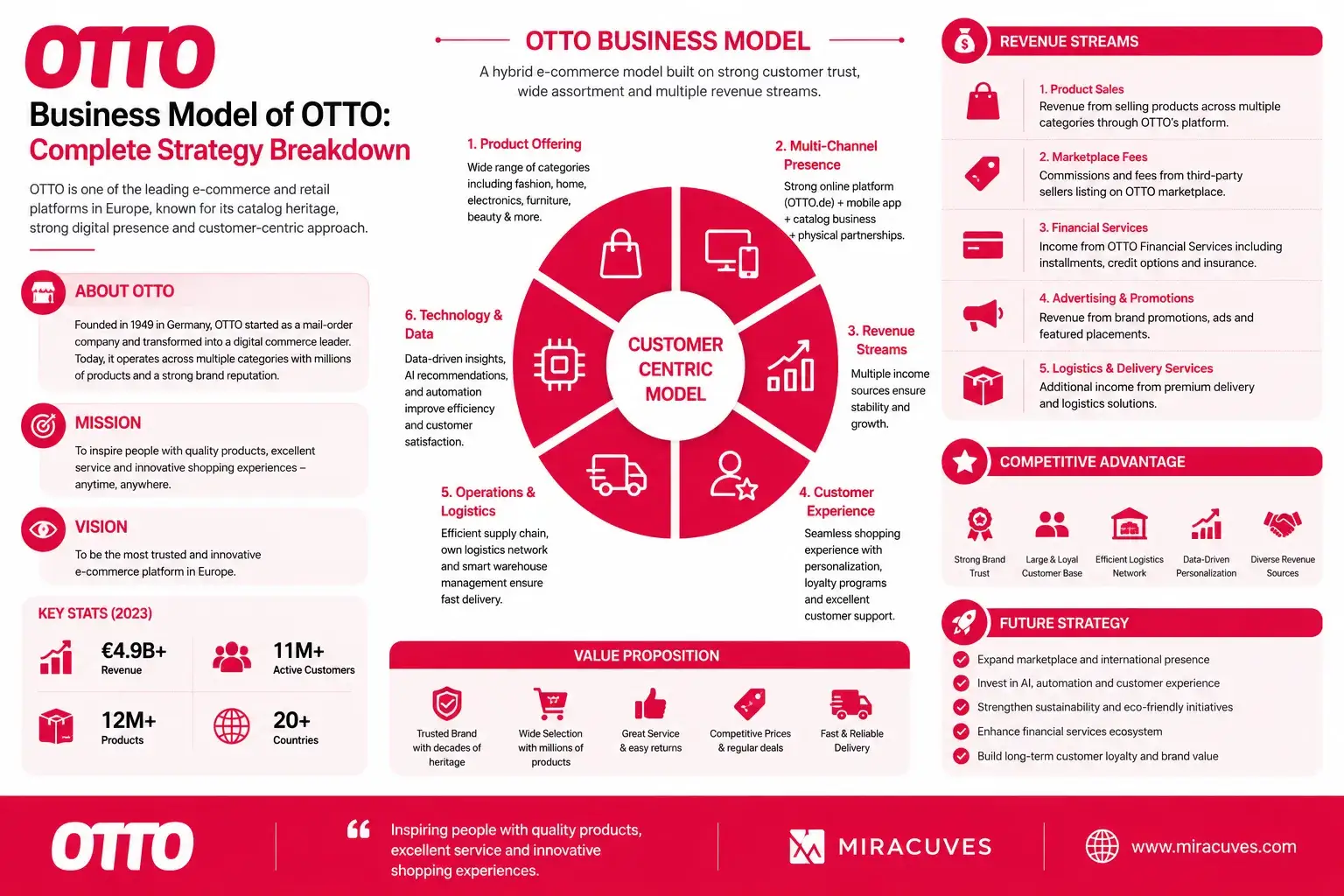
OTTO is not just an eCommerce company—it represents one of Europe’s most successful digital retail transformations. Founded in 1949 as a mail-order business, the company reinvented itself into a platform-first digital marketplace serving millions of customers across Germany and the wider EU. The Business Model of OTTO reflects a rare combination of legacy trust and modern platform thinking, making it a powerful case study for today’s digital entrepreneurs.
What makes the Business Model of OTTO especially relevant in 2026 is the way it scaled without following the usual Big Tech playbook. OTTO did not rely on aggressive global expansion like Amazon, did not attempt to own all inventory, and avoided constant price wars. Instead, it built a controlled hybrid marketplace focused on quality sellers, reliable logistics, and a consistent customer experience rooted in trust.
For founders building marketplaces or hybrid commerce platforms, offers clear lessons in defensive scaling, ecosystem control, and sustainable profitability. Studying this model today proves that regional dominance combined with a strong platform strategy can outperform global brute force—when execution, trust, and long-term vision are aligned.
How the OTTO Business Model Works
OTTO operates a hybrid eCommerce marketplace model that blends first-party retail (1P) with a rapidly scaling third-party marketplace (3P). This structure allows OTTO to balance control and capital efficiency—owning customer experience where it matters while outsourcing inventory risk to partners.
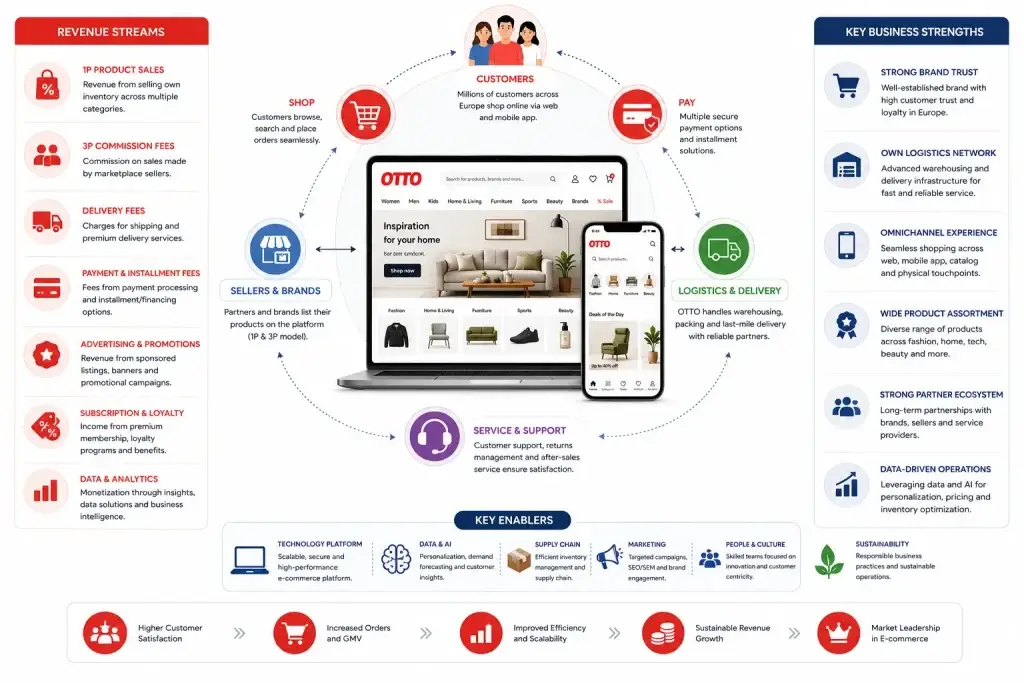
At its core, OTTO is a platform for trusted commerce, not a discount-first marketplace
Type of Business Model
- Hybrid Marketplace Model
- 1P Retail: OTTO sells selected products directly (private labels + strategic categories)
- 3P Marketplace: Thousands of verified sellers list products on OTTO’s platform
- Platform-led Commerce Ecosystem
- Sustainability-driven retail strategy
Value Proposition by User Segment
For Customers
- High-quality, trusted products (strict seller vetting)
- Strong focus on sustainability and ethical sourcing
- Reliable logistics and customer service
- Familiar, local brand trust (especially in Germany)
For Sellers & Brands
- Access to a high-intent, high-trust customer base
- Lower competitive noise compared to Amazon
- Logistics, payment, and fulfillment support
- Brand-safe marketplace environment
For Partners
- Stable APIs and integrations
- Long-term collaboration focus over transactional relationships
Key Stakeholders & Their Roles
- Consumers: Drive demand, repeat purchases, and brand trust
- Marketplace Sellers: Expand assortment without inventory risk
- Logistics Partners: Ensure delivery reliability and sustainability goals
- Technology Teams: Power personalization, fraud prevention, and scalability
- Regulators & ESG Bodies: Shape OTTO’s sustainability and compliance leadership
Evolution of the Model
- Pre-2010: Catalog + early eCommerce (inventory-heavy)
- 2010–2015: Digital-first transformation
- 2016–2020: Launch and expansion of 3P marketplace
- 2021–2026: Platform optimization, sustainability leadership, AI-driven personalization
OTTO intentionally limited seller count early on to maintain quality over quantity—a strategic contrast to Amazon’s open-market approach.
Why the OTTO Model Works in 2026
- Consumers prioritize trust, sustainability, and reliability
- Brands seek controlled marketplaces with less race-to-the-bottom pricing
- Logistics efficiency is a competitive moat
- Regulatory pressure favors compliant, transparent platforms
OTTO’s model aligns perfectly with these macro shifts.
Read more : What is OTTO and How Does It Work?
Target Market & Customer Segmentation Strategy
OTTO’s growth has never been about serving everyone. Its success comes from deeply understanding a specific customer mindset and scaling around trust, quality, and long-term value rather than impulse buying.
Primary Customer Segments
1. Core German Households (Primary Segment)
- Age: 30–60
- Middle to upper-middle income
- Family-oriented, repeat buyers
- Value reliability, ethical sourcing, and post-purchase service
Why they stay:
- Familiar brand trust built over decades
- Predictable delivery and returns
- High confidence in product quality
2. Digital-First Urban Shoppers (Secondary Segment)
- Age: 25–40
- Mobile-first behavior
- Interested in fashion, home, electronics
- Sustainability-conscious purchasing decisions
Why they convert:
- Clean UX and strong personalization
- Curated marketplace experience (less clutter)
- Transparent pricing and seller credibility
3. Marketplace Sellers & Brands (B2B Segment)
- Mid-to-large European brands
- Premium and mid-premium positioning
- Looking for brand-safe, non-chaotic marketplaces
Why they join:
- Lower price wars than Amazon
- Better brand visibility
- Trust-led customer base with higher AOV
Customer Journey: Discovery → Retention
Discovery
- Brand-led SEO and organic traffic
- Email marketing and loyalty programs
- Seasonal campaigns (fashion, home, sustainability themes)
Conversion
- Trust signals (reviews, certifications, seller vetting)
- Clear return policies
- Transparent shipping timelines
Retention
- Personalised recommendations
- Account-based loyalty incentives
- Consistent post-purchase support
OTTO optimizes lifetime value, not just order volume.
Acquisition Channels by Segment
- B2C: SEO, email, app engagement, remarketing
- B2B (Sellers): Direct sales, partnerships, invite-only onboarding
- Brand Trust: PR, sustainability reporting, ESG positioning
Market Positioning & Competitive Edge
OTTO positions itself as Germany’s most trusted digital retailer, not the cheapest one.
- Strong domestic market share in Germany
- Clear differentiation from Amazon via curation and ethics
- Brand voice centered on responsibility, quality, and long-term value
This positioning creates high switching costs rooted in trust, not price.
Read more : Best Otto Clone Scripts 2025 – Build a Smart Online Marketplace
Revenue Streams and Monetization Design
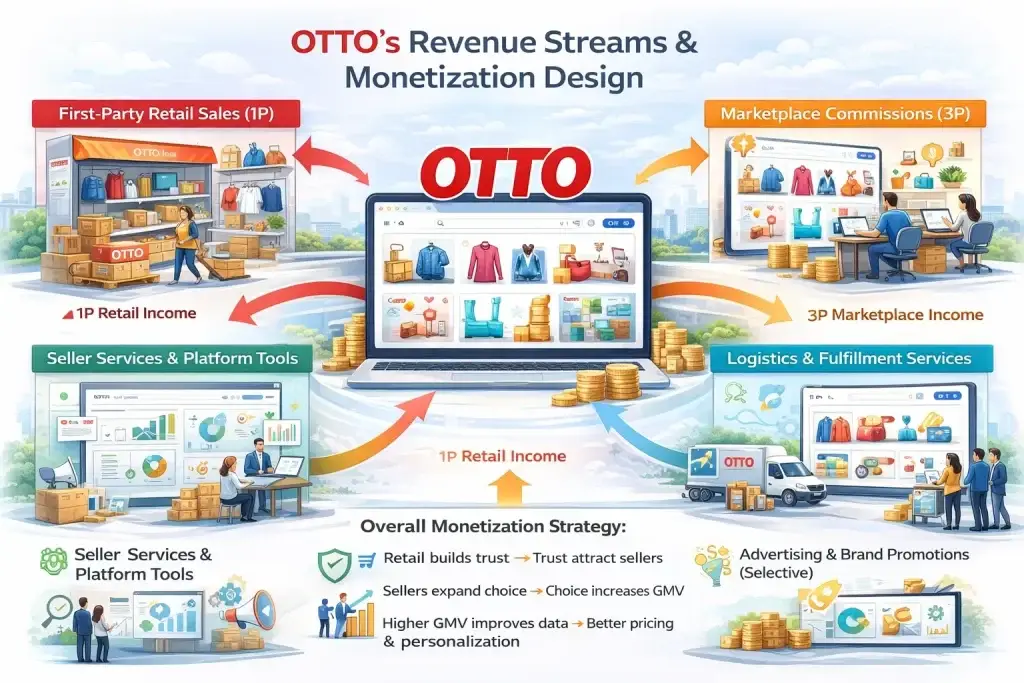
OTTO’s monetization strategy is intentionally balanced and risk-aware. Rather than over-optimizing for short-term margins, OTTO engineered a layered revenue architecture that blends predictable retail income with scalable marketplace monetization.
Primary Revenue Stream 1: First-Party Retail Sales (1P – Foundation Layer)
Mechanism
OTTO purchases inventory directly from brands or sells private-label products through its platform.
Pricing Model
- Wholesale purchase → retail markup
- Category-based margin control
- Seasonal discounting to optimize inventory turnover
Revenue Contribution
- Still a meaningful share of total revenue
- Lower margins compared to pure digital platforms
- Provides experience control and trust consistency
Growth Trajectory
- Gradual reduction in inventory risk
- Focus on high-trust and private-label categories
- Margin optimization through data-driven pricing
Primary Revenue Stream 2: Marketplace Commissions (3P – Scale Engine)
Mechanism
Third-party sellers list products on OTTO’s marketplace and pay commissions per transaction.
Pricing Model
- Category-specific commission rates
- Performance-based incentives for top sellers
Revenue Contribution
- Fastest-growing revenue stream
- Asset-light and highly scalable
- Expands product assortment without inventory ownership
Growth Trajectory
- Seller onboarding with strict quality gates
- Gradual increase in GMV per seller
- Focus on premium and sustainable brands
Secondary Revenue Streams
1. Seller Services & Platform Tools
- Analytics dashboards
- Promotional visibility tools
- Seller performance optimization services
2. Logistics & Fulfillment Services
- Warehousing and delivery partnerships
- Sustainability-focused shipping options
- Premium fulfillment support for sellers
3. Advertising & Brand Promotions (Selective)
- Sponsored product placements
- Brand campaigns (non-intrusive, controlled)
Overall Monetization Strategy
OTTO’s monetization works because each revenue stream reinforces the other:
- Retail builds trust → trust attracts sellers
- Sellers expand choice → choice increases GMV
- Higher GMV improves data → better pricing and personalization
Pricing psychology emphasizes fairness and transparency, avoiding aggressive dark-pattern monetization that could erode trust.
Operational Model & Key Activities
Behind OTTO’s clean customer experience lies a highly disciplined operational machine. Unlike fast-growth marketplaces that prioritize expansion over stability, OTTO optimized for operational reliability, compliance, and scalability—a strategy that pays off in mature markets like Europe.
Core Operations
Platform & Technology Management
- Scalable marketplace architecture
- AI-driven search, recommendations, and pricing
- Strong data security and GDPR-compliant infrastructure
Seller Quality Control
- Strict onboarding and vetting processes
- Continuous performance monitoring
- Delisting mechanisms for policy violations
Logistics & Fulfillment
- Hybrid fulfillment model (in-house + partners)
- Carbon-conscious delivery initiatives
- Optimized returns management
Customer Support
- Multi-channel support (chat, email, phone)
- Fast refunds and transparent complaint handling
- Trust-building post-purchase communication
Marketing & Brand Management
- Loyalty-driven campaigns
- Seasonal demand planning
- Sustainability-focused messaging
Resource Allocation Strategy (2026)
- Technology & Product: ~30–35%
- Logistics & Operations: ~25–30%
- Marketing & Growth: ~20%
- HR & Talent: ~10–15%
- R&D & Sustainability Initiatives: ~5–10%
OTTO prioritizes platform resilience over hyper-growth, ensuring systems scale smoothly during peak demand.
Why Operations Are a Competitive Advantage
- Fewer operational failures compared to open marketplaces
- High seller compliance improves customer satisfaction
- Lower regulatory risk in EU markets
- Strong trust flywheel → repeat purchases
OTTO proves that boring excellence beats chaotic growth in the long run.
Strategic Partnerships & Ecosystem Development
OTTO’s ecosystem strategy is built on long-term collaboration, not short-term arbitrage. Instead of maximizing partner volume, OTTO selectively builds alliances that strengthen trust, operational efficiency, and sustainability across the platform.
Partnership Philosophy
OTTO treats partners as ecosystem enablers, not replaceable vendors. This mindset creates deeper integration, better service quality, and mutual growth—especially important in regulated European markets.
Key Partnership Types
Technology & API Partners
- Personalization and recommendation engines
- Fraud prevention and identity verification tools
- Cloud infrastructure and data analytics platforms
Payment & Financial Partners
- Local and international payment gateways
- Buy Now Pay Later providers
- Fraud protection and risk assessment services
Logistics & Fulfillment Alliances
- Regional delivery partners across Germany and the EU
- Sustainable shipping and packaging partners
- Reverse logistics and returns optimization services
Marketing & Distribution Partners
- Brand collaborations and co-marketing campaigns
- Influencer and content partnerships
- Media and affiliate networks
Regulatory & Sustainability Alliances
- ESG certification bodies
- Environmental compliance organizations
- Local trade and consumer protection agencies
Ecosystem Strategy Insights
- Strong partnerships reduce operational friction
- Integrated services increase seller dependency on OTTO
- Network effects emerge through trust, not volume
- Partners benefit from predictable demand and stability
This ecosystem design creates defensive moats that are difficult for aggressive, price-led competitors to replicate.
Growth Strategy & Scaling Mechanisms
OTTO’s growth story is not about explosive global expansion. It is about controlled, compounding scale—deepening value in core markets before expanding outward. This approach has made OTTO resilient in economic downturns and competitive cycles.
Primary Growth Engines
Organic Demand & Brand Loyalty
- High repeat purchase rates
- Email-driven reactivation and seasonal campaigns
- Strong app engagement in core categories
Marketplace Expansion
- Gradual onboarding of high-quality sellers
- Category-by-category expansion instead of mass listings
- Focus on premium and sustainable brands
Product & Category Depth
- Strengthening fashion, home, lifestyle, and electronics
- Private-label optimization in high-margin segments
- Data-driven assortment planning
Geographic Focus Strategy
- Germany-first dominance
- Selective EU expansion
- Avoidance of low-trust, high-friction markets
Scaling Challenges & How OTTO Solved Them
Challenge: Marketplace Quality vs Scale
Solution: Invite-only seller onboarding and performance scoring
Challenge: Logistics Complexity
Solution: Hybrid fulfillment and regional partner networks
Challenge: Amazon Competition
Solution: Brand safety, ethics, and trust-led positioning
Challenge: Regulatory Pressure (EU)
Solution: Proactive compliance and transparent policies
Why OTTO’s Growth Model Works in 2025
- Consumers favor reliability over novelty
- Brands prefer controlled marketplaces
- Regulations reward compliant platforms
- Sustainable growth outperforms blitzscaling
OTTO scales depth before breadth, turning stability into a growth advantage.
Competitive Strategy & Market Defense
OTTO operates in one of the most competitive digital commerce environments in the world, yet it continues to defend its position through structural advantages, not reactive tactics. Its strategy is designed to make competition expensive and inefficient for rivals.
Core Competitive Advantages
Trust-Based Network Effects
- High-quality sellers attract loyal customers
- Loyal customers attract premium brands
- Premium brands reinforce platform trust
Brand Equity & Cultural Alignment
- Deep-rooted German brand credibility
- Strong alignment with local consumer values
- Long-term customer relationships over discounts
Technology & Data Intelligence
- AI-powered personalization and search relevance
- Predictive demand and inventory insights
- Fraud prevention and seller risk scoring
Compliance & Governance Strength
- GDPR-first architecture
- Transparent seller policies
- Sustainability and ESG leadership
Market Defense Tactics
Against New Entrants
- High trust barriers that are difficult to replicate quickly
- Seller lock-in through platform services
Against Pricing Wars
- Avoidance of race-to-the-bottom discounting
- Emphasis on value, service, and ethics
Against Feature Copycats
- Slow, deliberate feature rollouts
- Focus on execution quality, not speed
Strategic M&A and Partnerships
- Selective acquisitions within the Otto Group
- Ecosystem strengthening rather than market capture
OTTO’s defense strategy proves that stability itself can be a moat.
Lessons for Entrepreneurs & Implementation
OTTO’s journey offers powerful, practical lessons for founders building marketplaces, commerce platforms, or hybrid apps in 2026. Its success didn’t come from copying Amazon—it came from designing a model aligned with its market reality.
Key Factors Behind OTTO’s Success
- Trust-first platform design
- Controlled marketplace onboarding
- Strong logistics and post-purchase experience
- Long-term thinking over short-term GMV spikes
- Early investment in compliance and sustainability
Replicable Principles for Startups
1. Own Trust Before You Scale
Start small with quality users and sellers. Volume comes later.
2. Hybrid Models Reduce Risk
Blend owned supply with marketplace listings to balance margins and control.
3. Monetize the Ecosystem, Not Just Transactions
Seller tools, logistics, and analytics create recurring revenue.
4. Design for Regulation, Not Around It
Compliance can become a competitive advantage.
Common Mistakes to Avoid
- Onboarding too many low-quality sellers
- Competing only on price
- Ignoring post-purchase experience
- Treating operations as a cost center instead of a moat
Adapting the OTTO Model for Local or Niche Markets
- Start with one category (fashion, home, B2B supplies)
- Curate sellers aggressively
- Build logistics partnerships early
- Use sustainability or compliance as differentiation
Ready to implement OTTO’s proven marketplace business model for your market?
Miracuves builds scalable platforms with tested business models, secure infrastructure, and growth-ready architecture.
We’ve helped entrepreneurs launch profitable marketplace apps.
Get your free business model consultation today.
Conclusion
OTTO’s business model proves that enduring success in digital commerce is not about speed alone—it’s about precision. While many platforms chased hypergrowth and global domination, OTTO focused on trust, operational discipline, and ecosystem alignment, building a marketplace that compounds value year after year.
In 2026, as platform economies mature and regulatory pressure increases, OTTO stands as evidence that responsible scale beats reckless expansion. Its model shows founders that innovation works best when paired with patience, strong execution, and respect for the market’s cultural and regulatory realities.
The future of platform businesses will belong to those who design systems that last, not just products that launch fast—and OTTO is already operating in that future.
FAQs
What type of business model does OTTO use?
OTTO uses a hybrid marketplace business model, combining first-party retail with a carefully curated third-party marketplace to balance control, trust, and scalability.
How does OTTO’s business model create value?
OTTO creates value by offering customers a trusted shopping environment, enabling sellers to reach high-intent buyers, and supporting the ecosystem with logistics, technology, and compliance infrastructure.
What are OTTO’s key success factors?
Its key success factors include strong brand trust in Germany, controlled seller onboarding, reliable logistics, sustainability leadership, and regulatory compliance.
How scalable is OTTO’s business model?
OTTO’s model is highly scalable within regulated markets because it is asset-light on the marketplace side while maintaining operational control over customer experience.
What are the biggest challenges in OTTO’s model?
Key challenges include balancing marketplace scale with quality control, managing logistics costs, and competing against global giants like Amazon without engaging in price wars.
How can entrepreneurs adapt OTTO’s model to their region?
Entrepreneurs can adapt OTTO’s model by focusing on one trusted category, curating sellers aggressively, building strong logistics partnerships, and using compliance or sustainability as differentiation.
Related Article :