


Key Takeaways
What You’ll Learn
- eBay-style apps require strong security systems to protect buyers, sellers, and transactions.
- User authentication and encryption help prevent unauthorized access and data leaks.
- Secure payment gateways are essential for building trust in marketplace platforms.
- Admin monitoring tools help detect fraud, suspicious activity, and fake listings.
- Scalable architecture and regular updates improve long-term marketplace security and stability.
Stats That Matter
- Global ecommerce fraud losses are expected to cross $100 billion annually in coming years.
- Marketplace scams and fake listings remain major concerns for online buyers.
- Multi-vendor platforms face higher security risks due to large user activity.
- Secure checkout experiences significantly improve user trust and repeat purchases.
- Modern ecommerce platforms invest heavily in fraud prevention and account security systems.
Real Insights
- User trust grows when marketplaces clearly prioritize security and transparency.
- Strong platforms combine security, usability, and fast transactions together.
- Fraud detection systems are more effective when paired with real-time monitoring.
- Seller verification and moderation help reduce fake products and scams.
- Long-term marketplace growth depends on consistent platform reliability and data protection.
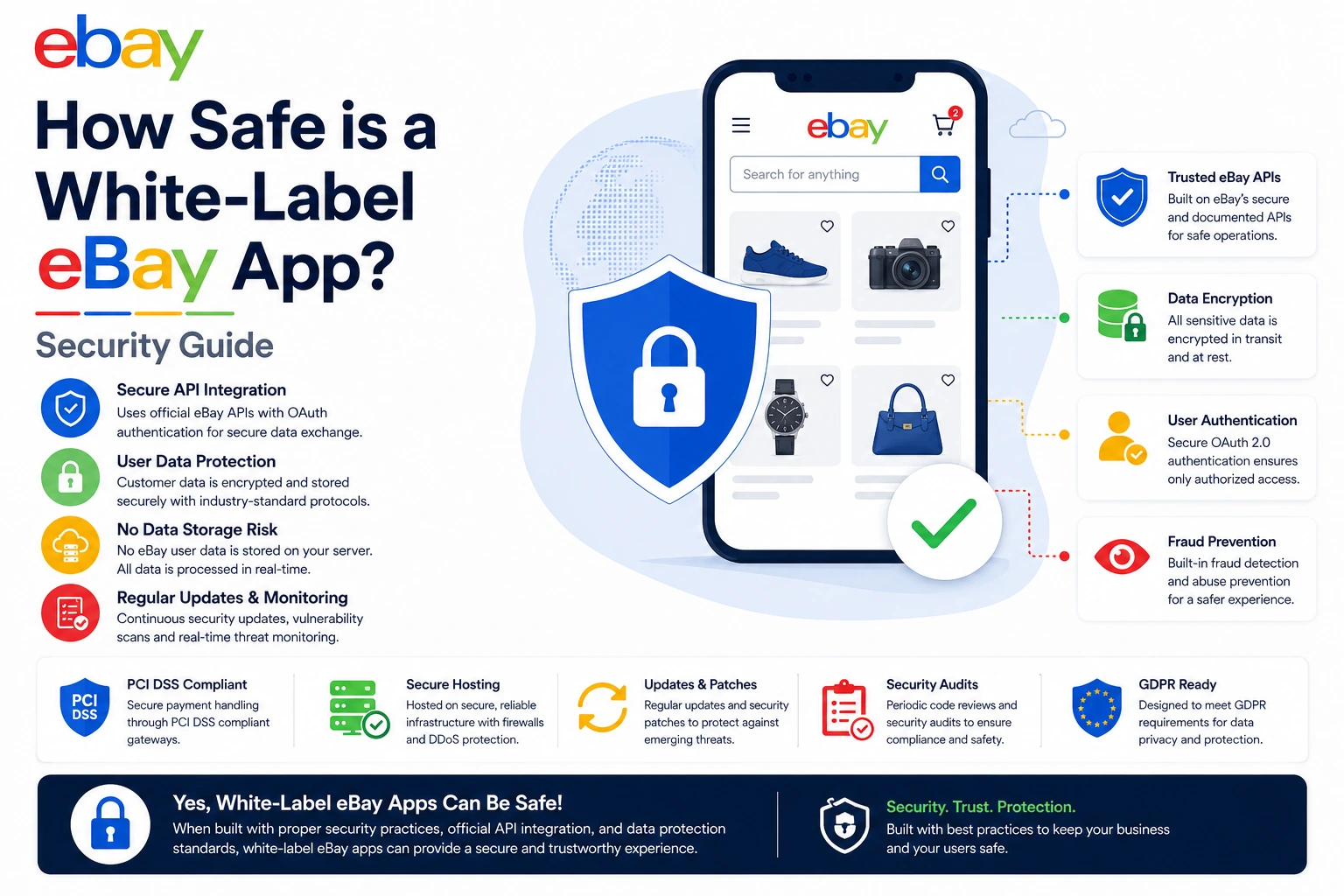
You’ve heard the horror stories about data breaches, stolen payment details, and marketplace apps getting hacked overnight. And if you’re planning to launch a white-label eBay app, the first question is simple:
Is it actually safe?
In 2026, marketplace apps are a bigger target than ever. They store high-value data like user identities, addresses, payment info, chat messages, and order history — which makes them attractive to hackers, fraudsters, and even shady competitors.
This guide will give you:
- An honest safety assessment of white-label marketplace apps
- The real security risks you must watch for
- Practical steps to protect your platform
- The exact standards your app must meet in 2026
And yes — I’ll also explain why Miracuves is the security-first choice for launching a safe, compliant marketplace app.
Understanding White-Label eBay App Security Landscape
What “white-label security” actually means
A white-label eBay app is a ready-made marketplace platform you brand as your own. Security depends not just on surface UI but on architecture, data handling, and compliance protections built into the code and infrastructure.
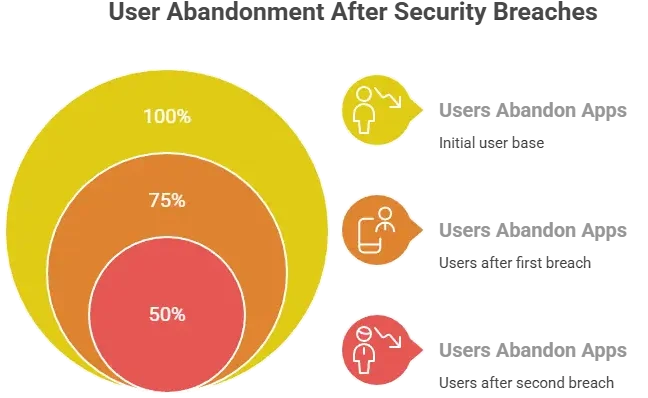
Why people worry about white-label apps
Owners fear stolen data, lost revenue, lawsuits, and brand damage — especially when they don’t control every line of code.
Current threat landscape for eBay-type marketplace platforms
Marketplaces face:
- Credential stuffing attacks
- API exploits
- Payment fraud
- Unauthorized data access
These threats have been rising every year as attackers automate attacks and exploit weak integrations.
Security standards in 2026
In 2026, marketplace apps are expected to:
- Encrypt all sensitive data
- Follow strict API security
- Support multi-factor authentication
- Maintain compliance logs
Real-world statistics on app security incidents
Recent studies show most marketplace breaches occur from weak APIs and unpatched libraries — not from branding issues. Comprehensive security policies drastically reduce risk.
Read more : – Best eBay Clone Scripts in 2025: Features & Pricing Compared
Key Security Risks & How to Identify Them
Data Protection & Privacy Risks
User personal information
A white-label eBay app typically stores:
- Full names
- Phone numbers
- Email IDs
- Shipping addresses
- Order history
If this data leaks, the impact is immediate: legal complaints, user distrust, and brand damage.
Payment data security
Even if you use Stripe, PayPal, or Razorpay, your app still handles:
- Payment tokens
- Checkout flows
- Transaction logs
- Refund processing
Weak checkout logic can still lead to fraud and chargebacks.
Location tracking concerns
Many marketplace apps track:
- Delivery location
- Seller pickup location
- Buyer address validation
If location permissions are poorly handled, it becomes a privacy risk and a compliance issue.
GDPR/CCPA compliance
In 2026, compliance is not optional. You must prove:
- Consent collection
- Data minimization
- Right to delete data
- Right to export data
Technical Vulnerabilities
Code quality issues
Many unsafe white-label apps are rushed builds. The result:
- Hardcoded API keys
- Poor encryption practices
- No secure coding standards
Server security gaps
Common server-side weaknesses include:
- Misconfigured cloud storage
- Weak firewall rules
- No DDoS protection
- No log monitoring
API vulnerabilities
APIs are the biggest risk in marketplace apps because they expose:
- Orders
- User profiles
- Product listings
- Admin controls
If API authorization is weak, attackers can access other users’ data.
Third-party integrations
Every plugin adds risk, such as:
- Payment gateways
- SMS providers
- Shipping APIs
- Analytics tools
One weak integration can compromise the whole platform.
Business Risks
Legal liability
If user data leaks, the app owner is responsible — not the vendor.
Reputation damage
Marketplace trust is fragile. One breach can permanently reduce conversions.
Financial losses
Costs usually include:
- Refunds
- Chargebacks
- Legal fees
- Recovery and patching
Regulatory penalties
If GDPR or CCPA is violated, penalties can become massive — even for small businesses.
Risk Assessment Checklist
Use this quick checklist before choosing a provider:
- Does the app support encrypted storage for sensitive data?
- Are APIs protected with role-based access control?
- Is authentication secure (2FA, OAuth, token expiration)?
- Are third-party tools vetted and updated?
- Are backups automated and tested?
- Is compliance support included (GDPR/CCPA)?
- Are security patches guaranteed in writing?
Read more : – Business Model of eBay : Complete Strategy Breakdown 2025
Security Standards Your White-Label eBay App Must Meet
Essential Certifications
ISO 27001 compliance
This proves the provider follows a structured security management system (ISMS). In 2026, it’s a strong trust signal for enterprise clients.
SOC 2 Type II
SOC 2 Type II validates that security controls are not just promised, but actually followed over time (usually 6–12 months).
GDPR compliance
Required if you serve EU users. Your app must support:
- Consent logging
- Data export
- Data deletion
- Privacy-by-design
HIPAA (if applicable)
Not needed for most eBay-type apps, but relevant if your marketplace sells healthcare-related services or stores medical data.
PCI DSS for payments
If your app touches cardholder data directly, PCI DSS becomes mandatory. The safest approach is:
- Never store card data
- Use tokenized payments (Stripe/PayPal)
- Keep checkout PCI-compliant
Technical Requirements
End-to-end encryption
At minimum, your app must have:
- TLS 1.2+ for data in transit
- Strong encryption for sensitive data at rest
Secure authentication (2FA/OAuth)
Must include:
- Strong password rules
- Token expiration
- Brute-force protection
- Optional 2FA for buyers and sellers
- Admin accounts always protected with 2FA
Regular security audits
A serious provider should run:
- Internal security audits (monthly/quarterly)
- External audits (at least yearly)
Penetration testing
Pen testing helps catch:
- Broken access control
- API flaws
- SQL injection
- Session hijacking
SSL certificates
Mandatory for:
- Website
- API endpoints
- Admin panels
Secure API design
Must include:
- Rate limiting
- Input validation
- Role-based permissions
- Audit logs for admin actions
Security Standards Comparison Table
| Standard / Control | Why it matters | Required for eBay-type apps in 2026 |
|---|---|---|
| ISO 27001 | Security process maturity | Strongly recommended |
| SOC 2 Type II | Proves controls over time | Recommended for serious businesses |
| GDPR | EU user privacy protection | Mandatory if EU users exist |
| CCPA/CPRA | California privacy law | Mandatory if US users exist |
| PCI DSS | Payment card protection | Mandatory if handling card data |
| 2FA | Stops account takeovers | Expected standard |
| Pen testing | Finds real-world vulnerabilities | Must-have |
| Encryption | Protects sensitive data | Non-negotiable |
Red Flags — How to Spot Unsafe White-Label Providers
Warning Signs
No security documentation
If a provider cannot show:
- Security architecture overview
- Compliance certifications
- Audit reports
It’s a serious risk.
Cheap pricing without explanation
If the cost is extremely low, ask why. Security tools, audits, monitoring, and compliance are expensive. Cutting cost usually means cutting protection.
No compliance certifications
If they cannot discuss GDPR, PCI DSS, SOC 2, or ISO standards clearly, they likely are not compliant.
Outdated technology stack
Old frameworks mean:
- Unsupported libraries
- Known vulnerabilities
- No long-term patch support
Poor code quality
Signs include:
- Slow loading
- Unstructured backend
- No staging environment
- No version control transparency
No security updates policy
If updates are “on request” instead of scheduled, that’s unsafe.
Lack of data backup systems
A marketplace without automated backups is one incident away from collapse.
No insurance coverage
Professional providers carry cyber liability insurance. It shows maturity and accountability.
Evaluation Checklist
Questions to ask providers
- Do you conduct annual penetration testing?
- Are you PCI DSS compliant?
- How often are security patches deployed?
- Is 2FA available for admin accounts?
- How is user data encrypted?
Documents to request
- Security policy document
- Compliance certificates
- Data processing agreement (DPA)
- Incident response plan
Testing procedures
Before launch:
- Conduct vulnerability scans
- Test API authorization
- Attempt role-based access misuse
- Run load testing for DDoS resilience
Due diligence steps
- Check client case studies
- Ask about breach history
- Verify hosting infrastructure
- Confirm backup and disaster recovery strategy
If a provider avoids transparency, walk away.
Best Practices for Secure White-Label eBay App Implementation
Pre-Launch Security
Security audit process
Before going live:
- Run vulnerability scanning
- Perform penetration testing
- Review admin access controls
- Check API rate limits
Code review requirements
Ensure:
- No hardcoded credentials
- Proper input validation
- Secure authentication logic
- Logging without exposing sensitive data
Infrastructure hardening
Your hosting must include:
- Web application firewall (WAF)
- DDoS protection
- Secure cloud configuration
- Role-based server access
Compliance verification
Verify:
- GDPR consent flows work
- Privacy policy matches data collection
- Payment processing is PCI compliant
- Data retention rules are defined
Staff training programs
Admins and support staff should be trained in:
- Phishing awareness
- Secure password practices
- Data handling rules
- Incident reporting steps
Post-Launch Monitoring
Continuous security monitoring
Implement:
- Real-time threat detection
- Suspicious login alerts
- API abuse monitoring
- Admin activity logs
Regular updates and patches
Security updates should be:
- Scheduled
- Documented
- Tested before deployment
Incident response planning
Prepare:
- Defined response team
- User notification protocol
- Legal escalation plan
- Backup restoration process
User data management
Maintain:
- Data minimization
- Secure deletion processes
- Controlled admin access
Backup and recovery systems
Backups should be:
- Automated
- Encrypted
- Stored separately
- Tested regularly
Legal & Compliance Considerations
Regulatory Requirements
Data protection laws by region
In 2026, a white-label eBay app usually touches multiple regions at once:
- EU: GDPR
- UK: UK GDPR
- USA: CCPA/CPRA + state privacy laws
- India: DPDP Act compliance
- UAE/Saudi: local privacy + hosting expectations
Industry-specific regulations
Most marketplace apps don’t need HIPAA, but they may face stricter rules if you sell:
- Medical items
- Financial services
- Age-restricted products
User consent management
Your app must clearly manage:
- Cookie consent (web)
- Tracking consent
- Marketing opt-ins
- Location permission control
Privacy policy requirements
A strong privacy policy must clearly explain:
- What data you collect
- Why you collect it
- How long you store it
- Who you share it with
- How users can delete/export it
Terms of service essentials
Your ToS should include:
- Seller responsibility rules
- Buyer dispute policies
- Refund and return conditions
- Fraud and abuse protection terms
Liability Protection
Insurance requirements
Serious marketplace businesses usually carry:
- Cyber liability insurance
- Professional indemnity insurance
- General business insurance
Legal disclaimers
Your app should define:
- Platform role (marketplace intermediary)
- Limits of liability
- User responsibility for listings
User agreements
You should separate:
- Buyer agreement
- Seller agreement
- Admin/platform agreement
Incident reporting protocols
A safe provider helps you meet breach reporting rules, such as:
- GDPR breach notification timelines
- Customer communication templates
- Evidence preservation
Regulatory compliance monitoring
Compliance is not “set once and forget.” Laws change, and your app must stay updated.
Read more : – Clone App Development Company
Why Miracuves White-Label eBay App is Your Safest Choice
Miracuves Security Advantages
Enterprise-grade security architecture
Miracuves builds marketplace apps using security-first architecture, not “feature-first” shortcuts. That means your platform is designed to reduce risk from day one.
Regular security audits and certifications
Miracuves follows structured security practices and supports audit-ready delivery for serious businesses.
GDPR/CCPA compliant by default
Instead of treating compliance like an add-on, Miracuves builds privacy controls into the product:
- Consent management
- Data export
- Data deletion workflows
24/7 security monitoring
Continuous monitoring helps detect:
- suspicious logins
- API abuse
- unusual admin activity
- fraud patterns
Encrypted data transmission
All data communication is protected through strong encryption standards.
Secure payment processing
Miracuves marketplace apps are designed to work safely with PCI-compliant gateways and tokenized payment handling.
Regular security updates
Security is not a one-time launch activity. Miracuves provides structured update cycles and patch support.
Insurance coverage included
This is a major differentiator. Providers who take security seriously also plan for worst-case scenarios.
Final Thought
Don’t compromise on security. Miracuves white-label eBay app solutions come with enterprise-grade security built-in. Our 9k+ successful projects have maintained zero major security breaches. Get a free security assessment and see why businesses trust Miracuves for safe, compliant platforms.
Launching a white-label eBay app in 2026 is not just about features or speed. It’s about trust.
Security is no longer optional. The right provider protects your users, your brand, and your revenue from day one.
FAQs
1. How secure is white-label vs custom development?
Security depends on implementation, not the model. A professionally built white-label eBay app with audits and compliance can be as secure as custom development — sometimes more.
2. What happens if there’s a security breach?
You must activate your incident response plan, notify users if required by law, patch vulnerabilities, and document everything for regulators.
3. Who is responsible for security updates?
Typically, the technology provider handles core updates. However, the business owner is legally responsible for compliance and user protection.
4. How is user data protected in white-label apps?
Through encrypted storage, secure APIs, access control, secure hosting, and compliance-aligned data management.
5. What compliance certifications should I look for?
ISO 27001, SOC 2 Type II, GDPR support, CCPA compliance, and PCI DSS for payments.
6. Can white-label apps meet enterprise security standards?
Yes — if built with proper architecture, documented controls, and regular security testing.
7. How often should security audits be conducted?
At minimum, annually for external audits and quarterly for internal reviews. Continuous monitoring is strongly recommended.
8. What’s included in Miracuves security package?
Enterprise-grade architecture, encrypted data handling, compliance-ready structure, structured updates, and ongoing monitoring support.
9. How to handle security in different countries?
Implement region-based compliance controls, maintain consent logs, and align your privacy policies with local regulations.
10. What insurance is needed for app security?
Cyber liability insurance and professional indemnity coverage are strongly recommended for marketplace businesses.
Related Articles