



How to Hire the Best Turo Clone Developer
Create a powerful, customizable streaming solution with Miracuves’ Turo Clone, equipped with high-performance features and next-gen technology.
Thinking of building your own peer-to-peer car sharing platform like Turo? You’re not alone. With the global mobility market booming and user demand for flexible, on-demand rentals rising, launching a Turo clone is a smart move — if you do it right.
But the real question is: who’s going to build it for you? This isn’t the kind of project you hand off to just any dev shop. A Turo-style app involves real-time booking, geo-location, secure payments, user verification, and more — all while offering a smooth experience for both car owners and renters.
So how do you find a Turo clone developer who actually gets it?
In this guide, we’ll walk you through the exact steps to identify and hire a development partner who can turn your idea into a scalable, user-ready car rental platform — fast, secure, and tailored to your goals.
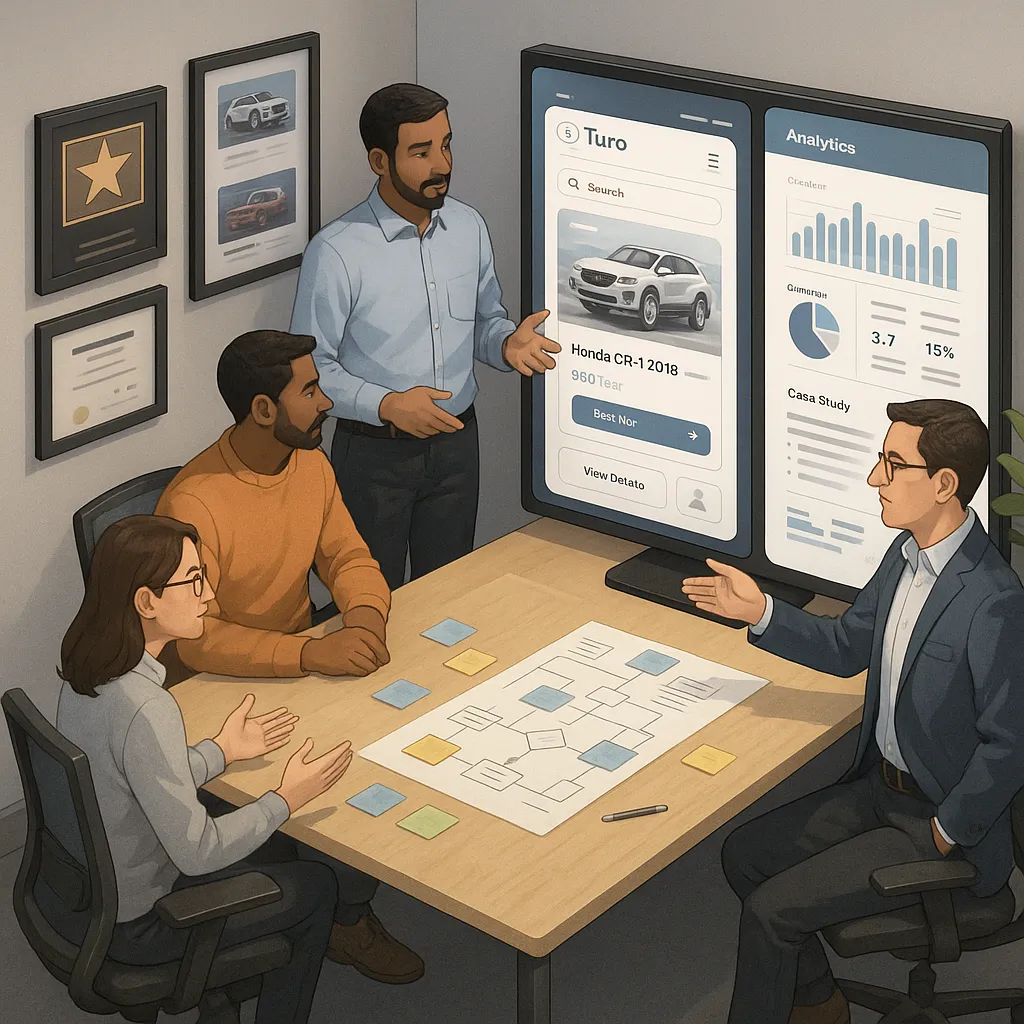
Look for Domain Expertise
You want more than just app developers — you want a team that’s already worked on marketplace platforms, mobility apps, or car rental solutions.
Here’s what to look for:
Relevant past projects: Ask if they’ve built similar apps, especially those involving peer-to-peer transactions, location-based services, or real-time scheduling.
Experience with rental workflows: Turo isn’t just a listing app — it involves time-sensitive reservations, dynamic pricing, driver verifications, and dispute handling. Your developer needs to understand those intricacies.
Proof in portfolio: Check for case studies, client testimonials, or live links of similar platforms they’ve built.
Choosing a developer who knows the terrain reduces guesswork and helps you get to market faster — with fewer pivots.
Tech Stack & Scalability
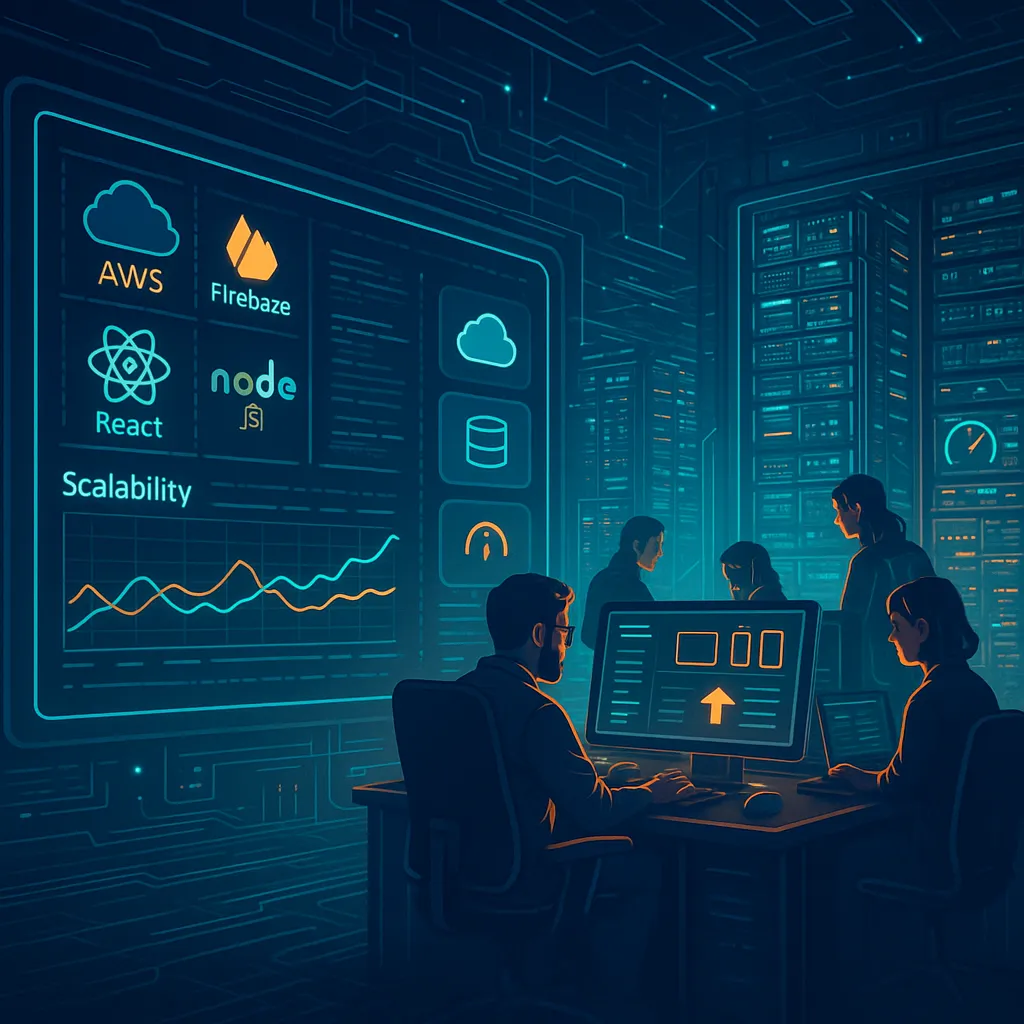
Building a Turo clone means creating a platform that handles everything from user authentication to payment gateways and real-time map integrations.
Make sure your developer uses a modern, scalable tech stack:
Front-end: React, Flutter, or Swift/Kotlin for seamless performance across devices.
Back-end: Node.js, Laravel, or Django for robust, API-driven architecture.
Cloud infrastructure: AWS, Google Cloud, or Firebase for scalability, uptime, and integrated analytics.
Database: Scalable options like PostgreSQL, MongoDB, or Firestore to handle growing user bases and data volumes.
Also, ask if the app will be built using modular architecture, which allows you to roll out new features (like loyalty programs or insurance APIs) without having to rebuild from scratch.
And don’t skip the topic of security — things like GDPR compliance, SSL encryption, and role-based access are non-negotiable.
UI/UX Capabilities
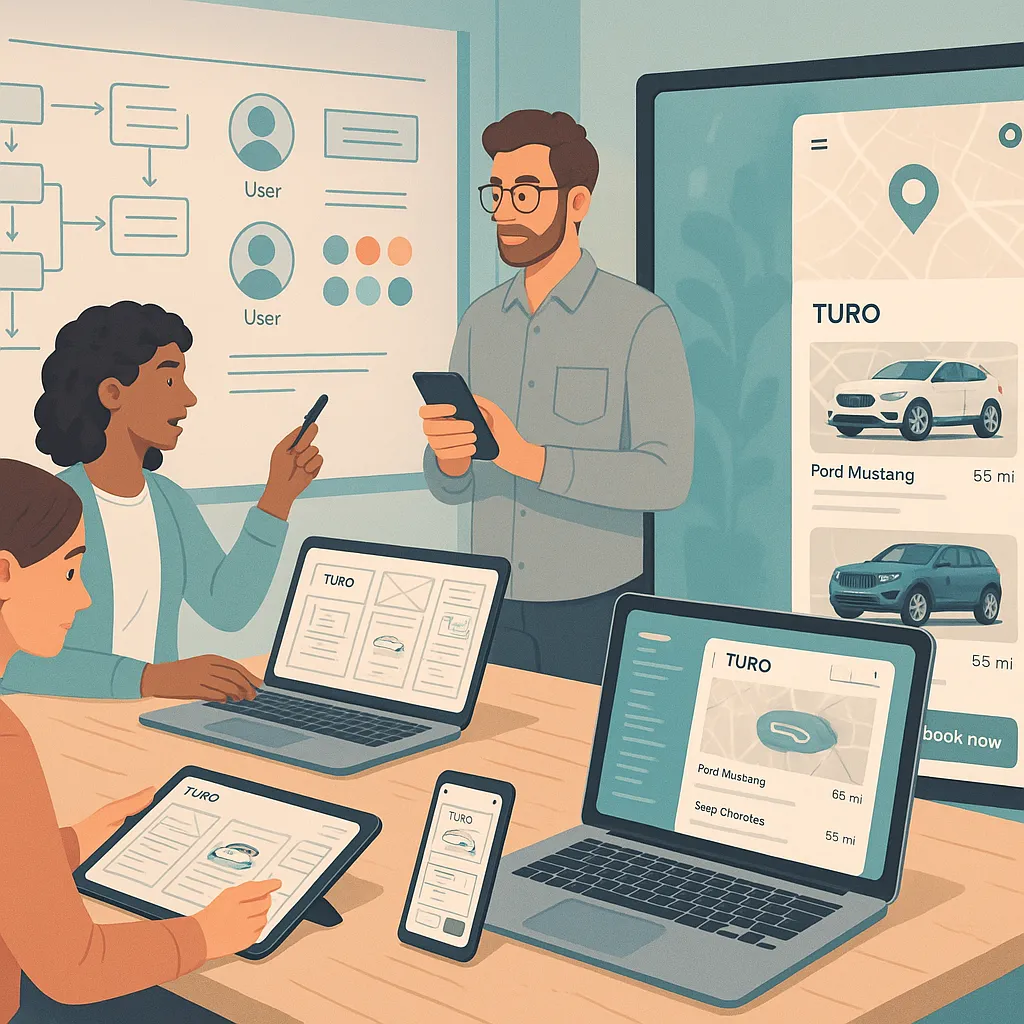
Your users won’t tolerate clunky interfaces. They expect a clean, intuitive experience — especially when they’re entrusting your app with their cars or credit cards.
Ask about the developer’s design process:
User-first design approach: How do they ensure frictionless booking, smooth onboarding, and responsive mobile layouts?
Brand customization: Can the platform be fully customized to reflect your branding — not just color tweaks, but layout, iconography, and messaging?
Role-specific dashboards: Renters and car owners should each have tailored views, along with admin tools for you to manage everything.
Accessibility & speed: Is the app optimized for all devices and screen sizes, even in low-bandwidth regions?
An elegant, easy-to-use interface keeps users engaged — and earns their trust.
Communication & Workflow
Hiring a Turo clone developer isn’t a one-time handoff — it’s a relationship. You’ll be collaborating through planning, building, testing, launching, and improving.
Here’s how to make sure the workflow won’t become a headache:
Project transparency: Do they use tools like Trello, ClickUp, or Jira? Is there a project roadmap and regular milestone tracking?
Real-time communication: You should have direct access to the developers or a dedicated manager, not just a sales team.
Iterative progress updates: Weekly or biweekly builds, feedback loops, and working demos are ideal.
Post-launch support: Once the app is live, will they handle bug fixes, updates, feature extensions, and server monitoring?
Good communication saves you from costly delays, misunderstandings, or wasted dev cycles.

Pricing Models & Quality
Sure, pricing matters — but not at the expense of product quality, maintainability, or launch readiness.
Here’s how to evaluate pricing smartly:
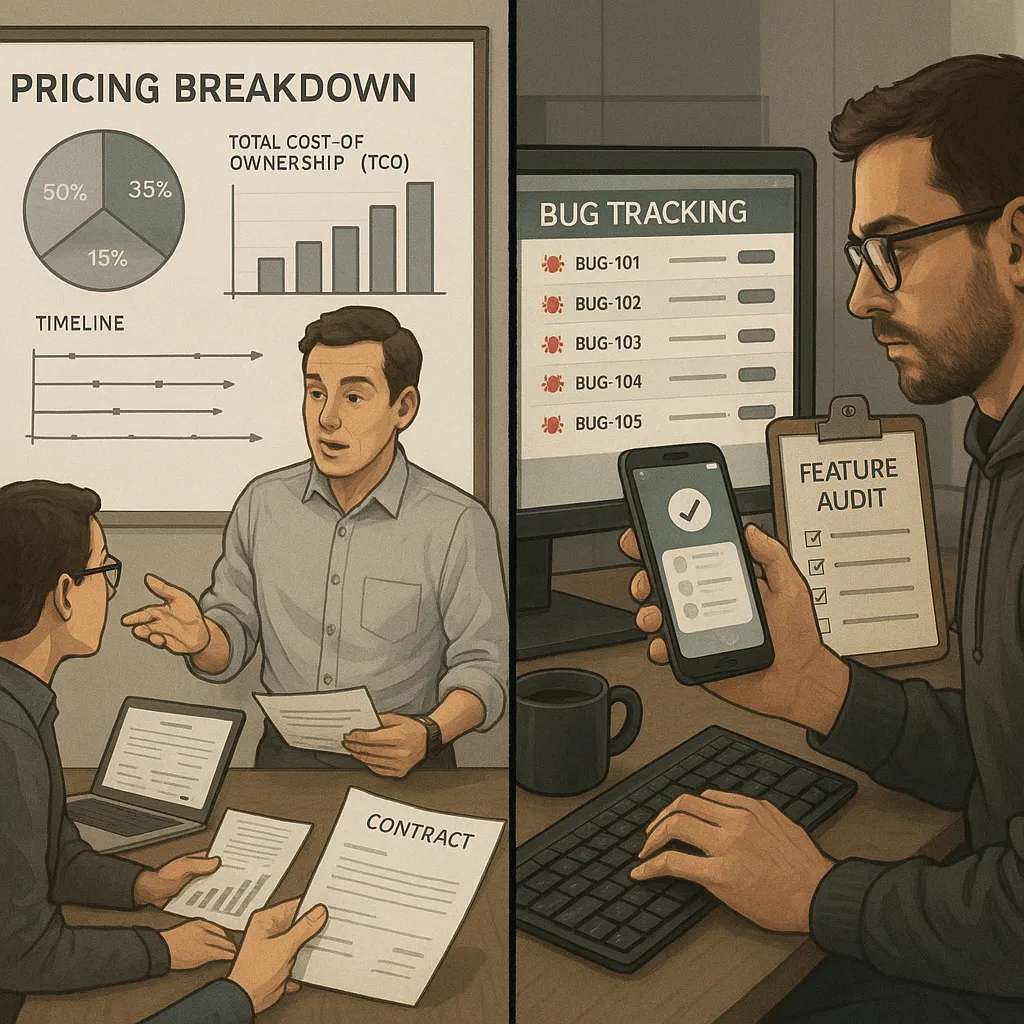
Know what’s included: Does the quote cover design, development, QA, deployment, and support — or just barebones coding?
Get detailed estimates: Ask for a breakdown by features, timelines, and resource hours — not just a lump-sum figure.
Watch for lowball bids: If it sounds too good to be true, it probably is. Cheap builds often lead to technical debt and expensive rework.
Think long-term: Consider hosting, maintenance, updates, and versioning — the full lifecycle, not just the MVP launch.
The goal isn’t to get the lowest price. It’s to get the best return on investment.
Choose the Right Development Partner
Even with a strong idea and clear feature set, building a peer-to-peer car sharing platform like Turo isn’t simple. You need a development team that not only knows the tech — but understands the dynamics of marketplace apps, trust-based transactions, and scalable mobility platforms.
Partnering with the right Turo clone developer can save you time, reduce costs, and help you avoid the pitfalls of reinventing the wheel.
Look for a team that offers:
Proven experience in rental marketplace and mobility app development
A track record of building scalable, secure, and user-friendly platforms
End-to-end services — from product discovery to post-launch support
At Miracuves, we don’t just deliver Turo clones — we engineer robust, ready-to-scale platforms tailored to your brand, your business model, and your market vision. From white-label options to fully custom builds, we handle the tech so you can focus on growth, users, and revenue.
Conclusion
Hiring the best Turo clone developer means finding a team that understands the unique needs of peer-to-peer car sharing platforms — not just from a technical perspective, but from a user experience and growth perspective too. Prioritize domain expertise, a scalable tech stack, strong design capabilities, transparent communication, and a clear pricing model that aligns with your long-term vision.
Frequently Asked Questions
Hiring a Turo clone developer with Miracuves starts at $2,899, with the final cost depending on the features and customizations you need.
Absolutely. A good developer will offer full branding control and feature flexibility to tailor the platform to your audience.
A Turo clone app with Miracuves can be built and launched in 3–9 days, based on the features, integrations, and customization you choose.
Key features include: listing management, real-time booking, maps, in-app messaging, reviews, payment gateway, ID verification, and admin panel.
The best ones do. Ensure your developer provides ongoing support for bug fixes, feature updates, and scaling assistance.