


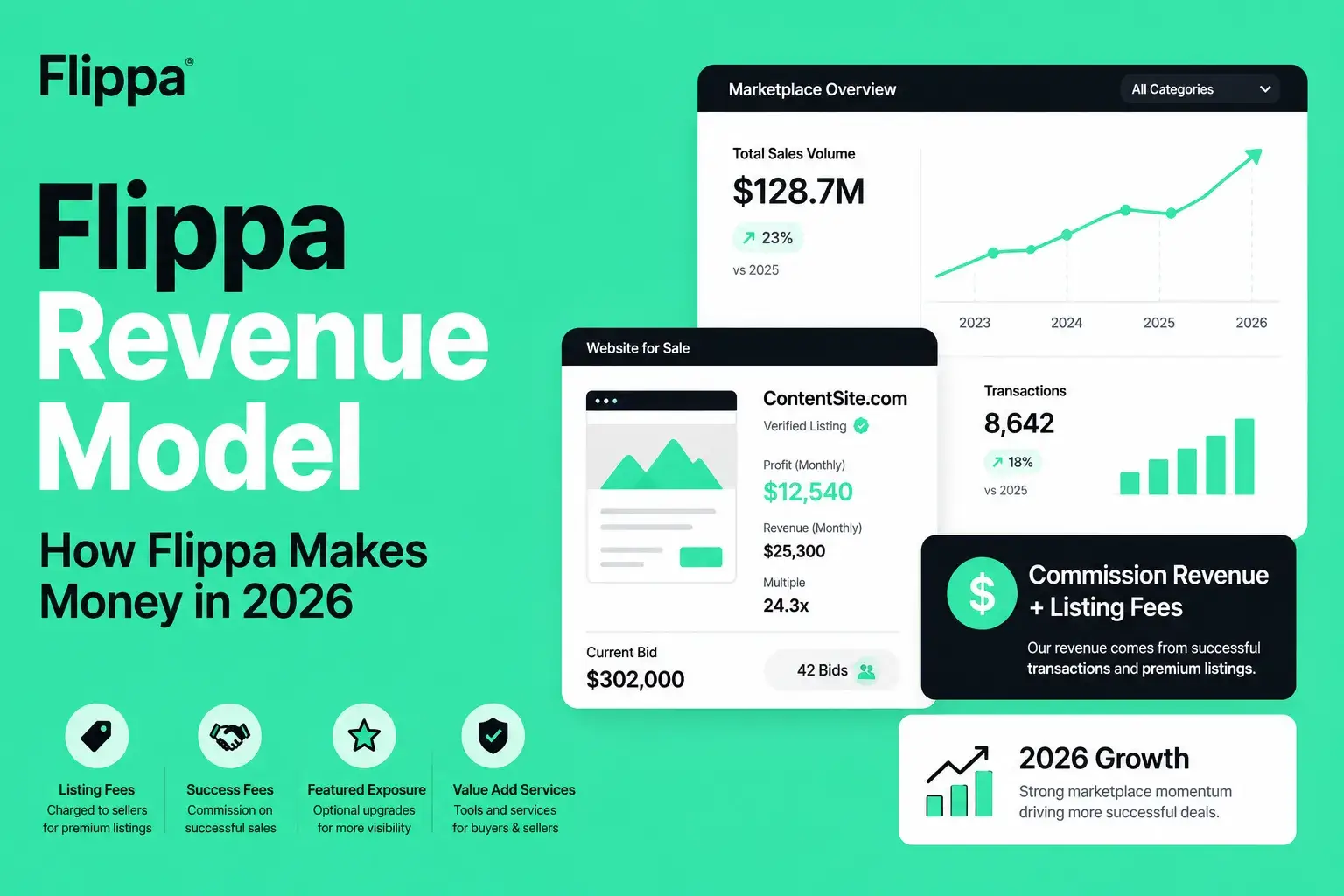
In 2026, Flippa stands as one of the world’s largest marketplaces for buying and selling online businesses, websites, apps, domains, and digital assets, supported by a global buyer network, data-driven valuation tools, and transaction infrastructure that enables deals to close across borders, currencies, and business models at scale.
With the rise of micro-SaaS, content sites, eCommerce stores, and AI-driven digital products, Flippa has positioned itself at the center of the digital asset economy by offering curated listings, built-in due diligence, escrow protection, and performance analytics that reduce risk and increase deal velocity for both buyers and sellers.
For founders, Flippa’s model offers powerful lessons in marketplace monetization, trust-layer engineering, and scalable fee design. The real advantage lies in tiered pricing, success-based commissions, verification systems, and lifecycle monetization strategies that turn one-time transactions into long-term platform relationships.
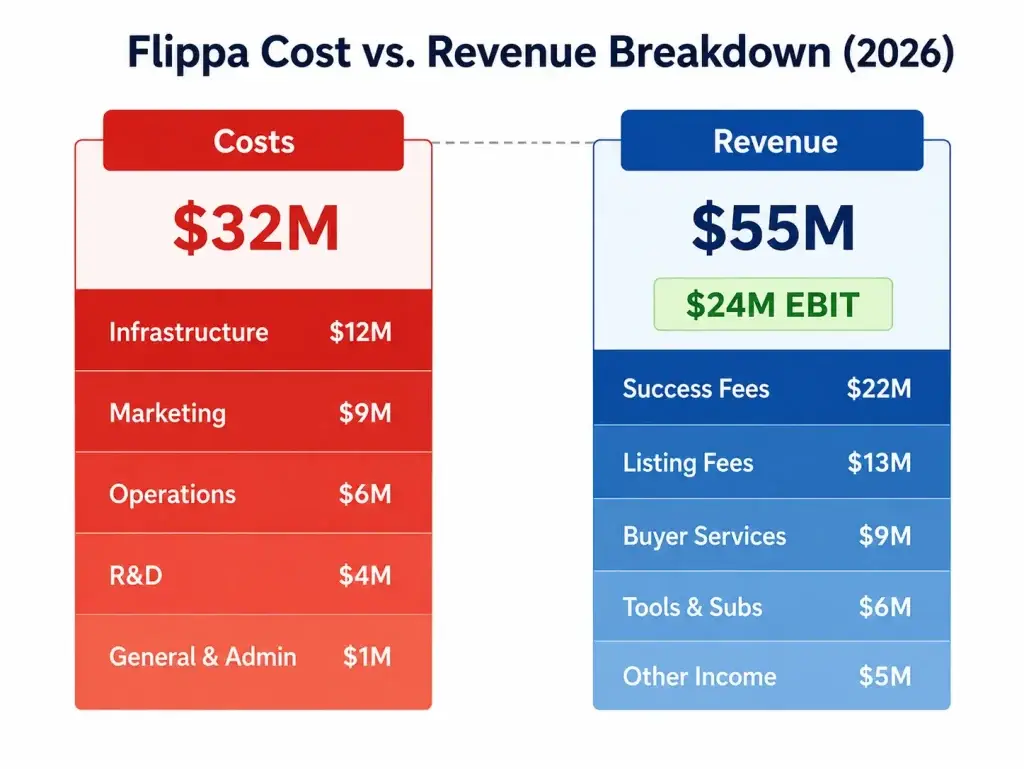
Flippa Revenue Overview – The Big Picture
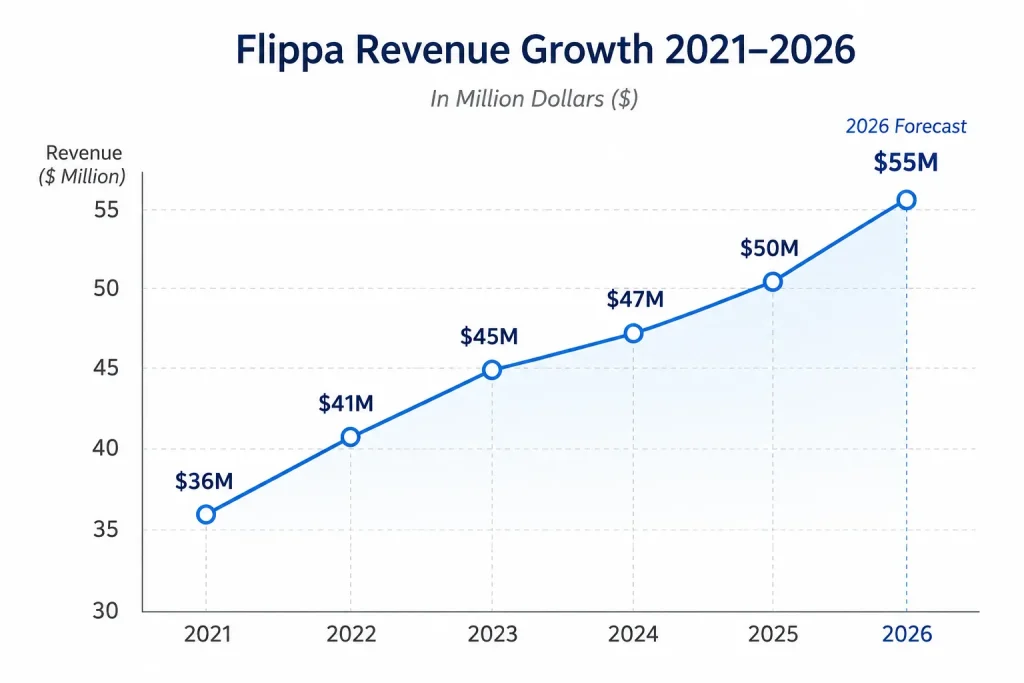
- 2026 Revenue: ~$45–50 million (estimated from filings, investor reports, and marketplace volume)
- Valuation: ~$200–250 million (private market estimates)
- YoY Growth: ~18–22%
- Revenue by Region:
- North America: ~45%
- Europe: ~30%
- Asia-Pacific & others: ~25%
- Average Gross Margin: ~70%
- Net Profit Margin: ~18–22%
- Competition Benchmark:
- Empire Flippers: Higher ticket size, curated listings
- MicroAcquire: Lower fees, founder-focused SaaS exits
Read More: What Is Flippa App? How It Works for Buying & Selling Online Assets
Primary Revenue Streams Deep Dive
Revenue Stream #1: Seller Listing Fees (≈25%)
Sellers pay upfront fees to list assets on the platform.
- How it works: Tiered listing packages
- Pricing (2026): $49–$499 per listing
- Value: Immediate cash flow regardless of sale outcome
Revenue Stream #2: Success Fees / Commission (≈40%)
Flippa takes a percentage when a deal closes.
- Commission range: 5%–15% depending on deal size
- Highest contributor to total revenue
Revenue Stream #3: Buyer Premium Services (≈15%)
Optional tools for buyers.
- Due diligence reports
- Deal sourcing & advisory
- Legal & escrow facilitation
Revenue Stream #4: Featured Listings & Promotions (≈10%)
Sellers pay for higher visibility.
- Homepage placement
- Email promotions
- Category boosts
Revenue Stream #5: Data, Valuation & SaaS Tools (≈10%)
Subscriptions for valuation tools, analytics, and deal insights.
Revenue Streams Percentage Breakdown
| Revenue Source | % Share |
|---|---|
| Success Fees | 40% |
| Listing Fees | 25% |
| Buyer Services | 15% |
| Featured Listings | 10% |
| Tools & Subscriptions | 10% |
The Fee Structure Explained
User-Side Fees
- Listing fees (sellers)
- Success commissions
- Optional premium services
Provider-Side Fees
- Third-party escrow
- Legal & verification partners
Hidden Revenue Layers
- Payment processing margins
- Upsell conversion funnels
- Data-driven pricing tiers
Regional Pricing Variation
- USD-based pricing globally
- Higher-value markets see higher average commissions
Complete Fee Structure by User Type
| User Type | Fees Paid |
|---|---|
| Seller | Listing + success fee |
| Buyer | Optional advisory & tools |
| Enterprise seller | Custom commission |
How Flippa Maximizes Revenue Per User
- Segmentation: Hobby founders, SaaS builders, agencies, investors
- Upselling: Featured listings, verification badges
- Cross-selling: Due diligence + escrow bundles
- Dynamic pricing: Higher fees for larger exits
- Retention monetization: Repeat sellers & buyers
- LTV optimization: Seller lifecycle monetization
- Psychological pricing: Low entry listing → high success fee
Example: A $100 listing often converts into $2,500–$10,000 in success fees.
Cost Structure & Profit Margins
- Infrastructure: Marketplace platform, analytics, hosting
- CAC & Marketing: Paid acquisition, partnerships, SEO
- Operations: Trust & safety, deal support teams
- R&D: Valuation algorithms, fraud detection
- Unit economics: Extremely low marginal cost per listing
- Margin optimization: Automation & data leverage
- Profitability path: Scale volume, not headcount
Read More: Best Flippa Clone Scripts– Build Your Digital Asset Marketplace
Miracuves Flippa-Like Platform Solution Cost and Tech Stack
Miracuves pricing for a Flippa-like digital asset marketplace platform developed in PHP/Laravel with scalable marketplace architecture is available on request. The final cost depends on platform modules, bidding systems, escrow workflows, monetization features, verification systems, and deployment requirements. Estimated delivery timeline: 6 days for ready-made deployment on request.
Build a scalable online marketplace platform designed for startups, digital entrepreneurs, website investors, SaaS founders, domain traders, eCommerce business owners, and acquisition-focused marketplaces.
Core Workflows:
Business listing creation, website and domain marketplace management, buyer-seller communication, bidding systems, direct acquisition workflows, valuation management, listing verification, secure transaction handling, and digital asset transfer processes.
Marketplace Logic:
Revenue estimation systems, traffic analytics display, seller verification workflows, listing approval logic, premium listing systems, auction management, escrow-style transaction handling, marketplace commissions, and digital business discovery engines.
Management Hub:
Admin dashboards, listing moderation, buyer and seller management, transaction tracking, commission controls, dispute handling, verification management, analytics reporting, featured listing controls, and centralized marketplace operations.
Enterprise Readiness:
Customizable marketplace architecture for scaling digital asset transactions, handling high listing volumes, supporting multiple monetization models, improving marketplace trust systems, and enabling long-term platform expansion.
Why a Flippa-Like Platform Works Efficiently with PHP/Laravel Architecture
A Flippa-like marketplace platform manages business listings, user accounts, bidding systems, negotiations, financial workflows, analytics, and marketplace operations simultaneously. It requires strong backend logic, scalable listing management, smooth dashboard experiences, secure transactions, and flexible monetization systems.
We recommend PHP/Laravel architecture for this type of platform because:
Marketplace Workflow Optimization
PHP/Laravel supports structured marketplace operations including listings, bidding systems, account management, messaging workflows, transaction handling, and admin moderation without requiring overly complex infrastructure.
Faster Marketplace Deployment
Using a ready-made PHP/Laravel foundation allows businesses to launch faster by reducing development time for core marketplace systems like auctions, dashboards, listings, verification logic, and monetization workflows.
Scalable Admin & User Dashboards
Laravel-based systems can efficiently manage marketplace dashboards for buyers, sellers, admins, listing analytics, transaction histories, commissions, and marketplace performance reporting.
Flexible Monetization Systems
The architecture supports multiple revenue streams including featured listings, commissions, premium visibility, subscriptions, advertising placements, verification charges, and marketplace service fees.
Easier Long-Term Marketplace Expansion
The platform can later integrate payment gateways, escrow systems, analytics engines, CRM tools, AI-based valuation systems, business verification APIs, and advanced marketplace intelligence features.
You get a scalable, marketplace-focused digital asset trading platform designed for long-term business growth, acquisition workflows, and online marketplace scalability.
Note: Final pricing depends on selected marketplace modules, bidding systems, verification workflows, monetization structure, third-party integrations, admin controls, scalability requirements, and custom feature development.
Miracuves delivers ready-to-launch Flippa-like marketplace solutions in 6 days on request using PHP/Laravel architecture.
Future Revenue Opportunities & Innovations
- AI-powered business valuation engines
- SaaS-only curated exits
- Subscription-based buyer access
- Embedded financing for acquisitions
- Secondary market for revenue shares
Risks & Threats
- Fraud & misrepresentation
- Regulatory scrutiny
- Competition from niche marketplaces
Opportunities for New Founders
- Vertical-specific asset marketplaces
- Regional digital business exchanges
- Faster escrow & compliance layers
Lessons for Entrepreneurs & Your Opportunity
What works
- Trust-first marketplace design
- High-margin success fees
- Data-backed pricing
What to replicate
- Tiered monetization
- Seller-first onboarding
- Strong verification layers
Market gaps
- Faster deal closure
- Transparent valuation models
- Industry-specific exits
Final Thought
Flippa proves that digital assets are a repeatable, scalable market when supported by standardized listing frameworks, transparent valuation benchmarks, and global distribution of buyers and capital. By turning unique businesses into comparable, tradable assets, the platform creates liquidity and predictability in an otherwise fragmented market.
Its strength lies in combining trust, data, and transactional leverage. Through verification systems, escrow-backed payments, performance analytics, and algorithm-driven deal matching, Flippa reduces friction, increases close rates, and maximizes revenue per transaction for both the platform and its users.
For founders, the opportunity is clear: niche marketplaces can outperform general ones when they offer deeper industry insights, faster deal cycles, specialized buyer pools, and tailored monetization models—creating defensible platforms that command higher fees and stronger long-term loyalty.
FAQs
1. How much does Flippa make per transaction?
Anywhere from a few hundred dollars to over $100,000 on large exits.
2. What’s Flippa’s most profitable revenue stream?
Success-based commissions.
3. How does Flippa’s pricing compare to competitors?
Higher than DIY platforms, lower than fully brokered exits.
4. What percentage does Flippa take from sellers?
Typically 5%–15% depending on deal size.
5. How has Flippa’s revenue model evolved?
From listings-only to data, tools, and advisory services.
6. Can small platforms use similar models?
Yes, especially in niche verticals.
7. What’s the minimum scale for profitability?
A few hundred successful transactions annually.
8. How to implement similar revenue models?
Start with listing fees, then layer success fees.
9. What are alternatives to Flippa’s model?
Broker-led exits or subscription-only marketplaces.