


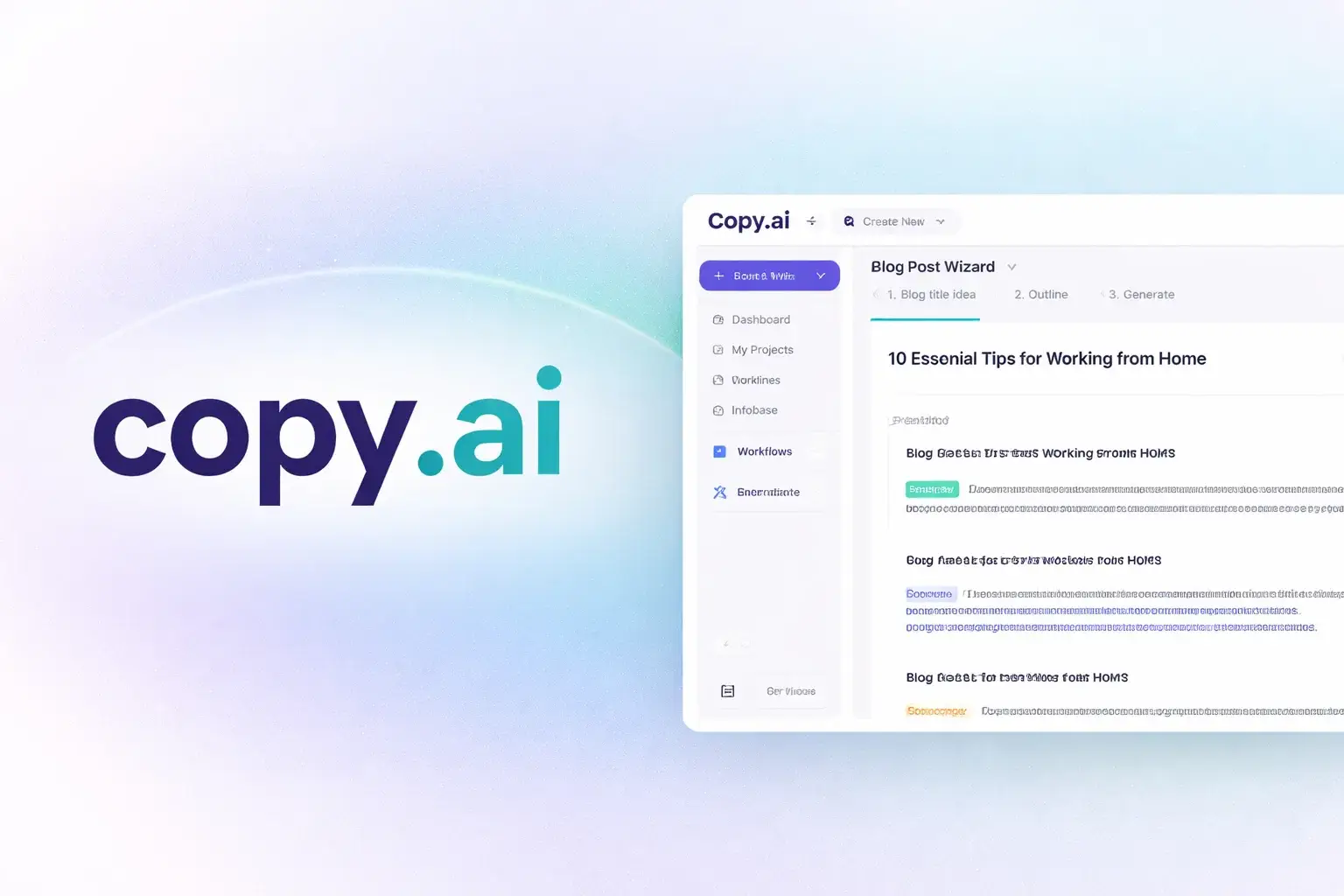
Picture a busy go-to-market team on a Monday morning: sales needs fresh outbound sequences, marketing needs landing page copy, and ops needs the same process repeated across regions—without spending hours copying, pasting, and juggling tools. Copy.ai is built for exactly this kind of “too much to do, not enough time” situation.
Copy.ai positions itself as a GTM AI platform—meaning it’s not only about writing copy. The platform focuses on automating repetitive go-to-market tasks using connected workflows, actions, and AI agents so teams can codify best practices and run them repeatedly with less manual effort.
It also offers free tools (like research-to-email style generators) to help teams move faster from research to outreach, and it provides a free plan with monthly word limits plus limited workflow credits for new users.
By the end of this guide, you’ll understand what Copy.ai is, how it works step by step, how it makes money, which features drive real GTM speed, and what it takes to build a Copy.ai-like platform for your niche with Miracuves.
What Is Copy.ai? The Simple Explanation
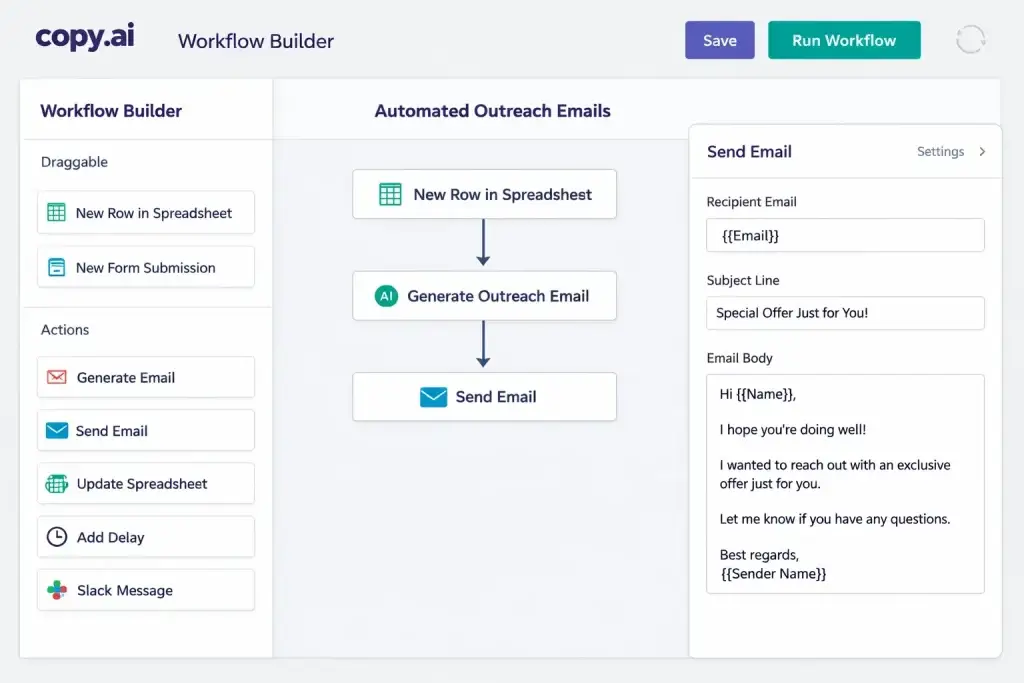
Copy.ai is an AI-powered go-to-market (GTM) automation platform that helps sales, marketing, and operations teams create content and run repeatable outreach and campaign workflows. In simple terms, it’s not just a tool that writes copy—it’s a system that helps teams standardize and automate how they communicate with customers.
The Core Problem Copy.ai Solves
GTM teams often struggle with:
- Repetitive writing of emails, ads, and messages
- Inconsistent messaging across regions or reps
- Manual research before outreach
- Slow campaign setup and execution
- Copy-paste workflows across tools
Copy.ai addresses this by letting teams build AI-driven workflows that turn inputs (like a company name or product info) into finished outputs (emails, LinkedIn messages, landing pages, and CRM notes) automatically.
Target Users and Use Cases
Copy.ai is commonly used by:
• Sales development reps (SDRs) and account executives
• Marketing teams running campaigns
• RevOps and GTM operations teams
• Founders doing outbound sales
• Agencies managing multiple clients
Typical use cases include cold email generation, LinkedIn outreach, product messaging, campaign copy, account research summaries, and CRM updates.
Current Market Position
Copy.ai is positioned as a GTM-focused AI automation platform, sitting between simple copy generators and full sales automation systems. It appeals to teams that want AI to handle the “busywork” of outreach and messaging.
Why It Became Successful
Copy.ai gained traction by shifting from “AI copywriting” to AI-powered GTM workflows, helping teams turn best practices into automated processes that scale.
How Copy.ai Works — Step-by-Step Breakdown
For Sales, Marketing, and GTM Teams
Setting up a workflow
Users begin by choosing or creating a GTM workflow. This could be something like “Research a company and generate a cold email,” “Create a product launch campaign,” or “Prepare LinkedIn outreach messages.”
Defining inputs
The workflow asks for structured inputs such as:
- Company name and website
- Product or offer details
- Target persona or role
- Tone and messaging preferences
- Region or language
These inputs act like variables that the AI uses across all steps.
Running AI actions
Each workflow is made up of AI actions, such as:
- Researching a company or industry
- Summarizing product benefits
- Writing a personalized email
- Creating ad copy or social posts
- Formatting CRM notes
The platform runs these actions in sequence, passing information from one step to the next.
Reviewing and editing outputs
Users can review the generated content, make edits, and rerun specific steps if needed. This keeps humans in the loop while saving time on the heavy lifting.
Exporting and integrating
Finished outputs can be copied into email tools, CRMs, or campaign platforms. Higher-tier plans often include integrations and automation options to push results directly into other systems.
Typical workflow
Choose GTM flow → enter inputs → run AI actions → review outputs → export or send.
Technical Overview (Simple)
Copy.ai combines:
- Large language models for writing and summarization
- Workflow engines that connect multiple AI steps
- Variable and template systems for personalization
- Integration layers for CRM and sales tools
- Cloud infrastructure for running workflows at scale
This turns Copy.ai into a process automation tool, not just a text generator.
Read More :- How to Develop an AI Chatbot Platform
Copy.ai’s Business Model Explained
How Copy.ai Makes Money
Copy.ai runs on a freemium + subscription SaaS model designed for go-to-market teams. It offers basic access for individuals and upgrades for teams that need more usage, more workflows, and collaboration features.
Main revenue streams include:
- Paid subscriptions: Monthly or annual plans that unlock higher limits and advanced tools
- Workflow-based usage: Plans often include limits tied to workflow runs, credits, or automation volume
- Team and enterprise plans: More seats, admin controls, security, and collaboration for organizations
- Value-add features: Integrations, workflow templates, and advanced GTM automation capabilities
This model scales with team size and how heavily they rely on Copy.ai daily.
Pricing Structure (Typical Model)
Copy.ai pricing usually depends on:
- Free vs paid tier
- Usage limits (words, workflow credits, or automation runs)
- Number of seats/users
- Access to workflow builder and advanced GTM tools
- Support level for businesses
Casual users can start free, while revenue teams upgrade for speed and scale.
Fee Breakdown
- Monthly subscription fee (individual or team)
- Seat-based pricing for organizations
- Higher tiers include more workflow runs and automation capacity
- No ads and no commissions
Market Size and Demand
Demand for Copy.ai-style platforms is driven by:
- Growth in outbound sales and personalized marketing
- Need to produce more content across channels
- Increasing cost of human-only content operations
- AI adoption in sales and marketing workflows
- Teams wanting repeatable, scalable GTM processes
Profitability Insights
Copy.ai improves profitability by:
- Building recurring subscription revenue
- Expanding within accounts as teams add seats
- Increasing retention through workflow lock-in
- Offering higher-margin enterprise plans
Revenue Model Breakdown
| Revenue Stream | Description | Who Pays | Nature |
|---|---|---|---|
| Subscriptions | Platform access | Individuals/Teams | Recurring |
| Workflow Usage | Automation runs | Heavy users | Usage-based |
| Team Plans | Seats + collaboration | Businesses | Tiered |
| Enterprise Deals | Security + admin | Enterprises | Contract |
Key Features That Make Copy.ai Successful
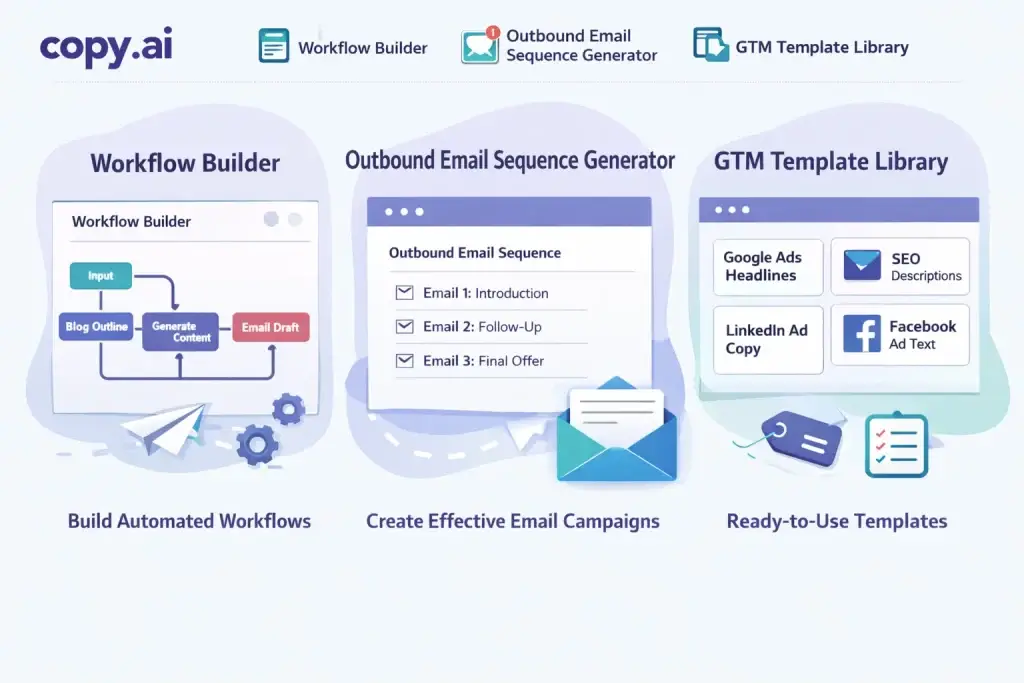
GTM workflow automation
Copy.ai’s biggest strength is its focus on go-to-market workflows. Instead of generating one piece of copy at a time, it helps teams run repeatable sequences like research → messaging → outreach → follow-ups.
Sales outreach content generation
Copy.ai supports creating cold emails, follow-ups, LinkedIn messages, call scripts, and pitch variations—making it especially useful for SDRs and outbound teams.
Marketing content creation
Marketing teams use it for landing pages, ads, blog outlines, social content, and campaign messaging—often using the same inputs across multiple channels.
Personalization at scale
The platform uses structured inputs to generate personalized outputs repeatedly, helping teams tailor messaging for different accounts, personas, or industries.
Workflow builder and templates
Copy.ai includes prebuilt templates and the ability to create custom workflows, so teams can standardize their best-performing GTM playbooks.
Research assistance
It supports research-style steps—summarizing companies, industries, and key signals—so users can write better outreach without manual browsing.
Team collaboration
Team plans allow shared workflows and consistent messaging across teams, reducing “every rep writes differently” problems.
Integrations and export options
Copy.ai fits into existing GTM stacks by supporting exports and integration-friendly workflows, helping teams move results into CRMs and campaign tools.
Brand and tone control
Users can guide tone and messaging to align with brand voice, reducing inconsistent or off-brand outreach.
Speed and repeatability
Copy.ai is built for volume. Teams can run the same workflow across many accounts quickly, turning GTM execution into an efficient process.
The Technology Behind Copy.ai
Tech stack overview (simplified)
Copy.ai is built as a GTM automation engine layered on top of large language models. Instead of treating AI as a single “write button,” it wraps AI inside workflows that can research, write, format, and export content in a structured way.
At a high level, the stack includes:
- Large language models for writing, summarizing, and rewriting
- Workflow orchestration engine to chain multiple AI actions
- Variable and template system for personalization at scale
- Integration layer for CRM, email, and marketing tools
- Usage tracking and credit systems for billing and limits
- Cloud infrastructure for running workflows reliably
How workflows run behind the scenes
When a user launches a workflow, Copy.ai:
- Collects structured inputs (company, persona, product, tone)
- Passes those inputs into the first AI step (often research or summarization)
- Feeds the output into the next step (like email writing or ad copy)
- Repeats this chain until the final deliverables are ready
This creates a pipeline effect, where each AI step builds on the previous one.
Personalization logic
Copy.ai’s variable system lets the same workflow adapt to different accounts, regions, or roles. For example, one email workflow can generate hundreds of unique messages just by changing the company name, industry, or buyer persona.
Integrations and automation
For advanced users, Copy.ai connects to other tools through APIs or automation platforms, enabling:
- Sending outputs directly to CRM records
- Triggering workflows from spreadsheets or forms
- Feeding results into campaign tools
This turns AI into a background worker rather than a manual tool.
Performance and scalability
Because GTM teams often run workflows in bulk, Copy.ai relies on cloud systems to:
- Handle many parallel AI jobs
- Queue and prioritize tasks
- Maintain consistent response times
- Track usage and limits accurately
Security and team controls
For business plans, Copy.ai typically includes:
- Role-based access and permissions
- Team workspaces
- Audit and usage logs
- Data handling controls for enterprise environments
Why this technology matters for business
Copy.ai’s tech matters because it turns best practices into systems. Instead of relying on individual reps or writers to remember how to do things well, teams can encode their GTM playbooks into workflows that run the same way every time—making scale, training, and quality control much easier.
Copy.ai’s Impact & Market Opportunity
Industry impact
Copy.ai helped shift AI writing from a “creative helper” into a go-to-market automation layer. Instead of focusing only on generating copy, it showed sales and marketing teams how AI can run entire workflows—researching accounts, drafting outreach, and preparing campaign assets in a repeatable way.
This changed expectations inside revenue teams. AI is no longer just a tool for inspiration—it’s becoming part of the operational backbone of outbound and marketing execution.
Market demand and growth drivers
Demand for Copy.ai-style platforms is driven by:
- Rising cost of manual sales and marketing operations
- Need for highly personalized outreach at scale
- Growth of outbound and account-based marketing
- Pressure to increase pipeline without increasing headcount
- Adoption of AI in RevOps and GTM workflows
These trends create a strong market for workflow-driven AI automation in revenue teams.
User segments and behavior
Copy.ai users typically include:
- SDR and outbound sales teams
- Growth and performance marketing teams
- RevOps and GTM operations leaders
- Founders running early-stage sales
- Agencies managing outbound campaigns for clients
A common behavior pattern is batch execution—teams run the same workflow across many accounts, industries, or regions to maintain consistency and speed.
Geographic reach
As a cloud-based SaaS platform, Copy.ai is used globally by sales and marketing teams, especially in regions with strong B2B SaaS, startup, and agency ecosystems.
Future direction
Copy.ai-style platforms are likely to evolve toward:
- Deeper CRM and sales engagement integrations
- Automated lead qualification and scoring
- AI agents that manage full outbound cycles
- Performance feedback loops (what messaging converts best)
- Multi-channel orchestration (email, LinkedIn, ads, SMS)
Opportunities for entrepreneurs
This massive success is why many entrepreneurs want to create similar platforms—especially for:
- Vertical-specific GTM tools (real estate, healthcare, fintech)
- Regional language outbound platforms
- SMB-focused sales automation tools
- Industry-focused agencies powered by AI workflows
- Internal revenue enablement platforms for large enterprises
Building Your Own Copy.ai-Like Platform
Why businesses want GTM automation systems
Copy.ai shows that revenue teams don’t just want help writing—they want repeatable, automated processes that turn research into outreach and outreach into pipeline. Businesses are interested in similar platforms because:
- Manual prospecting and messaging don’t scale well
- Consistency across reps and regions is hard to maintain
- AI can reduce time spent on low-value tasks
- Structured workflows improve training and quality control
- Subscription software fits recurring sales and marketing budgets
This makes GTM automation platforms attractive across B2B, agencies, and SaaS markets.
Key considerations before development
If you’re planning to build a Copy.ai-style platform, focus on:
- Workflow builder and orchestration engine
- Personalization and variable management
- Integrations with CRM, email, and sales tools
- Brand and messaging controls
- Usage tracking and billing systems
- Team permissions and audit trails
- Data privacy and compliance
The platform should feel like a revenue operations tool, not just a writing app.
Read Also :- How to Market an AI Chatbot Platform Successfully After Launch
Cost Factors & Pricing Breakdown
Copy.ai–Like App Development — Market Price
| Development Level | Inclusions | Estimated Market Price (USD) |
|---|---|---|
| 1. Basic AI Copywriting MVP | Core web interface for generating marketing copy, user registration & login, integration with a single LLM/API, prompt → output flow for a small set of templates (ads, emails, product descriptions), basic history, simple export/copy tools, minimal brand settings, standard admin panel, basic usage analytics | $65,000 |
| 2. Mid-Level AI Marketing Content Platform | Larger template library, brand voice settings, projects/workspaces, team collaboration (roles), folders & content management, tone controls, SEO content workflows (blogs/meta), optional plagiarism check integration, credits/usage tracking, analytics dashboard, polished web UI and mobile-ready experience | $140,000 |
| 3. Advanced Copy.ai-Level Enterprise Content Ecosystem | Large-scale multi-tenant content platform with enterprise orgs & RBAC/SSO, approvals & governance workflows, advanced brand guardrails, integrations (CMS, CRM, Ads tools), API access, audit logs, detailed observability, robust safety & policy enforcement, cloud-native scalable architecture | $260,000+ |
Copy.ai-Style Marketing Content Platform Development
The prices above reflect the global market cost of developing a Copy.ai-like AI marketing and copywriting platform — typically ranging from $65,000 to over $260,000, with a delivery timeline of around 4–12 months for a full, from-scratch build. This usually includes LLM integrations, template/workflow systems, brand voice controls, collaboration, analytics, governance, and production-grade infrastructure for teams and enterprises.
Miracuves Pricing for a Copy.ai–Like Custom Platform
Miracuves Price: Starts at $15,999
This is positioned for a feature-rich, JS-based Copy.ai-style AI marketing platform that can include:
- AI copywriting for ads, emails, landing pages, product descriptions, and blogs
- Brand voice and tone controls with reusable templates
- User accounts, teams/workspaces, projects, and content history
- Usage and credit tracking with optional subscription or pay-per-use billing
- Core moderation and compliance hooks for safe content generation
- A modern, responsive web interface plus optional companion mobile apps
From this foundation, the platform can be extended into enterprise approvals, deeper brand guardrails, CMS/CRM integrations, API access, audit logs, and large-scale SaaS deployments as your content engine matures.
Note: This includes full non-encrypted source code (complete ownership), complete deployment support, backend & API setup, admin panel configuration, and assistance with publishing on the Google Play Store and Apple App Store—ensuring you receive a fully operational AI marketing content ecosystem ready for launch and future expansion.
Delivery Timeline for a Copy.ai–Like Platform with Miracuves
For a Copy.ai-style, JS-based custom build, the typical delivery timeline with Miracuves is 30–90 days, depending on:
- Depth of content workflows (templates, SEO, brand voice, approvals, etc.)
- Number and complexity of AI model, storage, billing, and moderation integrations
- Complexity of team features (roles, workspaces) and enterprise controls (RBAC/SSO)
- Scope of web portal, mobile apps, branding, and long-term scalability targets
Tech Stack
We preferably will be using JavaScript for building the entire solution (Node.js/Nest.js/Next.js for the web backend + frontend) and Flutter / React Native for mobile apps, considering speed, scalability, and the benefit of one codebase serving multiple platforms. Other tech stacks can be discussed upon request — Contact us
Essential features to include
A strong Copy.ai-style MVP should include:
- Workflow builder with AI steps
- Structured inputs and variable system
- Email and message generation tools
- Research and enrichment steps
- Export and CRM integration
- Team collaboration features
- Usage and credit tracking
- Subscription and seat management
High-impact extensions later:
- Multi-channel orchestration (email, LinkedIn, ads, SMS)
- AI lead scoring and prioritization
- Performance analytics and A/B testing
- Vertical-specific GTM templates
- API access for custom automations
Read More :- AI Chat Assistant Development Costs: What Startups Need to Know
Conclusion
Copy.ai highlights a bigger shift in how revenue teams work: the real advantage isn’t just better messaging—it’s better systems. By turning outreach and content into automated workflows, it helps teams move faster, stay consistent, and scale without adding complexity.
For founders and product builders, the lesson is clear: the most valuable AI platforms in GTM aren’t those that write the best sentence—they’re the ones that help organizations run their entire growth engine more smoothly.
FAQs :-
What is Copy.ai used for?
Copy.ai is used for automating go-to-market workflows, including cold emails, LinkedIn outreach, ad copy, campaign messaging, and research summaries for sales and marketing teams.
How does Copy.ai make money?
Copy.ai makes money through subscription plans, seat-based pricing, and usage limits tied to workflow runs and automation capacity.
Is Copy.ai suitable for sales teams?
Yes. Copy.ai is widely used by SDRs and outbound teams to personalize and scale outreach across many accounts.
Does Copy.ai support team collaboration?
Yes. Team and business plans include shared workflows, permissions, and collaboration features.
Can Copy.ai integrate with CRMs?
Yes. Copy.ai supports integrations and API access so outputs can be pushed into CRM and sales engagement tools.
Is Copy.ai beginner-friendly?
Yes. Copy.ai offers templates and prebuilt workflows that make it easy for new users to get started.
Can I build a platform like Copy.ai?
Yes. Copy.ai-style platforms can be built by combining AI writing models, workflow orchestration engines, and CRM integrations.
What makes Copy.ai different from basic AI writing tools?
Copy.ai focuses on end-to-end GTM automation, not just text generation, making it more suitable for sales and revenue operations.
Does Copy.ai support multi-language content?
Yes. Copy.ai can generate content in multiple languages, which is useful for global outreach teams.
How can Miracuves help build a Copy.ai-like platform?
Miracuves helps founders build AI-powered GTM automation platforms with workflow builders, CRM integrations, personalization systems, and subscription billing—allowing fast launch and scalable growth.