




Artificial intelligence is becoming one of the fastest-growing technology markets in the world.
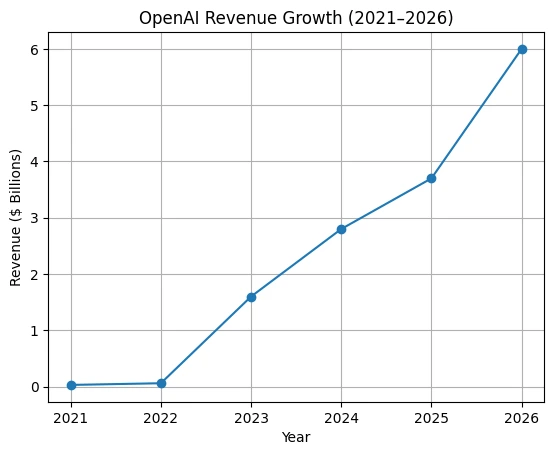
OpenAI is estimated to generate around $3.7 billion in revenue in 2025, driven largely by API usage, enterprise AI solutions, and platform partnerships. As generative AI adoption accelerates globally, OpenAI’s revenue is expected to grow significantly through 2026.
For founders and startup operators, OpenAI represents a new category of platform business: AI infrastructure as a service. Understanding how OpenAI monetizes APIs, enterprise tools, and developer ecosystems offers valuable lessons for building scalable technology platforms.
OpenAI Revenue Overview – The Big Picture
OpenAI operates a global AI infrastructure platform used by developers, startups, and enterprises to build AI-powered products.
Financial Snapshot (2025–2026 Estimates)
| Metric | Value |
|---|---|
| Estimated Revenue (2025) | ~$3.7 Billion |
| Estimated Revenue (2026) | ~$6 Billion |
| Estimated YoY Growth | ~60% |
| Valuation | ~$80B+ |
| Active Developers Using APIs | 3M+ |
| Enterprise Customers | 90% of Fortune 500 experimenting with AI |
Generative AI adoption is accelerating across industries such as software development, marketing, customer support, finance, and healthcare.
Estimated Revenue Distribution by Region
| Region | Revenue Share |
|---|---|
| North America | 55% |
| Europe | 25% |
| Asia-Pacific | 15% |
| Other Regions | 5% |
Benchmark Comparison
| Company | Estimated AI Platform Revenue |
|---|---|
| OpenAI | ~$3.7B |
| Anthropic | ~$1B |
| Cohere | ~$300M |
| Stability AI | ~$200M |
OpenAI currently leads the commercial generative AI platform market due to early adoption and strong enterprise partnerships.
Read More: OpenAI API Explained: Build AI Chat, Vision, and Automation Into Any App
Primary Revenue Streams Deep Dive
OpenAI monetizes its platform through multiple revenue layers centered around AI infrastructure.
Revenue Stream #1: OpenAI API Usage
The core of OpenAI’s business model is usage-based API pricing.
Developers integrate OpenAI models such as:
- GPT models for text generation
- Embedding models for search and recommendations
- Vision models for image understanding
- Speech models for transcription and voice AI
Developers pay based on token usage, meaning the amount of text processed.
Example pricing structure (simplified):
| Model Tier | Typical Pricing |
|---|---|
| GPT-4 level models | Higher cost per token |
| GPT-4 mini models | Lower cost per token |
| Embedding models | Very low cost per request |
Estimated revenue contribution: ~50–55%
APIs are used by:
- SaaS startups
- AI copilots
- productivity tools
- customer service automation platforms
- search systems
Revenue Stream #2: ChatGPT Subscriptions
OpenAI generates consumer revenue through premium ChatGPT subscriptions.
Pricing Tiers (2026)
| Plan | Monthly Price |
|---|---|
| Free | $0 |
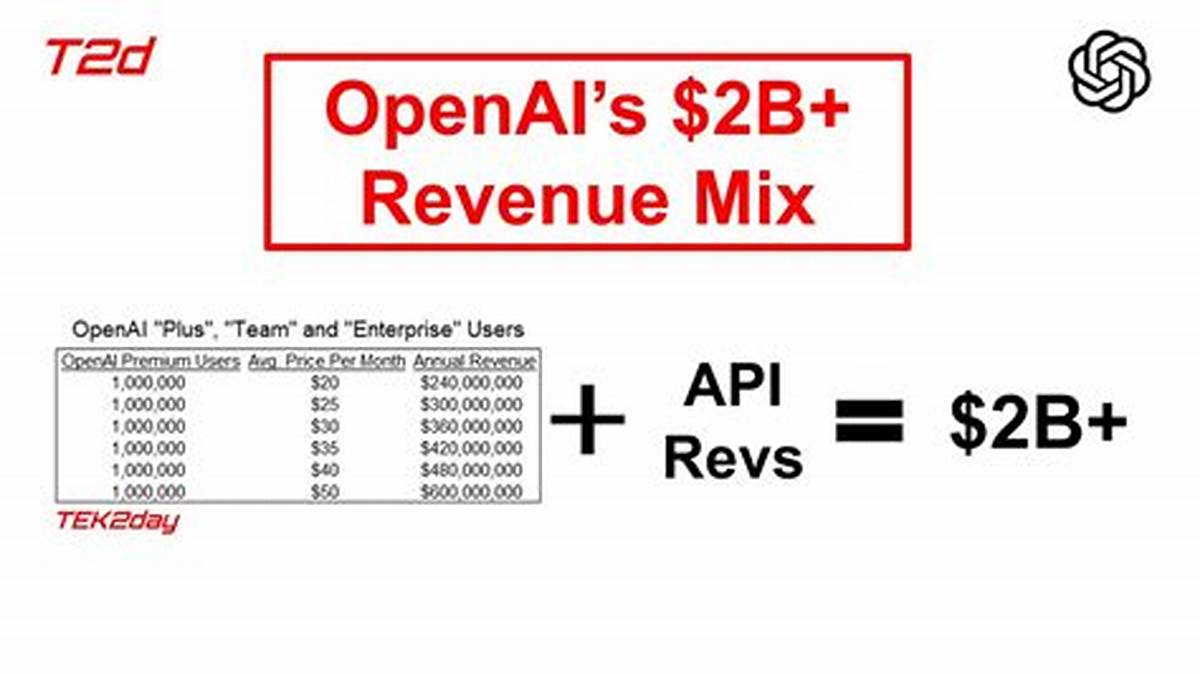
| ChatGPT Plus | $20 |
| ChatGPT Team | ~$25–30 per user |
| ChatGPT Enterprise | Custom pricing |
Premium plans provide:
- faster responses
- advanced models
- higher usage limits
- enterprise security features
Estimated revenue contribution: ~25–30%
Revenue Stream #3: Enterprise AI Solutions
Large organizations purchase enterprise-grade AI solutions.
Enterprise offerings include:
- custom AI integrations
- enterprise ChatGPT deployments
- internal knowledge copilots
- AI customer service automation
These contracts often involve large annual licensing agreements.
Estimated revenue contribution: ~10–15%
Revenue Stream #4: Strategic Partnerships
OpenAI generates revenue through partnerships with technology companies.
Examples include:
- cloud partnerships
- AI infrastructure integrations
- enterprise platform integrations
These partnerships expand distribution and platform reach.
Estimated revenue contribution: ~5–10%
Revenue Stream #5: Developer Ecosystem Tools
OpenAI also monetizes developer infrastructure tools such as:
- AI assistants
- function calling tools
- retrieval systems
- developer SDKs
These tools increase API usage and platform adoption.
Estimated revenue contribution: ~5%
Revenue Streams Breakdown (Latest Available Data)
| Revenue Stream | Description | Estimated Revenue Share | Pricing Model |
|---|---|---|---|
| API Usage | Pay-per-token AI model access | 50–55% | Usage based |
| ChatGPT Subscriptions | Premium AI assistant plans | 25–30% | Monthly subscription |
| Enterprise Solutions | Custom AI deployments | 10–15% | Annual contracts |
| Partnerships | Cloud & platform integrations | 5–10% | Revenue sharing |
| Developer Tools | Infrastructure tools for AI apps | ~5% | Usage based |
The Fee Structure Explained
OpenAI uses a multi-layer monetization system.
Platform Fee Structure (Latest Available Data)
| User Type | Fee Type | Typical Fee Range | Notes |
|---|---|---|---|
| Developers | API usage | Pay per token | Core revenue stream |
| Individuals | ChatGPT Plus | ~$20/month | Consumer subscription |
| Teams | ChatGPT Team | ~$25–30 per user | Collaboration features |
| Enterprises | Enterprise license | Custom pricing | Security & scale |
| Platform partners | Infrastructure usage | Revenue sharing | Cloud integrations |
Hidden revenue layers include:
- higher model pricing tiers
- enterprise usage scaling
- increased token consumption through new AI features
How OpenAI Maximizes Revenue Per User
OpenAI focuses heavily on expanding usage and developer dependency.
Customer Segmentation
OpenAI targets multiple customer groups:
- individual users
- startups
- SaaS companies
- large enterprises
Each segment has different pricing tiers.
Upselling Strategy
Users are encouraged to upgrade through:
- higher usage limits
- better models
- faster performance
Cross-Selling
OpenAI introduces new capabilities such as:
- vision models
- speech models
- multimodal AI
These features increase API usage and revenue.
Developer Lock-In
Once companies build products using OpenAI APIs, switching costs increase due to:
- model tuning
- application architecture
- infrastructure dependencies
This strengthens long-term revenue stability.
Cost Structure & Profit Margins
Running a global AI platform requires massive infrastructure investment.
Major Cost Categories
| Cost Category | Description |
|---|---|
| AI Infrastructure | GPU clusters and cloud computing |
| Model Training | Large-scale AI model development |
| Research & Development | AI innovation and safety |
| Cloud Operations | Global AI deployment |
| Talent | AI researchers and engineers |
AI model training and inference costs represent the largest expense category.
Unit Economics
Key factors impacting profitability include:
- compute cost per request
- model efficiency improvements
- enterprise pricing power
As AI hardware improves, margins are expected to increase.
Future Revenue Opportunities (2026–2028 Outlook)
Generative AI markets are expected to grow dramatically.
Key Growth Opportunities
1. AI Agents
Autonomous AI assistants performing complex tasks.
2. AI Productivity Tools
AI integrated into everyday software.
3. AI Infrastructure
OpenAI becoming the backbone of AI applications.
4. Enterprise Automation
AI replacing repetitive enterprise workflows.
Key Risks
- competition from Google and Anthropic
- rising infrastructure costs
- regulatory scrutiny
Opportunities for Startups
Startups can build on OpenAI by creating:
- AI vertical SaaS products
- AI automation tools
- AI copilots for specific industries
Lessons for Entrepreneurs
OpenAI provides several strategic lessons.
What Works Well
- platform-based ecosystem
- usage-based pricing
- developer-first strategy
What Startups Can Replicate
- API-first products
- scalable cloud infrastructure
- developer ecosystems
Market Gaps
Opportunities still exist in:
- industry-specific AI solutions
- AI workflow automation
- AI infrastructure optimization
Final Thought
OpenAI represents a new generation of technology companies built around AI infrastructure platforms. As AI adoption accelerates globally, platforms like OpenAI are positioned to become foundational layers of the digital economy.
For founders and builders, the key takeaway is the power of platform-based ecosystems—tools that developers and businesses can build on top of. Companies that successfully provide scalable infrastructure, strong developer tools, and continuous innovation can shape entire industries and unlock massive long-term value in the AI-driven future.
FAQs
1. How much does OpenAI make per API request?
Revenue varies based on model and token usage, with costs calculated per unit of processed text or data.
2. What is the most profitable revenue stream for OpenAI?
API usage is currently the largest revenue driver.
3. How does OpenAI pricing compare to competitors?
OpenAI typically competes on performance and ecosystem strength, while pricing varies across AI providers.
4. What percentage does OpenAI take from developers?
Developers pay based on API usage rather than revenue sharing.
5. How has OpenAI’s revenue model evolved?
The model evolved from research funding to API infrastructure, enterprise AI tools, and subscriptions.
6. Can small startups use a similar model?
Yes. Many startups build API-first platforms using usage-based pricing.
7. What scale is needed for profitability?
High scale is required because infrastructure costs are significant.
8. How can founders implement a similar model?
By building developer-focused platforms with scalable infrastructure and usage-based pricing.
9. What alternatives exist to this revenue model today?
Alternatives include:
SaaS subscription models
licensing AI models
open-source AI monetization