



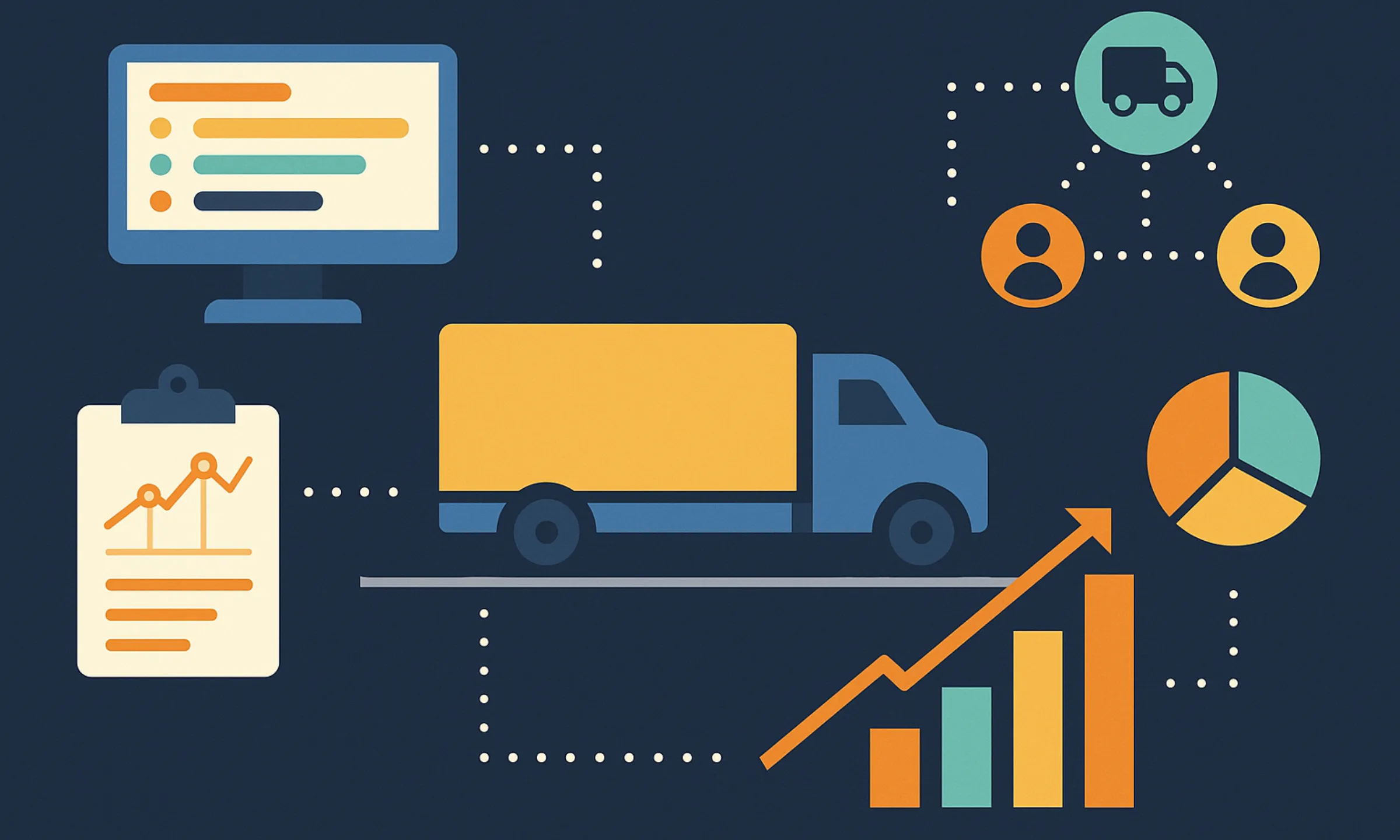
While consumer tech giants like Uber and Airbnb dominate headlines, DAT Load Board operates one of the most influential B2B digital marketplaces in the world — without most people ever seeing it. Every day, hundreds of thousands of truckers, freight brokers, and logistics firms rely on DAT to move goods across the U.S. and Canada.
business model of DAT Load Board stands as a masterclass in subscription-driven marketplace monetization, network effects, and data-powered decision-making
studying DAT is far more valuable than most consumer apps — because it shows how to build a high-retention, high-margin, mission-critical platform that businesses cannot operate without.
At Miracuves, we’ve seen rising demand for DAT-style freight and B2B marketplace platforms globally, as logistics digitization accelerates across emerging markets.
How the DAT Load Board Business Model Works
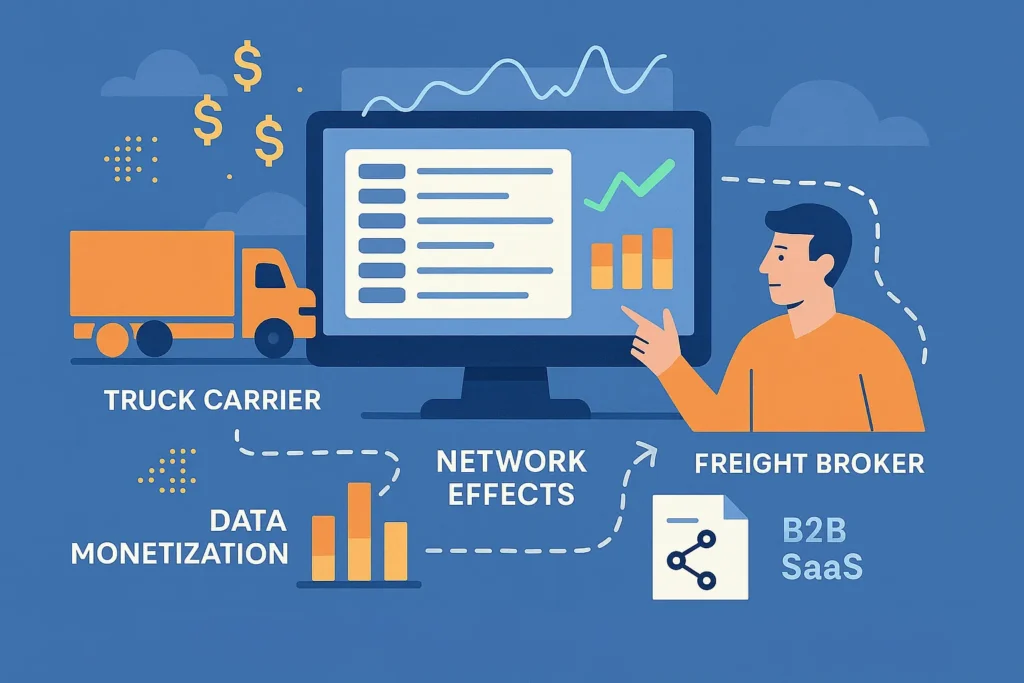
At its core, DAT Load Board operates as a data-driven B2B digital freight marketplace that connects freight brokers (who have loads) with truck carriers (who have capacity) in real time. Unlike consumer marketplaces, DAT is not transaction-based — it is subscription-based with intelligence layered on top, making it a mission-critical operating system for the trucking industry.
Instead of taking a cut per shipment, DAT monetizes access, data, and decision-making power.
Type of Business Model
Hybrid B2B SaaS + Two-Sided Marketplace + Data Intelligence Platform
- SaaS: Monthly/annual subscriptions for access
- Marketplace: Matching freight demand with trucking capacity
- Data Platform: Real-time freight rates, market trends, forecasting
This hybrid structure gives DAT:
- Predictable recurring revenue
- Extreme user stickiness
- High margins driven by data products
Value Proposition (By User Segment)
For Freight Brokers
- Instantly post thousands of loads
- Access the largest carrier network in North America
- Use real-time rate analytics to price loads competitively
- Reduce empty miles and improve profit margins
For Truck Carriers / Owner-Operators
- Find loads instantly to avoid deadhead time
- Compare lanes and rates in real time
- Filter by equipment type, region, and broker reputation
- Maximize revenue per mile
For Enterprise Logistics & Shippers
- Market intelligence on freight demand
- Rate forecasting and volatility insights
- Network risk reduction and capacity planning
Why the Model Works Exceptionally Well in 2025
- Global supply chains remain volatile and time-sensitive
- Trucking capacity shortages continue across regions
- Freight pricing requires real-time intelligence
- Businesses prefer OPEX subscriptions over CAPEX software
- Data-driven logistics has become a competitive necessity, not a luxury
Target Market & Customer Segmentation Strategy
DAT’s dominance comes from one core insight: own the daily workflow of the freight industry. Instead of targeting “everyone,” DAT precisely segments its audience by role, revenue size, and operational dependency — then designs different value layers for each.
In 2025, DAT’s ecosystem serves hundreds of thousands of active logistics professionals daily, with especially high penetration in North America’s long-haul, regional, and spot-market trucking lanes.
Primary Customer Segments
1. Truck Carriers & Owner-Operators (Supply Side)
Profile
- Independent drivers
- Small to mid-size fleet owners
- Regional and long-haul operators
Why They Use DAT
- To eliminate empty miles (deadhead)
- To discover higher-paying lanes
- To stabilize weekly revenue
Behavioral Pattern
- Multiple daily logins
- Load filters by lane, equipment, and broker rating
- Price-sensitive but extremely loyal once onboarded
Value Lever
- Revenue optimization per mile
- Consistent access to demand
2. Freight Brokers & 3PL Companies (Demand Side)
Profile
- Small brokerage firms
- Enterprise logistics providers
- Digital freight brokers
Why They Use DAT
- Instant access to large carrier pools
- Faster load coverage
- Real-time rate benchmarking
Behavioral Pattern
- Heavy daily usage
- Multi-user team accounts
- High willingness to pay for premium analytics
Value Lever
- Faster fulfillment
- Margin control via pricing intelligence
3. Enterprise Shippers & Logistics Planners (Data Consumers)
Profile
- Retailers, manufacturers, distributors
- Supply-chain analytics teams
Why They Use DAT
- Freight market forecasting
- Capacity risk modeling
- Budget forecasting
Behavioral Pattern
- Strategic, not transactional usage
- Focus on dashboards and reports
Value Lever
- Cost predictability
- Risk reduction
Customer Lifetime Value Optimization
DAT increases LTV through:
- Tiered subscriptions (basic → pro → enterprise)
- Add-on analytics tools
- Multi-seat licenses
- API and data feed licensing
- Long-term annual contracts
Retention is driven more by data dependency than by price sensitivity — a powerful SaaS advantage.
Revenue Streams and Monetization Design
With its massive daily transaction visibility, DAT doesn’t monetize movement of freight — it monetizes access to the freight market itself. This is a classic example of high-margin, subscription-first B2B monetization layered with premium data intelligence.
Instead of taking a risky per-shipment commission, DAT locks in predictable recurring revenue from every stakeholder that depends on real-time freight visibility.
Primary Revenue Stream: Subscription Access (Core Engine)
This is DAT’s largest and most stable revenue driver.
Who Pays
- Owner-operators
- Small fleet owners
- Freight brokers
- 3PL companies
- Enterprise logistics teams
How It Works
- Monthly and annual subscription tiers
- Pricing varies by:
- Number of users
- Load board access type
- Market analytics depth
- API access
Why It Scales So Well
- Freight activity is daily and continuous
- DAT becomes part of the core operating cost of logistics firms
- High renewal rates due to workflow dependency
- Predictable cash flow for the company
This transforms DAT into a mission-critical SaaS utility, not just a marketplace.
Secondary Revenue Stream 1: Freight Rate Analytics & Market Intelligence
DAT monetizes its massive historical and real-time pricing database as a separate intelligence product.
Revenue Mechanism
- Premium analytics subscriptions
- Custom enterprise reports
- Lane-based pricing forecasts
- Volatility and seasonality insights
Customers
- Large brokers
- Retailers
- Manufacturers
- Hedge funds and macro logistics analysts
Why It’s Powerful
- Data once collected is monetized repeatedly
- Margins are significantly higher than core subscriptions
- Used for budgeting, procurement, and risk control
This transforms operational data into a secondary SaaS intelligence business.
Secondary Revenue Stream 2: API & Systems Integration Licensing
DAT monetizes its platform by embedding itself into:
- Transportation Management Systems (TMS)
- Fleet management software
- ERP platforms
Revenue Model
- API licensing fees
- Usage-based data calls
- Enterprise integration contracts
This locks DAT deep into enterprise workflows and makes displacement extremely difficult.
Secondary Revenue Stream 3: Advertising & Sponsored Listings (Selective)
While not DAT’s main focus, it monetizes visibility inside its ecosystem:
- Featured broker listings
- Carrier services advertising
- Equipment, fuel, insurance, and factoring promotions
Because users are high-intent logistics professionals, ad inventory commands premium CPMs.
- Value-based pricing (not cost-based)
- Role-based tiering (carrier vs. broker vs. enterprise)
- Feature gating (basic access vs. advanced analytics)
- Annual commitment discounts to reduce churn
Instead of attracting price shoppers, DAT targets career-dependent users who optimize for profitability, not monthly fees.
Operational Model & Key Activities
Behind DAT’s clean interface and real-time insights exists a highly complex, always-on logistics intelligence machine. Unlike consumer apps, DAT operates in an environment where uptime, data accuracy, and trust directly impact billions of dollars in physical freight movement.
Its operational model is built around three pillars:
Platform reliability, market data integrity, and ecosystem enablement.
1. Core Operations (Daily Business Engine)
DAT’s day-to-day operations revolve around maintaining a high-availability digital freight market:
- Platform Management
- 24/7 system monitoring
- High-availability cloud infrastructure
- Global data redundancy across regions
- Real-time load ingestion and processing
- Data Validation & Quality Control
- Fraud detection on brokers and load postings
- Duplicate load filtering
- Rate outlier detection
- Carrier identity verification
- User Support & Success
- Dedicated onboarding teams for brokers and enterprises
- Technical support for API users
- Training modules for owner-operators
- Dispute assistance and account verification
- Marketing & Demand Stimulation
- Industry events and trucking expos
- Educational programs for new drivers
- Market condition webinars
- Freight trend publications
DAT does not rely on mass consumer marketing — it relies on industry trust and professional dependency.
2. Resource Allocation Strategy (Where the Money Goes)
DAT’s internal investment priorities reflect its data-first platform DNA:
- Technology & Infrastructure: ~40–45%
- Cloud scalability
- Data pipelines
- AI pricing models
- System security and compliance
- Data Science & Product R&D: ~20–25%
- Predictive rate models
- Market volatility engines
- Lane forecasting algorithms
- Capacity demand modeling
- Sales, Marketing & Partnerships: ~15–20%
- Enterprise sales teams
- Broker partnerships
- TMS provider alliances
- Operations, Compliance & Support: ~10–15%
- Carrier verification
- Broker compliance
- Customer success and retention programs
This allocation structure is typical of mature, high-margin B2B SaaS platforms with strong network effects.
3. Regional Expansion & Market Penetration Model
DAT expands through a data-density-first strategy, not geographical vanity expansion.
- Focus first on:
- Densely trafficked freight corridors
- High broker and carrier saturation zones
- Then expand via:
- Regional carrier recruitment campaigns
- Partnerships with national brokerage networks
Every new region must reach a minimum liquidity threshold before full-scale monetization is pushed.
4. Risk Management & Operational Resilience
Given its role in the physical supply chain, DAT actively manages:
- Cybersecurity threats
- Price manipulation risks
- Data latency and integrity issues
- Broker fraud and carrier scams
- Infrastructure outages
Resilience is built through:
- Multi-cloud deployments
- Automated data anomaly detection
- Human audit layers
- Continuous penetration testing
Operational Advantage in 2025
In an environment where:
- Freight markets swing weekly,
- Fuel prices fluctuate rapidly,
- And regulatory pressure is rising,
DAT’s operational reliability has become its strongest competitive weapon — even stronger than pricing.
Strategic Partnerships & Ecosystem Development
DAT did not grow into the world’s most trusted freight intelligence platform by operating in isolation. Its dominance in 2025 is the result of deliberate ecosystem engineering — weaving itself into every critical layer of the logistics technology stack.
Instead of trying to own the entire logistics workflow, DAT chose to become the central data and liquidity layer that all others plug into. This strategy is what transformed it from a “tool” into infrastructure.
Partnership Philosophy: Be the System of Record
DAT’s collaboration approach follows one simple rule:
This makes DAT:
- The default pricing reference,
- The benchmarking standard,
- And the trust backbone of logistics tech.
Key Partnership Categories
1. Technology & API Partners
DAT integrates deeply with:
- Transportation Management Systems (TMS)
- Fleet Management Software
- Dispatch & Routing platforms
- ERP and supply-chain platforms
Value Created
- Users access DAT data without leaving their primary workflow
- DAT locks in recurring API usage
- Partners gain instant freight market intelligence
This creates platform stickiness via embedded data dependence.
2. Payment, Fuel & Finance Ecosystem Partners
DAT forms alliances with:
- Factoring companies
- Fleet fuel card providers
- Truck insurance companies
- Equipment leasing firms
These partners advertise and distribute directly inside the DAT ecosystem, turning DAT into a freight financial marketplace — not just a load board.
3. Market Data & Research Partners
DAT collaborates with:
- Industry research firms
- Government freight policy bodies
- Port authorities
- Economic research institutions
This strengthens:
- Data credibility
- Regulatory trust
- Market influence
Over time, DAT’s rate data has become a de facto industry benchmark used even in government and investment policy modeling
4. Geographic & Expansion Alliances
For regional growth, DAT works with:
- National brokerage networks
- Regional trucking associations
- Logistics training institutes
These partnerships accelerate:
- Onboarding velocity
- Trust adoption in new regions
- Local regulatory alignment
Ecosystem Strategy: Turning Network Effects into a Competitive Moat
DAT’s partnerships are not tactical — they are structural.
Each new partner:
- Adds more operational data
- Increases platform utility
- Deepens switching cost
This creates:
- Network effects: More users → more data → better matching → more users
- Data effects: More data → smarter forecasting → higher decision accuracy
- Revenue effects: More integrations → higher contract values
Ecosystem partners also become indirect sales channels, reducing DAT’s customer acquisition costs.
Monetization Inside the Ecosystem
DAT monetizes partnerships through:
- API access fees
- Revenue-sharing on sponsored tools
- Enterprise data licensing
- White-labeled analytics modules
This allows DAT to earn even when it is not the primary user interface — a hallmark of infrastructure platforms.
Growth Strategy & Scaling Mechanisms
DAT’s growth has never followed a viral, consumer-style playbook. Instead, it has scaled through deep industry penetration, operational embedding, and compounding data network effects. Its strategy is less about explosive user acquisition — and more about becoming impossible to replace.
In 2025, DAT’s growth is driven by a blend of organic dependency, enterprise expansion, and data-led product innovation.
Core Growth Engines
1. Organic Industry Virality (Trust-Led Growth)
DAT benefits from a powerful peer-driven referral loop:
- New truckers are introduced to DAT during training
- Brokers recommend DAT as the default load board
- Enterprises standardize DAT as a pricing benchmark
This is not marketing virality — it’s professional necessity virality.
2. Paid Acquisition & Enterprise Sales
While small carriers self-onboard, DAT uses:
- Direct enterprise sales teams
- Industry event sponsorships
- Logistics tech conferences
- Channel sales via TMS partners
Enterprise contracts create:
- High average contract values (ACVs)
- Multi-year revenue stability
- Deep system integrations that boost retention
3. Product-Led Expansion (Data → Tools → Platforms)
Growth is extended by layering new products on top of existing users:
- Market rate forecasting tools
- Lane volatility dashboards
- Capacity forecasting engines
- Embedded analytics inside TMS systems
Why DAT’s Scaling Model Is So Defensible
DAT doesn’t just grow users — it grows:
- Data depth
- Market intelligence authority
- Enterprise dependency
- Ecosystem lock-in
Every year of operation increases:
- Forecasting accuracy
- Customer reliance
- Market switching costs
- Competitive entry barriers
This is why DAT’s growth curve is slow, steady, and extremely difficult to disrupt — unlike many hype-driven logistics startups that scale fast but collapse under operational weight.
Competitive Strategy & Market Defense
DAT operates in one of the most aggressive digital battlegrounds of the supply chain — where startups, AI-first logistics platforms, and global freight networks are all competing for the same carrier and broker attention. Yet in 2025, DAT continues to hold a category-defining leadership position. Its defense strategy is not about price wars — it is about structural dominance.
Core Competitive Advantages
1. Network Effects at Industry Scale
DAT’s biggest weapon is the density of its two-sided network:
- More brokers → more loads
- More carriers → faster matching
- Faster matching → higher daily dependency
- Higher dependency → stronger retention
New entrants can build a platform.
They cannot instantly replicate decades of marketplace liquidity.
2. Data Moat & Historical Intelligence
DAT controls:
- The deepest historical freight-rate database in North America
- Real-time lane-level pricing visibility
- Seasonal and volatility trend intelligence
This gives DAT:
- Superior forecasting accuracy
- Pricing authority
- Strategic influence even over competitors
While competitors offer “listings,” DAT offers market truth.
3. Workflow Lock-In Through Integration
Through deep integration with:
- TMS systems
- Dispatch tools
- ERP platforms
- Fleet management software
DAT becomes:
- Part of daily operations
- Embedded into decision pipelines
- Difficult and costly to replace
Switching from DAT is not a software change — it is an operational shutdown risk.
4. Brand Trust & Industry Legitimacy
In trucking and brokerage circles, DAT is not viewed as a startup — it is viewed as infrastructure.
- Used by training institutes
- Referenced by regulators
- Trusted by large enterprises
Trust in B2B logistics is more valuable than marketing spend — and DAT has spent decades compounding it.
Market Defense Tactics in Practice
1. Handling New Entrants
When new AI-driven load boards appear, DAT responds by:
- Quickly matching or exceeding critical features
- Bundling advanced intelligence into existing plans
- Locking enterprise clients into multi-product contracts
It avoids feature battles and focuses on ecosystem depth.
2. Managing Pricing Pressure
Instead of discounting:
- DAT enhances analytical value
- Introduces higher-margin premium tools
- Shifts customers upward into advanced tiers
This protects both revenue and brand positioning.
3. Strategic Acquisitions & Data Partnerships
DAT selectively acquires:
- Specialized analytics companies
- Regional freight data networks
- Compliance and verification technologies
These acquisitions enhance the defensive power of its data moat, not just market share.
4. Regulatory Alignment as a Defensive Shield
By working closely with:
- Compliance bodies
- Broker verification agencies
- Freight policy groups
DAT transforms regulation from a threat into a competitive barrier against unverified newcomers.
Lessons for Entrepreneurs & Implementation Strategy
If there is one overarching lesson from the DAT Load Board business model, it is this:
The most powerful platforms don’t chase transactions — they become the operating system of an industry.
For founders building B2B platforms, marketplaces, or data-driven ecosystems, DAT offers a blueprint that is far more durable than most consumer app success stories.
Key Factors Behind DAT’s Success
- Daily Workflow Ownership
DAT embedded itself into the daily operations of brokers and carriers — not just as a tool, but as a necessity. - Network Effects + Data Effects (Together)
Most platforms rely on user growth alone. DAT compounds user growth with data intelligence, making the product smarter every day. - Subscription-First Monetization
Predictable SaaS revenue insulated the business from fluctuations in freight transaction volumes. - Infrastructure Mindset
DAT was built as critical infrastructure, not as a feature-driven app — emphasizing uptime, trust, and scale from the start. - Long-Term Market Patience
Instead of hyper-growth at any cost, DAT focused on liquidity density and trust, which created an unbreakable moat over decades.
Replicable Principles for Startups
Entrepreneurs can adapt DAT’s principles to many verticals:
- Start with one core professional workflow
- Build two-sided liquidity first, features later
- Monetize access and intelligence, not just transactions
- Design for daily dependency, not weekly usage
- Let data become your long-term competitive weapon
These principles work across:
- Logistics platforms
- B2B marketplaces
- Healthcare exchanges
- FinTech data networks
- SaaS aggregation platforms
Common Mistakes to Avoid
- Building a marketplace without liquidity density
- Competing only on pricing instead of intelligence
- Ignoring data validation and trust systems
- Scaling geography before workflow adoption
- Treating B2B users like consumer users (they value reliability over novelty)
Adaptation Strategies for Local or Niche Markets
Founders can localize a DAT-style model by:
- Focusing on regional freight corridors or niche logistics sectors
- Partnering early with anchor brokers or fleet owners
- Introducing localized pricing intelligence
- Adding compliance and verification workflows specific to regional regulations
This approach is now being actively used in:
- Middle East cross-border logistics
- Southeast Asia last-mile freight
- Africa’s agri-logistics corridors
Investment Priorities
- 40% → Platform & data infrastructure
- 25% → Market onboarding & liquidity creation
- 20% → Product analytics & AI models
- 15% → Sales, compliance & partnerships
Ready to implement the DAT Load Board business model for your market?
Miracuves specializes in building scalable B2B marketplaces, logistics platforms, and data-driven SaaS ecosystems with built-in network effects and monetization frameworks. We’ve helped 200+ entrepreneurs launch robust, revenue-ready platforms globally.
Conclusion :
The business model of DAT Load Board proves a powerful truth of the platform economy in 2025:
The most valuable digital businesses are not the ones that move money — but the ones that move decisions.
DAT doesn’t touch freight. It doesn’t own trucks. It doesn’t ship goods.
Yet it influences billions of dollars in physical logistics activity every year — simply by owning the information layer of the industry.For modern entrepreneurs, DAT is not just a logistics case study — it is a masterclass in building invisible monopolies through workflow ownership, data authority, and ecosystem lock-in.
As platform economies evolve beyond consumer apps into industrial, financial, and infrastructure-grade systems, models like DAT will define the next generation of billion-dollar digital enterprises — across logistics, healthcare, fintech, energy, and beyond.
FAQs :
1. What type of business model does DAT Load Board use?
DAT uses a hybrid B2B SaaS + two-sided marketplace + data intelligence platform model. It connects freight brokers and truck carriers while monetizing access, analytics, and integrations through subscriptions and APIs.
2. How does the DAT Load Board business model create value?
DAT creates value by providing instant load-to-truck matching with real-time freight pricing intelligence. This enables faster decisions, higher profitability, and better operational planning.
3. What are the key success factors behind DAT’s business model?
Its success is built on strong two-sided network effects, a deep freight data moat, and subscription-based recurring revenue. High trust standards and workflow integrations further strengthen retention.
4. How does DAT Load Board make money?
DAT earns through monthly and annual subscriptions, premium analytics, and enterprise API licensing. Selective advertising adds an additional high-margin revenue stream.
5. How scalable is the DAT Load Board business model?
The model scales efficiently using reusable data, cloud infrastructure, and liquidity-first regional expansion. Enterprise contracts increase revenue without proportional cost growth.
6. What are the biggest challenges in this business model?
Key challenges include ensuring real-time data accuracy, preventing fraud, and managing marketplace liquidity. Infrastructure performance and regulatory compliance also require constant attention.
7. How can entrepreneurs adapt the DAT business model to their region?
Founders can localize the model by targeting specific freight corridors and partnering with anchor brokers and fleets. Regional pricing intelligence and compliance layers should be added before scaling.
8. What are the best alternatives to the DAT Load Board model?
Major alternatives include Truckstop.com, Uber Freight, Transfix, and Motive marketplace tools. Most competitors focus on transaction brokering rather than data-driven intelligence.
9. How has DAT Load Board’s business model evolved over time?
DAT evolved from dial-up freight listings to internet load boards and SaaS platforms with mobile and API access. By 2025, it operates as a full logistics intelligence and data infrastructure platform.