
Key Takeaways
- Creator platforms are moving beyond static subscriptions and paywalls.
- AI, communities, and paid challenges create stronger engagement loops.
- Audience ownership is becoming a major creator priority.
- Flexible monetization improves creator revenue and platform retention.
- Modern platforms act as operating systems for creator-led businesses.
Creator Economy Signals
- Support paid communities, challenges, memberships, and live sessions.
- Use AI for coaching, personalization, moderation, and content assistance.
- Provide subscriber export, CRM integration, and data portability.
- Build recurring billing, wallets, payouts, and access controls.
- Track creator earnings, engagement, retention, and audience growth.
Real Insights
- Participation creates stronger retention than passive content consumption.
- Creators increasingly prefer infrastructure over heavy revenue sharing.
- Platform independence can strengthen long-term creator trust.
- AI works best when embedded inside real creator workflows.
- Miracuves builds creator platforms with monetization, community, and AI-ready workflows.
The creator economy is no longer powered by simple subscriptions and static content libraries. In 2026, creators are building full-scale digital businesses, and the platforms supporting them are evolving far beyond traditional “paywall” models.
A few years ago, creator platforms mainly focused on gated videos, downloadable PDFs, and premium memberships. That structure helped launch the first generation of creator businesses, but the market has changed rapidly. Audiences now expect interactive experiences, personalized engagement, live participation, and stronger community relationships. At the same time, creators want more ownership over their audience, revenue, and platform infrastructure.
This shift is creating a completely new category of creator monetization platforms.
Modern creator ecosystems are now integrating AI-powered workflows, paid challenges, community-driven engagement, flexible monetization systems, and creator-owned audience infrastructure. Instead of simply hosting content, these platforms are becoming operating systems for creator-led businesses.
The biggest opportunity in 2026 is no longer building “another creator app.” The real opportunity is building a scalable ecosystem where creators can monetize, engage, automate, and grow independently.
Why Static Creator Platforms Are Losing Relevance
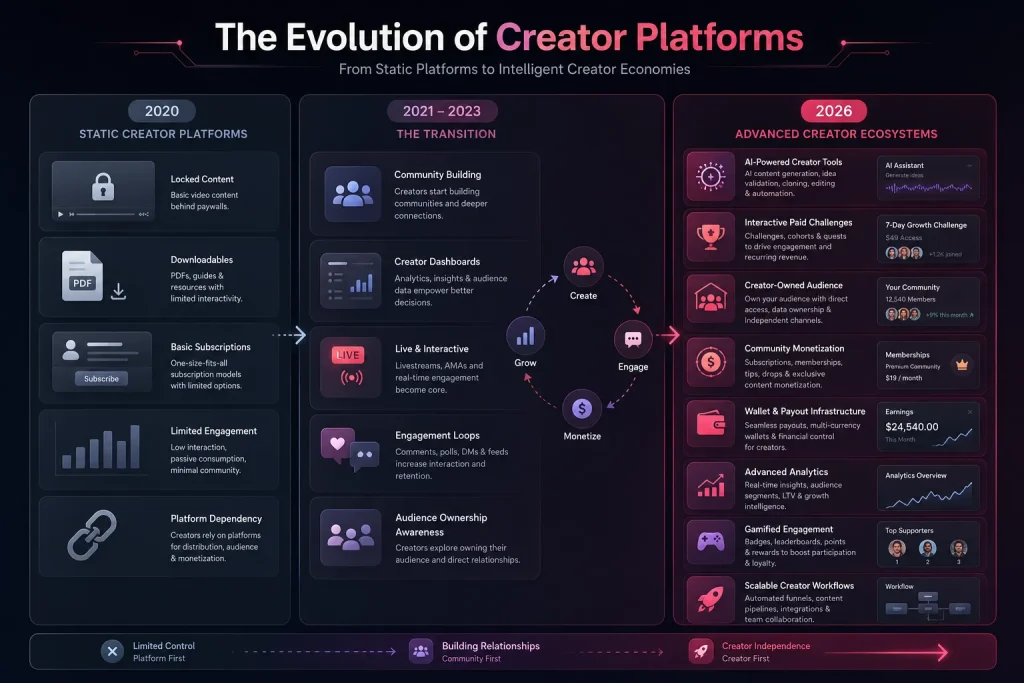
The first generation of creator platforms succeeded because they made monetization accessible. Creators could upload content, lock it behind subscriptions, and generate recurring income. However, as the creator economy matured, the limitations of this model became increasingly visible.
Static content creates weak engagement loops. A user may purchase access to a course or premium content library, consume part of it, and eventually disengage. The platform continues hosting content, but the creator loses long-term interaction and retention.
Modern audiences behave differently. They want participation rather than passive consumption. This is why creator businesses are moving toward experiences built around accountability, interaction, and personalization.
A fitness creator, for example, is no longer simply uploading workout videos. Instead, they are building 30-day transformation challenges with AI-generated meal plans, weekly live coaching, private communities, progress tracking systems, and gamified engagement. Education creators are shifting from static recorded lessons toward cohort-based learning systems and AI-assisted mentorship. Wellness creators are building community-led habit systems instead of standalone content libraries.
The same pattern is emerging across business coaching, finance education, entertainment communities, and creator-led membership ecosystems.
The platforms performing best in search results and user retention are the ones supporting continuous engagement rather than one-time content delivery.
Interactive Monetization Is Becoming the New Standard
One of the biggest changes in the creator economy is the shift from static monetization to interactive monetization.
Traditional creator platforms were designed around subscriptions alone. Users paid for access, creators uploaded content, and platforms generated revenue through transaction fees or subscription cuts. While that model still exists, it is no longer enough to sustain long-term engagement.
Interactive monetization changes the relationship between creators and audiences. Instead of paying only for access, audiences now pay for participation, progress, accountability, and direct creator interaction.
This is why modern creator platforms are increasingly built around:
- Paid challenges
- AI-guided coaching
- Interactive communities
- Live sessions
- Cohort-based learning
- Gamified engagement systems
- Personalized creator journeys
These experiences create stronger emotional investment and significantly higher retention.
Platforms that support interaction naturally generate more recurring engagement because users are actively participating rather than passively consuming. This is also why AI-powered creator ecosystems are growing rapidly. AI allows creators to scale personalization and engagement without manually handling every interaction.
Traditional Creator Platforms vs Modern Monetization Ecosystems
The Rise of the “Zero-Fee” Creator Economy
One of the strongest shifts happening in the creator economy is the movement away from aggressive revenue-sharing models.
Creators are becoming increasingly frustrated with platforms that take large percentages from subscriptions, tips, memberships, or premium content sales. While creators build audiences and generate engagement, platforms often retain a significant portion of the revenue.
This frustration is creating demand for “zero-fee” creator ecosystems.
In practice, the zero-fee model does not necessarily mean the platform generates no revenue. Instead, monetization shifts toward SaaS-style pricing, creator infrastructure subscriptions, AI tools, enterprise workflows, or premium platform services rather than heavy transaction cuts.
This approach gives creators more predictable earnings and greater financial control. It also positions the platform as an infrastructure partner instead of a revenue extractor.
The creator economy is gradually moving away from platform-controlled monetization and toward creator-owned business systems.
Platform Independence Is Becoming a Major Competitive Advantage
Creators are increasingly aware of the risks associated with platform dependency.
Many creators spend years building audiences on platforms they do not control. A policy update, algorithm change, monetization restriction, or account limitation can instantly disrupt their revenue and visibility.
This is why search intent around audience ownership and data portability is growing rapidly.
Creators now actively look for platforms that support:
- Subscriber exportability
- Audience ownership
- CRM integration
- Independent monetization
- Multi-platform connectivity
- Data portability
- Payment flexibility
Modern creator monetization platforms are responding by offering export systems, audience management tools, API accessibility, and creator-controlled infrastructure.
This creates a stronger sense of security and long-term trust. When creators know they can leave a platform without losing their audience, they are far more willing to invest time, content, and business growth into the ecosystem.
AI Is Becoming the Infrastructure Layer of Creator Platforms
AI is no longer a secondary feature added to creator platforms for marketing purposes. In 2026, AI is becoming part of the core infrastructure itself.
However, the most successful creator platforms are not using AI only for basic chatbots or generic content generation. Instead, they are integrating AI directly into creator workflows.
This includes AI-powered content assistance, automated engagement systems, personalized audience experiences, and scalable coaching infrastructure.
Creators can now generate captions, newsletters, scripts, thumbnails, and content ideas directly inside the platform. AI can also personalize user experiences by recommending challenges, communities, creator journeys, and learning paths based on audience behavior.
Fitness and education creators are increasingly using AI-guided mentorship systems that scale coaching without requiring manual interaction for every user. Community platforms are integrating AI moderation and engagement automation to improve retention while reducing operational overhead.
The platforms that successfully integrate AI into real creator workflows will dominate the next phase of the creator economy because they help creators scale without proportionally increasing workload.
The Most Profitable Creator Monetization Models in 2026
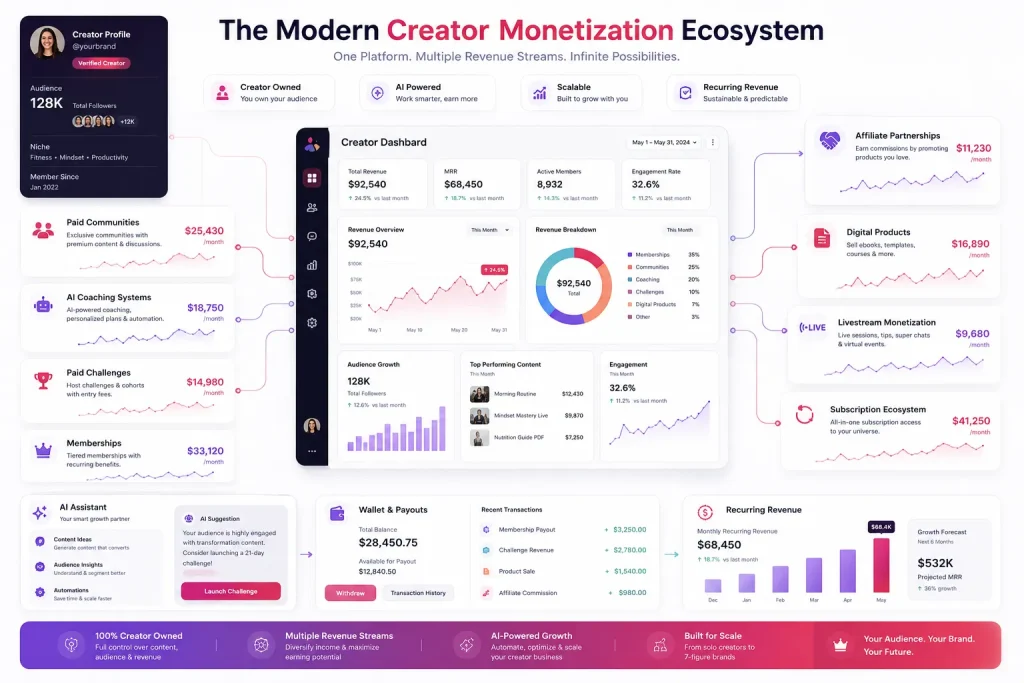
The creator economy is no longer dependent on subscriptions alone. Modern creator businesses are generating revenue through multiple monetization layers simultaneously.
Payment Infrastructure Is Becoming a Critical Growth Layer
Payment and payout infrastructure is now deeply connected to creator retention.
Modern creators expect more than simple payment gateways. They want global payouts, recurring subscriptions, creator wallets, flexible membership systems, and seamless access control across communities and premium content ecosystems.
This is why payment infrastructure is increasingly becoming part of the product experience itself.
The most advanced creator platforms now integrate payments directly into community systems. Users can unlock premium communities automatically after subscribing, while creators can manage memberships, tiers, and access permissions through centralized dashboards.
A scalable creator monetization platform should support recurring billing systems, wallet infrastructure, flexible payout management, creator analytics, and multi-tier subscription logic. The smoother the monetization flow becomes, the higher the platform retention and creator satisfaction.
Building a Creator Platform From Scratch vs Using Ready-Made Infrastructure
One of the biggest strategic decisions for startups is whether to build a creator monetization platform from scratch or launch using ready-made infrastructure.
Custom development offers flexibility, but it also introduces significant complexity. AI iintelligence development, payment infrastructure, creator dashboards, community systems, security architecture, scalability, and analytics workflows require large development investments and long timelines.
For many startups, this delays market entry while competitors continue growing.
This is why many businesses are now adopting ready-made creator platform infrastructure that can be customized around branding, monetization models, creator workflows, and engagement systems.
In the creator economy, speed matters. Businesses that launch faster often gain creator adoption earlier while competitors are still building infrastructure layers.
How Miracuves Helps Businesses Launch Creator Monetization Platforms Faster
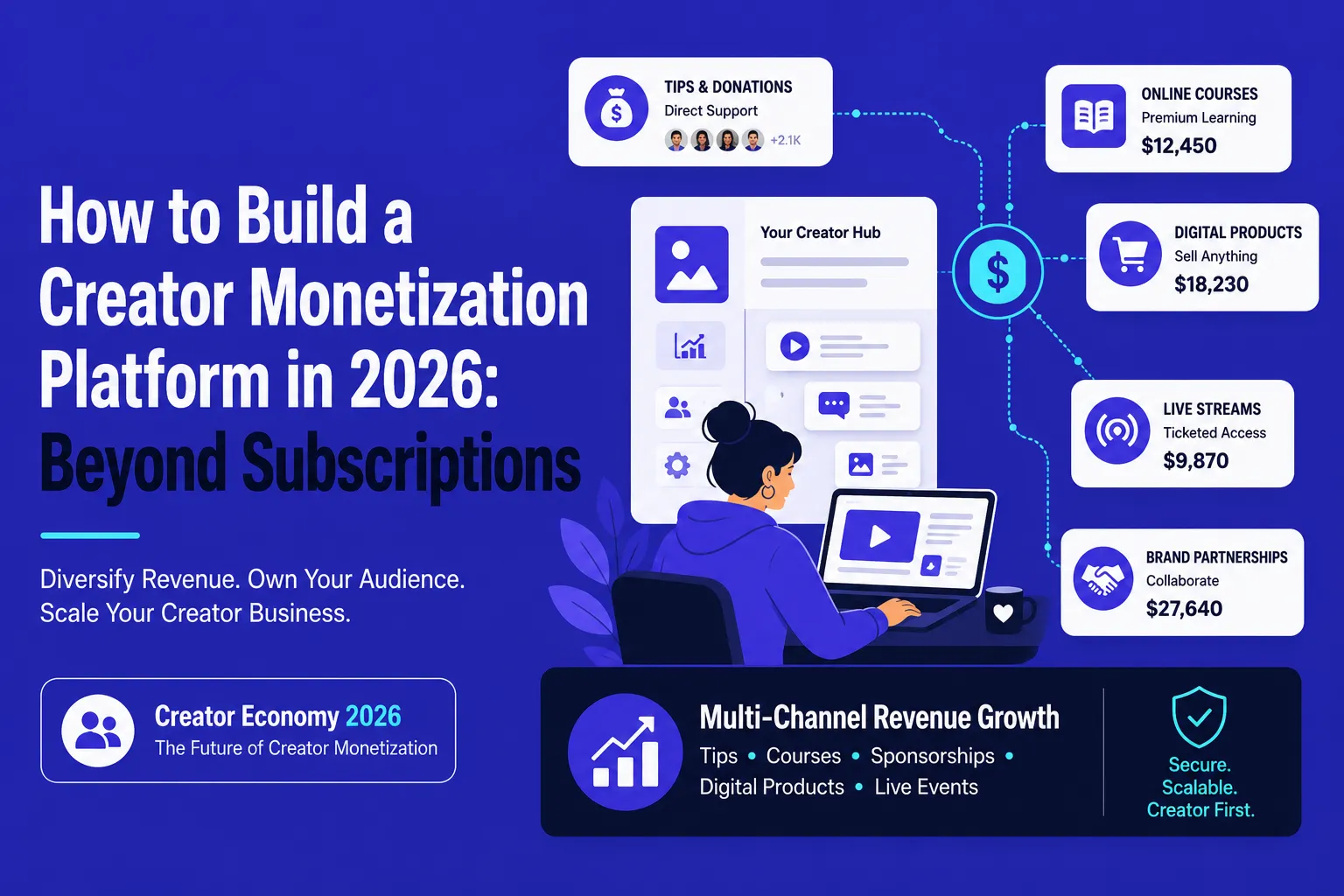
Building a creator monetization platform in 2026 is no longer just about launching a subscription website. Modern creator ecosystems require interactive monetization, community engagement, audience management, scalable payouts, and AI-ready workflows.
This is where Miracuves can help businesses launch faster with a ready-to-deploy creator monetization platform structure instead of rebuilding every infrastructure layer from scratch. Startups can begin with core systems such as creator onboarding, subscription workflows, premium content access, community modules, wallet and payout logic, creator dashboards, admin controls, and scalable backend architecture.
For businesses exploring creator-focused ecosystems similar to Patreon, Substack, or OnlyFans clone, the focus should move beyond static content hosting. Modern creator platforms increasingly need paid communities, AI-ready engagement workflows, audience ownership systems, and flexible monetization models designed for long-term creator growth.
Miracuves helps businesses shape these workflows into scalable creator ecosystems where creators can manage subscriptions, run paid challenges, communicate with communities, track earnings, and access analytics from one centralized system. The goal is not just faster deployment, but building a practical foundation that can expand as creator and audience engagement grows.
Conclusion
The creator economy is rapidly moving beyond static subscriptions and passive content libraries. In 2026, creators are no longer looking for platforms that only host content — they want complete ecosystems that help them monetize communities, automate engagement, retain audiences, and maintain ownership over their business.
At the same time, audiences now expect more interactive and personalized experiences instead of one-way content consumption. This is why modern creator monetization platforms are shifting toward AI-powered workflows, paid communities, creator-owned audience systems, flexible monetization models, and scalable engagement infrastructure.
The platforms leading the next phase of the creator economy will focus on interaction, retention, creator independence, and long-term audience relationships rather than simple subscription access alone. Features like AI-assisted workflows, community-driven engagement, audience portability, and interactive monetization are becoming core parts of modern creator ecosystems.
The future of creator platforms is no longer just about hosting premium content. It is about helping creators build sustainable digital businesses around their audience with greater control, scalability, and long-term growth.
FAQs
What is a creator monetization platform?
A creator monetization platform helps creators generate revenue through subscriptions, memberships, communities, digital products, and interactive engagement systems.
Why are creator platforms moving beyond subscriptions?
Modern audiences expect interactive experiences, AI-powered engagement, and community participation instead of only passive content access.
What are the most profitable monetization models for creators in 2026?
Paid communities, AI coaching, memberships, paid challenges, and creator-led engagement ecosystems are among the fastest-growing models.
Why is audience ownership important for creators?
Audience ownership helps creators maintain control over subscriber data, communication channels, and long-term monetization without platform dependency.
How is AI changing creator monetization platforms?
AI helps creators automate content creation, improve engagement, personalize experiences, and scale coaching or community workflows.
What features should a modern creator platform include?
A modern platform should include subscriptions, AI tools, community systems, creator dashboards, wallet infrastructure, analytics, and audience management.
Miracuves is an independent software development company. We are not affiliated with, connected to, sponsored by, or endorsed by any company or product named in this article.
Terms such as “X Clone” are used descriptively. It is how the software industry refers to building a platform with functionality comparable to a known service, and how clients search for it.
The entire design and codebase of our products is built by our own team. Our products contain no code, design, graphics, or content originating from any third-party website or applications.
All third-party names and marks referenced in this article are the property of their respective owners, referenced solely to identify the services discussed.