



You’ve probably heard the horror stories—apps leaking customer data, payment details getting compromised, or businesses facing legal trouble because of poor security. When it comes to a white-label Dream Yacht Charter app, these concerns feel even more serious because you’re dealing with high-value bookings, personal identity data, and sensitive payment information.
In 2025, app safety is no longer optional. Charter platforms handle traveler profiles, passport details, location tracking, and large transaction volumes. A single security lapse can damage trust permanently and expose your business to heavy regulatory penalties.
This guide gives you an honest, practical assessment of white-label Dream Yacht Charter app security. You’ll understand real risks, required standards, and how to choose a provider like Miracuves that builds security into the foundation—not as an afterthought.
Understanding White-Label Dream Yacht Charter App Security Landscape
What White-Label App Security Really Means
White-label app security refers to how securely the core platform is built, configured, deployed, and maintained when it is rebranded for your business. In a Dream Yacht Charter app, security is not just about code. It includes data handling practices, infrastructure setup, compliance readiness, and ongoing monitoring.
A secure white-label app means the same security architecture is consistently applied across deployments, with controlled customization that does not weaken the system.
Common Security Myths vs Reality
Many businesses believe white-label apps are automatically less secure than custom-built solutions. In reality, poorly built custom apps fail security audits more often than enterprise-grade white-label apps that have been tested across multiple real-world environments.
Another myth is that security comes “out of the box” without responsibility. The truth is that security is shared between the app provider and the business owner, especially when handling user data and operations.
Why Businesses Worry About White-Label Apps
The concern usually comes from three areas: lack of transparency, fear of reused code vulnerabilities, and uncertainty about compliance ownership. In charter booking apps, these fears increase because users trust the platform with personal travel and financial data.
Current Threat Landscape for Yacht Charter Platforms
Dream Yacht Charter–type platforms are frequent targets for:
- Payment fraud and chargeback abuse
- API attacks targeting booking systems
- Data scraping of user and yacht availability data
- Account takeovers through weak authentication
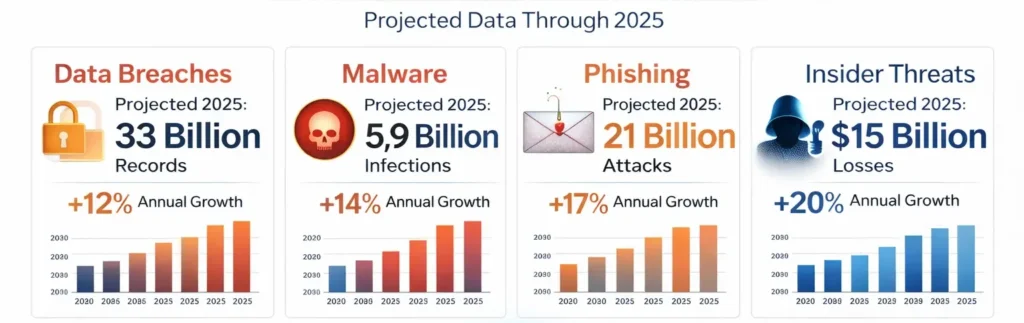
According to 2024–2025 industry reports, travel and booking apps account for over 18% of reported mobile API attacks, with payment and identity data being the primary targets.
Security Standards in 2025
In 2025, secure white-label apps are expected to follow zero-trust architecture, encrypted-by-default data handling, and continuous vulnerability monitoring. Static security measures are no longer sufficient.
Real-World Security Incident Statistics
Recent studies show that over 60% of app security breaches occur due to misconfigured servers or outdated third-party integrations—not core app logic. This highlights why provider discipline matters more than whether an app is white-label or custom.
Read more : – Dream Yacht Charter Revenue Model: How Dream Yacht Charter Makes Money in 2026
Key Security Risks & How to Identify Them
High-Risk Area 1: Data Protection and Privacy
User Personal Information
A Dream Yacht Charter app stores names, contact details, travel schedules, and sometimes identity documents. If this data is not encrypted at rest and in transit, it becomes a prime target for breaches.
Payment Data Security
Charter bookings involve high-value transactions. Storing or processing card data without PCI DSS compliance exposes the business to financial fraud and regulatory penalties.
Location Tracking Concerns
Live marina locations, yacht routes, and travel dates can be misused if access controls are weak. Location data must be restricted, logged, and masked where possible.
GDPR and CCPA Compliance
Improper consent handling, unclear data retention policies, or missing user data deletion workflows can result in serious compliance violations, especially for EU and US customers.
High-Risk Area 2: Technical Vulnerabilities
Code Quality Issues
Poorly structured or unreviewed code increases the risk of injection attacks, broken authentication, and insecure session handling.
Server Security Gaps
Misconfigured cloud servers, open ports, or weak firewall rules are among the most common causes of app breaches in travel platforms.
API Vulnerabilities
Booking, pricing, and availability APIs are frequent attack points. Without rate limiting, authentication, and monitoring, attackers can manipulate or scrape sensitive data.
Third-Party Integrations
Payment gateways, maps, messaging services, and analytics tools can introduce risk if not vetted and updated regularly.
High-Risk Area 3: Business-Level Risks
Legal Liability
Data breaches can trigger lawsuits, contract violations, and penalties under data protection laws.
Reputation Damage
Trust is critical in luxury and travel services. One incident can permanently impact brand credibility.
Financial Losses
Fraud, refunds, operational downtime, and incident recovery costs can quickly escalate.
Regulatory Penalties
Non-compliance with GDPR, CCPA, or payment regulations can lead to fines reaching millions in severe cases.
Risk Assessment Checklist
- Is all sensitive data encrypted at rest and in transit?
- Are payments handled through PCI DSS–compliant gateways?
- Are APIs authenticated, rate-limited, and logged?
- Is user consent clearly captured and auditable?
- Are third-party services regularly reviewed and updated?
- Is there a documented incident response plan?
Read more : – Dream Yacht Charter App Features You Need
Security Standards Your White-Label Dream Yacht Charter App Must Meet
Essential Certifications
ISO 27001 Compliance
This standard ensures that the app provider follows a structured information security management system. For a Dream Yacht Charter app, ISO 27001 confirms that data access, risk controls, and internal processes are formally governed.
SOC 2 Type II
SOC 2 Type II focuses on how securely data is handled over time. It evaluates controls related to security, availability, confidentiality, and privacy, which are critical for booking and payment-driven platforms.
GDPR Compliance
If your app serves European users, GDPR compliance is mandatory. This includes lawful data collection, user consent tracking, right-to-erasure workflows, and transparent privacy policies.
HIPAA (If Applicable)
While not always required, HIPAA becomes relevant if the app handles health-related information, such as medical disclosures for charter passengers or crew.
PCI DSS for Payments
Any app processing card payments must follow PCI DSS standards. This ensures secure handling of payment data and reduces exposure to fraud.
Technical Security Requirements
End-to-End Encryption
All data exchanges between the app, servers, and third-party services must be encrypted using modern protocols.
Secure Authentication
Multi-factor authentication, OAuth-based logins, and session expiration policies reduce the risk of account takeovers.
Regular Security Audits
Periodic third-party audits help identify vulnerabilities before attackers do.
Penetration Testing
Simulated attacks on the app infrastructure reveal real-world weaknesses in APIs, servers, and authentication flows.
SSL Certificates
Valid SSL certificates are mandatory to protect data in transit and establish user trust.
Secure API Design
APIs must include authentication, authorization, rate limiting, and detailed logging to prevent abuse.
Security Standards Comparison Overview
- ISO 27001 focuses on organizational security governance
- SOC 2 Type II validates ongoing operational security
- GDPR ensures lawful and transparent user data handling
- PCI DSS protects financial transactions
- Combined, these standards form the baseline for enterprise-grade app security in 2025
Red Flags: How to Spot Unsafe White-Label App Providers
Warning Signs You Should Never Ignore
No Security Documentation
If a provider cannot share security architecture details, audit reports, or compliance documentation, it usually means security was never a priority.
Unusually Cheap Pricing Without Explanation
Security infrastructure, audits, and monitoring cost money. Extremely low pricing often indicates shortcuts in encryption, testing, or compliance.
No Compliance Certifications
Lack of ISO, SOC, or GDPR alignment is a major risk, especially for charter platforms handling international customer data.
Outdated Technology Stack
Old frameworks and unsupported libraries increase exposure to known vulnerabilities.
Poor Code Quality
Unstructured codebases, lack of version control, or missing documentation make long-term security maintenance difficult.
No Security Update Policy
If updates are reactive rather than scheduled, vulnerabilities remain open longer than they should.
No Data Backup Systems
Without automated backups and disaster recovery, a single incident can result in permanent data loss.
No Insurance Coverage
Reputable providers carry cyber liability insurance. Its absence shifts all financial risk onto you.
Evaluation Checklist Before Choosing a Provider
Questions to Ask
- How is user and payment data encrypted?
- Which compliance standards does the app meet?
- How often are security audits conducted?
- Who is responsible for incident response?
Documents to Request
- Security policy and architecture overview
- Compliance certificates or audit summaries
- Data processing and retention policies
Testing Procedures
- Access to staging environments
- Results of recent penetration tests
- API security documentation
Due Diligence Steps
- Review past security incidents
- Verify client references
- Assess long-term update and support commitments
Best Practices for Secure White-Label Dream Yacht Charter App Implementation
Post-Launch Security Monitoring
Continuous Security Monitoring
Real-time monitoring helps detect unusual activity such as suspicious logins, API abuse, or transaction anomalies.
Regular Updates and Patches
Timely updates to frameworks, libraries, and dependencies prevent exploitation of known vulnerabilities.
Incident Response Planning
A documented response plan ensures fast containment, communication, and recovery in case of a security incident.
User Data Management
Access to sensitive data should be logged, restricted, and reviewed regularly.
Backup and Recovery Systems
Automated backups and tested recovery procedures protect against data loss, ransomware, and system failures.
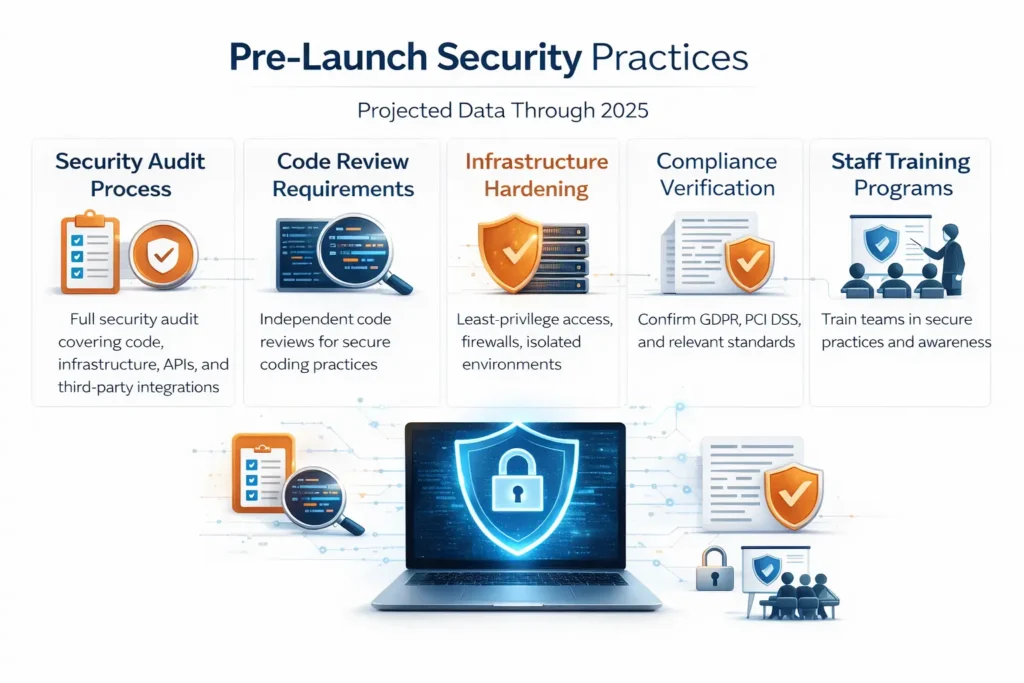
Security Implementation Timeline
- Week 1–2: Security audit and risk assessment
- Week 3: Code review and infrastructure hardening
- Week 4: Compliance validation and penetration testing
- Ongoing: Monitoring, updates, and periodic audits
Read more : –How to Start a Yacht Charters Platform Business
Legal & Compliance Considerations
Regulatory Requirements
Data Protection Laws by Region
A white-label Dream Yacht Charter app often serves users across multiple countries. This means compliance with GDPR for Europe, CCPA for California, and other regional data protection laws is mandatory. Each regulation defines how user data is collected, stored, processed, and deleted.
Industry-Specific Regulations
Travel and charter platforms must comply with consumer protection laws, digital payment regulations, and, in some regions, maritime and tourism authority guidelines.
User Consent Management
Clear consent mechanisms are required for data collection, location access, marketing communication, and cookies. Consent records must be stored and auditable.
Privacy Policy Requirements
The privacy policy must clearly explain what data is collected, why it is collected, how long it is retained, and how users can request deletion or access.
Terms of Service Essentials
Terms must define platform responsibilities, user obligations, payment handling, cancellations, and liability limitations.
Liability Protection Measures
Insurance Requirements
Cyber liability insurance helps cover costs related to data breaches, legal claims, and regulatory penalties.
Legal Disclaimers
Well-drafted disclaimers reduce exposure by clearly defining service scope and limitations.
User Agreements
User agreements should include data usage terms, dispute resolution mechanisms, and jurisdiction clauses.
Incident Reporting Protocols
Regulations like GDPR require breaches to be reported within strict timelines. A defined reporting process is critical.
Ongoing Compliance Monitoring
Laws change frequently. Continuous monitoring ensures the app remains compliant as regulations evolve.
Read more : –How to Start a Yacht Charters Platform Business
Why Miracuves White-Label Dream Yacht Charter App is Your Safest Choice
Miracuves Security Advantages
Miracuves approaches app security as a core architectural requirement, not a feature added later. Every white-label Dream Yacht Charter app is built on a security-first foundation designed to handle high-value transactions and sensitive customer data.
Key security strengths include enterprise-grade infrastructure, strict access controls, and continuous monitoring across all deployments. Security updates are applied proactively, reducing exposure to newly discovered threats.
Miracuves apps are GDPR and CCPA compliant by default, with structured data consent flows and automated data management processes. Payment handling follows PCI DSS standards, ensuring that financial data is processed securely without unnecessary storage risks.
Regular security audits, encrypted data transmission, secure authentication mechanisms, and controlled API access form the backbone of the platform. In addition, Miracuves maintains documented incident response procedures and carries insurance coverage to reduce business risk.
With over 600 successful projects delivered, Miracuves platforms have maintained a strong security track record, giving businesses confidence to scale safely.
Final Thought
Don’t compromise on security. Miracuves white-label Dream Yacht Charter app solutions come with enterprise-grade security built in. Our 600+ successful projects reflect a strong commitment to safe, compliant platforms. Get a free security assessment and understand how Miracuves protects your business and users.
White-label Dream Yacht Charter app safety is not about choosing the cheapest solution. It is about choosing a provider that treats security as a long-term responsibility. With the right standards, processes, and partner, a white-label app can be just as secure as any custom-built platform—without unnecessary risk.
FAQs
1. How secure is a white-label Dream Yacht Charter app compared to custom development?
A well-built white-label app with proven security standards is often more secure than custom development, because it has been tested, audited, and improved across multiple real-world deployments.
2. What happens if there is a security breach?
A proper incident response plan ensures quick containment, user notification, regulatory reporting, and system recovery to minimize damage and downtime.
3. Who is responsible for security updates?
Security updates are primarily handled by the app provider, while the business owner is responsible for following best practices in operations and access management.
4. How is user data protected in a white-label app?
User data is protected through encryption, strict access controls, secure servers, and compliance-driven data handling processes.
5. Which compliance certifications should I look for?
ISO 27001, SOC 2 Type II, GDPR compliance, and PCI DSS are essential for a Dream Yacht Charter app in 2025.
6. Can white-label apps meet enterprise security standards?
Yes, when built with proper architecture, audits, and monitoring, white-label apps can meet and maintain enterprise-level security standards.
7. How often should security audits be conducted?
Comprehensive security audits should be conducted at least annually, with ongoing monitoring and periodic vulnerability assessments.
8. What is included in Miracuves security package?
Miracuves includes encrypted data handling, compliance-ready architecture, regular security updates, monitoring, and documented response processes.
9. How is security handled across different countries?
The app follows region-specific data protection laws by applying localized compliance rules while maintaining a global security baseline.
10. What insurance is needed for app security?
Cyber liability insurance is recommended to cover legal, regulatory, and recovery costs in case of a security incident.
Related Aricles: