




Freelancer is one of the world’s largest freelancing marketplaces, and its revenue continues to grow steadily over the years. In 2025, it generated over AU$27 million in the first half alone, showcasing clear year-over-year momentum and strong marketplace activity. With millions of users and thousands of transactions happening daily, Freelancer has built a revenue engine that scales efficiently without proportionally increasing operational costs — a major advantage of digital marketplace economics.
What makes this model valuable is its flexibility. Freelancer doesn’t rely on just one income source; it monetizes bids, contracts, subscriptions, enterprise clients, and even visibility upgrades. This layered revenue structure is what many startups fail to implement — but it’s exactly what turns a platform from a simple listing website into a scalable business.
For entrepreneurs planning to build a Freelancer-style marketplace, this revenue model reveals powerful monetization strategies, low-risk scaling opportunities, and a proven path to profitability with the right technology and execution.
Freelancer Revenue Overview – The Big Picture
Current valuation and revenue (2025):
Freelancer delivered AU$27.07 million in revenue in the first half of 2025, reflecting strong marketplace activity.
Year-over-year growth:
Revenue increased by 8.5% compared to the previous year’s period.
Revenue breakdown by region:
The platform earns the most from North America, Europe, and Asia-Pacific, with emerging markets contributing rising volumes of small-ticket projects.
Profit margin analysis:
Freelancer achieved a positive net profit after tax in 2025, driven by higher GMV, cost optimization, and improved take-rate efficiency.
Market position vs competitors:
Freelancer remains among the top global marketplaces alongside Upwork and Fiverr, strengthened by diversified income streams and global user acquisition.
Read More: Freelancer App Explained – Features, Benefits & How It Works

Primary Revenue Streams Deep Dive
1. Project Commissions
Freelancer charges a percentage fee (commonly 5–10%) on project payments. This is the platform’s primary revenue source, contributing the largest share to yearly revenue.
2. Membership & Premium Subscriptions
Freelancers and employers pay recurring fees for premium tiers with benefits like more bids, better visibility, and reduced commissions.
3. Contest Fees
Employers can launch contests where freelancers submit entries. The platform charges listing fees or takes a portion of prize payouts.
4. Add-On Visibility Services
Featured jobs, highlighted profiles, badge verification, promoted proposals, and priority placement generate high-margin revenue.
5. Enterprise & Additional Services
Larger companies use Freelancer for bulk hiring, managed projects, and secure transactions via escrow-like services, adding a growing B2B revenue stream.
Read More: Business Model of Freelancer : Strategy Breakdown 2025
| Revenue Stream | Approx % of Total Revenue |
|---|---|
| Project Commissions | 50–60% |
| Premium Subscriptions | 10–20% |
| Contest Fees | 5–10% |
| Visibility & Add-Ons | 5–10% |
| Enterprise & Services | 10–20% |
The Fee Structure Explained
User-Side Fees
Freelancers pay commissions on completed projects, membership upgrades, and paid skills/profile enhancements.
Provider-Side Fees
Employers pay contest fees, job-posting boosts, featured listings, and project upgrades.
Hidden Revenue Layers
Upsells such as priority placement, subscription bundles, and profile certifications increase ARPU.
Regional Pricing Differences
Fees vary by region to match spending power and market competitiveness.
Complete fee structure by user type
| User Type | Fee Type | Typical Range |
|---|---|---|
| Freelancer | Commission | 5–10% per project |
| Freelancer | Premium Membership | Monthly/Annual |
| Employer | Contest/Listing Fees | Fixed per post |
| Both | Add-Ons/Boosts | Variable ($5–$100+) |
| Global Users | Regional Adjustments | Varies |
How Freelancer Maximizes Revenue Per User
Segmentation: Users are grouped by membership tiers, spending history, and region to personalize pricing and offers.
Upselling: Free users are nudged toward premium tiers; employers are nudged to advertise job posts.
Cross-selling: Users are encouraged to use add-ons, contests, and enterprise services.
Dynamic pricing: Fees vary based on region, user type, and project size.
Retention monetization: Repeat clients benefit from better profiles, reputation badges, and reduced fees, encouraging more transactions.
LTV optimization: Enhanced visibility tools and recurring memberships increase lifetime revenue from each user.
Psychological pricing: Tiered pricing, limited-time boosts, and discount bundles increase conversion.
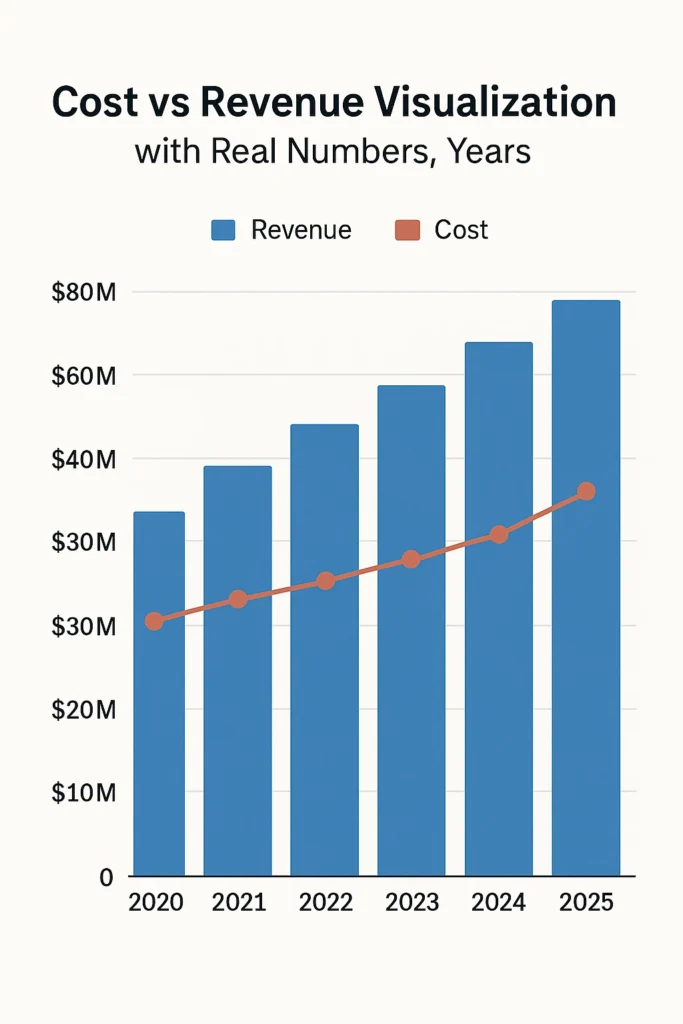
Real numbers example: With GMV in the hundreds of millions per quarter and revenue scaling proportionally, the platform maintains a healthy take-rate in the 5–7% range.
Cost Structure & Profit Margins
Tech infrastructure: Servers, security, cloud hosting, and development resources.
Marketing/CAC: Paid ads, SEO, brand partnerships, and affiliate programs.
Operations: Support teams, moderation, dispute resolution, and compliance.
R&D: AI-driven matching, automation, workflow enhancements, and mobile improvements.
Unit economics: Low marginal cost per additional user results in strong scalability.
Profitability path: Recent profitability indicates the model is efficient when volume is high.
Margin optimization: More revenue now comes from high-margin add-ons and enterprise services.
Read More: Best Freelancer Clone Script 2025 – Build Your Freelance Platform
Future Revenue Opportunities & Innovations
AI-powered matching: Charging for AI-recommended best freelancers or fast proposal matching.
Skill verification monetization: Paid certifications, premium badges, and automated testing.
Expansion markets: Emerging economies will drive low-ticket but high-volume project growth.
Enterprise expansion: More managed services and B2B hiring solutions.
New revenue streams: Micro-task marketplaces, workflow tools, project management suites.
2025–2027 predictions: Expect stronger take-rate, higher premium adoption, and increased enterprise share.
Threats/risks: Competition, regulatory changes, and fee-sensitive users.
Opportunities for new players: Niche-focused freelancer platforms with specialized pricing models.
Lessons for Entrepreneurs & Your Opportunity
What works: Multi-stream monetization combining commissions, subscriptions, and add-ons.
What to replicate: Tiered pricing, premium visibility tools, enterprise solutions.
Market gaps: Specialized industries (legal, AI, medical, fintech, creative tech) remain underserved.
Improve on the model: Lower fees for new users, region-based incentives, community-building tools, verified local talent pools.
Want to build a platform with Freelancer’s proven revenue model?Miracuves helps entrepreneurs launch revenue-generating platforms with built-in monetization features. Our Freelancer Clone scripts come with flexible revenue models you can customize. In fact, some clients see revenue within 30 days of launch, and Miracuves delivers ready-to-launch solutions in 3–9 days guaranteed. Get a free consultation to map out your revenue strategy.
Final Thought
Freelancer’s model clearly proves that a well-built marketplace can generate multiple revenue streams, scale globally, and achieve profitability fast. With Miracuves, you don’t just study this model—you can launch it. Our ready-to-launch Freelancer Clone helps entrepreneurs start earning within weeks, supported by built-in monetization tools and rapid delivery in 3–9 days.
FAQs
1. How much does Freelancer make per transaction?
Around 5–10% of each project.
2. What’s Freelancer’s most profitable revenue stream?
Project commissions, followed by premium upgrades.
3. How does Freelancer’s pricing compare to competitors?
The pricing is competitive — lower than Fiverr and similar to Upwork, offering strong marketplace value. With Miracuves, you can build such a platform starting at just $2899.
4. What percentage does Freelancer take from freelancers?
About 10%, with discounts for premium members.
5. How has Freelancer’s revenue model evolved?
It expanded from commissions to memberships, contests, visibility boosts, and enterprise services.
6. Can small platforms use this model?
Yes, even niche platforms can monetize effectively with the same structure.
7. What’s the minimum scale for profitability?
Once GMV grows steadily and CAC decreases; niche platforms can break even sooner.
8. How can entrepreneurs implement the same model?
Use commissions, subscriptions, and add-ons. Miracuves’ Freelancer Clone has these built-in.
9. What alternatives exist to Freelancer’s model?
Subscription-only, pay-per-lead, SaaS hiring tools, and enterprise talent platforms.
10. How quickly can a Freelancer Clone start earning?
With Miracuves, platforms can start monetizing in just 3–9 days with guaranteed delivery, ensuring rapid growth from day one.