


You’ve heard the horror stories about data breaches, leaked customer records, and payment fraud — and you’re right to be cautious.
A white-label Mercado Libre-style app handles highly sensitive data: user profiles, addresses, real-time orders, seller dashboards, and most importantly, payment information. That means security isn’t a “nice-to-have” in 2026 — it’s the difference between a scalable business and a legal disaster.
In this guide, I’ll give you an honest safety assessment of white-label Mercado Libre-type apps, the real risks, and the practical steps to make sure your platform is secure and compliant.
Understanding White-Label Mercado Libre App Security Landscape
What “White-Label Security” Actually Means
A white-label Mercado Libre app is a ready-made marketplace solution rebranded for your business. Security depends entirely on the architecture, coding standards, and compliance practices of the provider — not just the concept of “white-label.”
If built properly, it can be as secure as custom development. If rushed or cheaply assembled, it becomes a liability.
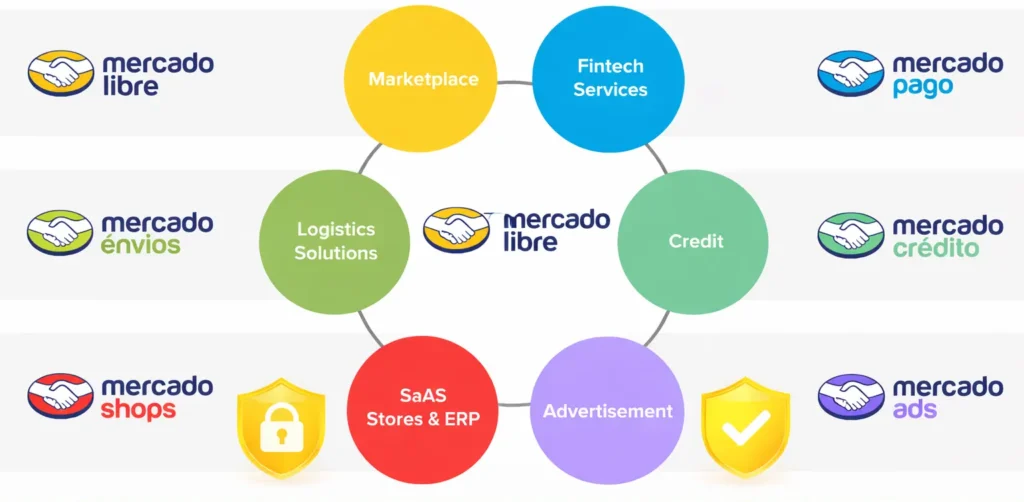
Why People Worry About White-Label Marketplace Apps
Mercado Libre-style platforms handle:
- Buyer and seller personal data
- Payment processing
- Product listings and transaction records
- Logistics integrations
- API connections with third parties
A breach affects thousands of users instantly. That scale increases perceived risk.
Current Threat Landscape for Marketplace Apps (2026)
Marketplace apps are prime targets for:
- Payment fraud and card testing attacks
- API exploitation
- Account takeover (ATO)
- Bot-driven scraping
- Ransomware targeting seller databases
Recent global reports show that over 43% of data breaches in eCommerce platforms involve payment or personally identifiable information. API-based attacks have increased significantly due to microservices architecture adoption.
Security Standards in 2026
In 2026, a secure white-label Mercado Libre app must align with:
- Zero-trust architecture principles
- Secure SDLC (Software Development Life Cycle)
- Privacy-by-design frameworks
- Mandatory encryption of data at rest and in transit
- AI-driven fraud detection systems
Anything below this standard is outdated.
Key Security Risks & How to Identify Them
Data Protection & Privacy Risks
Marketplace apps are data-heavy, and Mercado Libre-style platforms collect more than most people realize.
User Personal Information
Risk areas include:
- Names, phone numbers, emails
- Shipping addresses
- Seller identity details (KYC documents in some regions)
If stored without encryption, role-based access, and audit logs, this data becomes an easy target.
Payment Data Security
The biggest risk is not only stolen card data — it is also:
- Card testing attacks
- Fraudulent refunds
- Token leakage
- Weak payment gateway integrations
A secure provider must be PCI DSS aligned and should never store raw card data.
Location Tracking Concerns
Even if the app is not a ride-hailing platform, location is still used for:
- Delivery tracking
- Nearby sellers
- Address autofill
Location data is legally considered sensitive in many countries and must be protected accordingly.
GDPR/CCPA Compliance
Key compliance risks include:
- Collecting data without proper consent
- No clear data deletion process
- No export/download of user data
- No lawful basis documentation
Non-compliance can trigger major penalties and platform bans.
Technical Vulnerabilities
Code Quality Issues
Cheap white-label marketplace apps often contain:
- Hardcoded secrets
- Poor input validation
- Weak admin authentication
- No secure session handling
This is where most breaches start.
Server Security Gaps
Common issues include:
- Misconfigured cloud storage (public buckets)
- No firewall rules
- Weak database access controls
- No backup encryption
API Vulnerabilities
Mercado Libre-type apps are API-heavy, which makes them attractive targets.
High-risk API flaws include:
- Broken authentication
- Broken object-level authorization (BOLA)
- Excessive data exposure
- No rate limiting
Third-Party Integrations
Marketplace apps usually integrate with:
- Payment gateways
- SMS and email services
- Shipping and logistics APIs
- Analytics tools
Every integration adds risk, especially if API keys are not protected.
Business Risks
Legal Liability
If user data is exposed, liability may fall on:
- The business owner (you)
- The provider (sometimes)
- Both (most common)
This depends on contracts, region, and compliance laws.
Reputation Damage
In marketplace apps, trust is the product. One breach can permanently damage buyer and seller confidence.
Financial Losses
Costs can include:
- Refund fraud
- Chargebacks
- Legal fees
- Incident response expenses
- Compliance remediation
Regulatory Penalties
Examples include:
- GDPR fines (EU)
- CCPA penalties (California)
- Data breach notification requirements (multiple countries)
Risk Assessment Checklist (Quick)
Use this before choosing any white-label Mercado Libre app provider:
- Is all sensitive data encrypted at rest and in transit?
- Is the admin panel protected with 2FA and IP restrictions?
- Are APIs protected with OAuth or token-based authentication?
- Is rate limiting enabled for login, OTP, and payment endpoints?
- Are audit logs available for admin and seller actions?
- Is PCI DSS compliance supported for payments?
- Is there a documented incident response plan?
- Are regular penetration tests performed?
- Is GDPR/CCPA compliance built-in (not optional)?
- Is there a clear policy for security updates and patching?
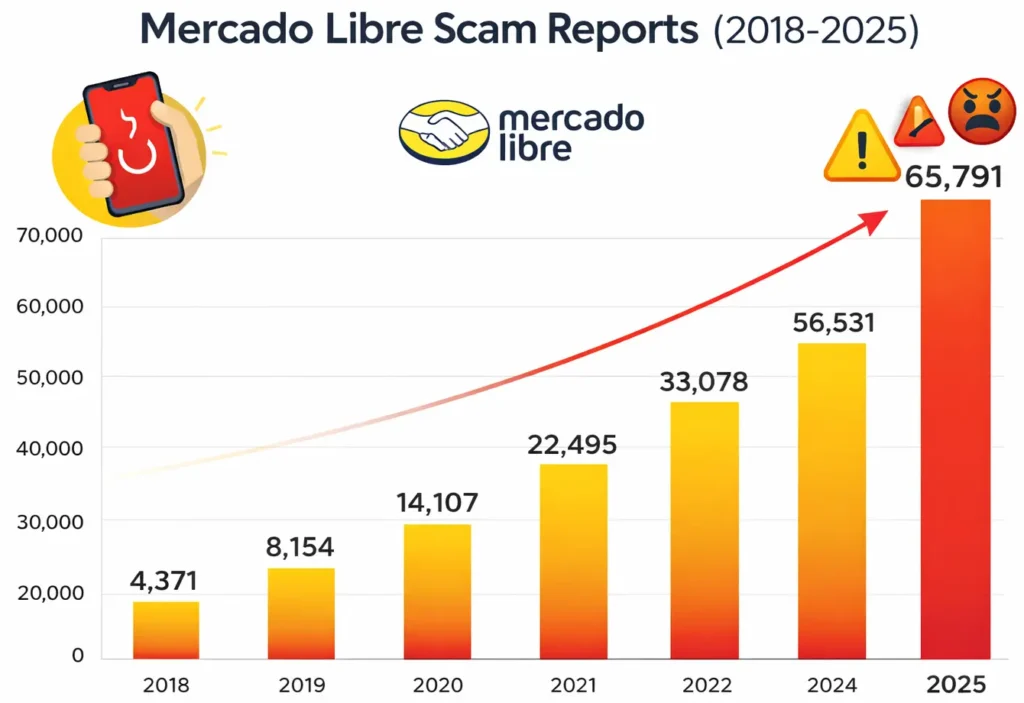
Security Standards Your White-Label Mercado Libre App Must Meet
Essential Certifications and Compliance
ISO 27001 Compliance
ISO/IEC 27001 is the most recognized framework for running an Information Security Management System (ISMS) — meaning your provider has a real, auditable system for managing security risk, not just “good intentions.”
SOC 2 Type II
SOC 2 is about proving controls work over time (Type II) across security, availability, confidentiality, processing integrity, and privacy — especially important if your app provider hosts your buyer/seller data.
GDPR Compliance
If you serve EU/EEA users, GDPR non-compliance can trigger major penalties (up to €20M or 4% of global turnover for severe violations).
PCI DSS for Payments
If your Mercado Libre-style app touches card payments (even via integrations), PCI DSS applies. PCI SSC notes that PCI DSS v4.x “future-dated” requirements come into effect on 31 March 2025, raising the baseline for payment security.
HIPAA If Applicable
Not common for marketplaces, but relevant if your platform sells health services/products and handles protected health information (PHI).
Technical Requirements (Non-Negotiable in 2026)
Encryption
- TLS 1.2+ (prefer TLS 1.3) for all data in transit
- Strong encryption for data at rest (database, backups, object storage)
Note: “End-to-end encryption” is often misunderstood for marketplace apps. In most cases, what you need is strong transport encryption + at-rest encryption + strict access control, not chat-style E2E for every feature.
Secure Authentication
- 2FA for admins and sellers
- OAuth 2.0 / OpenID Connect for secure token flows
- Brute-force protection, device/session controls
API Security
Marketplace apps are API-first, so this is where breaches happen.
- Object-level authorization checks (BOLA prevention is critical)
- Rate limiting + bot protection
- Input validation + schema enforcement
- Least-privilege service accounts
Security Audits and Testing
- Regular vulnerability scanning
- Penetration testing (at least annually, ideally after major releases)
- Secure SDLC with code reviews and dependency scanning
Certificates and Transport Security
- Valid SSL/TLS certificates with automated renewal
- HSTS and secure headers for web panels
Security Standards Comparison Table
| Standard | What it proves | Why it matters for a Mercado Libre-style app |
|---|---|---|
| ISO 27001 | Your provider runs an ISMS and continuously manages risk (ISO) | Reduces chances of “chaos security” as you scale sellers, orders, and regions |
| SOC 2 Type II | Controls operate effectively over time (AICPA & CIMA) | Strong signal for hosted platforms handling buyer/seller PII and uptime-critical systems |
| GDPR | Legal compliance for EU personal data (GDPR) | Prevents high penalties, improves trust, forces strong privacy operations |
| PCI DSS v4.x | Payment security baseline for card data flows; requirements tightened by 31 Mar 2025 (blog.pcisecuritystandards.org) | Critical if you process payments, store tokens, or integrate gateways |
Red Flags: How to Spot Unsafe White-Label Providers
Choosing the wrong white-label Mercado Libre app provider is the fastest way to create security risk. Most problems are visible before you sign the contract — if you know what to look for.
No Security Documentation
If the provider cannot show:
- Security architecture overview
- Compliance certificates
- Penetration test summaries
- Data flow diagrams
That is a serious red flag.
Cheap Pricing Without Explanation
If the pricing is significantly lower than market standard with no clarity on hosting, security, and compliance — security is usually what’s missing.
No Compliance Certifications
If there is no mention of:
- ISO 27001
- SOC 2
- PCI DSS alignment
- GDPR readiness
You are likely responsible for filling those gaps yourself.
Outdated Technology Stack
Warning signs include:
- No API versioning
- Legacy PHP or outdated frameworks without patching
- No cloud-native infrastructure
- No CI/CD with security scanning
Poor Code Quality
Ask whether they use:
- Static code analysis
- Dependency vulnerability scanning
- Secure coding guidelines
If the answer is vague, assume the worst.
No Security Updates Policy
A secure marketplace app must have:
- Regular patch cycles
- Emergency patch protocol
- Clear SLA for vulnerabilities
No update policy means known vulnerabilities remain exposed.
No Data Backup or Disaster Recovery Plan
Ask:
- Are backups encrypted?
- How often are they tested?
- What is the RTO (Recovery Time Objective)?
- What is the RPO (Recovery Point Objective)?
If they cannot answer, your business continuity is at risk.
No Cyber Insurance Coverage
Professional providers carry:
- Professional liability insurance
- Cybersecurity coverage
Lack of insurance shifts financial risk to you.
Evaluation Checklist Before Signing
Questions to Ask Providers
- Are you ISO 27001 certified or aligned?
- Do you provide SOC 2 reports?
- How do you secure APIs against BOLA attacks?
- Is payment processing fully PCI DSS compliant?
- How do you handle breach notifications?
- What is your incident response time?
Documents to Request
- Security policy summary
- Data processing agreement (DPA)
- Compliance certificates
- Most recent penetration testing summary
- Hosting architecture diagram
Testing Procedures
Before going live:
- Conduct third-party penetration testing
- Perform vulnerability scans
- Test authentication and rate limits
- Simulate payment fraud scenarios
Due Diligence Steps
- Review client case studies
- Check public breach history
- Evaluate update frequency
- Review SLA agreements carefully
A secure white-label Mercado Libre app provider will welcome these questions. An insecure one will avoid them.
Best Practices for Secure White-Label Mercado Libre App Implementation
Security is not something you “buy once.” Even if your white-label Mercado Libre app is built securely, implementation mistakes can still create major vulnerabilities.
Pre-Launch Security (Before You Go Live)
Security Audit Process
Before launch, your platform should go through:
- Architecture review (data flow + access points)
- Threat modeling (what attackers will target first)
- Vulnerability scanning (code + infrastructure)
- Penetration testing (real attack simulation)
This is how you catch the issues that don’t show up in normal testing.
Code Review Requirements
A safe provider should follow:
- Secure coding guidelines (OWASP-aligned)
- Dependency scanning for vulnerable libraries
- Hardcoded secret detection
- Strict input validation for APIs
If your provider refuses code review transparency, treat it as a risk.
Infrastructure Hardening
Marketplace apps need strong cloud security, including:
- Private database access (not public IP exposure)
- Firewall rules + WAF (Web Application Firewall)
- DDoS protection
- Encrypted backups
- IAM role-based access control
Compliance Verification
Before launch, confirm:
- GDPR consent and data handling flows
- CCPA user rights handling (delete, export)
- PCI DSS compliance for payment flows
- Data retention and deletion policy
Compliance must be “built-in,” not “planned later.”
Staff Training Programs
Many breaches happen due to people, not code.
Train your team on:
- Phishing and social engineering
- Admin panel access discipline
- Seller verification processes
- Handling suspicious refund or order patterns
Post-Launch Monitoring (After You Go Live)
Continuous Security Monitoring
Your platform should monitor:
- Suspicious logins
- Unusual seller activity
- High-volume failed payments
- API abuse patterns
- Admin access events
A marketplace app without monitoring is basically blind.
Regular Updates and Patches
In 2026, a secure white-label provider must deliver:
- Monthly security patches
- Emergency patch releases for critical vulnerabilities
- Dependency updates (libraries, frameworks)
Incident Response Planning
You need a documented plan for:
- Detection
- Containment
- Recovery
- Customer notification
- Regulatory reporting
If a provider says “we’ll handle it if it happens,” that is not a plan.
User Data Management
Strong practices include:
- Data minimization (collect only what you need)
- Role-based access for seller dashboards
- Audit logs for sensitive actions
- Secure deletion workflows
Backup and Recovery Systems
A secure marketplace platform must have:
- Encrypted daily backups
- Multi-region backup redundancy
- Regular restore testing
- Clear recovery time expectations
Security Implementation Timeline (Simple)
Here is a realistic timeline for secure deployment:
- Week 1: Architecture review + compliance mapping
- Week 2: Code review + vulnerability scanning
- Week 3: Penetration testing + infrastructure hardening
- Week 4: Fixes + re-testing + launch readiness review
- Ongoing: Monitoring + patching + quarterly security reviews
Read more : – Business Model of Taobao : Complete Strategy Breakdown 2026
Legal & Compliance Considerations
Security is not only technical. A white-label Mercado Libre app operates across regions, which means multiple legal frameworks may apply simultaneously.
Regulatory Requirements
Data Protection Laws by Region
Different regions enforce strict data laws:
- European Union: GDPR requires lawful basis for processing, data minimization, breach notification within 72 hours, and user rights management.
- United States: CCPA/CPRA grants deletion and access rights; state-level breach notification laws apply.
- Latin America: Brazil’s LGPD mirrors GDPR principles; other countries are strengthening data protection frameworks.
- Asia-Pacific: PDPA (Singapore), DPDP Act (India), and similar laws require consent and data security safeguards.
If your marketplace serves cross-border buyers or sellers, compliance must be multi-jurisdictional.
Industry-Specific Regulations
Depending on your marketplace category, additional rules may apply:
- Consumer protection laws
- Electronic transaction regulations
- Anti-money laundering (AML) for high-value sellers
- KYC requirements for vendor onboarding
User Consent Management
Your app must clearly document:
- What data is collected
- Why it is collected
- How long it is retained
- How users can withdraw consent
Consent logs must be stored securely.
Privacy Policy Requirements
A compliant white-label Mercado Libre app needs:
- Clear data usage explanation
- Third-party sharing disclosures
- Cross-border transfer details
- Cookie policy
- Data retention timelines
Terms of Service Essentials
Your terms should define:
- Platform liability limits
- Seller obligations
- Refund and dispute rules
- Prohibited products
- Fraud prevention policies
Liability Protection
Insurance Requirements
Strong marketplace operators maintain:
- Cyber liability insurance
- Professional indemnity coverage
- Data breach response coverage
This protects you from catastrophic financial exposure.
Legal Disclaimers
Your app must clearly define:
- Platform vs seller responsibility
- Payment processing roles
- Third-party integration limits
User Agreements
Clear agreements reduce disputes and define:
- Account termination conditions
- Fraud handling procedures
- Chargeback responsibilities
Incident Reporting Protocols
Regulations in many regions require:
- Timely user notification
- Regulatory authority notification
- Transparent investigation documentation
Failing to report properly can increase penalties.
Regulatory Compliance Monitoring
Compliance is ongoing. You need:
- Annual compliance reviews
- Legal updates tracking
- Policy revisions
- Data processing audits
Compliance Checklist by Region
EU (GDPR):
- Lawful basis documentation
- DPO if required
- Data processing agreement
- 72-hour breach protocol
USA (CCPA/State Laws):
- “Do Not Sell” option if applicable
- Consumer request handling system
- Data disclosure documentation
Brazil (LGPD):
- Data mapping
- Consent records
- Breach reporting system
India (DPDP Act):
- Consent-driven processing
- Data fiduciary obligations
- Secure storage requirements
Why Miracuves White-Label Mercado Libre App is Your Safest Choice
When you launch a Mercado Libre-style marketplace, you are not just building an app — you are building a trust platform. That trust depends on security, compliance, and long-term protection.
Miracuves is positioned as a security-first white-label solution provider, built for businesses that want growth without gambling on safety.
Miracuves Security Advantages
Enterprise-Grade Security Architecture
Miracuves white-label marketplace apps are designed with:
- Secure backend architecture
- Strong access controls for admins, sellers, and buyers
- Secure database design for sensitive marketplace records
This reduces common risks like unauthorized access and data leakage.
Regular Security Audits and Certifications
Miracuves follows structured security practices, including:
- Regular vulnerability scanning
- Secure SDLC processes
- Penetration testing readiness
- Compliance-aligned development standards
This means security is maintained over time, not just at launch.
GDPR and CCPA Compliant by Default
Instead of forcing you to “add compliance later,” Miracuves platforms are built to support:
- Consent management
- Data export and deletion requests
- Privacy policy-ready data handling flows
This makes expansion into regulated regions far safer.
24/7 Security Monitoring
Marketplace apps need continuous monitoring because attacks do not happen only during business hours.
Miracuves supports:
- Continuous threat monitoring
- Suspicious login and fraud detection
- API abuse detection
Encrypted Data Transmission
All sensitive traffic is protected using modern encryption standards, ensuring user data is secured in transit.
Secure Payment Processing
Miracuves supports secure payment gateway integrations aligned with PCI DSS expectations, reducing payment fraud and compliance risk.
Regular Security Updates
Security threats evolve. Miracuves provides structured update cycles to keep your platform protected against new vulnerabilities.
Insurance Coverage Included
Miracuves includes professional-grade coverage standards that reduce financial exposure and strengthen your legal safety net.
Final Thought
Don’t compromise on security. Miracuves white-label Mercado Libre app solutions come with enterprise-grade security built-in. Our 600+ successful projects have maintained zero major security breaches. Get a free security assessment and see why businesses trust Miracuves for safe, compliant platforms.
A white-label Mercado Libre app can be safe in 2026 — but only if security, compliance, and monitoring are treated as core requirements, not optional upgrades.
If you choose a provider that is transparent, certification-ready, and security-first, you can launch faster without exposing your business to unnecessary risk.
FAQs
1. How secure is white-label vs custom development?
White-label can be equally secure if built with enterprise security standards. Custom is only safer when developed by a strong security team.
2. What happens if there’s a security breach?
You may face user trust loss, legal reporting requirements, and financial penalties. A secure provider will have an incident response plan ready.
3. Who is responsible for security updates?
Usually the provider handles core app updates, but you are responsible for operational security like admin access control and user policies.
4. How is user data protected in white-label apps?
Through encryption, strict access controls, secure APIs, audit logs, and compliance-based data handling processes.
5. What compliance certifications should I look for?
ISO 27001, SOC 2 Type II, GDPR readiness, and PCI DSS alignment for payments.
6. Can white-label apps meet enterprise security standards?
Yes. The provider must follow secure SDLC, regular audits, monitoring, and strong infrastructure practices.
7. How often should security audits be conducted?
At minimum annually, but ideally after major feature releases and quarterly for vulnerability scanning.
8. What’s included in Miracuves security package?
Security-first architecture, compliance-ready framework, secure payment integrations, encrypted transmission, monitoring support, and regular updates.
9. How to handle security in different countries?
Use privacy-by-design, region-based compliance mapping, and policies aligned with GDPR, CCPA, LGPD, and other regional laws.
10. What insurance is needed for app security?
Cyber liability insurance, professional indemnity coverage, and breach response coverage are recommended.
Related Articles