Key Takeaways
What You’ll Learn
- Periscope-style live streaming apps face risks related to privacy, location exposure, and real-time content sharing.
- Public broadcasts can expose sensitive personal information if privacy settings are not managed properly.
- Live streaming platforms are vulnerable to harassment, inappropriate content, and unauthorized recordings.
- Security depends on moderation systems, account protection, and user awareness.
- Strong privacy controls are essential for maintaining trust on live streaming platforms.
Stats That Matter
- Live broadcasts were public by default unless privacy settings were changed.
- Location tagging and metadata sharing created privacy concerns for users.
- Live videos could still be recorded or downloaded after streams ended.
- Harassment and inappropriate live content were major moderation challenges.
- Copyright violations and weak moderation became common issues for streaming platforms.
Real Insights
- Live streaming creates security challenges because content is broadcast instantly.
- Users often reveal more personal information than intended during broadcasts.
- Privacy settings, follower-only modes, and blocking tools improve platform safety.
- Strong moderation systems are critical for reducing abuse and harmful content.
- A successful live-streaming app must balance engagement, privacy, and moderation.
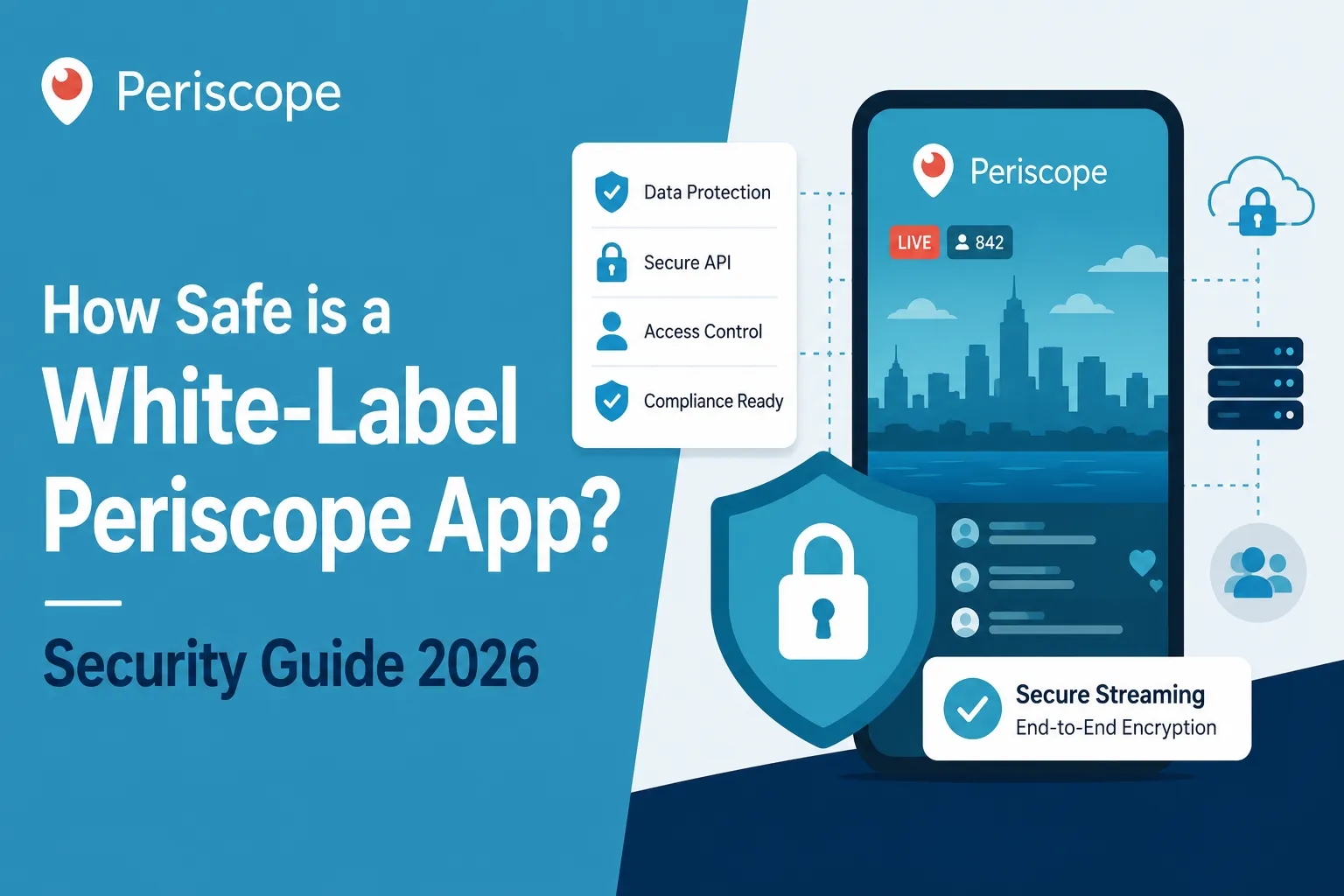
You’ve probably heard the horror stories about data breaches, leaked user data, and hacked live streaming platforms. For businesses planning to launch a white-label Periscope app, security is often the biggest concern.
Live streaming platforms process large amounts of user data in real time. They manage user profiles, chat messages, location data, and sometimes payment transactions. Even a small vulnerability can expose thousands of users.
Security matters more than ever in 2026. Regulations like GDPR and CCPA are stricter, and cyberattacks targeting streaming platforms are increasing. Many businesses rely on experienced development partners like Miracuves to ensure strong security and compliance.
In this guide, you will learn the real security risks, the standards required in 2026, and the practical steps needed to launch a safe white-label Periscope app.
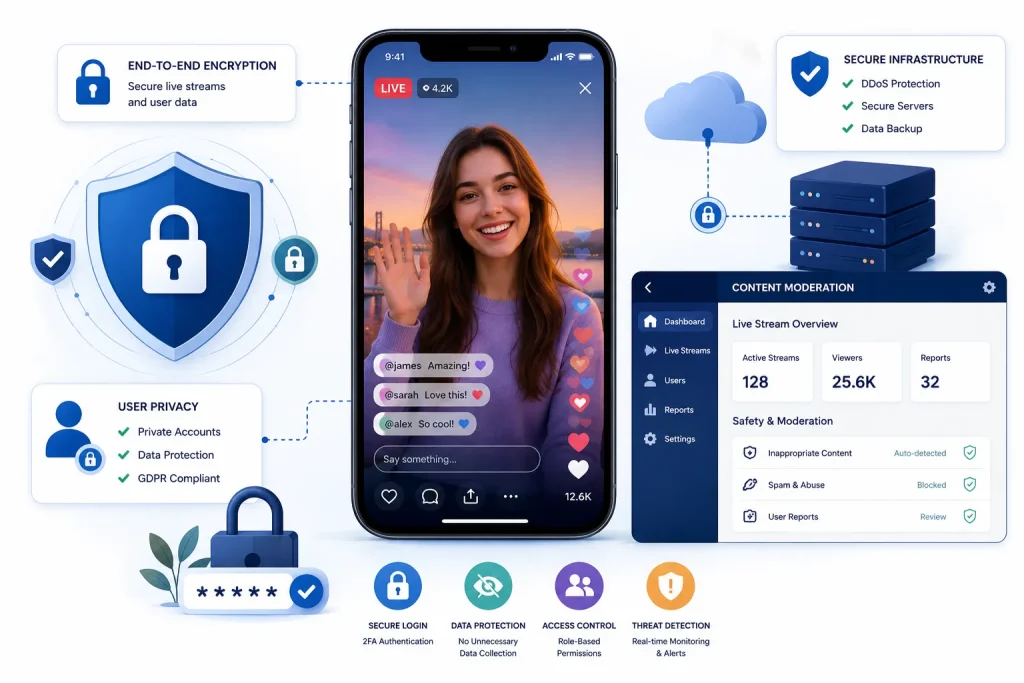
Understanding White-Label Periscope App Security Landscape
What White-Label Security Actually Means
White-label security refers to the security architecture, protocols, and compliance standards built into a ready-made app solution before it is customized for a business.
In the case of a white-label Periscope app, the core live streaming infrastructure already exists. The provider supplies the backend system, streaming servers, user management modules, and security layers.
Your business launches the app under its own brand, but the underlying system must still meet enterprise-level security standards.
Security in white-label apps depends heavily on three factors:
- The provider’s infrastructure security
- The quality of the app codebase
- The compliance standards followed during development
If the provider follows modern security practices, white-label apps can be as secure as custom-built platforms.
Common Security Myths vs Reality
Many businesses hesitate to adopt white-label platforms because of outdated assumptions.
| Myth | Reality |
|---|---|
| White-label apps are less secure than custom apps | Security depends on architecture and compliance, not development model |
| Shared codebases increase vulnerability | Mature providers isolate infrastructure and data layers |
| White-label platforms are harder to update | Professional providers deliver faster security patches |
| Custom development automatically means better security | Many custom apps lack proper security audits |
The biggest risk is not the white-label model itself. The real risk is choosing an inexperienced provider.
Why Businesses Worry About White-Label Apps
Security concerns usually arise because businesses do not have full visibility into the provider’s development practices.
Common worries include:
- Unauthorized access to user data
- Weak encryption standards
- Poor server protection
- Third-party SDK vulnerabilities
- Lack of regulatory compliance
These concerns are valid. Live streaming apps handle high volumes of sensitive data, making them attractive targets for cybercriminals.
Current Threat Landscape for Live Streaming Platforms
Live streaming platforms face unique cybersecurity threats due to their real-time nature and high user engagement.
Major threats affecting Periscope-style apps include:
- Account takeover attacks
- Stream hijacking
- Chat and content injection attacks
- API exploitation
- Distributed denial-of-service (DDoS) attacks
In 2026, streaming platforms are increasingly targeted because they generate continuous data traffic and rely on multiple APIs.
Security Standards Expected in 2026
Modern live streaming platforms are expected to follow strict security frameworks.
Common standards include:
- Zero-trust security architecture
- End-to-end encryption for video streams
- Secure WebRTC communication
- Role-based access control (RBAC)
- Continuous vulnerability monitoring
Cloud providers like AWS, Google Cloud, and Azure also enforce advanced infrastructure security practices that modern white-label platforms must follow.
Real-World Statistics on App Security Incidents
Recent cybersecurity reports highlight the growing risks in app ecosystems.
Key statistics:
- Over 80% of mobile apps contain at least one security vulnerability (Veracode 2025 State of Software Security Report).
- Streaming platforms experienced a 32% increase in API-based attacks between 2024 and 2025 (Salt Security API Threat Report).
- More than 60% of data breaches occur due to misconfigured cloud infrastructure (IBM Cost of a Data Breach Report 2025).
- The global average cost of a data breach reached $4.88 million in 2025.
For businesses launching a white-label Periscope app, these numbers highlight one critical fact: security must be built into the platform from day one.
Key Security Risks & How to Identify Them
Live streaming platforms handle continuous real-time data. A white-label Periscope app must manage user identities, live video streams, chats, and sometimes financial transactions.
Because of this complexity, several security risks can appear if the platform is not properly designed.
Data Protection and Privacy Risks
User Personal Information
A live streaming platform collects large amounts of personal data such as:
- User names and profile details
- Email addresses and phone numbers
- Profile photos and uploaded media
- Device identifiers and IP addresses
If databases are not encrypted or access permissions are poorly configured, attackers can steal this information.
Modern platforms must use strong encryption methods such as AES-256 and secure storage protocols.
Payment Data Security
Some streaming apps support monetization features such as:
- Live donations
- Paid subscriptions
- Virtual gifts
Handling financial data introduces serious security responsibilities.
To protect payment information, platforms must follow PCI DSS standards and integrate secure payment gateways like Stripe, PayPal, or Razorpay.
Sensitive payment information should never be stored directly inside the app database.
Location Tracking Concerns
Live streaming apps sometimes use geolocation features for:
- Discovering nearby streams
- Local content recommendations
- Event-based live broadcasting
Location data can reveal sensitive information about users. Improper handling may expose real-time user movement patterns.
To reduce this risk, platforms should:
- Use anonymized location data
- Allow users to disable location sharing
- Store only limited geographic information
GDPR and CCPA Compliance
Global privacy laws require strict data protection practices.
Key requirements include:
- Clear user consent before data collection
- Transparent privacy policies
- Ability for users to delete their data
- Secure data storage and processing
Failure to follow these regulations can lead to heavy fines.
For example, GDPR penalties can reach up to 4% of global annual revenue.
Technical Vulnerabilities
Code Quality Issues
Poorly written code often introduces hidden vulnerabilities.
Common problems include:
- SQL injection vulnerabilities
- Insecure authentication logic
- Improper input validation
- Memory leaks or unstable streaming modules
Regular code reviews and automated vulnerability scanning are necessary to detect these issues early.
Server Security Gaps
Backend infrastructure plays a major role in platform safety.
If servers are not configured correctly, attackers may gain unauthorized access to databases or streaming servers.
Common server risks include:
- Open ports and unsecured endpoints
- Misconfigured cloud storage
- Weak firewall rules
- Lack of intrusion detection systems
Secure infrastructure should include network monitoring, firewalls, and automatic threat detection.
API Vulnerabilities
Live streaming apps rely heavily on APIs for communication between services.
Examples include:
- Authentication APIs
- Streaming management APIs
- Chat and messaging APIs
- Payment processing APIs
If APIs are not secured, attackers can exploit them to access private data or disrupt services.
Modern API protection requires:
- Token-based authentication
- Rate limiting
- Secure API gateways
- Continuous monitoring
Third-Party Integrations
Most streaming platforms depend on third-party services such as:
- Video streaming infrastructure
- Payment gateways
- Analytics tools
- Social login providers
Each integration adds a potential entry point for attackers.
Providers must regularly audit all third-party services and ensure they follow strong security standards.
Business Risks
Legal Liability
If user data is compromised, the platform owner may face legal consequences.
Regulators can impose penalties, and affected users may file lawsuits.
Legal liability increases when the platform fails to follow required compliance standards.
Reputation Damage
Security breaches can destroy user trust.
Live streaming platforms rely heavily on active communities. If users feel unsafe, they will quickly migrate to competitors.
Reputation recovery after a breach can take years.
Financial Losses
Security incidents often cause significant financial damage.
Costs may include:
- System recovery and investigation
- Legal fees
- Regulatory fines
- User compensation
According to IBM’s 2025 cybersecurity report, the average breach costs companies nearly $5 million.
Regulatory Penalties
Governments are enforcing stricter digital security regulations in 2026.
Failure to comply with laws like GDPR, CCPA, or regional data protection frameworks can result in major financial penalties.
Risk Assessment Checklist
Before launching a white-label Periscope app, businesses should verify the following security points.
| Security Area | Key Question | Risk Level |
|---|---|---|
| Data encryption | Is user data encrypted in transit and storage? | High |
| Payment security | Is the platform PCI DSS compliant? | High |
| API protection | Are APIs protected with authentication and rate limits? | High |
| Cloud infrastructure | Are servers protected by firewalls and monitoring systems? | Medium |
| Compliance | Does the platform follow GDPR and CCPA regulations? | High |
| Third-party integrations | Are all integrations security audited? | Medium |
A secure white-label platform must address every one of these areas before launch.
Security Standards Your White-Label Periscope App Must Meet
Launching a live streaming platform in 2026 requires more than basic security practices. Businesses must meet internationally recognized compliance standards and implement strong technical safeguards.
A white-label Periscope app should follow globally accepted frameworks that protect user data, prevent cyberattacks, and ensure regulatory compliance.
Essential Certifications
ISO 27001 Compliance
ISO 27001 is one of the most recognized international standards for information security management.
It ensures that a company has structured processes for:
- Data protection
- Risk management
- Security policies
- Continuous monitoring
An ISO 27001 compliant provider demonstrates that security is embedded in their operational processes.
SOC 2 Type II
SOC 2 Type II certification verifies how a platform handles user data across five trust principles:
- Security
- Availability
- Processing integrity
- Confidentiality
- Privacy
For streaming platforms handling real-time data, SOC 2 compliance proves that infrastructure and systems are properly secured.
GDPR Compliance
The General Data Protection Regulation applies to any platform serving users in the European Union.
GDPR requires:
- Transparent data collection practices
- User consent before collecting data
- The right to delete personal data
- Strict data breach reporting rules
Streaming apps that store user profiles, messages, and behavioral data must comply with these rules.
HIPAA Compliance (If Applicable)
If the streaming platform supports healthcare broadcasting, telemedicine, or medical discussions, HIPAA compliance becomes necessary.
HIPAA requires strong safeguards for protecting health information.
Although not all streaming apps require HIPAA compliance, it becomes essential in health-related platforms.
PCI DSS for Payments
Any platform that processes payments must follow the Payment Card Industry Data Security Standard.
PCI DSS ensures:
- Secure payment processing
- Encrypted card data transmission
- Restricted access to financial data
- Regular security testing
Live streaming platforms with monetization features must implement PCI DSS compliant payment systems.
Technical Requirements
End-to-End Encryption
End-to-end encryption ensures that live video streams and user communication cannot be intercepted during transmission.
Encryption protocols such as TLS 1.3 and secure WebRTC encryption are commonly used in modern streaming platforms.
This protects both broadcasters and viewers from unauthorized surveillance.
Secure Authentication
Strong authentication prevents unauthorized access to user accounts.
Modern platforms should support:
- Two-factor authentication (2FA)
- OAuth login systems
- Secure password hashing
- Device-based authentication
These mechanisms significantly reduce the risk of account takeover attacks.
Regular Security Audits
Security audits help identify vulnerabilities before attackers exploit them.
Professional platforms conduct:
- Internal security reviews
- External cybersecurity audits
- Automated vulnerability scanning
In 2026, most enterprise platforms perform security audits at least twice per year.
Penetration Testing
Penetration testing simulates real-world hacking attempts to identify weaknesses.
Cybersecurity experts attempt to exploit the platform in controlled conditions.
This process helps organizations fix vulnerabilities before they can be abused.
SSL Certificates
Secure Socket Layer certificates encrypt data exchanged between users and servers.
Every modern app must enforce HTTPS connections to protect:
- Login credentials
- User data
- Streaming interactions
Without SSL encryption, sensitive data could be intercepted by attackers.
Secure API Design
APIs control communication between different parts of the app ecosystem.
Secure API architecture includes:
- Token-based authentication
- API gateways
- Rate limiting
- Request validation
- Monitoring tools
API attacks have increased significantly in recent years, making secure API design essential for live streaming platforms.
Security Standards Comparison Table
| Security Standard | Purpose | Why It Matters for Streaming Apps |
|---|---|---|
| ISO 27001 | Information security management | Protects user data and operational processes |
| SOC 2 Type II | Data handling and system security | Ensures platform reliability and confidentiality |
| GDPR | Data protection regulation | Protects user privacy and personal information |
| HIPAA | Healthcare data security | Required for medical-related streaming services |
| PCI DSS | Payment data protection | Secures financial transactions and donations |
Meeting these standards significantly reduces the risk of cyberattacks and regulatory penalties.
A professional white-label provider should already implement these safeguards before delivering the platform.
Red Flags: How to Spot Unsafe White-Label Providers
Choosing the wrong provider is the biggest security mistake businesses make when launching a white-label Periscope app. Many security incidents occur not because of the app model, but because the development partner lacks proper security practices.
Before selecting a provider, it is important to identify warning signs that indicate potential risks.
Warning Signs
No Security Documentation
A reliable provider should clearly document their security practices.
If a company cannot provide information about:
- Data protection policies
- Infrastructure security
- Encryption methods
- Compliance standards
then the platform may not be secure.
Security transparency is a basic requirement in 2026.
Extremely Cheap Pricing Without Explanation
Security infrastructure is expensive. Proper encryption, secure servers, monitoring tools, and compliance processes require investment.
If a white-label streaming app is priced significantly lower than industry standards, it may indicate:
- Poor code quality
- Lack of security testing
- Insecure hosting infrastructure
Cheap development often leads to expensive security problems later.
No Compliance Certifications
Serious technology providers follow recognized standards such as:
- ISO 27001
- SOC 2
- GDPR compliance
If a provider cannot show proof of compliance, businesses should treat it as a major risk.
Outdated Technology Stack
Old technologies often contain known vulnerabilities.
Examples of outdated systems include:
- Unsupported frameworks
- Deprecated encryption protocols
- Old database engines
A modern white-label Periscope app should use updated technologies such as secure WebRTC streaming, cloud-native infrastructure, and modern backend frameworks.
Poor Code Quality
Unstructured or poorly maintained code introduces serious vulnerabilities.
Signs of poor code quality include:
- Frequent system crashes
- Slow streaming performance
- Weak input validation
- Lack of documentation
Professional providers conduct continuous code reviews and automated security testing.
No Security Updates Policy
Cyber threats evolve quickly. Platforms must regularly release security patches.
If the provider does not offer:
- Scheduled security updates
- Vulnerability patching
- Infrastructure maintenance
then the platform may become unsafe over time.
Lack of Data Backup Systems
Live streaming platforms must maintain secure backup systems.
Without automated backups, businesses risk losing:
- User accounts
- Streaming content
- transaction records
- platform configuration data
Reliable providers implement encrypted backups with disaster recovery systems.
No Insurance Coverage
In 2026, many enterprise technology providers maintain cyber liability insurance.
Insurance coverage helps manage risks related to:
- Data breaches
- service disruptions
- legal claims
If a provider has no protection plan, businesses may face higher financial risk in case of security incidents.
Evaluation Checklist
Before selecting a white-label Periscope app provider, businesses should complete a structured security evaluation.
Questions to Ask Providers
- What security certifications does your platform have?
- How is user data encrypted and stored?
- How often are security audits conducted?
- What protections exist against DDoS attacks?
- How are security updates handled?
Documents to Request
Businesses should always request official documentation such as:
- Security architecture overview
- Compliance certifications
- Data protection policies
- Infrastructure security reports
- penetration testing reports
These documents help verify the provider’s security claims.
Testing Procedures
Before deployment, the platform should undergo security validation.
Recommended testing includes:
- vulnerability scanning
- penetration testing
- API security testing
- infrastructure stress testing
These tests help detect weaknesses before the platform goes live.
Due Diligence Steps
A safe launch requires careful verification of the provider.
Essential due diligence steps include:
- reviewing the provider’s previous projects
- checking client testimonials
- verifying security certifications
- evaluating infrastructure architecture
- testing demo platforms
A thorough evaluation significantly reduces security risks.
Best Practices for Secure White-Label Periscope App Implementation
Security should not be treated as a one-time task. A white-label Periscope app must follow a structured security process before launch and continue monitoring risks after deployment.
A strong implementation strategy protects user data, prevents platform abuse, and ensures long-term compliance.
Pre-Launch Security
Security Audit Process
Before launching the platform, a full security audit should be performed.
This audit examines the entire system, including:
- application code
- cloud infrastructure
- streaming servers
- API architecture
Security auditors identify vulnerabilities and provide remediation steps.
Most enterprise platforms perform independent third-party security audits before release.
Code Review Requirements
A structured code review process helps detect security flaws early.
Developers should review:
- authentication logic
- input validation mechanisms
- database queries
- encryption implementations
Automated security scanning tools should also be used to detect hidden vulnerabilities.
Regular code review ensures the platform remains stable and secure.
Infrastructure Hardening
Infrastructure hardening reduces attack surfaces across servers and networks.
Key steps include:
- configuring firewalls and intrusion detection systems
- closing unnecessary ports
- implementing network segmentation
- enabling DDoS protection
Cloud providers such as AWS, Google Cloud, and Azure offer advanced security tools that help strengthen infrastructure.
Compliance Verification
Before launch, the platform must confirm compliance with applicable regulations.
Verification includes checking alignment with:
- GDPR requirements
- CCPA privacy regulations
- PCI DSS standards for payments
Compliance verification ensures the app can legally operate in multiple regions.
Staff Training Programs
Human error remains one of the biggest cybersecurity risks.
Teams managing the platform should receive training on:
- secure data handling practices
- recognizing phishing attempts
- incident reporting procedures
- system access policies
Regular training reduces internal security risks.
Post-Launch Monitoring
Continuous Security Monitoring
Once the app is live, real-time monitoring becomes essential.
Security monitoring systems detect unusual behavior such as:
- suspicious login activity
- abnormal API traffic
- unauthorized server access
Security information and event management (SIEM) systems help track and analyze potential threats.
Regular Updates and Patches
Software vulnerabilities are discovered regularly.
To remain secure, the platform must release updates that:
- patch security vulnerabilities
- upgrade outdated libraries
- improve authentication systems
- enhance encryption protocols
Ignoring updates can expose the platform to known exploits.
Incident Response Planning
Every platform must prepare for potential security incidents.
An incident response plan should define:
- detection procedures
- internal communication channels
- containment strategies
- user notification processes
Fast response significantly reduces damage from cyber incidents.
User Data Management
Proper data management practices protect user privacy.
Platforms should implement:
- minimal data collection policies
- encrypted databases
- automatic data retention controls
Users should also have the option to download or delete their personal data.
Backup and Recovery Systems
Reliable backup systems ensure business continuity.
Secure backup strategies include:
- automated daily backups
- encrypted storage systems
- multi-region cloud backup infrastructure
Disaster recovery plans allow businesses to restore services quickly if systems fail.
Security Implementation Timeline
| Stage | Key Security Actions | Timeline |
|---|---|---|
| Planning | Risk assessment and security architecture design | Month 1 |
| Development | Secure coding practices and internal testing | Month 2–4 |
| Pre-Launch | Security audits, penetration testing, compliance checks | Month 5 |
| Launch | Infrastructure monitoring and incident response setup | Month 6 |
| Post-Launch | Continuous monitoring, updates, and security reviews | Ongoing |
A structured security implementation process ensures that a white-label Periscope app launches safely and remains secure throughout its lifecycle.
Legal and Compliance Considerations
Launching a white-label Periscope app in 2026 involves more than technical security. Businesses must also follow strict legal and regulatory requirements related to user privacy, digital communication, and financial transactions.
Failure to comply with these laws can result in fines, legal disputes, and platform shutdowns. Understanding these obligations before launching the app is essential.
Regulatory Requirements
Data Protection Laws by Region
Different countries enforce different data protection laws. A live streaming platform operating globally must follow the regulations applicable to its users.
Some major regulations include:
- GDPR (European Union)
- CCPA and CPRA (United States – California)
- DPDP Act 2023 (India Digital Personal Data Protection Act)
- PIPEDA (Canada)
- LGPD (Brazil)
These regulations require platforms to protect user data and provide transparency about how data is collected, processed, and stored.
Key obligations typically include:
- obtaining user consent before collecting personal data
- allowing users to access or delete their data
- notifying authorities in case of data breaches
- limiting unnecessary data collection
Industry-Specific Regulations
Some streaming platforms operate in industries that require additional regulatory compliance.
Examples include:
- financial content platforms requiring financial regulatory compliance
- health-related streaming platforms requiring HIPAA compliance
- children’s content platforms requiring COPPA compliance
Businesses must review the legal framework of the industry they operate in before launching the platform.
User Consent Management
User consent is a fundamental requirement in modern privacy laws.
A compliant white-label Periscope app must implement systems that allow users to:
- accept or reject data tracking
- manage cookie preferences
- control location sharing
- withdraw consent at any time
Consent logs should also be stored securely to demonstrate compliance during audits.
Privacy Policy Requirements
Every streaming platform must publish a transparent privacy policy.
The policy should clearly explain:
- what data is collected
- how the data is used
- where the data is stored
- how users can request deletion
Privacy policies must also be updated whenever platform practices change.
Terms of Service Essentials
Terms of service define the legal relationship between the platform and its users.
Important elements include:
- acceptable content rules
- streaming guidelines
- intellectual property ownership
- platform liability limitations
- account suspension policies
Clear terms of service help prevent disputes and protect the business legally.
Liability Protection
Insurance Requirements
Many technology businesses now purchase cyber liability insurance to protect against potential security incidents.
Cyber insurance can help cover:
- data breach investigation costs
- legal defense expenses
- regulatory penalties
- user compensation
For streaming platforms handling large user bases, cyber insurance is becoming a standard risk management strategy.
Legal Disclaimers
Legal disclaimers clarify the responsibilities of both the platform and its users.
Streaming platforms typically include disclaimers related to:
- user-generated content
- third-party integrations
- service interruptions
- content moderation limitations
These disclaimers reduce legal exposure.
User Agreements
User agreements define how users interact with the platform.
They typically include rules about:
- prohibited content
- harassment policies
- intellectual property rights
- monetization rules
Well-structured agreements help platforms maintain a safe community environment.
Incident Reporting Protocols
Most privacy laws require companies to report serious security breaches within a specific timeframe.
For example:
- GDPR requires breach reporting within 72 hours.
- Several U.S. state laws require notification within a few days.
Businesses must establish a clear incident reporting protocol to meet these deadlines.
Regulatory Compliance Monitoring
Compliance is not a one-time process. Regulations evolve constantly.
Organizations must regularly monitor:
- updates to privacy laws
- changes in payment regulations
- regional data storage requirements
Legal teams or compliance specialists should review policies regularly to ensure ongoing compliance.
Compliance Checklist by Region
| Region | Major Regulation | Key Requirement |
|---|---|---|
| European Union | GDPR | User consent, data protection, breach reporting |
| United States | CCPA / CPRA | Data transparency and user privacy rights |
| India | DPDP Act | Consent-based data processing and protection |
| Canada | PIPEDA | Secure personal data handling |
| Brazil | LGPD | Data processing transparency and privacy protection |
Meeting these compliance requirements helps ensure that a white-label Periscope app operates legally across different regions.
Read more : – Best Periscope Clone Script 2026 : Build Your Own Live Streaming Platform
Why Miracuves White-Label Periscope App is Your Safest Choice
Security is not just a feature in a modern live streaming platform. It is the foundation that protects users, businesses, and platform credibility. This is where Miracuves stands apart.
Miracuves builds white-label Periscope apps with a security-first architecture designed for high-scale live streaming platforms. Every component of the system is engineered to meet modern security and compliance requirements in 2026.
Miracuves Security Advantages
Enterprise-Grade Security Architecture
Miracuves platforms are designed with enterprise-level infrastructure that protects data across all layers of the system.
Security architecture includes:
- secure cloud infrastructure
- protected streaming servers
- encrypted data storage
- network-level security monitoring
This layered approach significantly reduces the risk of cyberattacks.
Regular Security Audits and Certifications
Miracuves follows structured security review processes to identify and eliminate vulnerabilities.
The platform undergoes:
- regular internal security audits
- third-party vulnerability assessments
- continuous infrastructure monitoring
These processes help maintain a secure environment for live streaming applications.
GDPR and CCPA Compliant by Default
Privacy compliance is integrated into the system architecture.
Miracuves white-label apps support:
- user data consent management
- secure personal data storage
- user data deletion requests
- privacy policy compliance tools
This helps businesses operate legally across multiple regions.
24/7 Security Monitoring
Real-time monitoring systems track platform activity continuously.
Security systems detect:
- unusual login patterns
- suspicious API activity
- abnormal traffic spikes
Immediate alerts allow teams to respond quickly to potential threats.
Encrypted Data Transmission
Miracuves platforms use modern encryption standards to protect user data.
This includes:
- TLS 1.3 encrypted communication
- secure WebRTC streaming protocols
- encrypted database storage
These measures ensure that sensitive data remains protected during transmission and storage.
Secure Payment Processing
For apps that support monetization features such as donations or subscriptions, Miracuves integrates secure payment gateways.
Payment security includes:
- PCI DSS compliant payment systems
- secure tokenized transactions
- fraud monitoring tools
This protects both the platform and its users during financial transactions.
Regular Security Updates
Cybersecurity threats evolve constantly. Miracuves maintains continuous update cycles to address emerging vulnerabilities.
Security updates include:
- patching software vulnerabilities
- upgrading encryption libraries
- improving authentication systems
This ensures that the platform remains secure over time.
Insurance Coverage Included
Miracuves supports enterprise risk management by offering platforms designed to align with cyber liability protection frameworks.
This helps businesses reduce financial exposure in the unlikely event of a security incident.
Conclusion
Our successful projects have maintained zero major security breaches. Businesses trust Miracuves to launch secure, compliant, and scalable live streaming platforms.
Developing a white-label Periscope app in 2026 can be safe and reliable if the platform is built with strong security practices from the beginning.Talk to our team and discover why Miracuves is the trusted partner for building safe live streaming apps.
The biggest risks usually come from poor infrastructure, weak compliance, or inexperienced providers. Businesses that choose a security-focused development partner, follow compliance standards, and maintain continuous monitoring can operate safely.
FAQs
How secure is a white-label Periscope app compared to custom development?
What happens if there is a security breach?
Who is responsible for security updates?
How is user data protected in white-label apps?
What compliance certifications should businesses look for?
Can white-label apps meet enterprise security standards?
How often should security audits be conducted?
How should businesses handle security across different countries?
What type of insurance is recommended for app security?
Related Articles
Miracuves is an independent software development company. We are not affiliated with, connected to, sponsored by, or endorsed by any company or product named in this article.
Terms such as “X Clone” are used descriptively. It is how the software industry refers to building a platform with functionality comparable to a known service, and how clients search for it.
The entire design and codebase of our products is built by our own team. Our products contain no code, design, graphics, or content originating from any third-party website or applications.
All third-party names and marks referenced in this article are the property of their respective owners, referenced solely to identify the services discussed.