


You’ve probably heard the horror stories.
Healthcare apps leaking patient data.
Prescription details exposed due to weak APIs.
Payment systems compromised because of poor security practices.
If you’re planning to launch a white-label PharmEasy app, one question naturally keeps you awake at night:
“Is it actually safe?”
And that concern is absolutely valid.
In 2025, digital pharmacy platforms are no longer just eCommerce apps — they are regulated health data systems handling sensitive medical records, prescriptions, location data, and payment information. One security lapse doesn’t just hurt revenue — it can result in legal action, regulatory fines, and permanent brand damage.
The reality is this:
A white-label PharmEasy app can be extremely secure — or dangerously risky — depending entirely on how it is built, audited, and maintained.
This guide gives you an honest, no-marketing assessment of:
- Real security risks in pharmacy apps
- Compliance requirements you cannot ignore
- What unsafe providers hide
- And how to deploy a security-first PharmEasy-style app correctly
At Miracuves, we’ve built healthcare and pharmacy apps where security isn’t an add-on — it’s the foundation. This article will help you understand exactly what to demand before trusting any white-label provider.
Understanding White-Label PharmEasy App Security Landscape
What White-Label App Security Really Means
White-label app security refers to the protections built into the core architecture of the app before it is branded and launched for your business. In a healthcare and pharmacy app like PharmEasy, security is not something that can be safely added later.
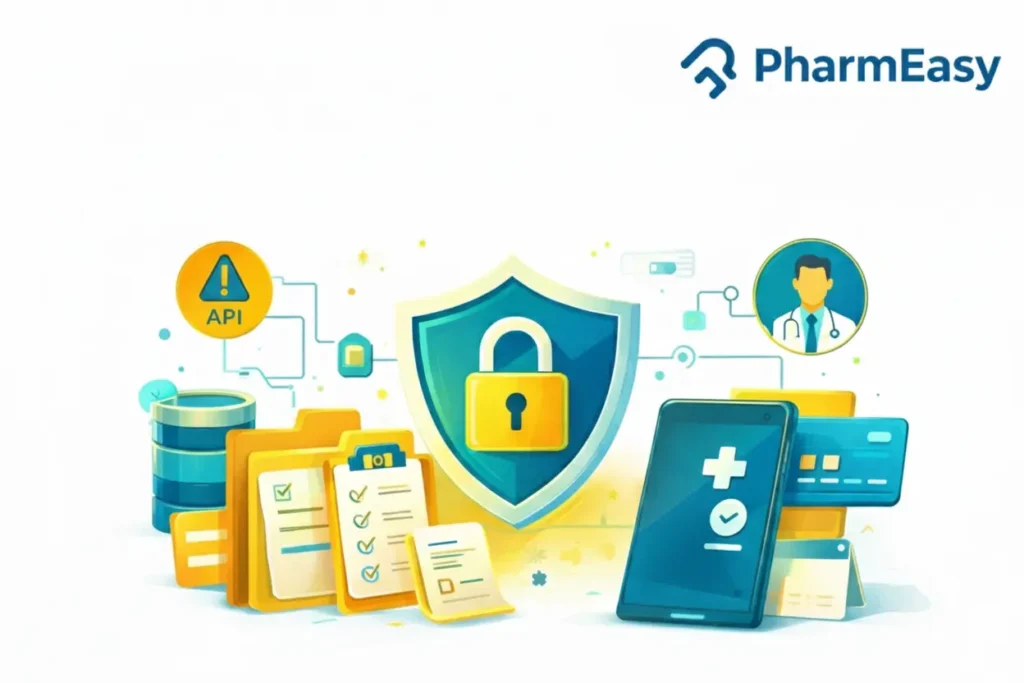
It must already exist at the code level, server level, and data-handling level.
A secure white-label PharmEasy app includes:
- Hardened backend infrastructure
- Secure and authenticated APIs
- Encrypted medical and prescription databases
- Compliance-ready workflows for healthcare regulations
If the underlying app architecture is weak, no amount of branding, UI polish, or feature customization can make it safe.
Common Security Myths vs Reality
Many founders believe white-label apps are unsafe because they are reused across multiple businesses. This belief is incorrect.
The real risk is not the white-label model, but:
- Poor engineering practices
- Shared databases without isolation
- Lack of security audits
- No compliance enforcement
Another common myth is that using cloud hosting or popular frameworks automatically makes an app secure. In reality, misconfigured cloud infrastructure is one of the biggest causes of healthcare data breaches.
Security depends on:
- How access is controlled
- How data is stored and encrypted
- How APIs are protected
- How updates and patches are managed
Why People Worry About White-Label Pharmacy Apps
Concerns around white-label PharmEasy-style apps usually come from real industry incidents.
Founders worry about:
- Patient prescription data leaks
- Unauthorized access to medical history
- Payment and insurance fraud
- Regulatory non-compliance penalties
- Loss of trust from users and pharmacies
In healthcare apps, trust is everything. One security incident can permanently destroy brand credibility.
Current Threat Landscape for Pharmacy Apps in 2025
In 2025, pharmacy and healthcare apps face increasingly sophisticated threats:
- API abuse exposing prescription data
- Account takeover through weak authentication
- Ransomware attacks on medical databases
- Insider threats from poorly controlled admin access
- Third-party integration vulnerabilities
According to recent industry reports:
- Healthcare apps are among the top 3 most targeted sectors globally
- Over 60% of healthcare data breaches originate from application-level vulnerabilities
- APIs are now the primary attack surface, not websites
This makes security architecture non-negotiable for any PharmEasy-type platform.
Security Standards Expected in 2025
In 2025, a white-label PharmEasy app is expected to meet enterprise-grade security standards by default.
This includes:
- Encryption of data at rest and in transit
- Strong user authentication and authorization
- Audit logs for every sensitive action
- Isolated databases per client
- Continuous security monitoring
Anything less is considered high-risk, especially for apps handling medical and payment data.
Read more : – Business Model OF PharmEasy : Complete Strategy Breakdown 2025
Key Security Risks & How to Identify Them
Data Protection & Privacy Risks
Healthcare and pharmacy apps handle some of the most sensitive user data available. In a white-label PharmEasy app, weak data protection is the highest-risk area.
Key risk points include:
- User personal information
Names, phone numbers, addresses, age, and medical profiles must be encrypted and access-controlled. - Payment data security
Card details, UPI tokens, and transaction metadata must never be stored without PCI DSS compliance. - Prescription and medical records
Prescription uploads, medicine history, and doctor details require healthcare-grade protection. - Location tracking concerns
Real-time delivery tracking exposes live user location data, which must be securely transmitted and stored. - GDPR, DPDP, and CCPA compliance
Non-compliance can lead to regulatory fines, forced shutdowns, and legal action.
If a provider cannot clearly explain how data is stored, encrypted, and accessed, that provider is not safe.
Technical Vulnerabilities
Most real-world pharmacy app breaches happen due to technical weaknesses, not user mistakes.
High-risk technical areas include:
- Code quality issues
Poorly written or reused code increases attack surfaces and hidden vulnerabilities. - Server security gaps
Misconfigured cloud servers, open ports, and weak firewall rules are common breach points. - API vulnerabilities
Insecure APIs can expose prescription data, order history, and user profiles. - Third-party integrations
Payment gateways, SMS providers, and pharmacy systems can introduce external risks if not audited.
A secure white-label PharmEasy app must be designed with security-first architecture, not patched after launch.
Business Risks
Security failures don’t just affect technology — they directly impact your business.
Major business risks include:
- Legal liability
Data leaks involving medical records can result in lawsuits and regulatory action. - Reputation damage
Users lose trust immediately after a healthcare data breach. - Financial losses
Fraud, refunds, downtime, and recovery costs escalate quickly. - Regulatory penalties
Violations of healthcare and data protection laws can result in severe fines.
For pharmacy platforms, security incidents are often business-ending events, not temporary setbacks.
Risk Assessment Checklist
Use this checklist before selecting any white-label PharmEasy app provider:
- Are all databases encrypted at rest and in transit?
- Is user data isolated per client or shared across deployments?
- Are APIs protected with authentication and rate limiting?
- Is payment processing PCI DSS compliant?
- Are regular security audits conducted?
- Is access to admin panels logged and restricted?
- Is there a documented incident response plan?
If even one of these answers is unclear or missing, the risk level is high.
Security Standards Your White-Label PharmEasy App Must Meet
Essential Compliance Certifications
In 2025, a white-label PharmEasy app is expected to operate at enterprise healthcare security standards. Anything below this exposes your business to regulatory and legal risks.
Mandatory certifications and compliance frameworks include:
- ISO 27001
Ensures an Information Security Management System (ISMS) is in place to manage data protection risks. - SOC 2 Type II
Validates long-term controls for security, availability, confidentiality, and data integrity. - GDPR Compliance
Required for handling data of EU users, covering consent, data access, deletion, and breach reporting. - India DPDP Act Compliance
Mandatory for Indian healthcare and pharmacy platforms handling personal data. - HIPAA (where applicable)
Required if the app handles protected health information in regulated regions. - PCI DSS for Payments
Essential for processing cards, UPI, and digital wallet transactions securely.
Without these, a pharmacy app is not legally safe to scale.
Technical Security Requirements
Certifications alone are not enough. The underlying technical implementation must enforce security at every layer.
A secure white-label PharmEasy app must include:
- End-to-end encryption
All sensitive data encrypted during storage and transmission. - Secure authentication systems
OAuth-based login, strong password policies, and optional multi-factor authentication. - Regular security audits
Code, infrastructure, and access reviews conducted periodically. - Penetration testing
Simulated attacks to identify real-world vulnerabilities before attackers do. - SSL/TLS certificates
Mandatory for all app and API communications. - Secure API architecture
Token-based access, rate limiting, and request validation.
If a provider avoids technical explanations or uses vague terms like “standard security,” that is a red flag.
Security Standards Comparison Overview
A reliable way to evaluate providers is by comparing what they claim versus what they implement.
High-security providers:
- Offer documented compliance reports
- Provide audit and penetration testing summaries
- Maintain isolated databases per deployment
- Enforce role-based access control
- Track and log all sensitive operations
Low-security providers:
- Avoid sharing compliance details
- Bundle security as an optional add-on
- Use shared or poorly segmented infrastructure
- Lack incident response documentation
For pharmacy platforms, security must be part of the base product, not an upgrade.
Read more : – How to Develop Online Pharmacy & Healthcare App
Red Flags: How to Spot Unsafe White-Label Providers
Warning Signs You Should Never Ignore
In the white-label app market, unsafe providers often hide behind low prices, fast delivery promises, and vague security claims. For a pharmacy app like PharmEasy, these shortcuts can be extremely dangerous.
Major warning signs include:
- No security documentation
If a provider cannot share security architecture details, audit reports, or compliance proof, security is not a priority. - Unusually cheap pricing without explanation
Healthcare-grade security requires investment. Extremely low pricing usually means corners are being cut. - No compliance certifications
Absence of ISO, SOC, GDPR, or healthcare compliance is a serious risk. - Outdated technology stack
Legacy frameworks and unmaintained libraries expose apps to known vulnerabilities. - Poor code quality
Obfuscated, unstructured, or poorly documented code increases long-term risk. - No security update policy
Apps without scheduled patches and updates become vulnerable over time. - Lack of data backup systems
No backups mean permanent data loss during incidents or system failures. - No insurance coverage
Reputable providers carry cyber liability insurance to mitigate breach-related risks.
If multiple red flags appear, the provider should be avoided entirely.
Evaluation Checklist Before Choosing a Provider
Before committing to any white-label PharmEasy app, you should perform structured due diligence.
Ask these questions:
- How is user and prescription data encrypted?
- Are databases isolated per client or shared?
- What security certifications do you currently hold?
- How often are security audits conducted?
- Who is responsible for security patches after launch?
- What happens if a security incident occurs?
Documents You Should Request
A trustworthy provider will willingly share:
- Security architecture overview
- Compliance certificates
- Penetration testing summaries
- Data handling and retention policies
- Incident response plan
- Backup and disaster recovery documentation
Refusal or hesitation to share these documents is a clear risk indicator.
Testing and Due Diligence Steps
Before launch, you should ensure:
- Independent vulnerability testing is completed
- API endpoints are tested for abuse
- Admin access is strictly controlled
- Logging and monitoring systems are active
- Backup restoration is verified
Healthcare apps cannot rely on assumptions. Security must be proven, not promised.
Best Practices for Secure White-Label PharmEasy App Implementation
Pre-Launch Security Measures
Security must be embedded before the app goes live, not added later. Pre-launch preparation determines whether a white-label PharmEasy app is resilient or fragile.
Critical pre-launch steps include:
- Comprehensive security audit
Review application code, server configurations, APIs, and data flow. - Code review and quality checks
Identify hardcoded credentials, insecure logic, and outdated dependencies. - Infrastructure hardening
Secure cloud environments, firewall rules, and role-based access control. - Compliance verification
Confirm GDPR, DPDP, HIPAA, and PCI DSS requirements are fully met. - Staff and admin training
Ensure operational teams understand data handling, access controls, and incident procedures.
Skipping any of these steps significantly increases breach risk.
Post-Launch Security Monitoring
Once live, security becomes an ongoing process. Pharmacy apps are continuous targets for attacks.
Post-launch best practices include:
- Continuous security monitoring
Real-time alerts for unusual activity, failed logins, or data access anomalies. - Regular updates and patches
Security vulnerabilities must be addressed as soon as they are discovered. - Incident response planning
Clear procedures for breach containment, investigation, and communication. - User data management controls
Enforced data retention, deletion, and anonymization policies. - Automated backup and recovery systems
Frequent backups with tested restoration procedures.
A secure white-label PharmEasy app treats monitoring as a 24/7 responsibility, not a periodic task.
Security Implementation Timeline
A realistic security-first rollout typically follows this sequence:
- Initial security architecture design
- Pre-launch audits and penetration testing
- Compliance validation and documentation
- Controlled production deployment
- Live monitoring and logging activation
- Scheduled audits and updates
Rushing launch without completing this timeline exposes your platform to unnecessary risks.
Legal & Compliance Considerations
Regulatory Requirements You Must Follow
A white-label PharmEasy app operates in a highly regulated environment. Legal compliance is not optional — it is a core operational requirement.
Key regulatory obligations include:
- Data protection laws by region
GDPR for EU users, India’s DPDP Act, CCPA for California users, and other regional privacy regulations. - Healthcare-specific regulations
Prescription handling, medicine records, and patient data must follow healthcare data protection standards. - User consent management
Explicit consent for data collection, location access, and prescription storage. - Privacy policy requirements
Transparent disclosure of how data is collected, stored, shared, and deleted. - Terms of service essentials
Clear usage terms, liability limitations, and dispute resolution clauses.
Failure to meet these obligations can result in fines, forced shutdowns, or legal action.
Liability Protection for Pharmacy App Owners
Security compliance alone does not eliminate liability. Legal safeguards must also be in place.
Essential protections include:
- Cyber liability insurance
Covers costs related to data breaches, investigations, and legal claims. - Clear legal disclaimers
Define responsibilities related to prescriptions, delivery delays, and third-party pharmacies. - Strong user agreements
Establish acceptable use, data rights, and user responsibilities. - Incident reporting protocols
Mandatory breach notifications within legally defined timelines. - Ongoing compliance monitoring
Regular reviews to ensure regulations remain satisfied as laws evolve.
For healthcare apps, being compliant today is not enough. Compliance must be continuously maintained.
Compliance Checklist by Region
Before scaling, confirm the following:
- User consent mechanisms comply with local laws
- Data residency requirements are met
- Breach reporting timelines are defined
- User data access and deletion requests are supported
- Regulatory documentation is updated and auditable
Launching without this checklist completed exposes your business to serious regulatory risk.
Why Miracuves White-Label PharmEasy App is Your Safest Choice
Miracuves Security-First Architecture
At Miracuves, security is not treated as a feature — it is built into the foundation of every white-label PharmEasy app we deliver. Our platforms are designed to meet enterprise healthcare standards from day one, ensuring safety, compliance, and long-term scalability.
Our security architecture includes:
- Enterprise-grade infrastructure
Isolated environments with hardened cloud configurations and strict access control. - Encrypted data handling
All sensitive data, including prescriptions and payments, is encrypted in transit and at rest. - Secure authentication systems
Role-based access control, OAuth authentication, and optional multi-factor authentication. - Compliance-ready frameworks
Built-in support for GDPR, DPDP, HIPAA (where applicable), and PCI DSS requirements.
Continuous Security Monitoring and Audits
Security threats evolve constantly. Miracuves ensures your pharmacy app remains protected long after launch.
Our ongoing security measures include:
- Regular security audits
Periodic code, infrastructure, and access reviews. - Proactive vulnerability management
Identification and remediation of potential threats before exploitation. - 24/7 security monitoring
Real-time alerts for suspicious behavior and unauthorized access attempts. - Controlled update and patch management
Timely deployment of security updates without disrupting operations.
Why Businesses Trust Miracuves
Over the years, Miracuves has delivered 600+ secure digital platforms across healthcare, logistics, fintech, and enterprise sectors.
Clients choose Miracuves because:
- Security is included by default, not sold separately
- Compliance documentation is transparent and verifiable
- Data isolation is guaranteed per deployment
- Secure payment processing is built-in
- Backup, recovery, and incident response plans are included
Final Thought
Miracuves white-label PharmEasy app solutions come with enterprise-grade security built in by design. With 600+ successful projects and a strong record of zero major security breaches, we help businesses launch safe, compliant, and future-ready pharmacy platforms. Get a free security assessment and see why businesses trust Miracuves for secure, regulation-ready pharmacy apps.
In 2025, pharmacy platforms sit at the intersection of healthcare, payments, and personal data. This makes security, compliance, and transparency non-negotiable. Choosing the right technology partner determines whether your app earns user trust or becomes a liability.
FAQs
1. How secure is a white-label PharmEasy app compared to custom development?
A white-label PharmEasy app can be equally secure or more secure than custom development when built with enterprise-grade security, audits, and compliance frameworks from the start.
2. What happens if there is a security breach?
A proper incident response plan includes immediate containment, investigation, regulatory notification, and user communication within legal timelines.
3. Who is responsible for security updates after launch?
The technology provider is responsible for core security patches, while the app owner must ensure updates are applied and monitored.
4. How is user and prescription data protected?
Data is encrypted at rest and in transit, access is role-based, and all sensitive actions are logged and monitored.
5. What compliance certifications should I look for?
ISO 27001, SOC 2 Type II, GDPR, DPDP Act compliance, and PCI DSS for payments are essential.
6. Can a white-label PharmEasy app meet enterprise security standards?
Yes, when designed with security-first architecture, isolated infrastructure, and regular audits.
7. How often should security audits be conducted?
At least annually, with additional audits after major updates or regulatory changes.
8. What is included in Miracuves’ security package?
Enterprise-grade encryption, compliance-ready architecture, continuous monitoring, regular audits, and secure payment handling.
9. How is security handled across different countries?
Data handling and consent mechanisms are adapted to local laws such as GDPR, DPDP, and CCPA.
10. What insurance is required for app security?
Cyber liability insurance is recommended to cover breach response, legal costs, and regulatory penalties.
Related Articles: