


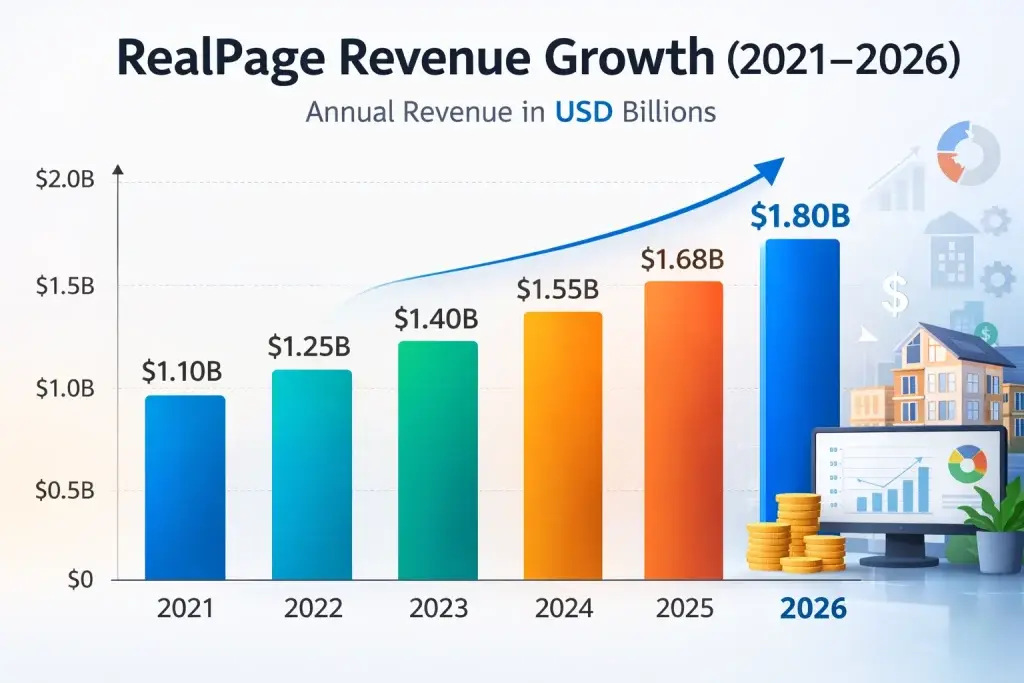
RealPage has quietly become one of the most powerful technology platforms behind the global rental housing market. By 2026, the proptech company is estimated to generate around $1.8B in annual revenue, serving property owners, managers, and real estate investors across millions of residential units worldwide.
For founders and SaaS builders, RealPage offers a powerful lesson in vertical SaaS dominance. Instead of building a consumer-facing platform, the company built deep infrastructure for the real estate industry—unlocking recurring software revenue, data monetization, and enterprise contracts.
RealPage Revenue Overview – The Big Picture
RealPage operates one of the most comprehensive property management technology platforms in the world. Its products help apartment owners, real estate companies, and property managers handle everything from leasing and accounting to revenue optimization and tenant analytics.
Financial Snapshot (Estimated 2026)
| Metric | Estimated Value |
|---|---|
| Estimated Annual Revenue | ~$1.8B |
| Company Valuation | ~$10B (private equity ownership estimate) |
| Global Properties Served | 24M+ rental units |
| Enterprise Customers | 12,000+ property operators |
| Profitability Status | Strong SaaS margins |
The company’s growth is largely driven by:
• increasing digitization of property management
• demand for revenue optimization tools
• expansion of rental housing markets globally
• adoption of AI-driven pricing analytics
Compared to competitors like Yardi, AppFolio, and Buildium, RealPage focuses heavily on enterprise-scale property portfolios and data-driven pricing tools.
Primary Revenue Streams Deep Dive
RealPage generates revenue primarily through enterprise SaaS subscriptions, analytics platforms, transaction services, and data products.
Property Management Software (Core SaaS Platform)
The largest portion of RealPage’s revenue comes from its core property management software solutions.
These systems allow real estate companies to manage:
• leasing workflows
• accounting systems
• rent payments
• maintenance operations
• tenant communications
Because these tools are mission-critical, customers typically sign long-term contracts.
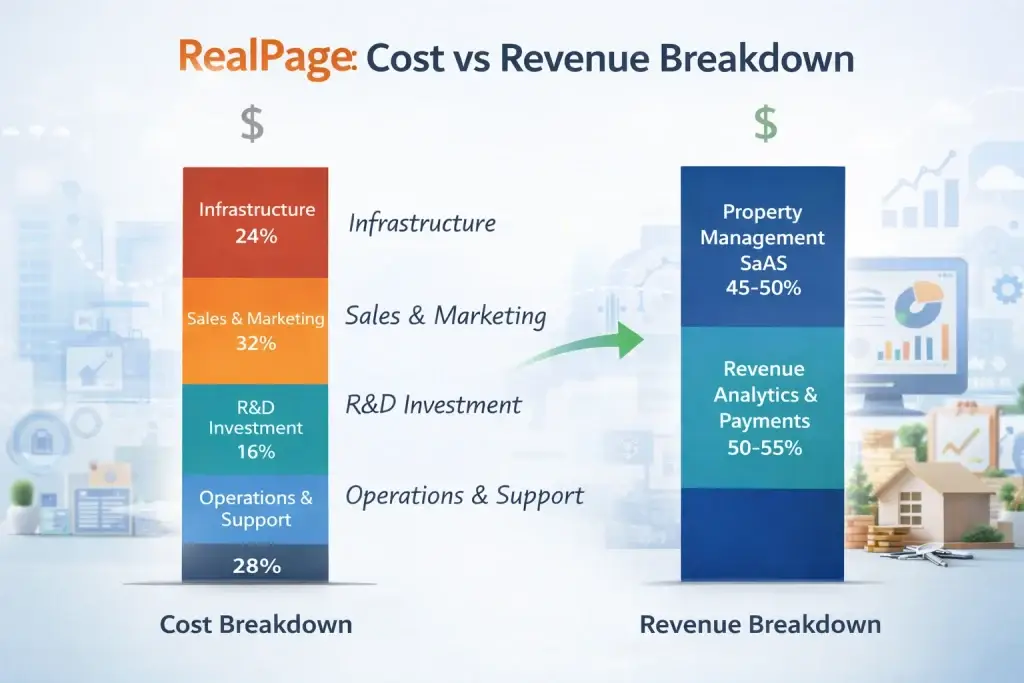
Estimated revenue share: ~45–50%
Pricing is typically structured as:
• monthly subscription per rental unit
• enterprise licensing agreements
• bundled product packages
Revenue Management & Pricing Analytics
RealPage is widely known for its AI-driven rent pricing algorithms.
These tools help property owners dynamically adjust rental prices based on:
• market demand
• competitor pricing
• occupancy rates
• regional housing trends
This product category has become one of the fastest-growing segments of the platform.
Estimated revenue share: ~20–22%
Pricing is typically tied to:
• number of units analyzed
• market data access
• enterprise analytics subscriptions
Transaction & Payment Processing
RealPage also processes billions in rental payments annually through its payment infrastructure.
These services include:
• digital rent collection
• tenant payment portals
• payment processing infrastructure
• security deposits and fees
Estimated revenue share: ~12–15%
Revenue comes from:
• transaction processing fees
• payment infrastructure charges
• financial integrations
Marketing & Leasing Platforms
RealPage also offers marketing tools that help property managers attract tenants.
These services include:
• listing syndication
• digital advertising for rental properties
• tenant lead generation
• leasing CRM systems
Estimated revenue share: ~8–10%
Property owners pay for:
• marketing automation software
• advertising placement
• lead management tools
Data & Market Intelligence
Another growing revenue stream comes from real estate data products.
RealPage aggregates massive datasets across rental markets and sells insights to:
• real estate investors
• developers
• institutional property owners
These datasets help companies understand:
• rental price trends
• vacancy rates
• market demand forecasts
Estimated revenue share: ~6–8%
Revenue Streams Breakdown (Latest Available Data)
| Revenue Stream | Description | Estimated Revenue Share | Pricing Model |
|---|---|---|---|
| Property Management SaaS | Core platform for managing rental portfolios | 45–50% | Per-unit subscription |
| Revenue Management Tools | AI pricing and rent optimization | 20–22% | Enterprise analytics subscription |
| Payment Processing | Tenant rent payment infrastructure | 12–15% | Transaction fees |
| Marketing & Leasing Tools | Tenant acquisition and leasing automation | 8–10% | SaaS subscription |
| Data & Market Intelligence | Rental market analytics and reports | 6–8% | Data subscription |
The Fee Structure Explained
RealPage monetizes primarily through property owners and real estate operators, not tenants.
Tenants interact with the platform only through rent payment or leasing portals.
User-Side Fees
Tenants may encounter indirect fees when using RealPage-powered platforms such as:
• online payment processing fees
• application processing fees
• convenience charges for digital payments
Provider-Side Fees
Property managers and real estate companies pay for the platform.
Pricing usually depends on:
• number of rental units
• product packages
• enterprise feature sets
Platform Commissions
RealPage earns additional revenue from:
• payment transaction processing
• marketing service placements
• premium data analytics
Platform Fee Structure (Latest Available Data)
| User Type | Fee Type | Typical Fee Range | Notes |
|---|---|---|---|
| Property Owners | SaaS subscription | $2–$12 per unit/month | Core software pricing |
| Enterprise Operators | Custom SaaS contracts | Variable | Large portfolios |
| Tenants | Payment convenience fee | $1–$10 per transaction | Online payment processing |
| Marketing Services | Lead generation fees | Variable | Property advertising |
How RealPage Maximizes Revenue Per User
RealPage’s strategy is based on maximizing revenue per property unit rather than individual users.
Customer Segmentation
RealPage focuses on three primary customer groups:
• large real estate investment firms
• apartment management companies
• institutional housing operators
These organizations manage thousands of rental units, making them highly valuable customers.
Upselling Enterprise Tools
RealPage frequently upsells additional services once a customer adopts its core platform.
Examples include:
• revenue optimization tools
• tenant screening systems
• maintenance automation tools
• advanced analytics dashboards
Each additional module increases customer lifetime value.
Cross-Selling Platform Services
The company cross-sells services across its ecosystem:
• payment infrastructure
• marketing automation
• data analytics platforms
Customers that use multiple products generate significantly higher recurring revenue.
Data-Driven Monetization
Because RealPage aggregates massive housing data across markets, it can monetize insights through:
• market intelligence reports
• investment analytics
• predictive pricing tools
Data has become a high-margin business for the company.
Cost Structure & Profit Margins
Like most enterprise SaaS companies, RealPage operates with a cost structure heavily focused on technology and sales infrastructure.
Infrastructure Costs
Key infrastructure expenses include:
• cloud hosting and platform infrastructure
• data analytics systems
• AI pricing engines
• platform security and compliance
Sales & Customer Acquisition
Enterprise SaaS requires significant investment in:
• sales teams targeting real estate companies
• industry conferences and real estate events
• enterprise account management
Customer acquisition costs can be high, but long-term contracts generate strong lifetime value.
Product Development & R&D
RealPage invests heavily in:
• pricing optimization algorithms
• rental market analytics
• property management automation tools
These investments help maintain its competitive advantage.
Customer Support & Operations
Enterprise property management software requires extensive operational support, including:
• onboarding teams
• technical integrations
• customer success programsUnit Economics
Once customers adopt multiple RealPage tools, the company benefits from:
• high switching costs
• strong SaaS margins
• predictable recurring revenue
Future Revenue Opportunities (2026–2028 Outlook)
The next growth phase for RealPage will likely focus on deeper automation and global expansion.
AI-Driven Property Operations
Artificial intelligence could automate:
• rental pricing decisions
• maintenance scheduling
• tenant communication
This would create new premium subscription tiers.
Global Rental Market Expansion
RealPage currently dominates the North American market.
Expansion into Europe, Asia, and emerging rental markets could significantly expand its customer base.
Fintech Services for Property Owners
Future fintech opportunities include:
• rental financing products
• insurance services
• automated property expense management
These services could create entirely new revenue streams.
Industry Risks
Potential risks include:
• regulatory scrutiny of pricing algorithms
• competition from newer proptech startups
• consolidation in the property management software market
Opportunities for Startups
Startups entering the proptech space could focus on:
• niche property management tools
• AI tenant experience platforms
• automation for maintenance operations
These areas remain relatively underserved.
Lessons for Entrepreneurs
RealPage demonstrates how powerful vertical SaaS infrastructure can be.
Own the Operational Core
RealPage built tools that property managers rely on daily. Once embedded in operations, these platforms become extremely difficult to replace.
Data Becomes a Second Business
By collecting massive real estate datasets, RealPage created a second high-margin business in market intelligence and analytics.
Enterprise Customers Drive Growth
Large real estate operators managing thousands of properties generate significantly more recurring revenue than small landlords.
Expand the Platform Over Time
RealPage started with property management software but gradually expanded into:
• pricing algorithms
• marketing tools
• fintech infrastructure
• data analytics
Platform expansion increased lifetime value dramatically.
If you want working software first, our ready-made property management platform starts at $5,199 and is delivered in 6 days. It covers rent collection, expense tracking and maintenance requests for landlords and tenants. It is not a copy of RealPage. Revenue management and pricing analytics modules are built as custom work.
Final Thought
RealPage shows how building infrastructure for a specific industry can unlock massive long-term value. By embedding itself into the operational backbone of the rental housing market, the company transformed property management into a scalable SaaS platform.
For founders, the key lesson is simple: own the workflow of an industry, and monetization opportunities multiply.
FAQs
1. How much does RealPage make per transaction?
RealPage earns small processing fees on tenant payments and rent transactions, typically through payment infrastructure charges.
2. What is the most profitable revenue stream for RealPage?
The core SaaS property management platform generates the highest margins due to recurring enterprise subscriptions.
3. How does RealPage’s pricing compare to competitors?
RealPage is typically positioned for larger property portfolios and enterprise clients, making it more comprehensive than smaller property management platforms.
4. What percentage does RealPage take from providers?
RealPage does not usually take commissions from rent payments but charges subscription fees and service fees instead.
5. How has RealPage’s revenue model evolved?
The company expanded from property management software into pricing algorithms, marketing platforms, and real estate data products.
6. Can small startups use a similar model?
Yes. Vertical SaaS platforms targeting specific industries can replicate this model by building operational infrastructure.
7. What scale is needed for profitability?
SaaS platforms generally achieve strong margins once they manage tens of thousands of units or enterprise clients.
8. How can founders implement a similar model?
Focus on solving operational workflows first, then expand into analytics, payments, and automation services.
9. What alternatives exist to this revenue model today?
Alternative models include transaction-based proptech platforms, marketplace real estate services, and API-driven infrastructure solutions.
Miracuves is an independent software development company. We are not affiliated with, connected to, sponsored by, or endorsed by any company or product named in this article.
Terms such as “X Clone” are used descriptively. It is how the software industry refers to building a platform with functionality comparable to a known service, and how clients search for it.
The entire design and codebase of our products is built by our own team. Our products contain no code, design, graphics, or content originating from any third-party website or applications.
All third-party names and marks referenced in this article are the property of their respective owners, referenced solely to identify the services discussed.