


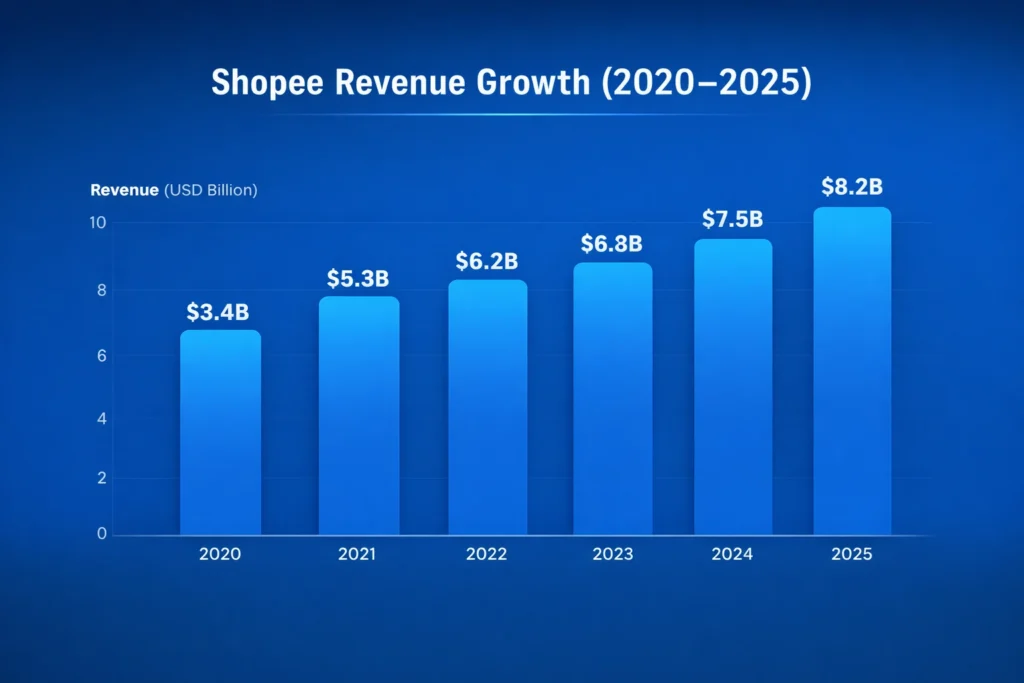
Shopee continues to dominate Southeast Asia’s ecommerce sector in 2025, reporting $8.2+ billion in revenue driven by an aggressive blend of marketplace fees, advertising, fintech, and logistics. Its rapid growth in Indonesia, Brazil, and the Philippines shows how powerful a mobile-first strategy can be.
For startups and entrepreneurs, Shopee’s revenue model offers a perfect learning blueprint on how to scale fast while monetizing deeply.
Let’s break down how Shopee makes money — and how these strategies can help you build a successful Shopee-like platform.
Shopee Revenue Overview – The Big Picture
2025 Revenue: ~$8.2B
Parent Company: Sea Ltd.
YoY Growth (2024–25): ~24%
Regional Revenue Split:
- Indonesia – 42%
- Brazil – 26%
- Philippines – 14%
- Vietnam – 10%
- Other markets – 8%
Profit Margins (2025):
- Contribution margins positive in 4 major regions
- Fintech contributes the highest profitability uplift
- Increasing ads reduces reliance on incentives
Competitive Standing:
- Outperforms Lazada in most SEA markets
- Competes with Mercado Libre in Brazil
- Amazon has less footprint in SEA
Read More: What Is Shopee and How Does It Work?
Primary Revenue Streams Deep Dive
1. Marketplace Commissions (31% of revenue)
Shopee takes a cut from sellers per transaction.
- Commissions: 5%–14% depending on product category
- Higher for Shopee Mall brands
- 2025 GMV surpasses $85B
2. Shopee Ads (29% of revenue)
A high-margin revenue engine.
Includes:
- Sponsored Search Ads
- Product Listing Ads
- Shop Ads
- Banner & Display Ads
2025 ad revenue exceeds $2.4B.
3. ShopeePay (Fintech) (23% of revenue)
Fast-growing division.
Earns from:
- Merchant transaction fees
- Payment processing
- Wallet top-ups
- Offline QR payments
- Bill payments fees
ShopeePay processed $32B+ in annual TPV in 2025.
4. Logistics – Shopee Xpress (11% of revenue)
Revenue sources:
- Shipping fees
- Fulfillment
- Storage
- Last-mile delivery
Handled 2.1B+ parcels in 2025.
5. Seller Services & Subscriptions (6% of revenue)
Includes:
- Cross-border seller fees
- Paid campaign participation
- Subscription tools for premium sellers
Revenue streams percentage breakdown
| Revenue Stream | % |
|---|---|
| Marketplace Fees | 31% |
| Ads | 29% |
| ShopeePay | 23% |
| Logistics | 11% |
| Seller Services | 6% |
The Fee Structure Explained
Buyer Fees
- Shipping charges (after vouchers)
- FX fees for cross-border items
- Installment interest (third-party partners)
Seller Fees
- 5–14% commission
- 2–3% transaction fee
- Logistics charges
- Advertising costs
- Event & Campaign participation fees
Hidden Revenue Layers
- Float income from ShopeePay balances
- FX spreads
- Sponsored campaign co-funding
- Priority visibility auctions
Regional Pricing
Brazil, Indonesia & Vietnam have the highest logistics profitability.
Complete fee structure by user type
| Fee Type | Buyer | Seller |
|---|---|---|
| Commission | No | Yes |
| Shipping | Yes | Sometimes |
| Transaction Fees | Yes | Yes |
| Ads | No | Yes |
| Installment Fees | Yes | Sometimes |
| Subscription | Optional | Yes |
How Shopee Maximizes Revenue Per User
Segmentation:
SMEs, casual sellers, and Shopee Mall brands have tiered fees.
Upselling:
Paid campaigns, sponsored products, high-visibility search ads.
Cross-selling:
Marketplace → ShopeePay
ShopeePay → Offline merchants
ShopeePay → ShopeeFood
Dynamic Pricing:
Flash sales, daily deals, algorithmic price incentives.
Retention Monetization:
- Free shipping vouchers
- Coins rewards system
- App-exclusive deals
LTV Optimization:
ShopeePay users have 2.5× higher spend than non-wallet users.
Psychological Pricing:
Countdown timers, 99-cent endings, limited flash windows.
2025 ARPU: ~$34 per active user (up 19% YoY)
Cost Structure & Profit Margins
Infrastructure Costs
Payment rails, servers, recommendation engines.
Marketing Costs (High CAC historically)
Voucher subsidies, influencer campaigns, mega sales days.
Operational Logistics Costs
Overhead for warehouses, drivers, and returns.
R&D
AI-driven logistics routing
Fraud detection
Ad bidding optimization
Unit Economics
Strongest in Indonesia, Brazil & Philippines.
Profitability Path
ShopeePay + Ads lift margins faster than marketplace fees.
Read More: Best Shopee Clone Script 2025 | Build Your E-Commerce Marketplace
Future Revenue Opportunities & Innovations
New Monetization Paths
- SME Credit via ShopeePay
- BNPL expansion
- Cross-border premium subscriptions
- AI inventory planning tools
AI/ML Monetization
- Smart bidding for ads
- Personalization scoring
- Predictive logistics analytics
Upcoming Growth Regions
- Mexico entry exploration
- Deeper expansion into Brazil rural areas
2025–2027 Predictions
- Fintech growth: +25–32% annually
- Ads share of revenue to exceed 33%
- Logistics maturity = higher margins
Risks
- Competing incentives from Lazada & TikTok
- Regulatory shifts for digital payments
Opportunities for Founders
- Localized niche marketplaces
- SME fintech integrations
- Inventory-light logistics platforms
Lessons for Entrepreneurs & Your Opportunity
What Works
- Mobile-first UX
- Fintech + marketplace synergy
- Incentive-led user acquisition
- Ads as long-term profit engine
Replicable Tactics
- Build wallet loyalty
- Push sellers into paid placements
- Create mega campaign culture
Market Gaps
- Local-language vertical niches
- High-trust logistics for SMEs
- BNPL for low-ticket ecommerce
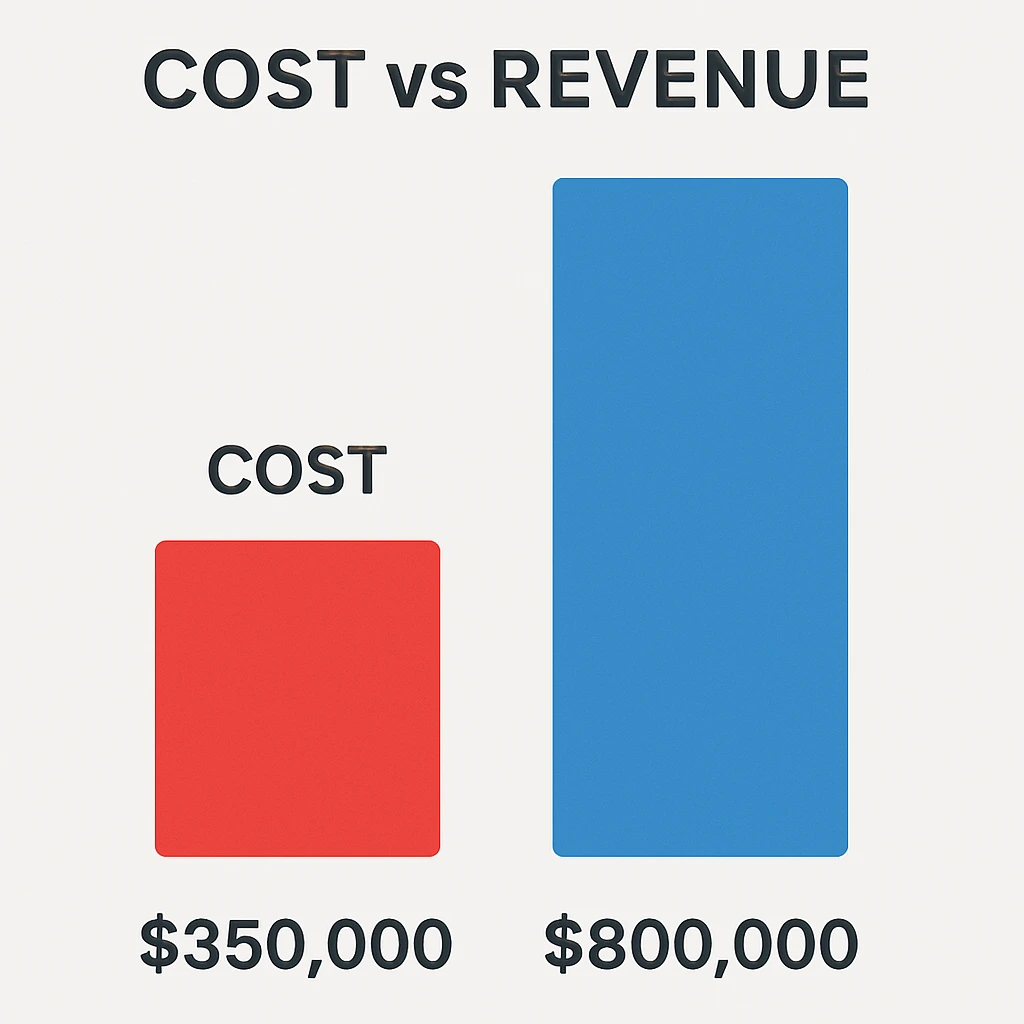
Want to build a platform with Shopee’s proven revenue model? Miracuves helps entrepreneurs launch revenue-generating platforms with built-in monetization systems. Our Shopee clone scripts come with flexible revenue models you can customize. Some clients see revenue within 30 days of launch, 30–90 days with strong seller onboarding.
Final Thought
Shopee demonstrates that combining marketplace infrastructure with fintech and logistics creates exponential monetization power. Its ability to convert traffic into multiple revenue layers is what makes it one of the most profitable ecommerce ecosystems.
For founders, this model proves that blended ecosystems outperform single-stream platforms. The future belongs to marketplace-plus-fintech-plus-logistics engines.
If you want to build a Shopee-like platform, the best time to start is now.
FAQs
1. How much does Shopee make per transaction?
5–14% commission + 2–3% transaction fee.
2. What is Shopee’s most profitable revenue stream?
Advertising and ShopeePay.
3. How does Shopee’s pricing compare to competitors?
Competitive with Lazada; lower than Amazon SEA.
4. What percentage does Shopee take from sellers?
5% to 14%.
5. How has Shopee’s revenue model evolved?
Shifted from marketplace-heavy to ads + fintech-driven.
6. Can small platforms use similar models?
Yes — even small niche marketplaces can adopt this model.
7. What’s the minimum scale for profitability?
10k–15k monthly transactions.
8. How to implement similar revenue models?
Start with marketplace fees → integrate wallet → add ads.
9. Alternatives to Shopee’s model?
Subscription marketplaces, zero-commission + ads, vertical marketplaces.
10. How quickly can similar platforms monetize?
Revenue starts in 30–60 days with strong seller onboarding.