


Imagine launching an online store in days—not months—with built-in tools for payments, shipping, SEO, product management, multi-store selling, and enterprise-grade performance. That’s exactly the problem BigCommerce solves for thousands of U.S. businesses.
BigCommerce, founded in 2009, began as a simple SaaS tool and has evolved into one of the top enterprise ecommerce platforms in the United States. Today, it powers over 60,000+ merchants, from small businesses to major brands like TYR, Solo Stove, and Skullcandy. Its focus on scalability, ease of use, and open-SaaS flexibility has made it a major player in the ecommerce industry—especially with the surge in online retail post-2020.
Whether you’re a beginner selling your first product or an enterprise managing thousands of SKUs, BigCommerce offers the infrastructure, tools, and integrations needed to grow rapidly in 2025.
What is BigCommerce? The Simple Explanation
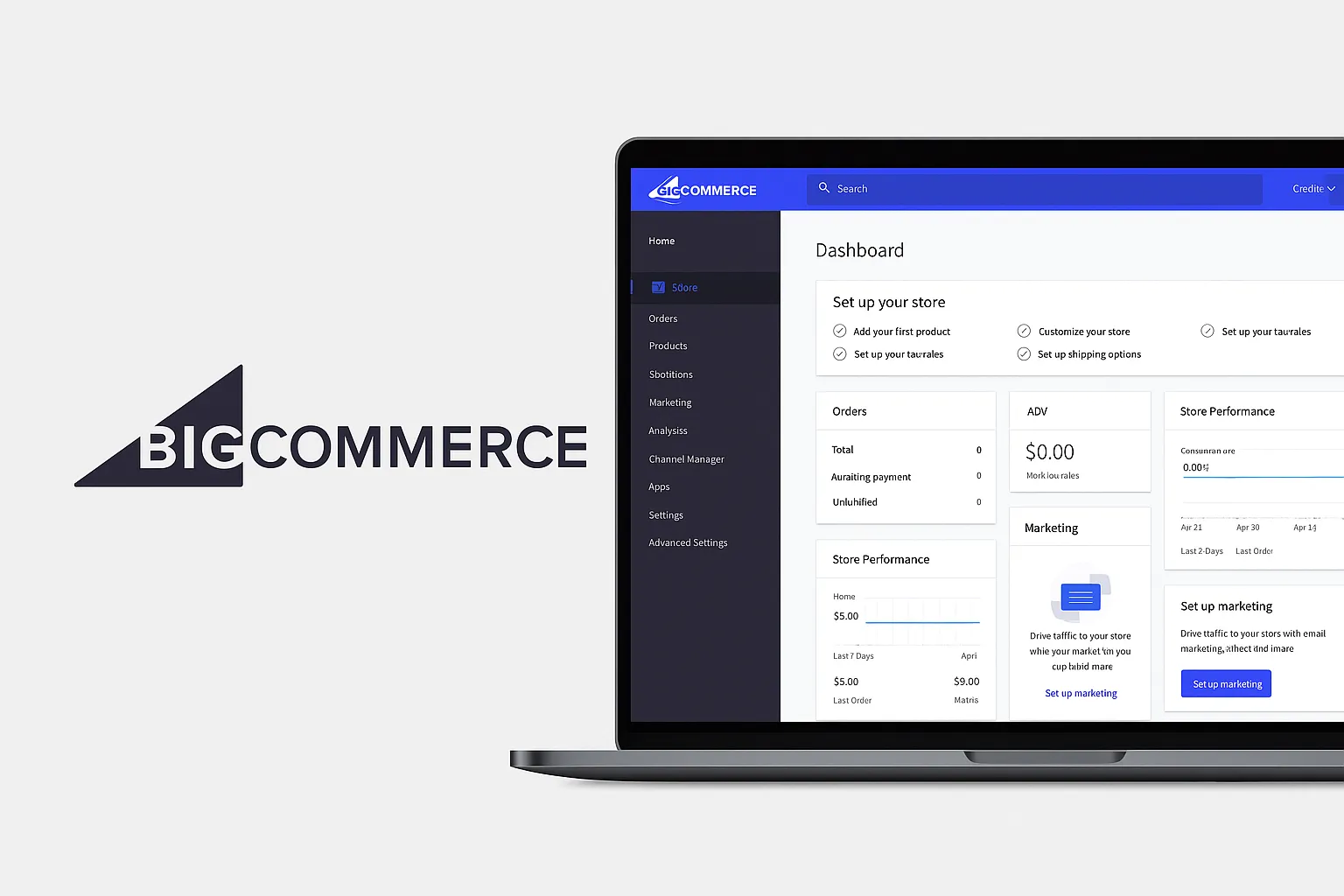
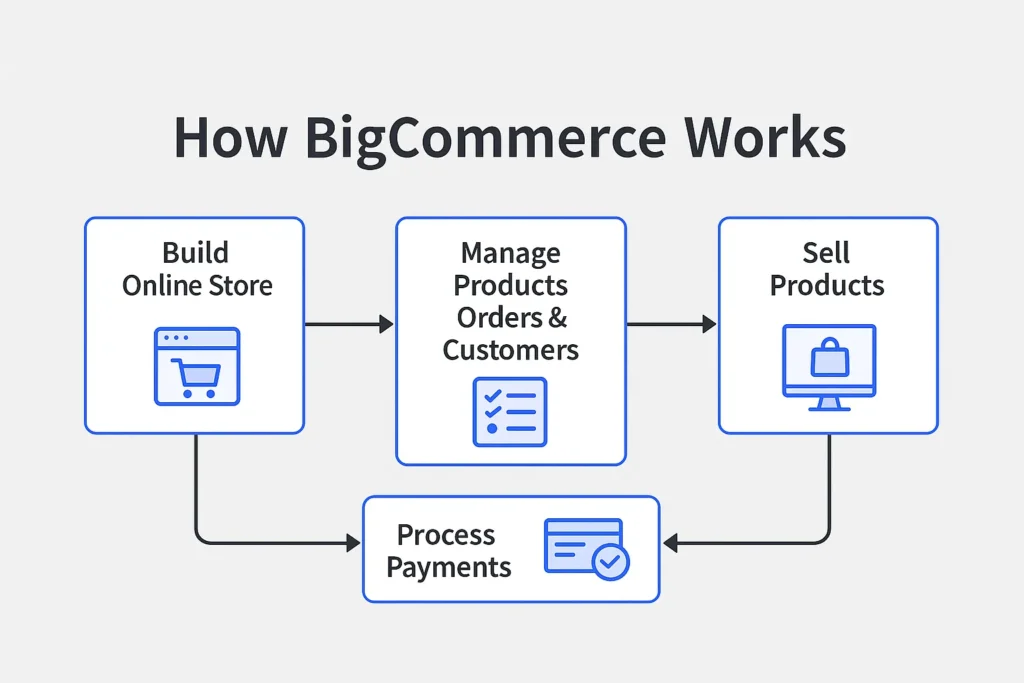
BigCommerce is a U.S.-based hosted ecommerce platform that helps businesses create, manage, and scale online stores without needing advanced technical skills. It provides everything—storefront design, payment processing, shipping tools, inventory management, SEO, multi-channel selling, and integrations—inside one easy dashboard.
The Core Problem BigCommerce Solves
Before platforms like BigCommerce, online sellers had to handle servers, hosting, updates, and custom development. BigCommerce eliminates all that by offering a ready-made, scalable ecommerce infrastructure so merchants can focus on selling, not maintaining technology.
Target Users & Use Cases
BigCommerce is ideal for:
- Small to medium businesses launching their first online store
- Direct-to-consumer brands scaling rapidly
- Enterprise retailers handling high-volume traffic
- Wholesale/B2B sellers needing advanced catalogs
- Omnichannel brands selling on Amazon, Walmart, TikTok Shop, eBay, etc.
- Startups wanting fast go-live without development bottlenecks
Market Position (2025 Stats)
- Powers 60,000+ active stores
- Ranked among the Top 5 ecommerce platforms in the U.S.
- Handles billions of dollars in GMV annually
- Growing fastest in B2B ecommerce, projected to reach $3 trillion+ by 2027
- Popular with mid-market and enterprise brands due to its “Open SaaS” flexibility
Why BigCommerce Became Successful
- No technical overhead — hosting, updates, security handled for you
- Scalability — can support small stores to enterprise brands
- Open SaaS model — combines the simplicity of SaaS with the flexibility of APIs
- High-conversion storefronts — fast, SEO-friendly, mobile-optimized
- Extensive integrations — 600+ apps including ERP, CRM, POS & marketing tools
- Multi-channel selling — reach customers through social + marketplaces easily
Read more: How to Develop a Website Builder SaaS Platform App
How Does BigCommerce Work? Step-by-Step Breakdown
How BigCommerce Works for Users (Store Owners)
1. Account Creation Process
Creating a BigCommerce store takes just a few minutes:
- Sign up with email
- Enter store name
- Select store category
- Choose theme/template
- Start adding products and settings
No coding required—BigCommerce auto-configures hosting, SSL, security, and dashboard setup.
2. Main Features Walkthrough
Inside the dashboard, store owners get access to:
- Product Management: Add products, variants, SKUs, categories
- Payments: Built-in support for PayPal, Stripe, Amazon Pay, Apple Pay, etc.
- Shipping: Real-time rates from USPS, FedEx, UPS
- Storefront Builder: Drag-and-drop editing with responsive templates
- SEO Tools: URL editing, meta tags, sitemaps, schema
- Marketing: Coupons, abandoned cart emails, analytics
- Multi-channel Selling: Connect to Walmart, TikTok, Amazon, eBay, Meta shops
- Analytics: Conversion reports, revenue insights, merchandising data
3. Typical User Journey (Example)
A small fashion brand using BigCommerce:
- Creates a BigCommerce store and chooses a theme
- Uploads 50–200 products with size/color variations
- Connects Stripe for payments
- Enables UPS for shipping
- Syncs products to Instagram Shop & TikTok Shop
- Runs marketing campaigns
- Processes orders through a single dashboard
- Uses analytics to scale advertising and inventory
This unified workflow is why BigCommerce appeals to growing DTC brands.
How BigCommerce Works for Service Providers (If applicable)
BigCommerce also supports B2B/wholesale operations, where sellers can:
- Create customer-specific catalogs
- Set tiered pricing
- Offer purchase orders (POs)
- Manage net payment terms
- Use sales representative accounts
Sellers can also connect:
- ERP systems (NetSuite, Acumatica, SAP)
- Inventory fulfillment partners
- POS systems for offline-to-online syncing
Earnings/Commission Structure
BigCommerce does not take a sales commission.
Instead, merchants pay:
- A monthly subscription fee
- Payment provider’s transaction fee (Stripe/PayPal, etc.)
This makes it more economical for high-volume businesses.
Technical Overview (Simple)
1. Basic Architecture (Non-technical Explanation)
BigCommerce is built on an Open SaaS framework:
- Your store runs on BigCommerce’s secure cloud servers
- Storefront is customizable
- APIs allow connections with apps, CRMs, ERPs, and warehouses
- No server management, patches, or hosting setup needed
You get the flexibility of open-source with the stability of SaaS.
2. Key Technologies Used
- Frontend: Stencil framework (HTML, CSS, JS)
- Backend: PHP + microservices
- APIs: REST + GraphQL
- Cloud Hosting: Google Cloud Platform
- Security: ISO/PCI-compliant infrastructure
BigCommerce’s Business Model Explained
How BigCommerce Makes Money
BigCommerce operates on a subscription-based SaaS business model.
It earns revenue through:
- Monthly/Yearly Subscription Plans
- Enterprise Custom Contracts
- Theme purchases (premium themes)
- App marketplace commissions (optional)
- Partner ecosystem commissions
- API usage (for enterprise-level integrations)
Unlike many ecommerce platforms, BigCommerce does NOT charge transaction fees—making it attractive for high-volume U.S. merchants.
Subscription Pricing Structure (2025 Updated)
BigCommerce USA Plans (Monthly Prices):
| Plan | Monthly Price | Annual Price | GMV Limit |
| Standard | $39/month | $29/month billed annually | Up to $50k/year |
| Plus | $105/month | $79/month billed annually | Up to $180k/year |
| Pro | $399/month | $299/month billed annually | Up to $400k/year (additional fees above limit) |
| Enterprise | Custom Pricing | Custom | Scalable, unlimited |
Additional Costs:
- Payment gateway fees (Stripe/PayPal): ~2.9% + $0.30 per transaction
- Apps/integrations (optional)
- Premium themes (optional)
Commission / Fee Breakdown
BigCommerce fee structure:
- 0% transaction fee on sales
- Payment gateway fee only (varies by provider)
- App marketplace cost for specific addons
- Overage charges for GMV exceeding Pro plan limits
This creates predictable revenue for merchants and scalability for enterprises.
Market Size & Growth (2025 Data)
- U.S. ecommerce market projected to reach $1.7 trillion by 2027
- BigCommerce revenue crossed $309M in 2024, growing consistently
- Expected CAGR of 18%+ for enterprise SaaS commerce platforms
- B2B ecommerce (BigCommerce’s focus area) projected to hit $3 trillion by 2027
BigCommerce is positioning itself as one of the top Open-SaaS ecommerce solutions for mid-market and enterprise brands in the U.S.
Profit Margin Insights
For merchants:
- No transaction fees → Higher margins
- Scalable pricing → Suitable for rapid growth
- Built-in SEO & marketing tools → Reduced marketing cost
- Multi-channel tools → Increased revenue opportunities
For BigCommerce:
- Recurring subscription revenue
- Low churn in enterprise segment
- High-margin SaaS model
Revenue Model Breakdown
| Revenue Stream | Description | Who Pays? | Why It Matters |
| Subscriptions | Monthly/annual fees for using platform | Merchants | Main revenue source |
| Enterprise Contracts | Custom plans with SLAs & advanced features | Large brands | High-margin deals |
| Apps Marketplace | Commission from third-party apps | Developers & merchants | Expands ecosystem |
| Themes Marketplace | Paid premium themes | Merchants | Enhances storefront design |
| Partner Programs | Agency & tech partner commissions | Partners | Increases channel revenue |
| API/Integration Upsells | Advanced API usage for enterprise | Enterprise merchants | Supports large-scale operations |
Key Features That Make BigCommerce Successful
Top 10 BigCommerce Features (With Why They Matter)
1. Drag-and-Drop Storefront Builder
BigCommerce’s visual editor allows merchants to design beautiful stores without coding.
Why it matters: Faster setup, easy customization, no developer dependency.
Benefit: Launch pages quickly and test designs effortlessly.
2. Robust Product Management
Supports unlimited products, variants, SKUs, custom options, and digital goods.
Why it matters: Works for both small catalogs and enterprise-level inventories.
Benefit: Scales naturally as your business grows.
3. Multi-Channel Selling (Built-In)
Sell on Amazon, Walmart, eBay, TikTok Shop, Facebook Shop, Instagram, and even POS solutions.
Why it matters: Modern customers shop across channels.
Benefit: Merchants increase reach and revenue without extra apps.
4. SEO-Optimized Infrastructure
BigCommerce is known for strong SEO:
- Custom URLs
- Automatic sitemaps
- Schema markup
- Fast page loading
- AMP support
Why it matters: Organic traffic directly influences revenue.
Benefit: Higher visibility on Google with minimal effort.
5. 0% Transaction Fees
Unlike Shopify, BigCommerce does not charge extra per sale.
Why it matters: Higher profit margins for sellers.
Benefit: More freedom to choose payment gateways.
6. Enterprise-Level B2B Suite
Features include:
- Customer-specific pricing
- Bulk ordering
- Purchase orders
- Net terms
- B2B quoting
Why it matters: The U.S. B2B ecommerce sector is booming.
Benefit: Merchants can serve both retail and wholesale clients.
7. Checkout Customization via Checkout SDK
Merchants can redesign the checkout experience to match their brand.
Why it matters: Checkout UX affects conversion rates.
Benefit: Lower abandoned carts & higher sales.
8. Headless Commerce Support
Connect BigCommerce backend to any frontend: React, Vue, Next.js, WordPress, custom apps.
Why it matters: Modern brands want personalized, high-speed frontends.
Benefit: Total creative freedom with enterprise agility.
9. Advanced Analytics & Reporting
Reports include:
- Sales analytics
- Customer insights
- Merchandising impact
- Marketing attribution
Why it matters: Data-driven decisions grow sales faster.
Benefit: Understand what sells, to whom, and why.
10. App Marketplace (600+ Integrations)
Connect ERP, CRM, marketing tools, inventory, accounting systems, and AI apps in minutes.
Why it matters: Ecommerce businesses require a connected ecosystem.
Benefit: No need to build expensive custom integrations.
2025 New/Updated Features
BigCommerce has expanded significantly in 2024–2025, adding:
- AI-driven product recommendations
- AI image optimization for faster load times
- TikTok Shop + Walmart Marketplace expansions
- B2B Edition upgrades for complex buyer workflows
- GraphQL Storefront API enhancements
- Improved Page Builder widgets
AI/ML Integrations
BigCommerce leverages AI for:
- Personalized product recommendations
- Smart search with autocomplete
- Fraud detection
- Automated merchandising
- AI insights for inventory planning
What Sets BigCommerce Apart
- Open SaaS flexibility
- Enterprise-grade features available at mid-market pricing
- Strong SEO performance
- Native multi-channel selling
- High scalability without plugins
BigCommerce stands out as a platform where businesses can scale to millions in revenue without switching systems.

The Technology Behind BigCommerce
Tech Stack Overview (Simplified)
BigCommerce uses an Open SaaS architecture, meaning you get the simplicity of SaaS with the flexibility of APIs, custom frontends, and enterprise integrations.
Here’s the simplified breakdown:
- Frontend:
- Stencil Framework (HTML, CSS, JS)
- React/Next.js support for headless storefronts
- Backend:
- PHP-based engine with microservices
- Google Cloud infrastructure
- APIs:
- REST APIs
- GraphQL Storefront API
- Webhooks for real-time sync
- Database:
- High-availability cloud databases (GCP)
- High-availability cloud databases (GCP)
- Security:
- PCI DSS Level 1 compliant
- ISO-certified infrastructure
BigCommerce handles hosting, uptime, CDN, caching, and server optimization so merchants don’t need to manage technical complexities.
Real-Time Features Explained
BigCommerce offers several real-time functionalities:
- Inventory Sync: Stock updates instantly across storefront, POS & marketplaces
- Real-Time Shipping Rates: USPS, FedEx, UPS calculate shipping costs live
- Instant Checkout Updates: Fast-loading checkout pages
- Live Analytics: Revenue, sales, and traffic insights update in real time
- Real-Time API Responses: For headless and B2B workflows
These features ensure a smooth shopping experience even during high-traffic sales events.
Data Handling & Privacy
BigCommerce focuses heavily on data security and privacy:
- End-to-end encryption (HTTPS, SSL)
- Tokenized payments (PCI Level 1)
- GDPR + CCPA compliance
- Merchant controls for customer data privacy
- Secure backups + disaster recovery infrastructure
This makes BigCommerce ideal for sensitive B2B or enterprise operations.
Scalability Approach
BigCommerce is designed to support both startups and enterprise brands:
- Auto-scaling servers during traffic spikes
- Global CDN for faster page loading
- Microservices architecture for improved reliability
- Multi-storefront support for regional expansion
- High API limits for enterprise integrations
Brands have successfully handled Black Friday traffic surges without downtime—one of its strongest selling points.
Mobile App vs Web Platform
BigCommerce provides:
1. Mobile-Optimized Storefronts
Every theme is responsive for mobile shopping.
2. Mobile App Integrations
Merchants can connect mobile commerce tools like:
- Tapcart
- Shopney
- Vajro
These allow sellers to convert their BigCommerce store into a mobile app.
3. Web Platform Dashboard
Merchants manage everything from a web dashboard:
- Orders
- Analytics
- Inventory
- Multi-channel sync
- Store design
The web platform acts as the central hub, while apps extend mobile capabilities.
API Integrations
BigCommerce supports integrations with:
- ERP: NetSuite, SAP, Acumatica, Odoo
- CRM: HubSpot, Salesforce, Zoho
- Marketing: Mailchimp, Klaviyo, Google Ads
- Fulfillment: ShipBob, ShipStation
- Payments: Stripe, PayPal, Adyen
Open APIs let developers build custom workflows, automate operations, or connect external systems seamlessly.
Why This Tech Matters for Business
This technology foundation gives businesses:
- Faster store performance
- Lower operational cost
- Ability to scale without switching platforms
- Complete design flexibility
- Strong SEO out-of-the-box
- Seamless omnichannel operations
- Strong security + compliance
BigCommerce’s tech stack makes it one of the most future-proof ecommerce platforms for 2025 and beyond.
BigCommerce’s Impact & Market Opportunity
Industry Disruption Caused by BigCommerce
BigCommerce has emerged as one of the most important Open-SaaS ecommerce platforms in the United States. Its combination of built-in commerce features, enterprise-level B2B capabilities, and headless flexibility has reshaped how retailers, DTC brands, and wholesalers launch online stores.
It disrupted the industry by:
- Offering enterprise features at mid-market pricing
- Removing transaction fees (a major Shopify limitation)
- Providing native multi-channel selling with Walmart, Amazon, Meta & TikTok Shop
- Supporting headless commerce natively for modern digital experiences
- Delivering strong SEO performance, giving merchants a competitive edge
This made BigCommerce a go-to choice for fast-growing U.S. brands wanting stability + flexibility.
Market Statistics & Growth (2025 Updated)
- U.S. ecommerce is expected to reach $1.7 trillion by 2027
- BigCommerce powers 60,000+ stores worldwide
- Platforms built on Open-SaaS are growing at a 17–22% CAGR
- BigCommerce’s revenue reached $309M+ in 2024
- The B2B ecommerce sector (a major BigCommerce focus) is projected to hit $3 trillion+ by 2027
- Headless commerce adoption is rising, with 68% of enterprise brands moving toward modular architectures
The shift toward blended retail—online + offline + social—is also fueling BigCommerce’s growth.
User Demographics & Behavior
BigCommerce merchants include:
- DTC brands (fashion, beauty, lifestyle)
- Wholesale/B2B suppliers
- Large retailers scaling from legacy systems
- Niche brands and fast-moving startups
- U.S.-based businesses expanding globally
Typical user behavior includes:
- Heavy focus on SEO + content marketing
- Growing adoption of TikTok Shop and Instagram Commerce
- Increasing demand for fast, mobile-first storefronts
Geographic Presence
BigCommerce is strongest in:
- United States (primary market)
- Canada
- United Kingdom
- Australia
- Europe (growth markets)
Their enterprise segment is expanding rapidly across North America and EMEA.
Future Projections
In 2025–2027, BigCommerce is expected to:
- Lead the Open SaaS ecommerce market
- Strengthen B2B capabilities
- Expand AI-driven commerce tools
- Grow multi-storefront support
- Advance headless + composable commerce adoption
The platform is positioned to be a top 3 ecommerce engine globally in the next few years.
Opportunities for Entrepreneurs
The BigCommerce ecosystem offers fertile ground for:
- Online store owners
- Niche DTC brand founders
- Marketplace operators
- B2B wholesale platforms
- Multi-vendor ecommerce startups
- Headless commerce solutions
- Mobile commerce & social selling apps
Anyone entering ecommerce in 2025 has massive potential—especially in sectors like fashion, beauty, sports gear, home décor, and custom products.
Transition to Development Section
This explosive growth is exactly why many entrepreneurs want to create their own BigCommerce-like ecommerce platforms—platforms that are scalable, customizable, multi-channel, and fast to launch.
Building Your Own BigCommerce-Like Platform
Why Businesses Want BigCommerce-Style Platforms
BigCommerce’s success comes from offering a powerful blend of:
- Scalability
- Customization
- Multi-channel selling
- Strong SEO performance
- B2B + B2C capabilities
- Headless commerce options
Entrepreneurs and companies want to build similar platforms because it allows them to:
- Serve a larger ecommerce audience
- Offer SaaS-based ecommerce services
- Monetize through monthly subscriptions
- Power multiple businesses under one system
- Expand into high-growth D2C and B2B markets
Creating a BigCommerce-like platform is essentially entering the ecommerce SaaS industry, one of the fastest-growing global markets.
Key Considerations Before Development
To replicate the BigCommerce model, founders must plan for:
1. Multi-Store Architecture
Should support individual stores with:
- Custom storefronts
- Product catalogs
- Domains
- Payment preferences
2. Drag-and-Drop Store Builder
A modular, widget-based editor enabling no-code customization.
3. Product & Inventory Engine
Should handle:
- Variants
- SKUs
- Multi-warehouse inventory
- Bulk uploads
4. Multi-Channel Selling
Integration with Amazon, Walmart, TikTok Shop, Meta, eBay, Shopify, WooCommerce.
5. Payment Gateways
Stripe, PayPal, Razorpay, Klarna, and local UPI support for India.
6. B2B Features
- Tiered pricing
- Customer-specific catalogs
- Quote requests
- Purchase orders
- Net terms
7. Analytics & Reporting
Real-time dashboards for orders, revenue, products, and customer insights.
8. Security & Compliance
PCI DSS compliance, SSL, GDPR, CCPA.
Cost Factors & Pricing Breakdown
BigCommerce-Like App Development — Market Price
| Development Level | Inclusions | Estimated Market Price (USD) |
| Basic Ecommerce SaaS MVP | Multi-tenant accounts, basic storefront creation, product/catalog engine, simple checkout | $120,000 |
| Mid-Level SaaS Commerce Platform | Theme builder, advanced catalog, subscription billing, app integrations, mobile apps, analytics dashboard | $250,000 |
| Advanced SaaS Platform | Full multi-tenant SaaS, plugin marketplace, custom theme engine, high-concurrency backend, advanced checkout, global scaling, native mobile apps | $300,000+ |
Typical global market cost for building a BigCommerce-style multi-tenant ecommerce platform ranges from $120,000 to $300,000+ and requires 6–12 months of development. Miracuves delivers a custom-built alternative at a fraction of that cost.
Miracuves Pricing for a BigCommerce-Like Platform
Miracuves Price Starts at: $15,999
Note: This includes full non-encrypted source code (complete ownership), complete deployment support, backend & API setup, admin panel configuration, and assistance with publishing on the Google Play Store and Apple App Store—ensuring you receive a fully operational ecommerce ecosystem ready for launch and future expansion.
Delivery Timeline for BigCommerce
Miracuves development timeline including setup, configuration, admin deployments, API integrations, and platform handover in approximately 30–90 days, depending on customization and additional functional layers requested. This ensures a stable, market-ready system with predictable delivery and no hidden engineering delays.
Tech Stack
We preferably will be using JavaScript for building the entire solution (Node.js/Nest.js/Next.js for the web backend + frontend) and Flutter / React Native for mobile apps, considering speed, scalability, and the benefit of one codebase serving multiple platforms. Other tech stacks can be discussed and arranged upon request — Contact us
Essential Features to Include
A BigCommerce-like platform must offer:
- Storefront builder
- Product catalog & inventory system
- Order management
- Payment integrations
- Multi-channel sync
- SEO tools
- Theme marketplace
- App marketplace
- Headless API support
- B2B commerce suite
- Analytics dashboard
- Marketing tools (email, coupons, abandoned cart recovery)
Read more: How to Market a Website Builder SaaS Platform App Successfully After Launch
Conclusion
BigCommerce has become one of the most reliable, scalable, and future-ready ecommerce platforms in the world—especially for U.S. brands aiming to grow fast in 2025 and beyond. Its powerful Open SaaS architecture, strong SEO performance, B2B and multi-channel capabilities, and zero transaction fees make it a top choice for both small businesses and enterprise retailers.
Whether you’re launching your first online store, scaling a fast-growing DTC brand, or building a full-fledged B2B commerce system, BigCommerce provides all the tools, flexibility, and performance needed to succeed.
As ecommerce continues to evolve—with AI-driven personalization, headless storefronts, mobile-first shopping, and multi-marketplace selling—platforms like BigCommerce will only become more essential.
FAQs
Q:1 How does BigCommerce make money?
BigCommerce earns money through monthly/annual subscription plans, enterprise contracts, premium themes, app marketplace commissions, and partner revenue. It does not charge transaction fees.
Q:2 Is BigCommerce available in my country?
Yes. BigCommerce is available globally, but it is strongest in the USA, Canada, UK, Australia, and Europe. Merchants worldwide can create stores using BigCommerce.
Q:3 How much does BigCommerce charge users?
BigCommerce plans in 2025 start at $39/month (Standard), $105/month (Plus), $399/month (Pro), and custom pricing for Enterprise. Annual billing gives discounted rates.
Q:4 What’s the commission for sellers on BigCommerce?
BigCommerce charges 0% commission. Sellers only pay the payment gateway fee (e.g., Stripe/PayPal 2.9% + $0.30).
Q:5 How does BigCommerce ensure safety?
BigCommerce uses PCI DSS Level 1 security, encryption, secure hosting, fraud prevention tools, and compliance with GDPR & CCPA to protect customer and merchant data.
Q:6 Can I build something similar to BigCommerce?
Yes. With the right tech stack, multi-store framework, API-driven backend, and storefront builder, you can build a BigCommerce-style platform—or use a Miracuves ecommerce SaaS clone to launch in 7–14 days.
Q:7 What makes BigCommerce different from competitors?
BigCommerce stands out with its Open SaaS flexibility, strong SEO performance, 0% transaction fees, and built-in multi-channel selling that scales for both B2C and B2B brands.
Q:8 How many users does BigCommerce have?
BigCommerce powers 60,000+ active stores worldwide, including major U.S. retail and DTC brands.
Q:9 What technology does BigCommerce use?
BigCommerce runs on an Open SaaS architecture using PHP, microservices, Stencil frontend, REST + GraphQL APIs, GCP hosting, and enterprise-grade security protocols.
Q:10 How can I create an app like BigCommerce?
You can create an app like BigCommerce by building a scalable ecommerce SaaS platform with multi-store architecture, APIs, storefront builder, and B2B features—or launch faster using a ready-made Miracuves clone solution.
Related Articles: