


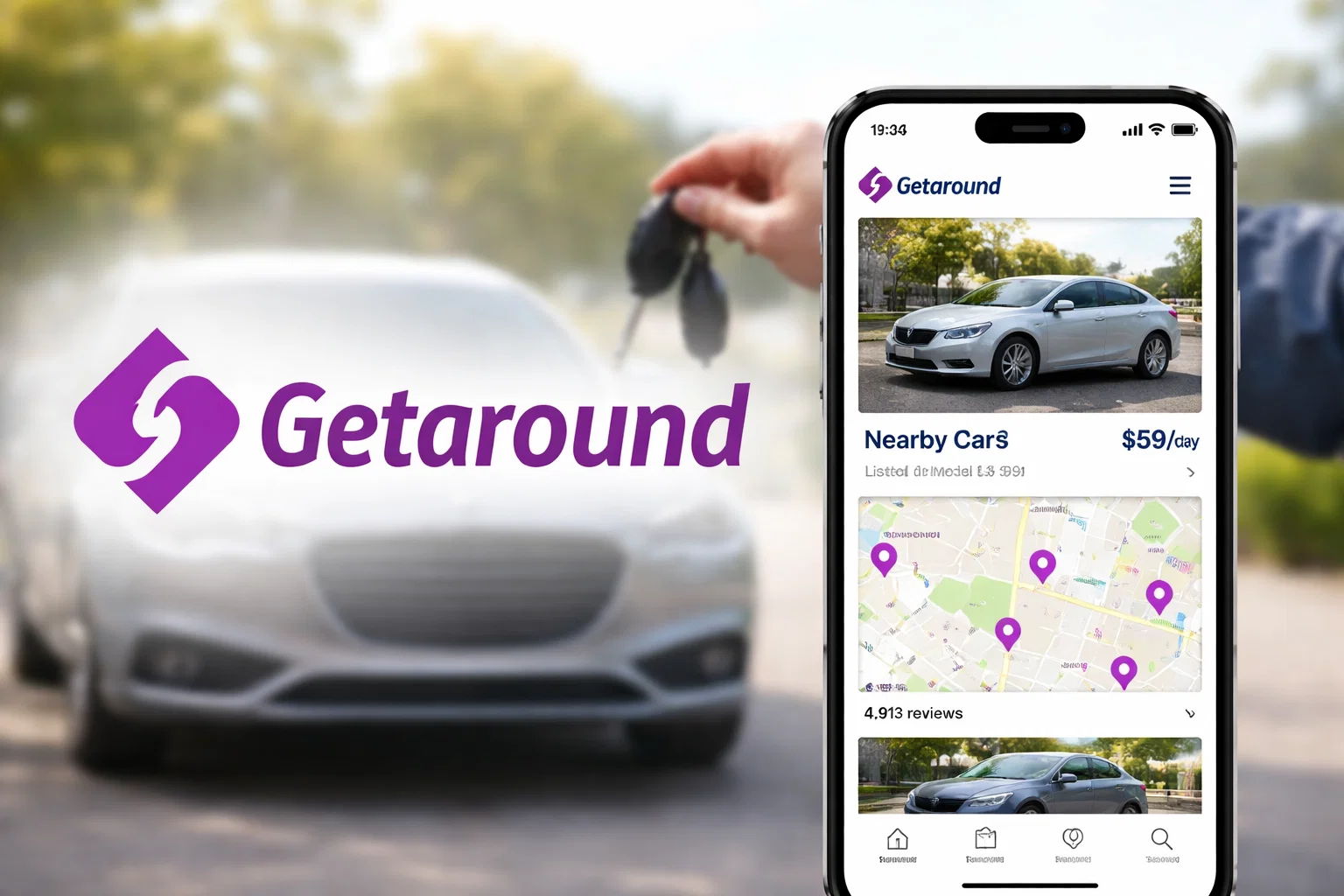
Imagine you need a car for just a few hours—to run errands, attend a meeting, or take a quick day trip—but traditional car rentals feel expensive, slow, and paperwork-heavy. You open Getaround, find a nearby car, unlock it with your phone, and drive away within minutes. That convenience is exactly what Getaround is built for.
Getaround is a peer-to-peer car sharing platform that allows car owners to rent out their vehicles to others on an hourly or daily basis. Instead of owning large fleets like traditional rental companies, Getaround turns privately owned cars into on-demand rentals using mobile technology.
What makes Getaround appealing is speed and flexibility. Cars are often available near where people live or work, bookings can be short-term, and the entire experience—from unlocking the car to returning it—happens through the app.
By the end of this guide, you’ll understand what Getaround is, how it works step by step, how it makes money, its core features, and why many founders aim to build Getaround-like car-sharing platforms—and how Miracuves can help bring such ideas to life.
What Is Getaround? The Simple Explanation
Getaround is a peer-to-peer car sharing platform that lets people rent cars from nearby owners for short periods—often by the hour or day. In simple terms, it turns privately owned vehicles into on-demand rentals that you can book and unlock using a mobile app.
The Core Problem Getaround Solves
Traditional car rentals are designed for multi-day trips, airport pickups, and paperwork-heavy processes. They’re often inconvenient if you just need a car for a few hours. Getaround solves this by offering quick, local access to cars without long queues, contracts, or fixed rental periods.
Target Users and Use Cases
Getaround is commonly used by:
• City residents who don’t own a car
• People needing a car for errands or short trips
• Travelers looking for flexible local transportation
• Car owners who want to earn from idle vehicles
• Users who prefer hourly rentals over daily plans
Current Market Position
Getaround is a recognized name in the car-sharing and mobility space in the USA, especially in urban areas where car ownership is expensive and parking is limited. It competes with traditional rental companies and other car-sharing services by focusing on convenience and short-term access.
Why It Became Successful
Getaround became popular because it removed friction. Cars are nearby, bookings take minutes, pricing is flexible, and unlocking the car doesn’t require meeting the owner. This makes driving feel as easy as booking a ride—while still giving users full control of the vehicle.
How Getaround Works — Step-by-Step Breakdown
For Renters (People Booking Cars)
Account Creation
Users create an account using email or phone number and complete identity verification, including a valid driver’s license. This ensures only eligible drivers can book cars.
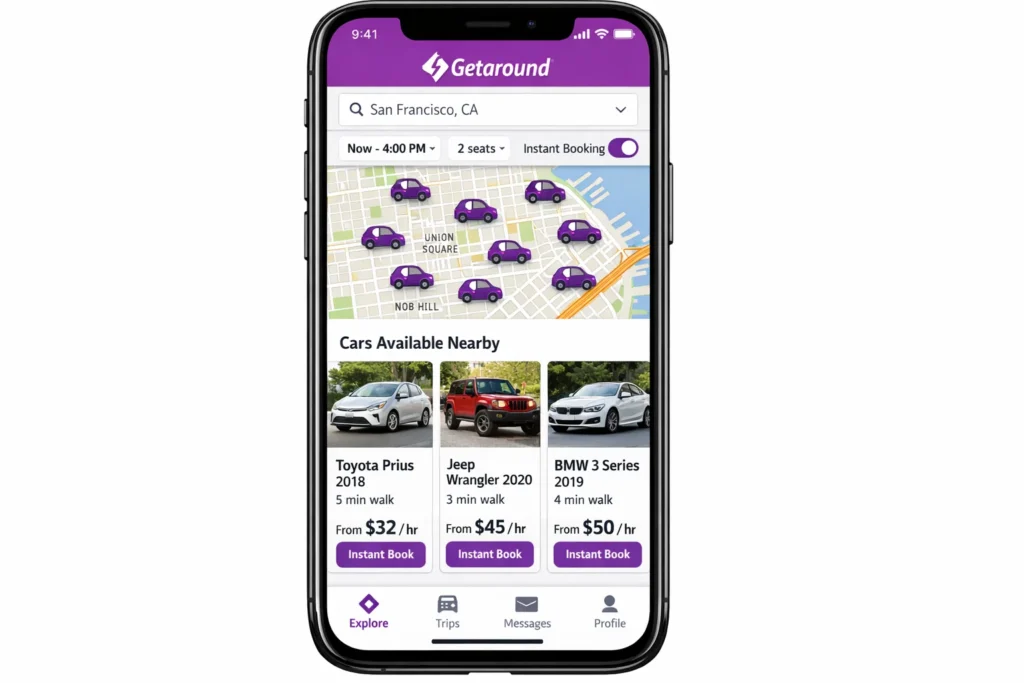
Finding a Car
After signing in, users see a map with nearby available cars. Each listing shows:
- Car model and features
- Hourly or daily price
- Availability window
- Pickup location
- Owner rules and requirements
Booking a Car
Users select a car, choose the rental duration (hourly or daily), review the price, and confirm the booking. Insurance and fees are typically included in the shown price.
Unlocking & Driving
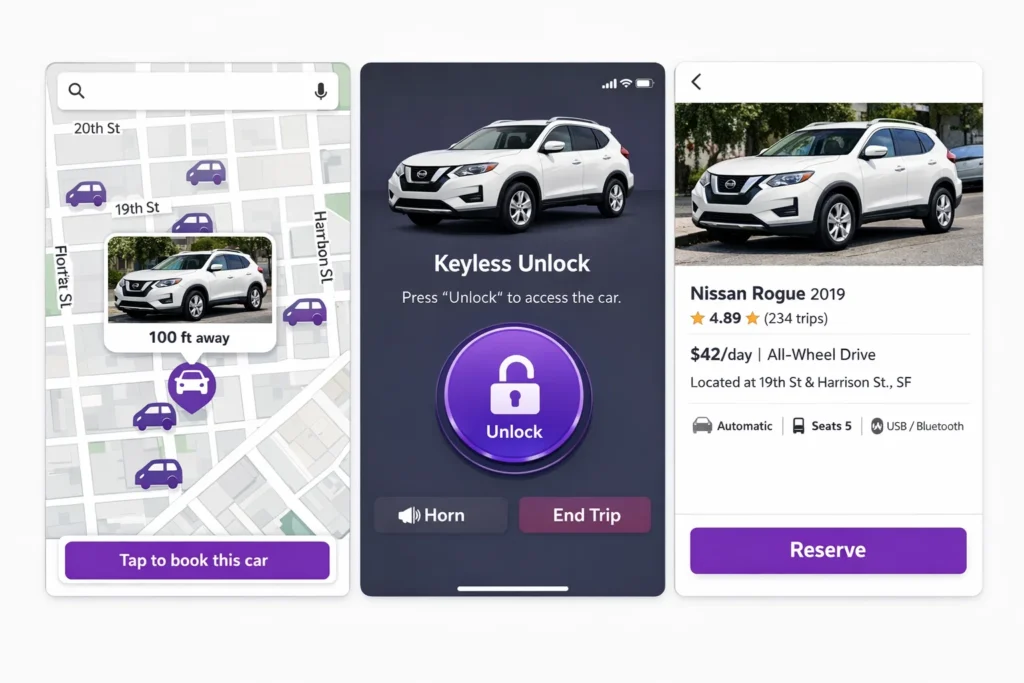
At the start time, users unlock the car directly from the app using in-car technology. No key exchange is needed. They drive for the booked duration just like their own car.
Returning the Car
At the end of the trip, users park the car in the designated area, lock it via the app, and end the rental. The app finalizes billing automatically.
Example Renter Journey
User signs up → finds nearby car → books instantly → unlocks via app → drives → parks and locks → trip ends.
For Car Owners (Hosts)
Vehicle Onboarding
Car owners list their vehicles by adding details, availability, pricing, and location. Eligible cars are equipped with Getaround’s in-car technology for remote access.
Setting Availability & Pricing
Owners control when their car is available and set hourly or daily rates. This flexibility lets them earn without long-term commitments.
Earning & Payouts
Owners earn money each time their car is rented. Getaround deducts a platform fee and pays the remainder to the owner on a scheduled basis.
Technical Overview (Simplified)
Getaround operates through a real-time mobility platform that includes:
- Mobile apps for renters and car owners
- GPS-based car discovery
- Remote lock/unlock hardware integration
- Scheduling and availability management
- Secure payments and insurance handling
All components work together to make car access instant and self-service.
Getaround’s Business Model Explained
How Getaround Makes Money
Getaround operates a peer-to-peer marketplace business model. It doesn’t own cars. Instead, it enables private car owners to rent out their vehicles and earns revenue by taking a portion of each rental transaction.
The main revenue streams include:
- Platform service fees: A percentage taken from each completed rental
- Insurance and protection fees: Built into rental pricing to cover trips
- Optional add-ons: Extras like extended usage or special vehicle categories
This asset-light model allows Getaround to scale without maintaining a fleet.
Pricing Structure
Getaround uses hourly and daily pricing, which is ideal for short-term needs. Pricing depends on:
- Vehicle type and model
- Rental duration (hourly vs daily)
- Location and local demand
- Owner-set base price with platform adjustments
Users see the total price before booking, which usually includes insurance and fees.
Commission / Fee Breakdown
- Renters pay the listed rental price
- Getaround deducts its platform fee
- The remaining amount is paid to the car owner
Exact fee percentages vary by market and vehicle category.
Market Size and Demand
Urban mobility is shifting away from ownership toward access. Demand for car sharing is driven by:
- High cost of car ownership in cities
- Limited parking availability
- Increased comfort with app-based mobility
- Need for occasional, short-term car access
Getaround benefits from frequent, short-duration rentals that increase platform activity.
Profitability Insights
Getaround improves margins by:
- Increasing utilization of listed vehicles
- Encouraging repeat rentals
- Expanding into dense urban areas
- Automating access and operations through technology
Revenue Model Breakdown
| Revenue Stream | Description | Who Pays | Nature |
|---|---|---|---|
| Platform Fees | Fee per rental | Renters/Owners | Transaction-based |
| Insurance Fees | Trip protection coverage | Renters | Embedded |
| Add-ons | Optional services | Renters | Variable |
Key Features That Make Getaround Successful
Instant car access (no key exchange)
One of Getaround’s biggest advantages is keyless entry. Users unlock and lock cars directly from the app, which removes the need to meet the owner or visit a rental counter.
Hourly and short-term rentals
Unlike traditional rental companies, Getaround supports hourly rentals, making it ideal for errands, meetings, or short trips instead of full-day bookings.
Nearby car discovery
The app shows cars available close to the user’s location, reducing travel time and making rentals feel truly on-demand.
Wide range of vehicles
Users can choose from economy cars, SUVs, electric vehicles, and specialty cars depending on availability, budget, and trip needs.
Owner-controlled availability and pricing
Car owners decide when their vehicle is available and how much to charge, giving them full control and flexibility.
Built-in insurance coverage
Insurance is typically included in the booking price, which simplifies the experience and reduces risk for both renters and owners.
Seamless in-app payments
All payments are handled digitally through the app. There’s no cash, paperwork, or manual billing.
Ratings and trust system
Renters and car owners rate each other after trips. This two-sided review system builds trust and accountability across the platform.
Flexible urban mobility solution
Getaround works especially well in cities where owning a car is expensive or inconvenient, offering access without long-term commitment.
Asset-light scalability
Because Getaround doesn’t own cars, it can scale city by city by onboarding owners rather than building physical fleets.
The Technology Behind Getaround
Tech stack overview (simplified)
Getaround is built as a real-time mobility platform that combines mobile apps, cloud services, and in-car hardware. The core layers include:
- Renter app: discovery, booking, unlock/lock, payments, trip management
- Owner app/dashboard: listings, pricing, availability, earnings
- Platform backend: matching, scheduling, billing, insurance, trust
- In-car hardware layer: remote access and telemetry
Keyless access and in-car technology
A defining technical feature is remote lock/unlock. Cars are equipped with a small device connected to the vehicle that allows the app to:
- Unlock/lock doors at trip start/end
- Verify trip timing and authorization
- Track basic vehicle status (availability, location)
This eliminates key handoffs and enables instant, self-service rentals.
Location, discovery, and availability
Getaround uses GPS to show nearby available cars in real time. The system manages:
- Owner-set availability windows
- Overlap prevention for bookings
- Dynamic updates when trips start or end
This makes short, spontaneous rentals possible.
Pricing and billing engine
The pricing system supports:
- Hourly and daily rates
- Owner-set base pricing
- Platform fees and protections
- Overtime handling and extensions
Billing is finalized automatically at trip completion, reducing disputes.
Insurance and trip protection flows
Trips typically include protection coverage. Technically, this requires:
- Trip state tracking (start, in-progress, end)
- Clear boundaries for coverage periods
- Event logs for incidents or claims
Accurate trip state management is essential for trust and compliance.
Trust, safety, and verification
Getaround’s platform enforces trust through:
- Driver identity and license verification
- Secure payments and audit logs
- Ratings and reviews after each trip
- Monitoring for misuse or policy violations
These systems help protect owners, renters, and the platform.
Scalability approach
Demand spikes around weekends, holidays, and events. To handle this, platforms like Getaround rely on:
- Scalable search and map services
- Asynchronous booking and notification flows
- Fault isolation between booking, access, and billing services
Why this technology matters for business
Getaround’s tech removes friction from car access. By automating discovery, access, billing, and trust, it turns idle vehicles into revenue-generating assets—and makes short-term car use feel effortless for renters.
Getaround’s Impact & Market Opportunity
Industry disruption caused
Getaround helped change how people think about car access. Instead of owning a car or dealing with traditional rental counters, users could access a nearby vehicle instantly for just a few hours. This made short, spontaneous trips practical without long-term commitments.
It also unlocked a new income stream for car owners by turning idle vehicles into earning assets, helping improve overall vehicle utilization in cities.
Market size and growth drivers
The car-sharing and shared mobility market continues to grow due to:
- High cost of car ownership in urban areas
- Limited parking and congestion in cities
- Increased comfort with app-based mobility
- Environmental awareness and shared usage models
- Demand for flexible, short-term transportation
As cities push toward reduced private car ownership, access-based models like Getaround gain relevance.
User demographics and behavior
Getaround users often include:
- Urban residents without cars
- Professionals needing occasional transport
- Students and young adults
- Travelers looking for local mobility
- Cost-conscious users avoiding long-term rentals
Car owners on the platform are typically:
- City residents with underused vehicles
- Owners looking to offset car ownership costs
- People comfortable with app-based sharing
A common behavior pattern is repeat short trips, such as errands, weekend needs, or one-off appointments.
Geographic presence
Getaround-style platforms work best in:
- Dense urban and suburban areas
- Cities with limited parking
- Locations with strong smartphone adoption
- Areas where traditional rentals are inconvenient
Urban density makes nearby car availability more likely and improves platform liquidity.
Future projections
Car sharing platforms are evolving toward:
- More electric and hybrid vehicles
- Smarter pricing based on demand and time
- Deeper integration with public transit
- Improved in-car technology and diagnostics
- Subscription-style access models
Opportunities for entrepreneurs
There are strong opportunities to build Getaround-like platforms for:
- City-specific or regional car sharing
- Electric vehicle–only sharing networks
- Corporate or campus car sharing
- Residential community car access
- Emerging markets with low car ownership
This massive success is why many founders explore car-sharing platforms—once access becomes easy and reliable, users rethink the need to own a car at all.
Building Your Own Getaround-Like Platform
Why businesses want Getaround-style car sharing platforms
Getaround proves that access can replace ownership—especially in cities. Entrepreneurs are drawn to this model because:
- Vehicles are high-value idle assets that can be monetized
- Demand is recurring for short, local trips
- The platform scales without owning cars
- Technology automates access, billing, and trust
- Urban mobility policies increasingly favor shared use
Key considerations before development
If you’re planning to build a Getaround-like platform, these decisions matter early:
- Market focus: city, region, campus, residential community
- Vehicle onboarding rules and eligibility
- In-car hardware strategy (keyless access)
- Pricing model: hourly, daily, subscriptions
- Insurance and protection coverage handling
- Trust systems: driver verification, ratings, misuse prevention
- Parking and return rules (fixed vs flexible zones)
Cost Factors & Pricing Breakdown
Getaround-Like App Development — Market Price
| Development Level | Inclusions | Estimated Market Price (USD) |
|---|---|---|
| Basic Car Sharing MVP | Core web + mobile-ready app for listing and booking cars, owner and renter registration & login, basic KYC, simple car profiles (photos, description, pricing), availability calendar, location mapping, booking request/approval flow, basic notifications, standard admin panel, simple reports | $60,000 |
| Mid-Level P2P Car Sharing Platform | Advanced search & filters (location, price, vehicle type, transmission, features), instant booking, pricing rules (per hour/day, minimums), owner dashboard, renter trip history, in-app chat, reviews & ratings, payment and payout flows (via your partners), dispute flags, analytics dashboard, polished mobile-first UX (web + apps) | $140,000 |
| Advanced Getaround-Level Mobility Sharing Ecosystem | Large-scale multi-city P2P car sharing network, dynamic pricing & discount rules, complex availability and fleet management, insurance and damage workflows (via partners), advanced trust & safety and fraud checks, rich review & reputation system, growth & referral tooling, cloud-native scalable architecture | $240,000+ |
Getaround-Style Car Sharing Platform Development
The prices above reflect the global market cost of developing a Getaround-like peer-to-peer car sharing platform — typically ranging from $60,000 to over $240,000, with a delivery timeline of around 4–12 months for a full, from-scratch build. This usually includes owner and renter apps, listing and booking flows, pricing and availability logic, payments and payouts, trust & safety features, reviews & ratings, analytics, and production-grade infrastructure for multi-city operations.
Miracuves Pricing for a Getaround-Like Custom Platform
Miracuves Price: Starts at $13,999
This is positioned for a feature-rich, JS-based Getaround-style car sharing platform that covers car listing and onboarding, renter registration and verification (via your KYC providers), availability calendars, search and booking flows, in-app chat and notifications, secure payments & payouts (via your payment partners), trip history, reviews & ratings, core analytics, and a modern admin console plus customer-facing mobile apps. From this foundation, the platform can be extended into dynamic pricing, insurance and claims workflows, advanced trust & safety controls, and growth/referral tooling as your mobility marketplace scales.
Note: This includes full non-encrypted source code (complete ownership), complete deployment support, backend & API setup, admin panel configuration, and assistance with publishing on the Google Play Store and Apple App Store—ensuring you receive a fully operational car sharing ecosystem ready for launch and future expansion.
Delivery Timeline for a Getaround-Like Platform with Miracuves
For a Getaround-style, JS-based custom build, the typical delivery timeline with Miracuves is 30–90 days, depending on:
- Depth of car sharing features (availability rules, pricing logic, trip flows, etc.)
- Number and complexity of integrations (payments & payouts, KYC, mapping, insurance partners)
- Complexity of trust & safety, dispute handling, and rating/review flows
- Scope of web portal, mobile apps, branding requirements, and long-term scalability plans
Tech Stack
We preferably will be using JavaScript for building the entire solution (Node.js/Nest.js/Next.js for the web backend + frontend) and Flutter / React Native for mobile apps, considering speed, scalability, and the benefit of one codebase serving multiple platforms.
Other technology stacks can be discussed and arranged upon request when you contact our team, ensuring they align with your internal preferences, compliance needs, and infrastructure choices.
Essential features to include
A strong Getaround-style MVP should include:
- User onboarding with driver verification
- Vehicle listings with availability and pricing
- Map-based discovery of nearby cars
- Hourly/daily booking flows
- Keyless unlock/lock via app
- Automated billing and payouts
- Ratings and reviews for trust
- Admin panel for trips, vehicles, users, and incidents
High-impact extensions you can add later:
- Subscription access plans
- EV-only fleets and charging integration
- Corporate or community car sharing
- Dynamic pricing for peak demand
- Advanced vehicle diagnostics and telemetry
Read More :- The Ultimate Guide to Starting a Car Rental Business
Conclusion
Getaround shows how technology can turn everyday assets into shared, on-demand services. By removing keys, paperwork, and long rental commitments, it made car access fast, flexible, and city-friendly—especially for people who don’t want the cost and responsibility of ownership.
For entrepreneurs, Getaround is a strong example of how combining mobile apps, IoT-style hardware, and trust systems can unlock entirely new business models. When access becomes easier than ownership, platforms like this naturally fit into modern urban lifestyles.
FAQs :-
What is Getaround used for?
Getaround is used for short-term car rentals, often by the hour or day, allowing people to access nearby cars without owning one.
How does Getaround make money?
Getaround earns revenue by taking a platform fee from each rental. Insurance and protection costs are usually built into the rental price.
Do I need to meet the car owner?
No. Getaround uses keyless access technology, so renters unlock and lock cars directly through the app.
Is insurance included?
Yes. Rentals typically include insurance or protection coverage during the booked trip, simplifying the experience for renters and owners.
Who owns the cars on Getaround?
Cars are owned by individual car owners, not the platform. Getaround simply facilitates sharing and rentals.
Can I rent a car by the hour?
Yes. One of Getaround’s main advantages is hourly rentals, which are ideal for short trips and errands.
Where does Getaround work best?
Getaround works best in urban and suburban areas where car ownership is costly and short-term access is valuable.
How are car owners paid?
Car owners earn money from each rental. Getaround deducts its platform fee and pays the remainder to the owner.
What makes Getaround different from traditional rental companies?
Getaround offers faster booking, nearby cars, hourly pricing, and no paperwork, unlike traditional rental services.
Can I build an app like Getaround?
Yes. With the right technology for booking, keyless access, insurance handling, and trust systems, Getaround-style platforms can be built.
How can Miracuves help build a Getaround-like platform?
Miracuves helps founders build Getaround-style car-sharing platforms in 30-90 days, offering booking engines, keyless access integrations, payment systems, trust workflows, and scalable admin tools—fully customizable for your target market.