


Imagine having an idea in your head—a surreal landscape, a futuristic character, or a cinematic illustration—but no design skills to bring it to life. Instead of learning complex tools or hiring a designer, you simply describe what you want in words, and within seconds, detailed artwork appears. That’s the experience Midjourney delivers.
Midjourney is an AI-powered image generation platform that transforms text prompts into high-quality visuals. Artists, designers, marketers, and creators use it to produce illustrations, concept art, social media visuals, and experimental artwork by simply describing what they want to see.
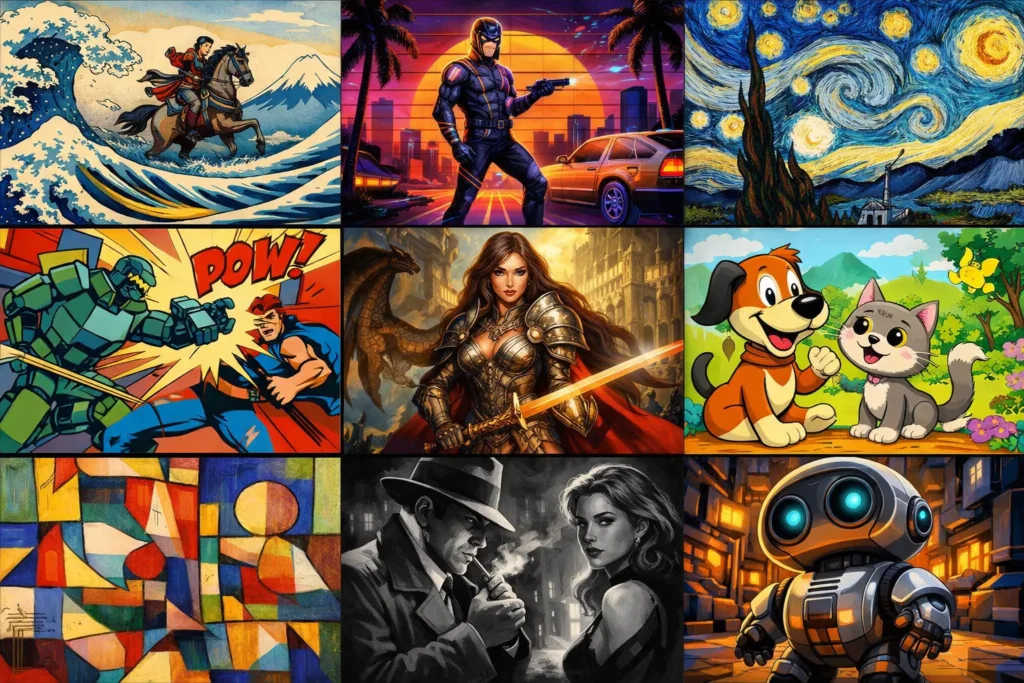
What makes Midjourney stand out is its focus on artistic quality and style. Rather than aiming only for realism, it excels at producing visually striking, imaginative, and aesthetic images that often feel handcrafted.
By the end of this guide, you’ll clearly understand what Midjourney is, how it works step by step, its business model, key features, the technology behind it, and why many entrepreneurs are inspired to build Midjourney-like AI platforms—and how Miracuves can help make that happen.
What Is Midjourney? The Simple Explanation
Midjourney is an AI image generation platform that creates images from text descriptions. In simple terms, you type what you imagine—such as a scene, object, style, or mood—and Midjourney turns those words into detailed, artistic visuals.
The Core Problem Midjourney Solves
Creating high-quality visuals usually requires design skills, time, and expensive software. Midjourney removes these barriers by:
- Turning ideas into images instantly
- Eliminating the need for advanced design skills
- Speeding up creative experimentation
- Making visual creation accessible to anyone
It allows creators to focus on ideas and imagination, not technical execution.
Target Users and Use Cases
Midjourney is commonly used by:
• Digital artists and illustrators
• Graphic designers and creative agencies
• Marketers creating visual content
• Game and concept artists
• Writers and storytellers visualizing worlds
• Social media creators and hobbyists
Current Market Position
Midjourney is positioned as a creativity-first AI art platform. It’s widely known for producing visually rich, stylized, and artistic images rather than purely realistic outputs, which sets it apart from many other image generators.
Why It Became Successful
Midjourney gained popularity because of its aesthetic quality and creative depth. Users consistently found its images more expressive and visually compelling, making it especially popular in art, design, and creative communities.
How Midjourney Works — Step-by-Step Breakdown
For Users (Creators & Designers)
Getting started
Users access Midjourney through a chat-based interface, where commands are used to generate images. Instead of traditional design tools, everything begins with text prompts—short or detailed descriptions of what the user wants to create.
Writing a prompt
A prompt usually includes:
- Subject (what the image should show)
- Style or artistic direction (realistic, cinematic, surreal, illustration, etc.)
- Mood, lighting, or color preferences
- Optional details like camera angle or composition
For example, a user might describe a scene, an art style, and an atmosphere all in one prompt.
Image generation
Once the prompt is submitted, Midjourney:
- Interprets the text description
- Translates words into visual patterns
- Generates multiple image variations
- Presents results within seconds
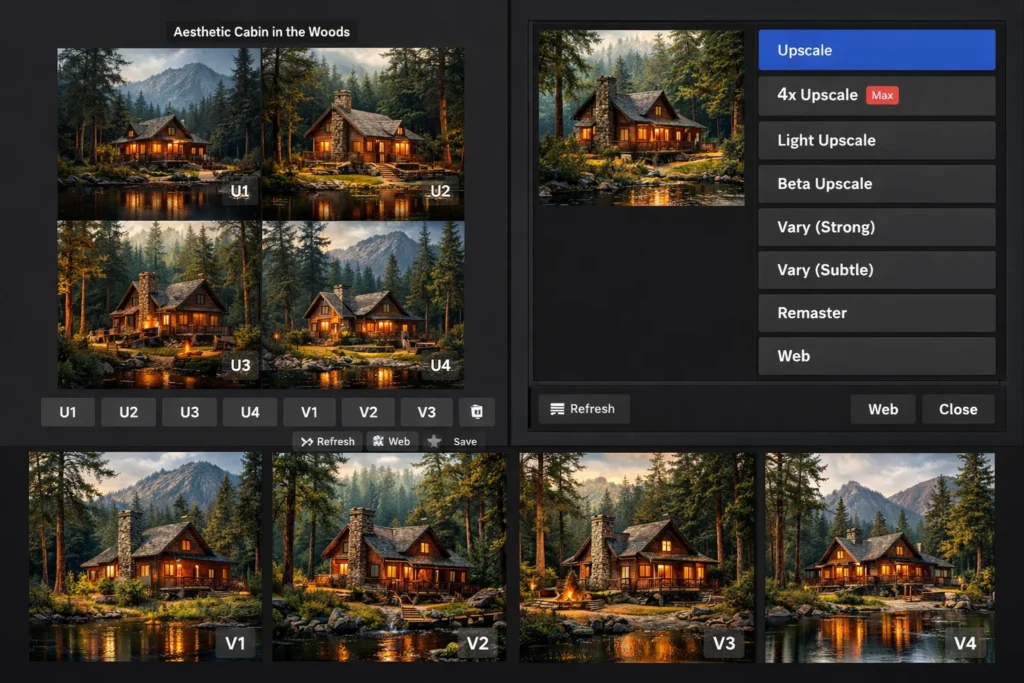
Users typically receive a grid of images to choose from.
Refining results
After the first output, users can:
- Upscale an image for higher quality
- Create variations of a selected image
- Adjust prompts to refine style or details
- Iterate multiple times to reach the desired look
This iterative process makes Midjourney feel like collaborating with an AI artist.
Typical user journey
User writes prompt → AI generates image options → user selects a favorite → refines or upscales → final artwork is produced.
For Advanced Users (Creative Control)
Prompt engineering
Experienced users learn how to structure prompts more precisely to control:
- Artistic style
- Composition
- Level of detail
- Consistency across multiple images
This makes Midjourney powerful for professionals who want repeatable visual styles.
Technical Overview (Simplified)
Midjourney works by combining:
- A text understanding system that reads prompts
- A generative image model trained on visual patterns
- An iteration engine that produces multiple variations
- Style interpretation layers for artistic output
The system focuses heavily on aesthetics and visual coherence rather than raw photorealism.
Midjourney’s Business Model Explained
How Midjourney Makes Money
Midjourney operates on a subscription-based model. Instead of offering free, unlimited image generation, users pay for access based on how much they want to create and how fast they want results.
The platform focuses entirely on paid creative usage, not advertising or data monetization.
Primary revenue streams include:
- Monthly subscriptions: Different plans based on usage volume
- Compute-based access: Higher tiers allow more image generations and faster processing
- Creator-focused plans: Designed for artists, designers, and teams who generate images regularly
This model ensures sustainable compute usage while maintaining high output quality.
Pricing Structure
Midjourney pricing generally depends on:
- Subscription tier (basic to advanced)
- Generation limits (how many images you can create)
- Processing priority (standard vs faster generation modes)
Higher plans unlock more creative freedom and speed.
Fee Breakdown
- Monthly or annual subscription fee
- No per-image purchase model
- No ads or commissions
- No extra charges for styles or features within plan limits
This keeps pricing predictable for creators who use the platform frequently.
Market Size and Demand
The demand for AI-generated visuals is growing due to:
- Explosion of digital content and social media
- Need for rapid visual creation in marketing and branding
- Indie creators and small teams needing design output
- Concept art demand in gaming, film, and storytelling
Midjourney sits strongly in the creative economy, serving both professionals and hobbyists.
Profitability Insights
Midjourney improves profitability by:
- Encouraging recurring subscriptions
- Optimizing compute usage through tiered access
- Focusing on high-retention creative users
- Maintaining a lean product without enterprise overhead
Revenue Model Breakdown
| Revenue Stream | Description | Who Pays | Nature |
|---|---|---|---|
| Subscriptions | Monthly access plans | Creators | Recurring |
| Tiered Usage | Higher limits & speed | Power users | Scaled |
| Creative Economy | Art & design output | Professionals | Long-term |
Key Features That Make Midjourney Successful
1) Text-to-image generation that feels “artist-first”
Midjourney’s main feature is turning text prompts into high-quality images, but what makes it special is the artistic feel. Results often look stylized, cinematic, or illustration-ready rather than plain or generic.
2) Multiple variations per prompt
Instead of giving one result, Midjourney typically produces multiple options at once. This helps users pick the closest match and iterate quickly without rewriting everything.
3) Upscaling for higher-quality output
Users can take a chosen image and upscale it for improved detail and clarity. This is important for creators who want output that’s closer to “final use” quality.
4) Variation tools for controlled refinement
Once you find an image you like, Midjourney makes it easy to generate variations that stay close to the original idea—so you can refine style, composition, or details gradually.
5) Strong style interpretation
Midjourney is known for understanding style cues well—like “cinematic lighting,” “anime,” “watercolor,” “3D render,” or “retro poster.” This gives creators more control over mood and aesthetic.
6) High creative depth for concept art
It’s widely used for concept art because it can create imaginative scenes, characters, environments, and product ideas quickly—useful in gaming, film, and storytelling workflows.
7) Fast iteration loop
The workflow is built for experimentation: prompt → results → pick → refine → repeat. This “creative loop” is why users can explore dozens of ideas in a short time.
8) Community-driven learning
Many users learn by seeing how others prompt and what results they get. This creates a natural ecosystem where techniques spread and creative quality improves across the community.
9) Consistency tools for themed outputs
Creators often need a consistent look across multiple images (like a series). Midjourney supports methods that help keep style and theme consistent through iterative prompting.
10) Broad creative use cases
Midjourney is used for:
- Social media visuals
- Branding concepts and mood boards
- Book and album cover concepts
- Product mockups and ad creatives
- Story and character visualization
The Technology Behind Midjourney
Tech stack overview (simplified)
Midjourney is built on generative AI for images, combining language understanding with a model that can create new visuals from scratch. At a high level, the system includes:
- A prompt understanding layer (reads your text)
- A generative image model (creates the visuals)
- An iteration engine (variations, upscales, refinements)
- Quality and safety controls
- Cloud compute to process image generation fast
How text becomes an image
When you type a prompt, Midjourney:
- Identifies the main subject (person, object, scene)
- Interprets style signals (cinematic, watercolor, anime, etc.)
- Converts the prompt into a “visual plan”
- Generates an image that matches patterns learned during training
So it’s not pulling an existing image—it’s generating a new one based on learned visual relationships.
The generation process (in simple terms)
Midjourney creates images through an iterative process where the model gradually “builds” an image from noise into a clear picture. Each step improves structure, details, lighting, and composition until the final result looks coherent.
This is why it can create multiple variations—tiny differences in the generation path can lead to different compositions and details.
Why variations work so well
When you ask for variations, Midjourney keeps the “core idea” but explores nearby possibilities:
- Slightly different pose or angle
- Different lighting and mood
- More or less detail
- Alternative compositions
This gives creators creative options without restarting from zero.
Upscaling and refinement
Upscaling is the process of producing a higher-resolution, more detailed version of a selected output. Behind the scenes, it adds clarity, texture, and fine details so the image is closer to production use.
Style understanding
Midjourney is especially strong at style because it learns visual patterns like:
- Brush strokes and illustration textures
- Cinematic lighting and depth
- Color grading and mood
- Composition styles (poster, portrait, wide scene)
That’s why results often feel “designed,” not random.
Data handling and safety
Image generation platforms typically add safeguards to reduce harmful or disallowed outputs. These controls help keep the platform usable for broad creative audiences while limiting misuse.
Scalability approach
Because image generation is compute-heavy, Midjourney relies on scalable cloud infrastructure to:
- Handle large numbers of requests
- Keep generation times reasonable
- Offer faster generation for higher-tier users
Mobile/web experience vs backend compute
The user experience may feel simple (type prompt, get images), but the heavy work happens on powerful servers. The front end handles prompts and controls, while the backend runs the model and returns results.
Why this tech matters for business
Midjourney’s technology turns creative production into a fast, repeatable workflow. For businesses, this means faster ideation, cheaper concept creation, and more experimentation—without needing a full design team for every early-stage idea.
Midjourney’s Impact & Market Opportunity
Industry impact
Midjourney has reshaped how people think about visual creation. It showed that high-quality, artistic imagery doesn’t have to come from years of design training or expensive software. By turning ideas into visuals instantly, it lowered the barrier to entry for creativity and accelerated how fast concepts can be explored.
It also shifted expectations in creative industries—designers, marketers, and storytellers now see AI as a creative collaborator, not just an automation tool.
Market demand and growth drivers
Demand for Midjourney-style platforms is driven by:
- Rapid growth of digital content and social media
- Need for fast visual ideation in marketing and branding
- Rise of indie creators, startups, and solo designers
- Concept art demand in gaming, film, and publishing
- Businesses seeking faster design turnaround without large teams
As visual content becomes central to communication, AI-generated imagery continues to gain adoption.
User segments and behavior
Midjourney attracts a wide range of users:
- Professional designers and creative agencies
- Indie creators and freelancers
- Marketers and brand teams
- Writers and storytellers visualizing ideas
- Hobbyists experimenting with art
A common behavior pattern is high iteration. Users generate, refine, and regenerate images many times in a single session, driving strong engagement and subscription retention.
Creative community effect
Midjourney benefits from a strong community-driven ecosystem. Users share prompts, styles, and results, which helps others learn faster and raises the overall creative quality on the platform.
Future direction
Platforms like Midjourney are evolving toward:
- Better control over consistency across images
- Higher resolution and production-ready outputs
- More customization for brands and teams
- Integration into creative workflows and tools
- Expanded use in video, animation, and 3D concepts
Opportunities for entrepreneurs
There are strong opportunities to build Midjourney-inspired platforms for:
- Niche creative markets (fashion, interiors, architecture)
- Brand-focused image generation tools
- Product visualization and mockups
- Educational creative tools
- AI-assisted design platforms for SMBs
This growing demand explains why AI-powered creativity is becoming one of the most valuable segments in the AI market.
Read More :- How to Develop an AI Chatbot Platform
Building Your Own Midjourney-Like Platform
Why businesses want Midjourney-style AI image platforms
Midjourney proves that speed + creativity = massive demand. Businesses are attracted to this model because:
- Visual content is needed everywhere (marketing, branding, social, products)
- AI removes dependence on large design teams
- Iteration is faster than traditional design workflows
- Subscription models create predictable recurring revenue
- Creators are willing to pay for quality and aesthetics
Instead of replacing designers, these platforms amplify creative output.
Key considerations before development
If you plan to build a Midjourney-like platform, you should decide early on:
- Your target audience (artists, marketers, SMBs, agencies, hobbyists)
- Style focus (artistic, realistic, branded, niche-specific)
- Prompt complexity vs simplicity
- Image resolution and output quality
- Usage limits and fair-use controls
- Content moderation and safety boundaries
- Community vs private creation workflows
Clear positioning is critical—generic image generators struggle without a creative edge.
Read Also :- How to Market an AI Chatbot Platform Successfully After Launch
Cost Factors & Pricing Breakdown
Midjourney-Like App Development — Market Price
| Development Level | Inclusions | Estimated Market Price (USD) |
|---|---|---|
| 1. Basic AI Image Generation MVP | Core web interface for text-to-image prompts, user registration & login, basic prompt → image pipeline via one image model/API, simple image gallery & download, basic rate limiting, minimal safety filters (NSFW blocklists), standard admin panel, simple usage analytics | $90,000 |
| 2. Mid-Level AI Image Studio Platform | Multi-model or multi-style support, richer prompt controls (aspect ratio, steps, variations), user workspaces, favorites & collections, basic upscaling, queue management, stronger safety & moderation hooks, credits/subscription billing integration, analytics dashboard, polished web UI and mobile-ready experience | $180,000 |
| 3. Advanced Midjourney-Level Generative Image Ecosystem | Large-scale multi-tenant platform with high-concurrency image generation, style presets & custom models, advanced upscaling & variation workflows, community features (feeds, comments, rating), team/collab spaces, fine-grained rate limiting & quotas, detailed observability and moderation tooling, cloud-native scalable architecture | $280,000+ |
Midjourney-Style AI Image Generation Platform Development
The prices above reflect the global market cost of developing a Midjourney-like AI image generation platform — typically ranging from $90,000 to over $280,000, with a delivery timeline of around 4–12 months for a full, from-scratch build. This generally includes integration with one or more diffusion/vision models, prompt → image pipelines, queueing and scaling logic, safety and moderation layers, billing/usage tracking, community or workspace features, and production-grade infrastructure for consumer or prosumer usage at scale.
Miracuves Pricing for a Midjourney-Like Custom Platform
Miracuves Price: Starts at $15,999
This is positioned for a feature-rich, JS-based Midjourney-style AI image generation platform that can include:
- Text-to-image generation via your chosen AI model(s) or APIs
- Prompt controls (styles, aspect ratios, variations) and basic upscaling
- User accounts, workspaces, favorites/collections, and image history
- Usage/credit tracking, with the option to plug in subscriptions or pay-per-use billing
- Core moderation hooks and basic safety filters
- A modern, responsive web interface plus optional companion mobile apps
From this foundation, the platform can be extended into custom style/model support, richer community features (feeds, sharing, rating), advanced observability & moderation dashboards, and multi-tenant SaaS capabilities as your AI product and user base grow.
Note: This includes full non-encrypted source code (complete ownership), complete deployment support, backend & API setup, admin panel configuration, and assistance with publishing on the Google Play Store and Apple App Store—ensuring you receive a fully operational AI image generation ecosystem ready for launch and future expansion.
Delivery Timeline for a Midjourney-Like Platform with Miracuves
For a Midjourney-style, JS-based custom build, the typical delivery timeline with Miracuves is 30–90 days, depending on:
- Depth of generation features (controls, upscaling, variations, styles, etc.)
- Number and complexity of AI model, storage/CDN, billing, and moderation integrations
- Complexity of workspaces, community features, and rate-limiting/usage policies
- Scope of web portal, mobile apps, branding requirements, and long-term scalability targets
Tech Stack
We preferably will be using JavaScript for building the entire solution (Node.js / Nest.js / Next.js for the web backend + frontend) and Flutter / React Native for mobile apps, considering speed, scalability, and the benefit of one codebase serving multiple platforms.
Other technology stacks can be discussed and arranged upon request when you contact our team, ensuring they align with your internal preferences, compliance needs, and infrastructure choices.
Essential features to include
A strong Midjourney-style MVP should include:
- Text-to-image prompt interface
- Multiple image variations per prompt
- Upscale and refinement tools
- Style and mood control options
- Image history and reuse
- Subscription tiers with usage limits
- Fast, intuitive creative workflow
High-impact extensions later:
- Consistent character or brand style control
- Team workspaces and shared libraries
- Commercial usage licensing options
- API access for product integrations
- Expansion into video or 3D generation
Read More :- AI Chat Assistant Development Costs: What Startups Need to Know
Conclusion
Midjourney shows that creativity doesn’t have to be limited by technical skill or tools. By turning imagination into visuals through simple text prompts, it has changed how people explore ideas, design concepts, and tell stories. The focus on artistic quality and experimentation is what keeps users engaged and willing to pay.
For founders and builders, Midjourney is proof that creative-first AI platforms can become powerful businesses. When AI helps people express ideas faster and more beautifully, it becomes a tool users don’t want to give up—opening long-term opportunities in the creative economy.
FAQs :-
What is Midjourney used for?
Midjourney is used to generate AI images from text prompts, including artwork, concept art, illustrations, branding visuals, social media content, and creative experimentation.
How does Midjourney make money?
Midjourney makes money through paid subscription plans that offer different usage limits, speeds, and creative flexibility.
Is Midjourney free to use?
Midjourney makes money through paid subscription plans that offer different usage limits, speeds, and creative flexibility.
What makes Midjourney different from other AI image generators?
Midjourney is known for its artistic style, visual depth, and creative aesthetics, often producing more expressive and stylized images than purely realistic generators.
Do I need design skills to use Midjourney?
No. Anyone can use Midjourney by describing what they want in words. Prompt quality helps, but no formal design skills are required.
Can Midjourney images be used commercially?
Commercial usage depends on the subscription plan. Many creators and businesses use Midjourney outputs for marketing, branding, and product concepts.
How long does it take to generate an image?
Image generation usually takes seconds to a minute, depending on demand and the selected processing mode.
Can I control the style of images?
Yes. Users can guide style, mood, lighting, and composition through prompt wording and refinement tools.
Is Midjourney good for professional designers?
Yes. Many professional designers use Midjourney for ideation, mood boards, and concept exploration before moving to final production tools.
Can I build a platform like Midjourney?
Yes. Midjourney-style platforms can be built by combining text-to-image AI models, prompt handling, iteration tools, and scalable infrastructure.
How can Miracuves help build a Midjourney-like platform?
Miracuves helps founders build AI image generation platforms with text-to-image engines, subscription billing, creative workflows, and full customization—allowing rapid entry into the AI creativity market.