



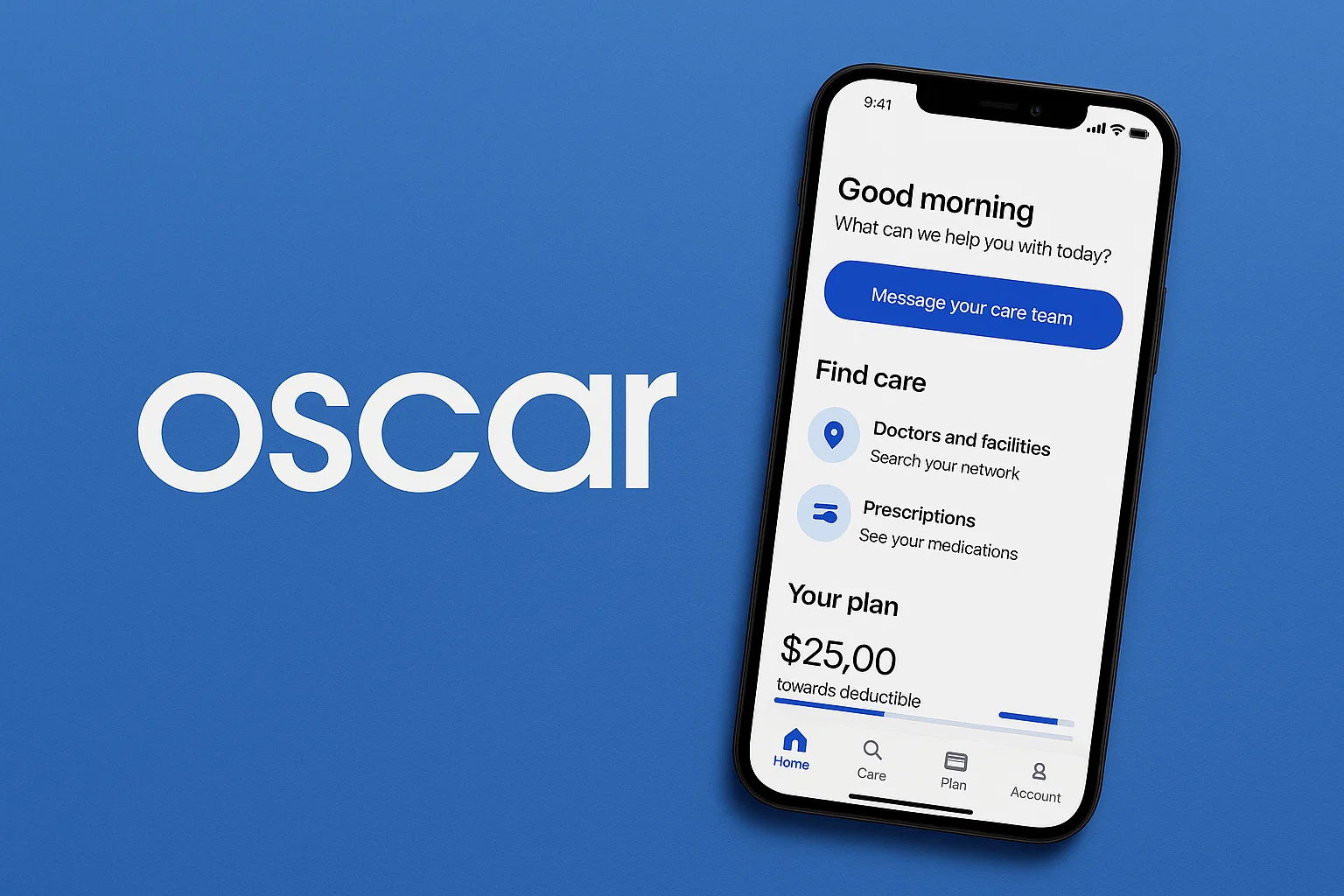
Imagine signing up for health insurance that actually feels like using a modern app—easy enrollment, transparent pricing, a virtual care team, and a mobile-first experience that helps you find doctors, track claims, and talk to clinicians instantly. That’s exactly the problem Oscar Health set out to solve.
Oscar Health launched in 2012 with a mission to simplify health insurance for Americans through technology, design, and personalized care. Today, it’s one of the fastest-growing digital health insurers in the USA, known for its user-friendly experience, virtual care services, and data-driven decision-making.
By the end of this article, you’ll understand what Oscar Health is, how it works, its business model, key features, technology stack, and how entrepreneurs can build similar healthcare platforms with the help of Miracuves.
What Is Oscar Health? The Simple Explanation
Oscar Health is a technology-driven health insurance company in the United States that offers individual, family, Medicare Advantage, and small business health plans. Unlike traditional insurers, Oscar focuses on a digital-first experience—using an app, telemedicine, and personalized care guidance to simplify healthcare for its members.
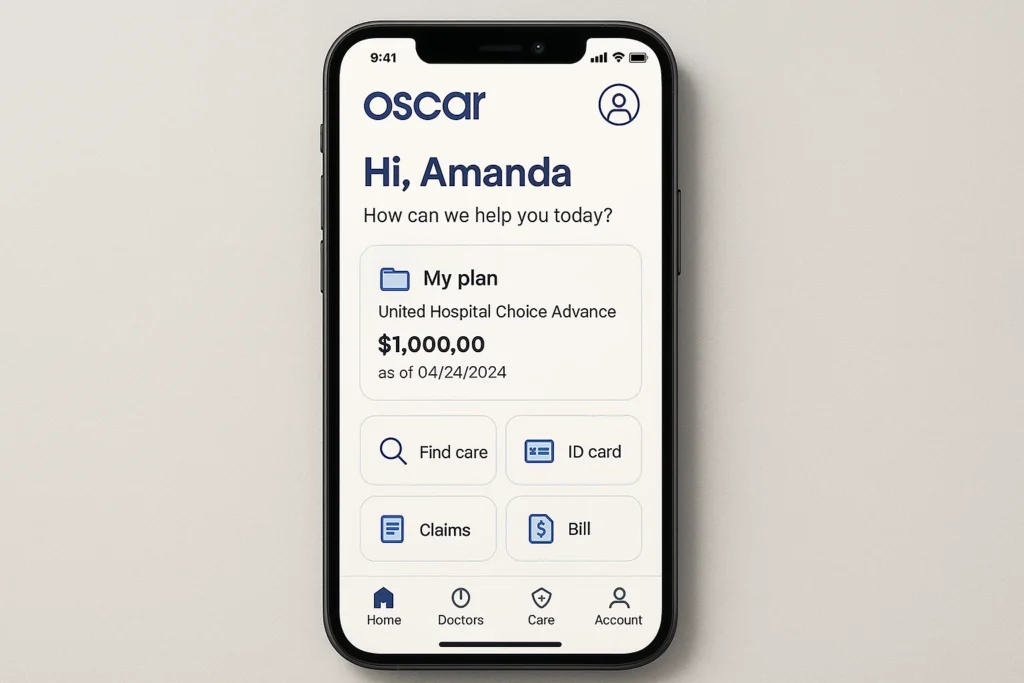
At its core, Oscar Health solves a major problem: health insurance in the U.S. is confusing, time-consuming, and difficult to navigate. Oscar reduces that complexity with easy enrollment, transparent pricing, a modern app, and real-time access to doctors and care teams.
Oscar’s target users include:
• Individuals and families purchasing their own plans
• Medicare-eligible seniors
• Small businesses needing employee coverage
• Members who prefer digital care and virtual doctor visits
As of 2025, Oscar Health covers millions of members across multiple U.S. states and continues to strengthen its position as a leading “insurtech” innovator. Its success comes from its technology-first approach, data-driven care recommendations, and emphasis on user experience.
How Oscar Health Works — Step-by-Step Breakdown
For Members (Users)
Account Creation
Users sign up through the web or mobile app by entering their basic details, selecting a plan, and completing verification. The onboarding flow is designed to be simple, with guidance through eligibility, subsidies, and plan comparison.
Finding Doctors & Care Options
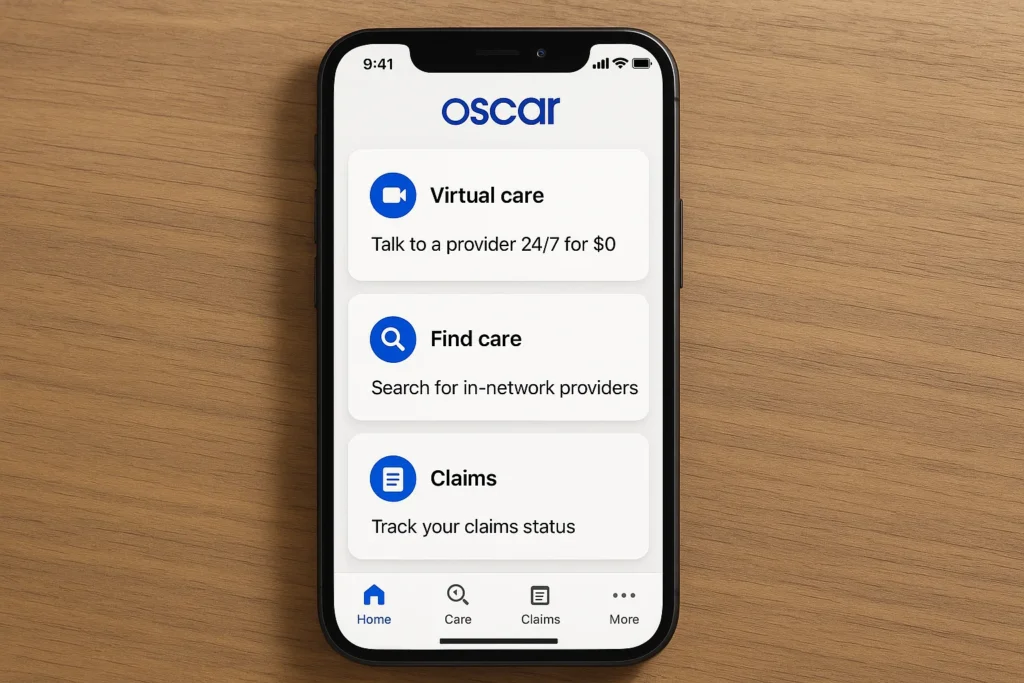
Using the app, members can search for in-network doctors, specialists, labs, and hospitals based on location, availability, or cost. Oscar shows transparent pricing and lets users check coverage instantly.
Virtual Care & Messaging
Oscar offers 24/7 telemedicine for common health issues. Members can chat with a clinician, schedule video visits, receive prescriptions, or ask questions through secure messaging.
Managing Claims & Benefits
Members can track claims in real time, see what’s covered, monitor remaining deductibles, and get alerts about bills. The platform translates insurance jargon into simple language.
Example User Journey
A user feels unwell and opens the app. Instead of visiting a clinic, they request a virtual visit, speak to a doctor within minutes, receive guidance or prescriptions, and then track follow-up care through the same interface.
For Providers
Onboarding
Doctors and clinics join Oscar’s network by completing credentialing, uploading compliance documents, and integrating scheduling systems.
Operating on the Platform
Providers can receive patient requests, conduct virtual visits, manage claims, access patient history, and communicate through secure channels.
Payment Structure
Providers are reimbursed based on negotiated rates. Oscar follows standard insurance reimbursement models but adds digital workflows for faster processing.
Technical Overview (Simple)
Oscar Health works through a modern digital ecosystem:
- A mobile-first app that connects members with doctors, benefits, and care teams
- Algorithms that recommend cost-effective and high-quality care options
- Real-time claims processing and automated notifications
- Telemedicine infrastructure enabling 24/7 virtual care
- APIs for provider systems, pharmacies, and labs
Read Also :- Most Profitable Digital Banking & Fintech Apps to Launch in 2025
Oscar Health’s Business Model Explained
How Oscar Health Makes Money
Oscar Health operates as a licensed health insurance provider, earning revenue primarily through:
- Monthly premiums paid by individual members, families, and small businesses
- Medicare Advantage payments from the U.S. government
- Risk adjustment programs that reward plans covering higher-risk populations
- Partnerships with healthcare systems for co-branded plans
- Technology licensing through its insurance platform for third-party insurers
Pricing Structure
Pricing varies by state, plan type, age group, and subsidies. Members typically pay:
- A monthly premium
- Deductibles
- Copays or coinsurance
- Out-of-pocket maximums
Oscar emphasizes transparency, showing users actual expected costs before they see a doctor.
Commission or Fee Breakdown
- Members pay their premium directly to Oscar
- Providers are reimbursed based on standard or negotiated rates
- Oscar earns the premium revenue minus claims expenses
Unlike marketplaces or telehealth apps, Oscar does not take a commission from providers; instead, it operates on a regulated insurance margin model.
Market Size and Growth
The U.S. health insurance market exceeds trillions of dollars annually, with digital health growing rapidly due to telemedicine adoption and consumer demand for simpler insurance experiences.
Oscar has grown significantly through ACA marketplaces, Medicare Advantage expansion, and partnerships with hospital networks.
Profit Margin Insights
Margins depend on medical loss ratio (MLR), which measures claims expenses versus premium revenue. Insurers aim to optimize care costs using data, preventive care, and guided navigation—areas where Oscar’s technology offers strong advantages.
Revenue Model Breakdown
| Revenue Stream | Description | Who Pays | Nature |
|---|---|---|---|
| Premium Revenue | Monthly payments for insurance plans | Members / employers | Recurring |
| Medicare Advantage Payments | Government payments per enrolled member | U.S. Government | Recurring per enrollee |
| Risk Adjustment | Payments for covering higher-risk patients | Federal programs | Regulatory adjustment |
| Co-Branded Plans | Joint plans with major health systems | Members | Shared revenue |
| Technology Licensing | Insurance platform licensed to partners | Other insurers | SaaS-like |
Key Features That Make Oscar Health Successful
Easy, Digital-First Enrollment
Oscar simplifies sign-up by guiding users through plan options, subsidies, and eligibility. This reduces the complexity typical of traditional insurance enrollment.
Intuitive Mobile App
Members can manage almost everything—finding doctors, booking virtual visits, tracking claims, chatting with care guides—from a clean, modern interface.
24/7 Virtual Care
Oscar offers round-the-clock telemedicine for common conditions. Members can chat or video-call clinicians and receive treatment guidance or prescriptions without visiting a clinic.
Personalized Care Teams
Every member is assigned a “Care Guide” team that helps with finding specialists, explaining bills, coordinating follow-ups, and navigating complex medical decisions.
Transparent Pricing & Coverage
The platform shows users exactly what services cost and whether they’re covered. This transparency builds trust and encourages smarter care choices.
Real-Time Claims Tracking
Members can see claims as they get processed, understand deductions, and know what they owe—without needing to decode insurance jargon.
Doctor & Hospital Finder Tool
Oscar’s search engine helps users find in-network providers quickly, filtering by location, specialty, cost, and availability.
Preventive Care Recommendations
Algorithms highlight preventive screenings, vaccinations, and follow-up care based on user history, encouraging healthier long-term outcomes.
Reward Programs
Many plans offer incentives for achieving health goals, such as step counts or wellness activities, motivating users to stay active.
2024–2025 Updates & Enhancements
Recent improvements include faster virtual care response times, deeper hospital partnerships, expanded mental health coverage, and AI-powered triage suggestions inside the app.
Read Also :- Top UI/UX Mistakes in Digital Banking & Fintech Apps
The Technology Behind Oscar Health
Tech Stack Overview (Simplified)
Oscar Health runs on a modern, cloud-based architecture designed to handle member data, claims, provider networks, and real-time interactions at scale. The platform typically combines:
- Web and mobile front-ends for members, providers, and internal teams
- Microservices on the backend handling enrollment, eligibility, claims, payments, and communication
- Secure databases for health records, plan data, and usage analytics
The focus is not just on storing data, but on using it to guide members to better, more cost-effective care.
Real-Time Features and Automation
Oscar’s platform processes key actions in near real time:
- Eligibility checks when a user searches for doctors or services
- Instant confirmation of virtual visit bookings
- Real-time updates on claims status and benefits usage
Automation reduces manual back-office work and makes the experience feel more like a modern fintech or consumer app than a legacy insurer.
Data Handling and Privacy
Because Oscar operates in U.S. healthcare, it must comply with strict regulations like HIPAA. That means:
- Encrypted data in transit and at rest
- Tight access controls and audit logs
- Segregation of sensitive health information from non-critical data
All communications—especially telemedicine and in-app messaging—are secured with medical privacy requirements in mind.
Scalability Approach
Oscar’s systems are designed to support millions of members across multiple states. Cloud infrastructure and microservices let them:
- Scale specific services (like telemedicine or claims processing) independently
- Handle enrollment spikes during open enrollment periods
- Roll out new markets or partnerships without rewriting the core platform
Mobile App vs Web Platform
- The mobile app is the primary touchpoint for members, used to:
- Access virtual care
- View digital ID cards
- Track claims and deductibles
- Message care guides
- The web platform is ideal for detailed plan comparisons, enrollment, and employer or broker workflows.
Both experiences are tightly aligned, so members can switch between them without friction.
API Integrations
Oscar integrates with:
- Provider systems and hospital networks for eligibility, referrals, and billing
- Pharmacy systems for prescriptions and benefits
- Labs and diagnostics providers for results and coverage
- Government and regulatory systems for compliance, reporting, and payment programs
These APIs ensure that the insurance experience is connected to real-world care delivery instead of existing in isolation.
Why This Tech Matters for Business
For Oscar, technology is not just a support function—it is the core of the business model. A strong tech stack allows:
- Lower administrative costs per member
- Better data-driven decision-making
- Higher member satisfaction through a smooth digital experience
- Faster experimentation with new products, plan types, and partnerships
For entrepreneurs, this shows that a health-insurance-like platform is really a complex, data-heavy SaaS product wrapped around regulated financial and medical workflows. Getting the tech right is what enables differentiation.
Oscar Health’s Impact and Market Opportunity
Industry Disruption
Oscar Health has pushed the traditional U.S. health insurance industry toward a more digital, user-centric model. Instead of members dealing with complex paperwork, phone trees, and confusing bills, Oscar makes the experience feel closer to using a modern banking or fintech app. This shift has forced larger incumbents to improve their own digital offerings and invest more in telehealth, member apps, and data-driven care management.
Market Statistics and Growth
The U.S. health insurance and healthcare market represents trillions of dollars in annual spend, and digital health/insurtech continues to grow as consumers expect app-based access, virtual care, and transparency. Oscar operates within ACA marketplaces, Medicare Advantage, and small-group plans, and has expanded its footprint over the years through new state entries, partnerships with major health systems, and co-branded plans.
While financial performance can fluctuate due to claims costs and regulation, the broader trend is clear: more members are open to choosing tech-led insurers if they get better digital tools, clearer pricing, and easier access to doctors.
User Demographics and Behavior
Oscar’s members are typically:
- Individuals and families comfortable using mobile apps for everyday services
- Seniors who want a more guided, tech-enabled Medicare Advantage experience
- Small business employees seeking simple, modern benefits
- People who value virtual care, quick support, and clear communication
These users frequently log into the app to check benefits, track claims, ask questions, and schedule virtual visits, which gives Oscar rich engagement data to continuously improve the product.
Geographic Presence
Oscar Health serves multiple states across the United States, focusing on markets where it can partner with strong provider networks and offer competitive plans on ACA exchanges and Medicare Advantage. Its growth strategy mixes new market entries, deeper hospital partnerships, and targeted product expansion rather than trying to be everywhere at once.
Future Projections
Digital health and insurtech are expected to keep expanding through:
- Increased adoption of telemedicine and remote monitoring
- Stronger integration between insurance, providers, and pharmacies
- Personalized, data-driven care journeys instead of one-size-fits-all plans
Oscar is well-positioned in this landscape, thanks to its early investment in technology and member experience. As regulations evolve and consumers demand better digital health tools, platforms like Oscar can play a central role in how people access and pay for care.
Opportunities for Entrepreneurs
There is huge room for niche, Oscar-style platforms that:
- Focus on a specific demographic or condition (e.g., chronic care, mental health, families, seniors)
- Serve particular regions or provider networks
- Blend insurance, telehealth, wellness, and financial tools into one experience
This massive success is why many entrepreneurs want to create similar platforms that combine health insurance, virtual care, and a clean app experience into one integrated product.
Building Your Own Oscar Health–Like Platform
Why Businesses Want Oscar-Style Health Platforms
Oscar Health proves that health insurance doesn’t have to feel old, slow, and confusing. A platform that combines insurance, virtual care, clear pricing, and a friendly app experience can attract and retain members much more effectively than traditional insurers. Businesses and entrepreneurs want Oscar-style platforms because they:
- Own the member relationship through an engaging app
- Use data to guide care and control costs
- Stand out with digital-first convenience and virtual care
- Build long-term trust by simplifying a stressful topic: health coverage
Key Considerations Before Building
Before you start building an Oscar-like solution, you should be clear about:
- Which segment you want to serve: individuals, families, small businesses, seniors, or a niche group
- Whether you’ll act as a full insurer, a tech partner, or a hybrid model
- How you’ll integrate with providers, labs, pharmacies, and regulators
- The regulatory environment in your region (healthcare is heavily regulated)
- How you’ll design the member journey—from enrollment to claims to ongoing care
These decisions will shape everything: product design, tech stack, compliance needs, and monetization.
Cost Factors & Pricing Breakdown
Oscar Health-Like App Development — Market Price
| Development Level | Inclusions | Estimated Market Price (USD) |
|---|---|---|
| Basic Digital Health Insurance MVP | Core web/app for selling a limited set of health plans, user registration & login, eligibility check, quote & enroll journey, policy/member profile, basic claims submission tracking (manual), provider directory search (static/limited), standard admin panel, basic reports | $100,000 |
| Mid-Level Health Insurance & Member Experience Platform | Multiple plan types (individual, family, employer), dynamic quote engine, richer onboarding, integrated provider directory with filters, claims status tracking, basic authorizations, in-app support chat/tickets, notifications & reminders, analytics dashboard, polished mobile-first UX (web + apps) | $190,000 |
| Advanced Oscar Health-Level Digital Ecosystem | Full digital health insurance stack with advanced member portal, provider search & ratings, care navigation, virtual care/telehealth integrations (via partners), complex benefits & claims logic, prior auth workflows, multi-state/compliance layers, deep integrations with core insurance systems, cloud-native scalable architecture | $300,000+ |
Oscar Health-Style Digital Health Insurance Platform Development
The prices above reflect the global market cost of developing an Oscar Health–like digital health insurance platform — typically ranging from $100,000 to over $300,000, with a delivery timeline of around 4–12 months for a full, from-scratch build. This generally includes quote & enrollment journeys, plan and member management, claims and benefits views, provider directory, integrations with health/insurance back-office systems, compliance considerations, and extensive testing for real-world policy and claims operations.
Miracuves Pricing for an Oscar Health-Like Custom Platform
Miracuves Price: Starts at $15,999
This is positioned for a feature-rich, JS-based Oscar Health–style digital insurance and member experience platform that covers online quote & enrollment, plan and member profiles, provider directory search, basic claims status views (via your core system), notifications & reminders, analytics, an insurer/admin console, and modern web + mobile interfaces. From this foundation, the platform can be scaled into deeper care navigation, telehealth integrations, richer benefits/claims logic, multi-state or multi-country support, and advanced automation as your health insurance operations grow.
Note: This includes full non-encrypted source code (complete ownership), complete deployment support, backend & API setup, admin panel configuration, and assistance with publishing on the Google Play Store and Apple App Store—ensuring you receive a fully operational digital health insurance ecosystem ready for launch and future expansion.
Delivery Timeline for an Oscar Health-Like Platform with Miracuves
For an Oscar Health–style, JS-based custom build, the typical delivery timeline with Miracuves is 30–90 days, depending on:
- Depth of health insurance product coverage and benefits logic
- Number and complexity of integrations (core health insurance systems, TPAs, telehealth providers, payment gateways, KYC/ID verification, etc.)
- Complexity of claims views, provider directory, care navigation, and compliance reporting
- Scope of web portal, mobile apps, branding requirements, and long-term scalability targets
Tech Stack
We preferably will be using JavaScript for building the entire solution (Node.js/Nest.js/Next.js for the web backend + frontend) and Flutter / React Native for mobile apps, considering speed, scalability, and the benefit of one codebase serving multiple platforms.
Other technology stacks can be discussed and arranged upon request when you contact our team, ensuring they align with your internal preferences, compliance needs, and infrastructure choices.
Essential Features to Include
A serious Oscar-like platform should offer at least:
- Simple enrollment and plan comparison flows
- Member dashboard with benefits, claims, and digital ID card
- Integrated telemedicine (chat and video)
- Smart provider search and in-network guidance
- Real-time claims and deductible tracking
- Secure in-app messaging with support or care guides
- Role-based portals for members, providers, and admins
- Strong analytics for usage, costs, and health outcomes
From there, you can add niche features like wellness programs, chronic-care journeys, condition-specific content, or employer-focused dashboards.
Read More :- Read the complete guide on fintech app development costs
Conclusion
Oscar Health shows how powerful a modern, digital-first approach can be in an industry that has historically been slow and complex. By blending insurance, virtual care, transparent pricing, and user-friendly design, it sets a new standard for what members expect from their health plans. Understanding how Oscar works gives entrepreneurs a roadmap to build innovative, human-centered health platforms of their own.
FAQs :-
How does Oscar Health make money?
Oscar earns revenue through monthly premiums, government payments for Medicare Advantage members, risk adjustment programs, co-branded plans with hospital systems, and technology licensing to other insurers.
Is Oscar Health available in my country?
Oscar Health is currently available only in the United States, operating in selected states through ACA marketplaces, Medicare Advantage, and small business plans.
How much does Oscar Health charge users?
Pricing varies based on plan type, state, age, subsidies, and medical needs. Users typically pay a monthly premium along with deductibles, copays, and coinsurance.
What’s the commission for service providers?
Providers do not pay a commission. Oscar reimburses doctors and hospitals based on negotiated or standard rates, similar to traditional insurance.
How does Oscar Health ensure safety and privacy?
Oscar follows HIPAA regulations, uses encryption for data security, applies strict access controls, and ensures all telemedicine and member communications are secure and compliant.
Can I build something similar to Oscar Health?
Yes. Many entrepreneurs create digital health insurance or hybrid platforms focused on telemedicine, niche care models, or simplified benefits. Smart frameworks and clone bases make it faster to launch.
What makes Oscar Health different from competitors?
Oscar stands out due to its user-friendly app, 24/7 virtual care, personalized care guides, transparent pricing, real-time claims tracking, and data-driven care recommendations.
How many users does Oscar Health have?
Oscar serves millions of members across its individual, family, small group, and Medicare Advantage plans, with strong growth in digital-first consumers.
What technology does Oscar Health use?
Oscar uses cloud infrastructure, APIs, microservices, secure data systems, telemedicine integrations, and analytics engines to power enrollment, care guidance, claims processing, and member communication.
How can I create an app like Oscar Health?
You can build it from scratch or launch faster using a pre-built clone system. Miracuves helps entrepreneurs build Oscar-style digital health platforms with customization, virtual care modules, and member app development in 30-90 days.