



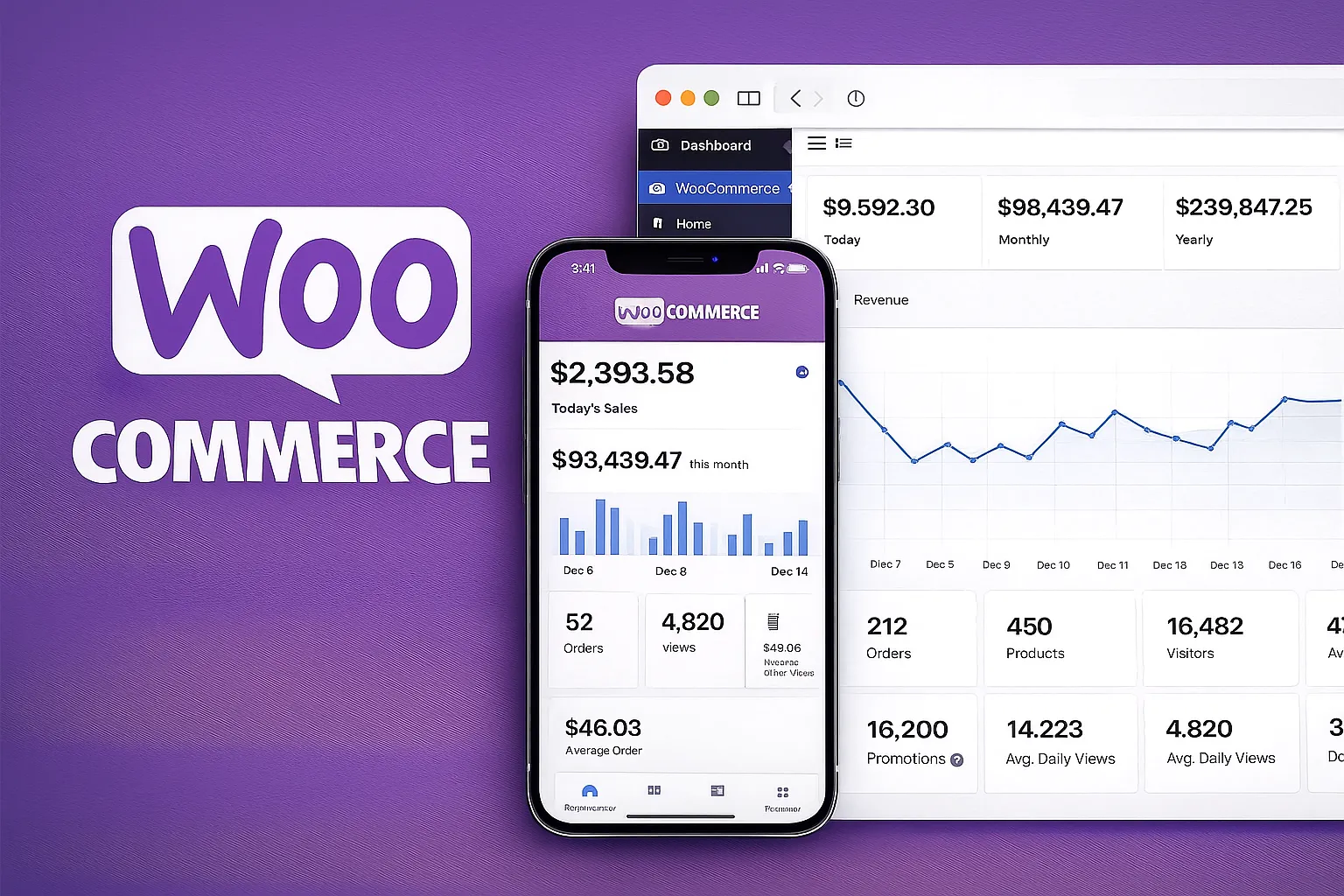
Imagine wanting to launch an online store in the USA, without paying Shopify-style monthly fees or hiring an expensive development team. You want full control, full ownership, and the ability to customize every part of your ecommerce site. WooCommerce solves exactly this problem.
Launched in 2011 as a WordPress plugin, WooCommerce quickly grew into the world’s most popular open-source ecommerce platform — powering over 39% of all online stores in 2025. From small local businesses to multi-million-dollar brands, WooCommerce gives merchants the freedom to build, scale, and customize their stores without limits.
Today, WooCommerce remains a top choice for US-based entrepreneurs because of its flexibility, zero vendor lock-in, huge plugin ecosystem, and complete ownership of data and design.
What is WooCommerce? The Simple Explanation
WooCommerce is a free, open-source ecommerce plugin that turns any WordPress website into a fully functional online store. It allows users to sell physical products, digital goods, subscriptions, bookings, and even services — all from a customizable storefront they fully control.
Core Problem It Solves
Before WooCommerce, creating an online store required:
- Expensive development
- Restrictive SaaS platforms
- Limited customization
WooCommerce removes all of that by giving business owners freedom, flexibility, and full ownership of their ecommerce experience.
Target Users & Use Cases
WooCommerce is used widely across the USA by:
- Small business owners launching online stores
- Dropshipping entrepreneurs
- Digital product sellers
- Subscription/box businesses
- Service professionals (appointments, coaching, consulting)
- Local businesses moving online
- Large enterprises using custom WooCommerce builds
Use cases include fashion stores, electronics, home décor, beauty brands, course marketplaces, print-on-demand, and more.
Current Market Position (2025 Stats)
- Powers 39% of all ecommerce stores worldwide
- Used by 6+ million active websites
- Largest ecosystem of WordPress plugins/extensions (55,000+)
- US adoption increased 17% YoY due to Shopify fee hikes (2024–2025)
Why WooCommerce Became Successful
- Completely free core plugin
- Unlimited customization
- Thousands of extensions and themes
- No monthly platform fees
- Total data ownership
- Works seamlessly with WordPress, the world’s #1 CMS
- Easy integration with payment gateways (Stripe, PayPal, Apple Pay etc.)
How Does WooCommerce Work? Step-by-Step Breakdown
WooCommerce works by adding ecommerce functionality to a WordPress website. Think of it as installing an engine inside a car you already own — instantly turning your site into a customizable online store.
For Users (Shoppers)
1. Account Creation Process
- Users visit your WooCommerce-powered store
- They can check out as guests or create an account
- Email verification & password setup (optional depending on settings)
2. Main Features Walkthrough
Shoppers get access to:
- Product catalog with filters
- Product detail pages with images, reviews, variations
- Add-to-cart system
- Secure checkout
- Multiple payment methods (Stripe, PayPal, Apple Pay, GPay)
- Real-time shipping rates
- Order tracking
3. Typical User Journey (Example)
Sarah wants to buy a fitness band:
She browses → filters by price → reads reviews → adds item to cart → chooses Stripe payment → completes purchase → receives order updates via email.
4. Key Functionalities Explained
- Smart product search
- Coupon system
- Wishlist plugins
- Personalized recommendations via AI extensions
- Subscription and recurring payments
- Multi-step checkout
- Digital downloads with auto-email delivery
For Store Owners / Service Providers (Merchants)
1. Onboarding Process
- Install WooCommerce plugin
- Run setup wizard
- Configure currency, taxes, shipping, payments
- Add products & categories
2. How Merchants Operate on WooCommerce
- Manage inventory
- Update product details
- Set discounts and coupons
- Create shipping zones
- Fulfill orders and print labels
- Automate emails
- Use analytics dashboard for insights
3. Earnings / Commission Structure
Unlike Shopify or Etsy, WooCommerce charges:
- $0 monthly fees
- $0 commissions
Only payment gateway fees apply: - Stripe/PayPal → 2.9% + 30¢ (USA standard rate)
Merchants keep nearly all their revenue.
Technical Overview (Simple)
Basic Architecture
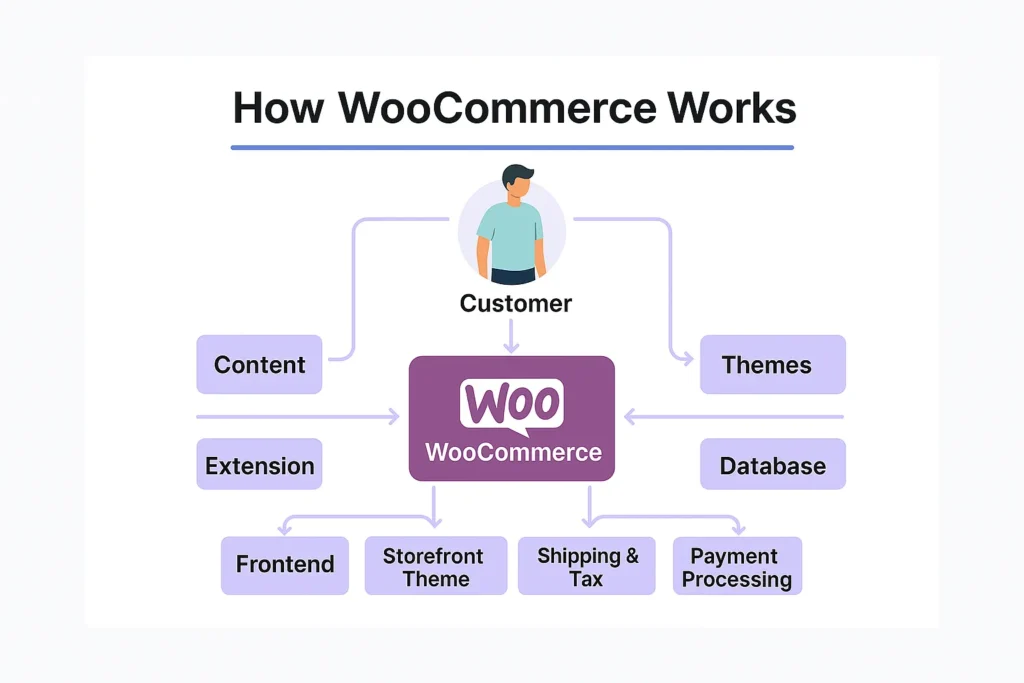
WooCommerce consists of:
- WordPress (core content management)
- WooCommerce plugin (ecommerce engine)
- Themes (storefront design)
- Extensions (extra features like shipping, subscriptions, marketing tools)
- Database storing products, orders, and customer data
Key Technologies Used
- PHP
- MySQL
- JavaScript (React-based blocks editor)
- REST API
- Secure payment APIs
- Cloud hosting infrastructure
Why This Works Well
- Easy customization
- Extensions for almost any use case
- Scales from small stores to large enterprise sites
- Full ownership of code & data
WooCommerce’s Business Model Explained
Despite being free and open-source, WooCommerce powers a multi-billion-dollar ecosystem. Its business model is centered around flexibility, extensions, hosting partnerships, and premium services — while giving store owners almost 100% profit ownership.
How WooCommerce Makes Money (All Revenue Streams)
1. Premium Extensions
WooCommerce sells over 100+ paid extensions for:
- Subscriptions & memberships
- Bookings & appointments
- Payment gateways
- Shipping solutions
- Marketing integrations
Prices typically range from $49–$299/year per extension.
2. WooCommerce Themes
Premium themes from WooCommerce Marketplace cost:
- $39–$199 one-time
Popular examples include Storefront Pro and niche ecommerce themes.
3. WooCommerce Payments
Their proprietary payment gateway earns:
- 2.9% + 30¢ per transaction (USA)
Additional 1% for international cards.
4. Partnerships & Integrations
WooCommerce partners with:
- Hosting companies (Bluehost, SiteGround, WP Engine)
- Logistics APIs
- Marketing platforms
These partnerships create embedded revenue shares.
5. Marketplace Commission (Extension Developers)
Developers selling third-party extensions on WooCommerce Marketplace pay:
- 40% commission to WooCommerce on each sale.
This drives a thriving global ecosystem.
Pricing Structure for Store Owners (2025)
While WooCommerce core is free, real-world store costs usually include:
- Domain: $10–$15/year
- Hosting: $8–$45/month depending on traffic
- Premium themes: optional
- Premium plugins: optional
- Payment processing fees: 2.9% + 30¢
Average US WooCommerce store spends $39–$129/month total — far cheaper than Shopify’s $39–$399 plans + 2% extra fees.
Market Size & Growth Stats (2025)
- WooCommerce powers 6+ million active stores
- USA contributes 38% of WooCommerce merchants
- WooCommerce ecosystem value expected to surpass $2.5B in 2025
- 17% YoY adoption growth due to rising SaaS platform fees
- Over 55,000 plugins built around WooCommerce
Profit Margins Insights
Because WooCommerce:
- Has no subscription fee
- No platform commission
- Low operational costs
Merchants typically enjoy higher profit margins vs Shopify, Etsy, or Amazon FBA.
A typical WooCommerce store in the USA keeps 92–96% of revenue after payment processing.
Revenue Model Breakdown Table
| Revenue Source | How WooCommerce Earns | Average Cost (2025) |
| Premium Extensions | Annual plugin fees | $49–$299/year |
| Premium Themes | One-time theme purchase | $39–$199 |
| WooCommerce Payments | Card processing fees | 2.9% + $0.30 |
| Partnerships | Hosting & service commissions | Variable |
| Marketplace Commission | Developers share revenue | 40% per sale |
Key Features That Make WooCommerce Successful
WooCommerce continues to dominate the ecommerce space in 2025 because of its unmatched flexibility, open-source nature, and massive ecosystem of plugins & themes. Below is a breakdown of the top features that make WooCommerce the go-to ecommerce solution for millions of US store owners.
1. Fully Customizable Storefront
Why it matters: Every brand can design a unique shopping experience.
Benefit for users: Store layouts match business identity and improve trust.
Technical innovation: Built using WordPress’s block editor + extendable PHP templates.
2. Unlimited Products & Variations
Why it matters: WooCommerce scales from 10 to 100,000+ products.
Benefit for users: Merchants never worry about data limits.
Technical innovation: Optimized database structure with product/meta tables.
3. Secure Payments (Stripe, PayPal, Apple Pay, WooCommerce Payments)
Why it matters: Checkout conversion depends on trusted payment options.
Benefit for users: Faster, safer checkout with global payment support.
Technical innovation: PCI-compliant payment APIs + tokenized transactions.
4. Built-In Shipping & Tax Automation
Why it matters: Automated taxes and shipping reduce store admin burden.
Benefit for users: Accurate shipping costs + location-based taxes.
Technical innovation: REST API integrations with USPS, FedEx, UPS, TaxJar.
5. 55,000+ Plugins & Extensions
Why it matters: No other ecommerce platform matches WooCommerce’s extensibility.
Benefit for users: Add any feature (subscriptions, bookings, CRM, POS).
Technical innovation: Open plugin architecture + hook/filters system.
6. SEO-Friendly Architecture
Why it matters: Organic traffic is the lifeline of ecommerce in 2025.
Benefit for users: Higher rankings via schema, optimized structure, Yoast/RankMath.
Technical innovation: Clean URLs, structured data, no-code SEO tools.
7. Advanced Product Management
Why it matters: Efficient catalog management boosts operational performance.
Benefit for users: Easy product variations, inventory control, attributes.
Technical innovation: Dynamic product data handling and stock management APIs.
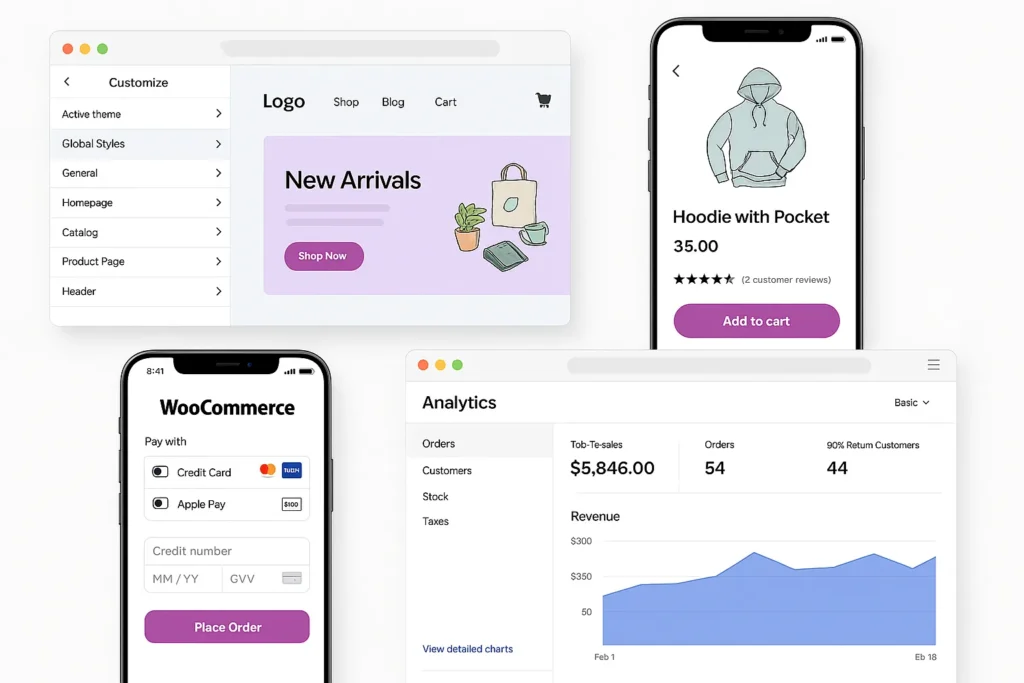
8. Analytics & Reporting Dashboard
Why it matters: Data-driven decisions improve sales.
Benefit for users: Track revenue, customers, orders, trends in real time.
Technical innovation: React-powered analytics with data visualization API.
9. Mobile-Optimized Shopping Experience
Why it matters: 73% of US ecommerce sales come from mobile in 2025.
Benefit for users: Fast, responsive storefronts.
Technical innovation: Mobile-first themes and AMP-compatible plugins.
10. Global Selling Features
Why it matters: Cross-border ecommerce is growing rapidly.
Benefit for users: Multi-currency, multilingual, worldwide shipping.
Technical innovation: Integrations with WPML, Currency Switcher, DHL/Shippo.
Recent 2025 WooCommerce Updates
- New AI-driven product recommendations
- Enhanced block-based cart & checkout pages
- Faster WooCommerce 9.x performance upgrade
- Built-in fraud prevention tools
- Native subscription improvements
- AI store setup wizard for beginners
- Better server-side caching support
AI/ML Integrations (2025)
WooCommerce now supports:
- AI product descriptions
- AI upsell suggestions
- Predictive inventory management
- AI chatbot for customer support
- Image optimization using ML
These are powered by third-party plugins like Jetpack AI, OpenAI integrations, and others.
What Sets WooCommerce Apart
- Open-source (full ownership)
- No monthly SaaS fees
- Largest plugin ecosystem in the world
- Highly customizable from design to backend logic
- Works perfectly with WordPress SEO capabilities
- Scalable from small stores to enterprise builds
The Technology Behind WooCommerce
WooCommerce is powerful because it’s built on a flexible, modern, and fully open-source technology stack. Its architecture allows developers, agencies, and businesses to control everything — from design to backend logic — without the limitations of closed SaaS systems.
Tech Stack Overview (Simplified)
Primary Technologies
- PHP – Core engine powering WooCommerce and WordPress
- MySQL / MariaDB – Database for products, orders, customers
- JavaScript (ES6) – Frontend interactions & dynamic components
- React.js – Used for WooCommerce admin & block editor
- REST API – Enables integrations with apps, POS systems, CRM tools
- HTML5 + CSS3 – Storefront layout and styling
Real-Time Features Explained
1. Real-Time Inventory Syncing
- Automatically updates stock on every purchase
- Prevents overselling
- Supports large inventory catalogs through optimized queries
2. Real-Time Order Notifications
- Email, SMS, and dashboard alerts for every order
- Integrates with services like Twilio, SendGrid, and Firebase
3. Dynamic Shipping & Tax Calculation
- Uses live APIs from USPS, UPS, FedEx, DHL, TaxJar, Avalara
- Calculates charges instantly at checkout
Data Handling & Privacy
Secure Data Storage
- Customer info stored safely in WordPress’s database structure
- PCI-compliant payment integrations
- Tokenized payment details to prevent breaches
GDPR & CCPA Compliance
WooCommerce provides:
- Consent checkboxes
- Data export tools
- Right-to-forget options
Full Data Ownership
A major reason US businesses choose WooCommerce:
Your store, your database, your customer data.
No vendor lock-in.
Scalability Approach
WooCommerce can scale from:
- A simple store with 10 products
- To enterprise-level operations with 100,000+ SKUs and millions of visitors
Scalability is achieved through:
- Optimized hosting (VPS, dedicated, cloud)
- Object caching (Redis, Memcached)
- CDN support
- Database indexing
- Lightweight themes
- Load balancing + Horizontal scaling
Major brands run WooCommerce at 2,000+ orders per hour with the right infrastructure.
Mobile App vs. Web Platform
Web Platform
- Full-featured storefront
- Checkout, product browsing, account management
- Customizable through themes and plugins
Mobile App (Optional)
WooCommerce offers:
- Official WooCommerce mobile app for merchants
- Custom buyer apps via APIs and third-party builders
- Push notifications
- Native checkout experiences
Many US brands build custom Android/iOS apps using WooCommerce REST API + React Native/Flutter.
API Integrations
WooCommerce supports integrations with:
- CRMs (HubSpot, Zoho, Salesforce)
- Accounting software (QuickBooks, Xero)
- Marketing tools (Mailchimp, Klaviyo)
- Shipping APIs (Shippo, ShipStation, DHL)
- POS systems
- Inventory systems
- AI plugins
The REST API makes it easy to extend WooCommerce into a full ecommerce ecosystem.
Why This Tech Matters for Business
- Full control and extendability
- Lower long-term cost
- Rapid development speed
- Ability to customize any feature
- Seamless integration with global tools
- Scalability for growing businesses
- Enterprise-level capability without enterprise-level price
WooCommerce remains the #1 choice in 2025 for US entrepreneurs seeking freedom, ownership, and long-term control.
WooCommerce’s Impact & Market Opportunity
WooCommerce has reshaped ecommerce globally — especially in the USA — by giving merchants full control, zero monthly platform fees, and unmatched customization. Its impact is visible across small businesses, large enterprises, and the rapidly growing creator-commerce ecosystem.
Industry Disruption Caused by WooCommerce
1. Democratized Ecommerce
WooCommerce made it possible for:
- Small businesses
- Individual sellers
- Bloggers
- Local US retailers
to launch online stores without paying Shopify-style fees.
2. Shift Toward Open-Source Commerce
Brands now prefer:
- No vendor lock-in
- Full data ownership
- Customizable features
WooCommerce leads this open-source ecommerce revolution.
3. Boosted Web-First Ecommerce
More businesses are building their store first on the web, then expanding into mobile apps — reversing the previously “app-first” trend.
Market Statistics & Growth (2025)
- Powers 39% of all ecommerce sites globally
- 6+ million active WooCommerce stores
- USA accounts for 38% of WooCommerce-based stores
- 17% YoY adoption rise in the US due to rising Shopify fees
- WooCommerce ecosystem projected to reach $2.5B+ by 2025
- WordPress still powers 43% of all websites, boosting WooCommerce growth
User Demographics & Behavior
Who Uses WooCommerce in the USA?
- Independent sellers
- Small to mid-sized retailers
- Niche ecommerce brands
- Dropshippers
- Subscription box companies
- Online educators & course creators
- Digital product sellers
Consumer Behavior Trends (2025)
- 73% purchases happen on mobile
- US buyers prefer customizable checkout experiences
- Increasing trust in independent online stores
- More demand for fast, transparent fulfillment
Geographic Presence
WooCommerce is widely used in:
- USA
- Canada
- UK
- Australia
- India
- Europe
But the USA remains the largest WooCommerce market, with strong adoption among DTC (Direct-to-Consumer) brands.
Future Projections
By 2028, WooCommerce is expected to:
- Cross 8+ million active stores
- Integrate more AI-powered automation
- Strengthen cloud hosting partnerships
- Expand its native mobile app features
- Offer deeper personalization and analytics
Opportunities for Entrepreneurs
WooCommerce creates huge opportunities for:
- Online store owners
- Ecommerce agencies
- Theme developers
- Plugin developers
- Dropshipping businesses
- Print-on-demand brands
- Niche subscription services
- Local retailers going digital
Since WooCommerce has no platform ownership restrictions, you can build:
- Marketplaces
- Multi-vendor platforms
- B2B wholesale systems
- Subscription commerce portals
- Custom ecommerce apps
Natural Transition
This massive success is why many entrepreneurs want to create similar ecommerce platforms fast, without high costs or long development cycles…
Building Your Own WooCommerce-Like Platform
WooCommerce’s massive popularity in the USA has inspired thousands of entrepreneurs to build flexible, scalable ecommerce platforms with full control and zero vendor lock-in. Whether you’re launching a niche marketplace, subscription store, or a custom ecommerce ecosystem, a WooCommerce-like platform gives you the freedom to shape your business exactly the way you want.
Why Businesses Want WooCommerce-Style Platforms
1. Complete Ownership
No SaaS restrictions. No forced updates. No monthly lock-in fees.
Businesses get full access to:
- Code
- Database
- Design
- Custom features
2. Unlimited Scalability
From 10 products to 100,000+ SKUs — WooCommerce-like systems scale effortlessly with the right architecture.
3. Cost-Efficiency
Unlike platforms that charge fees + commissions:
A WooCommerce-style build gives the owner total revenue control.
4. Flexibility Across Niches
A WooCommerce-like solution can power:
- Single-vendor stores
- Multi-vendor marketplaces
- Digital product stores
- Subscriptions
- Bookings
- Print-on-demand
- B2B wholesale
- Dropshipping
5. Huge Plugin Ecosystem
A clone-style platform can incorporate:
- AI recommendation engines
- Subscription systems
- POS integrations
- CRM/ERP modules
- Custom checkout systems
- Shipping API integrations
- Marketing automation
Key Considerations Before Development
1. Decide Your Store Structure
- Single vendor
- Multi-vendor
- Marketplace
- Hybrid B2B/B2C
2. Payment Setup
Choose payment gateways based on your audience:
- Stripe
- PayPal
- Apple Pay
- Google Pay
- Razorpay (India)
- Authorize.net (USA)
3. Product Types
Decide if you’ll sell:
- Physical products
- Digital downloads
- Subscription
- Courses
- Services
- Rentals or bookings
4. Scalability Requirements
Plan for:
- Caching
- CDN
- Database optimization
- Mobile apps
- Analytics dashboard
Cost Factors & Pricing Breakdown
WooCommerce-Like App Development — Market Price
| Development Level | Inclusions | Estimated Market Price (USD) |
| Basic Website Builder MVP | Template-based site builder, basic ecommerce module, user accounts, simple admin panel | $120,000 |
| Mid-Level SaaS Website & Store Builder | Drag-and-drop editor, multi-tenant accounts, customizable themes, checkout system, plugin integrations, mobile apps | $250,000 |
| Advanced SaaS Platform | Full drag-and-drop engine, global hosting architecture, AI-assisted design, app marketplace, multilingual support, high concurrency backend, native apps | $300,000+ |
Global market cost to build a WooCommerce-like ecommerce platform from scratch is $60,000–$150,000+, usually taking 4–10 months. Miracuves delivers a custom-built alternative at a fraction of that cost.
Miracuves Pricing for a WooCommerce-Like Custom Platform
Miracuves Starts at: $12,999
Delivery Timeline for a WooCommerce-Like Platform
Miracuves development timeline including setup, configuration, admin deployments, API integrations, and platform handover in approximately 30–90 days, depending on customization and additional functional layers requested. This ensures a stable, market-ready system with predictable delivery and no hidden engineering delays.
Tech Stack
We preferably will be using JavaScript for building the entire solution (Node.js/Nest.js/Next.js for the web backend + frontend) and Flutter / React Native for mobile apps, considering speed, scalability, and the benefit of one codebase serving multiple platforms. Other tech stacks can be discussed and arranged upon request — Contact us
Essential Features to Include
- Product management system
- Smart search
- Inventory & warehouse management
- Checkout optimizer
- Multi-payment gateway support
- Coupons & promotions
- Mobile-responsive UI
- Sales analytics
- SEO-optimized structure
- Security protocols
- Role-based access control
- Media CDN support
- Optional: Multi-vendor module
Conclusion
WooCommerce remains one of the most powerful, flexible, and cost-effective ecommerce platforms in 2025 — especially for businesses in the USA looking for complete ownership and unlimited customization. Whether you’re launching a small online shop, scaling into a full marketplace, or building a custom ecommerce ecosystem, WooCommerce gives you the tools, plugins, and freedom to grow on your own terms.
Its open-source nature, vast plugin ecosystem, seamless WordPress integration, and global community support make it the preferred choice for millions of merchants. From secure payments and inventory control to AI-powered recommendations and mobile-friendly design, WooCommerce continues to evolve with the future of ecommerce.
And with the ecommerce market expanding rapidly, there has never been a better time for entrepreneurs to build a WooCommerce-like platform tailored to their own niche or business goals.
FAQs
Q:1 How does WooCommerce make money?
WooCommerce earns through paid extensions, premium themes, WooCommerce Payments transaction fees, hosting partnerships, and commissions on third-party marketplace plugins.
Q:2 Is WooCommerce available in my country?
Yes. WooCommerce is available worldwide since it’s open-source software that can be installed on any WordPress website, regardless of country or hosting provider.
Q:3 How much does WooCommerce charge users?
WooCommerce is free to use. Costs only come from hosting, domains, optional premium plugins, and payment gateway fees (typically 2.9% + 30¢ per US transaction).
Q:4 What’s the commission for store owners or service providers?
WooCommerce charges 0% commission. Sellers only pay standard payment gateway fees like Stripe or PayPal.
Q:5 How does WooCommerce ensure safety?
WooCommerce ensures safety through secure coding standards, PCI-compliant payment integrations, SSL certificates, regular updates, tokenized payment data, and WordPress security plugins.
Q:6 Can I build something similar to WooCommerce?
Yes. With the right tech stack and development team, you can create a fully customizable WooCommerce-like ecommerce platform that supports products, payments, inventory, and plugins.
Q:7 What makes WooCommerce different from competitors?
WooCommerce stands out due to full ownership, no monthly fees, unlimited customization, 55,000+ plugins, deep WordPress integration, and its open-source nature.
Q:8 How many users does WooCommerce have?
As of 2025, WooCommerce powers 6+ million active ecommerce stores, making it the world’s most widely used ecommerce platform.
Q:9 What technology does WooCommerce use?
WooCommerce uses PHP, MySQL, JavaScript, REST API, React-powered admin interfaces, and integrates easily with payment, shipping, and marketing APIs.
Q:10 How can I create an app or platform like WooCommerce?
You can build a WooCommerce-like platform by developing a customizable ecommerce engine with modules for products, payments, orders, analytics, and plugins — or use ready-made clone frameworks for faster launch.
Related Articles: