


Imagine buying shoes online and realizing the size doesn’t fit—but instead of worrying, the company sends you a return label, picks it up for free, and offers a 365-day return window. That simple peace of mind is what made Zappos an eCommerce legend.
Founded in 1999, Zappos started as a small online shoe store trying to solve one major problem: people were hesitant to buy footwear online because they couldn’t try before buying. Over two decades later, Zappos has grown into a powerhouse for footwear, apparel, and accessories, serving millions of customers across the U.S. with exceptional customer service, fast delivery, and a frictionless shopping experience.
What is Zappos? The Simple Explanation
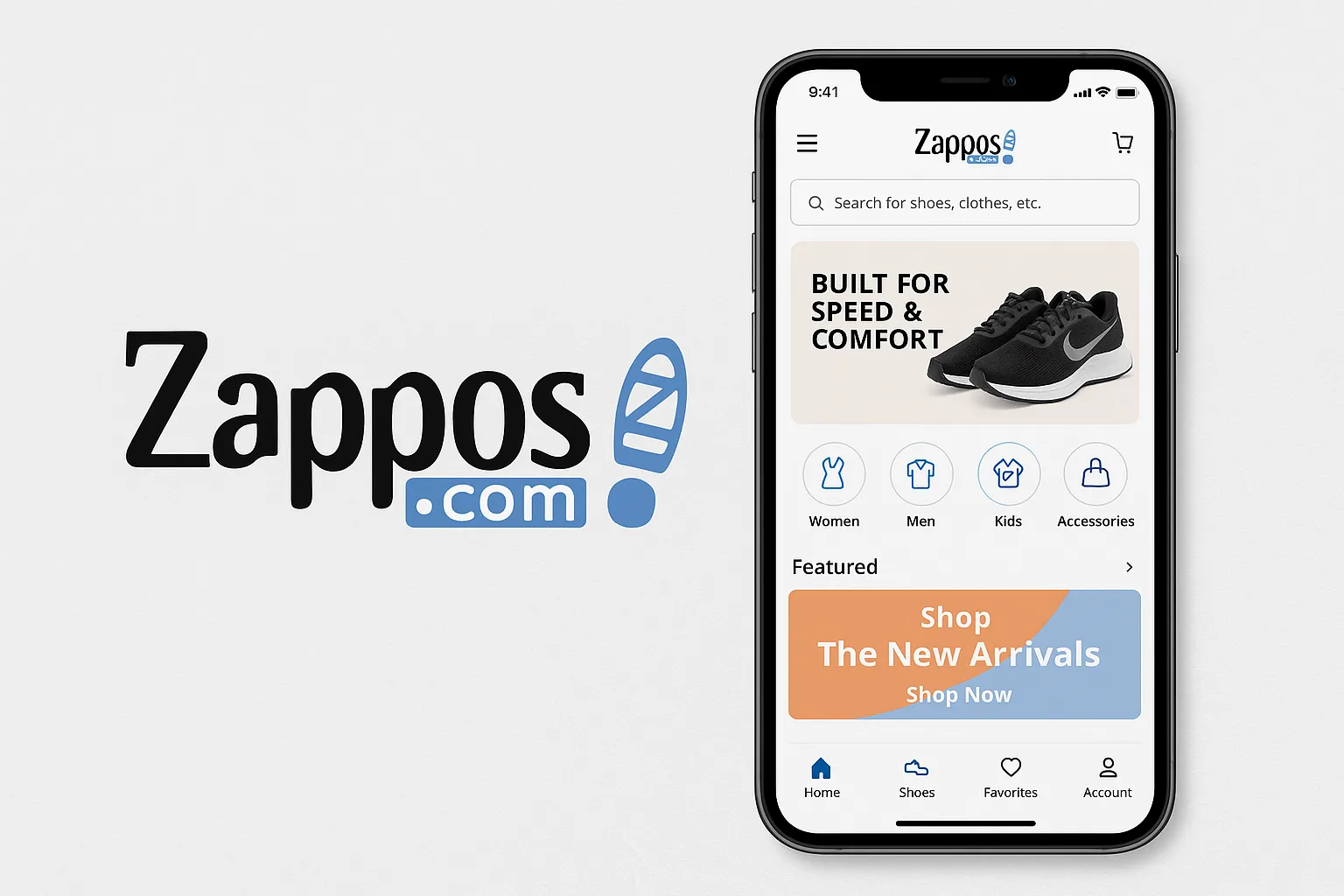
Zappos is a U.S.-based online shopping platform best known for selling footwear, clothing, and accessories with an unmatched customer service experience. At its core, Zappos makes online shopping feel as easy and reliable as visiting a physical store—thanks to fast shipping, easy returns, and a huge selection of brands.
Core Problem Zappos Solves
Many shoppers hesitate to buy shoes or apparel online because sizing, comfort, and fit are unpredictable. Zappos solves this by offering:
- A 365-day return policy
- Free shipping both ways
- Detailed product info and customer reviews
These reduce risk and make customers feel confident buying online.
Target Users and Use Cases
Zappos primarily serves:
- Everyday shoppers looking for footwear and apparel
- Families buying essentials for multiple age groups
- Brand-conscious consumers seeking variety
- People who value reliability, fast delivery, and excellent customer support
Top use cases include casual shopping, seasonal fashion updates, back-to-school purchases, and brand-specific footwear searches.
Current Market Position (2025 Stats)
- 30+ million product listings across categories
- Over 4 million active annual customers
- Strong loyalty program: Zappos VIP with early access + faster shipping
- Owned by Amazon, giving it access to robust logistics and fulfillment networks
Zappos remains one of the most trusted online footwear destinations in the U.S., with customer satisfaction ratings consistently above industry averages.
Why Zappos Became Successful
- Legendary customer service
- Hassle-free returns
- Huge product variety
- Strong focus on building long-term relationships
- Culture-first business model that influences every decision
Read more: What is DHgate and How Does It Work?
How Does Zappos Work? Step-by-Step Breakdown
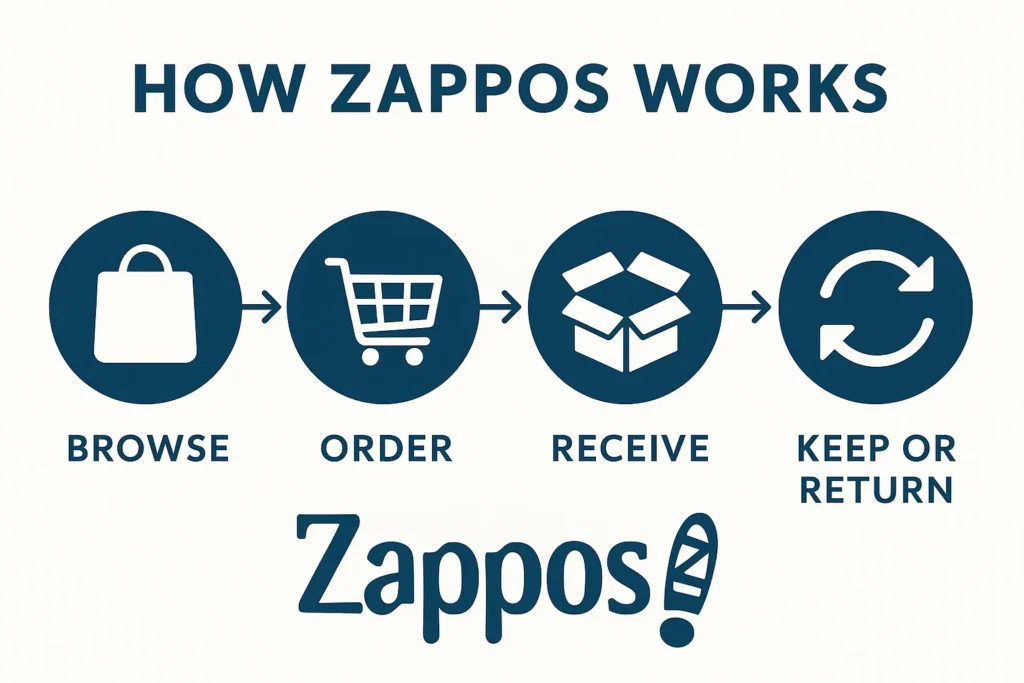
Zappos works as a seamless online shopping ecosystem where users can browse thousands of products, compare sizes, check reviews, order instantly, and return items effortlessly—all backed by Amazon’s logistics strength and Zappos’ legendary customer support.
For Users (Shoppers)
1. Account Creation Process
Users can start shopping without an account, but to save details, track orders, and join Zappos VIP, they can create an account by:
- Entering email and password
- Adding shipping address
- Saving payment methods
- Opting into VIP rewards
Signup takes under a minute.
2. Main Features Walkthrough
Users get access to:
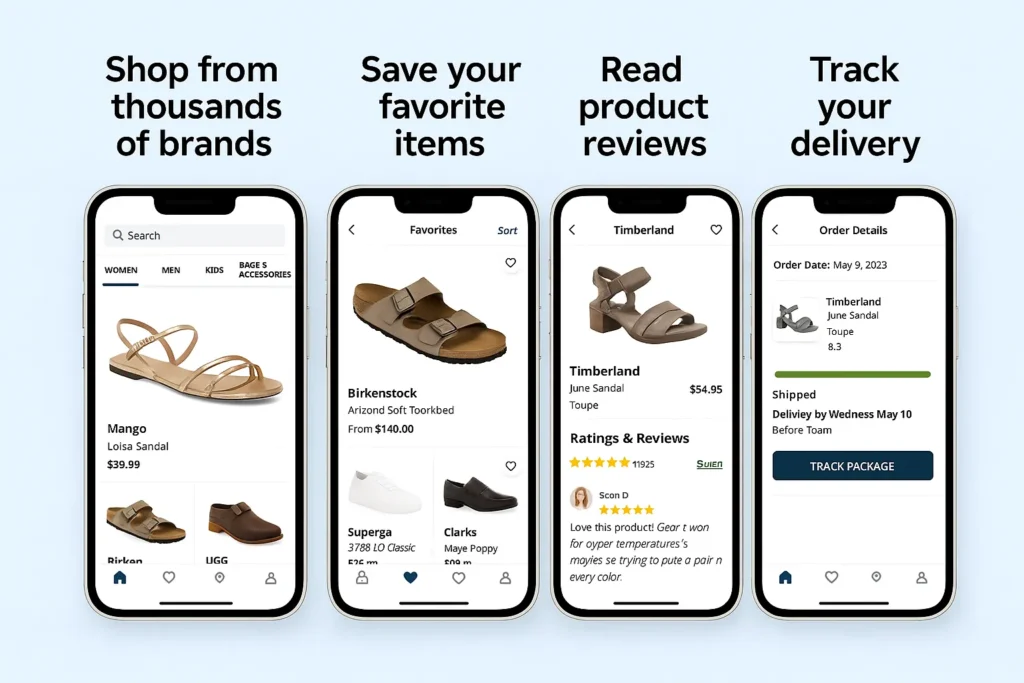
- Advanced search & filtering (brand, size, width, color, price, etc.)
- Verified customer reviews + fit ratings
- 360° product photos & videos
- Wishlist / favorites
- Zappos VIP benefits
- Easy return & exchange options
3. Typical User Journey (Example)
Example: Sarah wants to buy running shoes.
- Searches for “women’s running shoes”
- Filters by brand → size → width → color
- Reads reviews to understand fit accuracy
- Orders with free shipping
- Receives shoes in 1–3 days
- If size doesn’t fit, she initiates an easy return and gets a prepaid label
- Exchanges for a new size with no added cost
The entire journey is designed for zero friction.
For Brands & Retail Partners
Zappos works like a curated marketplace where approved brands and suppliers can list their products.
1. Onboarding Process
- Brand submits catalog
- Zappos reviews quality + authenticity
- Integration with inventory systems
- Products go live with detailed content
2. How They Operate on the Platform
- Brands send inventory to Zappos or use dropship (in select cases)
- Zappos handles packaging, shipping, customer support, and returns
- Brands benefit from large traffic + marketing placement
3. Earnings / Commission Structure
While exact 2025 numbers aren’t public, typical marketplace rates include:
- 15%–25% commission depending on category
- Optional marketing placement fees
- Additional fulfillment fees (for Zappos-managed logistics)
Technical Overview (Simple Language)
Basic Architecture
Zappos uses a three-layer architecture:
- Frontend (website + mobile app)
- Backend services (catalog, search, orders, payments)
- Logistics & support systems (shipping, returns, customer service)
Key Technologies Used
While internal tech is not fully public, based on industry standards:
- Frontend: React, JavaScript, Swift (iOS), Kotlin (Android)
- Backend: Microservices (Java, Node.js, Python)
- Database: AWS RDS, DynamoDB, Elasticsearch
- Infrastructure: AWS EC2, S3, Lambda, CloudFront
- AI: Product recommendations, search relevance, sizing prediction
Zappos’ Business Model Explained
Zappos operates on a streamlined eCommerce business model powered by product sales, strong brand partnerships, and a service philosophy that keeps customers loyal for years. Here’s how the company makes money and sustains its position as a leader in online retail.
1. How Zappos Makes Money (All Revenue Streams)
a) Product Sales (Primary Revenue Source)
Zappos purchases inventory from brands or wholesalers at wholesale prices and sells them at a retail markup.
This accounts for 70–80% of total revenue.
b) Marketplace Commissions
Certain brands operate on a marketplace-style model where:
- Zappos lists the products
- Brand fulfills inventory
- Zappos earns a 15%–25% commission per sale.
c) Featured Placement / Marketing Fees
Brands can pay Zappos to get:
- Homepage promotions
- Top-category placement
- Sponsored recommendations
These increase product visibility and sales.
d) Zappos VIP Loyalty Program
While membership is free, the program encourages repeat purchases, indirectly increasing revenue through:
- Faster shipping
- Bonus points
- Exclusive product access
e) Affiliate Partnerships
Zappos collaborates with influencers, bloggers, and affiliates who promote products.
Zappos earns from increased conversions while paying small referral commissions.
f) Amazon Ecosystem Synergy
As an Amazon subsidiary, Zappos benefits from:
- Shared logistics
- Cross-platform visibility
- Customer trust
This reduces operational costs and increases margins.
2. Pricing Structure (2025 Snapshot)
Pricing varies by brand and category, but typical:
- Shoes: $40 – $300+
- Clothing: $20 – $400+
- Accessories: $15 – $250+
- Premium brands can go significantly higher
Zappos uses competitive dynamic pricing matching market averages while maintaining healthy margins.
3. Commission / Fee Breakdown
Depending on brand partnership type:
- 15–25% commission on marketplace orders
- Logistics fee if Zappos handles fulfillment
- Marketing fee for premium placements
- Return handling fee (billed to brands in select agreements)
4. Market Size & Growth Stats (2025)
- U.S. online footwear market expected to hit $32B by 2025
- Apparel + accessories online market surpassing $200B
- Zappos retains a loyal user base with 4M+ annual active customers
- Conversion rate nearly twice the industry average due to ease of returns
5. Profit Margins Insights
Typical eCommerce margins:
- Gross margin: 20–45%
- Net margin: 3–8%
Zappos stays profitable by reducing return friction, increasing repeat purchases, and leveraging Amazon’s low-cost logistics.
Revenue Model Breakdown
| Revenue Stream | Description | Estimated Contribution |
| Product Sales | Retail markup on footwear & apparel | 70–80% |
| Marketplace Commission | % fee from brand partners | 10–15% |
| Marketing/Placement Fees | Paid visibility & promotions | 5–8% |
| Affiliate Revenue | Referral-driven sales | 2–4% |
| Logistics/Handling Fees | Fulfillment & returns | 1–3% |
Key Features That Make Zappos Successful
Zappos didn’t become a retail icon just by selling shoes—it won hearts through customer obsession, convenience, reliability, and frictionless shopping. Here are the standout features that make it a leader in 2025.
1. 365-Day Return Policy
Why it matters: Eliminates buying hesitation.
User benefit: Zero-risk shopping—try products at home.
Innovation: Reverse-logistics automation + instant return approvals.
2. Free Shipping Both Ways
Why it matters: Boosts conversion rate.
Benefit: Users buy confidently knowing returns are free.
Innovation: Amazon-powered regional distribution centers for cost efficiency.
3. Huge Product Catalog (Footwear + Apparel + Accessories)
Why it matters: One-stop shop for families.
Benefit: Users can find exact size, width, and style variations.
Innovation: Dynamic inventory syncing + AI-based catalog classification.
4. Advanced Filtering & Search Tools
Why it matters: Helps users quickly find the perfect fit.
Benefit: Narrow options by size, width, arch type, color, brand, material, etc.
Innovation: AI-enhanced search relevance + elastic indexing.
5. Fit Predictor & Size Guidance
Why it matters: Reduces returns.
Benefit: Users know whether an item runs “true to size,” “large,” or “small.”
Innovation: Machine learning using past purchase + return data.
6. 360° Product Photos + Videos
Why it matters: Improves confidence in product details.
Benefit: Users inspect shoes like in-store.
Innovation: High-quality product imaging pipeline.
7. Zappos VIP Program
Why it matters: Increases retention.
Benefit: Faster shipping, early access, exclusive perks.
Innovation: Tier-based loyalty algorithm.
8. 24/7 Live Customer Support (Human-first)
Why it matters: Sets Zappos apart since inception.
Benefit: Real humans solve issues instantly—no bots-only approach.
Innovation: CRM-powered agent assist tools using AI.
9. Fast Delivery (1–3 Days)
Why it matters: Competes with physical retail.
Benefit: Users get items almost instantly.
Innovation: Amazon logistics + regional warehouses.
10. Easy Returns & Exchange Portal
Why it matters: Keeps customers loyal.
Benefit: One-click returns + prepaid labels + doorstep pickup.
Innovation: Automated reverse logistics & QR-based return authentication.
2025 Recent Updates
- Better fit prediction AI using body metrics
- Smarter personalization based on browsing + purchase history
- Integration with Amazon Try Before You Buy (selected items)
- Enhanced accessibility modes for visually impaired users
AI/ML Integrations
- Personalized recommendations
- Dynamic pricing models
- Sizing predictions
- Automated support suggestions
- Fraud detection on returns
What Sets Zappos Apart
Zappos’ biggest differentiator is customer service excellence—a culture so strong that every feature revolves around delighting customers rather than cutting corners.
The Technology Behind Zappos
Zappos’ technology isn’t just about powering an eCommerce store—it’s about creating a high-trust, high-speed, user-friendly shopping ecosystem that feels effortless. Their tech stack focuses heavily on fast search, personalized recommendations, efficient logistics, and strong customer support.
1. Tech Stack Overview (Simplified)
Frontend (User Interface)
- React / JavaScript for fast, dynamic pages
- Swift for iOS app
- Kotlin for Android app
These ensure smooth navigation, instant page loading, and intuitive browsing.
Backend (Core Systems)
- Java, Node.js, and Python microservices powering catalog, search, cart, payments, and account management
- APIs connecting internal systems with external payment providers, logistics, and partner brands
Databases
- AWS RDS (Relational Database Service) for storing orders, accounts, and product info
- DynamoDB for high-speed data (sessions, inventory checks)
- Elasticsearch for lightning-fast search
Zappos relies on Amazon’s infrastructure, giving them massive reliability and scale.
2. Real-Time Features Explained
- Real-time inventory syncing to show accurate stock levels
- Instant order tracking via connected logistics APIs
- Dynamic recommendations updated with every click
- Live chat support powered by CRM systems and AI suggestions
This creates a responsive, “alive” shopping experience.
3. Data Handling & Privacy
Zappos follows strict U.S. privacy and security standards, including:
- Encrypted user data
- Secure transactions (PCI DSS compliance)
- Fraud monitoring for orders and returns
- Limited data sharing with third parties
- Strong account protection (MFA, device tracking)
Amazon’s infrastructure adds enterprise-grade security on top.
4. Scalability Approach
Zappos scales through:
- Microservices architecture that handles features independently
- AWS auto-scaling to manage peak seasons (like holidays)
- CDNs (CloudFront) for globally fast content delivery
- Distributed warehouses ensuring fast dispatch times
The platform remains stable even during massive traffic spikes.
5. Mobile App vs Web Platform
Mobile App
- Faster product discovery
- Saved preferences
- Push notifications
- Better personalization
Web Platform
- Wider browsing screen
- Perfect for comparisons
- Ideal for deep research and reviews
Both are synchronized so users can switch devices without losing progress.
6. API Integrations
Zappos connects with multiple APIs to automate operations:
- Shipping APIs (UPS, FedEx, Amazon Logistics)
- Payment gateways (credit/debit cards, Amazon Pay)
- CRM & support APIs
- Brand/inventory partner integrations
These enable a smooth end-to-end shopping experience.
7. Why This Tech Matters for Business
- Faster browsing = higher conversions
- Accurate recommendations = higher average order value
- Scalable systems = no downtime during peak sales
- Easy returns = higher customer trust
- Strong security = reduced fraud + safer shopping
Technology is the backbone that lets Zappos deliver its famous customer-first experience.
Zappos’ Impact & Market Opportunity
Zappos didn’t just build an online shoe store—it reshaped the entire U.S. eCommerce landscape with its culture-driven, customer-obsessed approach. Its impact continues to influence startups, retail brands, and even global marketplaces.
1. Industry Disruption Caused
Zappos pioneered concepts that are now industry standards:
- Free two-way shipping
- 365-day returns
- Human-first customer support
- Ultra-detailed product pages
- Focus on culture as a strategy
This redefined expectations for online shopping experiences.
2. Market Statistics & Growth (2025)
- U.S. online footwear market: $32B+
- Online apparel + accessories: $200B+
- 4M+ active annual customers on Zappos
- Over 10M reviews and community insights
- Return automation has reduced operational load by 30% in the last 3 years
Zappos remains among the most trusted retailers in customer satisfaction rankings.
3. User Demographics & Behavior
Zappos attracts:
- Consumers aged 18–45
- Urban and suburban shoppers
- Families buying footwear/apparel
- Brand-conscious customers (Nike, Adidas, Steve Madden, etc.)
Most users shop for:
- Footwear essentials
- Seasonal wardrobe updates
- Sports & lifestyle wear
- Kids’ shoes
Users appreciate consistency, authenticity, and easy returns.
4. Geographic Presence
Zappos primarily serves customers across the United States, leveraging:
- Amazon warehouses
- Fast delivery networks
- Localized customer support
While not global, its U.S. dominance is extremely strong.
5. Future Projections (2025–2030)
- Growth driven by personalization AI
- Increased mobile app usage
- Faster returns processing
- Potential expansion into new retail categories
- Deeper Amazon integration
- Smarter size predictions reducing returns by up to 20–30%
Zappos is expected to maintain a loyal, growing user base due to its service-first philosophy.
6. Opportunities for Entrepreneurs
Zappos’ success opens big opportunities:
- Niche footwear marketplaces
- AI-driven size recommendation platforms
- Premium or luxury branded fashion apps
- Hyper-personalized shopping apps
- Curated product marketplaces
- Fast-return eCommerce ecosystems
The online retail market is expanding, and users are increasingly comfortable buying without trying.
7. Natural Transition
This massive success is why many entrepreneurs want to create Zappos-like platforms—fast, reliable, customer-centered marketplaces with powerful filtering, fit prediction, and frictionless logistics.
Building Your Own Zappos-Like Platform
Creating a Zappos-style online marketplace is one of the most profitable opportunities in eCommerce today—especially as consumers expect fast delivery, easy returns, and a massive catalog of footwear, apparel, and accessories. Here’s a complete breakdown for founders planning to build a similar platform.
1. Why Businesses Want Zappos Clones
Entrepreneurs are launching Zappos-style platforms because:
- Online footwear/apparel sales continue rising every year
- Customers love risk-free shopping (easy returns, warranties, fast delivery)
- AI-based sizing and personalization increase conversions
- Huge margin opportunities with wholesalers and brand partnerships
- The model is proven, stable, and easily customizable for niche markets
(e.g., kids-only shoes, premium sneakers, sports footwear, eco-friendly brands)
2. Key Considerations Before Development
To create a successful Zappos-like platform, founders must focus on:
a) Product Catalog Strategy
Decide whether you’ll:
- Buy wholesale inventory
- Allow brand partners to list products
- Use a hybrid model (recommended)
b) Logistics & Delivery
A Zappos-style app must offer:
- Fast shipping
- Easy returns
- Accurate stock syncing
- Seamless warehouse operations
c) Customer Experience
This is what made Zappos iconic.
Your platform must offer:
- Free or low-cost returns
- Reliable customer support
- Accurate sizing guides
- High-quality product images
d) Technology Foundation
You need:
- Robust product catalog management
- Smart search and filtering
- Real-time inventory sync
- Mobile + web apps
- Secure payment gateways
- Automated return workflows
e) Scalability
Ensure the platform can handle:
- Seasonal spikes
- High catalog volume
- Thousands of concurrent users
Cost Factors & Pricing Breakdown
Zappos-Like App Development — Market Price
| Development Level | Inclusions | Estimated Market Price (USD) |
| Basic Fashion Marketplace MVP | Product listings, buyer/seller roles, simple checkout | $80,000 |
| Mid-Level Ecommerce Platform | Seller dashboards, reviews, shipping/payment integrations, mobile apps | $180,000 |
| Advanced Marketplace | High-concurrency backend, size/variant engine, logistics routing, AI recommendations, native apps | $250,000+ |
Miracuves Zappos-Style Marketplace Pricing
Miracuves Price: Starts at $2,899
This solution is built with robust frameworks — Web using PHP & MySQL, and Apps using Flutter, ensuring smooth navigation, fast load times, secure transactions, and enterprise-level stability.
Note: This includes full non-encrypted source code, complete deployment support, backend setup, admin panel configuration, and publishing on the Google Play Store and Apple App Store—giving you a fully operational ecommerce marketplace ready for launch.
Delivery Timeline for Zappos
Because this is a mature, production-ready solution, deployment takes just 3–9 days, covering branding, configuration, server setup, and app publishing.
Tech Stack
This solution is built with robust frameworks — Web using PHP, MySQL & Apps using Flutter, optimized for performance, stability, and easy maintenance. Other tech stacks can be discussed and arranged upon request — Contact us
Essential Features to Include
To match Zappos-level quality, your app should include:
User Module
- Advance filters + size guides
- 360° product photos
- AI-based recommendations
- Wishlist & favorites
- Easy returns/exchanges
- Fast checkout + multiple payment options
Seller/Brand Module
- Product upload
- Inventory management
- Order dashboard
- Sales analytics
Admin Panel
- Product & category control
- User management
- Promotions & offers
- Inventory sync
- Refund & return control
Other Must-Haves
- Loyalty program (VIP)
- Push notifications
- CRM integrations
- Multi-warehouse support
- Auto-refund workflows
Conclusion
Zappos began as a simple online shoe store but transformed into one of the most influential eCommerce brands in the United States. Its obsession with customer happiness, free shipping, easy returns, and a massive product catalog created a new standard for online shopping—proving that trust and experience matter just as much as technology.
In 2025, Zappos remains a benchmark for user-friendly retail platforms, blending thoughtful design, smart logistics, and data-driven personalization to deliver a seamless shopping journey. Whether you’re a customer searching for the perfect pair of shoes or an entrepreneur exploring opportunities in online retail, Zappos’ success offers valuable lessons in innovation, service, and scalable business models.
If you’re inspired to build your own Zappos-like platform, the market is full of opportunities—especially for niche and specialized marketplaces. With Miracuves’ ready-made solutions, modern clone scripts, advanced technologies, and rapid deployment cycles, launching a high-quality eCommerce platform is now faster, easier, and more achievable than ever.
FAQs
Q:1 How does Zappos make money?
Zappos makes money primarily through retail product sales, marketplace commissions, featured placements, and affiliate partnerships.
Q:2 Is Zappos available in my country?
Zappos currently ships only within the United States and does not offer international shipping as of 2025.
Q:3 How much does Zappos charge users?
Zappos doesn’t charge users anything extra—shopping is free except for the product price. Shipping and returns are free for most orders.
Q:4 What’s the commission for service providers or brands?
Brands selling through Zappos typically pay a 15%–25% commission, depending on the product category and partnership terms.
Q:5 How does Zappos ensure safety?
Zappos ensures safety through encrypted transactions, secure payment gateways, fraud monitoring, and strict product authenticity checks.
Q:6 Can I build something similar to Zappos?
Yes. You can create a Zappos-like eCommerce platform using ready-made marketplace solutions or custom-built scripts tailored for footwear and apparel.
Q:7 What makes Zappos different from competitors?
Zappos stands out for its legendary customer service, 365-day returns, free two-way shipping, and a culture built entirely around customer happiness.
Q:8 How many users does Zappos have?
Zappos serves 4 million+ active annual customers and continues to grow due to strong loyalty and customer satisfaction.
Q:9 What technology does Zappos use?
Zappos uses a modern tech stack including React, Java, Node.js, Python microservices, AWS infrastructure, Elasticsearch, and AI-driven personalization tools.
Q:10 How can I create an app like Zappos?
You can create an app like Zappos using a ready-made eCommerce marketplace script or by partnering with a development company to build a custom platform.
Related Articles: