


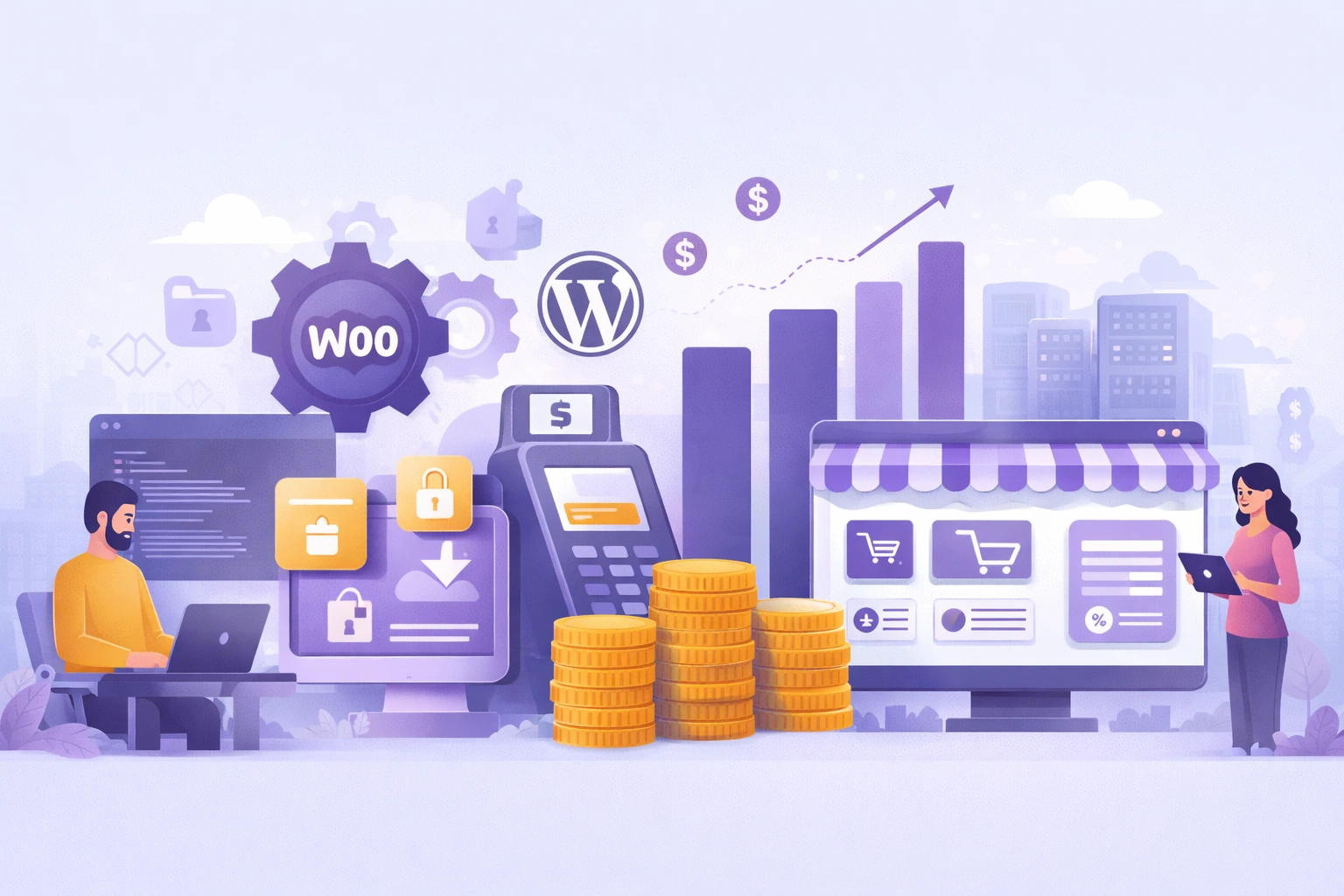
WooCommerce is the backbone of open-source ecommerce, powering over 6 million active stores globally. Its deep integration with WordPress, massive plugin ecosystem, and flexibility across industries make it the default choice for merchants who want ownership and customization without platform lock-in.
In 2025, WooCommerce itself follows a platform-plus-ecosystem monetization model, earning indirectly while enabling massive merchant revenue. Rather than charging platform fees, it monetizes through premium extensions, payment processing, hosting, and partner services. This approach scales revenue while keeping the core product free and widely adopted.
For founders, WooCommerce is proof that open source can still be highly profitable when paired with smart distribution and add-on economics. A free core drives adoption, while paid upgrades, renewals, and ecosystem services generate recurring income. This model shows how founders can balance community growth with strong, sustainable monetization.
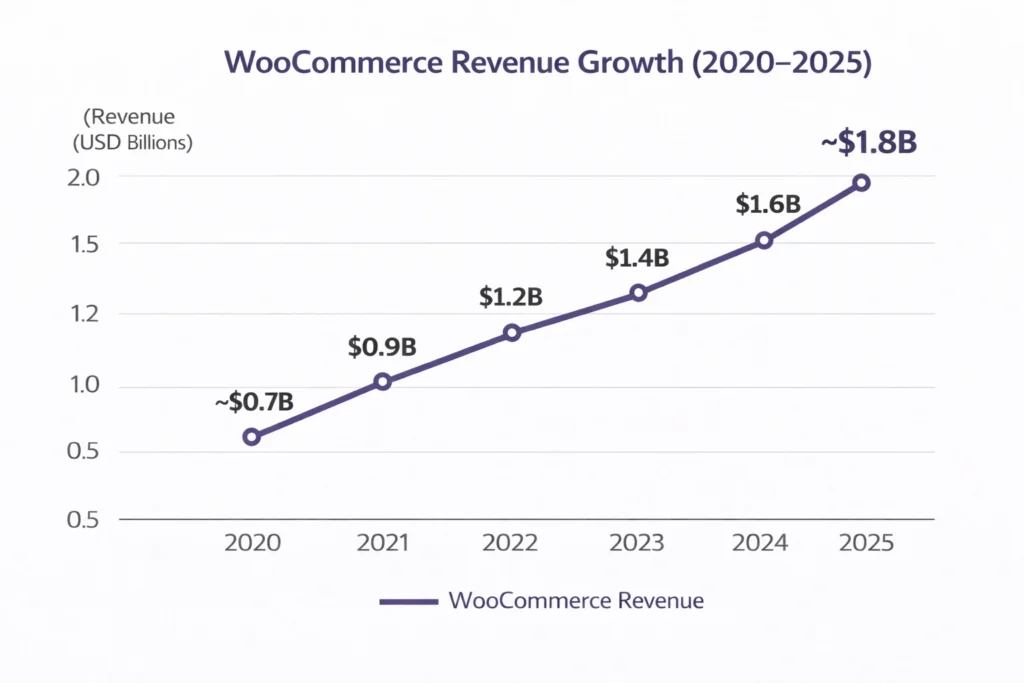
WooCommerce Revenue Overview – The Big Picture
| Metric | 2025 Data |
|---|---|
| Ecosystem Revenue (2025) | ~$1.8 billion |
| Core WooCommerce Revenue | ~$450–500 million |
| Valuation (Automattic) | ~$7–8 billion |
| YoY Growth | ~12% |
| Revenue Regions | North America (50%), Europe (30%), APAC & Others (20%) |
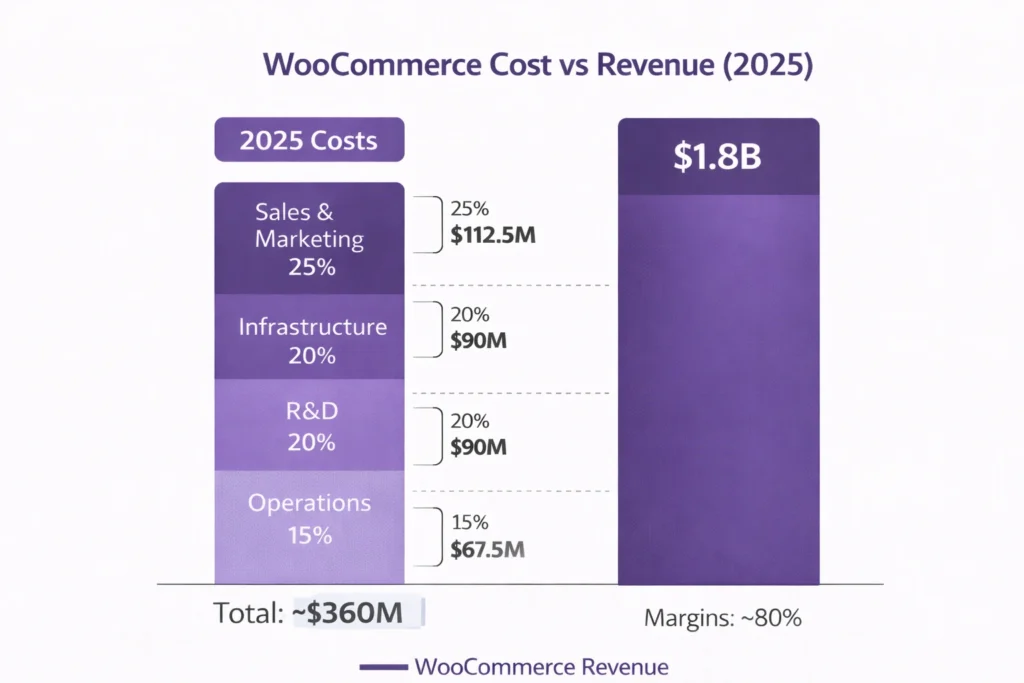
| Gross Margin | ~80% (digital products) |
| Primary Competitors | Shopify, BigCommerce, Magento |
Read More: What is WooCommerce and How Does It Work?
Primary Revenue Streams Deep Dive
Revenue Stream #1: Paid Extensions & Plugins
- How it works: Merchants buy premium plugins for payments, shipping, subscriptions, bookings
- Pricing: Annual licenses per store
- Revenue share: ~45%
- 2025 contribution: ~$225M
Revenue Stream #2: WooCommerce Payments
- Native payment gateway with transaction revenue
- Percentage-based processing fees
- Revenue share: ~25%
- 2025 contribution: ~$120M
Revenue Stream #3: WooCommerce Hosting & Commerce Services
- Managed WooCommerce hosting
- Performance, security, and scaling services
- Revenue share: ~15%
- 2025 contribution: ~$70M
Revenue Stream #4: Themes & Design Assets
- Premium ecommerce themes
- One-time or subscription pricing
- Revenue share: ~8%
- 2025 contribution: ~$40M
Revenue Stream #5: Enterprise & Partner Programs
- Agency partnerships
- Enterprise support and consulting
- Revenue share: ~7%
- 2025 contribution: ~$35M
Revenue Streams Breakdown Table
| Revenue Stream | % Share | 2025 Revenue |
|---|---|---|
| Extensions & Plugins | 45% | ~$225M |
| Payments | 25% | ~$120M |
| Hosting & Services | 15% | ~$70M |
| Themes | 8% | ~$40M |
| Enterprise & Partners | 7% | ~$35M |
The Fee Structure Explained
User-Side Fees
- Free core plugin
- Annual extension licenses
- Hosting subscription (optional)
Merchant-Side Fees
- Payment processing fees via WooCommerce Payments
- Paid feature add-ons
- Renewal fees for updates & support
Hidden Revenue Layers
- Extension renewals
- Upsells for security & performance
- Partner marketplace commissions
Regional Pricing Variation
- Higher ARPU in US/EU markets
- Lower-cost hosting bundles in emerging regions
Fee Structure Table
| User Type | Fees Paid | Notes |
|---|---|---|
| Small Store Owners | Plugin licenses | Optional upgrades |
| Growing Merchants | Payments + hosting | Higher LTV |
| Large Stores | Multiple extensions | Annual renewals |
| Agencies | Partner fees | Volume-based |
How WooCommerce Maximizes Revenue Per User
- Segmentation: Hobby stores → SMBs → High-GMV merchants
- Upselling: Extensions as stores scale
- Cross-selling: Payments, hosting, security
- Dynamic pricing: Per-site and per-year licensing
- Retention monetization: Annual renewals
- LTV optimization: Bundled extension packs
- Psychological pricing: Low entry cost with paid growth
- Real data insight: Over 70% of revenue comes from repeat customers
Cost Structure & Profit Margins
Major Cost Buckets
- Infrastructure: Cloud services & APIs (~20%)
- Sales & Marketing: Partner programs, developer ecosystem (~25%)
- Operations: Support & compliance (~15%)
- R&D: Plugin innovation, payments tech (~20%)
Unit Economics
- Extremely low CAC due to WordPress distribution
- High margins on digital extensions
- Payments revenue improves ARPU over time
Read More: Best WooCommerce Clone Scripts 2025: Scalable Ecommerce Platform
Future Revenue Opportunities & Innovations
- AI-powered store automation
- Revenue-based pricing for large merchants
- Embedded finance (BNPL, lending)
- Vertical-specific ecommerce bundles
- Faster adoption in emerging markets
Risks
- Plugin fragmentation
- Hosting performance issues
Founder Opportunities
- Curated WooCommerce-style ecosystems
- Managed ecommerce SaaS on open source
Lessons for Entrepreneurs & Your Opportunity
What works
- Free core + paid expansion
- Ecosystem-driven growth
- Community-led distribution
What to replicate
- Extension marketplaces
- Payment monetization
- Partner-first scaling
Market gaps
- Simplified WooCommerce for non-technical users
- Vertical-focused ecommerce solutions
Want to build a platform with WooCommerce’s proven revenue model? Miracuves helps entrepreneurs launch revenue-generating platforms with built-in monetization systems. Our WooCommerce-style clone scripts come with flexible revenue models you can customize. In fact, some clients see revenue within 30 days of launch, and if you want it we may arrange and deliver it in 30–90 days.
If you want advanced language-level scripts or enhanced versions, Miracuves provides those too.
Final Thought
WooCommerce proves that open source does not mean low revenue. By keeping the core product free and monetizing through extensions, payments, and services, WooCommerce captures value across the entire commerce lifecycle without limiting merchant growth.
Its ecosystem-first model creates long-term compounding income. Recurring plugin renewals, payment processing volume, hosting subscriptions, and partner revenue grow as merchants scale, creating predictable and expanding revenue streams over time.
For founders, it’s a blueprint for scalable, flexible ecommerce platforms. A free entry point, strong community adoption, and layered monetization allow platforms to scale efficiently while remaining adaptable across industries and markets.
FAQs
1. How much does WooCommerce make per transaction?
Directly, nothing—transactions are monetized via payments.
2. What’s WooCommerce’s most profitable revenue stream?
Paid extensions and renewals.
3. How does WooCommerce pricing compare to competitors?
Lower entry cost than Shopify, higher flexibility.
4. What percentage does WooCommerce take from merchants?
Only via payment processing, not platform fees.
5. How has WooCommerce’s revenue model evolved?
From plugins to payments and services.
6. Can small platforms use similar models?
Yes, especially open-core SaaS platforms.
7. What’s the minimum scale for profitability?
Thousands of active merchants.
8. How to implement similar revenue models?
Free core + paid ecosystem + payments.
9. What are alternatives to this model?
Pure SaaS subscriptions or marketplaces.
10. How quickly can similar platforms monetize?
Often within the first 30–60 days after launch.