


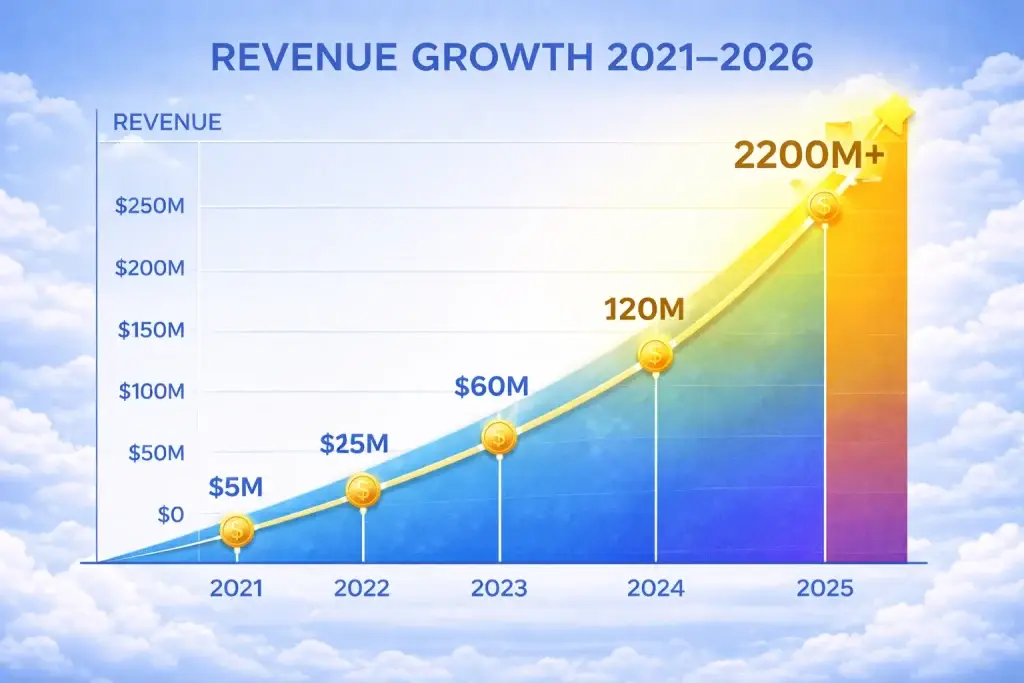
Writesonic operates in one of the fastest-growing sectors today—generative AI SaaS. With the AI content market expanding rapidly, Writesonic is estimated to generate $40M–$60M+ ARR (2026 estimate), driven by subscription revenue and AI-driven product expansion.
For founders, Writesonic is a blueprint for building a product-led growth (PLG) SaaS business. It combines freemium acquisition, usage-based pricing, and AI-driven upsells to maximize revenue per user.
What makes Writesonic especially interesting is how it monetizes output (content generation) rather than access, aligning pricing directly with value delivered.
Writesonic Revenue Overview – The Big Picture
Writesonic is a private SaaS company, so financials are estimated based on market signals and product pricing.
Key snapshot (2026 estimates):
• Estimated ARR: $40M–$60M+
• Growth rate: 50–80% YoY (AI SaaS expansion phase)
• Profitability: Likely reinvesting heavily into growth
• Market position: Competes with Jasper, Copy.ai, ChatGPT tools
• Valuation context: Estimated $200M–$500M range (startup benchmarks)
Revenue distribution:
• North America: Largest share
• Europe: Strong secondary
• Asia: Fast-growing adoption
Benchmark comparison:
• Competes on pricing + feature bundling
• Differentiation: Multi-tool AI platform + SEO focus
Read More: What Is Writesonic? How Brands Track ChatGPT Visibility and Automate SEO
Primary Revenue Streams Deep Dive
Revenue Stream #1: Subscription Plans (Core Revenue Engine)
This is the primary monetization model.
• Users pay monthly or annually
• Tiered pricing based on usage and features
Estimated contribution: 70–80%
Pricing model:
• Freemium → paid tiers ($15–$100+/month)
• Credit-based usage system
Performance insight:
High-margin recurring revenue with strong scalability.
Revenue Stream #2: Usage-Based AI Credits
Writesonic charges based on content generation volume.
• Users consume credits per output
• Encourages continuous usage
Estimated contribution: 10–20%
Pricing model:
• Pay-as-you-go credits
• Tiered usage pricing
Revenue Stream #3: Enterprise Plans
Larger businesses pay for advanced features.
• Custom pricing
• API access and integrations
Estimated contribution: 5–10% (growing fast)
Pricing model:
• Contract-based
• Seat + usage hybrid
Revenue Stream #4: AI Tools & Add-ons
Writesonic bundles multiple AI tools (Chatsonic, Botsonic, etc.).
• Upsell opportunities
• Feature-based monetization
Estimated contribution: 5–10%
Pricing model:
• Add-on pricing
• Premium feature unlocks
Revenue Stream #5: API Access
Developers and businesses integrate Writesonic AI.
• Enables platform expansion
• B2B revenue stream
Estimated contribution: <5% but strategic
Pricing model:
• Usage-based API pricing
Revenue Streams Breakdown (Latest Available Data)
| Revenue Stream | Description | Estimated Revenue Share | Pricing Model |
|---|---|---|---|
| Subscriptions | Monthly / annual plans | 70–80% | Tiered SaaS pricing |
| AI Credits | Pay-per-use generation | 10–20% | Usage-based |
| Enterprise Plans | Custom business plans | 5–10% | Contract pricing |
| Add-ons | Premium tools / features | 5–10% | Feature-based |
| API Access | Developer integrations | <5% | Usage-based pricing |
The Fee Structure Explained
Writesonic monetizes directly from users through a hybrid SaaS model.
Platform Fee Structure (Latest Available Data)
| User Type | Fee Type | Typical Fee Range | Notes |
|---|---|---|---|
| Free Users | Freemium access | $0 | Limited credits |
| Individual Users | Subscription | $15 – $100+ / month | Core plans |
| Power Users | Usage credits | Variable | Based on output |
| Businesses | Enterprise plans | Custom pricing | Advanced features |
| Developers | API usage | Pay-as-you-go | Scalable pricing |
Hidden revenue layers:
• Feature gating
• Credit overage charges
• Upsell nudges
Regional pricing:
• Mostly standardized globally
• Discounts in emerging markets
How Writesonic Maximizes Revenue Per User
Writesonic is built on usage-driven monetization.
Customer segmentation:
• Freelancers
• Marketers
• Agencies
• Enterprises
Upselling mechanics:
• More credits → higher tiers
• Unlock premium tools
Cross-selling systems:
• Chatsonic (AI chatbot)
• Botsonic (custom bots)
Dynamic pricing:
• Credit consumption model
• Tier-based feature access
Retention monetization:
• Daily usage habits
• Workflow integration
LTV optimization:
The more a user writes, the more they pay—direct alignment with value.
Psychological tactics:
• Credit exhaustion prompts upgrades
• “Unlock full power” messaging
• Usage visibility dashboards
Cost Structure & Profit Margins
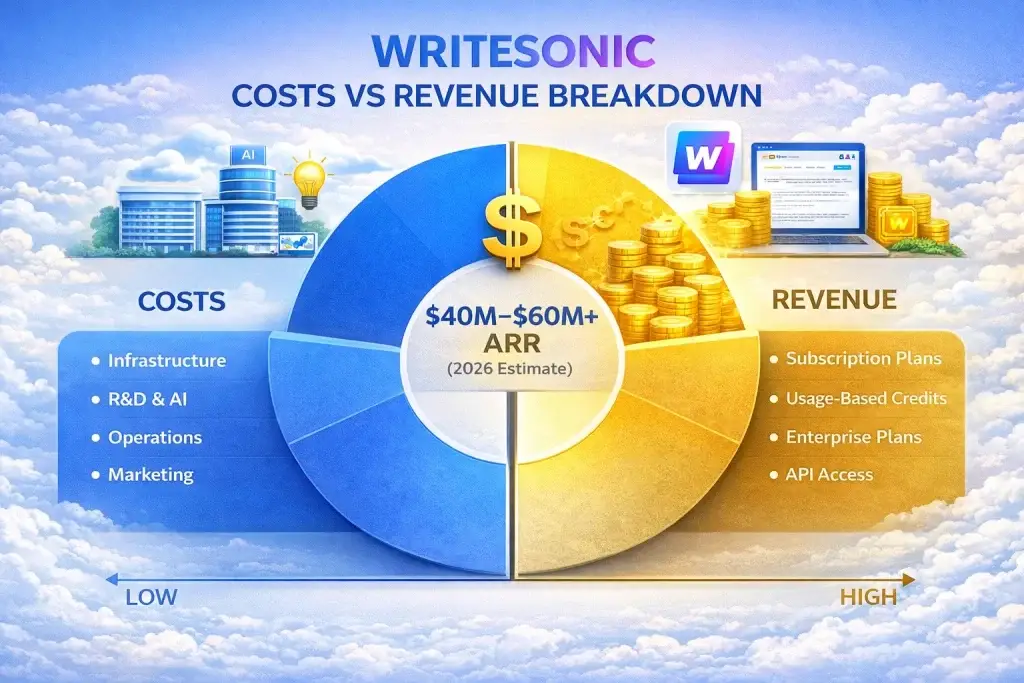
Writesonic operates with a typical AI SaaS cost structure.
Infrastructure:
• AI model inference costs (major expense)
• Cloud hosting
Customer acquisition:
• SEO
• Content marketing
• Paid ads
Marketing spend:
High due to competitive AI space.
Operations:
• Engineering teams
• Product development
R&D:
• AI model improvements
• Feature expansion
Unit economics:
• High gross margins but dependent on AI costs
• Margins improve with scale
Margin strategy:
• Optimize API/model costs
• Increase pricing tiers
• Push annual subscriptions
Future Revenue Opportunities (2026–2028 Outlook)
AI agent ecosystem:
• Autonomous content workflows
Enterprise expansion:
• Large-scale AI deployments
New monetization layers:
• AI subscriptions bundled with tools
• Workflow automation pricing
Market expansion:
• Non-English markets
• SMB adoption
Risks:
• High competition (OpenAI, Jasper, etc.)
• Pricing pressure
• AI commoditization
Startup opportunities:
• Niche AI tools
• Vertical-specific AI SaaS
• Workflow automation platforms
Lessons for Entrepreneurs
What works:
• Usage-based pricing
• Freemium acquisition
• Product-led growth
What to replicate:
• Credit-based monetization
• Multi-product ecosystem
• Upsell funnels
Market gaps:
• Industry-specific AI tools
• Better UX in AI platforms
What to improve:
• Reduce reliance on third-party AI models
• Improve retention loops
Final Thought
Writesonic shows how modern SaaS is evolving—from charging for access to charging for output and outcomes. That shift is critical in the AI era.
For founders, the key takeaway is clear: pricing should align directly with the value your product delivers. That’s where sustainable growth happens.
As AI becomes more competitive, the winners won’t just have better models—they’ll have better monetization systems, and Writesonic is already moving in that direction.
FAQs
1. How much does Writesonic make per user?
Typically $15–$100+ per month depending on usage and plan.
2. What is the most profitable revenue stream for Writesonic?
Subscription revenue due to recurring nature.
3. How does Writesonic’s pricing compare to competitors?
Generally competitive, with strong value through bundled features.
4. What percentage does Writesonic charge for usage?
It uses a credit-based system rather than percentage fees.
5. How has Writesonic’s revenue model evolved?
From simple subscriptions to hybrid usage-based pricing.
6. Can small startups use a similar model?
Yes, especially in SaaS and AI-based products.
7. What scale is needed for profitability?
Moderate scale with strong retention can achieve profitability.
8. How can founders implement a similar model?
Start with freemium, then layer usage-based pricing.
9. What alternatives exist to this revenue model today?
Flat subscription SaaS, API-first pricing, and enterprise licensing.
Miracuves is an independent software development company. We are not affiliated with, connected to, sponsored by, or endorsed by any company or product named in this article.
Terms such as “X Clone” are used descriptively. It is how the software industry refers to building a platform with functionality comparable to a known service, and how clients search for it.
The entire design and codebase of our products is built by our own team. Our products contain no code, design, graphics, or content originating from any third-party website or applications.
All third-party names and marks referenced in this article are the property of their respective owners, referenced solely to identify the services discussed.