



Skyscanner generated ~£389.9 million (~$490M) in 2025 revenue, with strong profitability and ~24% EBIT margins—an impressive feat for a platform that doesn’t sell flights directly.
For founders, Skyscanner is a masterclass in aggregation economics—building a high-intent traffic engine and monetizing it without owning inventory. If you’re building a marketplace, SaaS aggregator, or AI discovery product, this model is extremely relevant.
What makes Skyscanner particularly interesting is its position in the decision layer of travel. It doesn’t compete with airlines or OTAs on inventory—it controls where users start their journey. That strategic positioning allows it to influence billions of dollars in bookings while capturing a slice of every transaction indirectly.
Even more powerful is its demand-first model. Instead of spending heavily on supply (like hotels, fleets, or inventory), Skyscanner invests in traffic acquisition, SEO dominance, and user trust. Once that demand is aggregated, monetization becomes a function of routing users to the highest-value partners.
Skyscanner Revenue Overview – The Big Picture
Skyscanner operates as a meta-search platform—it doesn’t own inventory but captures value at the discovery layer.
Financial Snapshot (Latest Available Data + 2026 Estimates):
- 2025 Revenue: ~£389.9M (~$490M)
- 2026 Estimated Revenue: ~$520M–$560M (based on growth trend)
- EBIT Margin: ~23.9%
- Net Profit: ~£85M
- Valuation (last known): ~$1.6B (Trip.com acquisition benchmark)
- Monthly Users: ~100M+ users, billions of searches annually
Growth Insight:
Revenue grew from ~£283M → £389M in recent years, indicating strong post-pandemic travel recovery and monetization expansion.
Benchmark Comparison:
| Company | Revenue Scale | Model Type |
|---|---|---|
| Skyscanner | ~$500M | Meta-search |
| Expedia | ~$7B+ | Full-stack OTA |
| Hopper | ~$260M | App-based OTA |
Key Insight:
Skyscanner earns less revenue than OTAs but operates with higher margins due to asset-light structure.
Read More: What Is Skyscanner? A Simple Guide to the Travel Search Platform

Primary Revenue Streams Deep Dive
Revenue Stream #1: Flight Referral Commissions
This is Skyscanner’s core revenue engine.
How it works:
Users search flights → click airline/OTA → complete booking → Skyscanner earns commission.
- Estimated Share: ~65–70%
- Performance Data: Flight commissions alone exceeded £271M in recent reporting
- Pricing Model: Cost-per-click (CPC) + cost-per-acquisition (CPA)
Why it works:
High-intent users = high conversion rates = premium pricing from airlines.
Revenue Stream #2: Hotel Booking Referrals
Skyscanner aggregates hotel listings and redirects users to booking platforms.
- Estimated Share: ~5–8%
- Performance Data: Hotel commissions ~£9.7M+
- Pricing Model: CPA (commission per booking)
Strategic Role:
Lower volume than flights but higher margin per transaction.
Revenue Stream #3: Car Rental Commissions
Car rental search is bundled with travel planning.
- Estimated Share: ~3–5%
- Performance Data: ~£11.5M revenue
- Pricing Model: CPA
Founder Insight:
Bundling adjacent services increases average revenue per session.
Revenue Stream #4: Advertising & Sponsored Listings
Airlines and OTAs pay for premium placement.
- Estimated Share: ~15–20%
- Performance Data: ~£56.9M+ from ads/analytics
- Pricing Model: CPC / display advertising
Example:
Top search results are often paid placements.
Revenue Stream #5: Ancillary Revenue (Insurance, API, Data)
- Travel insurance referral fees
- Data insights for partners
- API integrations for travel platforms
- Estimated Share: ~3–5%
Revenue Streams Breakdown (Latest Available Data)
| Revenue Stream | Description | Estimated Revenue Share | Pricing Model |
|---|---|---|---|
| Flight Commissions | Airline & OTA referrals | 65–70% | CPC + CPA |
| Hotel Referrals | Hotel bookings via partners | 5–8% | CPA |
| Car Rentals | Rental booking referrals | 3–5% | CPA |
| Advertising | Sponsored listings & display ads | 15–20% | CPC |
| Ancillary | Insurance, API, data monetization | 3–5% | Referral + licensing |
The Fee Structure Explained
Skyscanner monetizes partners, not users.
Key Mechanics:
- Users: Free (zero direct fees)
- Airlines/OTAs: Pay for traffic and conversions
- Advertisers: Pay for visibility
Platform Fee Structure (Latest Available Data)
| User Type | Fee Type | Typical Fee Range | Notes |
|---|---|---|---|
| Travelers | None | Free | Core growth driver |
| Airlines | CPC / CPA | $0.20–$5 per click | Depends on route demand |
| OTAs | CPA | 3–8% per booking | High-margin routes cost more |
| Advertisers | Sponsored placement | Variable | Auction-based visibility |
How Skyscanner Maximizes Revenue Per User
Customer Segmentation
- Budget travelers → flight deals
- Premium travelers → flexible tickets, hotels
- Last-minute users → high-margin urgency pricing
Upselling & Cross-Selling
- Flights → Hotels → Car rentals
- Multi-step funnel increases session monetization
Dynamic Pricing Model
- Higher CPC during peak travel seasons
- Airline bidding increases monetization during demand spikes
Retention Monetization
- Price alerts → repeat engagement
- App usage → higher LTV
Psychological Pricing
- “Cheapest month” feature nudges booking decisions
- “Only 2 seats left” urgency increases conversion
LTV Optimization
- Frequent travelers → recurring revenue loop
- Travel planning cycles = repeat monetization
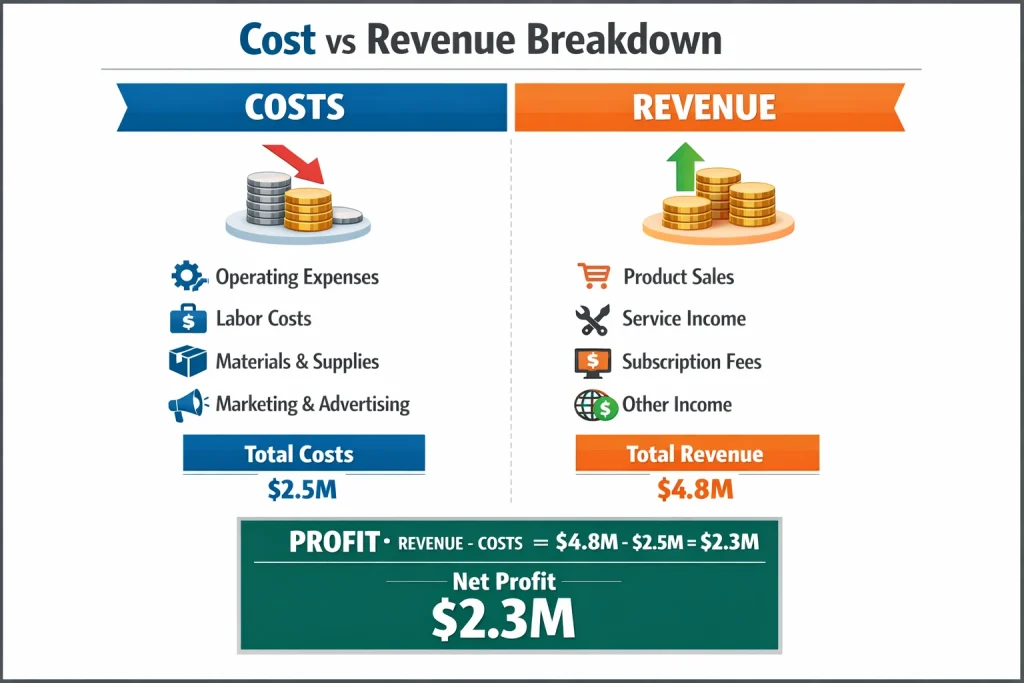
Cost Structure & Profit Margins
Despite being asset-light, Skyscanner has major cost drivers:
Key Cost Areas
- Infrastructure: Search indexing, real-time pricing systems
- Customer Acquisition: SEO + paid marketing
- Marketing Spend: Brand campaigns globally
- Operations: Partnerships with airlines & OTAs
- R&D: AI-driven travel recommendations
Unit Economics Insight
- Traffic is expensive, but:
- High-intent users = high conversion
- Margins stay strong (~24% EBIT)
Profit Strategy
- No inventory risk
- No logistics costs
- Scales with demand
Future Revenue Opportunities (2026–2028 Outlook)
AI-Driven Monetization
- Personalized travel recommendations
- AI trip planning assistants
- Predictive pricing insights
Expansion Opportunities
- Emerging markets (India, Southeast Asia)
- Localized pricing models
- Mobile-first monetization
New Revenue Streams
- Subscription-based travel insights
- Fintech (travel credit, BNPL)
- Dynamic bundling (flight + hotel + insurance)
Risks
- Dependence on Google Flights
- OTA competition (Expedia, Booking)
- Airline direct booking strategies
Startup Opportunity
- Niche aggregators (luxury, remote work travel)
- AI-powered trip builders
- Vertical-specific search engines
Lessons for Entrepreneurs
What Works
- Capture high-intent traffic
- Monetize at the decision layer
- Stay asset-light
What You Can Replicate
- Aggregation + referral model
- Marketplace without inventory
- Multi-stream monetization
Market Gaps
- Hyper-personalized travel
- AI-first planning
- Subscription-based discovery
What Could Be Improved
- Better UX for multi-leg trips
- Transparent pricing vs OTAs
- Stronger loyalty ecosystem
Final Thought
Skyscanner proves that owning the user journey is more powerful than owning the product. In 2026, aggregation plus intelligence is one of the most scalable business models founders can build.
What’s evolving now is the shift from aggregation to intelligent orchestration. Platforms like Skyscanner are no longer just listing options—they’re increasingly guiding decisions through predictive pricing, personalized recommendations, and behavioral insights. This transition unlocks even higher monetization potential because the platform moves closer to influencing when and why users convert.
Another key takeaway is the power of distribution leverage. Skyscanner doesn’t need to outspend airlines or OTAs on inventory—it wins by being the first touchpoint. In digital markets, controlling entry points often creates stronger defensibility than controlling supply.
For founders, the real opportunity lies in combining aggregation + AI + vertical focus. Whether it’s travel, fintech, healthcare, or SaaS tooling, there’s still massive whitespace for platforms that can simplify decision-making and capture intent early.
FAQs
1. How much does Skyscanner make per transaction?
Typically earns 3–8% commission or CPC fees per booking click, depending on partner deals.
2. What is the most profitable revenue stream for Skyscanner?
Flight commissions dominate both revenue and profitability.
3. How does Skyscanner’s pricing compare to competitors?
Cheaper for users (free), but partners pay similar or higher CPC compared to Google Flights.
4. What percentage does Skyscanner take from providers?
Usually 3–8% per booking or variable CPC fees.
5. How has Skyscanner’s revenue model evolved?
Shifted from pure search to ads + data + bundled services.
6. Can small startups use a similar model?
Yes—but requires strong SEO or niche traffic.
7. What scale is needed for profitability?
Millions of monthly users to generate meaningful commission revenue.
8. How can founders implement a similar model?
Build aggregation → capture intent → monetize via referrals.
9. What alternatives exist to this revenue model today?
Subscription travel platforms
Direct OTA models
AI travel concierge services