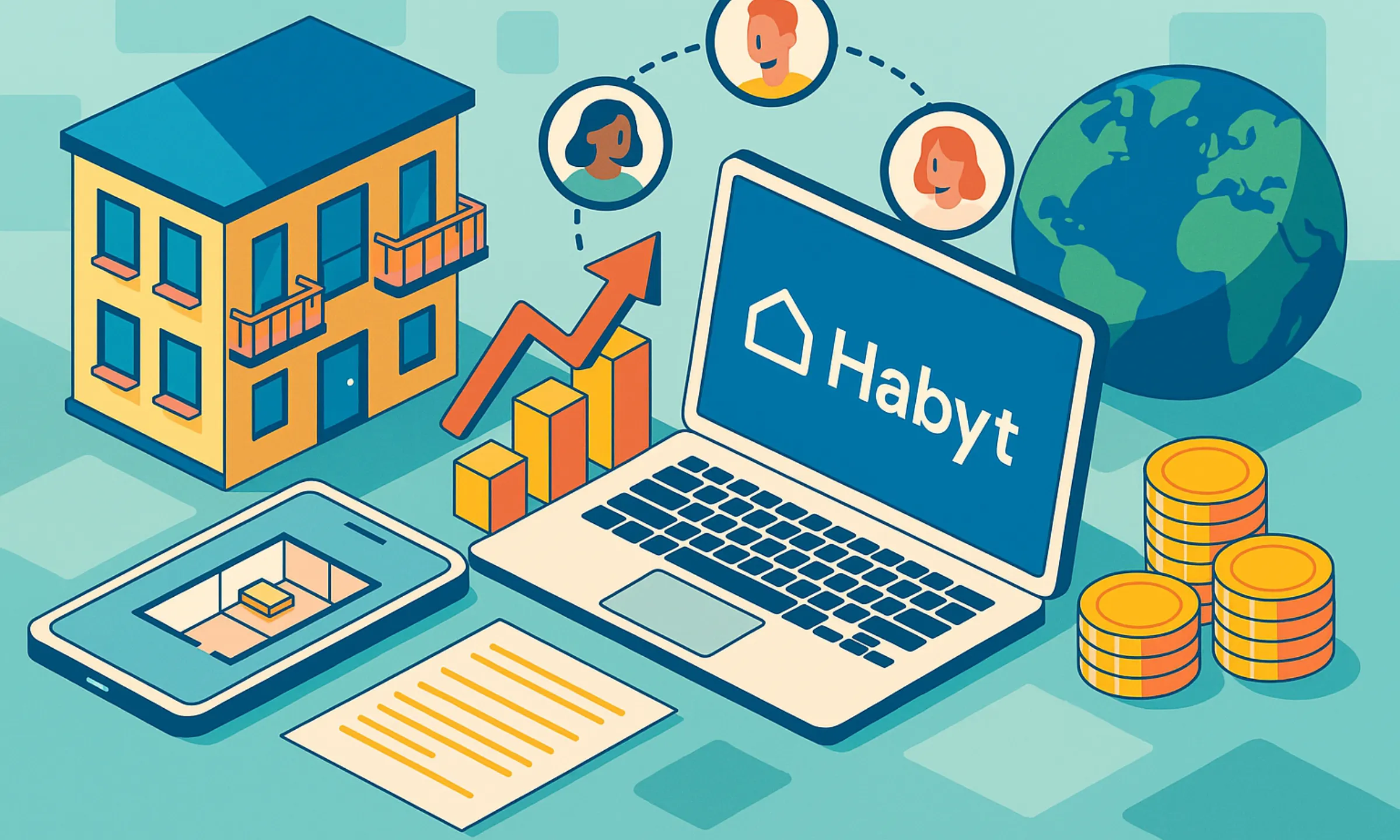
Habyt grew from a Berlin startup in 2017 to a global coliving powerhouse operating across 50+ cities by 2025 — uniting property, technology, and community under one scalable model.
Explore business model of Habyt and strategy powering its global coliving expansion. Learn how it’s reshaping real estate innovation In an era where housing affordability, flexibility, and digital nomadism define lifestyle choices, Habyt reimagines how people live and connect. Its business model matters because it’s not just renting rooms — it’s productizing urban living.
Entrepreneurs studying Habyt can uncover how to merge real estate assets, subscription models, and tech automation into a profitable, globally scalable platform.
How the Habyt Business Model Works
Habyt operates at the intersection of real estate, technology, and community, offering flexible living spaces that blend the convenience of short-term rentals with the consistency of long-term housing. Its model thrives on operational efficiency, platform integration, and user-centric design — transforming real estate into a subscription-driven experience.
Core Framework Overview
- Type of Model: Hybrid (Real Estate + Subscription + Platform Model)
Habyt owns, leases, and manages properties while monetizing through flexible rental plans — monthly, quarterly, or annual. - Value Proposition:
- For Tenants: Move-in-ready furnished spaces, utilities included, flexible terms, and digital management via the Habyt app.
- For Property Owners: Steady occupancy, revenue optimization, and professional management.
- For Partners: Cross-promotional access to Habyt’s global network (travel, coworking, digital nomad services).
- Stakeholders:
Tenants, property owners, developers, local governments, and service providers (cleaning, maintenance, internet, etc.). - Evolution:
- 2017–2020: Pure coliving startup focused on European urban centers.
- 2021–2023: Acquired Hmlet (Asia) and Common (U.S.), becoming the largest global flexible living operator.
- 2024–2025: Introduced unified digital leasing and analytics platforms across continents.
- Why It Works (2025 Context):
- Global shift toward flexible work and mobility.
- Preference for hassle-free housing with community benefits.
- Institutional investment in “Living-as-a-Service” assets.
- Tech automation reducing operational costs.
Read more : What Is Habyt App and How Does It Work?
Target Market & Customer Segmentation Strategy
Habyt’s success is built on understanding how modern tenants live, work, and move. It caters to digital nomads, young professionals, remote workers, and global citizens seeking community, flexibility, and comfort — not traditional leases.
The brand’s customer segmentation strategy combines data analytics and localized design, ensuring that each property fits its audience — whether it’s a high-end studio in Singapore or a shared apartment in Berlin.
Primary Customer Segments
- Young Professionals (25–40):
Seek urban convenience, flexible leases, and community living with minimal setup time. - Digital Nomads & Remote Workers:
Value flexibility across cities, furnished setups, coworking access, and transparent digital booking. - Expats & Long-Stay Travelers:
Desire community-oriented living with utilities and services included. - Corporate Clients:
Companies providing relocation or housing for distributed teams and short-term assignments.
Customer Journey (Discovery → Conversion → Retention)
- Discovery: Online search, social media, relocation platforms, or referral from global housing networks.
- Conversion: Seamless digital onboarding — explore, apply, and sign contracts online.
- Experience: Frictionless move-in, app-based support, and community engagement events.
- Retention: Discounts for long stays, loyalty perks, referrals, and the ability to move between cities.
Acquisition Channels
- SEO & paid digital ads targeting relocation and flexible housing keywords.
- Partnerships with travel platforms and coworking spaces.
- Corporate relocation programs and HR partnerships.
- Social media storytelling focused on the “global citizen lifestyle.”
Market Positioning
Habyt’s competitive edge lies in being a global brand with local authenticity — maintaining consistency in service quality while adapting to cultural nuances.
By 2025, business model of Habyt controls a growing share of the global coliving sector, estimated to be over $25 billion, and stands out through:
- Standardized living experience across continents.
- Integrated technology and tenant analytics.
- Community-driven engagement that increases retention rates.
Revenue Streams and Monetization Design
Habyt’s business model converts physical real estate into recurring digital income streams.
Unlike traditional landlords who depend solely on rent, Habyt layers subscriptions, value-added services, and B2B partnerships — creating a multi-dimensional monetization ecosystem.
Primary Revenue Stream: Rental Subscriptions
- Mechanism: Monthly or flexible-term subscriptions (1–12 months).
- Structure: Pricing varies based on location, unit type, and amenities.
- Share of Revenue: ~75–80% of total income.
- Growth Trajectory: Global average occupancy rate above 90% in 2025; ARR (Annual Recurring Revenue) growing 25% YoY due to unified digital platform integration.
Habyt’s rental subscription provides predictability similar to SaaS — steady, recurring, and scalable as inventory expands.
Secondary Revenue Streams
- Value-Added Services (10–12%):
- Cleaning, maintenance, internet, and furnishing packages.
- Upsells via the Habyt app (WiFi upgrades, laundry, move-in kits).
- Corporate Housing Programs (5–7%):
- B2B contracts with companies for housing teams and executives.
- Partnership pricing and multi-location housing plans.
- Community Events & Membership Add-ons (3–5%):
- Paid events, networking dinners, or wellness programs in premium locations.
- Paid events, networking dinners, or wellness programs in premium locations.
- Technology Licensing (Emerging Stream):
- Licensing Habyt’s property management platform to local operators.
Monetization Strategy Overview
Habyt’s revenue architecture is built around retention, cross-selling, and operational efficiency.
- Cross-sell: Add-ons through the Habyt (cleaning, coworking, insurance).
- Upsell: Premium apartments or longer-term plans with lower per-month pricing.
- Tiered Pricing Psychology: Encourages long-term commitments with perceived savings — a subscription logic applied to housing.
Read more : Best Habyt Clone Scripts 2025 — Build a Global Co-Living Platform

Operational Model & Key Activities
Behind Habyt’s sleek housing experience lies a complex operational engine that integrates real estate management, digital automation, and global customer service.
Its success in 2025 depends on blending local property operations with centralized technology systems, ensuring consistency across continents.
Core Operations
- Property Acquisition & Management:
Long-term leases or management agreements with developers and landlords.
Habyt ensures standardized furnishing, safety, and design guidelines. - Platform & Technology Management:
Habyt’s proprietary tech handles listings, payments, contracts, and tenant communication — minimizing manual work. - Customer Support & Community Building:
24/7 digital support, on-site managers, and engagement activities to foster tenant loyalty. - Quality Control & Maintenance:
Regular inspections and centralized reporting to maintain consistency. - Marketing & Growth:
Content marketing, referral programs, and city-based influencer collaborations.
Resource Allocation (Estimated 2025 Breakdown)
- Tech & Platform Development: ~30%
- Operations & Facility Management: ~35%
- Marketing & Customer Acquisition: ~20%
- Human Resources & Community Programs: ~10%
- R&D and Market Expansion: ~5%
Operational Strengths
- AI-powered occupancy prediction for pricing optimization.
- Centralized vendor management reducing service costs by up to 15%.
- Smart IoT integrations for energy monitoring and automation.
Regional hubs to manage logistics and compliance locally.
Strategic Partnerships & Ecosystem Development
Habyt’s rise to global prominence was fueled by strategic partnerships — not just in real estate, but across the tech, finance, and lifestyle ecosystems.
Its collaboration philosophy centers on creating mutual value networks that amplify reach, lower operational costs, and enhance tenant experience.
Key Partnership Types
- Technology & API Partners
- Integration with smart-home and IoT platforms for energy control, keyless entry, and maintenance tracking.
- Collaboration with SaaS companies for CRM, analytics, and tenant onboarding automation.
- Payment & Financial Alliances
- Partnerships with fintech firms for automated billing, digital deposits, and cross-border rent payments.
- Tie-ups with insurance providers for tenant and property protection.
- Real Estate Developers & Landlords
- Co-branded projects and lease-to-operate models that allow rapid geographic scaling.
- Strategic acquisition of underperforming properties to convert into Habyt units.
- Marketing & Distribution Partners
- Alliances with coworking brands, travel companies, and HR relocation firms to cross-promote flexible living solutions.
- Alliances with coworking brands, travel companies, and HR relocation firms to cross-promote flexible living solutions.
- Regulatory & Expansion Alliances
- Collaborations with local governments to ensure compliance with housing laws.
- Public-private projects supporting affordable urban living.
Ecosystem Insight
Through these partnerships, Habyt has created a multi-sided platform economy — every partner contributes to tenant satisfaction while deriving measurable business benefits.
Its network effects increase with every city it enters: more properties attract more tenants, leading to more data insights and thus more partners seeking access.
Strategic Advantage:
Habyt’s partner ecosystem acts as a defensive moat, making it hard for new entrants to replicate its integrated housing + lifestyle experience.
Growth Strategy & Scaling Mechanisms
Habyt’s expansion journey reflects a playbook of acquisition, integration, and innovation — growing from a Berlin startup into a global housing ecosystem.
Its scaling strategy focuses on standardization, localized execution, and technology-driven growth.
Growth Engines
- Strategic Acquisitions
- Acquired Hmlet (Asia) and Common (U.S.), instantly establishing presence across three continents.
- Integration of multiple brands under the unified Habyt platform streamlined user experience and backend systems.
- Tech-Led Global Expansion
- A single digital backbone manages contracts, billing, and communication globally.
- AI analytics predict demand trends to optimize property onboarding.
- Organic Virality & Brand Community
- Tenant referrals and influencer storytelling fuel organic growth — turning residents into brand advocates.
- Emphasis on community engagement and local events builds loyalty.
- Corporate & Institutional Partnerships
- Partnering with developers, real estate funds, and corporations to secure pre-leased or co-managed units.
- Reduces CapEx burden and accelerates market entry.
- New Market Entry Strategy
- Launches based on data-driven indicators (migration, remote work trends, rental gaps).
- Hub-and-spoke model ensures each regional HQ supports multiple cities.
Scaling Challenges & Solutions
| Challenge | Description | Solution |
| Operational complexity | Managing global standards across 50+ cities | Regional hubs with local operations teams |
| Tech infrastructure | Handling multi-country regulations & currencies | Centralized API-driven architecture |
| Regulatory hurdles | Zoning, rental laws, short-term restrictions | Legal partnerships & flexible lease models |
| Cultural adaptation | Different expectations of “community” | Local design teams & cultural customization |
Competitive Strategy & Market Defense
Habyt competes in a rapidly evolving PropTech and flexible-living ecosystem that includes startups like The Collective, Common Living (now merged), Outsite, and Sonder.
Its competitive strategy focuses on global integration, technology standardization, and trust-driven brand experience — the three pillars that protect its market share in 2025.
Core Competitive Advantages
- Network Effects & Switching Barriers
- Tenants can move between 50+ global cities without breaking leases — a major retention driver.
- Unified app experience builds switching friction by combining payment, service, and community under one login.
- Brand Equity & Customer Trust
- Consistent property quality and digital transparency position Habyt as a reliable global housing brand.
- Verified listings and clear pricing foster user confidence.
- Innovation & Technology Differentiation
- Data-driven demand forecasting enables smart property onboarding.
- AI-led pricing and automated maintenance systems reduce cost and improve ROI.
- Data & Personalization
- Proprietary CRM tracks tenant behavior and preferences to tailor offers, renewals, and event invites.
- Proprietary CRM tracks tenant behavior and preferences to tailor offers, renewals, and event invites.
- Operational Efficiency & Scale
- Standardized interior design and furnishing logistics lower setup costs.
- API-driven vendor management enables fast property turnarounds.
Market Defense Tactics
- Feature Expansion: Adding financial and lifestyle services (insurance, coworking, mobility) to deepen user dependency.
- Regulatory Navigation: Early compliance engagement and partnerships protect long-term city operations.
- Pricing Resilience: Flexible tiering allows Habyt to stay competitive without eroding margins.
- Acquisition Strategy: Continual absorption of regional competitors or distressed coliving operators.
- Brand Community: Strengthens retention through emotional connection, not just convenience.
Lessons for Entrepreneurs & Implementation
Habyt’s story is a masterclass in how to merge real estate with technology to create scalable, subscription-based living solutions.
For founders and startups, its journey provides practical blueprints for building durable, high-growth platforms that solve real-world problems while generating predictable recurring revenue.
Key Factors Behind Habyt’s Success
- Customer-Centric Design: Every product decision revolves around convenience, flexibility, and trust.
- Standardization + Localization: The global experience feels uniform yet locally relevant.
- Strategic M&A Growth: Acquiring Common and Hmlet gave Habyt instant market access and operational maturity.
- Data-Driven Operations: Smart pricing, predictive occupancy, and real-time reporting fuel efficiency.
- Community as a Retention Lever: Emotional connection transforms users into ambassadors.
Replicable Principles for Startups
- Build platforms that own customer relationships, not just assets.
- Design flexible subscription tiers instead of rigid ownership models.
- Prioritize automation over manpower — let software scale, not staffing.
- Integrate multiple value propositions (housing + services + experiences).
- Focus on ecosystem partnerships early to accelerate growth.
Common Mistakes to Avoid
- Over-expansion without localized compliance frameworks.
- Treating real estate purely as inventory instead of as a service ecosystem.
- Neglecting data-driven personalization and lifecycle management.
Ready to implement Habyt’s proven business model for your market?
Miracuves builds scalable, white-label housing and rental platforms with built-in subscription, analytics, and marketplace modules.
We’ve helped 200+ entrepreneurs launch profitable apps within 3–6 weeks. with price start at $12999
Get your free business model consultation today at Miracuves
Conclusion :
Habyt’s journey from a Berlin startup to a global coliving leader is a testament to how innovation, timing, and operational excellence can transform even traditional industries like real estate.
By turning housing into a tech-enabled, subscription-based experience, Habyt didn’t just rent rooms — it redefined how the modern world lives, works, and connects.
In 2025 and beyond, the future of real estate lies in Living-as-a-Service (LaaS) — where users demand flexibility, digital access, and community as part of everyday life.
For entrepreneurs, the Habyt model proves that success isn’t just about owning assets — it’s about owning the customer relationship and delivering consistent value across borders.
FAQs :
1. What type of business model does Habyt use?
Habyt operates on a hybrid business model that combines real estate leasing, technology-driven management, and subscription-based housing. It earns recurring revenue from flexible living plans and value-added services.
2. How does Habyt’s business model create value?
Habyt creates value by turning real estate into a service ecosystem — offering tenants convenience and flexibility, while providing landlords guaranteed occupancy and stable returns.
3. What are Habyt’s key success factors?
Habyt’s key success factors lie in its strategic acquisitions (Common, Hmlet) for rapid global expansion, tech-driven operational efficiency, and a community-focused customer experience — all powered by a scalable subscription-based revenue model.
4. How scalable is Habyt’s business model?
Highly scalable. Its unified digital infrastructure supports operations across 50+ global cities, allowing quick expansion without proportional cost increases.
5.What are the biggest challenges Habyt faces?
Habyt’s biggest challenges include navigating complex multi-country regulations, ensuring consistent quality standards across diverse markets, and staying ahead of rising competition from regional flexible-living startups
6. How can entrepreneurs adapt Habyt’s model to their region?
Focus on local partnerships, compliance, and modular tech infrastructure.
You can replicate Habyt’s success by launching regionally localized coliving or rental platforms with flexible terms and digital management.
7. What are alternatives to Habyt’s model?
Alternatives include Airbnb (short-term marketplace model), Sonder (hotelized apartments), and Blueground (corporate leasing model) — each with different levels of asset ownership and tech integration.
8. How has Habyt’s model evolved over time?
Habyt’s model evolved from a European coliving startup (2017–2020) to a global housing operator through major acquisitions (2021–2023), and by 2024–2025, it transformed into a tech-driven digital ecosystem offering mobility, flexibility, and community-focused living.
Related Article :