


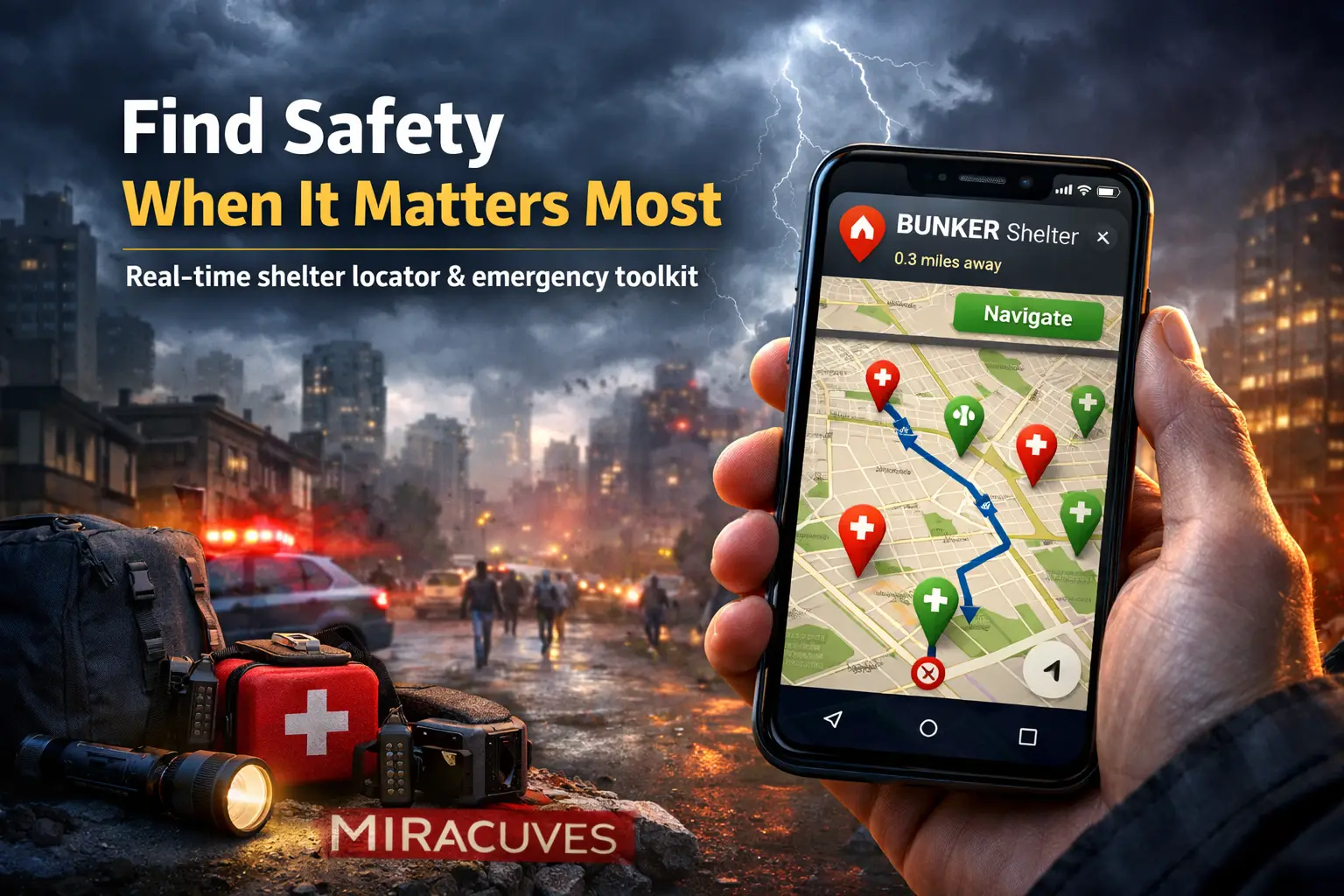
When conflict erupts or disaster strikes, the first question on everyone’s mind is: “Where can I find safety?” This primal need becomes critically urgent during active wars, natural disasters, or humanitarian crises. Yet reliable shelter information remains dangerously fragmented—scattered across outdated government PDFs, inconsistent NGO lists, and unreliable word-of-mouth networks that deteriorate as situations evolve. That is exactly where an emergency shelter finder app can make a meaningful difference by helping people access verified safety information faster.
As someone who’s spent 20+ years building technology for startups and enterprises, I kept returning to a simple observation: the same tools we use to launch products—speed, iteration, user-centric design—are desperately needed in humanitarian contexts. This insight led to DeBunkered.live, a free emergency shelter finder app we built not as a charity project, but as a demonstration of what happens when proven startup methodology meets urgent human need.
Here’s how we approached it, and why these lessons apply far beyond shelter maps—directly to how we build technology for Miracuves clients every day.
How Startup Methodology Solves Humanitarian Challenges
1. Start with a Micro-Problem, Not a Mission Statement
We didn’t begin by saying, “We will solve global displacement.” Instead, we asked a concrete, testable question:
“Can we verify and map 10 legitimate shelters in one city, make them searchable on a phone, and update them weekly?”
This narrowly defined MVP forced us to focus on what truly mattered: data quality over grandeur. A lesson any founder knows well—progress comes from shipping something small that works, not waiting for perfection. In our case, it meant launching with verified shelters in key European cities before expanding globally based on actual user demand.
Why this works for clients: At Miracuves, we apply this same principle—starting with a validated core feature before expanding scope—whether building a fintech MVP or an enterprise SaaS platform. This approach reduces risk, validates assumptions early, and delivers value faster.
2. Leverage What You Already Have (But Reimagine Its Purpose)
Our technology stack—Flutter for cross-platform apps, Firebase for real-time updates, Google Maps for visualization—wasn’t chosen specifically for this project. It’s what we use daily for client work at Miracuves. The critical shift was in mindset: treating shelter data like a core product feature, not an afterthought.
We applied the same rigor to verification, error handling, and UX that we would for a banking app or healthcare platform. Your existing tools are often far more adaptable than you think—it’s the framing and application that changes.
Client takeaway: When you partner with Miracuves, you benefit from battle-tested technologies we’ve refined across dozens of projects—now purpose-built for your specific challenge. We don’t reinvent the wheel; we optimize what already works for your unique needs.
3. Build for Trust, Not Just Functionality
In emergency situations, trust isn’t just important—it’s a matter of life and death. A shelter listing that’s wrong, outdated, or inaccessible isn’t merely inconvenient; it can lead people into dangerous situations.
So we engineered verification into DeBunkered’s core:
- Every location undergoes manual verification (via trusted local sources, official civil defense feeds, or NGO partners) before appearing
- We automatically sunset stale data and display prominent “last verified” timestamps
- Users can report inaccuracies directly through the app, triggering immediate review
This mirrors our approach to client projects at Miracuves: reliability isn’t a feature you add—it’s the foundation you build upon. Whether handling financial transactions or patient data, trust is non-negotiable. We implement the same verification layers, audit trails, and quality controls in every project we undertake.
4. Design for the Moment of Panic
Think about someone using DeBunkered during a crisis: they might be stressed, injured, on a dying phone battery, navigating with spotty connectivity, or seeking shelter in darkness. We ruthlessly stripped every non-essential element:
- Zero ads, zero sign-ups, zero tracking beyond anonymous usage metrics
- Interface optimized for fast loading even on 2G/3G connections
- Offline functionality once map data is cached
- High-contrast color scheme (yellow #fbbf24 and dark blue #1f2937) for readability in bright sunlight or low battery
- Minimal cognitive load—users grasp the interface in seconds
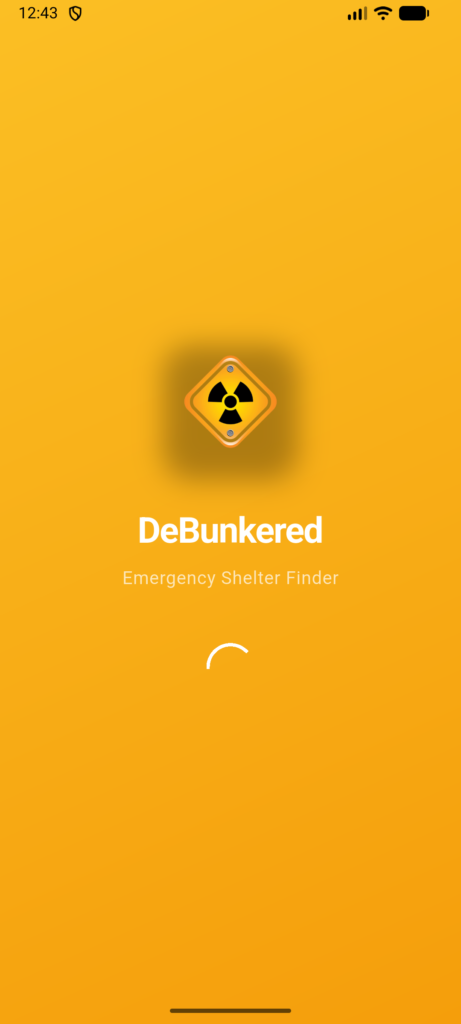
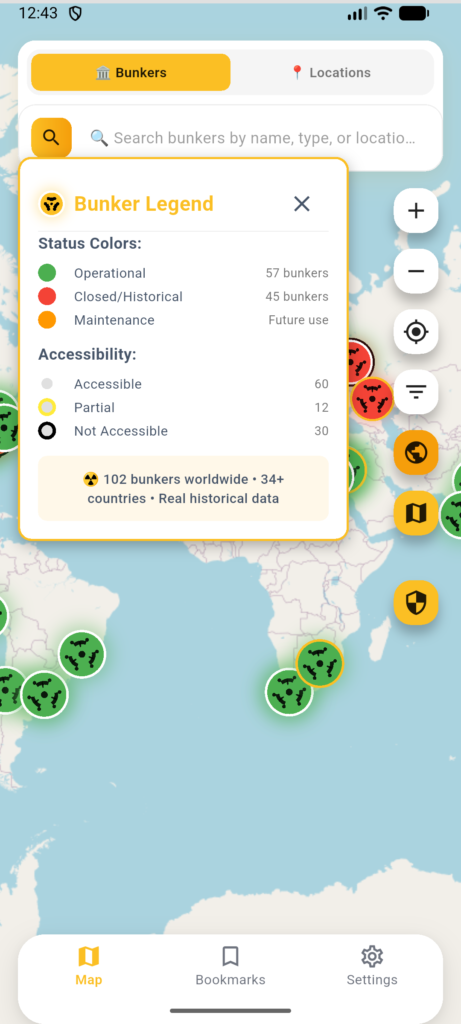
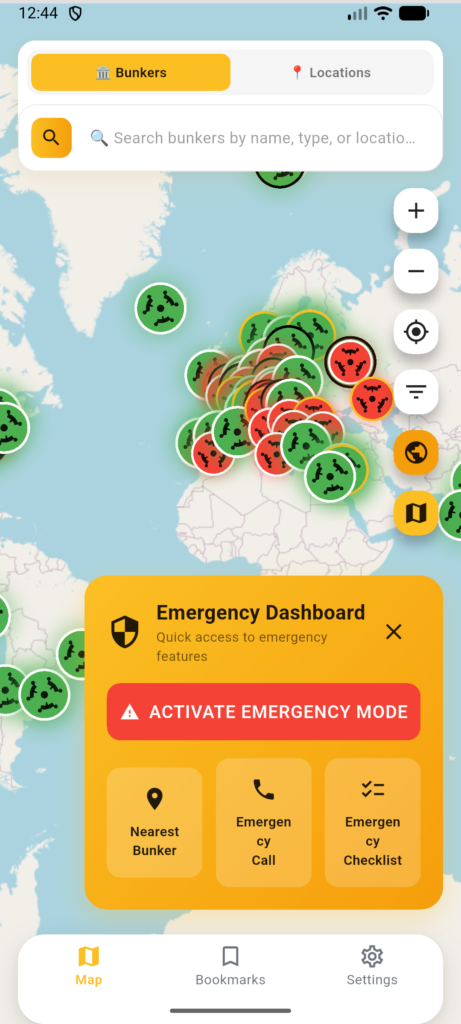
As we’ve learned building field-service apps for clients: emergency UX isn’t about delight; it’s about reducing friction when users have none to spare. We apply this same user-centered approach to all our projects—simplifying complex workflows, anticipating edge cases, and designing for real-world constraints.
5. Let Usage Guide Iteration, Not Assumptions
We launched with a basic web app and Android release. Rather than debating internally, we listened closely to actual user behavior:
- Via the in-app “Share Shelter” button and direct emails to hello@debunkered.live
- Two clear patterns emerged: travelers requested embassy/consulate locations; users in active conflict zones asked for offline map downloads
We shipped updates in two-week cycles based exclusively on this feedback—no internal debates, no vanity metrics. In crisis response, as in startups, your users will tell you what to build next—if you make it easy for them to speak.
This is how we operate at Miracuves: tight feedback loops, rapid iteration based on real data, and zero tolerance for building features nobody asked for. We believe the best products evolve through continuous learning, not boardroom speculation.
The Bigger Picture: Technology as a Force Multiplier
DeBunkered isn’t designed to replace government relief efforts or NGO coordination. Instead, it’s meant to amplify their effectiveness by:
- Giving individuals immediate access to vetted safety information so they can make faster decisions
- Freeing up organizers to focus on distribution, medical support, and logistics rather than basic information routing
- Creating a living database that improves with community input
For Miracuves, this project reinforces our core belief: the same skills that help a startup find product-market fit—the ability to listen deeply, iterate rapidly, and ship with intention—can be redirected toward problems that genuinely matter. Whether you’re building a SaaS platform, a mobile app, or a public safety tool like DeBunkered, the core loop remains constant: empathize, prototype, test, learn.
Experience DeBunkered Today
See the tool in action—whether for your team’s travel safety, community preparedness, or personal peace of mind:
Try our emergency shelter finder at DeBunkered.live
Download on Android via Google Play
Need Technology That Works When It Matters Most?
At Miracuves, we specialize in turning ideas into market-ready products—whether for startups, enterprises, or initiatives like this one. If you have a project that blends technical rigor with real-world impact (especially where reliability and trust are paramount), let’s discuss how we can help:
Explore Miracuves’ custom app development services
DeBunkered remains free and open to all. We actively welcome shelter verification suggestions, partnership inquiries with NGOs or government agencies, and feedback on how we can make it more useful. Reach our team at hello@debunkered.live.
Built by the team at Miracuves Solutions. Applying 20+ years of startup and enterprise expertise to humanitarian challenges.
Frequently Asked Questions
Q: Is DeBunkered really free to use?
A: Yes, DeBunkered is completely free for all users. There are no ads, no premium tiers, and no hidden costs. We believe critical safety information should be accessible to everyone, especially during emergencies.
Q: How do you ensure the shelter information is accurate?
A: Every shelter listing undergoes manual verification through trusted local sources, official government feeds, or NGO partners before appearing in the app. We also implement automatic data sunsetting and allow users to report inaccuracies for immediate review.
Q: Can I use DeBunkered offline?
A: Yes! Once you’ve loaded shelter data for a region, the app works completely offline. You can also explicitly download specific cities or regions for offline use when you know you’ll be in areas with poor connectivity.
Q: How does building DeBunkered relate to Miracuves’ client work?
A: DeBunkered applies the same principles we use for all client projects: startup methodology for rapid validation, enterprise-grade reliability for trust, and user-centered design for real-world usability. The technical stack (Flutter, Firebase, Google Maps) is identical to what we use for fintech, healthcare, and enterprise applications.
Q: How can I contribute to DeBunkered?
A: We welcome shelter verification suggestions, partnership inquiries with NGOs or government agencies, and feedback on how we can improve the app. Reach our team at hello@debunkered.live.