



You’ve heard the horror stories about delivery platforms getting hacked, customer data leaked, orders manipulated, and even payment systems compromised. And when you’re considering launching a white-label Delivery Hero–style app, the first question that naturally hits you is: “Is it safe?”
In 2025, the stakes are higher than ever. Global cyberattacks on food delivery and logistics apps have increased sharply due to the rise in online transactions, location-based data, and API-driven architectures. Safety is no longer optional — it’s the foundation of trust, customer retention, and regulatory compliance.
This guide gives you a completely honest, research-driven breakdown of white-label Delivery Hero app security. You’ll learn exactly what risks exist, what standards matter, and how to ensure your platform is protected. And more importantly, you’ll see how Miracuves approaches security differently — with a security-first mindset built into every layer of the platform.
Understanding White-Label Delivery Hero App Security Landscape
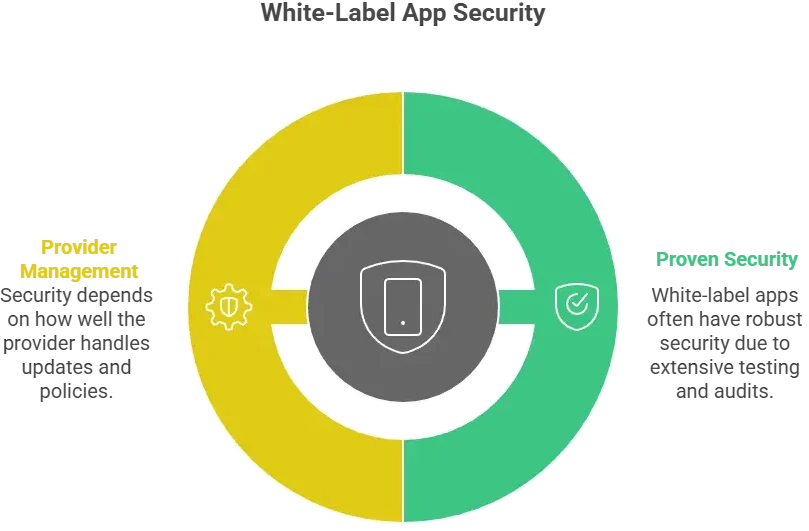
When people hear “white-label app,” they often assume it means lower security or reused code that may carry hidden risks. But in reality, white-label security depends entirely on the provider’s architecture, standards, and processes — not the concept itself.
What “white-label security” actually means
A white-label Delivery Hero app is built from a pre-existing framework, but the security must still follow industry best practices: encryption, secure APIs, compliance, and continuous monitoring. Quality providers treat security as a product layer, not an afterthought.
Why people worry about white-label apps
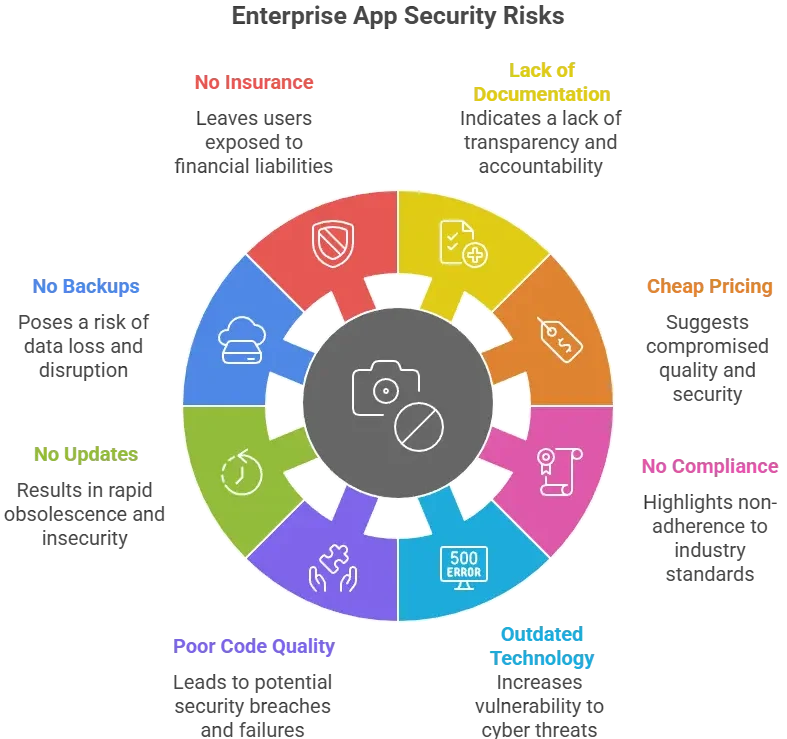
- Reused code may contain hidden vulnerabilities
- Some providers cut corners with low-cost hosting
- Lack of compliance certifications
- Outdated tech stacks and API structures
- No transparency on security audits
These concerns are valid — but they are risks of bad providers, not of white-label solutions in general.
Current threat landscape for Delivery Hero–type platforms
Delivery and logistics apps face the highest risks in three specific areas:
- Payment fraud and intercepts (attackers targeting in-app transactions)
- Location data leakage (riders, vendors, customers)
- API abuse (order manipulation, price tampering, unauthorized access)
- Account takeover attacks (phishing + poor authentication)
Security standards in 2025
Top platforms must now align with:
- Zero Trust security frameworks
- Regular penetration testing cycles
- End-to-end encryption for all user and order data
- Secure delivery partner onboarding
- Global data protection mandates (GDPR, CCPA, PDPA, etc.)
Real-world statistics
- Food delivery apps saw a 47% rise in API attacks in 2024–2025.
- 60% of breaches in delivery apps stem from improper access control and weak authentication.
- Payment fraud in delivery apps increased by 33% last year.
These numbers show why security has become the deciding factor for choosing a provider.
Key Security Risks & How to Identify Them
Security in a white-label Delivery Hero app revolves around three major categories: data protection, technical vulnerabilities, and business risks. Understanding these helps you evaluate whether a provider is genuinely secure or simply offering a low-cost product with hidden dangers.
1. Data Protection & Privacy Risks
User personal information
Delivery apps collect highly sensitive data: names, phone numbers, addresses, order histories. Poor encryption or insecure storage can lead to identity theft or targeted attacks.
Payment data security
If PCI DSS standards are not followed, hackers can capture card details, trigger fraudulent transactions, or manipulate payment flows.
Location tracking concerns
Delivery apps use real-time GPS data. If not securely handled, attackers can track users, riders, and vendors — a major safety violation.
GDPR / CCPA compliance
Non-compliance results in heavy fines. White-label apps must provide:
- Right to data access
- Right to deletion
- Consent-based tracking
- Clear data storage governance
2. Technical Vulnerabilities
Code quality issues
Unoptimized or outdated code can create injection points, insecure redirects, and performance weaknesses.
Server security gaps
Apps hosted on cheap or unmanaged servers are prone to:
- DDoS attacks
- Unauthorized access
- Data theft
- Ransomware
API vulnerabilities
Delivery Hero–style apps rely heavily on APIs for orders, menus, tracking, payments. Weak endpoints invite:
- Order manipulation
- Price alteration
- Duplicate transactions
- Unauthorized data extraction
Third-party integrations
Improperly vetted plugins, payment gateways, or mapping systems can create backdoors.
3. Business Risks
Legal liability
A breach triggers lawsuits, penalties, and compliance violations, especially with multi-country delivery operations.
Reputation damage
Security failures instantly destroy customer trust. Food delivery apps rely on daily usage — trust loss means operational collapse.
Financial losses
- Fraudulent refunds
- Chargebacks
- System downtime
- Regulatory fines
These can exceed the cost of the entire app.
Regulatory penalties
Weak compliance with GDPR, CCPA, PDPA, IT Act 2000 (India), etc., results in fines starting from thousands to millions of dollars.
Risk Assessment Checklist
Use this to evaluate any white-label Delivery Hero app provider:
- Is all user and order data encrypted (in transit + at rest)?
- Do they follow PCI DSS for payment flows?
- Is 2FA or strong authentication provided?
- Do they conduct regular penetration testing?
- Are security audit reports available?
- Is the hosting infrastructure secured and monitored?
- Do they offer GDPR/CCPA compliance support?
- Is their codebase regularly updated?
- Do they use secure API standards?
- Is a disaster recovery plan included?
A secure provider can answer YES to all.
Read more: – What is Dunzo App and How Does It Work?
Security Standards Your White-Label Delivery Hero App Must Meet
To operate safely in 2025, a white-label Delivery Hero app must follow globally recognized security, data protection, and infrastructure compliance standards. These standards ensure your app meets the same security benchmarks as top enterprise delivery platforms.
Essential Certifications
ISO 27001 compliance
Ensures that the provider follows a complete Information Security Management System (ISMS) with strict controls for data protection, risk management, documentation, and ongoing security improvement.
SOC 2 Type II
Verifies that the provider’s systems — including servers, data handling, and processes — meet strict criteria for security, availability, confidentiality, and processing integrity.
GDPR compliance
Mandatory for handling user data in Europe. Requires:
- Lawful data collection
- Explicit user consent
- Data deletion processes
- Data minimization
- Privacy by design
HIPAA (if applicable)
Required only when handling medical or health-related orders. Useful for delivery apps that include pharmacy or prescription services.
PCI DSS for payments
A must for any app handling card payments. Ensures secure card processing, tokenization, encryption, and protection against payment fraud.
Technical Requirements
Your white-label Delivery Hero app must include the following as standard — not optional:
End-to-end encryption
All customer data, order details, vendor information, and payment interactions must be encrypted both in transit (TLS/SSL) and at rest.
Secure authentication (2FA / OAuth)
Multi-factor authentication protects both users and riders from account takeovers — one of the most common threats in delivery apps.
Regular security audits
Quarterly or bi-annual audits by certified security experts to detect risks before attackers do.
Penetration testing
Simulated cyberattacks on the application to uncover vulnerabilities in code, APIs, and network layers.
SSL certificates across all endpoints
Ensures secure communication and prevents man-in-the-middle attacks.
Secure API design
Delivery apps run on APIs for orders, payments, restaurant panels, rider tracking, etc. APIs must include:
- Token-based authentication
- Rate limiting
- Role-based access control
- Encrypted endpoints
- IP whitelisting options
Security Standards Comparison Table
| Security Standard | Mandatory for Delivery Apps | What It Protects | Why It Matters |
|---|---|---|---|
| ISO 27001 | Yes | Information security processes | Ensures provider’s entire system is secure and audited |
| SOC 2 Type II | Yes | Infrastructure, hosting, processes | Validates continuous security and uptime practices |
| GDPR | Yes (EU users) | User data privacy & rights | Prevents heavy penalties and legal risks |
| PCI DSS | Yes | Payment processing | Protects against card fraud and payment breaches |
| HIPAA | Only if handling medical deliveries | Health data | Required for pharmacy delivery operations |
| SSL/TLS | Yes | Data transmission | Prevents interception and data theft |
| 2FA/OAuth | Strongly recommended | Account security | Stops account takeover attacks |
| Penetration Testing | Yes | App & API vulnerabilities | Detects flaws before attackers exploit them |
A truly secure provider meets all these standards — not just a few.
Red Flags: How to Spot Unsafe White-Label Providers
Not all white-label Delivery Hero app providers take security seriously. Some offer extremely low pricing by cutting corners on architecture, hosting, compliance, and audits. Spotting these warning signs early can save you from costly breaches, legal penalties, and brand damage.
Evaluation Checklist
Before selecting a white-label Delivery Hero app provider, use this due diligence checklist:
Questions to ask providers
- What security certifications do you follow (ISO, SOC, PCI)?
- How often do you conduct penetration tests?
- Do you provide security audit reports?
- Is user data encrypted at rest and in transit?
- How do you handle server monitoring and threat detection?
- What is your update and patching frequency?
Documents to request
- Security policy documents
- Data processing agreements
- Penetration testing reports
- Infrastructure architecture diagrams
- Compliance certificates
- Backup & recovery policy
Testing procedures
- API load and penetration testing
- Authentication strength tests
- Server and firewall configuration checks
- Payment flow security validation
- Endpoint encryption validation
Due diligence steps
- Review client feedback focused on security
- Verify hosting provider and infrastructure layers
- Ask for a demo focusing on backend security
- Ensure the provider follows DevSecOps practices
- Confirm disaster recovery and incident response plans
A reliable provider should pass every step of this evaluation without hesitation.
Read more : – DeliveryHero App Marketing | Delivering Growth That Last
Best Practices for Secure White-Label Delivery Hero App Implementation
Launching a white-label Delivery Hero–style app safely requires a structured approach from pre-launch preparation to post-launch monitoring. Security isn’t a one-time task — it’s an ongoing commitment.
Pre-Launch Security
Security audit process
A full audit of the platform’s codebase, APIs, backend, and server configuration ensures vulnerabilities are discovered before launch.
Code review requirements
Independent or in-house security engineers should review all critical modules, including:
- Authentication
- Payments
- Order APIs
- Vendor and rider panels
- Admin dashboards
Infrastructure hardening
Your servers must be secured with:
- Firewalls
- WAF (Web Application Firewall)
- DDoS protection
- Secure OS configurations
- Role-based access control
- IP whitelisting for admin access
Compliance verification
Map your app against GDPR, CCPA, and PCI DSS requirements and ensure documentation is complete before going public.
Staff training programs
Operational staff and support teams must understand:
- Data handling practices
- Privacy protocols
- Incident escalation
- Fraud detection basics
Even the most secure app can be compromised by poorly trained employees.
Post-Launch Monitoring
Continuous security monitoring
Real-time monitoring detects suspicious behavior such as brute-force attacks, API misuse, or fraudulent ordering patterns.
Regular updates and patches
Security patches must be applied promptly to address vulnerabilities in frameworks, servers, or third-party integrations.
Incident response planning
A predefined process is essential for handling any breach:
- Detection
- Containment
- Notification
- Recovery
- Documentation
User data management
Ensure secure storage, minimal data retention, and encrypted communication for all users, vendors, and delivery partners.
Backup and recovery systems
Regular automated backups (daily or hourly) ensure your business can recover quickly from failures, attacks, or data corruption.
Security Implementation Timeline
| Phase | Duration | Key Activities |
|---|---|---|
| Pre-Launch Audit | Week 1 | Code review, vulnerability scan, compliance checks |
| Infrastructure Setup | Week 2 | Server hardening, SSL, firewall configuration |
| Pre-Launch Testing | Week 3 | Load tests, penetration testing, API security validation |
| Go-Live Preparation | Week 4 | Documentation, staff training, compliance approvals |
| Post-Launch Monitoring | Continuous | Security alerts, updates, data audits, improvement cycles |
Strong implementation results in long-term safety and performance.
Legal & Compliance Considerations
A white-label Delivery Hero app isn’t just a technology product — it’s a legal and regulatory responsibility. Poor compliance can result in heavy fines, shutdown notices, lawsuits, and long-term brand damage. Understanding these requirements ensures your platform remains lawful, transparent, and secure across regions.
Regulatory Requirements
Data protection laws by region
Each region has unique privacy laws that directly affect how your app collects, stores, and processes user data:
- GDPR (Europe) – strictest global standard for data privacy
- CCPA (California) – consumer rights for data transparency
- PDPA (Singapore, Malaysia) – consent and data usage regulations
- IT Act 2000 + DPDP Act 2023 (India) – mandates secure data handling
- PIPEDA (Canada) – requirements for secure cross-border data transfers
Your app must allow:
- Data access requests
- Data deletion requests
- Consent-based tracking
- Clear privacy explanations
- Secure processing policies
Industry-specific regulations
If your app supports pharmacy, grocery, or medical deliveries, additional regulations may apply (HIPAA, NDPS-related compliance, etc.).
User consent management
Users must be informed and must agree to:
- Data tracking
- Location sharing
- Marketing notifications
- Payment processing policies
Consent must be stored securely and be revokable at any time.
Privacy policy requirements
A legal-grade privacy policy should explain:
- What data is collected
- Why it is collected
- How it is processed
- Who can access it
- How long it is stored
- How users can update or delete data
Terms of service essentials
This protects your business by defining:
- Platform usage rules
- Vendor and rider obligations
- Refunds and disputes
- Limitation of liability
- IP ownership
- Termination rights
Liability Protection
Insurance requirements
A serious white-label provider should offer or support coverage for:
- Cyber liability
- Data breach incidents
- Server downtime losses
- Legal defense costs
Legal disclaimers
Proper disclaimers reduce your liability during:
- Order errors
- Delivery delays
- Vendor disputes
- Misuse of the platform
User agreements
Each user role (customers, vendors, riders) must agree to role-specific responsibilities and security terms.
Incident reporting protocols
Your app must have a clear process for reporting:
- Breaches
- Fraud
- Payment disputes
- System failures
This ensures transparency and compliance with law enforcement or regulators when required.
Regulatory compliance monitoring
Security and privacy rules evolve yearly. Regular compliance reviews help ensure your app meets new standards and avoids penalties.
Compliance Checklist by Region
| Region | Required Regulations | Key Requirements |
|---|---|---|
| Europe | GDPR | Consent, data access, deletion rights, strict data protection |
| USA | CCPA, State privacy laws | Consumer rights, opt-out options, transparent data usage |
| Canada | PIPEDA | Secure storage + cross-border data control |
| India | IT Act 2000, DPDP Act 2023 | Data minimization, breach reporting, user rights |
| Middle East | National data laws (UAE, KSA) | Localization, compliance approvals, encrypted processing |
| APAC | PDPA (SG/MY), local laws | Explicit consent, secure processing, minimized retention |
A legally compliant app builds trust, prevents fines, and strengthens your long-term business position.
Why Miracuves White-Label Delivery Hero App Is Your Safest Choice
Most companies talk about security — Miracuves builds it into the DNA of every white-label Delivery Hero app deployment. Security is not an add-on, not an optional upgrade, and not something handled after development. It’s engineered into every layer of the platform from day one.
Miracuves Security Advantages
Enterprise-grade security architecture
Your Delivery Hero–style app runs on a hardened, scalable infrastructure that follows industry-leading security frameworks.
Regular security audits and certifications
Miracuves performs internal and external audits, including code reviews, vulnerability assessments, and penetration tests to keep the platform secure.
GDPR/CCPA compliant by default
User rights, consent management, data transparency, and privacy design principles are fully integrated.
24/7 security monitoring
Our systems constantly track anomalies, suspicious API calls, brute-force attacks, and operational threats so risks are addressed instantly.
Encrypted data transmission
All customer, rider, vendor, and order data is encrypted at rest and in transit using enterprise-level encryption protocols.
Secure payment processing
Built-in PCI DSS–aligned payment flows ensure safe card transactions, tokenized payments, and fraud protection.
Regular security updates
Miracuves maintains all modules, frameworks, APIs, and server components with continuous patching cycles.
Insurance coverage included
Unlike cheap providers, Miracuves offers liability protection to safeguard your platform in the event of unforeseen incidents.
Conclusion
Don’t compromise on security. Miracuves white-label Delivery Hero app solutions come with enterprise-grade protection built in. With over 600 successful projects, we’ve maintained zero major security breaches — a record that speaks for itself.
Security isn’t something you add later or hope will “just work” once your delivery platform goes live. In today’s environment — where cyberattacks, data leaks, and compliance failures can destroy a business overnight — security must be the foundation of your white-label Delivery Hero app, not a feature on your checklist.
Get a free security assessment and see why businesses trust Miracuves for safe, compliant, and future-ready delivery platforms.
FAQs
1. How secure is white-label vs custom development?
A high-quality white-label app is often more secure because its codebase is battle-tested and audited across multiple deployments.
2. What happens if there’s a security breach?
A structured incident response plan activates: containment, recovery, user notification, and forensic analysis.
3. Who is responsible for security updates?
With Miracuves, all framework updates, patches, and security improvements are handled for you.
4. How is user data protected in white-label apps?
Through encryption, secure storage, access control, and compliance-based data governance.
5. What compliance certifications should I look for?
ISO 27001, SOC 2 Type II, GDPR, PCI DSS, and regional privacy laws.
6. Can white-label apps meet enterprise security standards?
Yes — when built with strong architecture, proper encryption, and audit-backed processes.
7. How often should security audits be conducted?
Quarterly audits and annual penetration tests are recommended.
8. What’s included in Miracuves’ security package?
Encryption, monitoring, audits, compliance tools, secure hosting, and regular updates.
9. How to handle security in different countries?
Follow regional data laws (GDPR, CCPA, DPDP, PDPA) and local hosting requirements.
10. What insurance is needed for app security?
Cyber liability insurance + operational risk coverage ensures financial protection.
Related Articles: