


You have probably heard the horror stories—apps leaking user data, payment breaches, and startups shutting down overnight due to security failures. When it comes to launching a white-label Fancy app, safety is often the biggest unanswered question.
In 2026, users trust apps with their personal data, shopping behavior, payment details, and even lifestyle preferences. A single security mistake can destroy that trust instantly. This is why white-label app safety is no longer a technical concern—it is a business survival issue.
In this guide, I will give you an honest, risk-focused assessment of white-label Fancy app security in 2026. You will understand the real threats, required compliance standards, and how platforms like Miracuves design security-first white-label apps that scale safely and legally.
Understanding White-Label Fancy App Security Landscape
What White-Label Fancy App Security Actually Means
White-label Fancy app security refers to how safely the underlying app architecture protects user data, transactions, and platform operations while allowing businesses to rebrand and launch quickly. The security responsibility is shared between the app provider and the business owner, making the provider’s architecture critical in 2026.
Common Security Myths vs Reality
Many believe white-label apps are inherently unsafe or “copied code.” In reality, security depends on how the app is built, audited, and maintained. Poorly built white-label apps are risky, but enterprise-grade white-label apps often outperform rushed custom builds in security.
Why Businesses Worry About White-Label Apps
Businesses fear losing control over data, compliance failures, and hidden vulnerabilities. These fears usually come from providers who cut costs by skipping audits, encryption, and compliance requirements.
Current Threat Landscape for Fancy-Style Apps in 2026
Fancy-style apps face risks like payment fraud, account takeovers, API abuse, fake sellers, and data scraping. In 2026, attackers increasingly target marketplaces because of stored payment data and behavioral insights.
Security Standards That Matter in 2026
Modern white-label Fancy apps must follow zero-trust architecture, encryption-by-default policies, continuous monitoring, and compliance-first development to stay safe.
Real-World App Security Statistics
In 2026, over 60% of marketplace app breaches are caused by poor API security and outdated backend frameworks. Apps with regular audits reduce breach risk by nearly 70%, according to global security reports.
Key Security Risks & How to Identify Them
Data Protection & Privacy Risks
A white-label Fancy app handles sensitive user data every day. This includes personal profiles, shopping behavior, saved addresses, and payment preferences. If this data is not encrypted properly, it becomes an easy target for attackers.
Payment data security is another major concern. In 2026, any Fancy-style app that processes payments must strictly follow PCI DSS standards. Location tracking, wish lists, and user preferences also fall under data protection laws such as GDPR and CCPA, making compliance non-negotiable.
Technical Vulnerabilities
Many security failures come from poor code quality. Weak authentication logic, unsecured APIs, and misconfigured servers are common issues in unsafe white-label apps. Third-party integrations like payment gateways, analytics tools, or logistics APIs can also introduce vulnerabilities if not audited properly.
Business-Level Risks
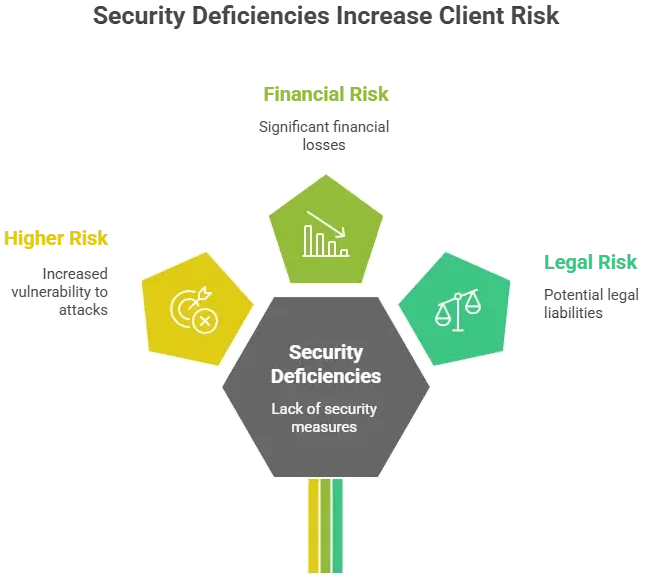
Security breaches do not only cause technical damage. They expose businesses to legal liability, loss of customer trust, financial penalties, and long-term brand damage. In 2026, regulators act faster and fines are higher than ever.
Risk Assessment Checklist
Security Standards Your White-Label Fancy App Must Meet
Essential Security Certifications
In 2026, a white-label Fancy app must meet internationally recognized security and compliance standards. These certifications are no longer optional if you want user trust and regulatory safety.
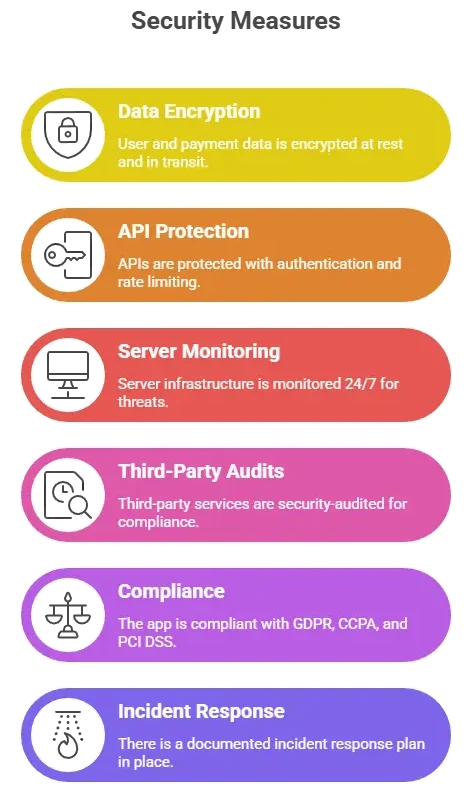
ISO 27001 ensures that the provider follows a structured information security management system. SOC 2 Type II validates how securely user data is handled over time, not just on paper. GDPR compliance is mandatory for handling user data from the EU, while CCPA applies to users in California. If health-related data is ever involved, HIPAA becomes relevant. For payments, PCI DSS compliance is critical.
Core Technical Security Requirements
End-to-end encryption protects user data during transmission and storage. Secure authentication methods such as two-factor authentication and OAuth reduce account takeover risks. Regular security audits and penetration testing help identify weaknesses before attackers do.
SSL certificates, secure API design, and role-based access control are essential technical foundations. In 2026, Fancy-style apps without these protections are considered high risk.
Security Standards Comparison Table
- ISO 27001: Focuses on organizational security processes
- SOC 2 Type II: Validates ongoing data protection controls
- GDPR: Governs personal data protection and user rights
- PCI DSS: Secures payment transactions and cardholder data
- HIPAA: Protects sensitive health information when applicable
Read more : – Fancy App Marketing | Make Your App Shine Bright
Red Flags – How to Spot Unsafe White-Label Providers
Major Warning Signs
If a white-label Fancy app provider avoids discussing security, that is the first red flag. Providers offering extremely low pricing without explaining how security is maintained often cut corners on audits, encryption, and compliance.
Lack of security documentation, outdated technology stacks, and poor code quality indicate higher risk. Another serious concern is the absence of a clear security update policy, data backup strategy, or disaster recovery system.
In 2026, providers without cyber insurance or breach response procedures expose clients to serious financial and legal risks.
Provider Evaluation Checklist
Before choosing a white-label Fancy app provider, ask these critical questions:
- Which security certifications do you hold?
- How often are security audits conducted?
- How is user and payment data encrypted?
- What is your incident response timeline?
- Do you provide regular security updates and patches?
Documents and Proof to Request
- Security audit reports
- Compliance certificates
- Data protection and privacy policies
- Backup and recovery documentation
- Insurance coverage details
Proper due diligence in 2026 can prevent years of damage later.
Best Practices for Secure White-Label Fancy App Implementation
Pre-Launch Security Measures
Before launching a white-label Fancy app in 2026, a complete security audit should be mandatory. This includes a detailed code review, infrastructure hardening, and verification of all compliance requirements.
Server environments must be secured using firewalls, access controls, and monitoring tools. Staff involved in managing the app should be trained on data handling, access permissions, and incident reporting procedures.
Post-Launch Security Monitoring
Security does not end after launch. Continuous monitoring helps detect unusual activity, attempted breaches, and system vulnerabilities in real time. Regular updates and security patches are necessary to keep the app safe against evolving threats.
Incident response planning ensures quick action if something goes wrong. Backup and recovery systems protect business continuity and user data integrity in case of failures or attacks.
Security Implementation Timeline
- Week 1–2: Security audit and compliance validation
- Week 3: Infrastructure hardening and penetration testing
- Week 4: Final security review and launch approval
- Ongoing: Monitoring, updates, and periodic audits
Read more : – Fancy Features Breakdown for Startup Founders
Legal & Compliance Considerations
Regulatory Requirements in 2026
Running a white-label Fancy app in 2026 means operating under strict data protection and digital commerce laws. Different regions impose different responsibilities, and ignorance is no longer a valid defense.
For users in the EU, GDPR governs how personal data is collected, stored, and processed. In the US, CCPA and CPRA define user rights around data access and deletion. Other regions follow similar privacy-first regulations, making global compliance essential for Fancy-style apps.
User consent management must be transparent and auditable. Privacy policies and terms of service should clearly explain how data is used, stored, and protected. Any misleading or incomplete disclosure can trigger regulatory action.
Liability and Risk Protection
Legal liability in 2026 extends beyond fines. Businesses may face lawsuits, payment processor bans, and forced shutdowns after serious security incidents.
To reduce exposure, white-label Fancy app owners should ensure proper cyber insurance coverage, clear legal disclaimers, and well-defined user agreements. Incident reporting protocols must be in place to meet regulatory deadlines and communication requirements.
Compliance Checklist by Region
- EU: GDPR compliance, data residency clarity, user consent logs
- USA: CCPA/CPRA compliance, breach notification timelines
- Global: Secure payment compliance, transparent data usage policies
- All regions: Documented audit trails and compliance monitoring
Why Miracuves White-Label Fancy App Is Your Safest Choice
Miracuves Security-First Approach
Miracuves designs every white-label Fancy app with security as a foundation, not an add-on. In 2026, this security-first architecture is what separates sustainable platforms from risky shortcuts.
Each app is built using enterprise-grade security frameworks, secure coding standards, and compliance-aligned infrastructure. Regular internal and third-party security audits ensure that vulnerabilities are identified and fixed before they become threats.
Built-In Compliance and Protection
Miracuves white-label Fancy apps are GDPR and CCPA compliant by default. Payment workflows follow PCI DSS requirements, and all data transmission is encrypted end to end. Continuous monitoring helps detect unusual behavior early, reducing breach risk significantly.
Security updates are deployed regularly, and clients benefit from structured incident response plans and documented backup systems. Cyber insurance coverage further reduces business exposure in case of unforeseen events.
Why Businesses Trust Miracuves in 2026
With 600+ successful projects delivered and zero major security breaches reported, Miracuves has earned trust by prioritizing safety, compliance, and transparency.
Final Thought
Do not compromise on security. Miracuves white-label Fancy app solutions come with enterprise-grade security built in. Get a free security assessment and see why businesses trust Miracuves for safe, compliant platforms in 2026.
In 2026, the safety of a white-label Fancy app directly impacts user trust, legal stability, and long-term growth. Security is no longer optional or negotiable. Choosing a provider that prioritizes compliance, audits, and proactive protection is the only sustainable path forward. Miracuves proves that speed, scalability, and security can coexist without compromise.
FAQs
1. How secure is a white-label Fancy app compared to custom development in 2026
A well-built white-label Fancy app can be as secure as, or more secure than, custom development in 2026. The key difference lies in whether the provider follows audited security frameworks, regular updates, and compliance standards from day one.
2. What happens if there is a security breach
In 2026, a proper incident response plan includes immediate containment, user notification as per legal timelines, forensic analysis, and system hardening. Providers like Miracuves include predefined breach response protocols.
3. Who is responsible for security updates
Security is a shared responsibility, but the white-label app provider must handle core infrastructure updates, patches, and vulnerability fixes to maintain platform safety.
4. How is user data protected in a white-label Fancy app
User data is protected through encryption at rest and in transit, role-based access controls, secure APIs, and strict compliance with data protection laws like GDPR and CCPA in 2026.
5. What compliance certifications should I look for
Essential certifications in 2026 include ISO 27001, SOC 2 Type II, GDPR compliance, and PCI DSS for payment security.
6. Can white-label Fancy apps meet enterprise security standards
Yes, when built with enterprise-grade architecture, continuous monitoring, and regular audits, white-label Fancy apps fully meet enterprise security expectations in 2026.
7. How often should security audits be conducted
At minimum, annual third-party audits are recommended, along with continuous internal monitoring and periodic penetration testing throughout 2026.
8. What is included in the Miracuves security package
Miracuves includes encrypted data handling, compliance-ready architecture, regular audits, security updates, monitoring, and incident response planning.
9. How do I manage security across different countries
This requires region-specific compliance mapping, localized data handling policies, and legal documentation aligned with each market’s regulations in 2026.
10. What insurance is needed for app security
Cyber liability insurance is essential in 2026 to protect against financial losses, legal claims, and regulatory penalties related to security incidents.
Related Article :