


Key Takeaways
- Fancy’s business model blends social discovery, curated shopping, product inspiration, and ecommerce transactions.
- Shoppers, sellers, brands, creators, and admins need connected workflows for discovery and buying.
- Product curation, wishlists, social sharing, seller listings, checkout, and recommendations are core platform drivers.
- Revenue comes from product sales, seller activity, promoted visibility, commissions, and marketplace engagement.
- A Fancy-like marketplace can help startups combine social commerce, lifestyle discovery, and curated online shopping.
Business Model Signals
- Customers need product discovery, collections, wishlists, reviews, secure checkout, and order tracking.
- Sellers need product listing tools, pricing control, inventory updates, brand profiles, and payout visibility.
- Admins need control over users, sellers, products, commissions, payments, promotions, and reports.
- Featured products, curated collections, and sponsored placements help increase marketplace revenue.
- Social sharing and personalized recommendations help turn product discovery into repeat purchases.
Real Insights
- Fancy shows that ecommerce growth can come from inspiration-led discovery, not only direct product search.
- Weak curation can reduce product appeal, browsing time, and customer purchase intent.
- Clear product details, pricing, shipping, and return rules help users buy with confidence.
- Strong seller quality control and personalized feeds improve trust, engagement, and repeat shopping.
- Miracuves builds Fancy Clone apps with social commerce, curated shopping, seller management, payments, and admin workflows.
The rise of the business model of Fancy has reshaped how people discover, shop, and share premium lifestyle products. Blending social discovery with e-commerce, Fancy has created a vibrant platform where users find unique items curated by tastemakers worldwide. It has become a go-to destination for trendsetters who crave authenticity and originality in what they buy.
Its business model is worth studying because it combines community-driven recommendations, influencer marketing, and marketplace dynamics—all under one digital roof. For founders planning a Fancy-like app, this model shows how social commerce can turn product discovery into an engaging shopping experience while building a loyal audience in a competitive market.
What is Fancy & How It Works
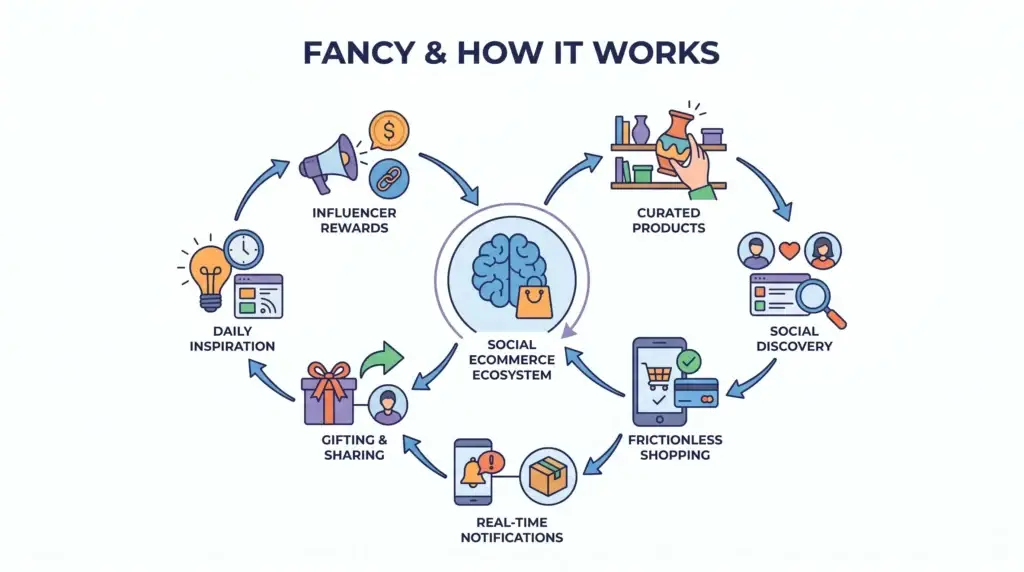
Fancy is a social Ecommerce platform that blends shopping with inspiration. It solves a big problem: how to discover unique, high-quality products without wading through endless generic listings.
At its core, combines a curated marketplace, social engagement, and streamlined transactions to make shopping feel effortless and inspiring.
Here’s how Fancy operates:
- Curated Marketplace
Brands, independent designers, and creators list products ranging from home decor to fashion and gadgets. Each listing is carefully selected to maintain a premium, design-focused catalog. - Social Discovery
Users can “fancy” (like) products, create wishlists, and follow other users. This creates a personalized feed of recommendations driven by your tastes and social graph. - Seamless Shopping
You can buy any product directly in-app without leaving the platform. This frictionless experience helps convert casual browsing into purchases quickly. - Gifting & Sharing
Fancy also enables users to send gifts and share curated collections with friends, driving organic referrals and social buzz. - Daily Inspiration Feeds
The app regularly showcases themed collections, trending products, and editor picks to keep users coming back for fresh ideas. - Integrated Affiliate Tools
Influencers and content creators can share product links and earn commissions, fueling word-of-mouth marketing. - Real-Time Notifications
Shoppers receive updates about flash sales, back-in-stock items, and new arrivals based on their interests.
Together, these elements create an ecosystem where discovery, community, and commerce flow naturally—making Fancy feel less like an online store and more like an endless source of inspiration
Read More : What is Fancy App and How Does It Work?
Target Audience and lifestyle enthusiasts
Fancy attracts a broad yet clearly defined set of customers who value discovery and style:
- Trendsetters and Influencers
Individuals who enjoy curating and sharing unique finds with their followers. They use Fancy as a platform to showcase their taste and build credibility. - Affluent Shoppers
Consumers willing to pay a premium for high-quality, design-led products. They appreciate exclusivity and convenience in one place. - Gift Seekers
Users looking for distinctive items to give as gifts for birthdays, holidays, or special occasions. curated selections save them time and ensure a memorable present. - Independent Brands & Designers
Small brands seeking exposure to a global, style-conscious audience. offers them a ready-made channel to reach high-intent buyers. - Lifestyle Enthusiasts
Shoppers who treat like a digital magazine—browsing collections for inspiration before purchasing. - Early Adopters and Trend Explorers
Tech-savvy users who enjoy discovering products before they hit the mainstream and sharing them with their networks.
Fancy’s model thrives on this blend of social influence, premium demand, and a desire for inspiration-driven shopping.
Features That Support the Business Model
Fancy’s business model is powered by a set of core features that drive engagement and revenue:
- Social Feeds & Following
Users see what their friends and influencers are “fancying,” which sparks discovery and impulse buys. - Wishlists & Collections
Shoppers can save products into themed lists, making it easy to return and purchase later. - In-App Purchasing
A seamless checkout experience keeps transactions inside the app, reducing friction and cart abandonment. - Gifting Options
One-click gifting increases average order value and drives viral growth through shared experiences. - Flash Sales & Featured Collections
Limited-time offers create urgency and highlight premium products. - Seller Dashboard
Vendors get tools to manage listings, track orders, and analyze sales performance. - Mobile Notifications
Alerts about trending products, sales, and wishlist items prompt frequent engagement and repeat purchases.
These features work together to create a sticky ecosystem where shopping and sharing happen organically.
Read More : Fancy Features Breakdown for Startup Founders
Revenue Streams of Fancy
Fancy has built a diversified revenue model that taps into multiple income sources. Here’s a clear breakdown:
| Revenue Stream | How It Works |
| Commission on Sales | Takes a percentage fee on each transaction completed in-app |
| Featured Listings | Charges brands to promote products in premium placements |
| Subscription Plans | Offers premium accounts for sellers with extra tools |
| Gifting Fees | Small service fee on gift orders and wrapping |
| Flash Sale Promotions | Brands pay to participate in curated flash sales |
| Affiliate Partnerships | Earns revenue when influencers drive purchases |
Highlights:
- Commission on Sales:
The core of Fancy’s revenue. Every sale generates a platform fee, aligning incentives with sellers’ success. - Featured Listings:
Brands pay to appear in top slots or themed collections, boosting visibility. - Subscription Plans:
Professional sellers unlock analytics and merchandising features by paying monthly fees. - Gifting Fees:
Additional convenience charges for gift packaging and messaging. - Flash Sale Promotions:
Time-limited campaigns where brands pay for inclusion to drive volume. - Affiliate Partnerships:
Influencers earn a cut of sales they refer, while keeps a portion.
Read more : Revenue Model of Bumble: How the Dating App Earns Big
Global Cost of Development for a Fancy-Like Marketplace App
Fancy-Like Social Commerce Marketplace Development — Market Price by Tech Stack
The tech stack affects product discovery, social sharing, seller management, checkout flow, and marketplace scalability in a Fancy-like app. PHP/Laravel works well for cost-effective marketplace launches, Node.js/React.js supports faster feeds, wishlists, recommendations, and buyer-seller interactions, while Go microservices suit large social commerce platforms with high traffic and global marketplace operations.
PHP/Laravel is often the most practical choice for launching a Fancy-like marketplace quickly and affordably. Node.js/Python fits better when personalized discovery, real-time activity, and data-heavy shopping workflows become more important, while Go microservices are better suited for enterprise-scale social commerce platforms with higher concurrency and more complex infrastructure needs.
These values reflect global development cost estimates. Final pricing varies based on product catalogs, seller panels, social discovery features, checkout flow, payments, commissions, reviews, recommendations, admin controls, and platform complexity.
Miracuves Fancy-Like App Solution Cost and Tech Stack
Miracuves Pricing for a Fancy-Like Social Commerce Marketplace App developed in PHP/Laravel with Flutter Apps for $2,799 USD (One-Time Price) in just 6 days
Miracuves Pricing for a Fancy-Like Social Commerce Marketplace App developed in PHP for $2,799 USD One-Time Price in just 6 days
Get a fully developed, deployment-ready social shopping marketplace modeled after Fancy. Built on a stable PHP foundation, this complete package includes everything you need to launch and scale a discovery-driven commerce platform for lifestyle products, fashion, gifts, home decor, gadgets, and curated marketplace shopping:
- Core Workflows: User registration, product discovery, curated product feeds, seller onboarding, product listing, wishlist creation, social sharing, cart checkout, order placement, reviews, and customer notifications.
- Built-in Revenue Logic: Seller commissions, product listing fees, promoted products, featured collections, marketplace service fees, affiliate-style monetization, advertising placements, subscription plans, and campaign-based revenue.
- Management Hub: Centralized admin dashboard, seller management, customer management, product approval, category management, order tracking, payment records, refund handling, review moderation, and marketplace analytics.
- Launch-Ready: Fully prepared for your custom branding, configuration, payment gateway setup, seller onboarding, product category setup, curated collection setup, and immediate market entry.
Why Is Fancy-Like App Development More Affordable?
Most social commerce marketplace apps become expensive when businesses choose fully custom development from scratch. A Fancy-style platform usually needs product discovery feeds, seller panels, social sharing, wishlist logic, checkout workflows, payments, reviews, promoted listings, analytics, and admin controls. Building all of this separately can increase both development cost and launch time.
We took a smarter, more practical approach:
- You Aren’t Paying for Ground-Up Development: Our social commerce marketplace engine is already developed, tested, and ready to deploy. You skip the inflated cost and long waiting period usually required for building a Fancy-style platform from scratch.
- The Power of PHP: We built this solution on a reliable and cost-effective PHP architecture. This keeps the upfront price affordable while supporting essential marketplace workflows such as product discovery, seller management, curated collections, checkout, payments, reviews, and admin operations.
- You get a launch-ready Fancy-like social commerce marketplace with practical discovery, shopping, and monetization features, source code access, and faster deployment without the high custom development price tag.
Note: This cost is for the solution, re-branding, deployment, and source code only.
Seller onboarding and Cost Structure
Running an app like Fancy involves several core expenses that founders should plan for:
- Platform Development & Maintenance
Ongoing costs to build new features, maintain infrastructure, and optimize performance across web and mobile. - Payment Processing Fees
Transaction costs incurred every time a user buys an item in the app. - Logistics & Fulfillment Support
Handling returns, coordinating shipping with sellers, and providing customer service for orders. - Marketing & Customer Acquisition
Budget to drive user growth via influencer partnerships, ads, and promotions. - Content Moderation & Curation
Costs of reviewing listings to maintain quality standards and ensure compliance. - Seller Support & Operations
Teams dedicated to onboarding vendors, managing accounts, and troubleshooting. - Hosting & Cloud Infrastructure
Expenses to scale storage, serve media-rich product feeds, and handle peak traffic.
These categories together shape the financial backbone of a curated social marketplace.
Innovations and Strategic Updates
Fancy has been evolving its strategy to stay competitive and cater to changing shopping behaviors. Here are some of the latest updates:
- AI-Powered Recommendations
New machine learning models curate product feeds tailored to each user’s browsing and purchase history. - Enhanced Mobile Checkout
A streamlined, one-page checkout flow on iOS and Android has improved conversion rates. - Live Shopping Events
Fancy introduced live video shopping where brands showcase products in real-time, driving urgency and engagement. - Subscription Gifting
Users can now gift subscription boxes curated around interests like home decor or wellness. - Expanded Affiliate Tools
Influencers and tastemakers have access to new dashboards to track sales and commissions transparently. - Sustainability Badges
Listings now display eco-friendly certifications, appealing to conscious consumers.
These innovations not only keep Fancy ahead of the curve but also highlight how social commerce apps can diversify revenue and deepen loyalty.
Read more : Business Model of Bumble | How the App Earns Revenue
Takeaways for Startup Founders
If you’re thinking about building an app like Fancy, here are key lessons to consider:
- Blend Commerce and Community
Combining social discovery with shopping increases engagement and purchase frequency. Your app should feel more like an experience than a catalog. - Simplify the Buying Journey
Fancy’s in-app checkout and gifting options reduce friction. Prioritize seamless payments and quick decision paths. - Leverage Influencer Partnerships
Influencers and micro-creators can drive powerful word-of-mouth growth. Equip them with affiliate tools and tracking dashboards. - Curate Relentlessly
Quality control is essential. Make sure product listings align with your brand’s style and values. - Experiment with Revenue Streams
Don’t rely on just commissions—explore subscriptions, featured placements, and exclusive experiences.
At Miracuves, we specialize in creating ready-made marketplace solutions that integrate social commerce features, influencer modules, and scalable checkout flows. If you want to build a sophisticated platform without starting from scratch, our Fancy solutions can help you launch faster and smarter.
Read more : Reasons startup choose our bumble clone over custom development
Conclusion :
Fancy has proven that a marketplace built on discovery, community, and seamless commerce can thrive in a crowded digital landscape. Its business model blends social engagement with curated shopping, unlocking multiple revenue streams while delivering real value to both buyers and sellers. For founders exploring a Fancy clone script, this model shows how social commerce, influencer-driven discovery, and marketplace monetization can work together in one scalable platform.
If you’re inspired to launch a similar app, the right partner makes all the difference. At Miracuves, we build customizable, ready-to-go marketplace platforms that combine stunning design, robust functionality, and proven monetization strategies.
Ready to create your own success story?
Contact Miracuves today to explore how we can help you bring your app idea to life.
FAQs:
1. How does Fancy make most of its money?
Fancy primarily earns revenue through commissions on sales. Every purchase made through the app generates a percentage fee. Additional income comes from featured listings, subscription plans for sellers, and affiliate partnerships.
2. Can small brands succeed on Fancy?
Absolutely. Fancy is known for showcasing independent designers and niche brands. If your products are high-quality and visually appealing, you can build a loyal audience through the platform’s curated discovery features.
3. What makes Fancy different from other marketplaces?
Fancy uniquely combines a social feed, wishlists, and influencer-driven shopping in one place. This blend of inspiration and commerce creates stronger engagement than traditional e-commerce sites.
4. How important is mobile experience in Fancy’s model?
Critical. The majority of Fancy’s traffic and purchases happen on mobile devices. A fast, intuitive app experience with one-click checkout is a key driver of conversions.
5. Is it expensive to build a Fancy-like app?
Building from scratch can be time-consuming and costly. However, working with Miracuves allows you to leverage ready-made solutions and customize them to fit your brand and budget, reducing launch time and development costs significantly.
Related Articles :
Miracuves is an independent software development company. We are not affiliated with, connected to, sponsored by, or endorsed by any company or product named in this article.
Terms such as “X Clone” are used descriptively. It is how the software industry refers to building a platform with functionality comparable to a known service, and how clients search for it.
The entire design and codebase of our products is built by our own team. Our products contain no code, design, graphics, or content originating from any third-party website or applications.
All third-party names and marks referenced in this article are the property of their respective owners, referenced solely to identify the services discussed.