You’ve probably heard the horror stories — logistics apps leaking customer addresses, shipment data exposed to hackers, payment details compromised, or delivery tracking misused. In the logistics and courier industry, a single security failure doesn’t just hurt revenue — it destroys trust permanently.
When businesses consider launching a white-label FedEx-style app, the first question is no longer “How fast can we launch?”
It’s “Is this app actually safe?”
And that concern is valid.
In 2025, logistics apps handle some of the most sensitive data in the digital ecosystem:
- Customer names, phone numbers, and addresses
- Real-time package location tracking
- Driver identity and route data
- Payment and invoicing information
- Enterprise shipping contracts
Any weakness in security can lead to regulatory fines, lawsuits, lost enterprise clients, and long-term brand damage.
This is why white-label app safety matters more than ever in 2025. Cyberattacks on logistics platforms have increased sharply, driven by the growth of last-mile delivery, cross-border shipping, and API-driven integrations with warehouses, retailers, and payment gateways.
In this guide, we’ll give you:
- An honest security assessment of white-label FedEx-style apps
- A clear breakdown of real risks vs common myths
- Practical steps to identify unsafe providers
- The exact security standards your app must meet
- And how Miracuves approaches white-label app security differently, with enterprise-grade protection built in from day one
No hype. No fear-mongering. Just real answers for founders, logistics companies, and enterprises evaluating a FedEx-style white-label app.
Understanding White-Label FedEx App Security Landscape
Before judging whether a white-label FedEx-style app is safe or not, it’s important to understand what white-label app security actually means — and where most misunderstandings come from.
What White-Label App Security Really Means
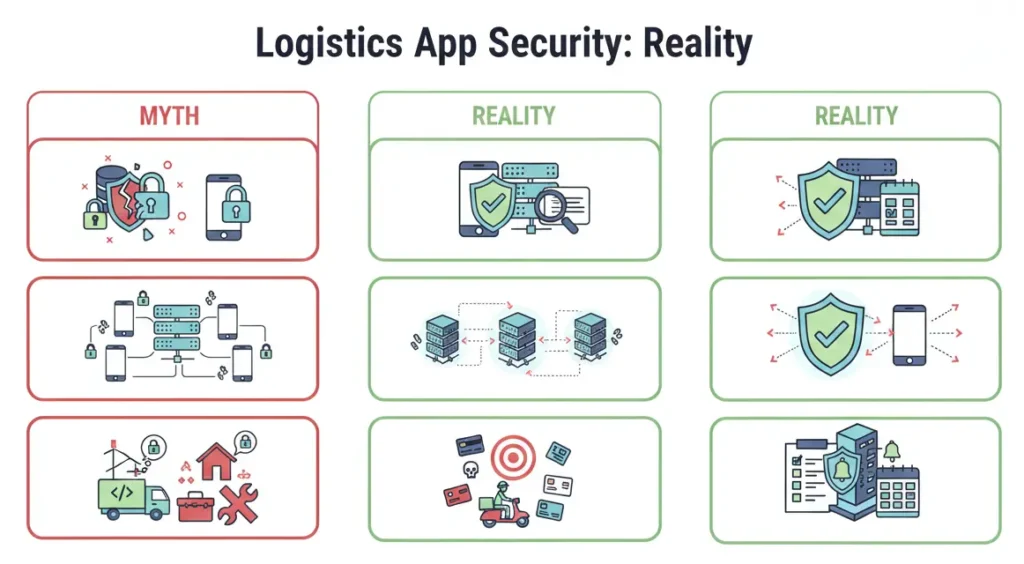
White-label app security does not mean “generic” or “shared” security.
In reality, it refers to:
- A pre-engineered app architecture
- Custom-branded and deployed for your business
- Hosted on dedicated or isolated infrastructure
- Secured based on how the provider designs, audits, and maintains it
The safety of a white-label FedEx-style app depends entirely on the provider, not on the white-label model itself.
A well-built white-label app can be more secure than a rushed custom-built app, especially when security frameworks are already tested across multiple enterprise deployments.
Why Businesses Worry About White-Label Logistics Apps
Concerns are valid because logistics apps involve:
- Continuous location tracking of drivers and packages
- High-frequency API calls between users, drivers, and admins
- Payment settlements, COD reconciliation, and invoices
- Integration with warehouses, ERPs, CRMs, and third-party carriers
If any one layer is weak, attackers can:
- Track high-value shipments
- Steal customer address databases
- Manipulate delivery routes
- Intercept payment or invoice data
Current Threat Landscape for FedEx-Style Apps in 2025
In 2025, white-label FedEx-style apps face:
- API abuse and token hijacking
- Account takeover attacks via weak authentication
- GPS spoofing and location manipulation
- Ransomware targeting logistics databases
- Insider threats from unmanaged admin access
According to global cybersecurity reports:
- Logistics and transportation cyber incidents have increased by over 60% in the last three years
- More than 70% of logistics breaches originate from unsecured APIs or third-party integrations
- Data exposure incidents cost logistics firms millions in regulatory fines and lost enterprise contracts
Security Standards Expected in 2025
Modern logistics apps are expected to follow:
- Zero-trust security architecture
- Encrypted data at rest and in transit
- Role-based access control for admins, drivers, and partners
- Continuous monitoring instead of one-time audits
- Compliance-ready data handling by default
Security is no longer a feature — it’s a baseline requirement.
Real-World Security Incident Insights
Most high-profile logistics app breaches happen due to:
- Poor access control on admin panels
- Unencrypted APIs exposed publicly
- Hardcoded credentials in mobile apps
- Lack of security updates after launch
These are provider failures, not white-label failures.
Key Security Risks & How to Identify Them
When evaluating a white-label FedEx-style app, security risks fall into three major categories. Understanding these risks — and knowing how to identify them early — can prevent costly mistakes later.
High-Risk Area 1: Data Protection & Privacy
Logistics apps process continuous streams of sensitive data. If this data is not protected correctly, the consequences are severe.
User Personal Information
- Names, phone numbers, email IDs, and delivery addresses
- Enterprise customer accounts and shipping contracts
- Breach impact: identity theft, legal claims, loss of trust
Payment Data Security
- Card payments, UPI, wallet transactions, COD reconciliation
- Tokenization failures expose raw payment data
- Non-compliance leads to immediate payment gateway suspension
Location Tracking Concerns
- Real-time driver and package GPS data
- Historical route data revealing patterns
- Risk of shipment theft and personal safety issues
GDPR / CCPA Compliance Risks
- Improper consent collection
- No data deletion or export mechanism
- Storing EU or California user data without legal safeguards
High-Risk Area 2: Technical Vulnerabilities
This is where most white-label apps silently fail.
Code Quality Issues
- Hardcoded credentials
- Lack of input validation
- Insecure file uploads
- Poor session management
Server Security Gaps
- Shared hosting environments
- No firewall or intrusion detection
- Weak access control for DevOps teams
API Vulnerabilities
- Publicly exposed endpoints
- Missing rate limiting
- Weak authentication tokens
- Poor API version control
Third-Party Integrations
- Payment gateways
- Maps and geolocation services
- Warehouse and ERP systems
- Each integration expands the attack surface
High-Risk Area 3: Business & Operational Risks
Security failures don’t stop at technical damage — they quickly become business disasters.
Legal Liability
- Lawsuits from customers and enterprise clients
- Breach notification failures
- Regulatory enforcement actions
Reputation Damage
- Loss of enterprise shipping contracts
- Negative press coverage
- Irreversible trust erosion
Financial Losses
- Fines under GDPR, CCPA, and local laws
- Compensation to affected users
- Incident response and recovery costs
Regulatory Penalties
- Payment license suspension
- Data protection authority audits
- Mandatory operational shutdowns
White-Label FedEx App Risk Assessment Checklist
Use this checklist before finalizing any provider:
- Is all user and shipment data encrypted at rest and in transit?
- Are payment flows PCI DSS compliant?
- Is GPS and location data access strictly role-based?
- Are APIs protected with authentication, rate limiting, and logging?
- Is infrastructure isolated per client?
- Are regular security audits conducted and documented?
- Is there a clear incident response and breach notification plan?
If a provider cannot clearly explain how data is stored, how APIs are secured, and how encryption is implemented, that provider is not enterprise-ready.
Read more : – Business Model of FedEx : Complete Strategy Breakdown 2025
Security Standards Your White-Label FedEx App Must Meet
If you’re launching a white-label FedEx-style app in 2025, “basic security” is not enough. Enterprises, payment providers, and regulators expect measurable controls, audit trails, and documented compliance.
Below are the standards and technical requirements you should treat as non-negotiable.
Essential Certifications and Compliance Requirements
ISO 27001 Compliance
- Focus: Information Security Management System (ISMS)
- What it proves: Your provider follows documented security processes, risk management, access control, and continuous improvement
- Why it matters: Often required for enterprise procurement and vendor approval
SOC 2 Type II
- Focus: Operational security controls over time (not just point-in-time)
- What it proves: Security practices are actually implemented and consistently followed across months
- Why it matters: Builds trust with enterprise clients, especially if your app handles shipment, identity, and operational data
GDPR Compliance
- Focus: EU personal data protection
- Requirements include:
- Lawful basis and consent tracking
- Data minimization and retention control
- Right to access, export, delete user data
- Breach reporting obligations
CCPA/CPRA Compliance
- Focus: California privacy rights
- Requirements include:
- Data disclosure and consumer rights workflows
- Opt-out mechanisms for data sharing (where applicable)
- Strict handling of “sensitive personal information”
HIPAA (If Applicable)
- Only needed if your FedEx-style app handles medical shipments where you become a covered entity/business associate and process PHI
- If unsure: treat it as “possible” for healthcare logistics clients and plan architecture accordingly
PCI DSS for Payments
- Focus: Payment card data handling
- What it proves: Secure payment processing practices, segmentation, monitoring, and vulnerability management
- Practical rule: Avoid storing raw card data in your systems; use tokenization via compliant payment gateways
Technical Requirements Your App Must Implement
End-to-End Encryption Where It Matters
- In transit: TLS 1.2+ (ideally TLS 1.3)
- At rest: database and storage encryption (AES-256 commonly used)
- Sensitive fields: encrypt tokens, identifiers, and any shipment metadata that can expose customer identity or route patterns
Secure Authentication
- 2FA for admin and enterprise accounts
- OAuth 2.0 / OpenID Connect for modern identity flows
- Strong password policy + breach/password reuse protection
- Session management: short-lived tokens, refresh tokens, device binding where appropriate
Regular Security Audits
- Scheduled vulnerability assessments
- Configuration and access reviews for infrastructure and admin panels
- Secure SDLC (security built into development workflow)
Penetration Testing
- External and internal tests covering:
- Mobile apps (reverse engineering, runtime tampering)
- APIs (auth bypass, injection, rate-limit abuse)
- Admin dashboards (privilege escalation, session hijacking)
SSL/TLS Certificates and HSTS
- Correctly configured certificates across:
- API gateway
- admin panel
- web portals
- HSTS to reduce downgrade and man-in-the-middle risks
Secure API Design
- Authentication on every endpoint (no “public by default”)
- Rate limiting + abuse detection
- Input validation + output encoding
- Least-privilege scopes for tokens
- Centralized logging and traceability for every sensitive action
Security Standards Comparison Table
| Standard / Control | What It Covers | Who Typically Requires It | What to Ask Your Provider |
|---|---|---|---|
| ISO 27001 | Security governance, policies, risk controls, audits | Enterprises, regulated clients | “Do you operate an ISO 27001-aligned ISMS? Show the scope and control overview.” |
| SOC 2 Type II | Operational proof that controls work over time | Enterprise procurement, B2B clients | “Do you have a SOC 2 Type II report? Which Trust Principles are included?” |
| GDPR | EU personal data privacy + user rights | Any EU users/clients | “How do you handle consent, deletion, export, retention, and breach reporting?” |
| CCPA/CPRA | California privacy rights and disclosures | US consumer-facing apps | “Do you support data access requests and opt-out workflows?” |
| PCI DSS | Card payment security | Any card payments | “Do you store card data? If not, how do you tokenize and segment payment flows?” |
| Pen Testing | Real attack simulation | Best-practice for all | “How often do you run pen tests and what’s the remediation SLA?” |
| Encryption (in transit/at rest) | Protects data in motion and storage | Everyone | “What data is encrypted, what algorithms, and where are keys managed?” |
| RBAC + Admin security | Prevents insider misuse and privilege abuse | Logistics apps especially | “Can you show role permissions, audit logs, and admin activity tracking?” |
Read more : – Must-Have FedEx Features for Delivery App Startups
Red Flags: How to Spot Unsafe White-Label Providers
Most security failures don’t come from sophisticated cyberattacks. They come from choosing the wrong provider. Unsafe white-label FedEx-style apps often look attractive on the surface but hide serious risks underneath.
Here are the warning signs you should never ignore.

Major Warning Signs You Should Treat as Deal-Breakers
No Security Documentation
- No written security architecture overview
- No explanation of data storage or encryption
- No audit reports or compliance mapping
If a provider cannot document security, it usually means security was never designed properly.
Unusually Cheap Pricing Without Explanation
- Prices far below market standards
- “All features included” without clarity on infrastructure or security costs
- No breakdown of hosting, monitoring, or compliance expenses
Security is expensive. If pricing ignores that reality, corners are being cut.
No Compliance Certifications or Roadmap
- No ISO 27001 alignment
- No GDPR or CCPA readiness
- No PCI DSS explanation for payments
Even startups should have a compliance roadmap. Zero planning equals high risk.
Outdated Technology Stack
- Old frameworks with known vulnerabilities
- No dependency update policy
- Unsupported libraries or SDKs
Outdated tech is one of the fastest paths to exploitation.
Poor Code Quality
- No version control discipline
- No code review process
- No separation between test, staging, and production environments
This dramatically increases the risk of accidental data exposure.
No Security Updates Policy
- “One-time delivery” mindset
- No patching schedule
- No post-launch security ownership
Security is continuous. Providers who disappear after launch create long-term exposure.
Lack of Data Backup and Recovery Systems
- No automated backups
- No off-site or multi-region backups
- No disaster recovery plan
Data loss can be just as damaging as data theft.
No Insurance Coverage
- No cyber liability insurance
- No professional indemnity coverage
- No contractual risk-sharing
This shifts all risk onto you.
Provider Evaluation Checklist
Use this checklist during vendor discussions.
Critical Questions to Ask
- How is user, shipment, and location data encrypted?
- Are APIs authenticated, rate-limited, and logged?
- Is infrastructure shared or isolated per client?
- How are admin actions audited and monitored?
- What is the incident response process and SLA?
- Who is responsible for security updates post-launch?
Documents You Should Request
- Security architecture overview
- Data flow diagrams
- Compliance mapping (GDPR, PCI DSS, etc.)
- Penetration testing summary (sanitized if needed)
- Backup and disaster recovery policy
Testing and Due Diligence Steps
- Request a demo focused on admin security
- Review role-based access controls
- Validate API authentication behavior
- Confirm encryption practices in writing
- Check real client references, not just marketing claims
If a provider avoids these discussions or gives vague answers, that’s your signal to walk away.
Best Practices for Secure White-Label FedEx App Implementation
Security is not a single milestone — it’s a lifecycle. Even the most secure white-label FedEx-style app can become unsafe if implementation and operations are poorly handled.
Below are best practices you should follow before and after launch.
Pre-Launch Security Best Practices
Security Audit Before Deployment
- Conduct a full security review of mobile apps, APIs, and admin panels
- Validate authentication flows and access controls
- Check for hardcoded secrets, exposed endpoints, and weak encryption
Code Review Requirements
- Mandatory peer reviews for all code changes
- Secure coding standards enforced across the team
- Dependency scanning for known vulnerabilities
Infrastructure Hardening
- Dedicated or logically isolated environments per client
- Firewalls, WAFs, and intrusion detection systems
- Least-privilege access for servers, databases, and cloud services
Compliance Verification
- Confirm GDPR and CCPA readiness before collecting real user data
- Validate PCI DSS scope and payment gateway integration
- Ensure privacy policies and user consent flows match actual data usage
Staff Training Programs
- Secure access handling for admin and support teams
- Awareness of phishing and social engineering attacks
- Clear escalation paths for suspicious activity
Post-Launch Security and Monitoring Practices
Continuous Security Monitoring
- Real-time monitoring of API traffic and admin actions
- Automated alerts for abnormal behavior
- Log correlation for faster incident detection
Regular Updates and Patches
- Monthly or bi-weekly security updates
- Immediate patching for critical vulnerabilities
- Ongoing framework and dependency updates
Incident Response Planning
- Documented incident response plan
- Clear roles and responsibilities
- Defined timelines for containment, investigation, and notification
User Data Management
- Enforced data retention and deletion policies
- Secure export mechanisms for user data requests
- Controlled access to sensitive shipment and location records
Backup and Recovery Systems
- Automated daily backups
- Encrypted backups stored off-site
- Periodic disaster recovery testing
Security Implementation Timeline
Phase 1: Planning (Weeks 1–2)
- Threat modeling
- Compliance scope definition
- Security architecture finalization
Phase 2: Pre-Launch Hardening (Weeks 3–6)
- Code and infrastructure audits
- Penetration testing
- Compliance verification
- Staff access setup
Phase 3: Launch & Stabilization (Weeks 7–8)
- Monitoring activation
- Incident response readiness
- Backup verification
Phase 4: Ongoing Operations (Continuous)
- Security updates and audits
- Monitoring and alert tuning
- Compliance reviews and documentation updates
Following this lifecycle approach ensures your white-label FedEx-style app remains secure not just at launch, but throughout its growth.
Legal & Compliance Considerations
Security is not just a technical responsibility — it’s a legal obligation. For a white-label FedEx-style app, failing to meet regulatory requirements can result in fines, lawsuits, forced shutdowns, and long-term brand damage.
Understanding legal and compliance responsibilities upfront protects both your business and your users.
Regulatory Requirements You Must Address
Data Protection Laws by Region
Different regions impose different obligations on logistics apps:
- European Union (GDPR)
- Lawful data processing and consent tracking
- Right to access, correction, portability, and deletion
- Mandatory breach notification within defined timelines
- Data processing agreements with vendors
- United States (CCPA / CPRA)
- Transparency on data collection and usage
- Consumer rights to access and delete personal data
- Restrictions on data sharing and selling
- Special handling for sensitive personal information
- India (DPDP Act)
- Explicit user consent
- Purpose limitation and data minimization
- Reasonable security safeguards
- Breach reporting obligations
- Other Regions
- Many countries now align with GDPR-style frameworks
- Cross-border data transfers require additional safeguards
Industry-Specific Regulations
Depending on your clientele, additional regulations may apply:
- Healthcare logistics: potential HIPAA obligations
- Government or defense shipments: enhanced security controls
- Financial documents and high-value goods: stricter audit and access requirements
Designing your app with flexible compliance controls allows you to serve regulated industries safely.
User Consent and Transparency
Your white-label FedEx-style app must:
- Clearly explain what data is collected and why
- Obtain explicit consent for location tracking
- Allow users to manage privacy preferences
- Provide accessible privacy policies and terms of service
Hidden or misleading consent mechanisms are a major compliance risk.
Liability Protection for Your Business
Insurance Requirements
- Cyber liability insurance to cover breaches and data exposure
- Professional indemnity insurance for operational failures
- Coverage for legal costs, regulatory fines (where permitted), and recovery expenses
Legal Disclaimers and Agreements
- Clear limitation of liability clauses
- Defined responsibilities between you and the provider
- User agreements explaining data usage and service scope
Incident Reporting Protocols
- Internal breach response workflows
- User and regulator notification procedures
- Evidence preservation and forensic investigation readiness
Ongoing Compliance Monitoring
- Regular compliance reviews as laws evolve
- Documentation updates for audits and enterprise clients
- Contractual compliance obligations with partners and vendors
Compliance Checklist by Region
- Is user consent legally valid and documented?
- Are data access and deletion requests supported?
- Are cross-border data transfers protected?
- Is breach notification defined and time-bound?
- Are privacy policies aligned with actual app behavior?
- Is insurance coverage adequate for your operating regions?
Ignoring legal and compliance requirements doesn’t just increase risk — it makes your app unviable for serious enterprise customers.
Why Miracuves White-Label FedEx App Is Your Safest Choice
When security is treated as an afterthought, white-label logistics apps fail under real-world pressure. At Miracuves, security is not an add-on — it is built into the foundation of every white-label FedEx-style app we deliver.
Our approach is designed for businesses that cannot afford data breaches, compliance failures, or reputational damage.
Miracuves Security-First Architecture
Enterprise-Grade Security Design
- Security baked into system architecture, not layered on later
- Isolated infrastructure ensuring client-level data separation
- Zero-trust access principles across admin, driver, and enterprise roles
Regular Security Audits and Certifications
- Alignment with ISO 27001 security frameworks
- SOC 2–aligned operational controls and monitoring
- Periodic vulnerability assessments and penetration testing
Privacy and Compliance by Default
- GDPR and CCPA-ready data handling workflows
- Consent management and user data control built-in
- Configurable data retention and deletion policies
24/7 Security Monitoring
- Continuous monitoring of APIs, admin actions, and system events
- Automated alerts for suspicious activity
- Proactive threat detection and response
Encrypted Data Transmission and Storage
- TLS-based encryption for data in transit
- Encrypted databases and secure key management
- Protection for sensitive shipment and location data
Secure Payment Processing
- PCI DSS-compliant payment integrations
- Tokenization to avoid storing sensitive card data
- Segmented payment flows to limit exposure
Ongoing Security Updates
- Regular patching and dependency updates
- Continuous improvement based on evolving threats
- Dedicated security ownership post-launch
Insurance Coverage Included
- Cyber liability and professional indemnity coverage
- Shared risk model for greater client confidence
Why Businesses Trust Miracuves
- 600+ successful projects delivered across industries
- Zero major reported security breaches across deployed platforms
- Proven experience with logistics, delivery, and enterprise-grade apps
- Transparent security documentation and audit readiness
We don’t just build apps — we build trust-ready platforms that stand up to audits, enterprise scrutiny, and real-world attacks.
Final Thought
Miracuves white-label FedEx-style app solutions come with enterprise-grade security built in by design. Our 600+ successful projects have maintained zero major security breaches because we treat security as a core business requirement, not a feature. Get a free security assessment and see why businesses trust Miracuves to deliver safe, compliant, and scalable logistics platforms.
Security shortcuts may save time or money initially, but they almost always lead to higher costs later through data breaches, regulatory penalties, and lost trust. In 2025, customers and enterprise partners expect logistics apps to be secure, compliant, and transparent by default.
A white-label app can be extremely safe — if security is engineered from day one and maintained continuously.
FAQs
1. How secure is a white-label FedEx-style app compared to custom development?
A well-built white-label FedEx-style app can be as secure, or even more secure, than custom development. The key factor is whether security frameworks, audits, and monitoring are already in place. Many custom apps fail due to lack of security expertise.
2. What happens if there is a security breach?
A secure provider will have an incident response plan that includes immediate containment, investigation, user and regulator notification, and remediation. Without this, breaches often escalate into legal and financial crises.
3. Who is responsible for security updates?
Security is a shared responsibility. The provider manages infrastructure, code, and platform updates, while the business ensures proper usage, access control, and compliance with operational policies.
4. How is user data protected in white-label logistics apps?
User data is protected through encryption at rest and in transit, strict access controls, role-based permissions, secure APIs, and continuous monitoring.
5. What compliance certifications should I look for?
At minimum, ISO 27001 alignment, GDPR and CCPA readiness, and PCI DSS compliance for payments. Enterprise deployments often also expect SOC 2 Type II controls.
6. Can white-label FedEx-style apps meet enterprise security standards?
Yes. When built correctly, white-label apps can meet and pass enterprise security audits, procurement reviews, and compliance assessments.
7. How often should security audits be conducted?
Security audits should be conducted at least annually, with vulnerability scans and monitoring running continuously. High-risk updates may require additional reviews.
8. What is included in the Miracuves security package?
Miracuves provides secure architecture, encrypted data handling, compliance-ready workflows, regular audits, monitoring, updates, and incident response readiness.
9. How do you handle security across different countries?
Security controls are designed to support region-specific regulations, data residency requirements, and cross-border compliance frameworks.
10. What insurance is needed for app security?
Cyber liability insurance and professional indemnity insurance are recommended to protect against data breaches, legal claims, and regulatory penalties.
Related Articles: