Key Takeaways
What You’ll Learn
- Forsage-style crypto platforms face risks related to smart contracts, phishing attacks, and referral-driven systems.
- Blockchain transparency does not automatically guarantee platform safety or legitimacy.
- Users remain vulnerable to fake websites, wallet compromise, and misleading investment claims.
- Security depends on smart contract auditing, wallet protection, and transparent operations.
- Regulatory scrutiny plays a major role in long-term trust and sustainability.
Stats That Matter
- Many participants in referral-driven crypto systems reportedly faced financial losses over time.
- Smart contract platforms can still expose users to phishing and fraudulent schemes.
- Security risks increase when users interact with fake wallet links or unauthorized contracts.
- Regulators investigated several crypto referral models over sustainability and legality concerns.
- Smart contract auditing and compliance checks help reduce operational risks.
Real Insights
- Blockchain automation improves transparency but cannot eliminate financial or operational risks.
- Users often confuse decentralized systems with guaranteed safety, increasing exposure to scams.
- Wallet security and verified smart contract interactions are critical for protection.
- Crypto platforms require strong compliance, auditing, and fraud monitoring systems.
- Long-term trust depends on transparency, security infrastructure, and sustainable operations.
You’ve probably heard the horror stories about crypto platforms getting hacked, user wallets being drained, or apps disappearing overnight with millions in losses. These concerns become even stronger when businesses consider launching a white-label Forsage app.
In 2026, security is no longer optional for blockchain-based platforms. Users expect strong protection for their data, transactions, and digital assets, while regulators are tightening compliance rules across regions.
So the big question many entrepreneurs ask is simple: Is a white-label Forsage app actually safe?
The answer depends on how the platform is built, secured, and maintained. With experienced development partners like Miracuves, businesses can launch secure and compliant platforms by implementing strong security architecture and industry-standard protection measures.
Understanding White-Label Forsage App Security Landscape
What White-Label Forsage App Security Actually Means
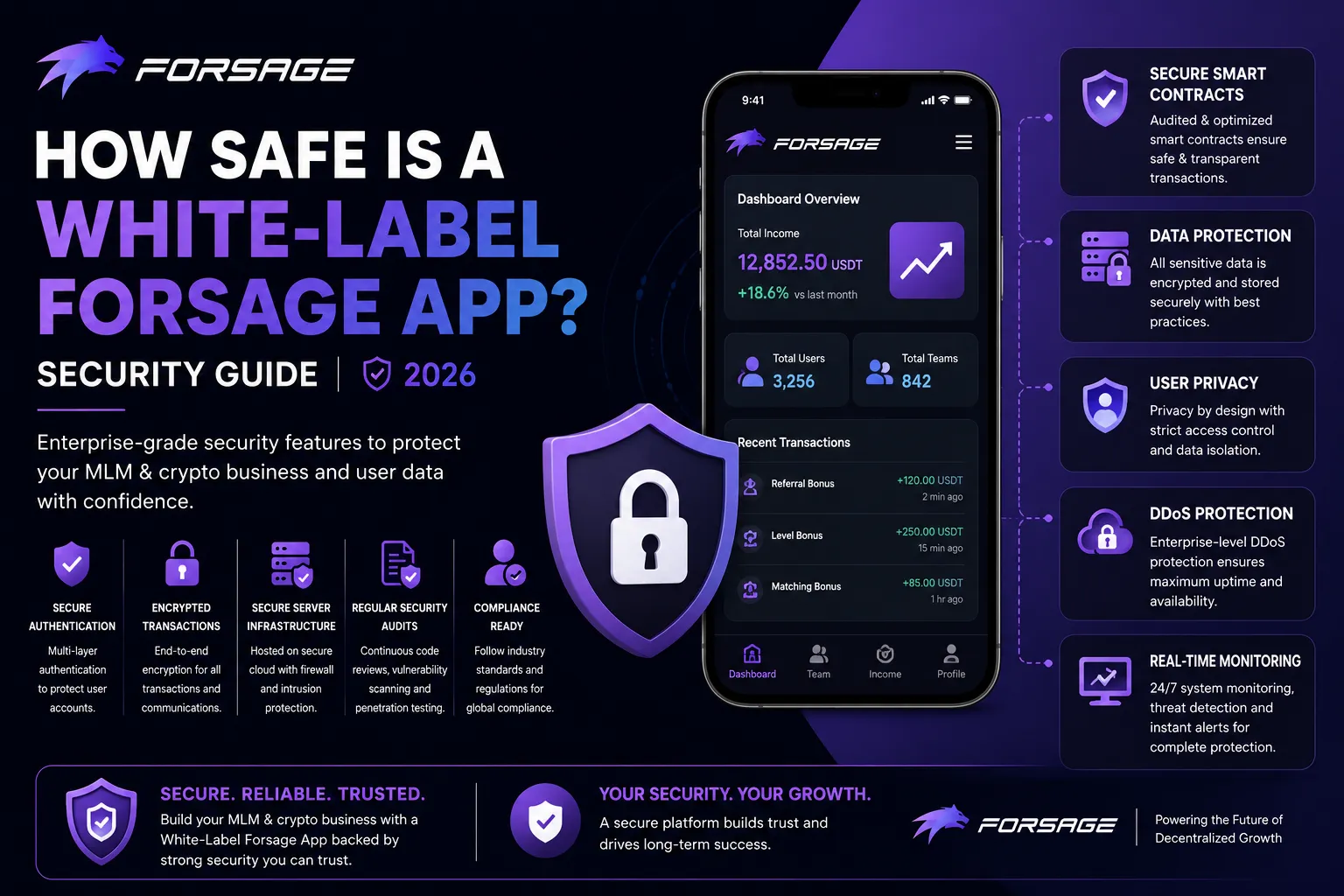
White-label Forsage app security refers to the protection mechanisms implemented within a ready-made blockchain-based platform that businesses can brand and launch as their own. These apps typically operate using smart contracts, cryptocurrency wallets, and decentralized transaction systems.
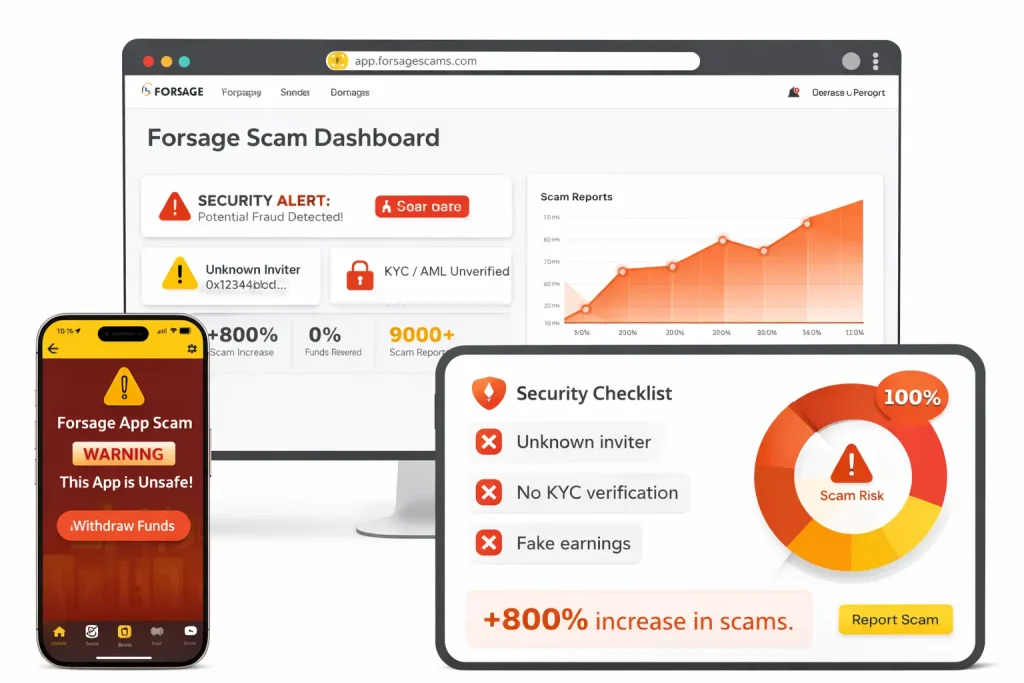
Security in such platforms focuses on multiple layers:
- Smart contract integrity
- User wallet protection
- Blockchain transaction validation
- Backend infrastructure security
- Data privacy and compliance
If any of these layers are weak, the entire platform becomes vulnerable.
In 2026, secure white-label blockchain apps must integrate strong encryption, smart contract audits, and secure node communication to ensure safe operations.
Common Security Myths vs Reality
Myth 1: Blockchain Apps Are Automatically Secure
Many people assume that because Forsage-style platforms use blockchain, they are fully secure. In reality, blockchain only secures transactions. The application layer, APIs, and servers can still be exploited if poorly built.
Myth 2: White-Label Apps Are Less Secure
A professionally developed white-label app can actually be safer than a rushed custom-built product. Established providers follow tested architectures, audited smart contracts, and proven security frameworks.
Myth 3: Security Only Matters After Launch
Security must be implemented during development. Fixing vulnerabilities after launch is expensive and can damage user trust.
Why People Worry About White-Label Forsage Apps
Forsage-style platforms involve financial transactions, which naturally attract hackers and fraud attempts.
Users often worry about:
- Wallet security
- Smart contract manipulation
- Fraudulent schemes
- Data misuse
- Platform shutdown risks
These concerns are valid, especially when platforms are built without proper audits or compliance frameworks.
Current Threat Landscape for Forsage-Type Platforms
Blockchain and DeFi platforms remain one of the most targeted sectors in cybersecurity.
According to blockchain security firm Chainalysis, cryptocurrency platforms lost over $1.7 billion to hacks and exploits in 2025. Many of these attacks targeted weak smart contracts and poorly secured APIs.
Common threats include:
- Smart contract exploits
- Phishing attacks on user wallets
- API manipulation
- Front-end code injection
- Insider threats from poorly managed infrastructure
Forsage-style platforms are particularly exposed if smart contracts are copied without proper auditing.
Security Standards in 2026
In 2026, secure blockchain-based apps must follow strict development and infrastructure standards.
These include:
- Smart contract auditing by independent security firms
- Secure blockchain node management
- Advanced wallet authentication mechanisms
- Secure API gateways
- Continuous vulnerability monitoring
Platforms that ignore these standards often become easy targets for attackers.
Real-World Statistics on App Security Incidents
Recent cybersecurity reports highlight the importance of strong app security:
| Security Metric | Latest Data |
|---|---|
| Global crypto losses due to hacks | $1.7 Billion |
| Smart contract vulnerabilities discovered annually | 20,000+ |
| Apps with at least one critical vulnerability | 60% |
| Security incidents caused by API weaknesses | 30% |
These statistics show that even advanced platforms can become vulnerable without proper security implementation.
Businesses launching a white-label Forsage app must therefore treat security as a foundational requirement, not an optional feature.
Key Security Risks & How to Identify Them
High-Risk Areas in White-Label Forsage Apps
Forsage-style platforms handle cryptocurrency transactions, user wallets, and sensitive personal data. This makes them attractive targets for cybercriminals.
Understanding where the biggest risks exist helps businesses implement stronger protection systems before launch./im
Data Protection and Privacy Risks
User data is one of the most valuable targets for attackers. A poorly secured white-label Forsage app can expose sensitive information such as identities, wallet addresses, and transaction history.
User Personal Information
Platforms often store details like:
- User names
- Email addresses
- Phone numbers
- Wallet IDs
- Transaction records
If the database is not encrypted or access controls are weak, attackers can steal this data.
Strong platforms implement:
- AES-256 data encryption
- Secure database access control
- Tokenized identity management
Payment Data Security
Even though crypto payments run on blockchain, the application layer still handles transaction requests and wallet interactions.
Risks include:
- Wallet hijacking
- Transaction manipulation
- Private key exposure
Secure apps use:
- Multi-signature wallets
- Hardware security modules
- Encrypted transaction validation
Location Tracking Concerns
Some apps track user activity and device location for fraud prevention.
However, poor handling of this data can violate privacy regulations such as:
- GDPR (Europe)
- CCPA (California)
- DPDP Act (India)
Apps must clearly disclose data collection practices and allow users to control their data.
GDPR and CCPA Compliance
Data privacy laws require platforms to follow strict policies for storing and processing user data.
Key compliance requirements include:
- User consent management
- Right to data deletion
- Transparent privacy policies
- Secure data storage
Failure to comply can result in heavy fines.
Technical Vulnerabilities
Technical weaknesses are the most common cause of security breaches in blockchain apps.
Code Quality Issues
Poorly written code creates vulnerabilities attackers can exploit.
Common examples include:
- Input validation failures
- Logic errors in smart contracts
- Weak authentication logic
Regular code reviews and automated testing reduce these risks.
Server Security Gaps
If servers are not properly secured, attackers may gain access to the entire platform.
Common server risks include:
- Misconfigured cloud servers
- Weak firewall rules
- Unpatched operating systems
Secure platforms implement hardened infrastructure with strict access controls.
API Vulnerabilities
APIs connect mobile apps, servers, and blockchain nodes.
Weak APIs can expose sensitive data or allow unauthorized transactions.
Security measures include:
- API authentication tokens
- Rate limiting
- Encrypted API communication
Third-Party Integrations
White-label apps often integrate external tools such as:
- Payment gateways
- Wallet providers
- analytics platforms
Each integration adds another potential security risk.
Proper vendor security evaluation is essential before integration.
Business Risks
Security failures affect not only technology but also the entire business.
Legal Liability
If user funds or data are compromised, businesses may face lawsuits and regulatory investigations.
Reputation Damage
Trust is critical for financial platforms. A single breach can permanently damage a brand’s credibility.
Financial Losses
Security incidents can lead to:
- Compensation to affected users
- Recovery costs
- legal fees
Some breaches cost companies millions of dollars.
Regulatory Penalties
Regulators worldwide are increasing enforcement of data protection laws.
For example:
- GDPR fines can reach €20 million or 4% of global revenue.
- Data privacy violations in the US can lead to multi-million dollar penalties.
Risk Assessment Checklist
Businesses evaluating a white-label Forsage app should verify the following:
| Security Area | What to Check |
|---|---|
| Smart Contracts | Independent security audit reports |
| Data Protection | Encryption and secure storage |
| Authentication | Multi-factor authentication |
| Infrastructure | Cloud security and firewall protection |
| API Security | Token-based authentication |
| Compliance | GDPR, CCPA, and regional regulations |
| Monitoring | Real-time security monitoring |
A provider that cannot clearly demonstrate these protections should be treated as a high risk.
Security Standards Your White-Label Forsage App Must Meet
Launching a white-label Forsage app without recognized security standards can expose the platform to legal risks and cyberattacks. In 2026, users expect financial platforms to follow strict international compliance frameworks and advanced technical security practices.
Below are the key standards every secure platform should meet.
Essential Security Certifications
Certifications demonstrate that a platform follows globally recognized security practices. Businesses launching blockchain-based platforms should verify these certifications from their technology provider.
ISO 27001 Compliance
ISO 27001 is one of the most respected global standards for information security management.
It ensures that the platform follows structured processes for:
- Data protection
- Risk management
- Access control
- Security monitoring
Companies certified under ISO 27001 regularly audit their security systems to maintain compliance.
SOC 2 Type II
SOC 2 Type II focuses on how companies manage user data across systems and infrastructure.
It verifies that the platform protects:
- Customer data confidentiality
- Platform availability
- System integrity
For financial and blockchain apps, SOC 2 compliance significantly increases user trust.
GDPR Compliance
The General Data Protection Regulation (GDPR) applies to platforms handling data of European users.
Key GDPR requirements include:
- Transparent data usage policies
- User consent management
- Data breach reporting
- Right to access or delete personal data
Failure to comply can lead to large financial penalties.
HIPAA Compliance (If Applicable)
HIPAA mainly applies to healthcare data. If a platform processes medical information in any integrated services, HIPAA compliance becomes mandatory.
Most Forsage-style platforms do not require HIPAA, but it may apply in certain integrations.
PCI DSS for Payments
If the app supports card payments or integrates with payment gateways, it must comply with PCI DSS standards.
PCI DSS ensures secure handling of payment information through:
- Encryption
- Network security
- Access control
- Continuous monitoring
Technical Security Requirements
Compliance certifications alone are not enough. The platform must also implement strong technical protections.
End-to-End Encryption
Encryption ensures that sensitive data remains protected during transmission.
Secure platforms use:
- TLS 1.3 encryption
- AES-256 data encryption
- Encrypted blockchain communication
This prevents attackers from intercepting sensitive data.
Secure Authentication
User authentication systems must prevent unauthorized access.
Modern platforms use:
- Two-factor authentication (2FA)
- OAuth authentication protocols
- Biometric authentication support
These layers significantly reduce account takeover risks.
Regular Security Audits
Security audits identify vulnerabilities before attackers can exploit them.
Professional platforms conduct:
- Quarterly security reviews
- Smart contract audits
- Infrastructure assessments
Independent cybersecurity firms typically perform these audits.
Penetration Testing
Penetration testing simulates real cyberattacks to identify weaknesses.
Tests often evaluate:
- Application vulnerabilities
- Server misconfigurations
- API weaknesses
This helps developers fix issues before launch.
SSL Certificates
SSL certificates secure communication between users and the app.
Benefits include:
- Encrypted data transmission
- Protection against man-in-the-middle attacks
- Increased user trust
Modern platforms must use strong SSL configurations.
Secure API Design
APIs are often the most vulnerable part of an application.
Secure API design includes:
- Token-based authentication
- Rate limiting
- Data validation
- Encrypted communication
These measures prevent unauthorized system access.
Security Standards Comparison
| Security Standard | Purpose | Why It Matters for Forsage Apps |
|---|---|---|
| ISO 27001 | Information security management | Protects platform infrastructure |
| SOC 2 Type II | Data protection and system integrity | Builds user trust |
| GDPR | User data privacy | Required for European users |
| PCI DSS | Payment security | Protects payment transactions |
| Smart Contract Audit | Blockchain code verification | Prevents contract exploits |
Meeting these standards ensures that a white-label Forsage app operates safely and complies with global security expectations in 2026.
Red Flags: How to Spot Unsafe White-Label Providers
Choosing the wrong white-label Forsage app provider can create serious security risks. Many platforms appear professional at first glance but lack proper infrastructure, compliance, and security protocols.
Before investing in a platform, businesses should carefully evaluate the provider’s security practices.
Warning Signs of Unsafe White-Label Providers
No Security Documentation
A reliable provider should always provide clear documentation explaining how the platform protects data and transactions.
If a company cannot explain its security architecture, encryption standards, or smart contract audits, it is a major warning sign.
Proper documentation should include:
- Security architecture overview
- Smart contract audit reports
- Data protection policies
- Infrastructure security standards
Without these, the platform’s security cannot be verified.
Cheap Pricing Without Explanation
Security infrastructure is expensive. Providers offering extremely low-cost white-label apps often cut corners in areas such as:
- Code quality
- server security
- blockchain infrastructure
- compliance processes
Low pricing without transparency may indicate poor development standards.
No Compliance Certifications
If a provider cannot demonstrate compliance with recognized standards like ISO 27001, SOC 2, or GDPR frameworks, the platform may not meet modern security requirements.
Lack of certification often means:
- weak internal security processes
- poor data protection systems
- limited regulatory compliance
For financial or crypto-related platforms, this is a critical risk.
Outdated Technology Stack
Outdated development frameworks can create serious vulnerabilities.
Unsafe providers may use:
- unsupported programming libraries
- outdated blockchain protocols
- legacy server software
These systems often contain known vulnerabilities that hackers can exploit.
Poor Code Quality
Low-quality code increases the risk of security flaws.
Signs of weak development include:
- frequent system crashes
- slow performance
- inconsistent functionality
Secure providers perform multiple code reviews and automated testing before releasing their platform.
No Security Updates Policy
Cyber threats constantly evolve. If a provider does not offer regular security updates, the platform will become vulnerable over time.
Reliable providers should clearly define:
- update frequency
- vulnerability patching process
- long-term security maintenance
Continuous updates are essential for maintaining platform safety.
Lack of Data Backup Systems
Data loss can occur due to cyberattacks, hardware failures, or system errors.
Secure platforms implement:
- automated database backups
- multi-region storage
- disaster recovery systems
Providers without backup infrastructure expose businesses to severe operational risks.
No Insurance Coverage
Professional technology providers often carry cybersecurity insurance.
Insurance helps protect businesses against financial losses caused by:
- data breaches
- system failures
- cyberattacks
A provider without insurance coverage may lack confidence in its own security practices.
Evaluation Checklist Before Choosing a Provider
Businesses should conduct a detailed security evaluation before selecting a white-label Forsage app provider.
Questions to Ask Providers
- Has the platform undergone independent smart contract audits?
- What encryption standards are used for user data?
- How often are security updates released?
- What compliance certifications does the platform meet?
- How is user wallet security handled?
| Document | Purpose |
|---|---|
| Smart Contract Audit Report | Verifies blockchain code security |
| Security Architecture Document | Explains platform protection systems |
| Compliance Certifications | Confirms regulatory standards |
| Data Protection Policy | Shows how user data is handled |
| Incident Response Plan | Defines breach management procedures |
Testing Procedures
Before launch, businesses should perform independent testing of the platform.
Recommended tests include:
- penetration testing
- vulnerability scanning
- smart contract security verification
- API security testing
These tests help identify hidden risks before users access the platform.
Due Diligence Steps
A safe provider should demonstrate transparency in all technical and legal aspects of the platform.
Key due diligence steps include:
- reviewing previous projects
- verifying security certifications
- conducting third-party security assessments
- checking customer testimonials and case studies
Taking these precautions significantly reduces the risk of launching an insecure platform.
Best Practices for Secure White-Label Forsage App Implementation
Launching a white-label Forsage app safely requires a structured security strategy before and after deployment. Businesses that follow a proper implementation process significantly reduce risks related to data breaches, financial fraud, and system vulnerabilities.
A secure platform is not created through a single step. It requires continuous security planning, testing, and monitoring.
Pre-Launch Security Preparation
Before the platform goes live, several critical security steps must be completed to ensure a safe infrastructure.
Security Audit Process
A full security audit evaluates the entire application architecture.
This includes reviewing:
- Smart contracts
- Backend infrastructure
- Mobile and web applications
- Database security
- API endpoints
Independent cybersecurity firms usually conduct these audits to identify hidden vulnerabilities.
Code Review Requirements
Code reviews ensure that the platform’s source code follows secure development practices.
Developers should analyze the code for:
- authentication weaknesses
- input validation errors
- smart contract vulnerabilities
- logic flaws in transaction processing
Multiple review stages reduce the chances of exploitable bugs.
Infrastructure Hardening
Infrastructure hardening protects servers and cloud environments from unauthorized access.
This process typically includes:
- firewall configuration
- server access restrictions
- network traffic monitoring
- container security configuration
Modern platforms often deploy hardened cloud infrastructure to improve resilience against cyberattacks.
Compliance Verification
Before launch, the platform must verify compliance with applicable regulations.
This may include:
- GDPR data protection requirements
- PCI DSS payment standards
- regional digital asset regulations
Compliance verification protects the business from regulatory penalties.
Staff Training Programs
Human error remains one of the most common causes of security incidents.
Staff should receive training on:
- data protection policies
- phishing attack awareness
- incident reporting procedures
- secure access management
Well-trained teams play a crucial role in maintaining platform security.
Post-Launch Security Monitoring
Security responsibilities do not end after launch. Continuous monitoring ensures the platform remains protected against new threats.
Continuous Security Monitoring
Real-time monitoring systems detect unusual activities across the platform.
Security monitoring tools track:
- suspicious login attempts
- abnormal transaction patterns
- unauthorized server access
Early detection helps prevent large-scale security incidents.
Regular Updates and Patches
Software vulnerabilities are constantly discovered. Platforms must regularly update their systems to fix security flaws.
Updates typically include:
- blockchain protocol upgrades
- server security patches
- dependency library updates
Timely updates prevent attackers from exploiting known vulnerabilities.
Incident Response Planning
A structured incident response plan ensures quick action if a security issue occurs.
An effective response plan defines:
- breach detection procedures
- internal communication protocols
- user notification processes
- system recovery steps
Fast response minimizes damage and maintains user trust.
User Data Management
Secure platforms implement strict controls for handling user information.
Best practices include:
- encrypted data storage
- limited administrative access
- anonymized analytics processing
These practices protect user privacy and support regulatory compliance.
Backup and Recovery Systems
Reliable backup systems ensure that the platform can recover quickly after unexpected failures.
Effective systems typically include:
- automated daily backups
- multi-region cloud storage
- disaster recovery testing
These systems allow businesses to restore operations without losing critical data.
Security Implementation Timeline
| Implementation Phase | Key Activities | Timeline |
|---|---|---|
| Planning Stage | Security architecture design, compliance planning | Weeks 1–2 |
| Development Stage | Secure coding, smart contract creation | Weeks 3–10 |
| Security Testing | Penetration testing, vulnerability scanning | Weeks 11–12 |
| Pre-Launch Audit | Final security verification | Week 13 |
| Post-Launch Monitoring | Continuous monitoring and updates | Ongoing |
Following a structured security implementation process ensures that a white-label Forsage app operates safely and meets modern cybersecurity standards in 2026.
Legal & Compliance Considerations
Launching a white-label Forsage app is not only a technical decision but also a legal responsibility. Platforms handling digital assets, user data, and financial transactions must follow strict regulatory requirements in many countries.
Ignoring compliance can result in fines, platform shutdowns, or legal liability.
In 2026, governments are increasing regulation around crypto platforms and digital financial services. Businesses must ensure their platform meets all applicable laws before launch.
Regulatory Requirements
Different regions have different rules for blockchain platforms and digital financial services. Businesses must verify the legal framework of every region where the app operates.
Data Protection Laws by Region
Data privacy laws regulate how platforms collect, store, and process user information.
Major regulations include:
| Region | Data Protection Law | Key Requirement |
|---|---|---|
| European Union | GDPR | User consent and right to data deletion |
| United States | CCPA / CPRA | Transparency in data collection |
| India | Digital Personal Data Protection Act | Secure handling of personal data |
| United Kingdom | UK GDPR | Strong data privacy controls |
| Canada | PIPEDA | Responsible data processing |
Failure to follow these laws can result in severe financial penalties.
Industry-Specific Regulations
Platforms dealing with cryptocurrency transactions may fall under financial regulations depending on the country.
Common requirements include:
- Anti-Money Laundering (AML) compliance
- Know Your Customer (KYC) verification
- transaction monitoring systems
- suspicious activity reporting
Many regulators require platforms to implement identity verification before allowing financial transactions.
User Consent Management
Apps must clearly inform users about how their data is used.
User consent systems should allow users to:
- accept or reject data collection
- review stored information
- request data deletion
Consent records should be securely stored for compliance verification.
Privacy Policy Requirements
A professional platform must publish a clear privacy policy explaining:
- what data is collected
- how the data is used
- how long the data is stored
- who has access to the data
The policy should be accessible inside the app and on the official website.
Terms of Service Essentials
Terms of service define the relationship between the platform and its users.
Important elements include:
- platform usage rules
- liability limitations
- dispute resolution procedures
- prohibited activities
Strong terms of service help protect the business from legal disputes.
Liability Protection
Legal protection mechanisms help businesses manage risks related to security incidents or regulatory changes.
Insurance Requirements
Many digital platforms now carry cybersecurity insurance.
Cyber insurance can cover:
- financial losses from data breaches
- legal expenses
- regulatory penalties
- user compensation costs
Insurance provides an additional layer of financial protection.
Legal Disclaimers
Legal disclaimers clarify the responsibilities of both the platform and the users.
Disclaimers often address:
- cryptocurrency market risks
- platform availability limitations
- third-party service integrations
Proper disclaimers reduce potential legal exposure.
User Agreements
User agreements ensure that users understand the risks involved in blockchain-based platforms.
Agreements typically include:
- transaction responsibility statements
- platform usage policies
- dispute resolution procedures
Users must accept these agreements before accessing platform features.
Incident Reporting Protocols
Regulations in many regions require businesses to report data breaches within a specific time frame.
For example:
- GDPR requires breach reporting within 72 hours.
- Many US states require immediate disclosure of major security incidents.
A clear reporting protocol ensures compliance with these requirements.
Regulatory Compliance Monitoring
Regulations change frequently, especially in the blockchain and cryptocurrency industry.
Businesses must continuously monitor:
- regulatory updates
- compliance requirements
- regional licensing rules
Failure to adapt to regulatory changes can result in penalties or forced platform shutdown.
Compliance Checklist by Region
| Compliance Area | EU | US | India | Global Platforms |
|---|---|---|---|---|
| Data Protection | GDPR | CCPA | DPDP Act | Required |
| KYC Verification | Required | Required | Required | Required |
| AML Monitoring | Mandatory | Mandatory | Mandatory | Mandatory |
| Breach Reporting | 72 hours | Varies by state | Required | Recommended |
| User Consent Management | Mandatory | Mandatory | Mandatory | Mandatory |
Following these legal and compliance requirements ensures that a white-label Forsage app operates safely and legally across different regions.
Why Miracuves White-Label Forsage App is Your Safest Choice
Choosing the right development partner is the most important decision when developing a white-label Forsage app. Security architecture, compliance readiness, and continuous monitoring depend heavily on the expertise of the provider.
Miracuves focuses on building platforms with a security-first approach, ensuring that every system layer is designed to protect user data, financial transactions, and platform infrastructure.
Miracuves Security Advantages
Enterprise-Grade Security Architecture
Miracuves develops white-label Forsage apps using enterprise-level security frameworks.
The architecture includes:
- Multi-layer security infrastructure
- Secure blockchain interaction protocols
- Hardened cloud environments
- Advanced threat detection systems
This layered approach minimizes the risk of vulnerabilities across the platform.
Regular Security Audits and Certifications
Security audits are conducted regularly to identify and resolve vulnerabilities before they become threats.
Miracuves platforms undergo:
- Smart contract security audits
- Application vulnerability testing
- infrastructure penetration testing
- compliance verification processes
These audits ensure the platform remains aligned with modern cybersecurity standards.
GDPR and CCPA Compliance by Default
Miracuves builds white-label apps with built-in compliance frameworks to meet global data protection laws.
Compliance features include:
- user consent management
- secure data processing systems
- transparent privacy policies
- data access and deletion tools
These features help businesses operate safely in regulated markets.
24/7 Security Monitoring
Continuous monitoring plays a crucial role in preventing cyberattacks.
Miracuves platforms include monitoring systems that track:
- suspicious login activity
- abnormal transaction patterns
- unauthorized access attempts
- server performance anomalies
Real-time alerts allow rapid response to potential threats.
Encrypted Data Transmission
All sensitive data transmitted through the platform is protected using advanced encryption protocols.
Miracuves implements:
- TLS 1.3 encrypted communication
- secure wallet interaction layers
- encrypted database storage
This ensures that user information and transaction data remain protected.
Secure Payment Processing
For platforms that integrate payment systems, Miracuves follows strict payment security standards.
Payment protection includes:
- PCI DSS compliant payment systems
- encrypted transaction handling
- fraud detection mechanisms
These measures help protect both users and businesses from financial risks.
Regular Security Updates
Cyber threats evolve constantly. Miracuves provides ongoing security updates to ensure the platform remains protected.
Updates typically include:
- vulnerability patches
- system performance improvements
- blockchain protocol updates
- infrastructure security enhancements
Continuous updates ensure long-term platform reliability.
Insurance Coverage Included
Miracuves platforms include cybersecurity insurance coverage options that help businesses manage risks related to cyber incidents.
Insurance coverage can support:
- financial recovery after security incidents
- legal expenses related to data breaches
- compensation costs for affected users
This additional protection provides peace of mind for platform owners.
Security-First Development Approach
Miracuves follows a structured development methodology designed to prioritize platform safety.
The process includes:
| Development Stage | Security Focus |
|---|---|
| Planning | Security architecture design |
| Development | Secure coding practices |
| Testing | Penetration testing and audits |
| Deployment | Infrastructure hardening |
| Maintenance | Continuous monitoring and updates |
This structured approach helps ensure that the platform remains secure throughout its lifecycle.
Secure Infrastructure Built for Scalability
Miracuves platforms are designed to scale while maintaining strong security standards.
Infrastructure advantages include:
- cloud-based distributed architecture
- advanced load balancing
- secure API management
- automated security monitoring
This allows the platform to grow safely as user demand increases.
Final thought
With 9k+ successful projects and zero major security breaches, Miracuves has become a trusted partner for businesses developing secure digital platforms.
developing a white-label Forsage app in 2026 requires more than just a functional platform. Security, compliance, and user trust must be built into the system from the beginning.
Businesses that prioritize smart contract audits, strong infrastructure security, and regulatory compliance significantly reduce risks. Choosing an experienced development partner also plays a crucial role in protecting user data and financial transactions.
so let’s talk with our Security experts and discover why businesses worldwide trust Miracuves to build safe, compliant white-label platforms.
FAQs
1. How secure is a white-label Forsage app compared to custom development?
A professionally developed white-label Forsage app can be as secure as a custom-built platform. Established providers use tested architectures, audited smart contracts, and proven security frameworks, which often reduce development risks.
2. What happens if there is a security breach?
If a breach occurs, a proper incident response plan is activated. This usually includes identifying the vulnerability, securing the system, notifying affected users, and implementing recovery measures.
3. Who is responsible for security updates?
Security updates are typically handled by the development provider. However, platform owners must ensure regular maintenance agreements are in place to keep the system protected.
4. How is user data protected in a white-label Forsage app?
User data is protected through encryption, secure databases, controlled access systems, and compliance with data protection regulations such as GDPR and CCPA.
5. What compliance certifications should businesses look for?
Businesses should verify certifications such as ISO 27001, SOC 2 Type II, GDPR compliance, and PCI DSS if payment systems are integrated.
6. Can white-label Forsage apps meet enterprise security standards?
Yes. With proper infrastructure, encryption protocols, smart contract audits, and security monitoring, white-label apps can meet enterprise-grade security standards.
7. How often should security audits be conducted?
Security audits should ideally be performed at least once or twice per year, along with continuous vulnerability monitoring and regular penetration testing.
8. What is included in the Miracuves security package?
Miracuves provides enterprise security architecture, smart contract audits, encrypted data transmission, 24/7 monitoring, compliance-ready infrastructure, and regular security updates.
9. How can security be managed for users in different countries?
Platforms must follow regional compliance laws such as GDPR in Europe, CCPA in the United States, and the DPDP Act in India, while implementing secure data handling systems.
10. What insurance is recommended for app security?
Cybersecurity insurance is recommended. It helps cover financial losses from data breaches, legal expenses, regulatory penalties, and recovery costs.
Related Articles
Miracuves is an independent software development company. We are not affiliated with, connected to, sponsored by, or endorsed by any company or product named in this article.
Terms such as “X Clone” are used descriptively. It is how the software industry refers to building a platform with functionality comparable to a known service, and how clients search for it.
The entire design and codebase of our products is built by our own team. Our products contain no code, design, graphics, or content originating from any third-party website or applications.
All third-party names and marks referenced in this article are the property of their respective owners, referenced solely to identify the services discussed.