


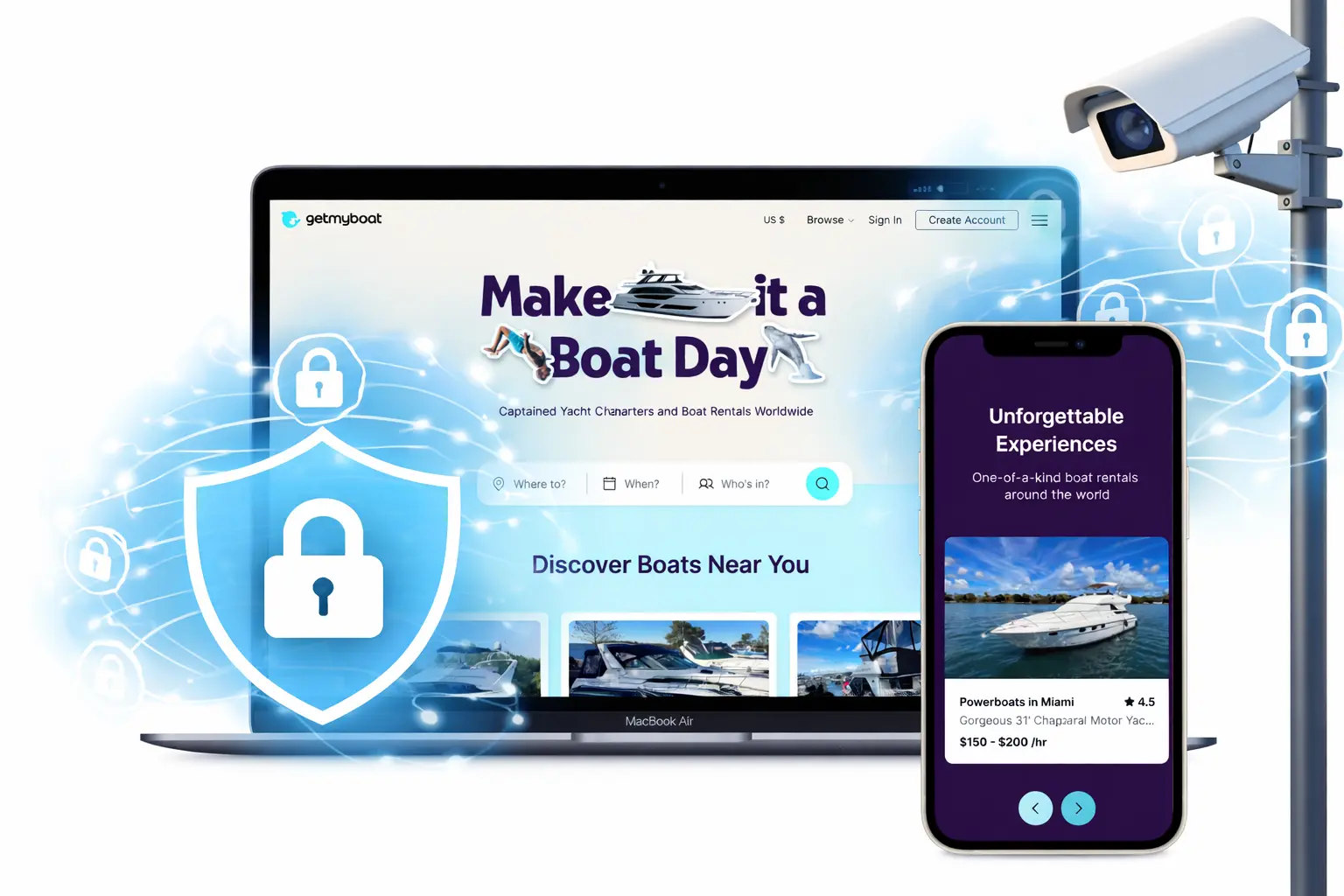
You’ve probably heard the horror stories—apps getting hacked, user payment data leaked, location data exposed, and businesses facing legal notices overnight. For founders planning a white-label GetMyBoat-style app, safety isn’t a technical detail anymore. It’s a survival requirement.
In 2025, boat rental and marine service apps handle highly sensitive data: user identities, real-time location tracking, payment credentials, insurance details, and vendor documents. A single security gap can destroy trust faster than any marketing can rebuild it.
The real question is not “Can I launch faster with a white-label app?”
It’s “Is my white-label GetMyBoat app actually safe?”
This guide gives you an honest, risk-focused security assessment—no hype, no fear-mongering. You’ll understand where white-label GetMyBoat apps fail, what security standards truly matter today, and how platforms like Miracuves design security-first app architectures that protect both businesses and users.
Understanding White-Label GetMyBoat App Security Landscape
What White-Label GetMyBoat App Security Actually Means
White-label security does not mean “shared” or “generic” security. In a GetMyBoat-type app, security refers to how the underlying platform protects boat owners, renters, payments, locations, and communications, even after branding and business logic are customized.
A secure white-label GetMyBoat app must protect:
- User identity and KYC data
- Payment and payout workflows
- Real-time boat location and availability
- Owner documents, licenses, and insurance records
- In-app messaging between renters and boat owners
Security failures usually happen below the UI layer, not in the visible design.
Why Founders Worry About White-Label GetMyBoat Apps
Security concerns usually come from real business risks:
- Fear of payment fraud or chargebacks
- Concerns about GDPR fines for EU users
- Exposure of real-time location data
- Legal responsibility if user data is breached
- Platform bans from payment gateways or cloud providers
For marine rental platforms, trust is everything. One incident can shut down growth completely.
Current Threat Landscape for Boat Rental Apps (2025)
GetMyBoat-type apps face a unique mix of threats:
- Account takeover attacks on boat owner profiles
- Fake listings and identity fraud
- Payment manipulation and payout redirection
- API abuse exposing availability or pricing data
- Location spoofing and unauthorized tracking
- Insider access misuse by poorly controlled admin panels
According to recent mobile security reports, location-based marketplace apps saw over 30% growth in targeted attacks between 2023–2025, especially those handling payments and real-time availability.
Security Standards Expected in 2025
By 2025, a white-label GetMyBoat app is expected to follow:
- Zero-trust access architecture
- Encryption at rest and in transit
- Strong role-based admin controls
- Secure API gateways
- Continuous vulnerability monitoring
- Documented incident response workflows
Anything less is considered operational risk, not innovation.
Real-World App Security Statistics
- Over 60% of app breaches originate from misconfigured servers or APIs
- 1 in 3 marketplace apps experience attempted payment fraud within the first year
- GDPR penalties for data mishandling reached €1.6 billion globally in recent years
- Apps without regular security audits are 4x more likely to suffer critical breaches
These numbers explain why investors, insurers, and regulators now demand proof of security—not promises.
Read more : – GetMyBoat Revenue Model: How GetMyBoat Makes Money in 2026
Key Security Risks & How to Identify Them
High-Risk Area 1: Data Protection & Privacy
Boat rental apps collect far more sensitive data than most founders realize.
User Personal Information
Names, phone numbers, email addresses, ID proofs, and sometimes boating licenses are stored. If this data is not encrypted properly, it becomes an easy target for attackers.
Payment Data Security
Even when third-party gateways are used, weak integrations can expose:
- Transaction metadata
- Payout schedules
- Partial card information
This can lead to fraud, chargebacks, and payment processor bans.
Location Tracking Concerns
GetMyBoat-type apps rely on real-time or scheduled location data. Without strict access control:
- Unauthorized tracking becomes possible
- Historical movement data can be exposed
- User safety is compromised
GDPR and CCPA Compliance Risks
Improper consent handling, missing data deletion workflows, or unclear privacy policies can result in heavy penalties, especially for EU and US users.
High-Risk Area 2: Technical Vulnerabilities
Code Quality Issues
Poorly written code increases exposure to:
- SQL injection
- Cross-site scripting
- Authentication bypass
These vulnerabilities are common in cheaply built white-label apps.
Server and Infrastructure Gaps
Security failures often occur due to:
- Open ports
- Weak firewall rules
- Shared cloud resources
- No DDoS protection
API Vulnerabilities
APIs control bookings, pricing, availability, and payouts. Weak API security can allow:
- Data scraping
- Unauthorized actions
- Manipulation of bookings or payments
Third-Party Integrations
Maps, payment gateways, analytics tools, and messaging services can introduce risks if not reviewed and secured properly.
High-Risk Area 3: Business and Operational Risks
Legal Liability
If user data is compromised, the business owner—not the technology provider—is usually held responsible.
Reputation Damage
Trust loss spreads quickly in marketplace apps. Reviews, social media, and press coverage can permanently affect growth.
Financial Losses
Breaches lead to:
- Refunds and chargebacks
- Legal expenses
- Regulatory fines
- Increased insurance premiums
Regulatory Penalties
Non-compliance with data protection laws can result in business suspension or heavy fines.
Risk Assessment Checklist
Before choosing a white-label GetMyBoat app provider, verify:
- Is user data encrypted at rest and in transit?
- Are payment workflows PCI DSS compliant?
- Is location data access role-restricted?
- Are APIs protected with authentication and rate limiting?
- Are regular security audits documented?
- Is there a defined incident response plan?
- Are compliance requirements clearly addressed?
If these answers are unclear or undocumented, the risk is high.
Security Standards Your White-Label GetMyBoat App Must Meet
Essential Security Certifications
In 2025, a white-label GetMyBoat-style app without formal security standards is considered a business liability, not a technology asset.
ISO 27001 Compliance
This certification ensures that the app provider follows a structured Information Security Management System (ISMS). It covers:
- Data access control
- Risk assessment processes
- Incident management
- Internal security audits
ISO 27001 is critical for protecting user identities, owner documents, and admin access.
SOC 2 Type II
SOC 2 Type II validates how well security controls perform over time. For a GetMyBoat-type app, this proves:
- Continuous monitoring of systems
- Secure handling of customer data
- Operational reliability
This certification is often required by enterprise clients and investors.
GDPR Compliance
If your app serves European users, GDPR compliance is mandatory. It ensures:
- Explicit user consent management
- Right to access and delete data
- Data minimization practices
- Breach notification procedures
Non-compliance can result in fines reaching millions.
HIPAA (If Applicable)
While not always required, HIPAA becomes relevant if the app stores any medical or accident-related data linked to boating activities.
PCI DSS for Payments
Any app processing payments must comply with PCI DSS standards. This ensures:
- Secure payment handling
- Tokenization of card data
- Reduced exposure to financial fraud
Technical Security Requirements
Certifications alone are not enough. The app’s technical foundation must enforce security at every layer.
End-to-End Encryption
All data transfers, including messages, booking details, and payments, must be encrypted using modern standards like TLS 1.3.
Secure Authentication
A secure GetMyBoat app should support:
- Two-factor authentication
- OAuth-based login systems
- Strong password hashing
This protects both users and boat owners from account takeovers.
Regular Security Audits
Professional audits help identify vulnerabilities before attackers do. These audits should be:
- Scheduled
- Documented
- Actionable
Penetration Testing
Simulated attacks expose real-world weaknesses in APIs, authentication, and infrastructure.
SSL Certificates
SSL is mandatory for encrypting data in transit and building user trust.
Secure API Design
APIs must include:
- Authentication tokens
- Rate limiting
- Input validation
- Activity logging
This prevents abuse and unauthorized access.
Security Standards Comparison Overview
A secure white-label GetMyBoat app should meet all of the following:
- ISO 27001 for information security
- SOC 2 Type II for operational trust
- GDPR for data privacy
- PCI DSS for payments
- Encrypted communication and storage
- Continuous security monitoring
Missing even one of these creates exposure that grows as your platform scales.
Read more : – Top 5 Mistakes Startups Make When Building a GetMyBoat Clone
Red Flags: How to Spot Unsafe White-Label Providers
Warning Signs You Should Never Ignore
Choosing the wrong provider for a white-label GetMyBoat app can expose your entire business to avoidable risks. The following warning signs indicate weak or missing security foundations.
No Security Documentation
If a provider cannot clearly explain how data is protected, where it is stored, and who has access, security is not a priority.
Unusually Cheap Pricing Without Explanation
Security infrastructure costs money. Extremely low pricing often means:
- No encryption at rest
- Shared servers
- No monitoring or audits
No Compliance Certifications
A lack of ISO, SOC, or GDPR alignment usually signals shortcuts in architecture and processes.
Outdated Technology Stack
Old frameworks and unsupported libraries create vulnerabilities that attackers actively exploit.
Poor Code Quality
Messy or unstructured code makes it difficult to patch vulnerabilities and increases long-term risk.
No Security Updates Policy
Apps require constant updates. If there is no clear update and patching policy, security degrades over time.
Lack of Data Backup Systems
Without automated backups and recovery plans, data loss after an incident can be permanent.
No Insurance Coverage
Professional providers carry cyber liability or errors and omissions insurance. Lack of coverage transfers all risk to you.
Evaluation Checklist Before Finalizing a Provider
Questions to Ask
- How is user and payment data encrypted?
- Are databases isolated per app instance?
- How often are security audits conducted?
- What happens if a breach occurs?
- Who is responsible for updates and patches?
Documents to Request
- Security architecture overview
- Compliance and audit reports
- Data handling and privacy policies
- Incident response documentation
Testing Procedures
- Demo access with role-based permissions
- API behavior under stress
- Authentication and password policies
Due Diligence Steps
- Review past client use cases
- Validate hosting and infrastructure providers
- Confirm ongoing security support
If a provider avoids these discussions, the risk is already high.
Read more : –Best GetMyBoat Clone Scripts 2025 — Build Your Boat Rental Empire Fast
Best Practices for Secure White-Label GetMyBoat App Implementation
Pre-Launch Security Practices
Launching a white-label GetMyBoat app without security validation is one of the most common and costly mistakes founders make.
Security Audit Process
Before launch, the app must undergo a full security audit covering:
- Application logic
- APIs and integrations
- Database access rules
- Admin panel permissions
This helps identify critical vulnerabilities early.
Code Review Requirements
Independent code reviews ensure that:
- Secure coding standards are followed
- Hardcoded credentials are eliminated
- Authentication logic is robust
Infrastructure Hardening
Secure infrastructure includes:
- Private cloud environments
- Firewalls and intrusion detection
- Isolated production and testing environments
Compliance Verification
Confirm that GDPR, PCI DSS, and regional data protection requirements are implemented before onboarding users.
Staff and Admin Training
Human error causes many security incidents. Admins must be trained in:
- Access control
- Data handling policies
- Incident reporting procedures
Post-Launch Security Monitoring
Security does not end at launch. In fact, most threats appear after user adoption grows.
Continuous Security Monitoring
Real-time monitoring helps detect:
- Suspicious login activity
- API misuse
- Payment anomalies
Regular Updates and Patches
Dependencies, frameworks, and libraries must be updated continuously to close newly discovered vulnerabilities.
Incident Response Planning
Every app should have a documented response plan that defines:
- Detection methods
- Containment steps
- Communication protocols
- Recovery actions
User Data Management
Data should be:
- Stored only when necessary
- Accessed based on role
- Deleted upon user request
Backup and Recovery Systems
Automated backups and tested recovery plans ensure business continuity even after major incidents.
Secure Implementation Timeline Overview
A well-structured white-label GetMyBoat app security timeline typically includes:
- Pre-launch audits and compliance checks
- Controlled beta release with monitoring
- Ongoing updates and vulnerability assessments
- Annual compliance and penetration testing
Security maturity grows with the platform when processes are planned correctly.
Legal & Compliance Considerations
Regulatory Requirements by Region
A white-label GetMyBoat app operating across regions must align with multiple legal frameworks.
Data Protection Laws
- GDPR (Europe): User consent, data access, deletion rights, breach notifications
- CCPA (California): Data disclosure, opt-out rights, transparency
- India DPDP Act: Purpose limitation, consent-based data usage
Failure to comply can lead to fines, app takedowns, or payment gateway suspension.
Industry-Specific Regulations
Boat rental apps may require compliance related to:
- Insurance documentation storage
- Operator licensing data
- Safety and liability disclosures
User Consent Management
Apps must clearly document:
- What data is collected
- Why it is collected
- How long it is stored
Consent must be revocable at any time.
Privacy Policy and Terms
Legal pages must reflect actual data practices, not generic templates. Mismatch is a major compliance risk.
Liability Protection Measures
Insurance Requirements
Cyber liability and professional indemnity insurance protect against breach-related claims.
User Agreements
Clear contracts define responsibility boundaries between platform, boat owners, and users.
Incident Reporting Protocols
Regulations often require reporting breaches within fixed timelines. Delays increase penalties.
Compliance Monitoring
Laws change frequently. Ongoing legal monitoring is essential for long-term safety.
Why Miracuves White-Label GetMyBoat App Is Your Safest Choice
Security-First Architecture at Miracuves
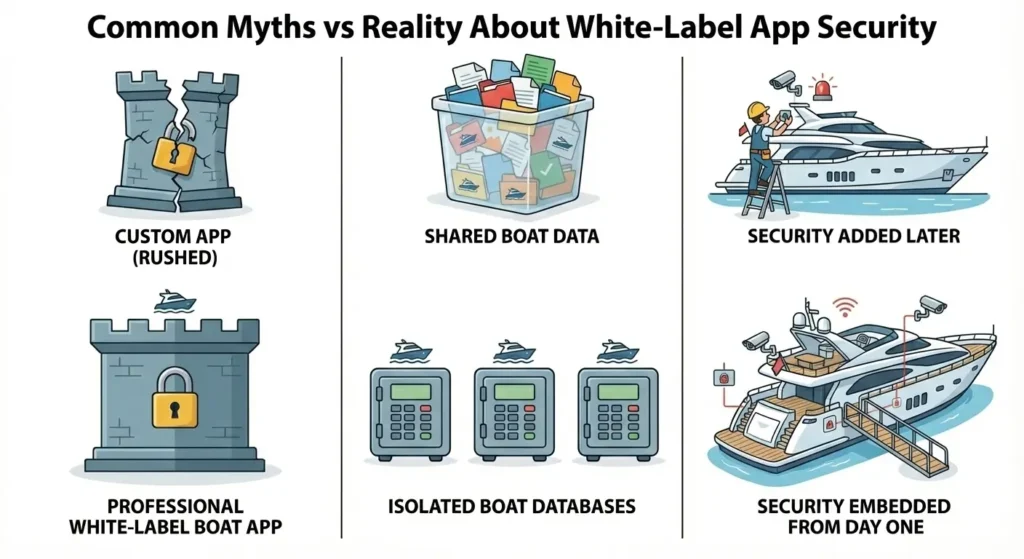
Miracuves designs white-label GetMyBoat apps with security embedded at the architecture level, not added as an afterthought. Every app instance runs in an isolated environment with strict access controls, encrypted data storage, and monitored infrastructure.
Enterprise-Grade Compliance by Default
Miracuves platforms are built to align with modern compliance expectations:
- GDPR and CCPA-ready data handling
- PCI DSS-compliant payment flows
- Structured access control for admins and vendors
- Secure audit trails for all critical actions
This reduces legal exposure and simplifies expansion into new regions.
Continuous Monitoring and Updates
Security threats evolve daily. Miracuves maintains:
- 24/7 infrastructure monitoring
- Regular vulnerability scans
- Scheduled security updates and patches
- Controlled access to admin and operational panels
This ensures the app remains protected long after launch.
Proven Track Record
With 600+ successful deployments, Miracuves platforms have operated across multiple industries without major security breaches. This experience directly translates into safer, more resilient GetMyBoat-style apps.
Built-In Risk Protection
Miracuves also supports:
- Secure payment processing
- Encrypted communication channels
- Data backup and recovery systems
- Structured incident response workflows
This combination protects both business owners and end users.
Final Thought
Don’t compromise on security. Miracuves white-label GetMyBoat app solutions come with enterprise-grade security built in. With hundreds of successful projects and a security-first approach, Miracuves helps you launch with confidence. Get a free security assessment and understand exactly how your app is protected from day one.
Security is not a feature you add later to a white-label GetMyBoat app. It is the foundation that determines whether your platform earns trust, survives regulations, and scales without fear. Choosing a security-first provider like Miracuves is not about avoiding problems—it’s about building a platform that is ready for real-world risk from day one.
FAQs
1. How secure is a white-label GetMyBoat app compared to custom development?
A well-architected white-label GetMyBoat app is often more secure because it is battle-tested, audited, and continuously updated, unlike rushed custom builds.
2. What happens if there is a security breach in the app?
A proper incident response process isolates the issue, notifies stakeholders, restores systems from backups, and meets legal reporting requirements.
3. Who is responsible for security updates in a white-label app?
The technology provider handles core security updates, while the business owner follows operational and compliance practices.
4. How is user data protected in a GetMyBoat-type app?
Data is protected through encryption, access control, secure servers, and compliance-driven data handling policies.
5. What compliance certifications should I look for?
ISO 27001, SOC 2 Type II, GDPR compliance, and PCI DSS for payments are essential in 2025.
6. Can a white-label GetMyBoat app meet enterprise security standards?
Yes, when built with enterprise-grade architecture, audits, and monitoring, it can fully meet enterprise requirements.
7. How often should security audits be conducted?
At minimum annually, with continuous vulnerability scanning throughout the year.
8. What is included in the Miracuves security package?
Encrypted data handling, compliance-ready architecture, regular audits, monitoring, backups, and structured incident response.
9. How is security managed across different countries?
Region-specific data laws are followed through configurable consent, storage, and compliance workflows.
10. What insurance is needed for app security?
Cyber liability and professional indemnity insurance are recommended to cover breach-related risks.
Related Articles :