

So, you’re thinking about building a GetMyBoat clone—or maybe you’ve already started. Smart move. The on-demand boat rental market is picking up steam in 2025, driven by the rise of experience-first travel and a booming leisure economy. From yacht parties in Dubai to kayak rentals in Goa, people want water-based adventures, and they want to book them digitally.
But here’s the deal: cloning a successful platform like GetMyBoat isn’t as simple as copying its features and slapping on a new logo. A lot of startups get excited by the what (the app), and forget the how (the business logic, trust systems, regulatory compliance, and more). And that’s where they crash into rough waters.
I’ve seen founders sink thousands into MVPs, launch with a flashy interface, and then struggle to gain traction. Why? Because they made avoidable mistakes—mistakes that could’ve been sidestepped with better planning and market awareness.
In this post, we’ll explore the top five mistakes startups make when trying to build a GetMyBoat clone. Whether you’re a travel-tech founder, a solo dev, or an investor evaluating your next venture, you’ll want to read this before you go full steam ahead.
Why Most GetMyBoat Clones Fail: 5 Critical Startup Mistakes You Can’t Afford to Make
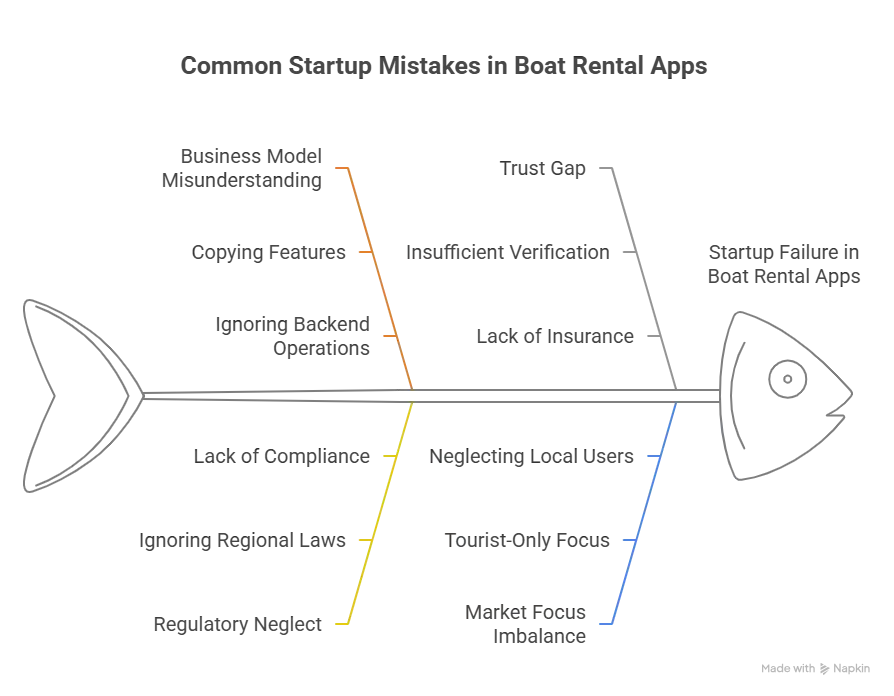
1. Copying Features Without Understanding the Business Model
The most common trap? Founders rush to build lookalike features—filters, listings, maps—without fully grasping how GetMyBoat actually makes money or why it works for users.
Why it’s a problem:
- GetMyBoat didn’t succeed just because of clean UI. It worked because of trust systems, insurance partnerships, region-specific onboarding, and smart monetization.
- If you don’t model the backend operations—commission handling, refunds, dispute resolution—you’re building a boat with no anchor.
What to do instead:
- Reverse-engineer their workflows—not just the frontend.
- Study their revenue streams, supply-side onboarding, and how they handle legal/regulatory risk.
2. Ignoring Regional Laws and Marine Regulations
You can’t just launch a P2P boat rental app in any city and expect smooth sailing. Maritime laws vary wildly by region. In some places, peer-to-peer boating is restricted. In others, every rental must include a licensed captain.
Why it’s a problem:
- You risk getting banned, fined, or worse—being liable for damages.
- Users won’t trust a platform that feels sketchy or non-compliant.
What to do instead:
- Research boating regulations city by city before launching.
- Work with local partners—tour operators, insurance providers, and even government tourism boards.
- Bake regulatory compliance into onboarding flows.
3. Underestimating the “Trust Gap”
Unlike booking a hotel or cab, renting a boat involves high value, safety risk, and a huge leap of faith—especially when dealing with strangers.
Why it’s a problem:
- Without strong verification processes, insurance backing, and transparent reviews, users won’t convert.
- A single bad rental can damage your reputation before you even grow.
What to do instead:
- Implement multi-step KYC for boat owners.
- Require boat documentation uploads (insurance, license, inspection).
- Offer damage coverage and trip protection as built-in options.
4. Building for Tourists Only and Ignoring Local Users
Yes, tourists make up a large part of the market—but they’re seasonal. If you only cater to them, your app might be buzzing in summer and dead in winter.
Why it’s a problem:
- Seasonality kills momentum.
- Marketing costs skyrocket if you constantly need new users.
What to do instead:
- Design for locals and semi-frequent users—think weekend boaters, fishing enthusiasts, or event planners.
- Offer local pricing, membership perks, and even B2B integrations with hotels and resorts.
- Add utility-based use cases: photo shoots, private dining, water taxi services.
5. Focusing Too Much on App Design and Too Little on Marketplace Dynamics
Startups often over-invest in aesthetics—beautiful homepages, fancy icons—while ignoring critical systems like dynamic pricing, availability syncing, or owner incentives.
Why it’s a problem:
- A great-looking app without liquidity (enough boats and renters) is just a pretty shell.
- The real value lies in managing supply-demand equilibrium and market velocity.
What to do instead:
- Prioritize owner acquisition, fleet onboarding, and tools to help them manage inventory.
- Gamify the host experience: reward response times, highlight top-rated captains.
- Use pricing intelligence tools (even basic ones) to help hosts optimize earnings.
Final Thoughts
Building a GetMyBoat clone in 2025 can be a game-changing opportunity—but only if you steer clear of these common traps. At its core, this isn’t just a tech problem; it’s a marketplace challenge with legal, social, and operational complexities baked in.
The startups that win in this space will be the ones who go beyond surface-level cloning and invest in trust, compliance, and deep user value. Don’t just build another boat rental app—build a platform people trust with their vacation, their money, and their safety.
Now that you know the biggest mistakes, the real question is: are you ready to build smarter?
FAQs
Can I launch a GetMyBoat clone without a mobile app?
Yes, you can start with a responsive web app, but mobile is essential for long-term growth—most users search and book on the go.
How do I build trust on a new platform?
Use ID verification, verified reviews, insurance options, and transparent cancellation policies to build credibility from day one.
What if I don’t have a tech team?
You can start with a clone script or MVP builder, but eventually, invest in a full-stack team to scale and secure your platform.
Is this model seasonal?
In part, yes. That’s why targeting locals, adding utility use cases, or operating in both hemispheres can balance usage.
Can I earn without taking commissions?
Yes. Offer subscriptions, featured listings, or third-party integrations (e.g., catering, crew services).
What’s the best way to find boat owners to list on my platform?
Start locally—visit marinas, talk to fleet managers, advertise in boating communities, or partner with travel businesses.
Miracuves is an independent software development company. We are not affiliated with, connected to, sponsored by, or endorsed by any company or product named in this article.
Terms such as “X Clone” are used descriptively. It is how the software industry refers to building a platform with functionality comparable to a known service, and how clients search for it.
The entire design and codebase of our products is built by our own team. Our products contain no code, design, graphics, or content originating from any third-party website or applications.
All third-party names and marks referenced in this article are the property of their respective owners, referenced solely to identify the services discussed.