



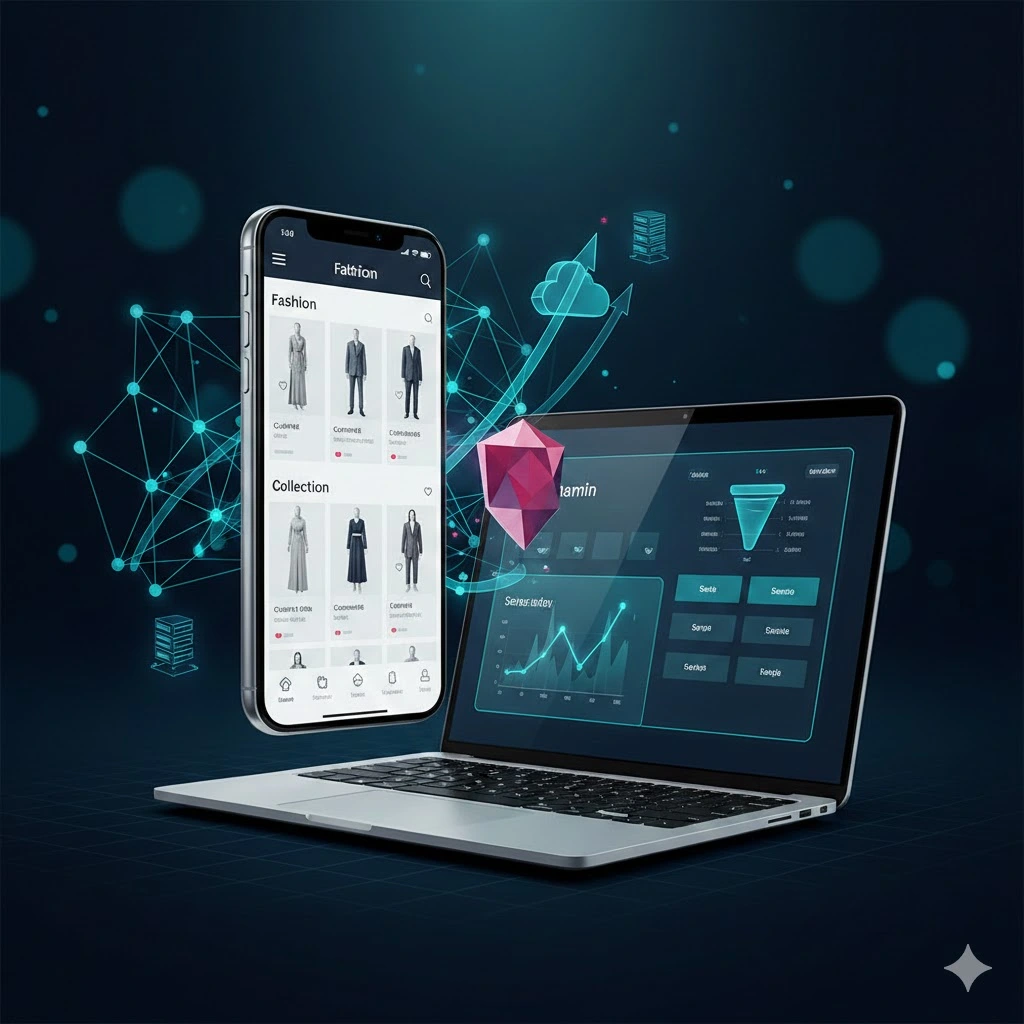
A few years ago, “fashion e-commerce” mostly meant discounting and endless catalog pages. Revolve flipped that playbook by turning product drops, influencer momentum, and a premium brand experience into a machine that can hit massive scale—reporting $1.1B in net sales and serving 2.7M active customers in 2024. In 2025, that blueprint is even more valuable because shoppers don’t just buy products—they buy curation, community, and speed.
If you’re an entrepreneur, the reason a Revolve-style clone matters in 2025 is simple: the market is big, competitive, and still growing. Fashion e-commerce is projected to cross $1T in 2025, which means there’s room for focused winners in niches like premium streetwear, modest fashion, plus-size luxury, sustainable drops, or region-specific curated brands. The opportunity isn’t to “copy a website.” It’s to replicate the business logic: premium merchandising, content-driven conversion, creator-led acquisition, and retention loops that keep customers coming back.
That’s exactly what this guide will break down: what the Best Revolve Clone Scripts 2025 should include, what smart founders prioritize in Revolve Clone Development, and how Miracuves Clone Solutions help you launch faster with a scalable foundation built for real revenue—not experiments.
What Makes a Great Revolve Clone?
A great Revolve-style clone in 2025 isn’t “a fashion website with a cart.” It’s a premium, content-led commerce engine that feels fast, curated, and personal—while quietly handling massive catalog scale, nonstop traffic spikes, and complex operations (inventory, returns, promos, creator campaigns, and drop schedules). The winning formula is a polished shopping experience on the surface and a scalable architecture underneath, so you can grow from 100 orders/week to 10,000+ without rewrites.
The second defining trait is monetization flexibility. Revolve-like businesses don’t rely on one lever. They combine high-margin private labels, curated brands, drop urgency, creator attribution, and smart retention. Your clone must be designed to support these revenue loops from day one, not as “future add-ons.”
Finally, a great clone must be data-native. In 2025, fashion buyers expect personalization, fit guidance, and faster decision-making. That requires AI-driven merchandising, clean analytics, and automated ops that reduce manual work while improving conversion and repeat purchases.
What defines a “great clone” in 2025 (summary points)
Performance + Reliability (non-negotiable targets):
- App + web pages load fast even on mid-range devices; aim for sub-2.5s perceived load on key pages (home, category, PDP, checkout)
- Backend APIs aim for <300ms average response time on core flows (search, PDP, cart, checkout)
- Production uptime target: 99.9%+ with monitoring, alerts, and auto-recovery
Scalability + Operations: - Handle flash drops, influencer spikes, and sale events with autoscaling + caching
- Catalog + inventory sync designed for large SKUs, variants, and frequent price/promo changes
- Returns, refunds, and order edits supported without messy manual workflows
UI/UX that sells premium: - Clean typography, editorial layouts, and “curation-first” navigation
- Low-friction size selection, saved sizes, wishlists, and smart reorders
- Checkout optimized for speed (guest checkout, express payments, address autocomplete)
Monetization-ready by design: - Bundles, cross-sells, and “complete the look” flows
- Tiered loyalty, VIP access, early drops, and limited releases
- Affiliate/creator attribution and commission logic built-in
Must-have 2025 features (AI, blockchain, cross-platform)
AI automation (to boost conversion + reduce ops):
- Personalized feeds: “recommended for you” based on browsing, price range, style tags, and seasonality
- Smart search + discovery: typo-tolerant search, intent-based results, and visual similarity (“find similar”)
- Merchandising autopilot: auto-tagging products, trend detection, and inventory-aware ranking (push what’s available, profitable, and likely to convert)
- Support automation: AI-assisted returns Q&A, order status help, and ticket triage (handoff to humans when needed)
Blockchain transparency (use it where it actually adds trust): - Optional authenticity verification for premium categories (limited drops, resale, luxury)
- Immutable proof records (e.g., authenticity certificates, supply-chain milestones) without slowing checkout
- “Verification badge” UX that is clear and lightweight, not confusing
Cross-platform integration (because shoppers live everywhere): - Mobile apps + responsive web + optional PWA for speed and reach
- Social commerce hooks: creator storefronts, shareable product cards, trackable referral links
- Integrations for payments, shipping, tax, CRM, email/SMS, analytics, and ad platforms
Technical blueprint targets (practical, founder-friendly)
- Search: fast indexing + filters (size, color, brand, price, availability) with caching for popular queries
- Images/video: CDN delivery, next-gen formats, lazy loading, and adaptive quality for mobile networks
- Security: tokenized payments, rate-limiting, bot protection for drops, and role-based admin access
- Data layer: event tracking for views, add-to-cart, checkout steps, coupon usage, refunds, and repeat purchase behavior
- Architecture: modular services (catalog, cart, checkout, orders, users, creators/affiliates) so features can evolve without breaking everything
Table: Modern Revolve clones and their differentiators
| Modern clone type | Best for | Key differentiator | Tradeoff |
|---|---|---|---|
| Catalog-first store | Quick launch, basic fashion retail | Simple browsing + checkout | Weak retention, limited storytelling |
| Content-led commerce (editorial) | Premium positioning, higher AOV | Shoppable stories, curated collections, “complete the look” | Requires better UX + content ops |
| Drop-first / hype model | Streetwear, limited releases, spikes | Waitlists, timed drops, anti-bot, VIP access | Needs strong scaling + fairness logic |
| Marketplace + creators | Rapid acquisition via influencers | Creator storefronts, affiliate tracking, commissions | More complex payouts + attribution |
| Headless + app-first build | Performance-driven brands | Ultra-fast UX, flexible UI experiments | Higher engineering discipline needed |
Essential Features Every Revolve Clone Script Must Have
Imagine two founders launching the same premium fashion concept. Founder A builds “a store.” Founder B builds a Revolve-style system: curated discovery, creator-led acquisition, fast checkout, and retention loops that keep buyers returning weekly. In 2025, the second founder wins—not because they have more products, but because the product experience and growth engine are built into the platform. A high-performing Revolve clone is basically three platforms in one: the customer experience, the admin command center, and the brand/creator (or vendor) workspace. When these layers work together, you don’t just sell—you scale.
1) User side features (experience, convenience, retention tools)
Your user layer should feel premium and “effortless,” like a personal stylist meets a fast checkout.
Core features:
- Account + guest checkout, saved addresses, quick reorder
- Advanced search + filters (size, color, brand, price, availability, shipping speed)
- Product detail pages that sell: multiple images/video, variants, size guide, delivery/returns clarity
- Wishlist, recently viewed, “complete the look,” “buy the outfit” bundles
- Reviews with fit feedback (runs small/true/large), photo reviews, Q&A
Retention + conversion boosters (2025-ready): - AI personalization feed: style-based recommendations, seasonal edits, “because you liked…”
- Back-in-stock alerts, price-drop alerts, drop reminders
- Loyalty tiers (VIP early access, exclusive drops, free expedited shipping)
- Referral program with trackable rewards and fraud controls
Advanced 2025 features: - AR onboarding for sizing/fit guidance (optional but high-impact in premium categories)
- Visual search (“snap or upload to find similar”)
- Blockchain verification badge for select categories (luxury/limited drops)
2) Admin panel features (control, analytics, automation)
If the admin panel is weak, the business becomes manual chaos. A great Revolve clone admin is a growth cockpit.
Core controls:
- Product + variant management, bulk upload, smart attributes/tags
- Inventory management with low-stock rules and auto-hiding out-of-stock variants
- Orders, returns, refunds, cancellations, exchanges, partial refunds
- Promotions: coupons, bundles, BOGO, free shipping rules, scheduled campaigns
Analytics that matter: - Funnel tracking (view → add-to-cart → checkout → purchase)
- Cohorts + repeat purchase rate, AOV, LTV, CAC insights (integrated via analytics stack)
- Campaign attribution (creator links, referrals, paid channels)
Automation features (saves time, protects margins): - Automated fraud flags, suspicious orders, address mismatch alerts
- Smart merchandising rules (boost high-margin items, prioritize in-stock, suppress high-return SKUs)
- Customer segmentation for email/SMS campaigns (VIP, first-time, churn risk)
3) Brand/creator side features (earnings dashboard, AI recommendations)
Revolve-like growth often depends on creators/affiliates and curated merchandising. Your third layer enables that scale.
Creator/affiliate module:
- Creator storefront pages with curated drops and shoppable collections
- Unique trackable links + discount codes
- Commission rules (tiered, time-based, product-based)
- Earnings dashboard: clicks, conversions, payout status, top products
AI recommendations for creators and brands: - Suggest products likely to convert for their audience
- Recommend best posting windows and drop timing (based on historical conversion)
- Detect content-product mismatch and propose better pairings
Technical architecture requirements (scalability, load handling, security, APIs)
A Revolve clone must be built like a serious commerce platform, not a template site.
Scalability + performance:
- Target <300ms average API response time for core flows (search/cart/checkout) using caching + optimized queries
- Autoscaling for traffic spikes (drops, influencer campaigns, sale events)
- CDN for images/video, edge caching for common pages, background jobs for heavy tasks
- Target 99.9%+ uptime with monitoring, error tracking, and automated rollback strategy
Security layers: - PCI-aligned payment flows using tokenization (never store raw card data)
- Role-based access control (RBAC) for admin and operations teams
- Rate limiting + bot protection (especially for drops and coupon abuse)
- Secure audit logs for refunds, pricing edits, and payouts
Third-party APIs commonly required: - Payments (cards, wallets, BNPL optional), shipping rate + tracking, tax/VAT, email/SMS, analytics, CRM, fraud checks
Table: Feature comparison (Basic vs Professional vs Enterprise)
| Feature area | Basic (MVP) | Professional | Enterprise |
|---|---|---|---|
| Storefront | Responsive web, core catalog | Web + mobile apps, editorial modules | Headless + app-first, advanced UX experiments |
| Search & filters | Standard filters | Smart search + typo tolerance | AI ranking + visual search |
| Personalization | Simple recommendations | AI feeds + segmentation | Real-time personalization + LTV-based offers |
| Checkout | Guest checkout, wallets | Express checkout + saved preferences | Multi-region checkout + advanced risk controls |
| Promotions | Coupons | Bundles + scheduled campaigns | Dynamic pricing rules + advanced promos |
| Creator/Affiliate | Optional basic links | Creator storefront + commission | Multi-tier payouts + deep attribution |
| Ops/Admin | Orders + refunds | Automation + analytics dashboards | Enterprise workflows + audit + approvals |
| Security & scale | Standard hardening | Bot protection + monitoring | Advanced security, SLA-grade reliability |
Cost Factors & Pricing Breakdown
Revolve-Like Fashion & Lifestyle eCommerce Platform Development — Market Price
| Development Level | Inclusions | Estimated Market Price (USD) |
|---|---|---|
| 1. Basic Fashion eCommerce MVP | Product listings, categories, size & variant management, cart & checkout, user accounts, order tracking, and a simple admin panel. | $50,000 |
| 2. Mid-Level Apparel Marketplace | Web + mobile UI/UX, advanced filters (brand, size, color), inventory management, wishlists, reviews & ratings, promotions, notifications, and analytics dashboards. | $120,000 |
| 3. Advanced Revolve-Level Platform | Influencer-driven collections, personalized recommendations, editorial content integration, loyalty programs, multi-warehouse support, global shipping logic, and enterprise-grade scalability. | $240,000+ |
These figures represent the typical global investment required to build a premium, trend-driven fashion commerce platform similar to Revolve — focused on discovery, branding, and high-conversion shopping experiences.
Miracuves Pricing for a Revolve-Like Platform
Miracuves Price: Starts at $15,999
This package includes a complete fashion eCommerce foundation with product & variant management, inventory controls, promotional pricing, checkout workflows, customer accounts, influencer/collection modules, and a unified admin backend — designed for premium branding and scalable growth.
Note:
Includes full source code, backend setup, frontend integration, admin configuration, API connections, and deployment assistance — enabling you to launch a fully branded Revolve-style platform with complete ownership.
Launch Your Revolve-Style Fashion Marketplace — Contact Us Today
Delivery Timeline for a Revolve-Like Platform with Miracuves
The typical delivery timeframe is 30–90 days, depending on:
- Number of product categories & SKUs
- Influencer and editorial content features
- Inventory, warehouse & fulfillment workflows
- Branding & UI/UX customization
- Payment gateway & logistics integrations
- Performance and scalability requirements
Tech Stack
Built using a JS-based architecture, ideal for modern fashion eCommerce platforms that require scalability, fast catalog browsing, personalization engines, and high-performance checkout experiences.
Customization & White-Label Option
Building a Revolve-style fashion and lifestyle ecommerce platform isn’t just about selling apparel online — it’s about creating a premium, trend-driven shopping experience that blends curated collections, influencer-led merchandising, and a strong brand identity. A platform inspired by Revolve must focus on visual storytelling, fast product discovery, mobile-first experiences, and seamless fulfillment while supporting scale and global reach.
Miracuves delivers a fully white-label Revolve-style solution that allows deep customization across storefront design, product presentation, influencer integration, and backend commerce operations. Whether you are targeting fashion, beauty, accessories, or luxury lifestyle segments, the platform can be tailored to your brand voice and customer expectations.
Why Customization Matters
In fashion ecommerce, differentiation comes from curation and experience. Customers expect visually rich catalogs, fast access to trends, smooth checkout, and consistent brand aesthetics. Customization ensures your platform reflects your fashion positioning, supports rapid collection updates, and builds long-term customer loyalty.
What You Can Customize
Complete UI/UX Personalization
Customize homepage layouts, editorial-style collections, lookbooks, category pages, product detail layouts, typography, color palettes, and mobile-first designs for a premium fashion experience.
Product Catalog & Merchandising
Configure seasonal collections, designer storefronts, variant handling (size, color, fit), rich media galleries, styling suggestions, and cross-sell or upsell logic.
Influencer & Content Integration
Enable influencer collections, tagged products in content, campaign landing pages, social proof sections, user-generated content, and editorial storytelling modules.
Checkout, Payments & Fulfillment
Customize cart behavior, express checkout, multiple payment options, shipping rules, international delivery handling, returns and exchanges workflows, and order tracking.
Customer Accounts & Loyalty
User profiles, order history, wishlists, saved sizes, loyalty programs, early-access sales, personalized recommendations, and notification preferences.
Backend & Integrations
Integrate payment gateways, logistics partners, ERP/CRM systems, inventory and warehouse tools, analytics platforms, and marketing automation software.
Monetization & Growth Tools
Enable private-label promotion, featured collections, paid brand placements, subscription perks, data-driven merchandising insights, and campaign performance tracking.
How Miracuves Handles Customization
Miracuves follows a structured customization process designed for experience-led ecommerce platforms.
- Requirement Understanding
Analysis of your fashion niche, brand positioning, and target audience. - Planning & Breakdowns
Customization tasks are organized into modular components for efficient execution. - Design & Development
UI/UX enhancements, merchandising logic, and content-driven commerce features are implemented according to your roadmap. - Testing & Quality Assurance
Performance, usability, mobile responsiveness, and scalability testing ensure a smooth shopping experience. - Deployment
Your fully white-labeled fashion ecommerce platform goes live with complete branding and operational configuration.
Real Examples from the Miracuves Portfolio
Miracuves has powered 9k+ successful ecommerce and marketplace deployments, including:
- Fashion and lifestyle ecommerce platforms with curated collections
- Influencer-driven shopping experiences with editorial content
- Global fashion stores supporting multi-currency and international shipping
- White-label retail platforms optimized for mobile-first fashion audiences
These real-world deployments demonstrate how customization transforms a Revolve-style platform into a scalable, brand-centric fashion ecommerce business.
Launch Strategy & Market Entry
A Revolve-style clone can be beautifully built and still fail if it launches without a plan. The founders who win treat launch like a product rollout, not a “publish and pray” moment. Your first 90 days should be designed to prove three things: people want your curation, your acquisition channel is repeatable, and your retention loop is working. Here’s how to approach it like a mentor guiding a real startup launch.
Pre-launch checklist (don’t skip these)
Product readiness:
- End-to-end testing: browse → search → cart → checkout → refunds/returns
- Performance checks: load testing for peak traffic and campaign spikes
- Bug triage: fix checkout blockers first, then discovery + UI friction
Compliance + trust basics: - Clear returns/refunds policy, shipping timelines, taxes/VAT where needed
- Secure payments setup and fraud prevention rules
- Privacy policy, cookie policy (if applicable), and user consent flows
App store + release readiness (if you launch apps): - Store assets: screenshots, preview videos, feature bullets, keywords
- Crash reporting and analytics instrumentation from day one
- Versioning plan for weekly fixes after launch
Marketing prep: - Landing pages for your niche categories and curated collections
- Email/SMS flows: welcome, abandoned cart, browse abandon, back-in-stock, VIP drops
- Creator kit: templates for stories/reels/posts, trackable links, offer codes
Regional entry strategy (Asia, MENA, Europe, U.S.)
Different regions reward different positioning. A smart entry is localized—not just translated.
Asia (price-sensitive + high mobile usage):
- Win with fast mobile UX, creator-led campaigns, and aggressive referral loops
- Local payments + COD (where relevant), quick shipping expectations
- Micro-influencer networks often outperform big celebrity spends early
MENA (premium demand + brand trust): - Emphasize premium curation, authenticity, fast delivery, and localized support
- Localized sizing guides, Arabic UX options, and region-friendly payments
- VIP tiers and early-access drops can perform extremely well
Europe (privacy/compliance + sustainability angles): - Strong compliance posture, clear user consent, easy returns
- Sustainability filters and transparency pages can improve conversion for eco-luxury niches
- Multi-country shipping rules and VAT-ready checkout matter quickly
U.S. (competition + influencer scale): - Niche hard: don’t be “fashion,” be “premium streetwear drops” or “curated luxe basics”
- Build brand voice and community, not just catalogs
- Prioritize fast shipping, easy returns, and strong creator attribution tracking
User acquisition frameworks that work in 2025
You don’t need 20 channels. You need 2–3 that you can repeat profitably.
1) Influencer/creator engine (Revolve-style growth):
- Start with 20–50 micro creators in your niche
- Give each a storefront + code + trackable link
- Run weekly “drop moments” they can promote (content cadence matters)
2) Referral loops (built for compounding): - Offer give/get rewards: “Give 10%, Get 10%” or credit-based incentives
- Add fraud controls so the loop stays profitable
3) Retention funnels (where profits are made): - Abandoned cart + browse abandon flows
- Back-in-stock + price-drop alerts
- VIP early access and loyalty tiers to create “reasons to return”
Monetization models proven in 2025 (choose 1–2 to start)
- Premium retail margin: curated brands + strong merchandising
- Private label: higher margins, better control, stronger differentiation
- Creator/affiliate-driven sales: trackable commissions and performance tiers
- VIP membership: early access, free expedited shipping, exclusive drops
- Bundles + upsells: “complete the look” increases AOV
How Miracuves supports your launch end-to-end
Miracuves doesn’t just deliver a build—you get a launch-ready foundation designed for real execution:
- Server setup guidance + scalable deployment approach
- Analytics and event tracking readiness so you can measure funnel performance
- Support for integrating key tools (payments, shipping, email/SMS, attribution)
- A practical first 90-day roadmap structure: launch → stabilize → optimize conversion → scale acquisition
Why Choose Miracuves for Your Revolve Clone
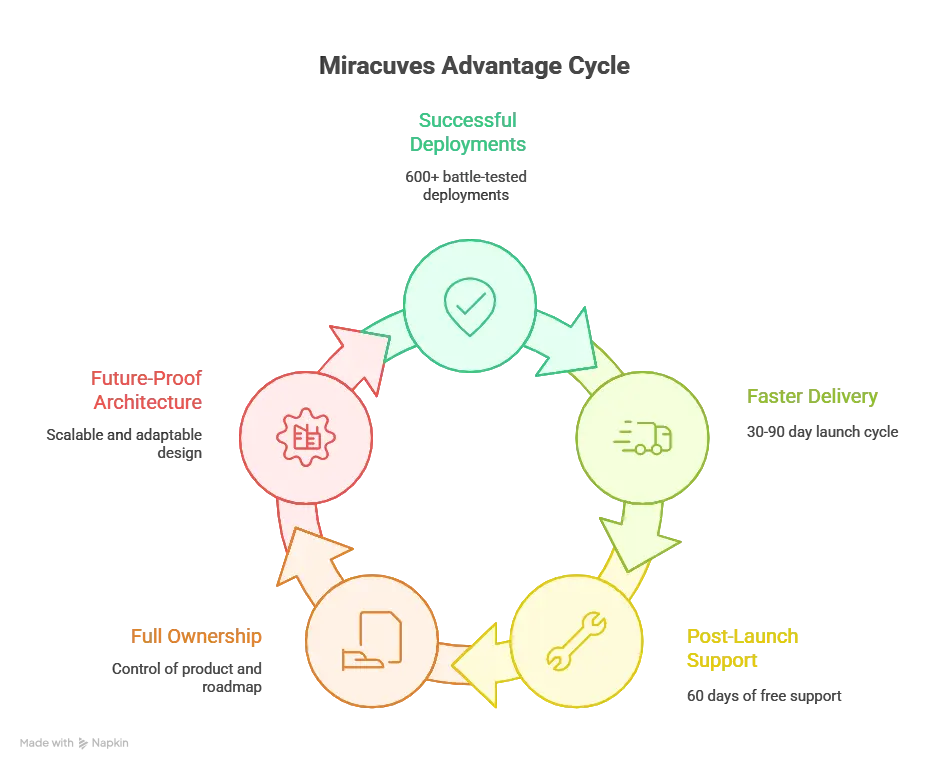
A founder’s hardest problem isn’t building “an app.” It’s building a platform that doesn’t collapse when your first campaign hits, doesn’t leak money through broken ops, and doesn’t trap you in endless rebuilds. A Revolve-style business needs premium UX, real performance, and growth mechanics that are engineered into the product—not glued on later. That’s where Miracuves becomes the unfair advantage: you’re not starting from zero, you’re starting from a proven foundation built for launch and scale.
What Miracuves brings to the table (the founder-grade advantages):
- 9k+ successful deployments: battle-tested delivery experience across marketplaces, ecommerce, and on-demand platforms
- 30–90-day delivery cycle: launch faster with a structured build process and predictable milestones
- Free post-launch support (60 days): stabilize, fix early issues, and optimize after real users arrive
- Full source-code ownership: you control your product, your roadmap, and your future upgrades
- Future-proof architecture: built to handle growth, drop spikes, integrations, and feature expansion without rewriting the core
Short success stories (what transformation looks like)
Story 1: “From idea to curated premium store in one season”
A niche founder targeting premium streetwear didn’t need “every feature.” They needed a fast, high-converting storefront, creator links, drop scheduling, and a loyalty loop. With Miracuves, they launched within the planned build window, started running weekly drops, and used creator storefronts to drive trackable sales instead of guessing which campaigns worked.
Story 2: “A boutique brand scaled without ops chaos”
A curated women’s fashion concept hit sudden spikes from influencer posts. The platform held steady because the build prioritized performance, scalable infrastructure, and clean admin workflows for orders, returns, and promos. Instead of firefighting, the team focused on merchandising and retention.
Story 3: “A region-focused fashion brand localized fast”
A founder entering a specific region needed localized checkout, shipping logic, and region-specific sizing flows. Miracuves structured customization in phases—launch with a strong MVP, then iterate quickly based on actual buyer behavior—so the business didn’t lose momentum waiting for “perfect.”
The real reason founders pick Miracuves
Because you’re buying speed and stability. You get a Revolve-like foundation that’s designed around what actually drives outcomes in 2025: premium UX, smart discovery, retention loops, creator-led growth, and scalable operations.
Final Thought
A Revolve-style business isn’t successful because it sells clothes online. It wins because it sells a curated experience—fast discovery, premium presentation, creator-led trust, and repeat-worthy drops that keep customers coming back. In 2025, entrepreneurs who understand this model don’t compete on “more products.” They compete on better merchandising, smarter personalization, smoother checkout, and tighter retention loops.
That’s exactly why building a Revolve clone is a strategic move when you do it the right way. You’re not copying a brand—you’re adopting a proven growth blueprint and adapting it to your niche: premium streetwear, eco-luxury, modest fashion, region-focused curation, creator boutiques, or limited drops. When your platform is engineered for speed, scale, and monetization from day one, every campaign compounds instead of breaking your operations.
Miracuves helps you launch with that advantage. With a proven clone foundation, performance-first architecture, and a startup-friendly delivery approach in 30–90 days, you can go live faster, iterate smarter, and build a fashion commerce brand that feels premium and operates like a real business—not a fragile prototype.
Ready to launch your Revolve clone? Get a free consultationand detailed project roadmap from Miracuves — trusted by 1500+ entrepreneurs worldwide.
FAQs
How quickly can Miracuves deploy my Revolve clone?
Miracuves typically delivers a Revolve-style clone within 30–90 days, depending on your feature scope, integrations, and customization depth.
What’s included in the Miracuves clone package?
You get a complete foundation covering the storefront experience, admin control panel, and essential commerce workflows like catalog, search, cart, checkout, orders, returns, and promotions—plus the architecture to scale and extend.
Can I get full source-code access?
Yes. Miracuves provides full source-code ownership, so you can customize, scale, and evolve the platform without being locked in.
How does Miracuves ensure scalability?
By using a performance-first, modular build approach: optimized APIs, caching, scalable infrastructure patterns, and production-grade monitoring so the platform stays stable during spikes (drops, influencer traffic, sales events).
Does Miracuves assist with app store approval?
Miracuves supports launch readiness with guidance on required assets, stability checks, and compliance basics, helping you prepare the app for smoother submission and review.
Is post-launch maintenance included?
Miracuves includes 60 days of free post-launch support to help stabilize your release, handle early fixes, and ensure a smoother production rollout.
Can Miracuves integrate custom payment gateways?
Yes. Miracuves can integrate custom payment gateways, wallets, and region-specific payment methods based on your target market needs.
What’s the upgrade/update policy?
Upgrades and updates are handled through a structured change process—new features, UI improvements, integrations, and performance enhancements can be rolled out in planned iterations to avoid breaking live operations.
How does white-labeling work?
White-labeling means the platform is delivered fully under your brand—name, logo, color system, app icons, splash screens, domain setup, and branded customer communication templates—so customers only see your identity.
What kind of ongoing support can I expect?
Beyond the initial post-launch support window, Miracuves can continue with structured technical support, feature iterations, scaling assistance, and integration upgrades as your user base and operations grow.
Related Articles
- Best Faire Clone Scripts 2025: Build a B2B Wholesale Marketplace That Scales
- Best WooCommerce Clone Scripts 2025: Build a Scalable Ecommerce Platform from Day One
- Best BigCommerce Clone Scripts 2025: Build a Scalable SaaS Ecommerce Platform
- Best Wish Clone Scripts 2025: Build a High-Profit Social Commerce App
- Best DHgate Clone Scripts 2025: Build a Global B2B Wholesale Marketplace Faster
- Best Cdiscount Clone Scripts 2025: Build a Scalable French Marketplace Like a Pro