



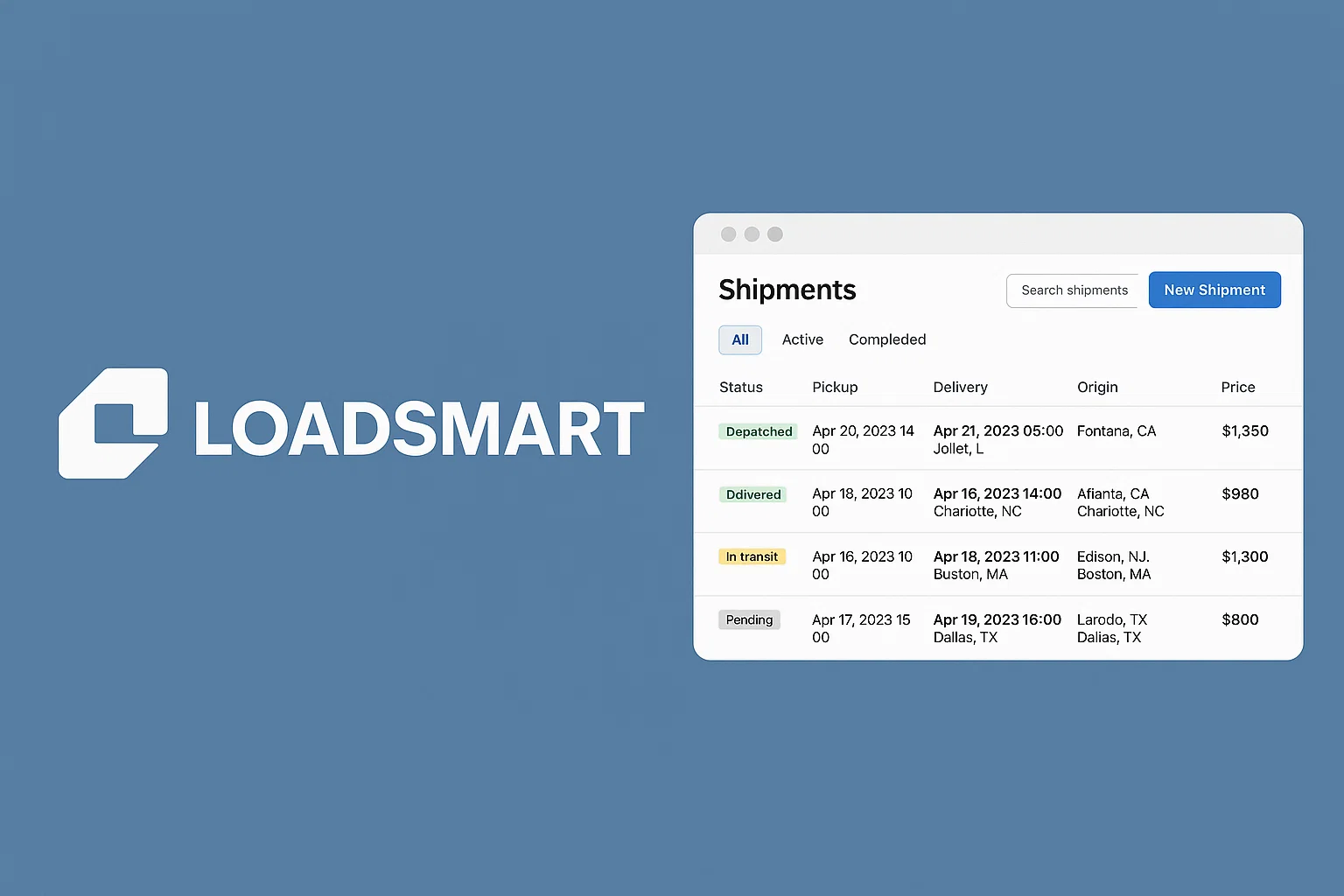
Imagine you’re a logistics manager facing tight deadlines, fluctuating carrier prices, and endless calls to secure a truck. Loadsmart removes all that chaos with instant pricing, automated booking, and smarter freight matching—right from a single dashboard.
Loadsmart started in 2014 with a mission to modernize the trucking industry through automation and data analytics. Today, it’s a leading digital freight platform trusted by shippers, carriers, and 3PLs across North America.
By the end of this guide, you’ll understand exactly what Loadsmart is, how it works, the technology behind it, and why so many entrepreneurs want to build similar platforms—plus how Miracuves can help you create your own Loadsmart-like solution.
What is Loadsmart? The Simple Explanation
Loadsmart is a digital freight platform that uses automation and real-time data to connect shippers with trucking carriers instantly. Instead of calling multiple brokers, shippers get instant rates, book loads online, track shipments live, and manage freight more efficiently. Carriers, on the other hand, receive better load visibility, optimized routes, and faster payments.
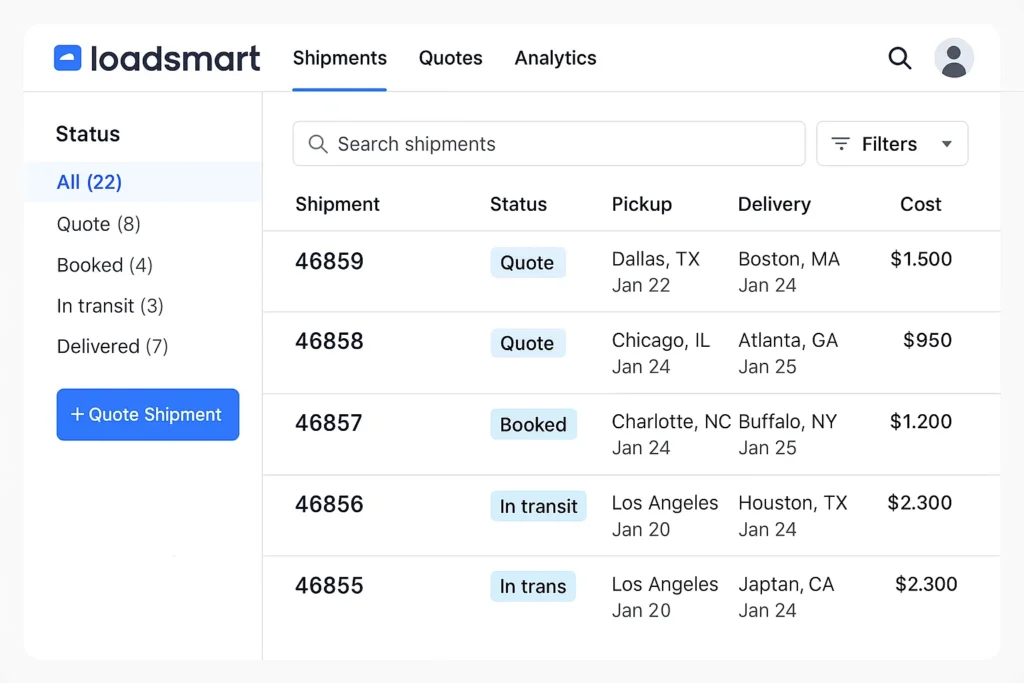
At its core, Loadsmart solves the problem of slow, manual freight booking. It brings speed, transparency, and automation to an industry traditionally dependent on paperwork and phone calls.
Its main users include:
• Shippers (manufacturers, retailers, distributors)
• Carriers and owner-operators
• 3PLs and logistics teams managing high-load volumes
In 2025, Loadsmart has strengthened its position among top digital freight companies, with strong adoption from enterprise shippers and increased API integrations across TMS platforms. The company has grown due to its instant pricing engine, automation workflows, and AI-driven freight matching.
How Does Loadsmart Work? Step-by-Step Breakdown
For Shippers (Users)
1. Account Setup
A shipper signs up, adds business details, verifies email, and completes onboarding by integrating their TMS (optional).
2. Getting Instant Freight Quotes
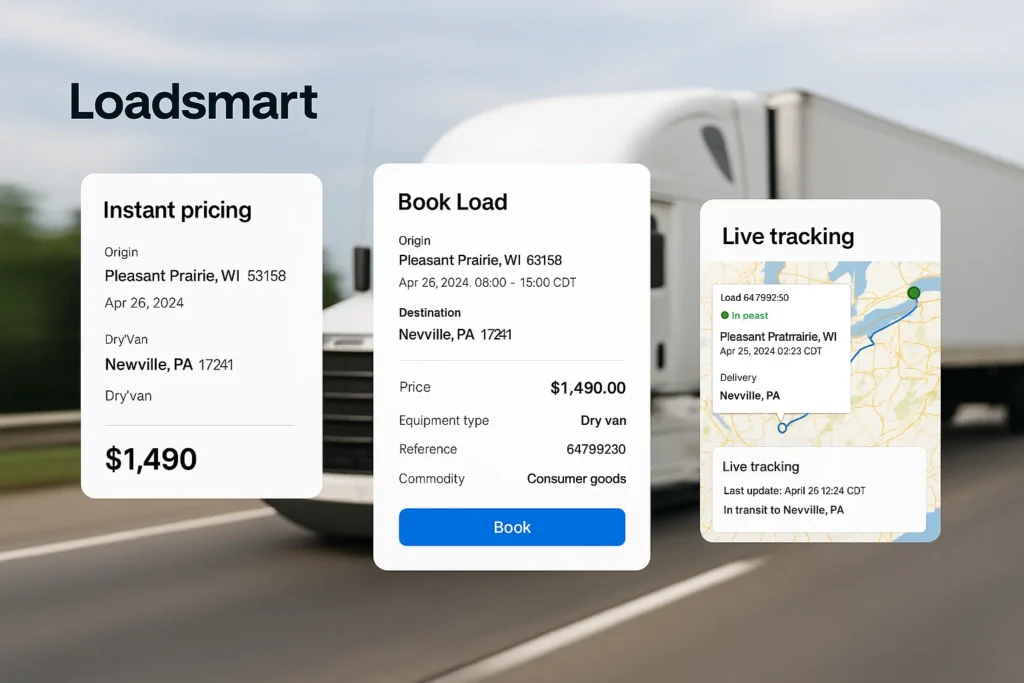
They enter shipment details—origin, destination, weight, equipment type—and Loadsmart’s pricing engine instantly generates real-time rates.
3. Booking Loads in Seconds
Shippers select a rate, confirm the booking, and receive automated carrier assignment without needing phone calls or negotiation.
4. Real-Time Tracking
Once a truck is assigned, shippers can track shipments on a live map, get ETAs, and receive automated status updates.
5. Shipment Management
Documents like BOL, POD, and invoices are stored digitally, and analytics dashboards provide cost and performance insights.
Typical User Journey Example
A company in Chicago needs a full truckload delivered to Dallas. Instead of calling brokers, they enter details on Loadsmart, instantly get a price, click “Book,” and monitor the truck live until delivery.
For Carriers / Trucking Companies
1. Onboarding
Carriers register, upload insurance, provide fleet details, and verify compliance.
2. Load Discovery
They browse available loads, get recommended trips based on route optimization, and accept assignments with one click.
3. Execution & Payment
After completing deliveries, they upload PODs and receive faster, automated payments based on platform rules.
Technical Overview (Simple)
Loadsmart works through a combination of automation, real-time data, and machine learning:
• The platform pulls live pricing data from the market to calculate instant quotes.
• Algorithms match shipments with carriers using routes, truck availability, and load preferences.
• APIs connect Loadsmart with Transportation Management Systems (TMS) and carrier tools.
• Real-time GPS tracking is enabled through telematics integrations and carrier mobile apps.
Loadsmart’s Business Model Explained
Loadsmart operates as a digital freight brokerage and logistics technology platform, earning revenue by connecting shippers (who need to move freight) with carriers (who have capacity) and optimizing that flow with software.
How Loadsmart Makes Money (Revenue Streams)
- Freight Brokerage Margin
Loadsmart earns a margin between what shippers pay for a load and what carriers are paid. This is the core revenue stream, similar to a tech-enabled broker. - Contracted / Dedicated Capacity Solutions
For large shippers, Loadsmart offers contracted or dedicated capacity programs. These are longer-term agreements where pricing and volume are pre-negotiated, creating more predictable revenue. - Intermodal & Multimodal Services
Beyond full truckload (FTL), Loadsmart also offers intermodal and other transport modes, charging service fees and margins on top of carrier costs. - API & TMS Integrations (Value-Added Services)
Loadsmart integrates with leading TMS platforms and offers API-based access to rates and booking. While many integrations are part of the service, large enterprise solutions can involve implementation and customization fees. - Managed Transportation / Logistics-as-a-Service
Some customers rely on Loadsmart not just for rates, but for ongoing logistics optimization and management, which can be billed as a service or management fee on top of freight spend.
Pricing Structure & Typical Rates (High-Level)
Exact per-load pricing depends on lane, distance, equipment, fuel, market volatility, and contract vs spot. However, the structure generally looks like this:
- Shippers see an all-in rate per load (e.g., per lane, per mile, or total trip cost).
- Carriers are paid a negotiated rate per load.
- Loadsmart’s earnings are the spread (margin) between the shipper’s price and the carrier payout.
Margins in digital freight typically hover in ranges similar to brokerage models, but efficiency and automation can improve profitability compared to traditional brokers.
Commission / Fee Breakdown (Conceptual)
- Shipper pays: Total freight cost for lane X (e.g., $X per mile or $Y per load).
- Carrier receives: A slightly lower amount negotiated via the platform.
- Loadsmart keeps: The difference as commission/margin, plus any additional value-added service fees from enterprise solutions or managed transportation offerings.
Because Loadsmart emphasizes automation and optimization, its model aims to increase volume while keeping operational costs lower than traditional brokerage.
Market Size and Growth
Loadsmart operates in the massive North American freight and logistics market, where:
- The U.S. freight trucking market alone represents hundreds of billions of dollars annually in spend.
- Digital freight and logistics tech platforms are gaining a larger share each year as shippers move from phone-and-fax to automated platforms.
- Growth is driven by e-commerce, supply chain digitization, and demand for real-time visibility.
This environment allows Loadsmart to grow both as a tech platform and as a high-volume digital broker.
Profitability & Business Insights
- Loadsmart’s business model scales with volume and automation: the more loads they handle with minimal human intervention, the more profitable the model becomes.
- Deep TMS/API integrations help lock in enterprise customers and increase recurring volume.
- Data and algorithms become a long-term asset, improving pricing accuracy and load matching efficiency over time.
Revenue Model Breakdown
| Revenue Component | Description | Who Pays? | Nature of Revenue |
|---|---|---|---|
| Freight Brokerage Margin | Spread between shipper rate and carrier payout | Shipper | Transactional per load |
| Contracted / Dedicated Capacity | Pre-negotiated programs for large shippers | Shipper | Recurring/volume-based |
| Intermodal & Multimodal | Non-truckload modes and extended logistics services | Shipper | Transactional + margin |
| API / TMS Integrations | Enterprise integrations and custom solutions | Shipper | Project / service fees |
| Managed Transportation | Ongoing logistics optimization and operations | Shipper | Management/service fee |
This mix of per-load transaction revenue and higher-value enterprise services gives Loadsmart both scalability and depth in customer relationships.
Key Features That Make Loadsmart Successful
Loadsmart stands out because it doesn’t just digitize freight booking – it makes the whole workflow faster, clearer, and more predictable for both shippers and carriers. Here are the key features that drive its success:
- Instant Pricing and Quoting
Shippers can input pickup, drop-off, dates, and load details and get an instant, all-in rate. No waiting for callbacks or email quotes. This speed is a big reason teams adopt platforms like Loadsmart instead of traditional brokers. - One-Click Digital Booking
Once a rate looks good, the shipper can book the load in seconds. This reduces back-and-forth communication and lets logistics teams secure capacity even during busy seasons or volatile markets. - Smart Load Matching for Carriers
Loadsmart recommends loads to carriers based on location, lane preferences, and available capacity. This helps reduce empty miles and improves earnings for carriers while ensuring shippers get faster coverage. - Real-Time Shipment Tracking
Shippers can see where their freight is on a map, get ETAs, and receive automatic updates at key milestones (pickup, in transit, delivered). This real-time visibility saves countless “Where’s my load?” calls. - TMS and API Integrations
Loadsmart integrates with popular Transportation Management Systems and offers APIs so shippers can access rates and book loads directly from their existing tools. This deeply embeds Loadsmart into enterprise workflows and increases usage. - Automated Documents and Billing
BOLs, PODs, and invoices are handled digitally. This reduces paperwork, speeds up payment cycles, and minimizes errors in manual entry—especially useful for high-volume shippers. - Analytics and Cost Insights
Dashboards show freight spend, lane performance, carrier utilization, and cost trends. Logistics managers can use this data to negotiate better, optimize routes, and justify decisions to leadership. - Dynamic Pricing and Market Intelligence
Loadsmart uses data from multiple sources (market rates, capacity, routes, seasonality) to generate pricing. This helps shippers stay closer to market reality while avoiding overpaying in volatile times. - Carrier Experience and Faster Payments
Carriers benefit from a clean interface for load management, route planning, and faster, more predictable payments. A better carrier experience means more reliable capacity for shippers. - Automation-First Design
Many repeating tasks—rate requests, booking confirmation, updates, notifications—are automated. This reduces manual workload and allows human teams to focus on exceptions instead of every single load.
Recent updates through 2024–2025 in the digital freight space (including platforms like Loadsmart) lean heavily into deeper TMS integrations, better visibility tools, and smarter automation, often enhanced with AI-driven recommendations and route optimization.
AI/ML plays a role in:
- Predicting capacity and pricing
- Recommending the best carrier or route for a given load
- Reducing service failures by flagging at-risk shipments early
What truly sets Loadsmart apart is this combination of automation, data, and integrations that make it fit naturally into how modern logistics teams already work, instead of forcing them to completely change their systems.
The Technology Behind Loadsmart
Tech Stack Overview (Simplified)
Loadsmart operates on a modern logistics-tech architecture built to handle high-volume freight data, real-time pricing, and continuous integrations. Its backend typically uses cloud-based infrastructure, microservices, and distributed systems that allow rapid scaling as shipment volumes grow. The front-end is built for speed and usability, giving shippers and carriers a frictionless experience.
Real-Time Features and Automation
Loadsmart’s instant pricing engine uses market data, lane history, carrier capacity, and predictive analytics to generate rates within seconds. Automated workflows handle carrier assignment, shipment updates, and documentation without manual intervention. This automation reduces the need for human brokers and enables more consistent, repeatable operations.
Data Handling, Privacy, and Security
Freight data—routes, customer details, documents, tracking info—is processed through secure, encrypted channels. Access controls ensure that only authorized teams and integrated systems can view sensitive shipping information. Compliance with industry standards helps maintain trust with enterprise shippers who require strict data governance.
Scalability Approach
Loadsmart’s platform scales horizontally, meaning additional capacity can be added as shipment volume grows. Microservices ensure that individual components—pricing, tracking, booking—can scale independently without affecting the full system. This allows the platform to handle spikes during peak seasons like Q4 or unexpected surges in demand.
Mobile App vs Web Platform
The web platform is the strongest interface for shippers managing multiple loads, analytics, and TMS integrations. Carriers typically rely on mobile-friendly tools or app-based tracking to update load status, upload documents, and receive real-time alerts. Each side is optimized for the workflows of its users.
API Integrations
Loadsmart integrates with major Transportation Management Systems and enterprise logistics software through APIs. These APIs allow shippers to:
- Pull live Loadsmart rates directly into their TMS
- Book loads without switching platforms
- Sync shipment updates and documents automatically
API-based operations reduce friction and embed Loadsmart into existing supply chain workflows.
Why This Technology Matters for Business
The combination of automation, integrations, and predictive pricing makes freight booking faster, more accurate, and more cost-efficient. Shippers save time and money. Carriers get better load access. And Loadsmart grows revenue by processing more loads with fewer manual steps—one of the biggest advantages of digital freight technology.
Loadsmart’s Impact & Market Opportunity
Industry Disruption
Loadsmart has transformed traditional freight brokerage by replacing manual quoting, negotiation, and load matching with automation and data-driven decision-making. It reduces delays, improves transparency, and streamlines operations for both shippers and carriers. This shift from phone-based brokerage to digital workflows has significantly accelerated the adoption of logistics technology across North America.
Market Statistics & Growth
The U.S. freight market continues to exceed hundreds of billions of dollars annually, and digital freight platforms are capturing a growing share each year. With shippers demanding real-time pricing, visibility, and automation, platforms like Loadsmart are seeing increased enterprise adoption throughout 2024–2025. Investments in visibility tools, predictive analytics, and integrations have further strengthened their presence.
User Demographics & Behavior
Shippers using Loadsmart range from small businesses to major manufacturers and retailers. These users typically move high freight volumes and value fast quotes, automation, and reduced administrative overhead. Carriers include owner-operators, small fleets, and enterprise trucking companies looking for reliable loads, reduced empty miles, and prompt payments.
Geographic Presence
Loadsmart operates primarily across the United States, covering major freight corridors and regional routes. Its integrations with carriers and TMS ecosystems allow it to serve national shippers while supporting thousands of lanes and multi-modal options.
Future Projections
The demand for automated logistics platforms will continue rising as companies push for efficiency, cost reduction, and real-time decision-making. AI-driven freight forecasting, automated dispatch, and deeper API integrations are expected to dominate the next phase of industry growth.
Opportunities for Entrepreneurs
Digital freight is one of the most promising logistics sectors in 2025. Growing e-commerce, volatile market conditions, and increasing need for visibility create ideal conditions for new Loadsmart-like platforms. Entrepreneurs can target niche markets, specific lanes, regional operations, or specialized freight types to differentiate their offerings.
This massive success is why many entrepreneurs want to create similar platforms that combine automation, smart pricing, and real-time operations.
Building Your Own Loadsmart-Like Platform
Why Businesses Want Loadsmart-Style Platforms
Businesses are attracted to Loadsmart-like platforms because they turn complex, messy freight operations into a streamlined digital experience. Instead of depending on manual brokers, companies can control pricing, visibility, and carrier relationships from one place. A custom platform also means owning the data, building long-term shipper and carrier relationships, and shaping the product around a specific niche—like regional lanes, specific industries, or specialized freight.
Key Considerations Before You Start Development
Before you jump into building a Loadsmart-style solution, you’ll want to think through:
- Who is your core target: shippers, carriers, 3PLs, or a mix?
- Will you focus on full truckload, LTL, intermodal, or a specific segment?
- Do you want to be a pure tech platform, a digital broker, or both?
- Which regions and lanes will you serve first?
- How will you handle compliance, onboarding, and document workflows?
Clear answers here will guide your product features, tech stack, and monetization strategy.
Cost Factors & Pricing Breakdown
Loadsmart-Like App Development — Market Price
| Development Level | Inclusions | Estimated Market Price (USD) |
|---|---|---|
| Basic Load Board MVP | Core web platform for posting and browsing loads, carrier and shipper/broker registration & login, basic lane search, simple load posting, contact/expression-of-interest flow, basic availability management, standard admin panel | $40,000 |
| Mid-Level Freight Matching Platform | Advanced search & filters (lane, equipment type, weight, dates), real-time load and truck postings, rating & feedback system, notifications & alerts, basic pricing tools, document upload (POD, rate confirmations), richer analytics dashboard, mobile-ready experience | $100,000 |
| Advanced Loadsmart-Level Logistics Ecosystem | Large-scale multi-region load board and freight marketplace, dynamic pricing tools, multi-user company accounts, advanced capacity & lane analytics, integrations with TMS/ELD/telematics, in-app messaging, dispute workflows, multi-currency & multi-language support, native mobile apps, cloud-native scalable backend | $200,000+ |
Loadsmart-Style Platform Development
The prices above reflect the global market cost of developing a Loadsmart-style freight matching and trucking marketplace — typically ranging from $40,000 to over $200,000, with a delivery timeline of approximately 4–12 months for a full, from-scratch build. This usually covers platform architecture, complex search and matching logic, integration planning (TMS/telematics/payments), security, and extensive testing for real-world logistics operations.
Miracuves Pricing for a Loadsmart-Like Platform
Miracuves Price: Starts at $12,999
This follows Miracuves’ official Load Board (MXlLoader) solution pricing and should be used consistently for all load board–style blogs (DAT, Truckstop, 123Loadboard, Uber Freight, Navisphere, Convoy, Loadsmart, etc.). At this price point, you get a feature-rich Loadsmart-style freight marketplace that covers core workflows such as load posting, carrier and shipper/broker onboarding, search & match flows, notifications, basic document handling, analytics, and modern web + mobile apps—while leaving room to extend into more advanced analytics, integrations, and automation as your logistics business scales.
Note: This includes full non-encrypted source code (complete ownership), complete deployment support, backend & API setup, admin panel configuration, and assistance with publishing on the Google Play Store and Apple App Store—ensuring you receive a fully operational load board ecosystem ready for launch and future expansion.
Delivery Timeline for a Loadsmart-Like Platform with Miracuves
Because this is treated as a readymade Load Board solution, the typical delivery timeline with Miracuves is 3–9 days, depending on:
- Depth of load board features (search, filters, matching logic, analytics, etc.)
- Number and complexity of third-party integrations (TMS, telematics/ELD providers, payment gateways, mapping/route APIs)
- Complexity of company accounts, role-based access, and compliance workflows
- Scope of mobile apps, branding requirements, and long-term scalability targets
Tech Stack
This solution is built with robust frameworks — Web using JavaScript (Node.js/Next.js), PostgreSQL & Apps using Flutter, optimized for performance, stability, and easy maintenance.
Other technology stacks can be discussed and arranged upon request when you contact our team, ensuring they align with your internal preferences, compliance needs, and infrastructure choices.
Essential Features You Should Include
A serious Loadsmart-style platform should at least offer:
- Shipper dashboard with instant rate search and booking
- Carrier/driver portal or app for load discovery and updates
- Real-time tracking and status notifications
- Automated documentation (BOL, POD, invoices)
- Pricing and margin controls for your operations team
- Admin panel for user, load, and payment management
- Analytics for lanes, performance, and profitability
You can then add advanced features like AI-based capacity prediction, dynamic pricing, or specialized workflows for particular industries.
Final Thought
Loadsmart shows how powerful logistics can become when technology, data, and automation come together. It replaces slow, manual freight workflows with faster, smarter, and more transparent operations for both shippers and carriers. If you understand why Loadsmart works, you’re already one step closer to building a focused, niche version for your own market—and turning complex freight challenges into a scalable digital business.
FAQs :-
How does Loadsmart make money?
Loadsmart earns revenue through brokerage margins, contracted capacity programs, multimodal services, and value-added integrations or managed transportation offerings.
Is Loadsmart available in my country?
Loadsmart primarily operates in the United States, with coverage across major freight lanes and TMS integrations that support national shippers.
How much does Loadsmart charge users?
Shippers pay an all-in freight rate per load. Pricing varies by lane, distance, vehicle type, and market conditions. Loadsmart’s earnings come from the margin between shipper pricing and carrier payouts.
What’s the commission for service providers (carriers)?
Carriers don’t pay a commission. They are paid a negotiated rate per load, while Loadsmart keeps the brokerage margin between shipper and carrier pricing.
How does Loadsmart ensure safety?
Loadsmart verifies carrier documents, insurance, and compliance. Real-time tracking, automated updates, and strict onboarding help maintain shipment security and transparency.
Can I build something similar to Loadsmart?
Yes. Many entrepreneurs build niche or regional versions of Loadsmart. Platforms can be created using ready-made logistics solutions or custom development tailored to market needs.
What makes Loadsmart different from competitors?
Its instant pricing engine, deep API/TMS integrations, automation workflows, and live visibility features make it more efficient and scalable than traditional brokers.
How many users does Loadsmart have?
Loadsmart works with thousands of shippers and carriers across the U.S. While exact user numbers fluctuate, adoption has steadily grown, especially among enterprise shippers.
What technology does Loadsmart use?
It relies on cloud infrastructure, microservices, APIs, automation tools, real-time tracking integrations, and predictive analytics for pricing and load matching.
How can I create an app like Loadsmart?
You can build it from scratch or use a pre-built logistics clone solution. Miracuves helps entrepreneurs launch Loadsmart-style platforms in 3-9 days with full customization options.