


Imagine you’re getting ready for a friend’s party — you want something trendy, stylish, and instant. Instead of spending hours roaming malls or waiting weeks for overseas shipping, you just open one app, scroll through hundreds of curated outfits, and within a few clicks order something that arrives at your door in days. That’s exactly the convenience that REVOLVE brings to fashion lovers today.
REVOLVE was founded in 2003 by two entrepreneurs (later co-CEOs) with a vision: to combine technology and fashion, and build an online store that feels as dynamic and trend-savvy as the styles it sells. Over the years it has become a go-to fashion destination especially for Millennials and Gen Z — offering apparel, footwear, accessories, beauty, even home products. As of 2025, the company reports millions of active customers, solid sales growth, and a growing influence in global fashion e-commerce.
What is REVOLVE? The Simple Explanation
REVOLVE is a leading U.S.-based online fashion retailer known for curating trendy, influencer-approved styles across clothing, footwear, beauty, accessories, and home categories. Think of it as a digital fashion destination where shoppers find premium, contemporary, and celebrity-inspired looks — all in one place.
Core Problem REVOLVE Solves
It solves the modern fashion shopper’s biggest challenge: discovering stylish, up-to-date outfits quickly without browsing dozens of brands or physical stores.
Target Users & Use Cases
REVOLVE mainly attracts:
- Millennials & Gen Z looking for trend-forward outfits
- Shoppers wanting premium but accessible designer labels
- Fashion lovers following influencers and celebrity styles
- Customers seeking fast shipping and reliable returns
Common use cases:
- Buying outfits for events (parties, vacations, festivals)
- Curated style inspiration from influencers
- Discovering new emerging designers
- Shopping beauty & lifestyle products together
Current Market Position (2025 Stats)
As of 2025:
- Millions of active customers across the U.S. and globally
- Strong sales performance across apparel, footwear & beauty
- A preferred platform for influencer-driven commerce
- Recognized for its fashion curation, tech-driven merchandising, and strong social commerce presence
Read more: What is ASOS and How Does It Work?
Why REVOLVE Became Successful
REVOLVE blends fashion, technology, and influencer culture better than almost any competitor. Its algorithmic merchandising, data-driven inventory, social media dominance, and highly curated brand portfolio make it a favorite for trend seekers.
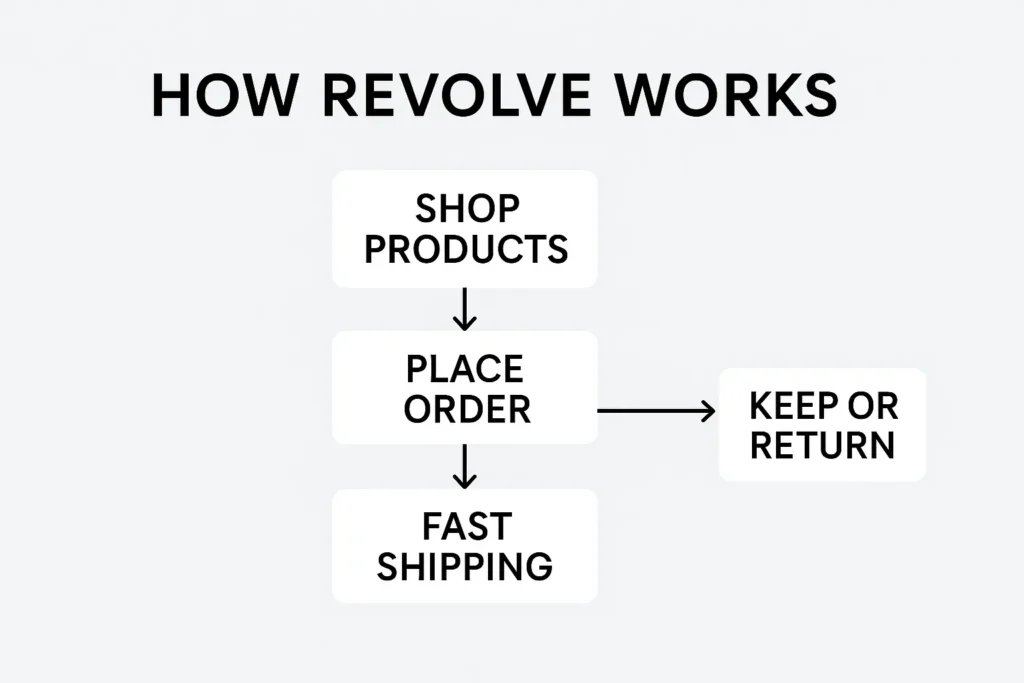
How Does REVOLVE Work? Step-by-Step Breakdown
REVOLVE works like a smart, curated fashion marketplace — combining an easy shopping experience, influencer-powered discovery, and fast fulfillment. Here’s the full breakdown.
FOR USERS (Shoppers)
1. Account Creation
Users can create an account through:
- Email & password
- Google / Apple login
- Mobile number authentication
Optional profile details (sizes, style preferences, wishlist) help REVOLVE personalize recommendations.
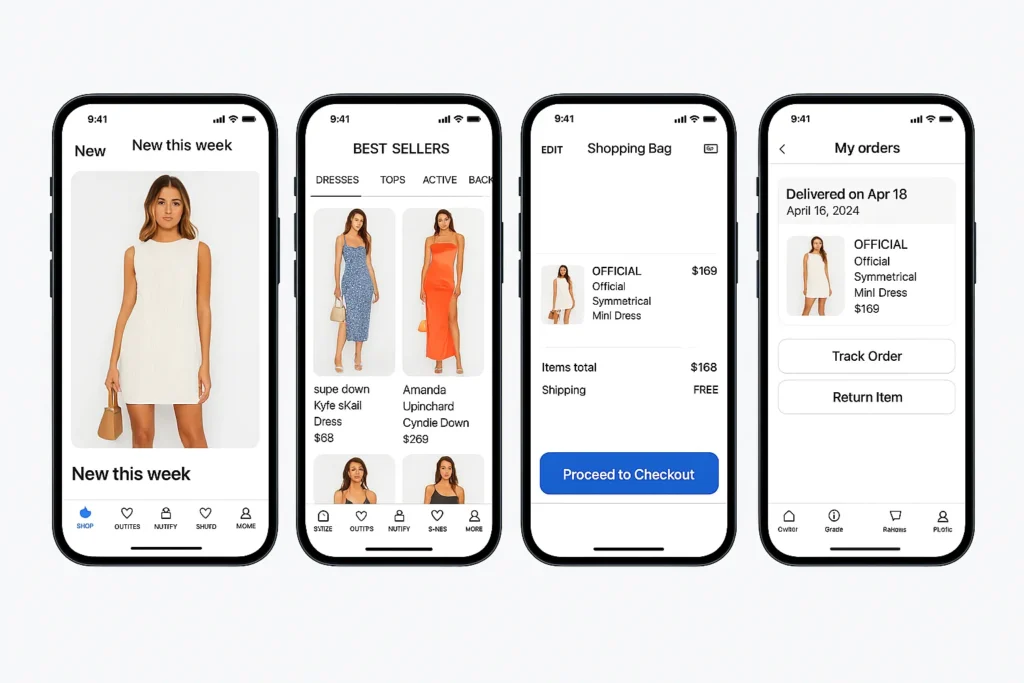
2. Browsing & Discovery
Once inside the app/website, users explore:
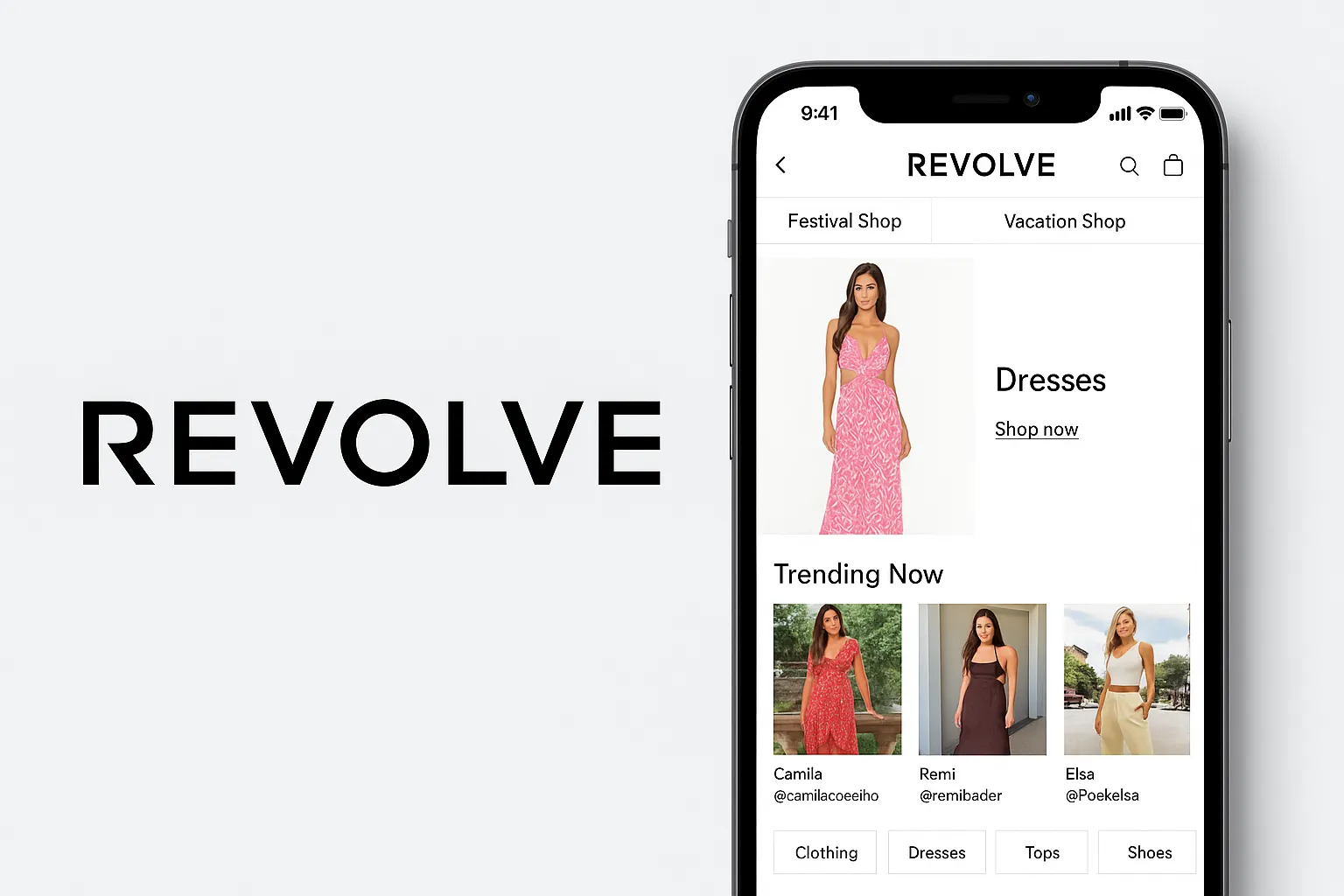
- Curated collections (e.g., Festival Shop, Vacation Shop)
- Trending styles worn by influencers
- Top brands (L’Academie, Lovers + Friends, Superdown, etc.)
- Category-based browsing: Dresses, Tops, Shoes, Beauty
REVOLVE’s algorithm adjusts product visibility based on user behavior and fashion trends.
3. Product Selection
Each product page includes:
- 360° images and try-on style photos
- Size guides + fit recommendations
- Influencer looks
- “Complete the outfit” suggestions
- Real customer reviews
4. Checkout & Payment
User selects size → adds to cart → completes payment via:
- Credit/Visa/Mastercard
- Apple Pay / PayPal
- Gift cards & store credit
Shipping options include standard, expedited, and sometimes free premium shipping offers.
5. Order Tracking & Delivery
REVOLVE integrates with logistics partners for:
- Real-time order tracking
- Fast domestic U.S. deliveries
- International shipping
6. Returns & Exchanges
REVOLVE is known for easy returns:
- Prepaid return labels
- Quick refund process
- Store credit options
TYPICAL USER JOURNEY (Example)
A user needs an outfit for a weekend trip → opens REVOLVE → browses “Vacation Shop” → checks outfits worn by influencers → adds dress + sandals → pays via Apple Pay → receives order in 2–4 days → posts outfit on social media tagging REVOLVE.
FOR BRANDS / SERVICE PROVIDERS (If Applicable)
1. Brand Onboarding
REVOLVE handpicks premium and emerging designers. Brands apply through partnerships or REVOLVE scouts them.
2. Product Listing
Brands send product samples → REVOLVE handles:
- Photoshoots
- Styling
- Creative merchandising
- Drops & campaigns
3. Sales & Commissions
REVOLVE usually works on:
- Wholesale buying model (REVOLVE buys inventory upfront)
- Select marketplace-style partnerships
- Co-branded campaigns & influencer collaborations
TECHNICAL OVERVIEW (Simple)
Basic Architecture
REVOLVE uses a modern eCommerce architecture:
- A fast frontend app & website
- A backend for inventory, pricing, and order management
- APIs that connect the app, warehouses, and payment systems
- Recommendation engines powered by user data
Key Technologies Used
- Cloud hosting (scalable infrastructure)
- Machine learning for recommendations
- Social-commerce integrations
- Secure payment gateways
- Real-time logistics APIs
REVOLVE’s Business Model Explained
REVOLVE operates on a hybrid, tech-driven fashion retail model combining premium curation, data-driven merchandising, and influencer-led marketing. This mix is what makes it one of the most profitable and trend-relevant fashion platforms in the U.S.
1. How REVOLVE Makes Money (All Revenue Streams)
1. Direct-to-Consumer Sales (Primary Revenue Source)
REVOLVE buys merchandise from brands at wholesale prices and sells them at retail.
This is its main revenue engine — especially strong in apparel & footwear.
2. REVOLVE-Owned Brands
REVOLVE operates many in-house brands such as:
- Superdown
- Lovers + Friends
- L’Academie
- NBD
- Tularosa
Margins are significantly higher for in-house labels since REVOLVE controls production.
3. Marketplace / Third-Party Brand Partnerships
Some brands list their products via partnership arrangements where revenue is shared.
4. FWRD (Luxury Division)
Their luxury arm — FWRD — generates revenue by selling high-end designer products with higher ticket sizes. Celebrity endorsements (e.g., Kendall Jenner as creative director) help boost this segment.
5. Influencer Collaborations & Drops
Limited-edition collections with influencers and celebrities drive massive sales spikes.
6. Beauty, Home & Lifestyle Categories
Diversification into new categories increases average order value (AOV).
7. Events & Festivals (Brand Marketing Revenue Impact)
Events like REVOLVE Festival drive indirect revenue through viral marketing, increasing customer acquisition & brand awareness.
2. Pricing Structure
REVOLVE’s pricing varies depending on:
- Brand value
- Trendiness
- Inventory levels
- Category (luxury vs. affordable)
Typical ranges:
- Dresses: $70–$300
- Luxury (FWRD): $500–$4,000+
- Beauty products: $15–$150
REVOLVE also incorporates:
- Seasonal discounts
- Clearance categories
- Exclusive early-access offers
3. Commission / Fee Breakdown (Estimated)
REVOLVE’s model is mostly wholesale, but for partnership-based sellers:
| Revenue Type | Estimated Model | Details |
| Wholesale | REVOLVE buys at 40–60% margin | Most common model |
| Marketplace | 20–30% commission on sales | Used for select brands |
| Luxury (FWRD) | Higher markups | Designer goods category |
| Influencer collaborations | Profit-sharing | Limited drops & exclusive launches |
4. Market Size & Stats (2025)
- U.S. fashion eCommerce market: $250B+
- Global fashion eCommerce: $900B+
- REVOLVE has millions of active customers globally
- Strong traction among Millennials & Gen Z, who form the majority of its consumer base
- REVOLVE’s influencer-driven model gives it significantly lower CAC (Customer Acquisition Cost) than traditional retailers
5. Profit Margins Insights (General)
REVOLVE enjoys:
- High margins from private-label brands
- Strong retention with repeat customers
- Efficient inventory planning boosted by ML-driven forecasting
This results in better operating margins compared to traditional fashion retailers.
| Revenue Stream | Description | Importance Level |
| Direct Retail Sales | Primary revenue from selling apparel & beauty | ⭐⭐⭐⭐⭐ |
| In-House Brands | High-margin private labels | ⭐⭐⭐⭐ |
| FWRD Luxury | High-ticket designer sales | ⭐⭐⭐ |
| Marketplace Partnerships | Commission-based earnings | ⭐⭐ |
| Influencer Drops | Spike-driven sales events | ⭐⭐⭐⭐ |
| Beauty & Lifestyle | AOV booster | ⭐⭐⭐ |
Key Features That Make REVOLVE Successful
REVOLVE stands out because it blends fashion, technology, and influencer culture into one seamless shopping experience. Here are the top features that power its success in 2025:
1. Hyper-Curated Fashion Collections
REVOLVE doesn’t just list products — it curates them. Every category (Vacation Shop, Event Dresses, Festival Outfits) is handpicked using style experts + data insights.
Why it matters: Shoppers instantly find relevant styles without endless browsing.
Benefit: Saves time, reduces decision fatigue, boosts conversions.
2. Influencer-Driven Shopping Experience
Influencers power REVOLVE’s culture — from campaigns to REVOLVE Festival.
Why it matters: Trust and instant style inspiration.
Benefit: Users buy what their favorite creators wear.
3. Strong Private Label Brands
Brands like Superdown, Lovers + Friends, NBD add trend freshness.
Why it matters: Higher margins and style exclusivity.
Benefit: Shoppers get unique pieces not found elsewhere
4. Try-On Photos & High-Quality Imagery
REVOLVE uses premium photoshoots, 360° views, and “real people” fit images.
Why it matters: Reduces return rates.
Benefit: Better purchase confidence.
5. Smart Search & Personalization (AI-Driven)
REVOLVE’s system tracks browsing, sizing, and past behavior.
Why it matters: Personalized recommendations = higher satisfaction.
Benefit: Users see products that match their vibe instantly.
6. Fast & Reliable Shipping
REVOLVE is known for quick U.S. & international shipping.
Why it matters: Fashion often has urgency (events, trips).
Benefit: Last-minute shoppers trust REVOLVE.
7. Easy Returns & Refunds
Prepaid labels, hassle-free return policy.
Why it matters: Removes fear from buying fashion online.
Benefit: Increased customer loyalty.
8. Seamless Mobile App Experience
Smooth UI, personalized feed, live tracking.
Why it matters: 60%+ of REVOLVE sales occur via mobile.
Benefit: Users shop effortlessly from anywhere.
9. Festival & Event Tie-Ins
REVOLVE Festival, brand collabs, influencer trips.
Why it matters: Builds hype & viral marketing.
Benefit: Organic traffic, huge brand awareness.
10. Integrated Beauty & Lifestyle Categories
REVOLVE expanded beyond fashion to beauty, wellness, home.
Why it matters: Encourages upsells & larger carts.
Benefit: Higher AOV (Average Order Value).
Recent 2025 Updates & Innovations
- More AI-powered recommendations
- Expansion of home & lifestyle product lines
- Better fit prediction engine
- Deeper social-shopping integrations (creator storefronts)
- Enhanced sustainability tagging & filters
What Sets REVOLVE Apart
- More influencer-focused than competitors like ASOS
- Better curation than Amazon Fashion
- Faster trend adoption cycle
- Premium shopping experience + strong tech backend
- Unique brand relationships and exclusive drops
Read more: What is SHEIN and How Does It Work?
The Technology Behind REVOLVE
REVOLVE isn’t just a fashion company — it’s a technology-powered retail engine. Behind the stylish front-end is a highly optimized tech stack designed for fast browsing, smart recommendations, efficient inventory management, and smooth global operations.
Let’s break it down simply.
1. Tech Stack Overview (Simplified)
REVOLVE uses a modern eCommerce architecture built for speed, personalization, and scale.
Frontend (User Interface)
- React / JavaScript-based UI
- Optimized for fast page loads & smooth mobile performance
- High-resolution image rendering
- Personalization widgets & style recommendations
Backend (Core System)
- Cloud-hosted infrastructure (AWS or equivalent)
- Enterprise-grade eCommerce engine
- Inventory + pricing engine
- Secure payment processing
- Recommendation AI models
Mobile Apps
- iOS (Swift)
- Android (Kotlin)
- Deep linking for product sharing
- Real-time notifications for offers & drops
2. Real-Time Features Explained
Real-Time Search
When users type in the search bar, results update instantly using:
- Predictive search
- Keyword suggestion models
- Trending product databases
Live Inventory Sync
REVOLVE’s backend updates stock in real time:
- Prevents overselling
- Handles flash-sale spikes
- Synchronizes warehouses & storefronts
Real-Time Order Tracking
Integrated logistics API shows:
- Order shipped
- In transit
- Out for delivery
- Delivered
3. Data Handling & Privacy
REVOLVE follows strong data privacy protocols:
- Encrypted user account data
- Secure payment gateways
- GDPR & CCPA compliant practices
- Minimal access policies
- Fraud detection systems for transactions
User data helps power:
- Size recommendations
- Personalized product feeds
- Smart re-targeting
—but always under compliance.
4. Scalability Approach
REVOLVE scales effortlessly because its system is built for:
- High traffic (especially during sales)
- Large product catalogs
- Heavy image loads
- Global customer demand
Scalability comes from:
- Auto-scaling cloud servers
- Load balancing
- Distributed databases
- Optimized CDN delivery
This ensures the site stays fast even with millions of visitors.
5. Mobile App vs Web Platform
| Feature | Mobile App | Website |
| Speed | Faster | Fast, but browser-dependent |
| Personalization | Deeper (notifications, saved preferences) | High |
| Convenience | One-tap shopping | Broader browsing experience |
| Engagement | Higher | Moderate |
| Features | Alerts, wishlists, push offers | More product detail depth |
REVOLVE encourages mobile use because it increases repeat purchases.
6. API Integrations
REVOLVE integrates multiple APIs for:
- Logistics (FedEx, UPS, DHL)
- Payments (Stripe, PayPal, Apple Pay)
- Tax calculation
- AI recommendation engines
- Marketing automation
- Influencer campaign tracking
APIs allow REVOLVE to operate globally with seamless automation.
7. Why This Tech Matters for Business
REVOLVE’s technology drives its competitive edge:
- Faster product discovery → higher sales
- Better personalization → stronger retention
- Smooth logistics → customer satisfaction
- Strong insights → smarter inventory planning
- Tech-enabled branding → influencer engagement
In short, technology makes REVOLVE scalable, profitable, and highly trend-responsive.
REVOLVE’s Impact & Market Opportunity
REVOLVE didn’t just build an online store — it reshaped how digital fashion retail works. Its blend of technology, influencer marketing, and hyper-curated collections has set new industry standards. Here’s the full picture.
1. Industry Disruption Caused by REVOLVE
REVOLVE pioneered:
- Influencer-first eCommerce: turning creators into the core of its marketing engine
- Data-driven merchandising: trend forecasting with real-time analytics
- High-quality, premium shopping experience in a mostly messy fast-fashion market
- Exclusive drops & creator collaborations that create hype similar to sneaker releases
It changed how brands think about online retail and trend cycles.
2. Market Statistics & Growth
U.S. Fashion eCommerce (2025)
- Valued at over $250B+
- Growing at ~9–11% annually
Global Fashion Market (2025)
- Expected to reach $900B+ in online sales
- 60%+ of purchases driven by Millennials and Gen Z
REVOLVE’s Growth Signals
- Millions of active global shoppers
- Strong performance in beauty & lifestyle categories
- Expanding marketplace partnerships
- Consistent quarter-over-quarter sales resilience
- Influence-heavy events increasing brand demand
3. User Demographics & Behavior
REVOLVE’s audience is:
- Mostly female
- Aged 18–35
- Fashion-forward
- High engagement via social platforms
- Festivals, vacations, events drive buying behavior
Users love REVOLVE because:
- The styles are aspirational yet accessible
- The app makes shopping feel fun and social
- Influencer outfits help users buy confidently
4. Geographic Presence
Although REVOLVE is U.S.-based:
- It ships globally
- Has strong traction in the U.K., Australia, Canada
- Growing interest in the Middle East & Southeast Asia
International growth is fueled by:
- Social media influence
- Fast shipping options
- Exclusive brands not available locally
5. Future Projections
By 2026–2030, REVOLVE is positioned to expand through:
- More influencer-owned brands
- AI-powered style suggestions
- Virtual try-on technologies
- Deeper beauty & wellness categories
- Increased international expansion
- Sustainability-driven collections
The company’s hybrid model (tech + creators + curated labels) remains highly defensible
6. Opportunities for Entrepreneurs
If you’re looking to launch a REVOLVE-style platform, opportunities include:
- Hyper-niche fashion marketplaces
- Influencer-driven commerce apps
- Premium curation platforms
- Festival, vacation, or events-focused fashion apps
- Luxury resale or boutique-style marketplaces
- Regional fashion discovery apps
There’s massive room to innovate — especially in mobile-first discovery and AI shopping recommendations.
Transition to Next Section
This massive success is why so many startups and fashion entrepreneurs want to build a REVOLVE-like app — and with modern clone frameworks, it has never been faster or more affordable to launch one.
Building Your Own REVOLVE-Like Platform
Building a fashion marketplace like REVOLVE in 2025 is not only possible — it’s one of the smartest opportunities in modern eCommerce. With rising influencer commerce, niche fashion demand, and mobile shopping dominance, entrepreneurs can tap into a massive, fast-growing market.
Here’s the full breakdown.
1. Why Businesses Want REVOLVE Clones
A REVOLVE-like platform is attractive because it offers:
- High customer engagement through curated styles
- Strong monetization via apparel, beauty, and lifestyle categories
- Influencer-led conversions (lowest CAC)
- Scalable fashion retail model powered by data
- High repeat-purchase behavior
- Premium branding potential without the overhead of physical stores
Entrepreneurs love the REVOLVE model because it’s:
- Trend-driven
- Mobile-first
- Creator-powered
- High-margin with private-label opportunities
2. Key Considerations Before Development
To build a successful REVOLVE-style marketplace, founders must carefully think about:
A. Product Strategy
- Which fashion categories to include?
- Will you curate like REVOLVE or allow open marketplace listings?
- Exclusive drops or influencer partnerships?
B. Technology Requirements
Your platform should include:
- Fast mobile app + web
- Real-time inventory
- AI-powered recommendations
- Smart search engine
- Visual product galleries
- Secure payments
- Easy returns workflow
C. Branding & Positioning
- Who is your target audience?
- Trendy? Luxury? Affordable? Event-focused?
- What’s your influencer strategy?
D. Logistics & Fulfillment
- Domestic shipping partners
- International delivery
- Warehouse management solutions
E. Monetization & Private Label Strategy
- Private labels generate high margins
- Marketplace model allows rapid scale
Cost Factors & Pricing Breakdown
Revolve-Like App Development — Market Price
| Development Level | Inclusions | Estimated Market Price (USD) |
| Basic Fashion Marketplace MVP | Product listings, buyer/seller roles, simple checkout | $120,000 |
| Mid-Level Fashion Commerce Platform | Brand dashboards, size/variant engine, shipping/payment integrations, reviews, mobile apps | $250,000 |
| Advanced Marketplace (Revolve-scale) | Premium UI, high-concurrency backend, catalog personalization, multi-warehouse logistics, AI recommendations, native apps | $300,000+ |
Typical global market cost for a fashion marketplace of this scope is $120,000–$250,000+ with 6–12 months delivery. Our custom JS build offers an optimized cost while maintaining enterprise-grade quality.
Miracuves Pricing for a Revolve-Like Custom Platform
Miracuves Price: Starts at $13,999
Note: This includes full non-encrypted source code, complete deployment support, backend setup, admin panel configuration, and publishing on Google Play and Apple App Store—so you launch a fully operational marketplace.
Delivery Timeline for Revolve
Miracuves development timeline including setup, configuration, admin deployments, API integrations, and platform handover in approximately 30–90 days, depending on customization and additional functional layers requested. This ensures a stable, market-ready system with predictable delivery and no hidden engineering delays.
Tech stack
We will use JavaScript end-to-end — Backend: Node.js/Nest.js • Web: Next.js/React • DB: PostgreSQL • Apps: Flutter or React Native. This stack is designed for speed, scalability, and one codebase across platforms. Other stacks can be arranged on request. Other tech stacks can be discussed and arranged upon request — Contact us
Essential Features to Include in a REVOLVE Clone
Your REVOLVE-like app must include:
User Features
- Stylish, curated interface
- Trending categories (Vacation Shop, Festival Shop)
- Product videos & 360° images
- Influencer storefronts
- Wishlists & saved outfits
- Fast checkout
- Real-time delivery updates
Brand/Partner Features
- Vendor onboarding
- Product listing & catalog management
- Inventory sync
- Performance analytics
Admin Features
- Category & collection management
- Brand management
- Influencer collaboration tools
- Order & return management
- Discount/coupon engine
Technical Features
- ML-driven recommendation engine
- Smart search + filters
- CDN for fast image load
- Secure payment gateways
- Mobile-first UI
Conclusion
REVOLVE has rewritten the rules of online fashion by blending technology, curation, and influencer culture into a shopping experience that feels modern, premium, and deeply personalized. What started as a small digital-first retailer has evolved into a global fashion powerhouse — setting new standards in trend discovery, social commerce, and mobile-first retail.
Its success shows one powerful truth: today’s shoppers want more than products — they want inspiration, convenience, and trust. REVOLVE delivers all three through curated collections, creator-driven campaigns, and a seamless shopping journey backed by smart technology.
For entrepreneurs, the REVOLVE model offers a massive opportunity. With the right platform, branding, and feature set, you can build a niche or global fashion marketplace that appeals to the same trend-driven audiences — without the years of development REVOLVE invested.
FAQs
Q:1 How does REVOLVE make money?
REVOLVE makes money primarily through direct retail sales, private-label brands, marketplace commissions, luxury sales via FWRD, and influencer-led collaborations.
Q:2 Is REVOLVE available in my country?
Yes. REVOLVE ships globally to most countries, and offers fast delivery to the U.S., Canada, U.K., Australia, Middle East, and several European regions.
Q:3 How much does REVOLVE charge users?
REVOLVE does not charge users to browse or shop; you only pay for the products you buy. Prices range from affordable fashion to premium designer pieces.
Q:4 What’s the commission for brands or sellers on REVOLVE?
REVOLVE mainly operates on a wholesale model, but marketplace partners typically share 20–30% commission on their sales.
Q:5 How does REVOLVE ensure safety?
REVOLVE uses encrypted payments, secure checkout, fraud monitoring, and privacy-compliant data protection (GDPR/CCPA) to keep user data safe.
Q:6 Can I build something similar to REVOLVE?
Yes. You can build a REVOLVE-like fashion marketplace using modern clone scripts or custom solutions that include mobile apps, curated collections, AI recommendations, and vendor onboarding.
Q:7 What makes REVOLVE different from competitors?
REVOLVE stands out for its influencer-driven shopping, hyper-curated collections, high-quality imagery, private-label brands, and fast logistics.
Q:8 How many users does REVOLVE have?
REVOLVE reports millions of active annual customers, with strong traction among Millennials and Gen Z shoppers.
Q:9 What technology does REVOLVE use?
REVOLVE uses a modern tech stack including cloud-hosted backend systems, real-time inventory sync, AI-powered recommendations, secure payment APIs, and React-based frontends.
Q:10 How can I create an app like REVOLVE?
You can create an app like REVOLVE by using a ready-made fashion marketplace script or a custom-built solution that includes curated catalogs, influencer integrations, secure checkout, and smart search.
Related Articles: