



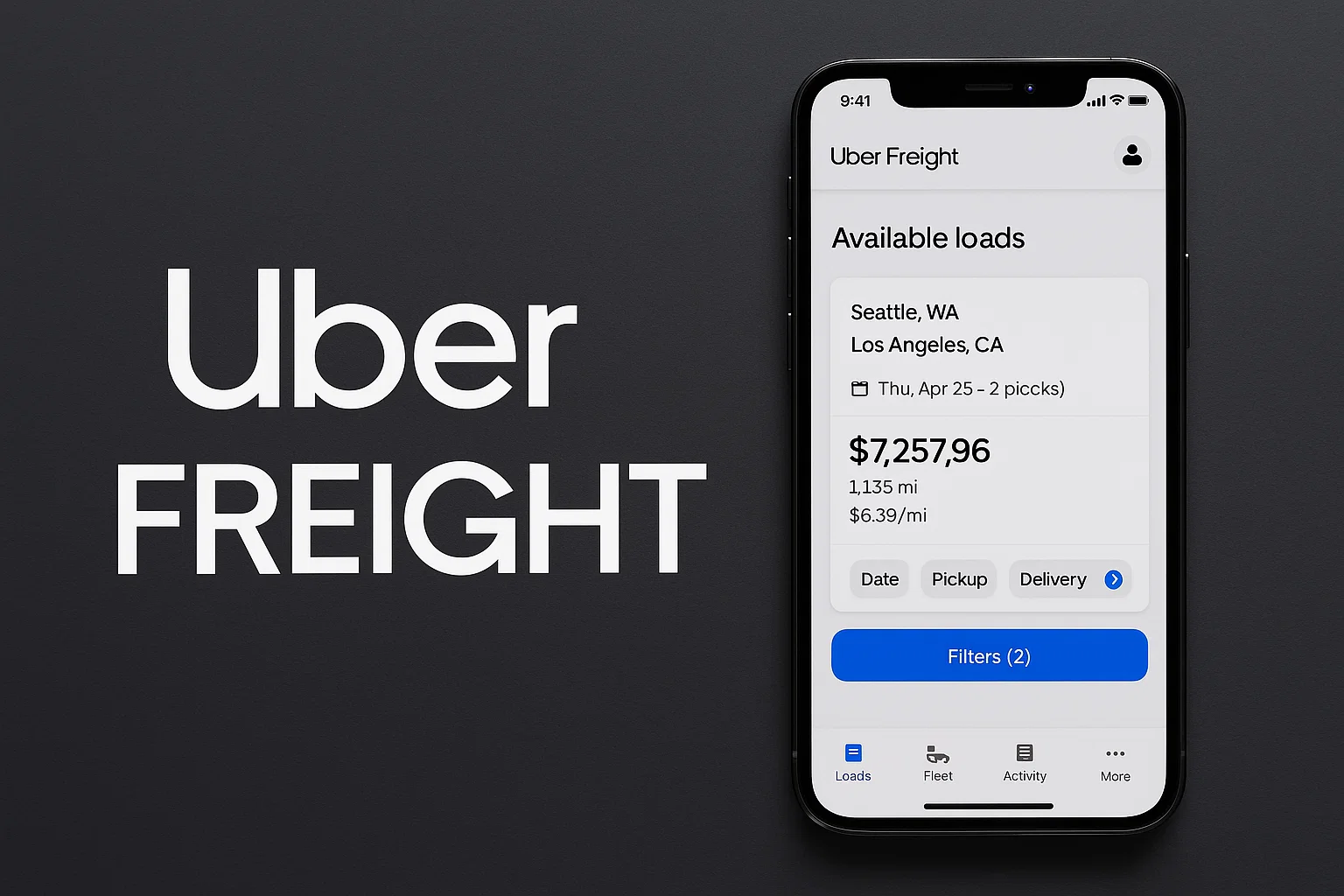
Imagine you’re a trucking carrier looking for your next load. Traditionally, you’d call brokers, wait for callbacks, negotiate rates, and hope everything lines up. On the other side, shippers scramble to find reliable trucks, verify capacity, and manage communication across multiple intermediaries.
This is the messy logistics world that Uber Freight set out to simplify.
Uber Freight is a digital freight matching platform created by Uber to connect shippers with truckers instantly—just like the Uber ride-hailing model, but for trucking. Instead of endless phone calls, carriers browse loads on an app, tap to book, and get upfront pricing. Shippers, meanwhile, get transparency, tracking, and capacity on demand.
Launched to modernize one of the world’s most complex industries, Uber Freight now supports:
- Small and large carriers
- Independent owner-operators
- SME and enterprise shippers
- Real-time load visibility
- Automated pricing
- AI-driven planning and routing
By the end of this guide, you’ll understand:
- What Uber Freight actually is
- How it works for carriers and shippers
- Its business model, features, and tech foundation
- Why it’s reshaping U.S. and global freight operations
- And how entrepreneurs are building Uber Freight–like platforms with Miracuves
What Is Uber Freight? – The Simple Explanation
Uber Freight is a digital load-matching platform that connects shippers who need to move freight with carriers and truck drivers who have available capacity. Think of it as the “Uber for trucking” — but built for the logistics and supply chain world, not passengers.
Instead of relying on manual broker calls, negotiation delays, and paperwork, Uber Freight gives both sides a simple, app-based experience to move loads quickly and transparently.
Simple Definition
Uber Freight is a technology-driven freight marketplace where shippers post loads, and carriers book them instantly with upfront pricing — no negotiations, no middlemen, no waiting.
Core Problem It Solves
Traditional freight booking is slow and inefficient. Shippers struggle to find trucks, and carriers waste time waiting for brokers. Uber Freight solves this by offering:
- Real-time available loads
- Instant booking
- Upfront, transparent rates
- Guaranteed payout timelines
- Shipment tracking for both sides
It removes friction, delays, and hidden pricing from the trucking workflow.
Who Uses Uber Freight?
| User Type | How They Use It |
|---|---|
| Carriers & Owner-Operators | Find and book loads instantly |
| Small Fleets | Keep trucks full & reduce empty miles |
| Enterprise Shippers | Move freight with real-time visibility |
| Dispatchers | Manage multiple drivers & loads |
| Logistics Teams | Optimize lanes with data insights |
Why Uber Freight Became Successful
- Easy “tap-to-book” model for truckers
- Transparent pricing — no haggling
- Huge carrier network + available capacity
- Real-time GPS tracking for shipments
- Fast (often same-day) payments
- Seamless integration with shipper systems
It brought modern tech, data, and automation to an industry that traditionally relied on spreadsheets and phone calls.
Current Market Position (2025)
- One of the largest digital freight platforms in the U.S.
- Strong shipper partnerships across retail, manufacturing, and FMCG
- Competes with Convoy, Loadsmart, J.B. Hunt 360, and traditional brokers
- Continues expanding into Europe and global markets
- Offers multimodal solutions beyond trucking
Uber Freight is now seen as a modern logistics operating system, not just a load board.
How Uber Freight Works – Step-by-Step Breakdown
For Carriers (Truckers, Owner-Operators, Fleets)
1. Sign Up & Verify
Carriers create an account on the Uber Freight app or web platform. They upload:
- MC/DOT authority
- Insurance documents
- Driver details (if a fleet)
- Equipment type (reefer, dry van, flatbed, etc.)
Once verified, they can start booking loads instantly.
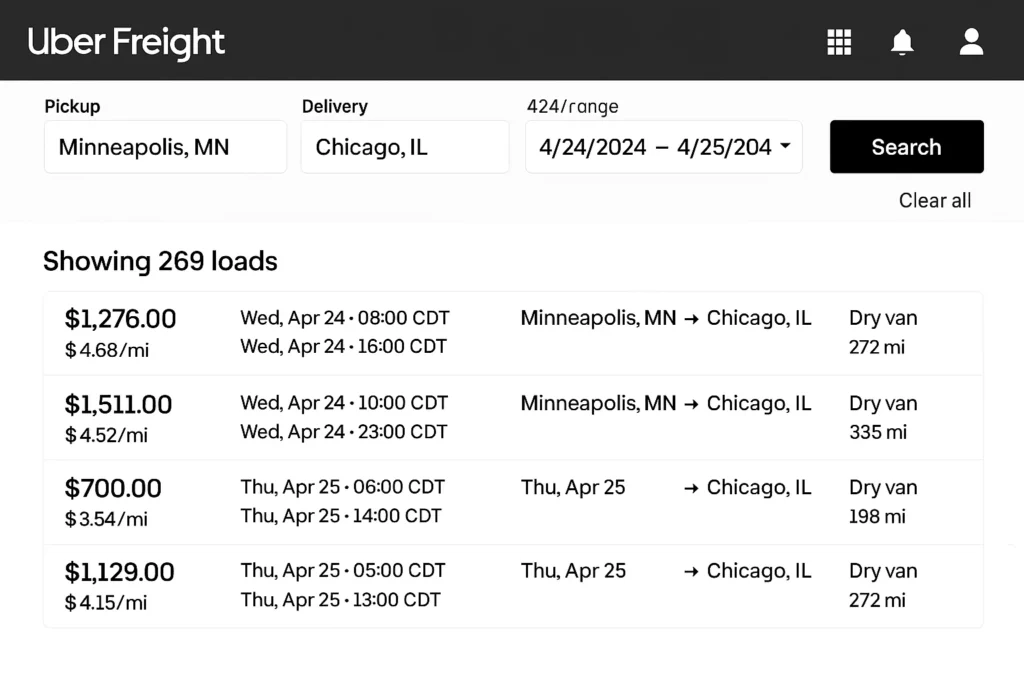
2. Browse Available Loads
The carrier app shows:
- Nearby loads
- Lane-specific loads
- Recommended loads based on history
- Filters for price, distance, equipment, deadhead, etc.
Loads include upfront pricing, shipper info, and pickup/delivery times.
3. Instant “Book Now”
No phone calls or negotiation. Carriers tap Book Load, confirm details, and the shipment is assigned to them immediately.
4. Pickup, Deliver, Track
The app provides:
- GPS navigation
- Shipment milestones
- Digital document upload (POD, BOL)
- Real-time tracking visible to shippers
Drivers receive automated updates throughout the trip.
5. Fast Payment
Uber Freight offers predictable payouts with options like:
- Standard weekly payment
- Quick Pay (often same-day/few days)
Payments are handled digitally, lowering admin work.
For Shippers
1. Create a Shipment
Shippers enter details such as:
- Origin and destination
- Load size & weight
- Equipment type
- Pickup/delivery windows
Uber Freight provides instant rate estimates based on real-time market data.
2. Automated Load Matching
The system uses algorithms to match loads to:
- Best-suited carriers
- Drivers in the area
- Preferred carrier networks
- Carriers with strong reliability history
Shippers see ETAs, price breakdowns, and capacity availability immediately.
3. Real-Time Tracking
Shippers get full visibility from pickup to delivery:
- GPS tracking
- Milestone updates
- Exception alerts
- Predictive ETAs
This reduces check calls and manual follow-ups.
4. Digital Documentation
Uber Freight stores all:
- BOLs
- PODs
- Invoices
- Rate confirmations
- Delivery proofs
Everything is accessible from the shipper dashboard.
Technical Overview (Simple Explanation)
Uber Freight’s platform works using:
- A marketplace engine matching shippers → carriers
- Real-time pricing generated by AI + historical data
- GPS and telematics integration for tracking
- Automated workflow tools for load creation, invoicing, and payments
- Cloud-based infrastructure supporting millions of load searches
It connects three key systems:
- Carrier App (drivers & fleets)
- Shipper Dashboard (businesses)
- Marketplace Engine (matches loads instantly)
Uber Freight’s Business Model Explained
How Uber Freight Makes Money
Uber Freight earns revenue through brokerage fees, technology services, and value-added logistics solutions. Its model mirrors a digital freight brokerage — but enhanced with automation, real-time data, and predictive pricing.
Brokerage Fees (Primary Revenue)
Uber Freight charges a margin on every load it facilitates.
Shippers pay a freight rate → Uber Freight takes a portion → the rest goes to the carrier.
This margin varies based on:
- Lane demand
- Shipment complexity
- Equipment type
- Market conditions
Because Uber Freight moves massive volume, these margins scale quickly.
Managed Transportation Services
Enterprise shippers can outsource part or all of their logistics operations to Uber Freight.
This includes:
- Route planning
- Network optimization
- Freight procurement
- Capacity management
Clients pay for these services through monthly or annual service fees.
SaaS & Enterprise Tools
Uber Freight offers technology solutions such as:
- Transportation management tools
- Real-time visibility dashboards
- API integrations
- Automated load scheduling
Large shippers may pay for premium analytics or enterprise modules.
Carrier Services
Uber Freight generates income from add-ons for carriers, including:
- Faster payouts (Quick Pay fees)
- Fuel rewards and card partnerships
- Equipment financing partnerships
- Load bundling technology
These optional services improve carrier loyalty and retention.
Dedicated Capacity Programs
Shippers can access reserved carrier fleets through Uber Freight’s Powerloop and dedicated capacity programs.
Revenue flows through:
- Leasing arrangements
- Trailer rentals
- Guaranteed volume commitments
This helps Uber Freight secure steady, predictable income streams.
Why This Business Model Works
- Asset-light (no fleet ownership)
- Scales with volume, not physical assets
- Marketplace demand increases supply automatically
- Data improves pricing, routing, and margins
- High retention from enterprise shippers seeking reliability
Uber Freight isn’t just a load board — it’s a digital logistics infrastructure designed for real-time freight movement at scale.
Read More :- Business Model of Uber Freight : Complete Strategy Breakdown 2025
Key Features That Make Uber Freight Successful
Instant “Book Now” Load Booking
One of Uber Freight’s biggest advantages is upfront pricing with tap-to-book loads. Carriers don’t have to negotiate over the phone or wait on brokers. They see the rate, lane, pickup time, and delivery details on the screen and book instantly. This saves hours and keeps trucks moving instead of sitting idle.
Transparent, Data-Driven Pricing
Uber Freight uses market data and algorithms to provide real-time, transparent pricing for shippers and carriers. Shippers get instant quotes based on lane, demand, and capacity. Carriers see clearly what they’ll earn before accepting a load. This reduces friction and builds trust compared to traditional, opaque broker pricing.
Powerful Mobile App for Drivers & Fleets
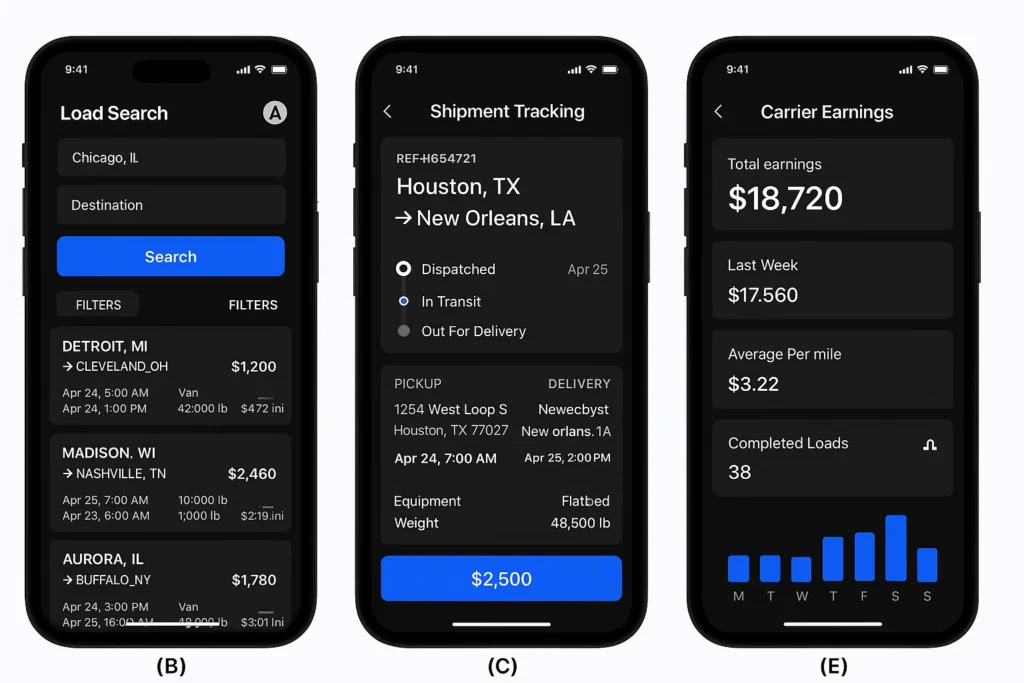
The Uber Freight app is designed for everyday use by drivers and small fleets. They can:
- Browse nearby or lane-specific loads
- Filter by rate, distance, equipment, and time
- Get navigation and stop details
- Upload documents like POD and BOL
- Track payments and completed loads
This mobile-first approach makes it extremely practical for life on the road.
Real-Time Shipment Tracking for Shippers
Shippers get end-to-end visibility into their loads — from pickup to delivery. GPS tracking, live ETAs, and automatic status updates reduce check calls and manual follow-ups. This is especially valuable for enterprise shippers managing hundreds or thousands of loads each week.
Smart Matching and Load Recommendations
Uber Freight’s matching engine recommends loads based on:
- Carrier location
- Past load history
- Equipment type
- Preferred lanes
- Timing and availability
This helps reduce deadhead miles and increases utilization for carriers, while shippers get better on-time performance.
Fast, Reliable Payments for Carriers
Uber Freight offers predictable payment timelines and Quick Pay options for eligible carriers. Instead of waiting weeks to get paid, drivers can receive funds much faster, improving cash flow — a critical factor for small carriers and owner-operators.
Integrated Solutions for Enterprise Shippers
Beyond the app experience, Uber Freight offers tools and services for large shippers, including:
- API and TMS integrations
- Network and lane optimization
- Dedicated capacity programs
- Analytics and performance dashboards
This makes Uber Freight not just a marketplace, but a strategic logistics partner for big brands.
Multimodal and Value-Added Services
Over time, Uber Freight has expanded beyond simple full-truckload moves to include additional services like LTL in some markets, intermodal partnerships, and managed transportation offerings. This allows shippers to rely on a single digital platform for more of their freight needs.
Focus on Reliability and Service Quality
Ratings, performance data, and compliance checks help Uber Freight maintain a reliable network of carriers. Shippers benefit from vetted capacity, and good carriers benefit from repeat access to quality freight. This feedback loop improves the overall marketplace quality.
What Truly Sets Uber Freight Apart
Uber Freight stands out because it combines digital simplicity (like Uber rides) with serious logistics depth. Instant booking, transparent pricing, tracking, and data insights make it feel like a modern tech product, while integrations, managed services, and scale make it strong enough for enterprise supply chains.
The Technology Behind Uber Freight
Marketplace Engine
At the core of Uber Freight is a dynamic freight marketplace that connects shippers and carriers in real time. The system evaluates lane conditions, demand, carrier availability, equipment types, and pricing trends to match loads with the best carriers instantly.
This engine constantly learns and improves as more shipments move through the system.
AI-Powered Pricing Algorithms
Uber Freight uses advanced machine learning models to generate real-time market pricing. These models analyze:
- Historical freight rates
- Current market demand
- Seasonal patterns
- Capacity availability
- Fuel trends
- Regional supply/demand imbalances
This ensures shippers receive competitive quotes, while carriers see transparent and fair pricing.
Real-Time Tracking & Telematics
Uber Freight integrates with GPS, ELDs, and telematics devices to provide:
- Live driver location
- Accurate ETAs
- Shipment milestone updates
- Exception alerts
Shippers gain full visibility into their loads, reducing manual check-ins and improving reliability.
Cloud-Native Platform Architecture
Uber Freight operates on a robust, cloud-based backend that supports:
- High-volume load searches
- Instant booking
- Carrier eligibility checks
- Document uploads (POD, BOL)
- Payment processing
- Shipper dashboard insights
This architecture ensures scalability for millions of transactions and thousands of daily shipments.
API Integrations with Shipper Systems
Enterprise shippers integrate Uber Freight with their TMS, ERP, or supply chain management tools through APIs to automate:
- Load tendering
- Shipment creation
- Tracking updates
- Carrier assignment
This reduces manual work and keeps logistics operations flowing smoothly.
Document Management & Digital Workflow
All paperwork—including Bills of Lading, Proof of Delivery, invoices, and rate confirmations—is digitized and stored in the cloud. Drivers upload documents via the app, eliminating physical paperwork and speeding up payment cycles.
Carrier Identity & Compliance Engine
Uber Freight verifies:
- MC/DOT authority
- Insurance status
- Safety history
- Equipment type
- Driver compliance records
This helps maintain a high-quality network of carriers and reduces risk for shippers.
Payment Infrastructure
The platform processes carrier payments digitally, offering options like standard pay and Quick Pay.
Payment systems connect directly to banking infrastructure to ensure:
- Fast disbursement
- Invoice matching
- Fraud prevention
- Secure transfers
Why This Technology Matters
- Carriers get more loads, less downtime, and faster payout
- Shippers gain predictable pricing, live visibility, and reliable capacity
- Logistics operations become more automated, data-driven, and efficient
- The system reduces reliance on manual brokers and legacy processes
Uber Freight’s technology turns complex trucking operations into a streamlined, digital experience.
Uber Freight’s Impact & Market Opportunity
How Uber Freight Transformed the Trucking Industry
Uber Freight modernized an industry that long relied on manual calls, slow negotiations, and fragmented systems. It introduced:
- Real-time load booking
- Transparent pricing
- GPS-based shipment visibility
- App-driven workflow for carriers
- Automated digital documentation
This created a more predictable, data-driven freight ecosystem — something both carriers and shippers had been demanding for decades.
Impact on Carriers
Carriers benefit from:
- More consistent load availability
- Less deadhead miles
- Guaranteed pricing
- Faster payments
- Better route planning
- Digital documentation and compliance
Owner-operators and small fleets, in particular, gained access to freight that was previously only available to large carriers or those with broker relationships.
Impact on Shippers
For shippers, Uber Freight offers:
- Reliable capacity during volatile markets
- Real-time tracking and predictive ETAs
- Lower administrative workload
- Quick access to nationwide carrier networks
- Better planning through analytics and lane insights
Enterprise shippers use Uber Freight to strengthen supply chain resilience.
Industry Disruption
Uber Freight disrupted traditional freight brokers by offering:
- Automation instead of phone-based booking
- Transparent pricing instead of opaque markups
- Digital tracking instead of check calls
- Smart matching instead of manual dispatching
It forced legacy brokers to adopt technology or lose market share.
Global Market Growth
The digital freight market continues to expand due to:
- Boom in e-commerce and last-mile delivery
- Need for real-time supply chain visibility
- Driver shortages and capacity volatility
- Increasing demand for on-demand freight
- Enterprise adoption of digital logistics platforms
This creates room for more players to build Uber Freight–style solutions, especially in:
- Asia
- Europe
- LATAM
- Middle East
- Africa
Regional markets are still underserved and ready for disruption.
Opportunity for Entrepreneurs
There is massive potential to build:
- Regional Uber Freight–like apps for specific countries
- Niche vertical-specific load matching platforms (reefer, flatbed, last mile)
- SME-focused digital freight networks
- Multi-modal logistics apps
- Fleet management + freight marketplace hybrids
This massive success is why many entrepreneurs want to create similar platforms with specialized features and regional optimization.
Building Your Own Uber Freight-Like Platform
Why Businesses Want Uber Freight–Style Platforms
The freight and logistics industry is massive but still fragmented. Shippers struggle to find reliable carriers, while truckers waste time searching for loads. An Uber Freight–like platform provides:
- Real-time load availability
- Transparent pricing
- Automated matching
- Fast carrier onboarding
- Better route optimization
- Reduced empty miles
- Improved visibility for shippers
This makes it a high-demand digital solution in many countries and logistics sectors.
Key Considerations Before Development
Define Your Market
Choose your target segment:
- Full truckload (FTL)
- Less-than-truckload (LTL)
- Flatbed / heavy haul
- Reefer loads
- Container drayage
- Last mile delivery
- Regional or international freight
Identify User Roles
Your platform should support:
- Shippers
- Carriers / owner-operators
- Dispatchers
- Fleet managers
- Admin and support teams
Cost Factors & Pricing Breakdown
Uber Freight-Like App Development — Market Price
| Development Level | Inclusions | Estimated Market Price (USD) |
|---|---|---|
| Basic Load Board MVP | Core web platform for posting and browsing loads, carrier and shipper/broker registration & login, basic lane search, simple load posting, contact / expression-of-interest flow, basic availability management, standard admin panel | $40,000 |
| Mid-Level Freight Matching Platform | Advanced search & filters (lane, equipment type, weight, dates), real-time load and truck postings, rating & feedback system, notifications & alerts, basic pricing tools, document upload (POD, rate confirmations), richer analytics dashboard, mobile-ready experience | $100,000 |
| Advanced Uber Freight-Level Logistics Ecosystem | Large-scale multi-region freight marketplace, dynamic pricing tools, multi-user company accounts, advanced capacity & lane analytics, integrations with TMS/ELD/telematics, in-app messaging, dispute workflows, multi-currency & multi-language support, native mobile apps, cloud-native scalable backend | $200,000+ |
Uber Freight-Style Platform Development
The prices above reflect the global market cost of developing an Uber Freight-style freight matching and trucking marketplace — typically ranging from $40,000 to over $200,000, with a delivery timeline of approximately 4–12 months for a full, from-scratch build. This usually covers platform architecture, complex search and matching logic, integrations (TMS/telematics/payments), security, and extensive testing for real-world logistics operations.
Miracuves Pricing for an Uber Freight-Like Platform
Miracuves Price: Starts at $12,999
At this price point, you get a feature-rich Uber Freight-style freight marketplace covering core workflows such as load posting, carrier and shipper onboarding, search & match flows, notifications, basic document handling, analytics, and modern web + mobile apps—while leaving room to extend into more advanced analytics, integrations, and automation as your logistics business scales.
Note: This includes full non-encrypted source code (complete ownership), complete deployment support, backend & API setup, admin panel configuration, and assistance with publishing on the Google Play Store and Apple App Store—ensuring you receive a fully operational load board ecosystem ready for launch and future expansion.
Delivery Timeline for an Uber Freight-Like Platform with Miracuves
Because this is a readymade Load Board solution, the typical delivery timeline with Miracuves is 3–9 days, depending on:
- Depth of load board features (search, filters, matching logic, analytics, etc.)
- Number and complexity of third-party integrations (TMS, telematics/ELD providers, payment gateways, mapping/route APIs)
- Complexity of company accounts, role-based access, and compliance workflows
- Scope of mobile apps, branding requirements, and long-term scalability targets
Tech Stack
This solution is built with robust frameworks — Web using JavaScript (Node.js/Next.js), PostgreSQL & Apps using Flutter, optimized for performance, stability, and easy maintenance.
Other technology stacks can be discussed and arranged upon request when you contact our team, ensuring they align with your internal preferences, compliance needs, and infrastructure choices.
Required Features
To compete with Uber Freight, your platform needs:
- Load posting + load search
- Real-time pricing engine
- Carrier verification (MC/DOT, insurance)
- GPS tracking & automated ETAs
- Document upload (POD, BOL)
- Digital payments
- Ratings and reliability scoring
- Fleet management features
Compliance & Safety
Depending on your region, ensure:
- Carrier licensing checks
- Insurance verification
- Safety score tracking
- ELD data integration (if applicable)
Technology Stack
A strong Uber Freight–like platform includes:
- Marketplace engine
- GPS + telematics integration
- Payment gateway
- Cloud backend
- Real-time notifications
- Machine learning pricing module
Development Roadmap (Simplified)
Phase 1 – Carrier & Shipper Onboarding
- Account creation
- Document verification
- Fleet setup
Phase 2 – Load Marketplace
- Load posting
- Instant booking
- Smart matching engine
Phase 3 – Tracking & Communication
- GPS tracking
- ETA predictions
- Messaging/chat
Phase 4 – Payments & Document Management
- Quick Pay
- Automated invoicing
- POD/BOL uploads
Phase 5 – Analytics & Enterprise Tools
- Lane insights
- Capacity forecasting
- Integration APIs
Conclusion
Uber Freight didn’t just digitize load booking — it reshaped how shippers and carriers interact in a historically slow, fragmented trucking ecosystem. By bringing instant booking, transparent pricing, and real-time tracking to freight logistics, Uber Freight created a modern, technology-first model that carriers and shippers now expect as the standard.
It proved that logistics doesn’t have to be complicated or inefficient. With the right platform, freight can move smarter, faster, and with far fewer manual bottlenecks.
For entrepreneurs, this shift presents a massive opportunity. The world still needs regional, industry-specific, and niche-focused freight platforms that serve unique markets — from reefer and flatbed to local delivery and multi-country trucking lanes.
As global trade grows and digital adoption accelerates, the demand for Uber Freight–style platforms will only continue to rise. Building a smart, streamlined logistics marketplace can power the next generation of freight mobility.
FAQs :-
What is Uber Freight?
Uber Freight is a digital freight marketplace that connects shippers with carriers for instant load booking, transparent pricing, and real-time shipment tracking.
How does Uber Freight work for carriers?
Carriers browse loads in the app, see upfront rates, tap Book Now, haul the load, upload POD/BOL, and receive fast digital payments. No negotiations or broker calls required.
How does Uber Freight work for shippers?
Shippers create shipments, get instant pricing, book capacity, and track loads in real time. The platform automates tendering, documentation, visibility, and communication.
Is Uber Freight a broker?
Yes. Uber Freight operates as a digital freight broker, using technology to automate pricing, matching, scheduling, and tracking.
How does Uber Freight make money?
Uber Freight earns from brokerage margins, managed transportation services, SaaS-style logistics tools, Quick Pay fees, and dedicated capacity programs.
What types of loads does Uber Freight handle?
Primarily full truckload (FTL), with expanding support for LTL, intermodal, and other specialized freight types depending on region.
How do carriers get paid?
Payments are processed digitally via weekly payouts or Quick Pay (faster payments). Drivers upload delivery documents to trigger payment processing.
Is Uber Freight available internationally?
Yes. Uber Freight operates in the U.S., Europe, and continues expanding globally into emerging logistics markets.
What technology powers Uber Freight?
AI-driven pricing, real-time GPS tracking, telematics integrations, cloud architecture, load-matching algorithms, automated workflows, and digital documentation.
Can I build an app like Uber Freight?
Absolutely. You can build a digital freight marketplace with load posting, smart matching, tracking, payments, and compliance tools.
Miracuves delivers full Uber Freight–style platforms in 3-9 days with customization and source code.