You’ve heard the horror stories about data breaches, stolen payment details, and apps exposing user data. And if you’re planning to launch a white-label Wish app, this concern is valid.
In 2026, app security isn’t optional. It’s a business survival factor. E-commerce apps like Wish handle sensitive user data, payments, and transactions daily, making them prime targets for cyberattacks.
This guide gives you an honest look at white-label Wish app security. No fluff. Just real risks, real standards, and practical ways to stay safe.
By the end, you’ll know exactly what to look for and how to build a secure, compliant app.
Understanding White-Label Wish App Security Landscape
What “White-Label Security” Actually Means
White-label security refers to how the pre-built app handles data protection, infrastructure safety, and compliance before you even launch it.
Unlike custom apps, you are relying on a shared codebase. This makes the provider’s security practices critical to your business.
If the foundation is weak, your app inherits those risks.
Common Security Myths vs Reality
Myth 1: White-label apps are always less secure
Reality: A well-built white-label Wish app can be more secure than poorly developed custom apps.
Myth 2: Security is handled only by the provider
Reality: Security is a shared responsibility between you and the provider.
Myth 3: Small apps are not targeted
Reality: Attackers often target smaller platforms because they expect weaker security.
Why People Worry About White-Label Apps
There are real concerns behind the hesitation:
- Lack of transparency in code quality
- Dependency on third-party infrastructure
- Limited control over backend systems
- Fear of shared vulnerabilities across multiple apps
These concerns are valid, but manageable with the right partner.
Current Threat Landscape for Wish-Type Platforms
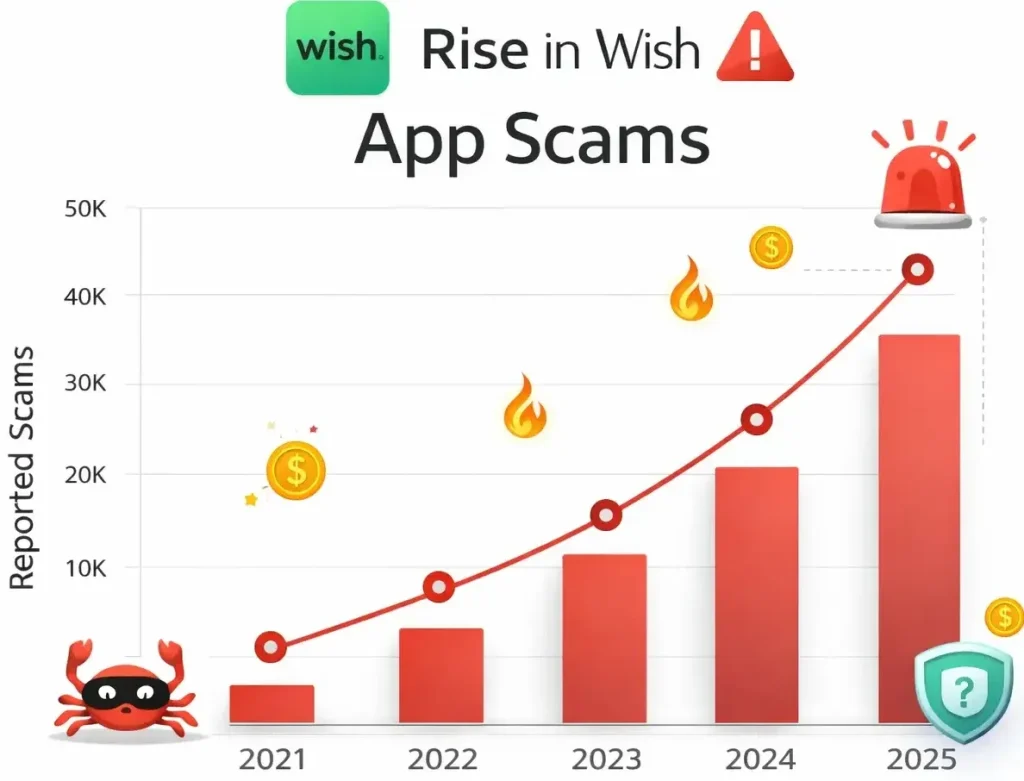
E-commerce apps like Wish are among the most targeted categories in 2026.
Common threats include:
- Payment fraud and card skimming
- Account takeovers through weak authentication
- Fake product listings and scams
- API attacks targeting checkout systems
- Data scraping and bot attacks
These threats evolve constantly, making proactive security essential.
Security Standards in 2026
Modern white-label apps are expected to follow strict security frameworks:
- Zero Trust Architecture
- End-to-end encryption for all transactions
- Secure cloud infrastructure (AWS, Azure standards)
- Regular vulnerability scanning and patching
- Privacy-first data handling
If your app doesn’t align with these, it’s already behind.
Real-World Statistics on App Security Incidents
- Over 60% of e-commerce apps reported at least one security incident in the past year
- API attacks increased by more than 30% in online shopping platforms
- Nearly 45% of breaches involved weak authentication systems
- Payment-related fraud continues to be the top threat for marketplace apps
These numbers highlight one thing: security gaps are common, but preventable.
Read more : – Business Model of Wish : Complete Strategy Breakdown 2026
Key Security Risks & How to Identify Them
Data Protection & Privacy Risks
User Personal Information
A white-label Wish app collects names, addresses, phone numbers, and emails. If this data is not encrypted or properly stored, it becomes an easy target.
Look for:
- Data encryption at rest and in transit
- Role-based access control
- Secure user session handling
Payment Data Security
Payment data is the most sensitive layer. Any weakness here can lead to direct financial loss.
Critical checks:
- PCI DSS compliance
- Tokenization of card details
- Secure payment gateways integration
Location Tracking Concerns
Many e-commerce apps track user location for delivery and recommendations.
Risks include:
- Unauthorized tracking
- Data misuse
- Lack of user consent
Ensure:
- Explicit user permission
- Minimal data collection
- Clear privacy controls
GDPR / CCPA Compliance
If your app serves global users, compliance is not optional.
Verify:
- User consent mechanisms
- Right to data deletion
- Transparent privacy policies
Non-compliance can lead to heavy fines.
Technical Vulnerabilities
Code Quality Issues
Poorly written code introduces hidden vulnerabilities.
Warning signs:
- No code review process
- Lack of secure coding standards
- No version control transparency
Server Security Gaps
Your backend infrastructure must be hardened.
Check for:
- Firewall configurations
- Intrusion detection systems
- Secure cloud hosting
API Vulnerabilities
APIs handle communication between frontend and backend. Weak APIs are a major entry point for attackers.
Look for:
- Authentication on every API request
- Rate limiting
- Data validation
Third-Party Integrations
Payment gateways, analytics tools, and plugins can introduce risks.
Ensure:
- Only trusted integrations are used
- Regular updates are maintained
- Access permissions are limited
Business Risks
Legal Liability
A single breach can result in lawsuits and regulatory penalties.
Reputation Damage
Users lose trust quickly after a security incident. Recovery is difficult and costly.
Financial Losses
Fraud, refunds, and downtime directly impact revenue.
Regulatory Penalties
Non-compliance with laws like GDPR can result in fines up to millions.
Risk Assessment Checklist
Use this quick checklist before choosing or launching your app:
- Is user data encrypted end-to-end?
- Are payment systems PCI DSS compliant?
- Does the app follow GDPR/CCPA guidelines?
- Are APIs secured with authentication and rate limits?
- Is there a regular security audit process?
- Are third-party integrations verified and updated?
- Is there a clear incident response plan?
If you answer “no” to even a few of these, your app is at risk.
Security Standards Your White-Label Wish App Must Meet
Essential Certifications
A secure white-label Wish app must comply with globally recognized standards. These are not optional in 2026.
ISO 27001 Compliance
Ensures your app follows a structured information security management system.
SOC 2 Type II
Validates how securely customer data is handled over time, not just at a single point.
GDPR Compliance
Mandatory if you handle data from European users. Focuses on privacy, consent, and data rights.
HIPAA (If Applicable)
Required only if your app handles health-related data.
PCI DSS for Payments
Critical for any app processing card payments. Without this, payment data is highly vulnerable.
Technical Requirements
These are the baseline technical safeguards your app must have.
End-to-End Encryption
All data, especially user and payment information, must be encrypted during transmission and storage.
Secure Authentication (2FA / OAuth)
Basic login is no longer enough. Multi-factor authentication adds a strong security layer.
Regular Security Audits
Frequent audits help identify vulnerabilities before attackers do.
Penetration Testing
Ethical hackers simulate attacks to find weak points in your system.
SSL Certificates
Ensures secure communication between users and servers.
Secure API Design
APIs must include authentication, rate limiting, and input validation.
Security Standards Comparison Table
| Security Standard | Purpose | Mandatory for Wish App | Risk if Missing |
|---|---|---|---|
| ISO 27001 | Information security management | Highly Recommended | Poor data governance |
| SOC 2 Type II | Data handling trust | Recommended | Loss of customer trust |
| GDPR | Data privacy regulation | Mandatory (EU users) | Heavy legal penalties |
| PCI DSS | Payment security | Mandatory | Payment fraud risk |
| SSL/TLS | Secure communication | Mandatory | Data interception |
| 2FA/OAuth | User authentication | Strongly Recommended | Account takeover |
A white-label Wish app that does not meet these standards is a liability, not an asset.
Red Flags: How to Spot Unsafe White-Label Providers
Choosing the wrong provider is the biggest security mistake you can make. Most risks start here, not after launch.
Warning Signs
No Security Documentation
If a provider cannot clearly explain their security architecture, it’s a major red flag.
You should always get:
- Security policies
- Compliance reports
- Data handling procedures
Cheap Pricing Without Explanation
If pricing seems too low, security is usually what’s missing.
Security infrastructure, audits, and compliance cost money. If they’re not charging for it, they’re not providing it.
No Compliance Certifications
Lack of ISO, SOC 2, or PCI DSS compliance indicates weak security practices.
Outdated Technology Stack
Old frameworks and libraries are more vulnerable to attacks.
Ask:
- Which technologies are used?
- How often are they updated?
Poor Code Quality
Unstructured or unoptimized code increases the risk of vulnerabilities.
No Security Updates Policy
If there’s no regular patching or update cycle, your app will become vulnerable over time.
Lack of Data Backup Systems
No backups means permanent data loss in case of failure or attack.
No Insurance Coverage
Serious providers carry cyber liability insurance. If they don’t, risk shifts entirely to you.
Evaluation Checklist
Before finalizing a provider, go through this checklist.
Questions to Ask Providers
- Do you follow ISO 27001 or SOC 2 standards?
- How do you secure user and payment data?
- What is your incident response process?
- How often do you conduct security audits?
- Do you provide regular updates and patches?
Documents to Request
- Compliance certificates
- Security audit reports
- Penetration testing results
- Privacy policy and data flow documentation
Testing Procedures
- Request a demo with security walkthrough
- Perform vulnerability scanning (if allowed)
- Test authentication and payment flows
Due Diligence Steps
- Check client reviews and past incidents
- Verify uptime and breach history
- Evaluate support responsiveness
- Confirm long-term maintenance commitment
A secure app starts with a secure provider. If you ignore these red flags, fixing issues later becomes expensive and risky.
Best Practices for Secure White-Label Wish App Implementation
Security is not a one-time task. It starts before launch and continues throughout the app lifecycle.
Pre-Launch Security
Security Audit Process
Before going live, conduct a full security audit.
This should include:
- Vulnerability assessment
- Code review
- Infrastructure testing
Code Review Requirements
Ensure the code follows secure coding standards.
Focus on:
- Input validation
- Error handling
- Authentication logic
Infrastructure Hardening
Your hosting environment must be secured.
Steps include:
- Configuring firewalls
- Enabling intrusion detection systems
- Using secure cloud services
Compliance Verification
Verify all required certifications and legal compliance before launch.
This avoids penalties later.
Staff Training Programs
Your internal team should understand:
- Data handling policies
- Security best practices
- Incident reporting procedures
Human error is one of the biggest risks.
Post-Launch Monitoring
Continuous Security Monitoring
Use monitoring tools to detect suspicious activity in real time.
Regular Updates and Patches
Outdated systems are easy targets. Keep everything updated.
Incident Response Planning
Have a clear plan in case of a breach.
It should define:
- Roles and responsibilities
- Communication strategy
- Recovery steps
User Data Management
Only collect necessary data and store it securely.
Regularly review and delete unused data.
Backup and Recovery Systems
Maintain automated backups.
Test recovery processes regularly to ensure business continuity.
Security Implementation Timeline
| Phase | Key Actions | Timeline |
|---|---|---|
| Planning | Risk assessment, provider evaluation | Week 1–2 |
| Development | Secure coding, API protection | Week 3–6 |
| Pre-Launch | Security audit, compliance checks | Week 7–8 |
| Launch | Go-live with monitoring enabled | Week 9 |
| Post-Launch | Continuous monitoring, updates | Ongoing |
A secure launch is just the beginning. Long-term protection depends on consistent monitoring and updates.
Legal & Compliance Considerations
Ignoring legal and compliance requirements can be more damaging than a technical breach. In 2026, regulations are stricter and enforcement is more aggressive.
Regulatory Requirements
Data Protection Laws by Region
Different regions have different laws, and your app must comply based on where your users are.
- Europe: GDPR (strict consent and data rights)
- USA: CCPA and state-specific privacy laws
- India: DPDP Act (Digital Personal Data Protection)
- Global: Increasing focus on user data transparency
Failing to comply can result in heavy fines and app restrictions.
Industry-Specific Regulations
For e-commerce apps like Wish:
- Payment regulations (PCI DSS)
- Consumer protection laws
- Anti-fraud and anti-money laundering guidelines
User Consent Management
Your app must clearly collect and manage user consent.
This includes:
- Cookie consent
- Data usage permissions
- Marketing opt-ins
Consent must be explicit, not assumed.
Privacy Policy Requirements
A legally compliant privacy policy should clearly explain:
- What data is collected
- How it is used
- Who it is shared with
- How users can control their data
Terms of Service Essentials
Your terms must cover:
- User responsibilities
- Platform limitations
- Dispute resolution
- Refund and cancellation policies
Liability Protection
Insurance Requirements
Cyber insurance is becoming standard in 2026.
It helps cover:
- Data breach costs
- Legal expenses
- Compensation claims
Legal Disclaimers
Disclaimers help limit liability but must be properly written and visible.
User Agreements
Clear agreements protect both you and your users.
They should define:
- Acceptable use
- Payment terms
- Account responsibilities
Incident Reporting Protocols
You must report breaches within a defined time:
- GDPR: within 72 hours
- Other regions: varies but increasingly strict
Regulatory Compliance Monitoring
Compliance is ongoing.
You need:
- Regular legal reviews
- Policy updates
- Monitoring of new regulations
Compliance Checklist by Region
| Region | Key Law | Mandatory Actions | Risk if Ignored |
|---|---|---|---|
| Europe | GDPR | Consent, data rights, breach reporting | Heavy fines |
| USA | CCPA | Data disclosure, opt-out options | Legal action |
| India | DPDP Act | User consent, data protection | Penalties |
| Global | PCI DSS | Secure payment processing | Fraud risk |
Legal compliance is not just about avoiding fines. It builds trust and credibility with your users.
Read more : – Best Wish Clone Scripts 2025: Build a High-Profit Social Commerce App
Why Miracuves White-Label Wish App is Your Safest Choice
When it comes to security, not all providers are equal. This is where Miracuves stands out as a security-first solution provider.
Miracuves Security Advantages
Enterprise-Grade Security Architecture
Miracuves builds every white-label Wish app on a robust, scalable, and secure architecture designed to handle high traffic and sensitive data safely.
Regular Security Audits and Certifications
All systems undergo continuous security audits to identify and fix vulnerabilities before they become threats.
GDPR / CCPA Compliant by Default
Compliance is built into the foundation, not added later. This ensures your app is ready for global users from day one.
24/7 Security Monitoring
Real-time monitoring detects suspicious activities instantly, reducing response time and preventing major incidents.
Encrypted Data Transmission
All user and transaction data is protected with strong encryption protocols, ensuring data safety during transfer and storage.
Secure Payment Processing
Miracuves integrates PCI DSS-compliant payment systems with tokenization and fraud detection mechanisms.
Regular Security Updates
The platform is continuously updated to protect against emerging threats and vulnerabilities.
Insurance Coverage Included
Cyber liability protection adds an extra layer of business security, reducing financial risk in case of incidents.
Why Businesses Trust Miracuves
- 9k+ successful projects delivered
- Zero major security breaches reported
- Proven experience in secure app development
- Dedicated support and maintenance
Final Thought
Don’t compromise on security.
With the right standards, processes, and provider, you can build a secure, scalable, and compliant app in 2026. and see why businesses trust Miracuves for safe, compliant platforms. Talk to our team to know that Security in a white-label Wish app is not about avoiding risk completely. It’s about managing it smartly.
The real difference comes down to who you trust to build your foundation.
FAQs
1. How secure is white-label vs custom development?
A well-built white-label app can be as secure as custom apps, sometimes even better due to tested frameworks and faster updates.
2. What happens if there’s a security breach?
You must activate your incident response plan, notify users, and report to authorities within required timelines.
3. Who is responsible for security updates?
Both you and the provider share responsibility. The provider handles core updates, while you manage operational security.
4. How is user data protected in white-label apps?
Through encryption, secure servers, access controls, and compliance with laws like GDPR and CCPA.
5. What compliance certifications should I look for?
ISO 27001, SOC 2 Type II, GDPR, and PCI DSS are essential for a Wish-type app.
6. Can white-label apps meet enterprise security standards?
Yes, if built with proper architecture, audits, and compliance frameworks.
7. How often should security audits be conducted?
At least twice a year, with continuous monitoring in place.
8. What’s included in Miracuves security package?
End-to-end encryption, compliance-ready systems, 24/7 monitoring, secure payments, and regular updates.
9. How to handle security in different countries?
Follow region-specific laws like GDPR (Europe), CCPA (USA), and DPDP (India), and adapt policies accordingly.
10. What insurance is needed for app security?
Cyber liability insurance is recommended to cover breach costs, legal fees, and damages.
Related Articles
Miracuves is an independent software development company. We are not affiliated with, connected to, sponsored by, or endorsed by any company or product named in this article.
Terms such as “X Clone” are used descriptively. It is how the software industry refers to building a platform with functionality comparable to a known service, and how clients search for it.
The entire design and codebase of our products is built by our own team. Our products contain no code, design, graphics, or content originating from any third-party website or applications.
All third-party names and marks referenced in this article are the property of their respective owners, referenced solely to identify the services discussed.