


Key Takeaways
- Uber Eats earns through commissions, delivery fees, and service fees.
- Restaurants pay platform fees for orders and visibility.
- Customers pay delivery, small order, and convenience charges.
- Ads and promoted listings add extra revenue streams.
- A strong food delivery app needs balanced pricing for all sides.
Revenue Model Signals
- Commission logic should support restaurant-wise rates.
- Delivery fees should change by distance, demand, and zone.
- Subscription plans can improve repeat orders.
- Promoted restaurant slots create ad-based income.
- Admin reports should track orders, fees, refunds, and payouts.
Real Insights
- Food delivery profit depends on unit economics.
- Too many fees can reduce customer retention.
- Low commissions can hurt platform margins.
- Driver incentives must match delivery demand.
- Miracuves builds Uber Eats Clone apps with flexible revenue controls.
The UberEats revenue model has become one of the strongest examples of how food delivery platforms can generate income from multiple sources instead of depending on restaurant commissions alone. In 2026, Uber Eats earns through delivery fees, service charges, restaurant commissions, advertising, subscriptions, priority delivery, and grocery or retail partnerships.
For startups planning to launch an UberEats Clone, studying this model helps identify which monetization features should be included from day one, such as commission settings, dynamic delivery pricing, sponsored listings, wallet payments, subscriptions, and admin-controlled revenue rules. With the right technology and marketplace strategy, a food delivery app can move beyond simple order booking and become a scalable revenue-driven platform.
UberEats Revenue Overview – The Big Picture
Valuation & Revenue (2026 Estimates)
UberEats, as part of Uber’s global ecosystem, contributed roughly 30–35% of total company revenue, translating to over $15 billion in 2026. The platform processed billions of orders across more than 45 countries.
Year-over-Year Growth
Revenue grew approximately 13% year-over-year, supported by higher order frequency, subscription adoption, and improved delivery efficiencies.
Revenue by Region
- North America: ~54%
- Europe, Middle East & Africa: ~28%
- Asia-Pacific & Latin America: ~18%
Profit Margins
The delivery segment’s adjusted EBITDA margin rose to around 4–5% of gross bookings, driven by scale and operational efficiency.
Market Position
UberEats ranks among the top three delivery apps globally, competing with DoorDash, Meituan, and Deliveroo. Its integrated ecosystem and brand synergy with Uber’s ride-hailing service provide unique cross-selling advantages.
Primary Revenue Streams Deep Dive
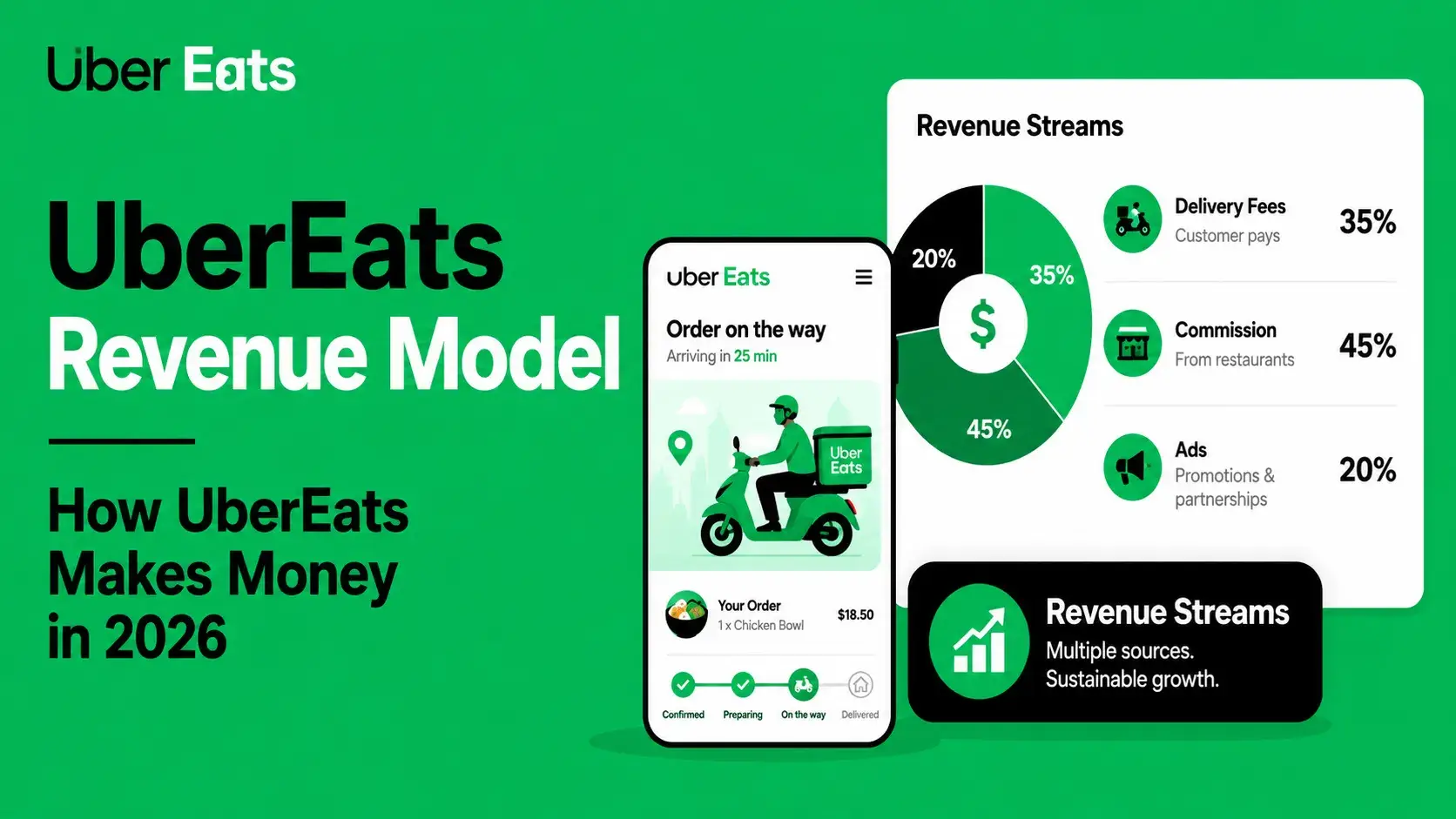
Revenue Stream #1: Commissions from Restaurants
- How it Works: Restaurants pay a commission on every order placed through UberEats.
- Percentage of Total Revenue: ~45–50%.
- Commission Rate: Typically between 20%–30% per order.
- Growth Trend: As order volumes rise, this remains UberEats’ core and most stable income source.
- Example: For a $40 order, UberEats takes about $8–$10 in commission.
Revenue Stream #2: Delivery & Service Fees from Customers
- How it Works: Customers pay delivery and service fees based on distance, time, and demand.
- Percentage of Total Revenue: ~25–30%.
- Fee Range: Average delivery fee ranges from $2–$6, while service fees are 5–15% of order value.
- Growth Trend: Rising as more users accept convenience pricing and surge-based fees.
Revenue Stream #3: Advertising & Promoted Listings
- How it Works: Restaurants and brands pay for visibility—sponsored listings, in-app banners, and featured placements.
- Percentage of Total Revenue: ~10–12%.
- Pricing Model: Cost-per-click or fixed package; high-margin revenue stream.
- Growth Trend: Expected to double by 2027 as ad automation expands.
Revenue Stream #4: Subscription Plans (Uber One / Eats Pass)
- How it Works: Users pay a monthly or annual fee for free deliveries, discounts, and exclusive offers.
- Subscription Fee: Around $9.99/month or $99/year.
- Share of Revenue: ~8–10%.
- Growth Trend: Fastest-growing vertical due to customer retention and predictable cash flow.
Revenue Stream #5: Merchant Solutions & API Integrations
- How it Works: Restaurants use UberEats’ integrated tech for logistics, order management, and analytics.
- Share of Revenue: ~5%.
- Pricing Model: Platform licensing or per-transaction fees for partner integrations.
Read More: What is UberEats App and How Does It Work?
Detailed Breakdown of Revenue Streams by Percentage
| Revenue Stream | Share of Total Revenue |
|---|---|
| Commissions | 45–50% |
| Customer Fees | 25–30% |
| Advertising | 10–12% |
| Subscriptions | 8–10% |
| Merchant Tools | 5% |
The Fee Structure Explained
User-Side Fees
- Delivery Fee: Based on distance & time (~$2–$6 per order)
- Service Fee: 5–15% of order value
- Subscription: $9.99/month (Uber One)
- Surge Pricing: Higher fees during peak demand
Restaurant-Side Fees
- Commission: 20–30% per order
- Marketing Fees: Sponsored placement or visibility packages
- Cancellation / Dispute Penalties: Fees for rejected orders or late deliveries
Regional Pricing Variations
Commissions and fees are dynamic. Tier-1 cities and high-volume restaurants pay higher commissions, while smaller towns operate on reduced margins to attract partners.
Detailed Fee Structure Breakdown by User Type
| User Type | Fee Type | Rate / Description |
|---|---|---|
| Customer | Delivery Fee | $2–$6 per order |
| Customer | Service Fee | 5–15% of order value |
| Restaurant | Commission | 20–30% of order |
| Restaurant | Promotion Fee | Variable (CPC or flat) |
| Both | Surge / Peak Fee | Dynamic pricing system |
Global Cost of Development for an UberEats Clone App
UberEats-Like Food Delivery App Development — Market Price by Tech Stack
The tech stack affects order speed, restaurant management, live tracking, delivery assignment, and payment flow in an UberEats-like food delivery app. PHP/Laravel works well for cost-effective delivery app launches, Node.js/React.js supports real-time orders, GPS tracking, and notifications, while Go microservices suit large food delivery platforms with high traffic, multi-city operations, and fast order processing.
PHP/Laravel is often the most practical choice for launching an UberEats-like platform quickly and affordably. Node.js/Python fits better when real-time order flows and data-heavy revenue operations become more important, while Go microservices are better suited for enterprise-scale food delivery platforms with higher concurrency and more complex infrastructure needs.
These values reflect global development cost estimates. Final pricing varies based on customer, restaurant, driver, and admin apps, menu management, live tracking, commission setup, delivery fees, offers, payments, refunds, and platform complexity.
Miracuves UberEats-Like App Solution Cost and Tech Stack
Miracuves Pricing for UberEats-Like Food Delivery App developed in PHP/Laravel with Flutter Apps for $2,199 USD (One-Time Price) in just 6 days
Get a fully developed, deployment-ready food delivery platform modeled after UberEats. Built on a stable PHP foundation, this complete package includes everything you need to launch and scale:
- Core Workflows: Restaurant listing, menu management, customer ordering, cart checkout, order confirmation, delivery partner assignment, live order tracking, and customer notifications.
- Built-in Revenue Logic: Restaurant commissions, delivery fees, service charges, small order fees, promoted listings, subscription plans, advertising placements, promo codes, and delivery partner payout setup.
- Management Hub: Centralized admin dashboard, restaurant management, customer management, delivery partner management, order monitoring, payment records, refund handling, support management, and delivery analytics.
- Launch-Ready: Fully prepared for your custom branding, configuration, payment gateway setup, map integration, restaurant onboarding, delivery partner onboarding, and immediate market entry.
Why Is UberEats-Like App Development More Affordable?
Most food delivery apps become expensive when businesses choose fully custom development from scratch. Building separate workflows for customers, restaurants, delivery partners, admins, payments, live tracking, order dispatch, refunds, and notifications can increase cost, timeline, and technical complexity.
We took a smarter, more practical approach:
- You Aren’t Paying for Ground-Up Development: Our food delivery engine is already developed, tested, and ready to deploy. You skip the inflated cost and long waiting period usually required for building an UberEats-style platform from scratch.
- The Power of PHP: We built this solution on a reliable and cost-effective PHP architecture. This keeps the upfront price affordable while supporting essential food ordering, restaurant management, delivery assignment, payment workflows, tracking logic, and admin operations.
You get a launch-ready UberEats-like food delivery platform with practical marketplace features, source code access, and faster deployment without the high custom development price tag.
Note: This cost is for the solution, re-branding, deployment, and source code only.
Read More: The Evolution of Food Delivery App: What It Takes to Compete With Swiggy and UberEat
How UberEats Maximizes Revenue Per User
1. User Segmentation
Frequent customers receive loyalty perks; new users get introductory offers to build habits.
2. Upselling & Cross-Selling
In-app prompts for combo meals, desserts, and grocery items.
3. Subscription Upsell
Frequent users are nudged toward Uber One for steady recurring revenue.
4. Dynamic Pricing Algorithms
AI-driven pricing adjusts delivery fees based on time, weather, and demand.
5. Retention Strategies
Gamified rewards, cashback offers, and exclusive deals for consistent engagement.
6. Lifetime Value Optimization
Data-driven marketing increases user order frequency and average ticket size.
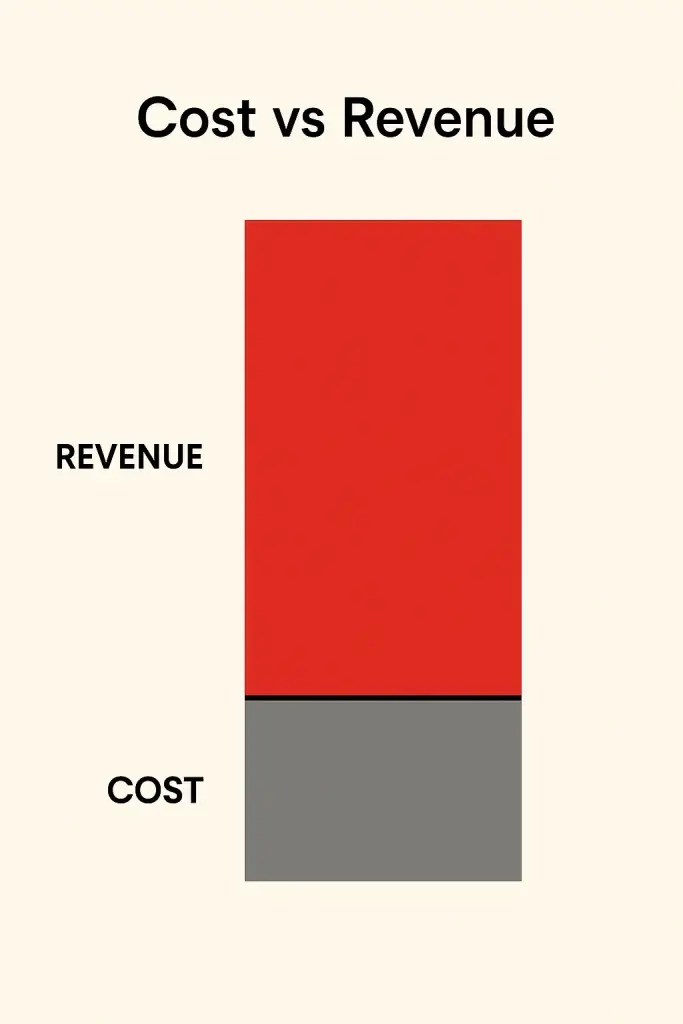
Cost Structure & Profit Margins
Major Costs
- Delivery Partner Payouts (largest share)
- Marketing & Promotions
- Technology Infrastructure
- Operations & Customer Support
- Insurance & Regulatory Compliance
Unit Economics
Average order value: ~$28–$30
Average take rate: ~22%
Contribution margin: 6–8% before overheads
Profit Margins
While gross margins are low, operational efficiency and ad/subscription revenue lift net profitability.
Margin Improvement Strategy
- Increase average order size
- Boost ad revenue share
- Lower driver idle time
- Automate logistics through AI
Future Revenue Opportunities & Innovations
1. Grocery & Retail Expansion
UberEats is scaling into grocery and pharmacy delivery—new revenue lanes for clone platforms.
2. AI & Predictive Logistics
AI to optimize delivery time, routing, and demand forecasting for lower costs.
3. Restaurant SaaS Tools
Providing white-label tech stacks, POS integrations, and analytics for partners.
4. Adtech & Brand Partnerships
Expanding advertising beyond restaurants into FMCG and local retail brands.
5. Drone & Autonomous Delivery
Long-term cost reduction and faster service potential.
6. Sustainability Monetization
Eco-delivery fees and carbon-neutral partnerships.
Predictions for 2025-2027
- Gross bookings to exceed $85 billion
- Subscription revenue to double
- Profit margins to rise toward 7–8% overall
Lessons for Entrepreneurs & Your Opportunity
Key Takeaways from UberEats’ Model
- Platform scale drives efficiency and pricing power
- Subscription + Ads = long-term stability
- Data-driven personalization maximizes LTV
- Cross-vertical integration creates ecosystem lock-in
Opportunities for New Players
- Localized clone apps for Tier-2/Tier-3 markets
- Hyper-niche models (healthy meals, regional cuisines)
- Hybrid delivery + dine-in systems
- Micro-subscription models for small towns
Final Thought
UberEats demonstrates how a food delivery app can become a full-stack monetization engine. It scales through multiple revenue levers—commissions, subscriptions, advertising, and logistics services—balancing volume and margin perfectly. Entrepreneurs can replicate this success with Miracuves’ UberEats Clone and capture profitable opportunities in their local markets.
FAQs
How much does UberEats make per transaction?
Around 20–25% of the order value, plus service and delivery fees.
What’s UberEats’ most profitable revenue stream?
Advertising and subscription fees deliver the highest margins.
How does UberEats’ pricing compare to competitors?
Its commission and delivery fees are similar to DoorDash but with higher subscription uptake.
What percentage does UberEats take from restaurants?
Between 20%–30%, depending on city and service level.
How has UberEats’ revenue model evolved?
It added subscriptions, ads, grocery delivery, and SaaS tools beyond standard commissions.
Can small platforms use similar models?
Yes—by starting with commission and customer fees, then adding ads or loyalty plans.
What’s the minimum scale for profitability?
At least 20–30 K monthly orders with optimized logistics and retention.
How to implement similar revenue models?
Use a Miracuves Uber Eats Clone to launch fast, automate logistics, and integrate commission, ads, and subscription monetization.
What are alternatives to UberEats’ model?
Flat-fee delivery, subscription-only plans, or local cooperative networks.