



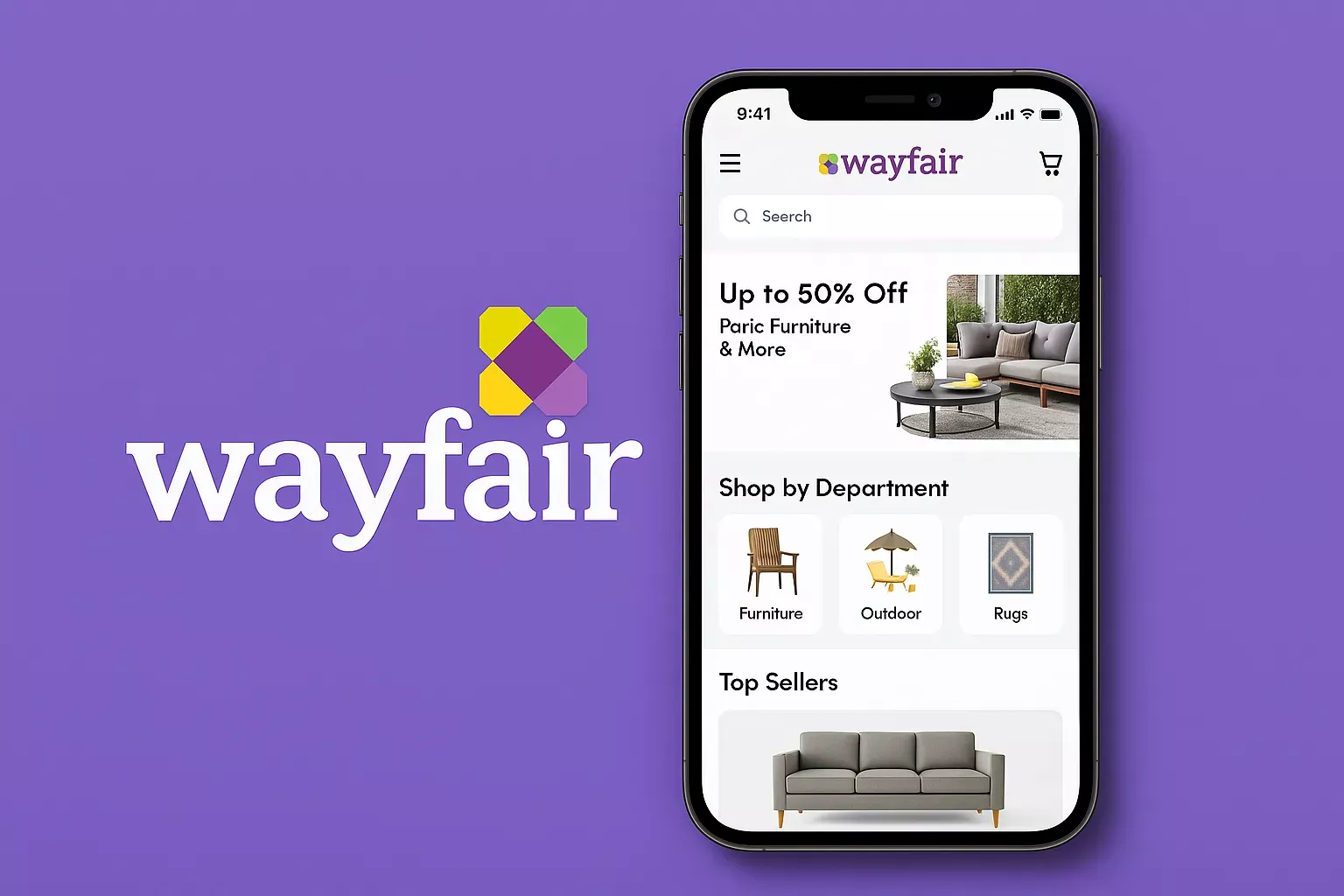
Imagine you just moved into a new apartment and want to furnish it beautifully without spending weeks hopping between stores. You open an app, browse thousands of furniture options, see them in your room using augmented reality, and get them delivered to your door — that’s the magic of Wayfair.
Founded in 2002 by Niraj Shah and Steve Conine, Wayfair has grown into one of the world’s largest online furniture and home goods retailers. With over 30 million products, 23,000 global suppliers, and 22 million active customers, Wayfair has revolutionized how people shop for furniture. By blending technology, logistics, and customer experience, it transformed a traditional retail industry into a seamless digital marketplace that continues to thrive in 2025.
What is Wayfair? The Simple Explanation
Wayfair is a leading online marketplace for furniture, décor, and home essentials, connecting millions of customers with suppliers around the world. Instead of owning physical stores or keeping vast inventories, Wayfair operates as a technology-driven eCommerce platform that brings together manufacturers, artisans, and logistics providers to deliver products directly to consumers.
The Core Problem It Solves:
Before Wayfair, shopping for furniture was time-consuming, limited by geography, and often expensive. Wayfair solved this by digitizing the entire experience — giving users access to millions of styles, personalized recommendations, and fast delivery, all from the comfort of home.
Target Users & Use Cases:
Wayfair primarily serves:
- Homeowners & Renters looking for furniture, décor, and renovation materials
- Interior designers seeking unique, affordable pieces for clients
- Suppliers & brands needing a scalable digital sales channel
Use cases range from furnishing entire homes to buying single décor items, mattresses, or office furniture.
Current Market Position (2025 Data):
- 22M+ active customers worldwide
- $12.1 billion in 2024 revenue
- Operates across North America and Europe
- Among the Top 3 global online furniture retailers
- Experiencing growth due to AR-based shopping and AI-powered personalization tools
Why It Became Successful:
Wayfair’s success lies in its data-driven personalization, AR visualization, and efficient drop-shipping logistics. The company leveraged advanced analytics to predict customer preferences and streamlined delivery operations, creating a frictionless buying experience.
How Does Wayfair Work? Step-by-Step Breakdown
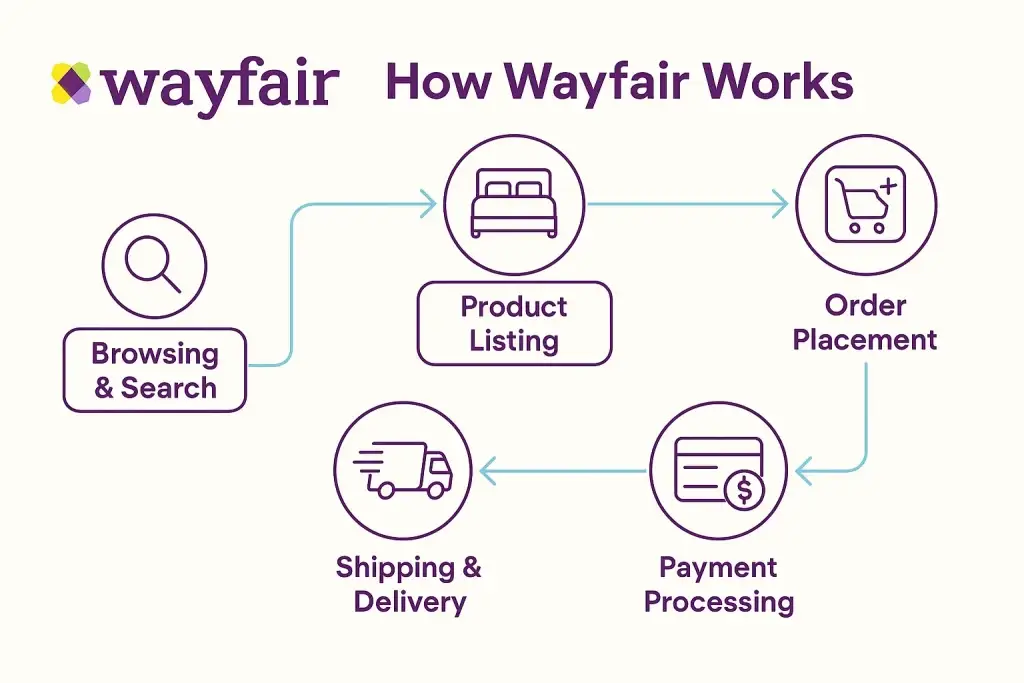
Wayfair operates as a two-sided marketplace — connecting buyers (shoppers) with suppliers (manufacturers, brands, and artisans). Its model focuses on seamless product discovery, visualization, purchase, and delivery through smart technology and logistics integration.
For Users (Buyers):
1. Account Creation
Users sign up using an email or social login, set preferences (room type, budget, style), and get a personalized dashboard with recommendations powered by AI.
2. Product Browsing & Visualization
Customers explore over 30 million items across categories like furniture, lighting, décor, kitchenware, and more.
Key features include:
- Filters & smart search
- 3D/AR View in Room
- Customer photo reviews
- Virtual design tools
3. Checkout & Payment
After adding items to the cart, users can pay via credit card, PayPal, Klarna, or financing options. The platform’s secure payment gateway and order tracking system ensure transparency and trust.
4. Delivery & Installation
Once purchased, Wayfair coordinates with its suppliers and logistics network to ship items directly. Large furniture items can include assembly and white-glove delivery services.
For Service Providers & Suppliers
1. Onboarding
Manufacturers and sellers can join Wayfair’s Partner Home program, where they list their products with descriptions, images, and inventory details.
2. Order Management
Wayfair automatically routes customer orders to relevant suppliers. Suppliers handle inventory and fulfillment, while Wayfair ensures consistent customer communication.
3. Earnings Model
Suppliers earn revenue from each sale, with Wayfair charging a commission-based fee (typically 15–25%) depending on category and service level.
Technical Overview (Simplified)
Wayfair runs on a cloud-based, microservices-driven architecture that supports millions of SKUs and transactions daily.
- Frontend: React, Next.js, and Swift (for mobile apps)
- Backend: Java, Python, Node.js
- Database: PostgreSQL, MongoDB
- AI & Personalization: TensorFlow, in-house ML models for recommendations
- Logistics Optimization: Real-time tracking via AWS and proprietary systems
This infrastructure enables real-time product updates, instant AR previews, and intelligent delivery routing.
Wayfair’s Business Model Explained
Wayfair’s business model is built around being a tech-enabled marketplace that connects furniture and home décor suppliers directly to consumers — without maintaining its own inventory. Its revenue comes from a blend of commissions, advertising, and service fees that scale with the platform’s massive catalog and user base.
How Wayfair Makes Money (All Revenue Streams)
- Commissions on Sales:
Wayfair charges suppliers a 15%–25% commission on each transaction, depending on product category, delivery complexity, and margin. - Advertising Fees:
Suppliers pay for promoted listings, banner placements, and sponsored search results, helping their products gain visibility across Wayfair’s app and website. - Delivery & Logistics Fees (Wayfair Delivery Network – WDN):
Through its own logistics arm, CastleGate, Wayfair offers warehousing, fulfillment, and last-mile delivery services — charging suppliers a service fee. - Membership Program (MyWay):
Customers can subscribe to MyWay for $29.99/year to get free shipping, early deals, and exclusive discounts, generating recurring subscription revenue. - Financing & Payments:
Wayfair partners with Klarna, Affirm, and Citi for installment payment options, earning referral and processing fees. - B2B Marketplace (Wayfair Professional):
Targeted at interior designers, contractors, and real estate professionals, this segment provides bulk deals and trade discounts — a rapidly growing B2B revenue source.
Pricing Structure (2025 Snapshot)
| Category | Avg. Product Price (USD) | Commission Rate | Fulfillment Fee (CastleGate) |
| Furniture | $250 – $3,000 | 20% | 8–10% |
| Décor | $50 – $500 | 15% | 5–7% |
| Lighting | $80 – $1,200 | 18% | 7–9% |
| Kitchenware | $30 – $400 | 15% | 5–6% |
| Office Furniture | $150 – $2,500 | 22% | 9–10% |
Market Size & Growth (2025 Update):
- Global home furnishing market: $770+ billion
- eCommerce share: 27% (projected to hit 35% by 2027)
- Wayfair’s annual revenue (2024): $12.1 billion
- Projected CAGR (2025–2028): 8.2%
- Operating in: USA, Canada, UK, Germany, Ireland
Wayfair’s strategy focuses on customer trust, fast delivery, and supplier empowerment, making it one of the few furniture platforms that scaled globally without owning physical stores.
Profit Margins & Insights
While margins are thinner than luxury retailers, Wayfair thrives on volume and data optimization. AI-powered demand forecasting reduces return rates and logistics costs, improving profitability as customer retention rises.
Key Features That Make Wayfair Successful
Wayfair’s growth from a niche eCommerce idea to a global furniture powerhouse is driven by its innovation-first features, customer-centric design, and seamless digital experience. Let’s explore the top 10 features that define Wayfair’s success in 2025.
Top 10 Features Analysis
| # | Feature | Why It Matters | User Benefit | Innovation |
| 1 | Augmented Reality (AR) “View in Room” | Helps users visualize furniture in their space | Reduces returns by up to 25% | Real-time 3D rendering using ARKit/ARCore |
| 2 | AI-Driven Recommendations | Uses behavior and style data to personalize products | Faster, smarter product discovery | TensorFlow + custom ML algorithms |
| 3 | Room Planner & Virtual Design Tools | Allows users to design full rooms virtually | Increases purchase confidence | 3D modeling with WebGL |
| 4 | Wayfair Professional (B2B) | Dedicated for businesses & designers | Special discounts and bulk pricing | Business-tier interface with project dashboards |
| 5 | Fast Shipping & CastleGate Logistics | Streamlined delivery via in-house fulfillment | Faster delivery (avg. 2.5 days) | IoT-enabled warehouse tracking |
| 6 | Customer Reviews with Photos/Videos | Real feedback improves trust | Shoppers see real setups | Verified content & smart moderation |
| 7 | Flexible Payment & Financing | Multiple payment partners (Klarna, Affirm, Citi) | Accessible for more users | API-based payment orchestration |
| 8 | Mobile App Optimization | Intuitive UI/UX for easy browsing | 70% of orders via mobile | Progressive Web App (PWA) tech |
| 9 | Sustainability Filters | Users can shop eco-friendly items | Aligns with 2025 green trends | Supplier transparency & carbon tracking |
| 10 | 24/7 Virtual Customer Support | AI chatbot + live agents | Faster resolution, 90% satisfaction | NLP-based service engine |
Recent 2025 Updates
- AI-Powered Style Boards: Automatically generate design boards based on user style and color preferences.
- Virtual Home Tours Integration: Lets users shop items directly from designer homes via AR.
- Voice-Assisted Shopping: Integrated with Alexa, Google Assistant, and Siri for hands-free ordering.
- Eco-Friendly Supply Network: Carbon-neutral shipping options available across the U.S.
AI/ML Integrations
Wayfair uses machine learning to optimize everything — from product recommendations to warehouse routing. Its image recognition engine identifies patterns from user behavior and browsing images, while predictive analytics help suppliers manage inventory more effectively.
What Sets Wayfair Apart
- Immersive AR shopping experience unmatched by competitors
- Data-driven personalization across every user journey
- Hybrid logistics + marketplace model ensuring faster, cheaper deliveries
- Heavy R&D investment in AI visualization and supply-chain automation
The Technology Behind Wayfair
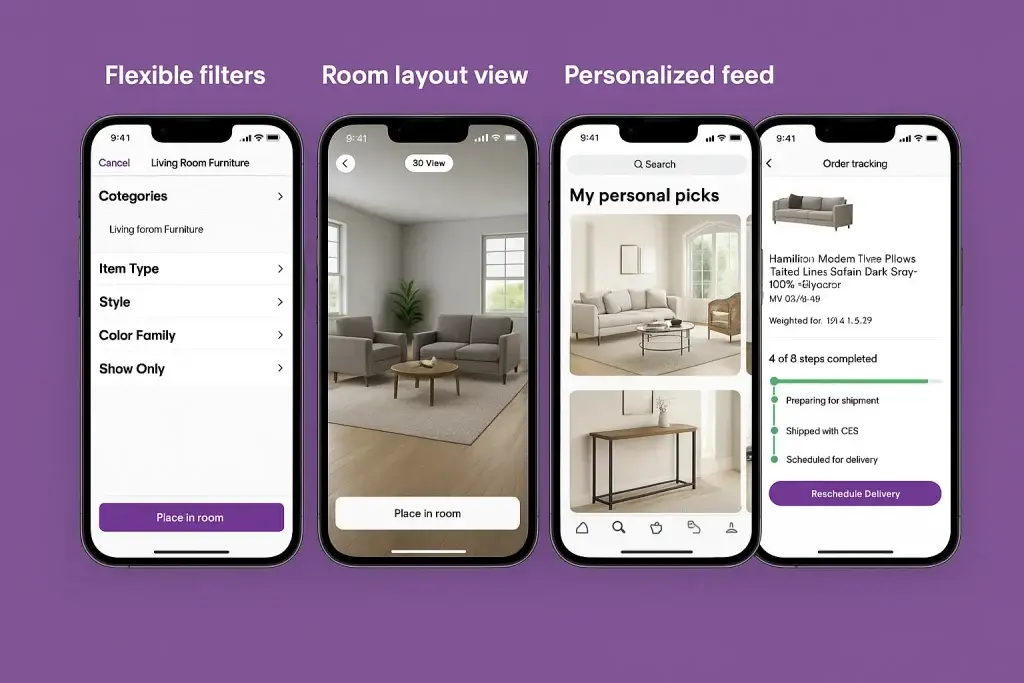
Wayfair’s technological backbone is what truly powers its massive scale and personalized shopping experience. By leveraging AI, cloud computing, and real-time data architecture, Wayfair ensures fast, reliable, and visually immersive furniture shopping for millions of users daily.
Tech Stack Overview (Simplified)
| Layer | Technologies Used | Purpose |
| Frontend | React, Next.js, Swift (iOS), Kotlin (Android) | Smooth UI and app performance |
| Backend | Java, Python (Flask), Node.js | Core business logic, APIs, and scalability |
| Database | PostgreSQL, MongoDB, Elasticsearch | Handling millions of SKUs and search queries |
| AI/ML Tools | TensorFlow, PyTorch, in-house ML pipelines | Product recommendation, personalization, demand prediction |
| Cloud Infrastructure | AWS, Google Cloud Platform | Scalable data storage and computing |
| Analytics | Apache Spark, Snowflake | Big data processing and customer insights |
| Payment Systems | Stripe, Braintree, Klarna APIs | Secure payments and financing options |
Real-Time Features
Wayfair’s architecture supports instant inventory updates, real-time product rendering, and AR visualization.
Key real-time features include:
- Live product availability tracking
- Instant shipping updates from CastleGate Logistics
- Real-time 3D rendering for the AR “View in Room” feature
Data Handling & Privacy
Wayfair places high priority on data protection and compliance:
- GDPR and CCPA-compliant systems
- AES-256 encryption for user data
- Secure token-based payment architecture
- Minimal data retention for third-party vendors
Scalability Approach
Wayfair’s microservices architecture ensures that the platform scales effortlessly during peak sales (like Black Friday). Each service — product listing, recommendations, checkout, logistics — runs independently, reducing downtime and improving performance globally.
Mobile App vs Web Platform
| Platform | Strengths | Usage Share (2025) |
| Mobile App | Personalized feed, AR view, saved design boards | 70% of total orders |
| Web Platform | Better comparison, multi-tab browsing, large screen view | 30% of total traffic |
API Integrations
Wayfair’s ecosystem integrates with:
- Payment APIs: Stripe, Klarna, PayPal
- Logistics APIs: FedEx, UPS, DHL
- CRM tools: Salesforce, HubSpot
- AI & Analytics APIs: Google Vision, Snowflake
These APIs ensure seamless operations from checkout to delivery.
Why This Tech Matters for Business
This advanced setup allows Wayfair to:
- Handle millions of product variations without lag
- Offer instant AR previews and recommendations
- Manage global logistics at scale
- Deliver a personalized, high-converting experience for every user
Wayfair’s Impact & Market Opportunity
Wayfair has done more than just sell furniture — it redefined how people buy for their homes. Through smart logistics, AI personalization, and immersive tech experiences, Wayfair transformed an offline industry into a thriving digital ecosystem, creating ripple effects across global eCommerce, design, and supply chains.
Industry Disruption Caused
Wayfair disrupted traditional furniture retail by:
- Eliminating the need for brick-and-mortar stores
- Offering millions of items online with AR previews
- Building direct supplier-to-consumer pipelines
- Revolutionizing delivery through CastleGate Logistics
This model inspired hundreds of online furniture startups, proving that technology could make even high-touch products like furniture sell successfully online.
Market Statistics and Growth
| Metric | 2023 | 2025 (Projected) |
| Global Online Furniture Market | $62 billion | $88 billion |
| Wayfair Annual Revenue | $10.2 billion | $12.1 billion |
| Active Customers | 19 million | 22 million |
| Avg. Order Value | $289 | $310 |
| AR Feature Usage | 30% of users | 50% of users |
| Market Share (USA Online Furniture) | 21% | 24% |
Wayfair’s strong brand presence, extensive product catalog, and early investment in AR/AI technologies have cemented it as a top innovator in online retail.
User Demographics & Behavior
- Age Group: 25–45 years dominate purchases
- Gender Split: 58% female, 42% male
- Buying Frequency: Avg. 3.2 orders per year per user
- Top Categories: Sofas, beds, rugs, lighting, wall décor
- Peak Traffic Times: Evenings and weekends
Shoppers love Wayfair’s personalized feed, real-room previews, and fast delivery, resulting in one of the highest repeat purchase rates in the furniture sector.
Geographic Presence
Wayfair operates in:
- North America (USA, Canada)
- Europe (UK, Germany, Ireland)
- Expansion plans in Australia & Middle East (2025–2026)
Its multi-language, multi-currency platform ensures localized experiences, making it easier to grow across regions.
Future Projections (2025–2030)
Analysts project:
- Global online furniture CAGR: 8.2%
- Wayfair’s potential valuation: $18–20 billion
- AR adoption rate: 70% of furniture shoppers by 2028
- AI-driven personalization: Expected to increase conversion rates by 25%
Wayfair’s integration of AI, sustainability, and experiential commerce puts it at the forefront of future retail innovation.
Opportunities for Entrepreneurs
The success of Wayfair shows massive potential for startups to build:
- Niche home décor marketplaces (eco-friendly, regional artisans, or luxury-focused)
- B2B design platforms for architects and interior designers
- 3D/AR-based furniture rental apps for urban populations
- Localized logistics and last-mile delivery solutions
Building Your Own Wayfair-Like Platform
The rise of Wayfair proves that digital furniture marketplaces can scale globally — when powered by smart tech, supplier integration, and exceptional user experience. Entrepreneurs and startups can tap into this trillion-dollar opportunity by developing their own Wayfair-like app or website with Miracuves’ ready-to-launch clone solutions.
Why Businesses Want Wayfair Clones
- Proven Market Demand: Home décor and furniture eCommerce continues to grow rapidly post-pandemic.
- High Average Order Value: Each transaction often exceeds $250–$300, making it a profitable model.
- Low Inventory Risk: Like Wayfair, clone platforms can operate as marketplaces without owning stock.
- Scalable Globally: With localization, multiple currencies, and AR features, such platforms can easily go cross-border.
- Smart Tech Integration: AI, AR, and ML personalization create next-gen shopping experiences.
Key Considerations for Development
- Supplier Network Integration: Build partnerships with furniture makers or wholesalers.
- Smart Search & Filtering: AI-based product discovery to match Wayfair’s browsing ease.
- AR & 3D Visualization: Let customers preview furniture in real spaces.
- Fast Delivery System: Integrate local courier APIs or develop in-house logistics.
- Multi-Vendor Dashboard: Enable sellers to manage listings, pricing, and delivery seamlessly.
- Secure Payments & Financing: Integrate options like Stripe, Razorpay, and Buy-Now-Pay-Later.
- Scalable Cloud Infrastructure: Use AWS or GCP for traffic spikes during campaigns.
Cost Factors & Pricing Breakdown
Wayfair-Like App Development — Market Price
| Development Level | Inclusions | Estimated Market Price (USD) |
| Basic Furniture Marketplace MVP | Product listings, categories, vendor onboarding, simple checkout | $120,000+ |
| Mid-Level Marketplace | Shipping modules, reviews, vendor dashboards, mobile apps, basic logistics workflows | $250,000 |
| Advanced Marketplace (Wayfair-scale) | 3D/AR modules, high concurrency backend, warehouse integrations, intelligent search, native mobile apps | $350,000+ |
These figures represent the global cost required to build a Wayfair-style marketplace from scratch, generally taking 6–12 months depending on catalog size and complexity.
Miracuves Wayfair-Style Marketplace Pricing
Miracuves Price: Starts at $15,999
This enables you to launch a fully featured furniture marketplace with vendor onboarding, catalog management, variant configurations, shipping workflows, promotion tools, and optional 3D/AR integrations—built with enterprise-grade performance and future scalability in mind.
Note: This includes full non-encrypted source code, complete deployment support, backend setup, admin panel configuration, and publishing on Google Play & Apple App Store—giving you a fully operational marketplace ready for launch.
Delivery Timeline for Wayfair-Style Platform
Miracuves development timeline including setup, configuration, admin deployments, API integrations, and platform handover in approximately 30–90 days, depending on customization and additional functional layers requested. This ensures a stable, market-ready system with predictable delivery and no hidden engineering delays.
Tech Stack
We preferably use JavaScript (Node.js + Next.js + PostgreSQL) for the full platform and Flutter/React Native for mobile apps, ensuring high speed, modularity, and future-proof development. Other tech stacks can be discussed and arranged upon request — Contact us
Essential Features to Include
- Augmented Reality “View in Room”
- Product customization and size visualization
- Smart recommendation engine
- Multiple seller integration
- Instant delivery tracking
- Wishlist and style boards
- Loyalty rewards and user reviews
Conclusion
Wayfair’s story is a masterclass in how technology can reshape even the most traditional industries. What started as a small online store for furniture has evolved into a global home décor giant — powered by AR, AI, logistics innovation, and customer experience.
In 2025, Wayfair continues to lead by blending personalization, convenience, and immersive technology — setting the gold standard for digital furniture retail. Its platform doesn’t just sell products; it creates an emotional, visual journey that helps customers design spaces they love.
For entrepreneurs, the takeaway is clear: the future of commerce lies in experience-driven marketplaces.
Ready to Build Your Own Wayfair-Like App? Transform your furniture business idea into a powerful online marketplace. Contact Us today for a free consultation!
FAQs
Q:1 How does Wayfair make money?
Wayfair earns revenue through commissions (15–25%), supplier advertising, logistics fees, and its MyWay membership program. It also monetizes through B2B sales and financing partnerships with Klarna and Affirm.
Q:2 Is Wayfair available in my country?
As of 2025, Wayfair operates in the USA, Canada, UK, Germany, and Ireland, with expansion plans for Australia and the Middle East.
Q:3 How much does Wayfair charge users?
Wayfair doesn’t charge users to browse or shop. However, premium members can subscribe to MyWay ($29.99/year) for free shipping and exclusive deals.
Q:4 What’s the commission for service providers or suppliers?
Suppliers typically pay 15–25% commission on sales, depending on product category, logistics needs, and service level within Wayfair’s Partner Home Program.
Q:5 How does Wayfair ensure safety?
Wayfair ensures customer safety through encrypted payments, secure user data storage, verified suppliers, and order tracking from warehouse to doorstep.
Q:6 Can I build something similar to Wayfair?
You can build a Wayfair-like furniture marketplace using a ready-made clone solution with vendor dashboards, AR visualization, and AI-powered recommendations.
Q:7 What makes Wayfair different from competitors?
Wayfair stands out due to its AR “View in Room” technology, data-driven personalization, CastleGate logistics network, and massive 30M+ product catalog — all focused on convenience and trust.
Q:8 How many users does Wayfair have?
Wayfair has 22+ million active users globally in 2025, with a growing base in North America and Europe.
Q:9 What technology does Wayfair use?
Wayfair’s tech stack includes React, Next.js, Java, TensorFlow, AWS, and PostgreSQL — ensuring fast, scalable, and AI-driven eCommerce performance.
Q:10 How can I create an app like Wayfair?
You can build a Wayfair-style home and furniture marketplace using a fully customizable clone solution with complete source-code ownership and scalable features.
Related Articles: