


Key Takeaways
What You’ll Learn
- White-label FoodPanda app security depends on verified protection, not just ready-made delivery code.
- Key risks include data leaks, payment exposure, unsafe APIs, and weak compliance controls.
- Security standards help protect customer data, merchant activity, and transaction flow.
- Pre-launch and post-launch safeguards are both essential for long-term platform safety.
- User trust depends on compliance, privacy, and operational readiness.
Stats That Matter
- The guide highlights 4 key standards: ISO 27001, SOC 2 Type II, GDPR, and PCI DSS.
- It also structures protection across 5 stages: planning, auditing, compliance, launch protection, and ongoing monitoring.
Real Insights
- Cheap delivery solutions can create bigger risks when security is not verified properly.
- Strong platforms combine encryption, authentication, backups, and compliance together.
- Security works best when patching, testing, and monitoring are part of daily operations.
- Payment safety and customer privacy should be treated as launch requirements.
- Long-term growth comes from verified protection, not assumptions.
You’ve heard the horror stories about data breaches, leaked customer details, stolen payment information, and apps getting shut down overnight due to compliance failures. In the food delivery industry, where every order carries personal data, location tracking, and real-time payments, security is not a feature anymore — it is your business foundation.
In 2026, the safety of a white-label FoodPanda-style app matters more than ever. Cyberattacks on food delivery platforms have surged globally due to the explosive growth in digital orders, cloud kitchens, and hyperlocal logistics. A single vulnerability can expose thousands of users, destroy years of brand trust, and trigger heavy regulatory penalties.
This guide gives you an honest, no-hype security assessment of white-label FoodPanda app safety — what the real risks are, what standards you must demand, and how to protect your platform at enterprise level. You will also learn how Miracuves approaches food delivery app security as a mission-critical responsibility, not an afterthought.
Understanding White-Label FoodPanda App Security Landscape
What “White-Label Security” Actually Means
White-label FoodPanda app security refers to the protection framework built into a ready-made food delivery app that is rebranded and deployed for your business. Unlike custom-built apps where security is designed from scratch, a white-label app inherits its core architecture, infrastructure design, data handling policies, and security controls from the solution provider. Your safety therefore depends heavily on the provider’s engineering standards and long-term maintenance practices.
In simple terms, you are not just buying features—you are inheriting an entire security ecosystem.

Why People Worry About White-Label FoodPanda Apps
Food delivery platforms process extremely sensitive data multiple times per day:
- Customer personal details
- Live GPS location of customers and riders
- Payment card and wallet transactions
- Restaurant banking details
- Internal operational analytics
Because this data moves through APIs, clouds, third-party services, and mobile devices, founders fear:
- Data breaches
- Payment fraud
- Account hijacking
- Regulatory punishment
- Permanent brand damage
These fears are justified if security is treated casually.
Current Threat Landscape for Food Delivery Apps (2026)
In 2026, food delivery platforms are among the top 5 most targeted mobile app categories globally. The most common attack vectors include:
- API abuse and token hijacking
- Fake order generation attacks
- Location spoofing
- Wallet and promo abuse
- Malware-injected mobile apps
- Cloud misconfiguration exploits
According to IBM and Verizon 2024–2026 breach reports:
- Over 41 percent of consumer app breaches now involve APIs
- Payment fraud in food delivery apps has increased by more than 28 percent year-over-year
- Cloud misconfiguration remains the cause of 23 percent of mobile data leaks
Security Standards in 2026
Today’s food delivery apps are expected to follow:
- Zero Trust Security Architecture
- Mandatory encryption at rest and in transit
- Secure DevOps (DevSecOps) pipelines
- Automated vulnerability scanning
- Real-time incident detection systems
Security is no longer optional or reactive. It is enforced at regulatory and payment network levels.
Real-World Statistics on App Security Incidents
- The average global cost of a mobile app data breach in 2024 crossed USD 4.6 million
- Food and retail delivery platforms accounted for 17 percent of customer identity leaks
- 61 percent of breached platforms were running outdated app versions
- Over 70 percent of breaches originated from server-side vulnerabilities rather than mobile devices
These numbers clearly show that the danger does not come from the user’s phone alone—it comes from weak backend infrastructure and neglected maintenance.
Read more : – Top Foodpanda Features Every Food App Needs
Key Security Risks & How to Identify Them
High-Risk Area 1: Data Protection & Privacy
Food delivery apps handle a large volume of personally identifiable information and financial data every single day. This makes them prime targets for cybercriminals.
User Personal Information
This includes names, phone numbers, email IDs, delivery addresses, and order history. If improperly stored or transmitted, this data can be leaked or sold on dark web marketplaces.
Payment Data Security
FoodPanda-style apps process:
- Credit and debit cards
- UPI and wallet transactions
- Refunds and restaurant settlements
Any weakness in payment gateway integration, tokenization, or encryption can directly lead to financial theft and chargeback fraud.
Location Tracking Concerns
Live GPS data of customers and riders is continuously exchanged between the app and servers. If attackers gain access:
- Rider movements can be tracked
- Customer behavior can be profiled
- High-risk personal targeting can occur
GDPR / CCPA Compliance Risks
If user consent, data storage, and deletion rights are not properly implemented:
- Heavy fines can be imposed
- App stores can remove your app
- You can face long-term legal exposure
High-Risk Area 2: Technical Vulnerabilities
Code Quality Issues
Poorly written or copied code leads to:
- SQL injection vulnerabilities
- Unsecured authentication flows
- Hardcoded credentials
- Unsafe session handling
Server Security Gaps
Common causes of server breaches include:
- Weak firewall rules
- Exposed admin panels
- Publicly accessible databases
- Misconfigured cloud storage buckets
API Vulnerabilities
APIs connect mobile apps, admin panels, riders, restaurants, and payment systems. If APIs lack:
- Proper authentication
- Rate limiting
- Data validation
They become the fastest route for attackers to enter your system.
Third-Party Integrations
Food delivery apps depend on:
- Map services
- SMS and email gateways
- Payment processors
- Analytics tools
Every external integration introduces a new attack surface if not secured properly.
High-Risk Area 3: Business Risks
Legal Liability
If a breach occurs, responsibility falls on the platform owner—even if the vulnerability came from your technology provider.
Reputation Damage
Food delivery is a trust-driven business. Once customers feel unsafe, churn increases rapidly and acquisition costs double.
Financial Losses
Losses arise from:
- Fraudulent refunds
- Chargebacks
- Legal penalties
- Recovery operations
- Infrastructure rebuilding
Regulatory Penalties
Depending on the region, penalties can range from:
- Five-figure fines to multi-million dollar penalties
- Permanent suspension from payment networks
- App delisting from Google Play and App Store
Risk Assessment Checklist
Use this checklist to evaluate the security posture of any white-label FoodPanda app before launch:/im
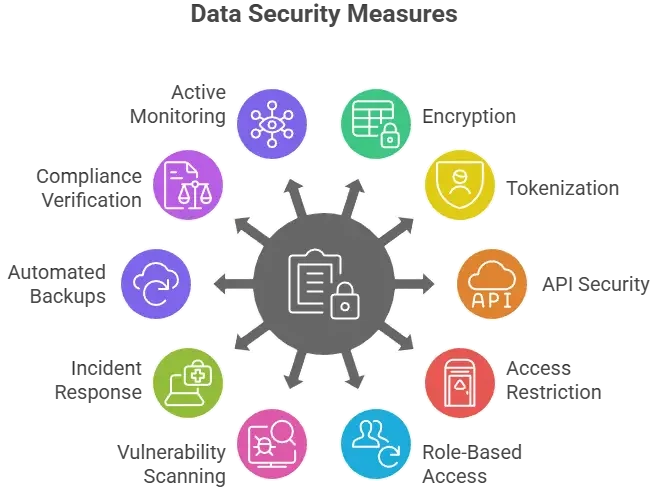
If more than two of these answers are unclear or missing, your platform is operating at high security risk.
Security Standards Your White-Label FoodPanda App Must Meet
For a white-label FoodPanda app to be considered truly safe in 2026, it must comply with globally accepted security frameworks, certifications, and technical benchmarks. These are not optional add-ons anymore — they are the baseline for operating legally and securely.
Essential Certifications
ISO 27001 – Information Security Management
This ensures that your white-label FoodPanda app provider follows a structured information security management system (ISMS). It covers:
- Risk assessment methodology
- Data access control policies
- Incident response protocols
- Continuous security improvement
Without ISO 27001, there is no formal proof of enterprise-grade security governance.
SOC 2 Type II – Operational Security Assurance
SOC 2 Type II validates how securely a provider operates its infrastructure over time. It examines:
- System availability
- Processing integrity
- Confidentiality
- Privacy controls
This is critical for platforms handling real-time food orders, payments, and rider tracking.
GDPR Compliance – Global Data Protection
If your users belong to Europe or your app stores EU user data:
- Explicit consent must be recorded
- Data minimization must be enforced
- Right to delete and export user data must exist
- Breach notifications must happen within 72 hours
Non-compliance can attract fines up to 4 percent of global revenue.
HIPAA (If Medical or Diet-Specific Data Is Collected)
If your food delivery app integrates:
- Medical diets
- Health-based nutrition plans
- Hospital meal deliveries
HIPAA-level protection may become mandatory for health data security.
PCI DSS – Payment Security
All card, UPI, and wallet transactions must be processed under PCI DSS standards to ensure:
- Secure payment data transmission
- Encrypted merchant servers
- Fraud detection and prevention
- Chargeback risk control
Technical Security Requirements
End-to-End Encryption
All data must be encrypted:
- From the customer app to the server
- From the server to riders and restaurants
- From admin panels to reporting dashboards
Modern acceptable standards include TLS 1.3 and AES-256 encryption.
Secure Authentication (2FA + OAuth)
Every admin, vendor, and rider account must use:
- Multi-factor authentication
- Secure password hashing
- OAuth token-based authentication for APIs
This prevents account hijacking even if credentials are leaked.
Regular Security Audits
Professional audits must be conducted:
- Quarterly vulnerability scans
- Annual independent third-party audits
- Infrastructure-level risk analysis
Audits prove that your app is not relying on assumed security.
Penetration Testing
Simulated cyberattacks help uncover:
- API injection points
- Authentication bypass flaws
- Privilege escalation risks
Penetration testing should be done before every major update.
SSL Certificates
All domains and subdomains must operate on valid SSL certificates to:
- Prevent data interception
- Protect login sessions
- Avoid browser and app store security warnings
Secure API Design
Good API security includes:
- Token-based access control
- API request validation
- IP whitelisting
- Rate limiting and throttling
- Web Application Firewall protection
Security Standards Comparison Table
| Security Standard | Mandatory in 2026 | Purpose | Risk If Missing |
|---|---|---|---|
| ISO 27001 | Yes | Enterprise data security governance | High risk of operational breaches |
| SOC 2 Type II | Yes | Infrastructure trust & availability | Unverified backend security |
| GDPR | Yes (EU/Global) | Personal data protection | Legal fines and app removal |
| PCI DSS | Yes | Secure online payments | Direct financial fraud risk |
| End-to-End Encryption | Yes | Data protection in transit | Data leaks & MITM attacks |
| Penetration Testing | Yes | Real-world attack simulation | Unknown hidden vulnerabilities |
| Secure APIs | Yes | Protect app integrations | API hacks & order manipulation |
If your white-label FoodPanda app provider cannot provide documented proof of these standards, your platform is running on assumed trust—one of the biggest causes of startup security failures.
Red Flags – How to Spot Unsafe White-Label FoodPanda App Providers
Choosing the wrong technology provider is the fastest way to expose your food delivery business to security disasters. In most real-world breaches, the root cause is not hackers alone—it is poor vendor selection. Below are the most critical danger signals you must never ignore.
Warning Signs of an Unsafe Provider
No Security Documentation
If a provider cannot share:
- Security architecture overview
- Data flow diagrams
- Incident response policy
- Compliance reports
It means security has never been formally implemented or audited.
Cheap Pricing Without Explanation
Extremely low pricing often indicates:
- No dedicated security team
- No regular audits
- Shared insecure servers
- Copied or outdated codebases
Security always has a real cost behind it.
No Compliance Certifications
Absence of ISO 27001, SOC 2, GDPR policies, or PCI DSS reporting clearly shows a lack of enterprise readiness.
Outdated Technology Stack
If the app still runs on:
- Obsolete frameworks
- Unsupported server versions
- Old database engines
It becomes automatically vulnerable to known exploits.
Poor Code Quality
Signs include:
- Slow application performance
- Frequent app crashes
- Inconsistent admin controls
- Hardcoded credentials inside the code
These directly indicate weak security hygiene.
No Security Updates Policy
If the provider does not follow:
- Monthly patch cycles
- Emergency update deployment
- Zero-day vulnerability monitoring
Your app will remain exposed long after threats are publicly known.
Lack of Data Backup Systems
Without automated and tested backups:
- Ransomware attacks can permanently destroy data
- System failures can wipe order history, payments, and user records
No Insurance Coverage
Reputable providers carry cyber liability insurance. Absence of insurance leaves you alone financially in case of a breach.
Evaluation Checklist for Safe Provider Selection
Before signing any agreement for a white-label FoodPanda app, you must verify the following:
Questions to Ask Providers
- What security standards and certifications do you follow?
- How often are vulnerability scans and penetration tests conducted?
- How is user and payment data encrypted?
- What is your incident response time in case of a breach?
- How do you manage cloud infrastructure security?
- Who is responsible for security patches after deployment?
- Do you provide compliance support for GDPR and local laws?
Documents to Request
- ISO 27001 or equivalent certification
- PCI DSS compliance proof
- Data protection and privacy policy
- Security audit and penetration testing reports
- Backup and disaster recovery policy
Testing Procedures
- Black-box penetration test before launch
- API security testing
- Load and abuse testing for fraud protection
- Authentication and role-based access testing
Due Diligence Steps
- Verify the provider’s past security incident history
- Check enterprise client references
- Review app store history of their existing deployments
- Validate third-party integrations and gateways
If any of these steps are skipped, you are effectively launching your business on blind trust.
Best Practices for Secure White-Label FoodPanda App Implementation
Building a secure white-label FoodPanda app is not just about choosing a safe provider. True security comes from how the app is implemented, configured, monitored, and maintained throughout its lifecycle. Below are the industry-proven best practices for 2026.
Pre-Launch Security
Security Audit Process
Before your app goes live:
- Conduct a full-stack security audit (mobile, backend, admin, APIs)
- Verify server hardening and firewall configuration
- Test authentication flows and role-based access
- Validate encryption methods for all sensitive data
This audit ensures that hidden vulnerabilities do not reach production.
Code Review Requirements
Every codebase must go through:
- Static code analysis
- Manual security code review
- Dependency vulnerability checks
This prevents unsafe libraries, insecure functions, and hardcoded credentials from entering your live environment.
Infrastructure Hardening
Your cloud infrastructure must include:
- Private network segmentation
- Restricted database access
- Secure load balancer configuration
- DDoS protection layers
Infrastructure hardening stops large-scale attacks before they reach your application.
Compliance Verification
Before launch, confirm:
- GDPR consent management workflows
- PCI DSS payment gateway validation
- Local data residency rules
- Data retention and deletion policies
Launching without compliance verification exposes you to instant legal risk.
Staff Training Programs
Security is not only technical. Your internal team must be trained on:
- Admin panel access discipline
- Phishing and social engineering awareness
- Data handling protocols
- Incident reporting procedures
Human error remains the top cause of real-world security breaches.
Post-Launch Security Monitoring
Continuous Security Monitoring
After launch, your app must be monitored 24/7 for:
- Suspicious login attempts
- API abuse and unusual traffic
- Payment fraud patterns
- Server health and intrusion alerts
Real-time monitoring allows immediate containment of threats.
Regular Updates and Patches
In 2026, new vulnerabilities are disclosed weekly. Your app must receive:
- Monthly security patch updates
- Emergency hotfixes for zero-day threats
- Framework and dependency upgrades
Delays in patching directly translate into exploit windows for attackers.
Incident Response Planning
A documented incident response plan must define:
- Breach detection process
- Communication flow
- Data isolation steps
- User and authority notification timelines
- System recovery procedures
Speed of response determines the scale of financial and reputational damage.
User Data Management
Post-launch data security includes:
- Enforced data minimization
- Automated data anonymization where required
- Secure archival of historical data
- Verified deletion mechanisms for user requests
This protects both privacy and regulatory compliance.
Backup and Recovery Systems
Your platform must operate with:
- Daily automated encrypted backups
- Multi-region backup storage
- Regular restoration testing
- Ransomware rollback protection
Backups are your last line of defense against catastrophic data loss.
Security Implementation Timeline
Phase 1 – Pre-Development (Week 1)
- Risk assessment
- Compliance mapping
- Security architecture planning
Phase 2 – Development & Testing (Weeks 2–6)
- Secure coding
- API protection setup
- Payment security integration
- Initial vulnerability scanning
Phase 3 – Pre-Launch Validation (Week 7)
- Penetration testing
- Cloud hardening verification
- Compliance document checks
Phase 4 – Post-Launch Operations (Ongoing)
- Continuous monitoring
- Monthly patch cycles
- Quarterly security audits
- Annual penetration testing
Security is not a single milestone—it is a permanent operational process.
Legal & Compliance Considerations for White-Label FoodPanda App
Security is incomplete without legal and regulatory compliance. Even a technically secure white-label FoodPanda app can be shut down if it violates data protection laws, payment regulations, or consumer protection frameworks. In 2026, regulatory enforcement is stricter than ever across all major markets.
Regulatory Requirements
Data Protection Laws by Region
Different countries enforce different data protection frameworks. Your white-label FoodPanda app must comply based on where your users operate.
Europe (EU/UK – GDPR & UK GDPR)
- Explicit user consent before data collection
- Right to access and right to erasure
- Data portability on request
- Mandatory breach notification within 72 hours
- Data Processing Agreements (DPA) with all vendors
United States (CCPA/CPRA + State Laws)
- Right to opt-out of data sale
- Transparent data usage disclosures
- Consumer access and deletion rights
- Mandatory disclosure of third-party data sharing
India (DPDP Act 2023)
- User consent before personal data processing
- Purpose limitation and data minimization
- Mandatory breach disclosure to authorities
- Strict penalties for data misuse
Middle East (UAE, Saudi Arabia)
- Local data residency requirements
- Government approval for cross-border data transfer
- Strong consumer privacy enforcement
Southeast Asia (Singapore PDPA, Indonesia PDP)
- Consent-driven data usage
- Data breach notification mandates
- Vendor accountability requirements
Non-compliance in any of these regions can result in heavy fines, forced shutdowns, or permanent app store bans.
Industry-Specific Regulations
Food delivery platforms are also governed by:
- Consumer protection laws
- E-commerce transaction regulations
- Digital payment network rules
- Food safety data handling policies
- Rider and gig worker data regulations
If your platform stores restaurant licenses, tax data, or rider KYC documents, those come with additional regulatory obligations.
User Consent Management
Your app must implement:
- Clear consent banners
- Granular permission controls
- Separate consent for marketing communication
- Withdrawal of consent at any time
All consent logs must be auditable.
Privacy Policy Requirements
A legally valid privacy policy must define:
- What data is collected
- Why it is collected
- How long it is stored
- Who it is shared with
- How users can exercise their rights
This policy must be visible inside the app and on your website.
Terms of Service Essentials
Your terms must clearly define:
- Platform liability limitations
- User responsibilities
- Payment dispute handling
- Refund, cancellation, and chargeback policies
- Jurisdiction and governing law
Weak or copied legal documents are a major source of litigation risk.
Liability Protection
Insurance Requirements
Every commercial white-label FoodPanda app should carry:
- Cyber liability insurance
- Data breach insurance
- Professional indemnity insurance
- Payment fraud coverage
This protects your business from catastrophic financial exposure after security incidents.
Legal Disclaimers
Disclaimers must cover:
- Platform service limitations
- Third-party service dependencies
- Network availability risks
- Data accuracy boundaries
User Agreements
Separate legally enforceable agreements should exist for:
- Customers
- Restaurants
- Riders
- Admin staff
Each group has distinct legal responsibilities and risk exposure.
Incident Reporting Protocols
Your legal framework must predefine:
- Internal breach escalation flow
- Regulatory reporting timelines
- Affected user notification procedures
- Public communication guidelines
Regulatory Compliance Monitoring
Compliance is not static. You must:
- Monitor law updates quarterly
- Conduct annual legal audits
- Update privacy and data policies regularly
- Re-validate contracts with third parties
Compliance Checklist by Region
Global Minimum
- GDPR-compliant consent framework
- PCI DSS certified payment processing
- Published privacy policy and terms
- Encrypted data storage and transmission
- Formal breach notification workflow
Europe
- Data Processing Agreements
- International data transfer safeguards
- Appoint Data Protection Officer if required
United States
- CCPA/CPRA consumer rights management
- Opt-out of data sale mechanism
India
- DPDP-compliant consent and grievance officer
- Breach reporting to authorities
Middle East
- Local hosting where required
- Cross-border transfer approvals
Southeast Asia
- PDPA compliance policies
- Vendor accountability documentation
Failure in any single jurisdiction can block expansion into that entire market.
Read more : – How to Hire the Best Foodpanda Clone Developer
Why Miracuves White-Label FoodPanda App is Your Safest Choice
When it comes to food delivery platforms, security cannot be treated as an optional upgrade. At Miracuves, security is engineered at the foundation level of every white-label FoodPanda app deployment. Our approach is designed for founders who want long-term business safety, regulatory confidence, and enterprise-grade trust.
Miracuves Security Advantages
Enterprise-Grade Security Architecture
Miracuves platforms are built on hardened cloud infrastructure with:
- Multi-layer firewall protection
- Secure virtual private networks
- Isolated database environments
- Zero-trust access principles
This ensures that even if one layer is attacked, the rest of the system remains protected.
Regular Security Audits and Certifications
Our systems undergo:
- Periodic third-party security audits
- Continuous vulnerability scanning
- Infrastructure compliance verification
This ensures that security is validated by independent professionals, not assumed.
GDPR and Global Privacy Compliance by Default
All Miracuves white-label FoodPanda apps are designed with:
- Built-in user consent management
- Data minimization architecture
- Automated data deletion workflows
- Secure data export functionality
This allows you to operate confidently across Europe, India, the US, and the Middle East.
24/7 Security Monitoring
Our production systems are monitored round the clock using:
- Intrusion detection systems
- Fraud detection engines
- Real-time alerting and escalation
Suspicious behavior is detected and blocked before it impacts your users.
Encrypted Data Transmission
All sensitive information including:
- Login credentials
- Location data
- Payment interactions
- Order processing data
is protected using modern encryption protocols across all communication channels.
Secure Payment Processing
Miracuves integrates PCI DSS compliant payment gateways with:
- Tokenized card processing
- Secure UPI and wallet flows
- Chargeback and fraud monitoring
This ensures that your platform meets strict financial security standards.
Regular Security Updates
We operate on a continuous update cycle that includes:
- Monthly security patches
- Emergency hotfixes for newly discovered vulnerabilities
- Technology stack upgrades
Your app is never left exposed due to outdated components.
Insurance Coverage Included
Miracuves deployments come with structured cyber risk protection policies that strengthen your financial resilience against unexpected cyber events.
Why Businesses Trust Miracuves for Secure Food Delivery Apps
- 600+ successful platform deployments
- Zero major public security breaches across live platforms
- Long-term enterprise client partnerships
- Security-first DevOps culture
- Compliance-ready infrastructure from day one
Conclusion
Do not compromise on security. Miracuves white-label FoodPanda app solutions come with enterprise-grade protection built into every layer of the platform. Our 9k+ successful projects have maintained zero major security breaches. Get a free security assessment today and see why businesses trust Miracuves for safe, compliant food delivery platforms.
The real question is not whether white-label apps can be secure. The real question is whether your chosen provider treats security as a core engineering responsibility or as a marketing checkbox. When security is built correctly from the first line of code and maintained continuously after launch, a white-label FoodPanda app can match and even exceed the safety of many custom-built platforms.
Choosing a security-first partner like Miracuves means you are not just protecting data — you are protecting your users, your revenue, your legal standing, and your brand’s future.
FAQs
1. How secure is a white-label FoodPanda app vs custom development?
A professionally built white-label FoodPanda app is often more secure because it is pre-tested across multiple live deployments and audited regularly.
2. What happens if there is a security breach?
A proper incident response plan activates immediately with system isolation, user notification, regulatory reporting, and data recovery.
3. Who is responsible for security updates?
The technology provider handles core security patches, while the business owner must follow operational security practices.
4. How is user data protected in a white-label FoodPanda app?
Through end-to-end encryption, secure servers, role-based access control, and automated backups.
5. What compliance certifications should I look for?
ISO 27001, SOC 2 Type II, GDPR compliance, and PCI DSS for payments.
6. Can a white-label FoodPanda app meet enterprise security standards?
Yes, if it follows certified security frameworks and continuous monitoring protocols.
7. How often should security audits be conducted?
Vulnerability scans quarterly and full penetration testing at least once a year.
8. What is included in the Miracuves security package?
Encrypted infrastructure, GDPR-ready systems, PCI-compliant payments, 24/7 monitoring, regular audits, and security updates.
9. How is security handled for different countries?
By implementing region-specific data laws such as GDPR, CCPA, DPDP Act, and local hosting rules where required.
10. What insurance is needed for app security?
Cyber liability insurance, data breach insurance, and payment fraud protection are essential.
Related Articles: