


From a small Swedish furniture business to a globally recognized home-living powerhouse, IKEA transformed how people discover, buy, and assemble furniture at scale. By 2025, the global online furniture and home décor market has crossed $380 billion, with digital-first brands capturing the fastest growth. This success story is not just about flat-pack furniture; it’s about mastering supply chains, immersive product experiences, and scalable eCommerce technology.
For entrepreneurs, understanding the IKEA Clone Script model matters more than ever in 2025. Consumers now expect rich product visualization, seamless logistics, transparent pricing, and fast delivery across regions. Venture funding and private equity interest in furniture tech, D2C home brands, and omnichannel retail platforms continues to rise as margins improve through automation and data-driven operations. An IKEA-style clone allows founders to enter niche segments like modular furniture, office interiors, eco-friendly decor, or B2B furnishing with a proven business framework instead of starting from scratch.
This is where Miracuves Clone Solutions come in. By leveraging a battle-tested IKEA clone architecture, entrepreneurs can launch faster, reduce operational risk, and focus on brand growth rather than core platform engineering.
What Makes a Great IKEA Clone Script in 2025
A great IKEA-style clone in 2025 is not defined by how closely it copies a catalog but by how intelligently it recreates the business logic behind large-scale furniture retail. Entrepreneurs often underestimate the complexity of furniture commerce. Product size variations, inventory depth, logistics planning, and visualization all have to work together seamlessly. A modern clone must feel lightweight for users while handling heavy operations behind the scenes.
At its core, a successful IKEA clone is built for performance, scalability, and experience. Pages must load instantly even with thousands of SKUs, high-resolution images, and AR previews. Backend systems must support regional warehouses, vendor integrations, and real-time stock updates without lag. In 2025 standards, an average response time under 300ms and 99.9% uptime are no longer optional; they are baseline expectations.
Monetization readiness is another defining factor. A strong clone supports multi-tier pricing, bundles, subscriptions, B2B pricing rules, and regional tax logic from day one. When these foundations are missing, platforms struggle to scale profitably even if demand exists.
Key qualities that define a great IKEA clone today include:
- High-performance architecture capable of handling 10x traffic spikes during sales
- Scalable UI/UX systems designed for large product catalogs and complex filtering
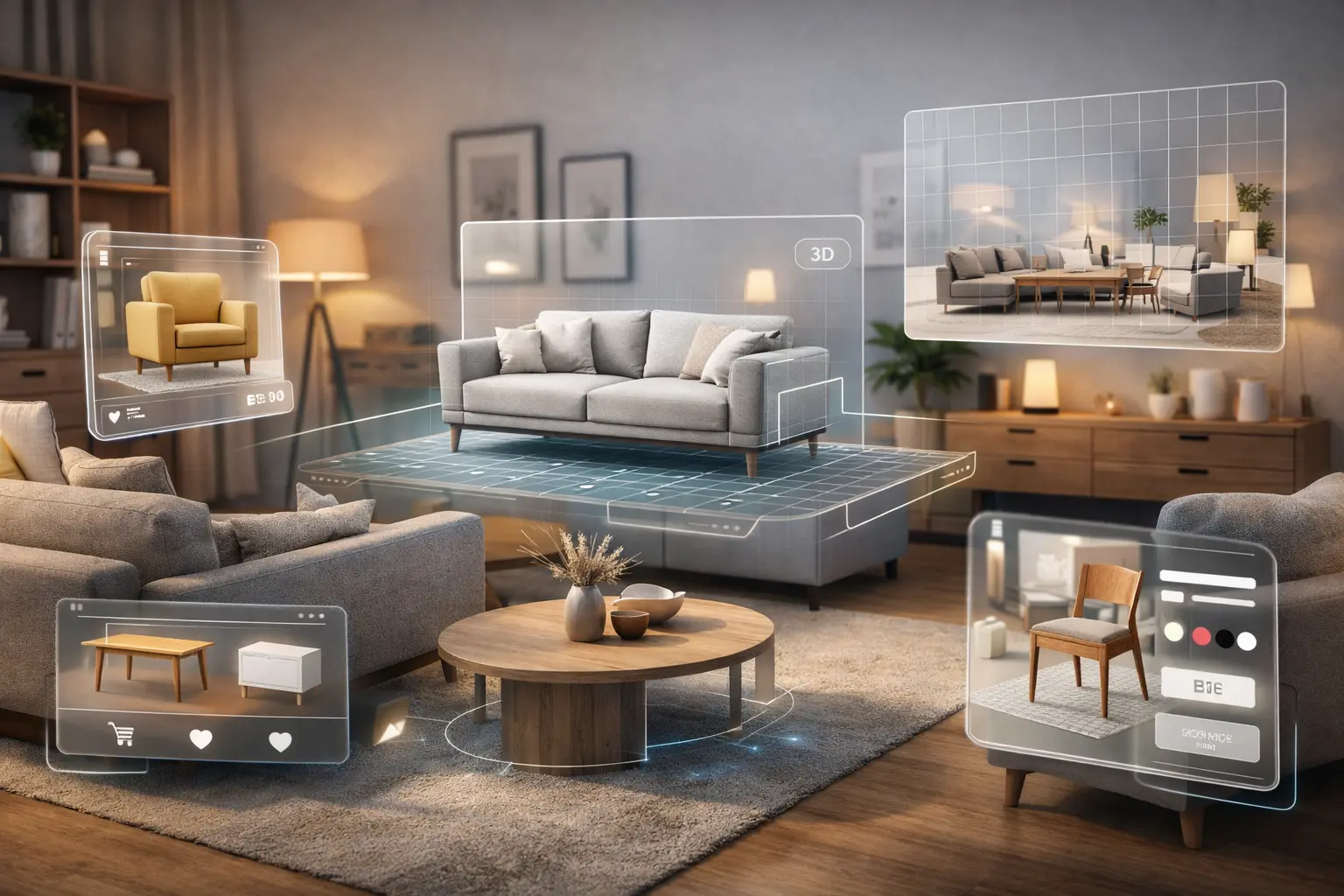
- Advanced product visualization, including 3D views and AR-based room previews
- Integrated logistics intelligence for bulky-item shipping and warehouse mapping
- Flexible monetization engines supporting D2C, B2B, and marketplace models
Modern IKEA clones also integrate AI automation, blockchain-backed transparency, and cross-platform synchronization. AI helps personalize furniture recommendations based on room size, browsing behavior, and budget. Blockchain improves supplier transparency and material traceability, which is increasingly important for sustainability-focused buyers. Cross-platform integration ensures a consistent experience across web, mobile apps, kiosks, and in-store tablets.
Modern IKEA Clone Differentiators
| Capability Area | Basic Furniture Clone | Modern IKEA Clone 2025 |
|---|---|---|
| Page Load Speed | 1–2 seconds | Under 300ms globally |
| Product Display | Static images | 3D + AR visualization |
| Scalability | Limited SKUs | 100,000+ SKUs supported |
| Uptime | 98% | 99.9% SLA-ready |
| Monetization | Single pricing | Multi-tier, B2B, bundles |
| Automation | Manual workflows | AI-driven operations |
This is exactly where Miracuves Clone Solutions stand apart. Instead of delivering a surface-level furniture store, Miracuves engineers IKEA-style platforms with enterprise-grade infrastructure, future-ready features, and performance benchmarks aligned with global commerce leaders.
Essential Features Every IKEA Clone Must Have
Building an IKEA-style platform in 2025 means engineering a multi-layered system, not just an eCommerce storefront. The most successful furniture platforms are designed around three tightly connected experiences: the customer side, the admin control layer, and the supplier or fulfillment side. When these layers work together intelligently, the platform scales smoothly even under heavy operational load.
On the user side, experience drives conversion and retention. Furniture buying involves higher consideration than typical retail, so the platform must reduce uncertainty at every step. Smooth navigation, intelligent filters, and immersive product previews help users move confidently from browsing to purchase. Personalization powered by AI plays a critical role, recommending products based on room size, previous views, budgets, and lifestyle preferences.
From the admin panel perspective, control and visibility are everything. Founders need real-time dashboards to monitor inventory movement, warehouse utilization, order fulfillment timelines, and regional demand patterns. Automation reduces dependency on manual operations, allowing lean teams to manage large catalogs efficiently. In 2025, advanced analytics and AI-driven demand forecasting are no longer premium add-ons; they are core requirements for profitable scaling.
The service provider or vendor layer is equally important in an IKEA clone ecosystem. Whether the platform operates as a D2C brand or a marketplace with multiple suppliers, vendors need transparent tools to manage listings, pricing, availability, and logistics. Real-time earnings dashboards, stock alerts, and AI recommendations help suppliers optimize performance while keeping the platform healthy.
Core Functional Layers Breakdown
User Experience Layer
- Advanced search and category filtering for large catalogs
- 3D product views and room-based visualization logic
- AI-powered recommendations and wish-list automation
- Seamless checkout with regional pricing and tax logic
- Retention tools such as saved rooms, collections, and alerts
Admin Control Layer
- Centralized product and inventory management
- Automated order routing based on location and availability
- Real-time analytics for sales, margins, and logistics
- Role-based access control and fraud prevention
- AI-driven demand forecasting and pricing insights
Vendor / Fulfillment Layer
- Supplier dashboards with performance metrics
- Real-time inventory sync across warehouses
- Earnings tracking and payout automation
- Smart restocking alerts and demand suggestions
- Logistics and delivery coordination tools
Advanced 2025-Ready Features
Modern IKEA clones differentiate themselves through innovation. AI-based personalization tailors the shopping journey for each user. AR onboarding allows customers to visualize furniture in real rooms before purchase. Blockchain verification adds transparency to sourcing, materials, and sustainability claims, which significantly boosts buyer trust in premium and eco-friendly segments.
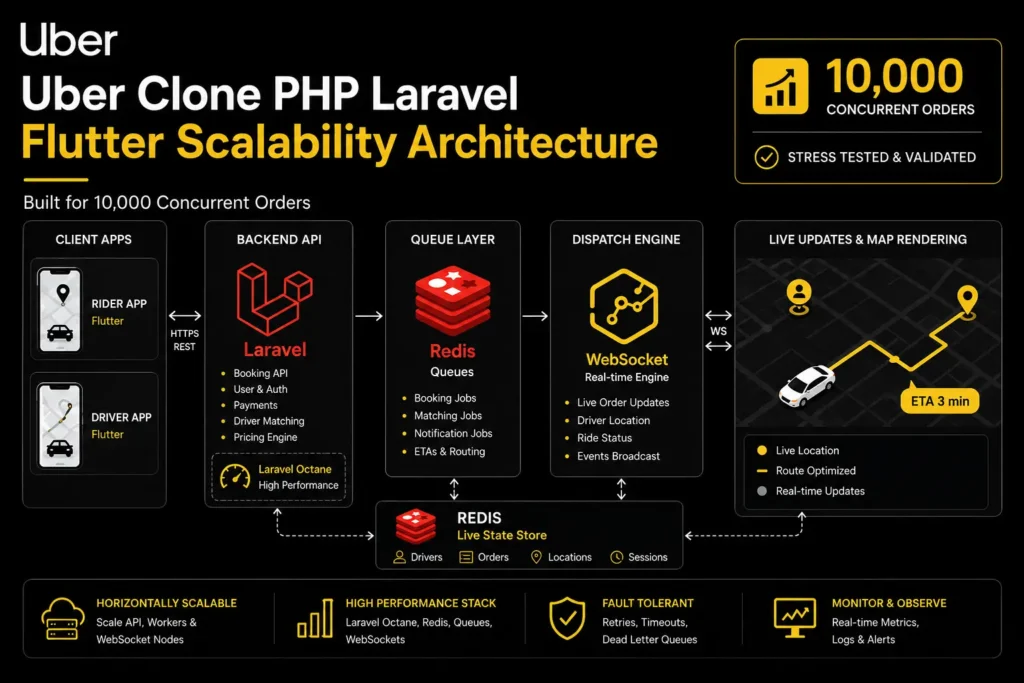
From a technical standpoint, the architecture must support horizontal scalability, handle millions of concurrent sessions, and integrate smoothly with third-party systems such as ERP tools, payment gateways, shipping partners, and analytics platforms. Security layers must include encrypted transactions, secure authentication, and compliance with global data protection standards.
Feature Tier Comparison
| Feature Scope | Basic | Professional | Enterprise |
|---|---|---|---|
| Product Catalog | Limited SKUs | Large catalogs | Unlimited SKUs |
| Visualization | Static images | 3D views | 3D + AR previews |
| Personalization | Rule-based | AI suggestions | AI + behavioral learning |
| Analytics | Basic reports | Advanced dashboards | Predictive analytics |
| Scalability | Regional | Multi-region | Global-ready |
Miracuves Clone Solutions implement all these layers as part of a unified framework. Instead of stitching together plugins and external tools, Miracuves delivers a cohesive IKEA clone system where performance, scalability, and advanced features are built into the core architecture from day one.
Cost Factors & Pricing Breakdown
IKEA-Like Furniture & Home Retail Platform Development — Market Price
| Development Level | Inclusions | Estimated Market Price (USD) |
|---|---|---|
| 1. Basic Furniture Retail MVP | Product listings, categories, cart & checkout, user accounts, order tracking, basic inventory management, and a simple admin panel. | $50,000 |
| 2. Mid-Level Home Retail Platform | Web + mobile UI/UX, product variants (size, color, material), room collections, wishlists, reviews & ratings, promotions, notifications, and analytics dashboards. | $120,000 |
| 3. Advanced IKEA-Level Platform | Modular product configuration, room-planner tools, AR preview, multi-warehouse fulfillment, returns & exchanges, loyalty programs, and enterprise-grade scalability. | $240,000+ |
These figures represent the typical global investment required to build a large-scale furniture and home retail platform similar to IKEA — combining catalog depth, logistics complexity, and experience-driven shopping.
Miracuves Pricing for an IKEA-Like Platform
Miracuves Price: Starts at $15,999
This package includes a complete furniture & home retail foundation with product & variant management, collections & merchandising tools, promotions, secure checkout flows, order & returns management, customer accounts, and a unified admin backend — designed for high-volume catalogs and scalable fulfillment.
Note:
Includes full source code, backend setup, frontend integration, admin configuration, API connections, and deployment assistance — enabling you to launch a fully branded IKEA-style platform with complete ownership.
Launch Your IKEA-Style Furniture & Home Store — Contact Us Today
Delivery Timeline for an IKEA-Like Platform with Miracuves
The typical delivery timeframe is 30–90 days, depending on:
- Catalog size & product modularity
- Room-planner or AR feature depth
- Warehouse & logistics integrations
- Branding & UI/UX customization
- Payment gateway & shipping integrations
- Performance and scalability requirements
Tech Stack
Built using a JS-based architecture, ideal for modern home retail platforms that require scalable catalogs, interactive product configuration, fast browsing, and high-performance checkout and fulfillment workflows.
Customization & White-Label Option
Building an IKEA-style furniture and home-living ecommerce platform isn’t just about selling products online — it’s about creating an experience-driven ecosystem where design inspiration, functional catalog browsing, and seamless fulfillment work together. A platform inspired by IKEA must support large product catalogs, modular product structures, room-based discovery, and strong omnichannel capabilities while maintaining performance and brand consistency.
Miracuves delivers a fully white-label IKEA-style solution that allows deep customization across product presentation, content merchandising, logistics workflows, and backend commerce operations. Whether you are targeting furniture, home décor, modular storage, or lifestyle products, the platform can be tailored to your brand vision and customer experience goals.
Why Customization Matters
In home and furniture ecommerce, customers don’t just buy products — they buy ideas and solutions. They expect rich visuals, clear dimensions, coordinated collections, and reliable delivery options. Customization ensures your platform supports inspiration-led shopping, complex product configurations, and large-item logistics without friction.
What You Can Customize
Complete UI/UX Personalization
Customize homepage layouts, room inspiration pages, collection showcases, product detail layouts, typography, color palettes, and mobile-optimized designs for a clean, modern shopping experience.
Product Catalog & Modular Structures
Configure complex product hierarchies, modular product components, size and material variants, assembly details, downloadable manuals, and accessory bundling.
Content & Inspiration Integration
Enable room planners, lookbooks, buying guides, curated collections, seasonal campaigns, and editorial content integrated directly into the shopping journey.
Checkout, Payments & Fulfillment
Customize cart behavior, multiple payment options, delivery scheduling, bulky-item shipping rules, click-and-collect logic, returns and exchanges workflows, and real-time order tracking.
Customer Accounts & Engagement
User profiles, order history, wishlists, saved rooms or projects, loyalty programs, personalized recommendations, and notification preferences.
Backend & Integrations
Integrate payment gateways, logistics and fulfillment partners, ERP/CRM systems, inventory and warehouse tools, analytics platforms, and customer support software.
Monetization & Growth Tools
Enable private-label promotion, featured collections, premium delivery services, subscription perks, cross-sell recommendations, and data-driven merchandising insights.
How Miracuves Handles Customization
Miracuves follows a structured customization approach designed for large-scale retail and lifestyle platforms.
- Requirement Understanding
Analysis of your product categories, logistics model, and customer journey expectations. - Planning & Breakdowns
Customization tasks are organized into modular components for efficient execution. - Design & Development
UI/UX enhancements, catalog logic, and content-commerce features are implemented according to your roadmap. - Testing & Quality Assurance
Performance, usability, scalability, and large-catalog testing ensure platform stability. - Deployment
Your fully white-labeled home and furniture ecommerce platform goes live with complete branding and operational configuration.
Real Examples from the Miracuves Portfolio
Miracuves has powered 9k+ successful ecommerce and marketplace deployments, including:
- Furniture and home-living ecommerce platforms with large catalogs
- Lifestyle retail stores with inspiration-driven shopping experiences
- Omnichannel commerce solutions integrating online, warehouse, and delivery systems
- White-label ecommerce platforms focused on design-led customer journeys
These real-world deployments demonstrate how customization transforms an IKEA-style platform into a scalable, experience-centric home and lifestyle ecommerce business.
Launch Strategy & Market Entry for an IKEA-Style Platform
A strong IKEA clone is only half the game. The other half is launching with a clear strategy so you can acquire users, build trust, and create repeat purchases in a category where decision cycles are longer and order values are higher. In 2025, founders who win in furniture commerce treat launch as a staged rollout, not a single app-store moment.
Pre-Launch Checklist That Prevents Costly Mistakes
Before you spend on ads or influencer campaigns, your platform must be stable, measurable, and compliant. Here’s what a smart pre-launch plan looks like:
- Product data readiness: clean attributes, variants, dimensions, materials, assembly info
- Catalog UX testing: search, filters, sorting, recommendations, cross-sell bundles
- Checkout testing: multi-address delivery, taxes, promo codes, refunds, COD rules if used
- Logistics validation: shipping zones, bulky delivery fees, installation scheduling, returns workflow
- Performance testing: load tests for peak traffic events and sale campaigns
- Compliance and policy setup: privacy, refunds, consumer protection, GST/VAT logic where needed
- Analytics foundation: event tracking for funnel steps, cohort retention, LTV and CAC monitoring
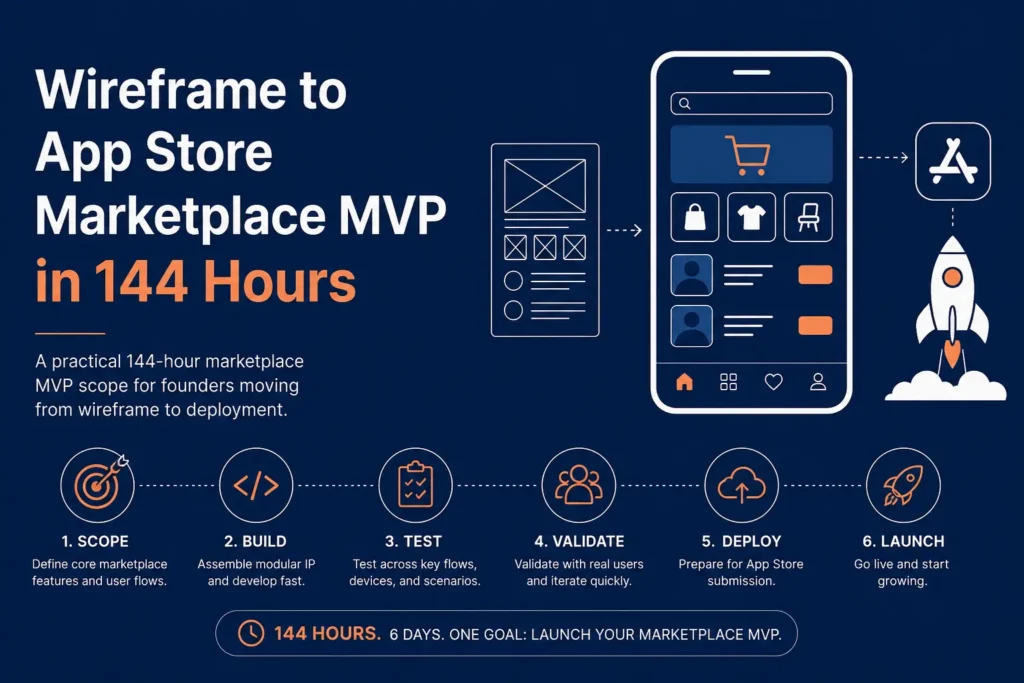
- App store readiness: screenshots, policy compliance, crash-free metrics, support workflows
Regional Entry Strategies That Work in 2025
Different regions reward different go-to-market angles, especially in home and furniture.
Asia tends to scale faster with mobile-first UX, COD support in select markets, and value-driven bundles. Local language UX and WhatsApp-style support workflows improve conversions.
MENA often responds well to premium presentation, fast delivery promises, and influencer-led trust building. Offering assembly and installation as an add-on is a strong differentiator.
Europe is highly sensitive to sustainability and transparency. Material sourcing proof, eco certifications, and robust returns policy messaging can boost trust significantly.
U.S. competition is intense, so niche positioning wins. Focus on a category like apartment furniture, home office setups, or sustainable interiors, then build a repeat purchase engine through collections and seasonal drops.
User Acquisition Frameworks Furniture Startups Use
Because furniture is not a daily purchase, your acquisition strategy must create intent and build confidence. Proven 2025 frameworks include:
- Influencer campaigns built around room makeovers and before-after transformations
- Referral loops tied to discounts, free delivery upgrades, or installation credits
- Retention funnels using wishlists, price-drop alerts, back-in-stock notifications, and curated collections
- Content-led SEO for category discovery: “small living room furniture ideas,” “modular wardrobe designs,” “best sofa under budget”
- Community growth via interior design tips, user-generated room setups, and creator partnerships
Monetization Models Proven in 2025
An IKEA-style clone becomes highly profitable when monetization is designed into the platform, not added later. Top models include:
- Direct-to-consumer margins with bundled accessory upsells
- Marketplace commissions for third-party sellers and brands
- Paid delivery and installation services for bulky items
- Subscription perks such as priority delivery, free returns, exclusive drops
- B2B furnishing contracts for offices, cafes, rentals, and builders
- Financing partnerships to improve conversion on high-ticket items
How Miracuves Supports Launch End-to-End
Miracuves does more than deliver code. The launch support approach focuses on removing friction across operations and growth. This includes server setup guidance, environment configuration, analytics readiness, and a structured first 90-day execution roadmap that aligns with your chosen market entry strategy. You get a platform built for growth experiments, so you can iterate fast and scale what works instead of rebuilding later.
Why Choose Miracuves for Your IKEA Clone
An IKEA-style platform looks simple on the surface, but founders quickly realize the hidden complexity once real customers, real inventory, and real delivery constraints hit the system. The difference between a furniture store that merely runs and a furniture platform that scales profitably comes down to one thing: the technology partner behind it. Miracuves was built for entrepreneurs who want speed without sacrificing stability, and growth without accumulating technical debt.
Miracuves brings execution experience that reduces risk immediately. With 9k+ successful deployments across ecommerce, marketplaces, and high-traffic consumer ecosystems, you are not betting on untested code or first-time architecture decisions. You are launching on frameworks that have already handled production traffic, payment edge cases, catalog scale challenges, and operational pressure. For a furniture business where order values are higher and logistics are heavier, this production readiness becomes a major competitive advantage.
Speed matters even more in 2025 because markets move faster and ad costs rise quickly. Miracuves follows a streamlined delivery model that helps entrepreneurs launch while competitors are still stuck in requirement loops. Most IKEA-style clone builds are delivered within a predictable 30–90 days, based on customization scope, so you can validate demand, onboard suppliers, and begin monetizing without losing momentum.
What founders value most is ownership and future-proofing. Every Miracuves clone is built to support growth cycles, new features, and scaling needs without forcing a rebuild. You also get full source-code ownership, which means your business is never locked into a vendor or restricted from evolving the platform as your strategy changes.
What You Get with Miracuves Clone Solutions
- 9k+ successful deployments across multiple high-growth industries
- 30–90 days delivery timeline aligned with customization scope
- 60 days free post-launch support to stabilize and optimize after release
- Full source-code ownership for long-term control and independence
- Future-proof architecture designed for scaling catalog, users, and regions
- Founder-first execution that focuses on business outcomes, not just features
Real Founder Transformations
A regional home décor startup used a Miracuves furniture clone foundation to launch faster, validate pricing, and scale into multiple categories without rebuilding core systems.
A niche modular furniture brand leveraged advanced catalog filters, smart recommendations, and logistics rules to reduce cart abandonment and increase repeat purchases.
A multi-vendor home marketplace rolled out seller onboarding, centralized inventory workflows, and analytics dashboards to improve supplier performance and maintain consistent customer experience.
Final Thought
Building an IKEA-style platform is not about copying a furniture catalog. It is about understanding the deeper business mechanics that made IKEA successful: standardized operations, immersive product discovery, efficient logistics, and a system designed to scale globally without losing control. In 2025, entrepreneurs who master these fundamentals can compete effectively by focusing on niches, regional demand, and differentiated customer experience.
When founders combine this understanding with the right technology foundation, execution becomes faster and far less risky. A well-built IKEA clone allows you to launch with clarity, test markets quickly, and refine your offerings based on real user behavior instead of assumptions. It turns complex furniture commerce into a repeatable, data-driven operation that grows stronger with every transaction.
Miracuves Clone Solutions empower entrepreneurs to move from idea to execution with confidence. By leveraging a production-ready IKEA clone architecture, you are not starting from zero. You are building on proven systems that support performance, scalability, and long-term ownership. This approach helps founders launch faster, scale smarter, and establish authority in competitive furniture and home décor markets.
Ready to launch your IKEA clone? Get a free consultation and detailed project roadmap from Miracuves — trusted by 1500+ entrepreneurs worldwide.
FAQs
How quickly can Miracuves deploy my IKEA clone?
Miracuves delivers IKEA-style clone platforms within a structured 30–90 days timeline depending on customization scope, feature depth, and regional requirements. This allows founders to launch faster without compromising stability.
What’s included in the Miracuves IKEA clone package?
The package includes a complete furniture commerce framework covering user apps, admin dashboard, vendor or fulfillment modules, analytics, security layers, and scalability-ready infrastructure.
Can I get full source-code access?
Yes. Every Miracuves clone solution is delivered with full source-code ownership, ensuring long-term control, flexibility, and freedom to scale or modify without dependency.
How does Miracuves ensure scalability for large catalogs?
Miracuves uses modular architecture, optimized databases, and cloud-ready infrastructure designed to support 100,000+ SKUs, high traffic loads, and multi-region expansion.
Does Miracuves assist with app store approval?
Yes. Guidance is provided for app store readiness, compliance checks, performance stability, and submission best practices to reduce approval friction.
Is post-launch maintenance included?
Miracuves provides 60 days of free post-launch support, covering bug fixes, performance tuning, and early-stage optimization based on real user behavior.
Can Miracuves integrate custom payment gateways and logistics partners?
Absolutely. The platform supports custom payment gateways, regional shipping providers, warehouse systems, and third-party APIs as per your business model.
What’s the upgrade and update policy?
The clone framework is built to evolve. You can add features, integrations, or scale modules without rebuilding the core system, keeping long-term costs predictable.
How does white-labeling work?
White-labeling removes Miracuves branding entirely and replaces it with your brand identity across apps, dashboards, and system workflows, making the platform fully yours.
What kind of ongoing support can I expect after launch?
Beyond initial support, Miracuves offers optional long-term maintenance, feature upgrades, performance optimization, and scaling assistance aligned with your growth roadmap.
Related Articles
- Best Thumbtack Clone Scripts in 2025: Features & Pricing Compared
- Best UrbanClap Clone Scripts in 2025: Features & Pricing Compared
- Most Profitable Home Services Marketplace Apps to Launch in 2025
- Best Crate & Barrel Clone Scripts 2025: Build a Premium Furniture & Home Decor Marketplace