


You’ve heard the horror stories about data breaches. Travel platforms leaking user information. Payment systems getting hacked. Apps exposing customer location data.
For businesses launching a white-label rental car app, security is not just a technical issue. It is a business survival factor.
In 2026, mobility platforms handle sensitive data such as:
- Driver licenses
- Payment information
- GPS location tracking
- Identity verification documents
According to recent cybersecurity reBusinesses looking toports, over 42% of mobility and travel apps experienced at least one security incident in the past two years. This makes security one of the biggest concerns for startups adopting white-label platforms.
But here is the reality: a well-built white-label rental car app can be just as secure as a custom platform—if it follows the right security architecture and compliance standards.
This guide gives you an honest assessment of white-label rental car app safety, including the biggest risks, security standards in 2026, and practical steps to build a secure platform.
You will also learn how Miracuves helps businesses launch security-first rental car apps designed to meet modern compliance requirements.
Understanding White-Label Rental Car App Security Landscape
What White-Label Security Actually Means
A white-label rental car app is a ready-made software platform that businesses can brand and launch as their own. The core infrastructure, features, and backend systems are developed by a technology provider.
Security in this context means the foundation of the app must already include secure architecture, compliance readiness, and protected data handling mechanisms.
A secure white-label platform typically includes:
- Encrypted databases
- Secure payment gateways
- Identity verification systems
- API protection layers
- Infrastructure-level security
When these elements are properly implemented, a white-label app can achieve enterprise-grade protection without the high cost of custom development.
Common Security Myths vs Reality
Many businesses hesitate to adopt white-label mobility platforms because of security misconceptions.
| Myth | Reality |
|---|---|
| White-label apps are less secure than custom apps | Security depends on architecture, not development method |
| Hackers target white-label platforms more | Attackers target weak systems, regardless of development type |
| Custom development guarantees safety | Poorly built custom apps often contain more vulnerabilities |
| White-label apps share user data across companies | Proper platforms isolate each client’s database |
In reality, many major SaaS platforms and enterprise mobility systems use white-label architecture with strict security standards.
Why Businesses Worry About White-Label Apps
Security concerns are valid because rental car platforms manage highly sensitive data.
Typical data handled by these apps includes:
- User identity documents
- Driving license information
- Payment details
- GPS tracking data
- Trip history
- Vehicle access permissions
If this information is compromised, the consequences can include financial fraud, identity theft, and legal liability.
Because of these risks, regulators and cybersecurity experts recommend strict security frameworks for mobility apps.
Current Threat Landscape for Rental Car Platforms
Mobility apps face several modern cybersecurity threats in 2026.
Common attack vectors include:
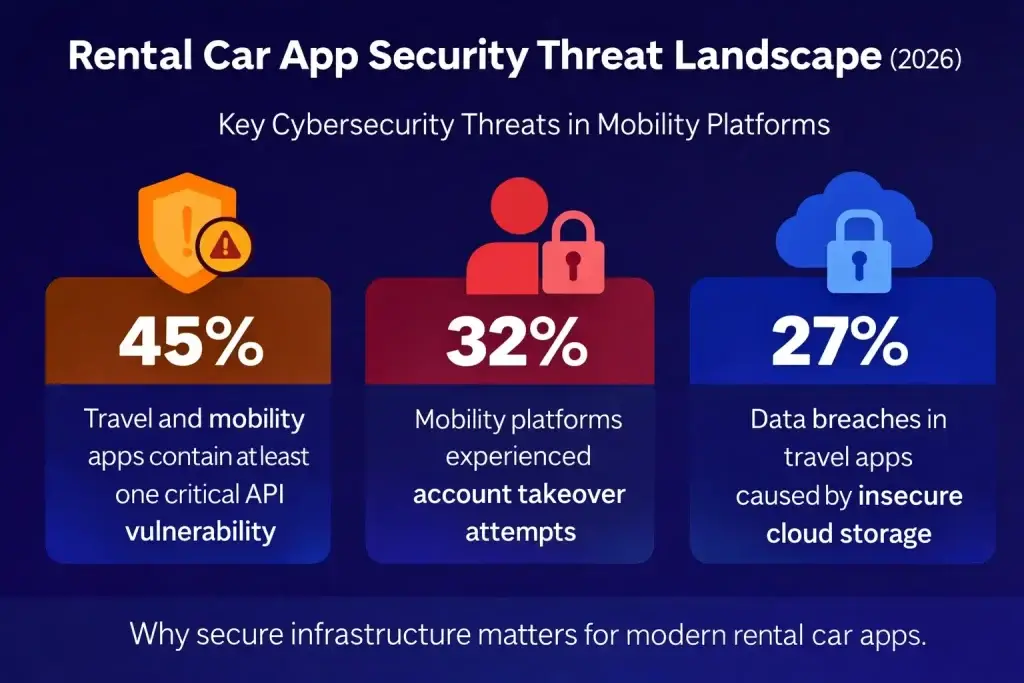
- API exploitation
- Payment fraud attempts
- Account takeover attacks
- Location data breaches
- Cloud server misconfigurations
- Third-party integration vulnerabilities
These threats make security architecture a top priority when choosing a white-label provider.
Security Standards in 2026
In 2026, mobility platforms are expected to meet multiple security frameworks to ensure safe data handling.
Important standards include:
- ISO 27001 information security framework
- SOC 2 Type II auditing
- GDPR data protection regulations
- PCI DSS payment protection standards
- Secure authentication protocols
Platforms that follow these standards reduce the risk of breaches and ensure compliance with global regulations.
Real-World Security Incidents in Mobility Apps
Several high-profile cybersecurity incidents have increased awareness around app safety.
Examples include:
- Ride-sharing platforms exposing user trip data due to insecure APIs
- Travel apps leaking millions of user records because of cloud misconfiguration
- Rental platforms suffering payment fraud due to weak authentication systems
These incidents highlight a key lesson: security failures usually come from poor implementation, not from the white-label model itself.
Businesses launching a rental car platform must therefore focus on security-first development and trusted technology providers.
Key Security Risks & How to Identify Them
Launching a rental car app involves handling sensitive customer information and financial transactions. If security is weak, the risks can quickly turn into legal, financial, and reputational damage.
Below are the most critical risk areas businesses must evaluate before launching a white-label rental car app.
Data Protection & Privacy Risks
Rental car apps collect large amounts of personal and financial data. Protecting this information is one of the most important security responsibilities.
User Personal Information
Most rental platforms require identity verification. This can include:
- Full name and address
- Driving license details
- Identity verification documents
- Contact information
If databases are not properly secured, attackers can access this information through data breaches or unauthorized API access.
Payment Data Security
Rental car apps process payments for bookings, deposits, and penalties.
Security risks include:
- Credit card data theft
- Payment gateway vulnerabilities
- Fraudulent transactions
To prevent these risks, the platform must comply with PCI DSS payment security standards and use encrypted payment processing.
Location Tracking Concerns
Many rental car apps track vehicle location through GPS.
This introduces privacy risks such as:
- Exposure of user travel patterns
- Unauthorized vehicle tracking
- Data misuse by attackers
Location data must be stored securely and only accessible through authorized systems.
GDPR and Global Data Compliance
In 2026, privacy regulations are stricter than ever. Rental platforms must comply with laws such as:
- GDPR in Europe
- CCPA and CPRA in the United States
- DPDP Act in India
Failure to follow these regulations can result in millions in fines and legal penalties.
Technical Vulnerabilities
Even a well-designed rental car app can become unsafe if technical security is ignored.
Code Quality Issues
Poorly written code can introduce vulnerabilities like:
- SQL injection
- Cross-site scripting (XSS)
- Authentication bypass
These vulnerabilities allow attackers to gain unauthorized access to systems.
Server Security Gaps
Cloud infrastructure misconfiguration is one of the leading causes of data breaches.
Common server risks include:
- Open databases
- Weak firewall rules
- Improper access control
Secure hosting and infrastructure hardening are critical.
API Vulnerabilities
Rental apps rely heavily on APIs to connect services such as:
- Payment systems
- GPS tracking
- identity verification
- vehicle management systems
If APIs are not protected with authentication and rate limiting, attackers can exploit them to access sensitive data.
Third-Party Integration Risks
Many mobility platforms integrate with external services.
Examples include:
- Payment gateways
- Mapping services
- identity verification providers
- insurance platforms
If these integrations are not properly secured, vulnerabilities from third-party systems can affect the entire app.
Business Risks
Security failures impact more than just technology. They directly affect the business itself.
Legal Liability
A data breach may expose customer personal data. Businesses can face lawsuits and regulatory investigations.
Reputation Damage
Trust is critical in rental services. A security incident can cause users to lose confidence in the platform.
Financial Losses
Cyber incidents can lead to:
- fraud losses
- regulatory fines
- legal costs
- recovery expenses
Regulatory Penalties
Governments worldwide have introduced strict data protection regulations. Non-compliance can result in penalties reaching millions of dollars depending on the jurisdiction.
Security Risk Assessment Checklist
Businesses evaluating a rental car app should verify the following security points.
| Security Area | What to Check |
|---|---|
| Data Protection | Encryption of user and vehicle data |
| Payment Security | PCI DSS compliant payment processing |
| Authentication | Secure login with 2FA or OAuth |
| Infrastructure | Secure cloud hosting with firewall protection |
| API Security | Authenticated APIs with rate limiting |
| Compliance | GDPR, CCPA, and regional data laws |
| Monitoring | Real-time security monitoring systems |
If these elements are missing, the platform may expose your business to serious cybersecurity risks.
Security Standards Your White-Label Rental Car App Must Meet
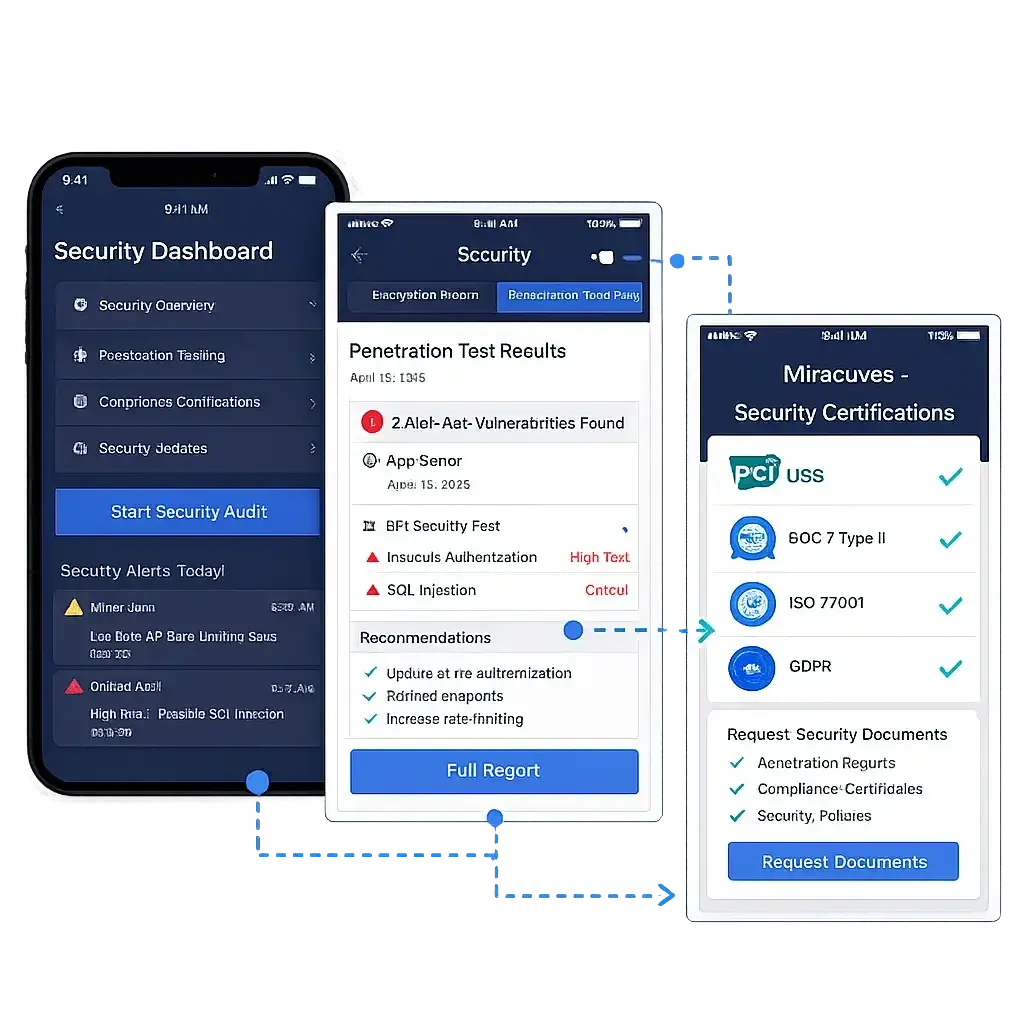
Security standards are the backbone of any safe mobility platform. A rental car app must follow globally recognized compliance frameworks to protect user data, financial transactions, and operational systems.
Without these standards, the platform becomes vulnerable to cyberattacks, legal penalties, and trust issues.
Essential Security Certifications
A reliable white-label rental car app provider should meet the following certifications and regulatory frameworks.
ISO 27001 Compliance
ISO 27001 is an international standard for information security management systems (ISMS).
It ensures that the platform follows structured processes for:
- Risk management
- Data protection
- Security monitoring
- Access control
Companies that follow ISO 27001 demonstrate that their infrastructure is designed to manage and reduce cybersecurity risks.
SOC 2 Type II
SOC 2 Type II evaluates how well a platform protects customer data over time.
The certification focuses on five trust principles:
- Security
- Availability
- Processing integrity
- Confidentiality
- Privacy
For mobility apps that manage user identity, location data, and payments, SOC 2 compliance is extremely important.
GDPR Compliance
The General Data Protection Regulation (GDPR) applies to businesses handling data from users in the European Union.
Key requirements include:
- User consent for data collection
- Transparent privacy policies
- Data deletion rights
- Secure data storage
Failure to comply can result in penalties up to 4% of annual global revenue.
HIPAA Compliance (If Applicable)
HIPAA may apply when rental platforms integrate with healthcare transport services or medical mobility solutions.
This regulation protects sensitive medical data and requires:
- Encrypted data storage
- Strict access controls
- Secure data transmission
PCI DSS for Payments
Any rental car app handling credit or debit card transactions must follow PCI DSS (Payment Card Industry Data Security Standard).
This standard requires:
- Encrypted payment processing
- Secure card data storage
- Continuous vulnerability monitoring
- Network security controls
PCI compliance significantly reduces the risk of payment fraud and financial data breaches.
Technical Security Requirements
Beyond certifications, strong technical safeguards must be built directly into the rental car app architecture.
End-to-End Encryption
Sensitive data such as user identities, payments, and location information must be protected using encryption during both:
- Data transmission
- Data storage
Encryption ensures that even if attackers intercept information, they cannot read it.
Secure Authentication Systems
Weak login systems are a common entry point for cyberattacks.
A secure rental car app should support:
- Two-factor authentication (2FA)
- OAuth-based login
- Biometric authentication options
- Strong password policies
These methods significantly reduce the risk of account takeover.
Regular Security Audits
Security audits help identify vulnerabilities before attackers exploit them.
A reliable provider should conduct:
- Internal security reviews
- Third-party cybersecurity audits
- vulnerability assessments
These audits ensure the system remains secure as technology evolves.
Penetration Testing
Penetration testing simulates real-world cyberattacks to identify weaknesses.
Testing typically evaluates:
- API security
- authentication systems
- server infrastructure
- mobile application security
Most enterprise-grade platforms conduct penetration testing multiple times per year.
SSL Certificates
SSL certificates protect data during transmission between users and servers.
Benefits include:
- Encrypted communication
- protection against data interception
- improved user trust
Every rental car app should operate under HTTPS with modern TLS protocols.
Secure API Design
APIs connect multiple systems within the platform. Poorly secured APIs are one of the most common causes of app breaches.
Secure API architecture should include:
- token-based authentication
- request validation
- rate limiting
- monitoring for suspicious activity
Security Standards Comparison Table
| Security Standard | Purpose | Why It Matters for Rental Car Apps |
|---|---|---|
| ISO 27001 | Information security management | Protects infrastructure and internal data systems |
| SOC 2 Type II | Data protection auditing | Ensures ongoing security monitoring |
| GDPR | Data privacy regulation | Protects user personal information |
| PCI DSS | Payment security | Prevents financial fraud and card theft |
| TLS/SSL | Secure communication | Encrypts data transmission |
| Penetration Testing | vulnerability detection | Identifies system weaknesses |
Following these standards significantly improves the safety of a white-label rental car app and reduces the risk of cyber incidents.
Businesses should always verify that their technology provider follows recognized compliance frameworks and modern security practices.
Red Flags: How to Spot Unsafe White-Label Providers
Choosing the wrong technology provider can expose your rental car app to serious security risks. Many platforms claim to be secure, but lack the certifications, infrastructure, and security processes required in 2026.
Identifying warning signs early can prevent costly mistakes and protect your users’ data.
Warning Signs of Unsafe Providers
Businesses should be cautious if a white-label provider shows any of the following red flags.
No Security Documentation
A trustworthy provider should offer clear documentation about their security practices.
This typically includes:
- Security architecture overview
- Data protection policies
- compliance certifications
- Infrastructure security details
If a provider cannot explain how user data is protected, it is a major risk.
Cheap Pricing Without Explanation
Extremely low pricing often indicates shortcuts in development and security.
Security infrastructure requires investment in:
- encrypted servers
- cybersecurity audits
- secure payment systems
- compliance frameworks
If pricing seems unrealistically low, security measures may be missing.
No Compliance Certifications
Serious technology providers follow recognized standards such as:
- ISO 27001
- SOC 2 Type II
- PCI DSS
A provider without any certification or compliance framework may not have structured security controls.
Outdated Technology Stack
Old frameworks and unsupported technologies create vulnerabilities.
Signs of outdated systems include:
- lack of modern encryption
- unsupported server software
- outdated mobile development frameworks
Modern platforms must use updated infrastructure to defend against evolving cyber threats.
Poor Code Quality
Weak code structure increases the risk of vulnerabilities.
Typical problems include:
- insecure authentication logic
- lack of input validation
- poorly designed APIs
Professional providers maintain clean, reviewed, and tested codebases.
No Security Updates Policy
Cybersecurity threats evolve constantly.
A reliable provider should offer:
- regular security patches
- system updates
- vulnerability monitoring
Without ongoing updates, the app becomes increasingly vulnerable over time.
Lack of Data Backup Systems
Data loss can occur due to cyberattacks, hardware failure, or human error.
Secure platforms must provide:
- automated backups
- disaster recovery systems
- secure off-site storage
Without backup systems, businesses risk losing critical data.
No Cybersecurity Insurance
Many enterprise technology providers carry cybersecurity insurance to protect clients against unexpected incidents.
Insurance coverage often includes:
- breach response support
- financial protection
- legal assistance
The absence of insurance coverage may indicate limited security maturity.
Evaluation Checklist for Businesses
Before choosing a white-label rental car app provider, businesses should perform a detailed evaluation.
Questions to Ask Providers
- What security certifications does your platform follow?
- How is customer data encrypted and stored?
- Do you conduct regular penetration testing?
- How often are security updates released?
- What incident response procedures are in place?
Documents to Request
Businesses should request proof of security and compliance.
Important documents include:
- security architecture documentation
- compliance certifications
- penetration testing reports
- data protection policies
- disaster recovery plans
These documents help verify whether the platform follows proper security practices.
Testing Procedures
Before launching a rental car app, businesses should perform independent testing.
Recommended tests include:
- vulnerability scanning
- penetration testing
- API security analysis
- load and infrastructure testing
These tests reveal weaknesses that need to be fixed before launch.
Due Diligence Steps
A structured evaluation process helps ensure the platform is safe.
Key due diligence steps include:
- Verify security certifications
- Review technical documentation
- Evaluate infrastructure security
- Test the platform’s vulnerabilities
- Confirm update and monitoring policies
Careful evaluation reduces the chances of selecting an unsafe provider.
Best Practices for Secure White-Label Rental Car App Implementation
Launching a secure rental car app requires more than selecting the right platform. Businesses must follow structured security practices before and after the app goes live.
Proper implementation reduces the chances of data breaches, fraud, and system vulnerabilities.
Pre-Launch Security Preparation
Security planning should begin before the platform is launched. Early preparation helps identify risks and fix weaknesses.
Security Audit Process
A comprehensive security audit should be performed before deployment.
This audit evaluates:
- server infrastructure security
- API protection mechanisms
- authentication systems
- database protection
Third-party cybersecurity firms often conduct independent audits to ensure unbiased testing.
Code Review Requirements
Code review helps detect vulnerabilities that may exist in the application logic.
Professional development teams perform:
- manual code reviews
- automated vulnerability scans
- security-focused testing
This process helps prevent issues such as SQL injection, insecure authentication, and data exposure.
Infrastructure Hardening
The cloud infrastructure hosting the rental car app must be hardened against attacks.
Security measures include:
- firewall configuration
- restricted server access
- secure cloud storage
- network monitoring systems
Infrastructure hardening protects backend systems from unauthorized access.
Compliance Verification
Before launch, the platform must meet required regulatory standards.
This includes verifying compliance with:
- GDPR data protection rules
- PCI DSS payment security
- regional data privacy laws
Compliance checks help businesses avoid legal risks and penalties.
Staff Training Programs
Human error is one of the leading causes of cybersecurity incidents.
Businesses launching a rental car app should train staff on:
- secure password practices
- phishing attack prevention
- proper data handling procedures
Security awareness programs reduce internal risks.
Post-Launch Security Monitoring
Security responsibilities continue after the app is launched. Continuous monitoring is necessary to detect threats early.
Continuous Security Monitoring
Modern platforms use monitoring tools to track suspicious activity.
Monitoring systems can detect:
- unusual login attempts
- abnormal API traffic
- unauthorized system access
Real-time alerts allow teams to respond quickly.
Regular Updates and Security Patches
Software vulnerabilities are discovered regularly. Platforms must release security patches to fix them.
Regular updates help maintain:
- secure system architecture
- compatibility with new technologies
- protection against emerging threats
Ignoring updates can leave systems exposed to attacks.
Incident Response Planning
Even well-protected systems must prepare for potential incidents.
An incident response plan should include:
- breach detection procedures
- containment strategies
- user notification protocols
- recovery processes
Prepared response plans reduce damage and downtime.
User Data Management
Sensitive user information should be managed carefully.
Best practices include:
- limiting access to sensitive data
- encrypting stored information
- defining data retention policies
Secure data management helps meet privacy regulations.
Backup and Recovery Systems
Backup systems protect businesses from data loss caused by cyberattacks or system failures.
A reliable backup strategy includes:
- automated backups
- encrypted storage
- rapid restoration capabilities
These systems ensure business continuity during emergencies.
Security Implementation Timeline
| Phase | Key Security Actions |
|---|---|
| Planning Stage | Security architecture design and risk assessment |
| Development Stage | Secure coding and vulnerability testing |
| Pre-Launch | Security audit and compliance verification |
| Launch | Infrastructure monitoring and access control |
| Post-Launch | Continuous monitoring, updates, and security testing |
Following these practices helps ensure that a rental car app remains secure throughout its lifecycle.
Legal & Compliance Considerations
Legal compliance is a critical part of operating a rental car app. Businesses must follow regional data protection laws, financial regulations, and consumer protection policies.
Ignoring legal requirements can result in heavy fines, platform shutdowns, and long-term reputation damage.
In 2026, regulators worldwide are tightening rules around data privacy, digital payments, and user consent for mobility platforms.
Regulatory Requirements
Different regions have specific data protection and digital service laws that rental car apps must follow.
Data Protection Laws by Region
Rental car apps process personal and financial data. Because of this, they must comply with global privacy regulations.
| Region | Key Regulation | Purpose |
|---|---|---|
| European Union | GDPR | Protects personal data and privacy |
| United States | CCPA / CPRA | Consumer data protection rights |
| India | Digital Personal Data Protection Act | Governs personal data processing |
| United Kingdom | UK GDPR | Regulates personal data handling |
| Canada | PIPEDA | Protects consumer information |
Failure to comply with these regulations can lead to penalties that reach millions of dollars depending on the severity of the violation.
Industry-Specific Regulations
Mobility and transportation platforms must also follow industry rules.
These may include:
- vehicle rental regulations
- transportation licensing requirements
- digital payment compliance rules
- identity verification requirements
Local transportation authorities often require platforms to maintain clear documentation of driver and vehicle information.x
User Consent Management
Modern privacy laws require businesses to obtain user consent before collecting or processing personal data.
A compliant rental car app must include:
- consent collection during registration
- clear privacy preferences
- options for users to withdraw consent
Transparent consent systems help businesses meet global privacy requirements.
Privacy Policy Requirements
Every rental car app must publish a detailed privacy policy.
The policy should explain:
- what data is collected
- how data is used
- who can access the data
- how long data is stored
Clear policies improve transparency and user trust.
Terms of Service Essentials
Terms of service protect both the business and the user.
A rental car platform should clearly define:
- booking policies
- payment and refund rules
- driver responsibilities
- vehicle usage conditions
- liability limitations
These terms reduce legal disputes and clarify service expectations.
Liability Protection
Beyond compliance, businesses must protect themselves from potential legal risks related to data breaches or platform misuse.
Insurance Requirements
Many mobility platforms maintain cybersecurity insurance.
This type of insurance can cover:
- data breach costs
- legal defense expenses
- compensation claims
- incident response services
Insurance acts as an additional safety layer for businesses operating digital platforms.
Legal Disclaimers
Legal disclaimers help define the platform’s responsibilities and limitations.
Common disclaimers include:
- liability limitations for service disruptions
- disclaimers related to third-party integrations
- conditions for vehicle usage
Clear disclaimers reduce exposure to legal claims.
User Agreements
User agreements must clearly explain the relationship between the platform and the customer.
Key elements include:
- user responsibilities
- account security expectations
- payment obligations
- acceptable platform usage
Well-structured agreements help prevent disputes.
Incident Reporting Protocols
If a cybersecurity incident occurs, businesses must follow defined reporting procedures.
These may include:
- notifying affected users
- informing regulators
- documenting the incident
- implementing corrective measures
In some regions, breaches must be reported within 72 hours under data protection laws.
Regulatory Compliance Monitoring
Compliance is not a one-time process. Laws evolve regularly.
Businesses should monitor:
- changes in privacy laws
- new cybersecurity regulations
- transportation industry updates
Regular legal reviews help keep the platform compliant.
Compliance Checklist by Region
| Compliance Area | Key Requirement |
|---|---|
| Data Protection | Follow GDPR, CCPA, or regional privacy laws |
| Payments | PCI DSS compliant payment processing |
| User Consent | Transparent consent and opt-out options |
| Legal Policies | Updated privacy policy and terms of service |
| Incident Reporting | Defined breach reporting procedures |
| Insurance | Cybersecurity and liability insurance coverage |
Following proper legal and compliance practices ensures that a rental car app operates safely and responsibly in global markets.
Why Miracuves White-Label Rental Car App is Your Safest Choice
Security should never be an afterthought when launching a rental car app. Businesses need a platform that is built with strong protection mechanisms from the start.
Miracuves focuses on security-first architecture, ensuring that mobility platforms meet modern cybersecurity and compliance standards.
Enterprise-Grade Security Architecture
Miracuves builds rental car apps using secure infrastructure designed to handle sensitive data such as identity verification, payments, and location tracking.
Key infrastructure protections include:
- encrypted databases
- secure cloud hosting environments
- protected API architecture
- strict access control systems
This architecture helps prevent unauthorized access and reduces the risk of data exposure.
Regular Security Audits and Compliance Monitoring
Security systems must be tested continuously. Miracuves performs regular security reviews to identify vulnerabilities before they become threats.
Security processes include:
- vulnerability assessments
- penetration testing
- infrastructure monitoring
- security compliance verification
These audits ensure that the platform maintains high security standards.
GDPR and Global Privacy Compliance
Data protection regulations are stricter in 2026. Miracuves platforms are designed to align with global privacy frameworks.
Built-in compliance features include:
- consent management systems
- secure user data storage
- privacy policy integration
- user data access and deletion controls
These capabilities help businesses comply with global privacy regulations.
24/7 Security Monitoring
Continuous monitoring helps detect suspicious activities early.
Miracuves platforms support monitoring systems that track:
- unusual login attempts
- abnormal API traffic
- suspicious account behavior
- potential fraud activities
Real-time alerts allow quick response to potential threats.
Encrypted Data Transmission
All data transmitted through the platform is protected using modern encryption protocols.
Encryption protects:
- user identity data
- payment information
- GPS location data
- communication between servers and mobile devices
This ensures sensitive information remains secure during transmission.
Secure Payment Processing
Rental car apps require safe payment systems. Miracuves integrates trusted payment gateways designed to meet PCI DSS standards.
Security measures include:
- encrypted payment transactions
- fraud detection mechanisms
- secure token-based payment systems
These features reduce the risk of financial fraud.
Regular Security Updates
Cybersecurity threats evolve constantly. Miracuves provides regular updates to maintain platform security.
Updates typically include:
- vulnerability fixes
- system improvements
- compatibility upgrades
- security enhancements
Consistent updates help maintain long-term platform safety.
Cybersecurity Insurance Coverage
Miracuves solutions include cybersecurity protection frameworks designed to help businesses manage potential risks.
Security preparation includes:
- incident response planning
- data recovery systems
- security incident documentation procedures
These measures provide an additional layer of protection for businesses operating rental platforms.
Final Thought
Security should never be compromised when launching a mobility platform.
Start Your Secure Rental Car App with Miracuves, that 9k+ successful projects delivered globally and zero major security breaches, Miracuves helps businesses launch reliable and secure digital platforms. Launching a rental car app in 2026 offers major opportunities, but it also comes with serious security responsibilities.
These platforms manage sensitive information such as user identity, payment details, and real-time location data. Without strong protection systems, a single vulnerability can lead to financial losses, legal penalties, and damaged user trust.Are you looking to build a safe rental car platform can Talk to our team to evaluate risks and understand how Miracuves ensures secure, compliant app deployment.
FAQs
1. How secure is a white-label rental car app compared to custom development?
A well-built white-label rental car app can be just as secure as custom development when it follows standards like ISO 27001, SOC 2, and PCI DSS. Security depends on architecture and compliance, not development type.
2. What happens if there is a security breach?
A proper incident response plan should include immediate threat containment, user notification, system recovery, and regulatory reporting according to regional laws.
3. Who is responsible for security updates?
The technology provider manages platform-level security updates, while the business operating the app must ensure operational security practices and monitoring.
4. How is user data protected in rental car apps?
User data is protected through encryption, secure cloud infrastructure, access control systems, and compliance with global privacy regulations.
5. What compliance certifications should I look for?
Important certifications include:
ISO 27001
SOC 2 Type II
PCI DSS
GDPR compliance
6. Can white-label rental car apps meet enterprise security standards?
Yes. Platforms built with enterprise infrastructure, encrypted APIs, and regular security audits can meet enterprise-level security requirements.
7. How often should security audits be conducted?
Most secure platforms conduct security audits and penetration testing at least once or twice per year.
8. What is included in the Miracuves security package?
Miracuves security systems typically include:
encrypted infrastructure
secure payment integrations
regular security updates
compliance-ready architecture
continuous monitoring
9. How should businesses manage security across different countries?
Businesses must follow regional privacy laws, data storage rules, and compliance frameworks relevant to each market.
10. What insurance is recommended for app security?
Mobility platforms often use cybersecurity insurance and liability coverage to protect against breach-related financial risks.
Mobility platforms often use cybersecurity insurance and liability coverage to protect against breach-related financial risks.
Related Articles