



You’ve heard the horror stories.
Customer data leaks. Payment information exposed. Entire marketplaces shut down because of one security mistake.
If you’re planning to launch a white-label AliExpress app, one question probably keeps coming back:
“Is this app actually safe?”
In 2026, security is no longer a technical detail—it is a business survival factor. Marketplaces like AliExpress-style apps handle massive volumes of user data, seller information, payment transactions, logistics data, and cross-border compliance requirements. A single weak point can lead to legal trouble, revenue loss, and permanent brand damage.
This concern is valid. Many businesses hesitate to choose white-label apps because they fear poor code quality, hidden vulnerabilities, or lack of compliance with global data protection laws.
This guide gives you an honest, real-world security assessment of white-label AliExpress apps in 2026. No hype. No fear-mongering. Just clear risks, real standards, and practical ways to protect your platform.
By the end, you’ll understand:
- Where security risks actually exist
- What standards a safe AliExpress-style app must meet
- How to identify secure providers
- Why security-first platforms like Miracuves are trusted for large-scale marketplace apps
Read more : – The Genius Behind AliExpress App Marketing Strategy
Understanding White-Label AliExpress App Security Landscape
What “White-Label App Security” Actually Means
White-label app security refers to the built-in protections, infrastructure safeguards, and compliance readiness of an app that is licensed, customized, and launched under your brand.
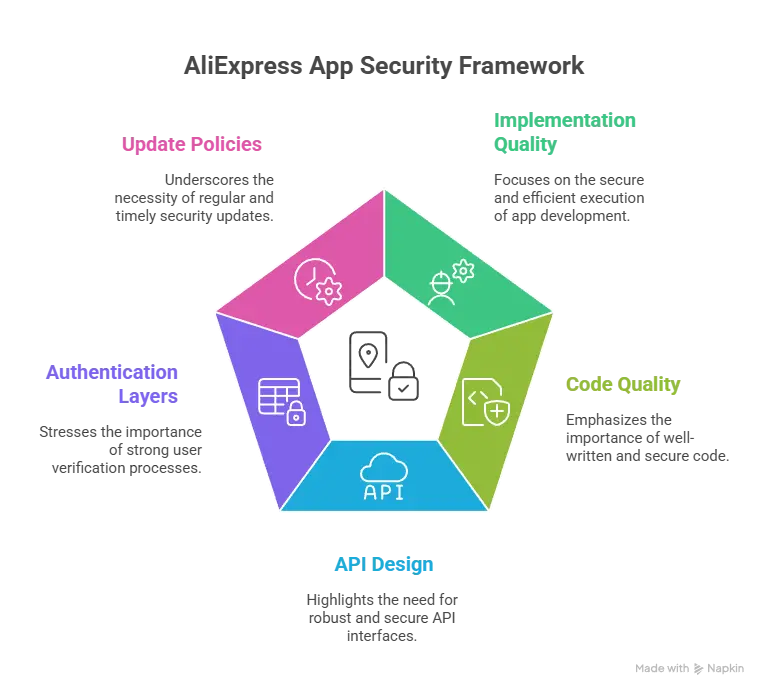
In a white-label AliExpress app, security is not just about the frontend users see. It includes:
- How user data is stored and encrypted
- How seller dashboards are protected
- How payments and refunds are processed
- How APIs communicate with logistics, vendors, and third-party services
In 2026, true white-label security means the app is enterprise-ready from day one, not “secured later.
Why Businesses Worry About White-Label AliExpress Apps
AliExpress-style apps operate in a high-risk environment because they manage:
- Multi-vendor onboarding
- Cross-border transactions
- Buyer–seller messaging
- Order tracking and logistics data
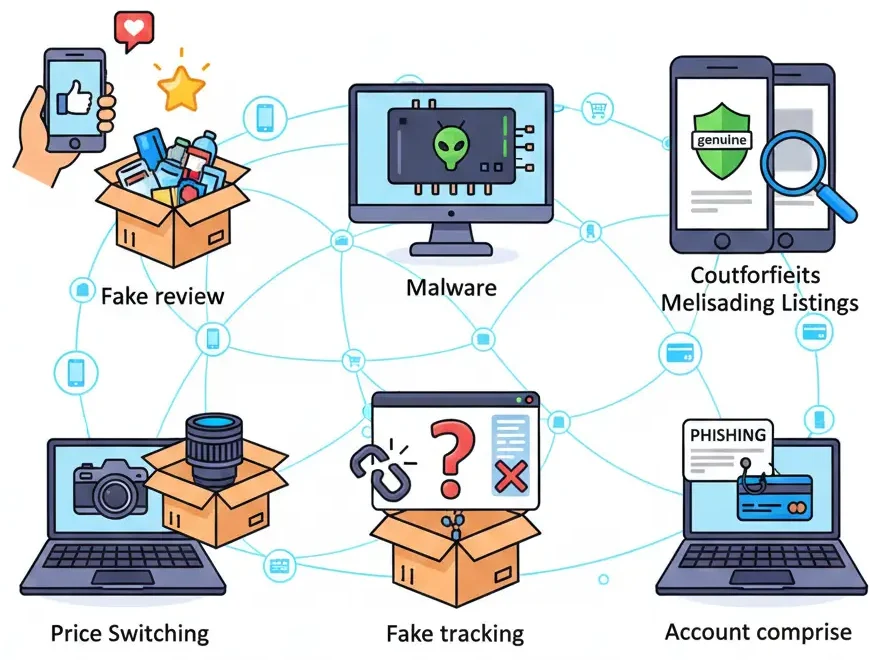
In 2026, marketplace apps are prime targets for:
- Payment fraud
- Fake seller account takeovers
- API abuse
- Data scraping attacks
This is why founders question whether a white-label app can handle these risks safely.
Current Threat Landscape for AliExpress-Type Apps in 2026
According to global app security reports in 2026:
- Over 68% of ecommerce security breaches involve third-party integrations
- API vulnerabilities account for nearly 40% of marketplace data leaks
- Payment-related attacks increased by 27% year-over-year
- Poor access control remains a top reason for seller dashboard compromise
AliExpress-style apps face constant threats from:
- Bot-driven fraud
- Fake order abuse
- Credential stuffing attacks
- Cross-site scripting via product listings
Security is no longer optional—it is operational.
Security Standards That Define “Safe” in 2026
In 2026, a white-label AliExpress app is considered safe only if it aligns with:
- Modern encryption standards
- Zero-trust access models
- Continuous vulnerability monitoring
- Global compliance requirements
Anything less is a risk disguised as a shortcut.
Read more : – Business Model of AliExpress: Complete Strategy Breakdown 2025
Key Security Risks & How to Identify Them
Data Protection & Privacy Risks
AliExpress-style apps handle extremely sensitive data. In 2026, data protection failures are the number one cause of marketplace shutdowns.
User Personal Information
This includes names, emails, phone numbers, addresses, and order history. If this data is not encrypted at rest and in transit, it becomes an easy target for breaches and leaks.
Payment Data Security
White-label AliExpress apps process high transaction volumes. Weak payment gateways, improper tokenization, or non-PCI-compliant systems can expose card data and lead to immediate legal action.
Location & Order Tracking Data
Real-time delivery tracking and warehouse mapping introduce risks. If APIs are not secured, attackers can scrape logistics data or manipulate order flows.
GDPR, CCPA & Global Privacy Compliance
In 2026, non-compliance is no longer forgiven. Failure to manage consent, data deletion requests, or cross-border data storage can result in heavy fines and forced app takedowns.
Technical Vulnerabilities to Watch For
Code Quality Issues
Poorly written or reused code often contains:
- Hardcoded credentials
- Unpatched libraries
- Insecure file handling
These issues silently weaken the app from the inside.
Server & Infrastructure Gaps
Misconfigured cloud servers, open ports, or weak firewall rules are common entry points for attackers targeting white-label apps.
API Vulnerabilities
AliExpress apps rely heavily on APIs for:
- Seller onboarding
- Product sync
- Payments
- Shipping integrations
Without rate limiting, authentication, and validation, APIs become the easiest attack surface.
Third-Party Integrations
Each plugin, payment gateway, or logistics partner increases risk. In 2026, most breaches originate from trusted but insecure integrations.
Business-Level Security Risks
Legal Liability
A single data breach can make the platform owner legally responsible, even if the vulnerability came from the app provider.
Reputation Damage
Marketplace trust collapses quickly. Buyers and sellers abandon platforms that cannot protect their data.
Financial Losses
Fraud refunds, chargebacks, downtime, and legal costs often exceed the original app investment.
Regulatory Penalties
Data protection authorities now actively monitor ecommerce apps. Fines in 2026 can reach millions depending on region and user base.
White-Label AliExpress App Risk Assessment Checklist
- Is user and payment data encrypted end-to-end?
- Are APIs protected with authentication and rate limits?
- Are third-party services security-reviewed?
- Is there a clear incident response plan?
- Are compliance requirements documented and verified?
If any of these answers are unclear, the app carries high hidden risk.
Security Standards Your White-Label AliExpress App Must Meet
Essential Certifications and Compliance in 2026
ISO 27001
ISO 27001 is the gold-standard framework for information security management (ISMS). For an AliExpress-style marketplace app, it signals that security is managed as a system: risk assessment, access control, incident handling, and continuous improvement.
SOC 2 Type II
SOC 2 Type II validates that security controls are not just documented, but operating effectively over a period of time. In 2026, enterprise buyers and payment partners increasingly ask for SOC 2 evidence for platforms handling sensitive user and seller data.
GDPR
If you serve EU users (or collect EU user data), GDPR is mandatory. Your white-label AliExpress app must support:
- Consent management
- Data access and deletion requests
- Data minimization and retention policies
- Breach notification workflows
CCPA and CPRA
If you serve users in California, CCPA/CPRA requires strong consumer rights management, including “Do Not Sell/Share” handling and data transparency obligations.
PCI DSS for Payments
If your app processes card payments, PCI DSS is non-negotiable in 2026. The safest approach is to use PCI-compliant payment processors and ensure your platform handles tokens, not raw card data.
HIPAA (If Applicable)
Usually not required for AliExpress-style apps. But if your marketplace sells health-related services or handles regulated health data, HIPAA obligations may apply depending on your business model and region.
Technical Security Requirements in 2026
Encryption Standards
Your white-label AliExpress app should enforce:
- TLS (HTTPS) for all data in transit
- Strong encryption for sensitive data at rest
- Secure key management (rotation, access controls, audit logs)
Secure Authentication and Access Control
Minimum expectations in 2026:
- 2FA for admin and seller accounts
- OAuth-based secure login options (where relevant)
- Role-based access control (buyer, seller, delivery, admin)
- Session management with device and token controls
Secure API Design
AliExpress-style apps are API-heavy. APIs should include:
- Authenticated endpoints (no anonymous sensitive calls)
- Rate limiting and throttling (anti-bot, anti-abuse)
- Input validation and output filtering
- Proper authorization checks (prevent IDOR-style access issues)
Regular Security Audits and Penetration Testing
You should have:
- Scheduled vulnerability assessments
- Penetration testing for web, mobile, and API layers
- Remediation tracking with clear timelines
- Re-testing after fixes
Infrastructure Hardening
A secure marketplace app in 2026 typically includes:
- WAF (Web Application Firewall)
- Network segmentation
- Secure backups and disaster recovery
- Least-privilege access for servers and cloud resources
Security Monitoring and Incident Response
Non-negotiables:
- Centralized logging (app, API, database, admin actions)
- Alerting for suspicious behavior (fraud spikes, login anomalies)
- Incident response playbook (roles, timelines, customer comms)
- Breach notification readiness aligned to regional laws
Security Standards Comparison Table
| Standard / Control | What It Covers | Why It Matters for an AliExpress-Style App in 2026 | Proof You Should Ask For |
|---|---|---|---|
| ISO 27001 | Security management system, risk controls, policies | Shows security is operational, not ad-hoc | ISO certificate, scope statement, audit summary |
| SOC 2 Type II | Controls tested over time (security, availability, etc.) | Builds trust with partners and enterprise customers | SOC 2 Type II report (or attestation letter) |
| GDPR | EU privacy rights + data handling rules | Avoids legal risk, builds user trust | DPA template, consent flows, data deletion process |
| CCPA/CPRA | US privacy rights (California) | Required if you serve CA users | Privacy controls, “do not sell/share” handling |
| PCI DSS | Card payment security | Reduces payment fraud risk and compliance exposure | PCI compliance proof from payment processor |
| Pen Testing | Real-world attack simulation | Finds exploitable weaknesses before attackers do | Pentest report, remediation plan, retest results |
| Secure SDLC | Secure development lifecycle | Prevents vulnerabilities from entering releases | SDLC policy, code review process, dependency scanning |
| Monitoring + IR Plan | Detection + response readiness | Limits damage when incidents happen | Monitoring dashboard overview, IR runbook |
Red Flags: How to Spot Unsafe White-Label Providers
Warning Signs You Should Never Ignore
In 2026, unsafe white-label AliExpress apps usually fail in predictable ways. The problem is not that risks are hidden—it is that buyers do not know what to look for.
No Security Documentation
If a provider cannot clearly explain how data is protected, where it is stored, and how incidents are handled, security is likely an afterthought.
Unrealistically Cheap Pricing Without Explanation
Security costs money. Providers offering extremely low pricing often cut corners on:
- Secure infrastructure
- Code audits
- Compliance readiness
- Ongoing updates
In 2026, “cheap” is often the most expensive mistake.
No Compliance Certifications or Audit Evidence
A serious provider should be able to discuss ISO 27001 alignment, GDPR readiness, and PCI compliance confidently. Silence or vague answers are major red flags.
Outdated Technology Stack
Legacy frameworks, unsupported libraries, or old server configurations increase vulnerability exposure. Modern security depends on active maintenance and updates.
Poor Code Quality
Warning signs include:
- No version control discipline
- No automated testing
- No code review process
- Heavy reuse of insecure components
Poor code equals hidden risk.
No Clear Security Update Policy
Security threats evolve constantly. If the provider does not commit to regular patches, dependency updates, and vulnerability fixes, the app will fall behind attackers.
Lack of Data Backup and Recovery Systems
In 2026, ransomware and destructive attacks are common. Without backups and tested recovery processes, downtime can be catastrophic.
No Insurance or Risk Coverage
Professional providers increasingly carry cyber liability insurance. If your provider has none, all risk shifts to you.
Evaluation Checklist Before Choosing a Provider
Critical Questions to Ask
- How is user and payment data encrypted?
- What security standards does the app comply with in 2026?
- How often are security audits and penetration tests conducted?
- Who is responsible for applying security updates?
- What happens if a breach occurs?
Documents You Should Request
- Security architecture overview
- Compliance and certification evidence
- Data processing agreements (DPA)
- Incident response policy
- Backup and disaster recovery plan
Testing and Validation Steps
- Review demo environments with security in mind
- Test admin and seller access controls
- Validate API authentication behavior
- Confirm logging and monitoring visibility
Due Diligence Essentials
- Background check on past projects
- History of reported breaches or incidents
- Transparency in communication
- Willingness to undergo independent security review
A provider who welcomes scrutiny is usually the safest choice.
Read more : – The Genius Behind AliExpress App Marketing Strategy
Best Practices for Secure White-Label AliExpress App Implementation
Pre-Launch Security Best Practices
Launching a white-label AliExpress app in 2026 without a structured security process is one of the most common and costly mistakes founders make.
Comprehensive Security Audit
Before launch, the app should undergo:
- Application-level security testing
- API vulnerability assessment
- Cloud and server configuration review
- Database access and encryption validation
This ensures no critical weakness reaches production.
Strict Code Review Requirements
All core modules should pass:
- Manual peer code reviews
- Automated static code analysis
- Dependency vulnerability scanning
This reduces the risk of hidden backdoors and insecure libraries.
Infrastructure Hardening
Your hosting environment must be secured with:
- Firewalls and network isolation
- Secure IAM roles and permissions
- Encrypted storage volumes
- Protected admin access endpoints
In 2026, infrastructure misconfiguration is still a top breach cause.
Compliance Verification
Before onboarding users:
- GDPR and CCPA workflows must be functional
- Payment processing must be PCI compliant
- Data retention and deletion rules must be tested
Compliance should be operational, not theoretical.
Internal Access and Staff Training
Admin users, support teams, and vendors must understand:
- Secure credential handling
- Phishing and social engineering risks
- Data access boundaries
Human error remains a major attack vector in 2026.
Post-Launch Security and Monitoring Practices
Continuous Security Monitoring
Once live, the app should be monitored for:
- Suspicious login behavior
- API abuse and bot traffic
- Fraudulent orders and payment anomalies
Early detection dramatically reduces breach impact.
Regular Updates and Patch Management
Security fixes must be:
- Applied quickly
- Tested before release
- Documented with clear change logs
An unpatched app becomes vulnerable very fast.
Incident Response Planning
Every white-label AliExpress app should have:
- A defined incident response team
- Clear escalation paths
- User and regulator communication plans
- Forensic investigation procedures
Preparedness determines damage control.
User Data Governance
In 2026, responsible data management includes:
- Limiting data access by role
- Automatic data deletion after retention periods
- Audit logs for sensitive actions
This reduces both risk and regulatory exposure.
Backup and Recovery Systems
Your platform should support:
- Automated encrypted backups
- Regular recovery testing
- Geo-redundant storage
Backups are your last line of defense against ransomware and system failure.
Security Implementation Timeline (High-Level)
- Week 1–2: Security audit, code review, infrastructure setup
- Week 3: Compliance validation and penetration testing
- Week 4: Monitoring, logging, incident response readiness
- Ongoing: Continuous updates, audits, and security improvements
Security is not a phase. In 2026, it is an ongoing operational commitment.
Legal & Compliance Considerations
Regulatory Requirements in 2026
White-label AliExpress apps operate across regions, vendors, and payment systems. This makes legal and compliance planning non-negotiable.
Data Protection Laws by Region
In 2026, your app must align with:
- GDPR for European users
- CCPA / CPRA for California-based users
- Local data protection laws in Asia, Middle East, and emerging markets
Non-compliance can result in fines, forced data deletion, or app suspension.
Industry-Specific Regulations
Depending on what products or services are sold:
- Financial products may trigger additional compliance
- Health-related items can introduce sector-specific obligations
- Cross-border trade laws affect seller onboarding and logistics
Your app must be flexible enough to adapt to regulatory changes.
User Consent Management
A secure AliExpress-style app in 2026 must:
- Clearly record user consent
- Allow users to withdraw consent
- Log consent changes for audits
Consent is now a legal record, not just a checkbox.
Privacy Policy and Terms of Service
Your platform must clearly define:
- What data is collected
- How it is used and stored
- Who has access to it
- How disputes and incidents are handled
Poorly written policies increase liability instead of reducing it.
Liability Protection and Risk Management
Cyber Insurance Requirements
Many businesses in 2026 carry cyber liability insurance to cover:
- Data breach response costs
- Legal expenses
- Customer notification and remediation
Insurance does not replace security—but it limits financial damage.
Legal Disclaimers and User Agreements
Your agreements should clearly outline:
- Platform responsibilities
- Seller obligations
- User rights and limitations
- Dispute resolution mechanisms
Clear contracts reduce ambiguity during incidents.
Incident Reporting Protocols
Regulations now mandate:
- Timely breach reporting to authorities
- Transparent communication with affected users
- Documented remediation steps
Delay or concealment often leads to harsher penalties.
Ongoing Compliance Monitoring
Compliance is not one-time. In 2026, laws evolve rapidly, and your app must:
- Monitor regulatory updates
- Adjust policies and workflows
- Document compliance actions
Why Miracuves White-Label AliExpress App Is Your Safest Choice
Miracuves Security-First Approach in 2026
Most security failures in white-label apps do not happen because founders ignore security. They happen because the platform was never designed with security as a foundation.
Miracuves takes a different approach. Security is built into the architecture, development process, and long-term maintenance of every white-label AliExpress app we deliver in 2026.
Enterprise-Grade Security Architecture
Miracuves apps are designed using:
- Secure-by-design architecture
- Role-based access controls across buyers, sellers, and admins
- Hardened infrastructure with monitored environments
This ensures that security is not added later, but embedded from day one.
Compliance-Ready by Default
Every Miracuves white-label AliExpress app is built to align with:
- GDPR and CCPA requirements
- PCI-compliant payment workflows
- Industry-standard security policies
Compliance workflows are functional, testable, and documented—ready for audits in 2026.
Proactive Security Audits and Monitoring
Miracuves follows a proactive security model:
- Regular internal security reviews
- Ongoing vulnerability assessments
- Continuous monitoring for suspicious activity
This reduces the likelihood of breaches and minimizes impact if incidents occur.
Secure Payments and Data Protection
Security measures include:
- Encrypted data transmission
- Secure token-based payment handling
- Isolation of sensitive data layers
- Strong authentication for admin and seller panels
User trust is protected at every transaction point.
Long-Term Security Maintenance
Unlike providers who deliver and disappear, Miracuves ensures:
- Regular security updates
- Dependency and framework patching
- Evolving protection against new threats
Security is treated as a continuous service in 2026, not a one-time feature.
Why Businesses Trust Miracuves
With 600+ successful projects delivered, Miracuves has helped businesses launch scalable, compliant, and secure marketplace apps without major security incidents.
Our experience across high-traffic platforms allows us to anticipate risks before they become problems.
Final Thought
Miracuves white-label AliExpress app solutions come with enterprise-grade security built in from day one. Our platforms are designed to meet 2026 compliance standards while protecting your users, sellers, and brand reputation. Get a free security assessment and see why businesses trust Miracuves to build safe, compliant marketplace apps.
Security is not about perfection. It is about preparation, transparency, and choosing a platform built to protect users, data, and long-term growth.
When security is handled correctly from the start, a white-label app becomes an advantage, not a vulnerability.
FAQs
1. How secure is a white-label AliExpress app compared to custom development in 2026?
A well-built white-label AliExpress app can be as secure as custom development. In many cases, it is safer because security controls are already tested, standardized, and maintained continuously.
2. What happens if there is a security breach?
A proper incident response plan includes immediate containment, investigation, user notification, and regulatory reporting. The impact depends on how prepared the platform is before the incident occurs.
3. Who is responsible for security updates in a white-label app?
In 2026, responsibility is shared. The provider handles core platform security, while the business owner ensures correct configuration, access control, and operational compliance.
4. How is user data protected in a white-label AliExpress app?
User data is protected using encryption, role-based access, secure APIs, and strict data governance policies that limit who can access sensitive information.
5. What compliance certifications should I look for?
At minimum, look for ISO 27001 alignment, GDPR compliance, PCI DSS for payments, and SOC 2 Type II practices where enterprise trust is required.
6. Can white-label AliExpress apps meet enterprise security standards?
Yes. In 2026, enterprise-grade white-label apps are designed with advanced security architecture, continuous monitoring, and audit readiness.
7. How often should security audits be conducted?
Security audits should be conducted at least annually, with continuous monitoring and additional testing after major updates or feature changes.
8. What is included in the Miracuves security package?
Miracuves provides secure architecture, compliance-ready workflows, encrypted data handling, regular updates, and proactive security monitoring.
9. How is security handled across different countries?
The app supports region-based compliance rules, data handling policies, and consent management aligned with local regulations in 2026.
10. What insurance is needed for app security?
Many businesses use cyber liability insurance to cover breach response, legal costs, and recovery. It complements security but does not replace
Related Articles :